
Raven Row is situated on a cobblestone backstreet just off Spitalfields Market. Spanning three floors and housed in an eighteenth-century building, the gallery features wooden floors, grand staircases, and ornate fireplaces throughout. It’s the opening night of their new exhibition, Conceptual Art and Christine Kozlov, and the space is heaving as Wednesday-night revellers negotiate their way through the crowded rooms with glasses of wine in hand. A throng of soggy umbrellas guards the front door.
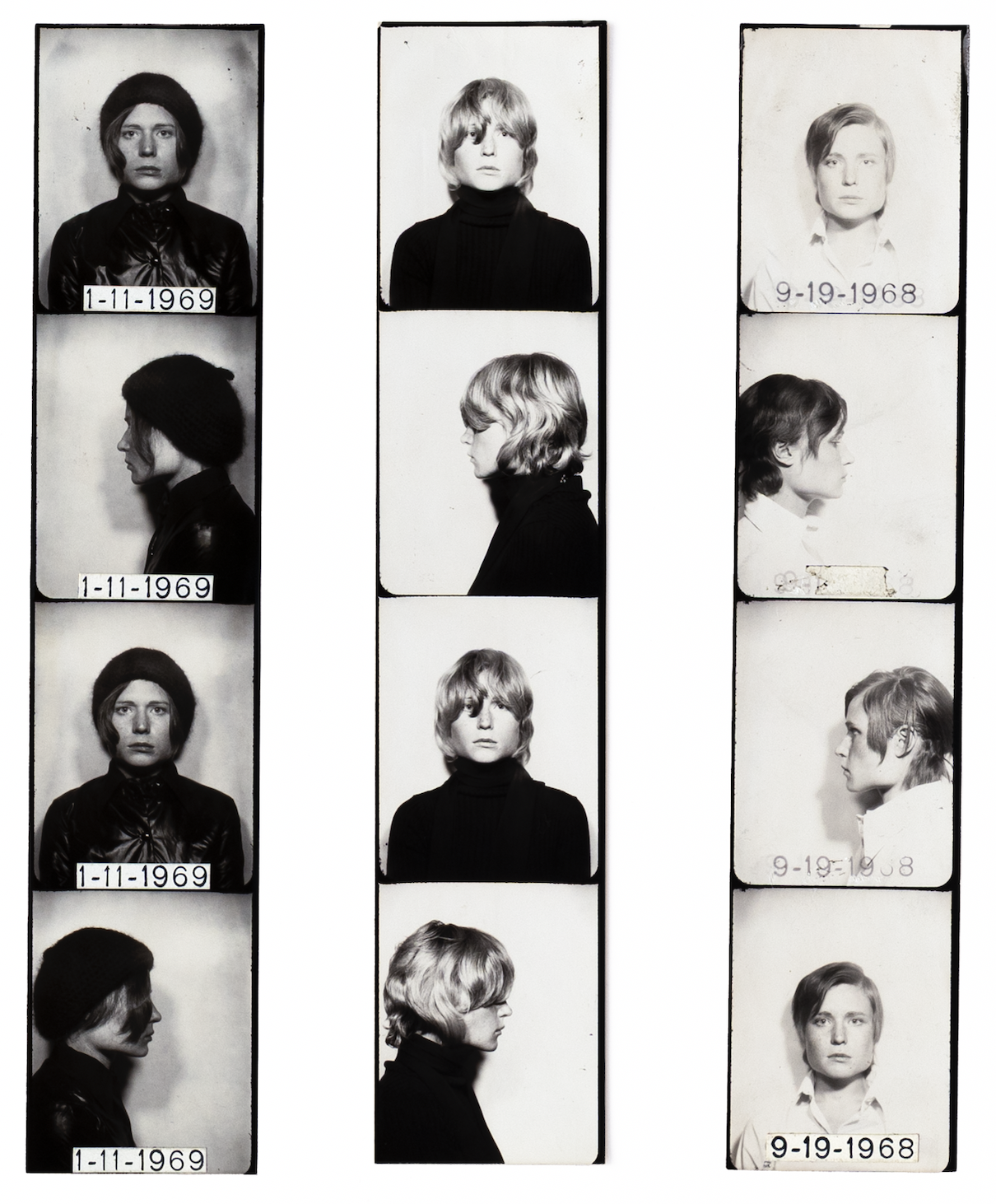
Born in New York in 1945, Christine Kozlov was a prominent figure in the Conceptual Art movement from the mid-1960s to the late 1970s. In response to an increasingly commercialised art world, the defining characteristic of the movement was its focus on the dematerialisation of art, emphasising the importance of the creative process and the development of ideas over the physical outcome. The exhibition features not only work by Kozlov but also that of her peers; collective and group projects were an integral part of her career from the early 1970s to the mid-1980s.
A recurring theme in Kozlov’s career is the lifespan of information and its ephemerality. In the centre of the exhibition’s main room, a very large, old-fashioned tape recorder and microphone sit on a table, recording the sounds of the space on a continuous loop for the duration of the exhibition. The artwork, Information: No Theory (1970), subtly alters the atmosphere: the microphone eggs some observers on, while others lower their voices. I watch as one guest approaches and makes loud animal noises into the microphone before scurrying away. Due to the nature of looped tape, the recorded information is erased every two minutes to make space for a new recording, rendering new information old in a matter of 120 seconds. In the artwork’s accompanying print, Kozlov writes, “Proof of existence of the information does in fact not exist in actuality, but [is] based on probability.”

Kozlov’s work is deeply concerned with the documentation of information. A stack of 271 sheets of blank white paper represents 271 days of rejected concepts from February to October 1968—a monument to the creative process and the perseverance it requires. A painting from On Kawara’s Today series (1966–2013) is also on display: NOV. 18, 1967. Kawara, one of Kozlov’s contemporaries, created around 3,000 paintings depicting the day’s date in the language and convention of the place in which he made them. If a work was not completed by midnight, he destroyed it. On the day of the exhibited painting, he had watched Bonnie and Clyde (1967) with Kozlov in New York.
On an adjacent wall hangs one of the only other paintings in the exhibition, Untitled (After Goya) (1968) by Kozlov. Resembling print media, it features simple white text which reads “Las Majas” on a bluish-grey background. The phrase references two paintings by Francisco Goya, which depict the same woman in the same pose—first clothed, then nude. It offers one example of how women have historically been positioned as passive muses by male artists within the canon.
Throughout the exhibition, I find myself unusually perplexed. I am unsure whether this is due to a lack of context or simply a rookie mistake of attempting to derive definitive meaning from the work at all. Many conceptual artworks, particularly those included here, possess a subtle tongue-in-cheek quality, as if winking at the viewer: You really think this is art? But more importantly, why would it not be?
An insurance policy slip addressed and sent to Kozlov, displayed in a glass frame, is titled Untitled (Became “Art” on October 14, 1968) (1968) by Joseph Kosuth. The only physical alteration Kosuth made to the document is a handwritten note at the top stating, “Became ‘art’ on 14 October 1968 when Joseph Kosuth reached his studio (46 W. 22nd St. NYC) safely.” Next to it hangs another insurance slip, this time untouched, titled Untitled (Phoenix Assurance Company Limited) (1970), also by Kosuth. It is hard not to consider the two works together, as though they are laughing at one another from opposite ends of whatever metric scale we use to define what is and is not art.
The exhibition also includes three films, among them the landmark feminist faux-documentary Born in Flames (1983) by Lizzie Borden, who was herself immersed in the conceptual art scene in America. A work of radical political science fiction, it addresses inequalities at the intersection of race, gender, and sexuality. Shot on 16mm, it is colourful and visually rich, depicting a dystopian New York ten years after a socialist revolution. The plot follows the Women’s Army vigilante group, the editorial team at the Socialist Youth Review newspaper, and two rival underground radio broadcasters. It is razor-sharp, essential viewing that makes many recent theatrical releases seem timid by comparison.
Conceptual Art and Christine Kozlov at Raven Row is a compelling entry point into the conceptual art movement, highlighting artists who have often been overlooked in examinations of the period. If you are anything like me, you may leave with more questions than answers—one of them being: Am I missing something? That is partially due to the nature of the content, but also the sheer number of rooms to wander through. As with much conceptual art, the exhibition is far from straightforward, and I benefited from my own additional research to get the most out of it. But it’s the process that counts, no?
Conceptual Art and Christine Kozlov at Raven Row runs from 19 February to 26 April 2026. Don't forget to check in to leave your review in the gowithYamo app!


Raven Row is situated on a cobblestone backstreet just off Spitalfields Market. Spanning three floors and housed in an eighteenth-century building, the gallery features wooden floors, grand staircases, and ornate fireplaces throughout. It’s the opening night of their new exhibition, Conceptual Art and Christine Kozlov, and the space is heaving as Wednesday-night revellers negotiate their way through the crowded rooms with glasses of wine in hand. A throng of soggy umbrellas guards the front door.
Born in New York in 1945, Christine Kozlov was a prominent figure in the Conceptual Art movement from the mid-1960s to the late 1970s. In response to an increasingly commercialised art world, the defining characteristic of the movement was its focus on the dematerialisation of art, emphasising the importance of the creative process and the development of ideas over the physical outcome. The exhibition features not only work by Kozlov but also that of her peers; collective and group projects were an integral part of her career from the early 1970s to the mid-1980s.
A recurring theme in Kozlov’s career is the lifespan of information and its ephemerality. In the centre of the exhibition’s main room, a very large, old-fashioned tape recorder and microphone sit on a table, recording the sounds of the space on a continuous loop for the duration of the exhibition. The artwork, Information: No Theory (1970), subtly alters the atmosphere: the microphone eggs some observers on, while others lower their voices. I watch as one guest approaches and makes loud animal noises into the microphone before scurrying away. Due to the nature of looped tape, the recorded information is erased every two minutes to make space for a new recording, rendering new information old in a matter of 120 seconds. In the artwork’s accompanying print, Kozlov writes, “Proof of existence of the information does in fact not exist in actuality, but [is] based on probability.”
Kozlov’s work is deeply concerned with the documentation of information. A stack of 271 sheets of blank white paper represents 271 days of rejected concepts from February to October 1968—a monument to the creative process and the perseverance it requires. A painting from On Kawara’s Today series (1966–2013) is also on display: NOV. 18, 1967. Kawara, one of Kozlov’s contemporaries, created around 3,000 paintings depicting the day’s date in the language and convention of the place in which he made them. If a work was not completed by midnight, he destroyed it. On the day of the exhibited painting, he had watched Bonnie and Clyde (1967) with Kozlov in New York.
On an adjacent wall hangs one of the only other paintings in the exhibition, Untitled (After Goya) (1968) by Kozlov. Resembling print media, it features simple white text which reads “Las Majas” on a bluish-grey background. The phrase references two paintings by Francisco Goya, which depict the same woman in the same pose—first clothed, then nude. It offers one example of how women have historically been positioned as passive muses by male artists within the canon.
Throughout the exhibition, I find myself unusually perplexed. I am unsure whether this is due to a lack of context or simply a rookie mistake of attempting to derive definitive meaning from the work at all. Many conceptual artworks, particularly those included here, possess a subtle tongue-in-cheek quality, as if winking at the viewer: You really think this is art? But more importantly, why would it not be?
An insurance policy slip addressed and sent to Kozlov, displayed in a glass frame, is titled Untitled (Became “Art” on October 14, 1968) (1968) by Joseph Kosuth. The only physical alteration Kosuth made to the document is a handwritten note at the top stating, “Became ‘art’ on 14 October 1968 when Joseph Kosuth reached his studio (46 W. 22nd St. NYC) safely.” Next to it hangs another insurance slip, this time untouched, titled Untitled (Phoenix Assurance Company Limited) (1970), also by Kosuth. It is hard not to consider the two works together, as though they are laughing at one another from opposite ends of whatever metric scale we use to define what is and is not art.
The exhibition also includes three films, among them the landmark feminist faux-documentary Born in Flames (1983) by Lizzie Borden, who was herself immersed in the conceptual art scene in America. A work of radical political science fiction, it addresses inequalities at the intersection of race, gender, and sexuality. Shot on 16mm, it is colourful and visually rich, depicting a dystopian New York ten years after a socialist revolution. The plot follows the Women’s Army vigilante group, the editorial team at the Socialist Youth Review newspaper, and two rival underground radio broadcasters. It is razor-sharp, essential viewing that makes many recent theatrical releases seem timid by comparison.
Conceptual Art and Christine Kozlov at Raven Row is a compelling entry point into the conceptual art movement, highlighting artists who have often been overlooked in examinations of the period. If you are anything like me, you may leave with more questions than answers—one of them being: Am I missing something? That is partially due to the nature of the content, but also the sheer number of rooms to wander through. As with much conceptual art, the exhibition is far from straightforward, and I benefited from my own additional research to get the most out of it. But it’s the process that counts, no?
Conceptual Art and Christine Kozlov at Raven Row runs from 19 February to 26 April 2026. Don't forget to check in to leave your review in the gowithYamo app!
Raven Row is situated on a cobblestone backstreet just off Spitalfields Market. Spanning three floors and housed in an eighteenth-century building, the gallery features wooden floors, grand staircases, and ornate fireplaces throughout. It’s the opening night of their new exhibition, Conceptual Art and Christine Kozlov, and the space is heaving as Wednesday-night revellers negotiate their way through the crowded rooms with glasses of wine in hand. A throng of soggy umbrellas guards the front door.
Born in New York in 1945, Christine Kozlov was a prominent figure in the Conceptual Art movement from the mid-1960s to the late 1970s. In response to an increasingly commercialised art world, the defining characteristic of the movement was its focus on the dematerialisation of art, emphasising the importance of the creative process and the development of ideas over the physical outcome. The exhibition features not only work by Kozlov but also that of her peers; collective and group projects were an integral part of her career from the early 1970s to the mid-1980s.
A recurring theme in Kozlov’s career is the lifespan of information and its ephemerality. In the centre of the exhibition’s main room, a very large, old-fashioned tape recorder and microphone sit on a table, recording the sounds of the space on a continuous loop for the duration of the exhibition. The artwork, Information: No Theory (1970), subtly alters the atmosphere: the microphone eggs some observers on, while others lower their voices. I watch as one guest approaches and makes loud animal noises into the microphone before scurrying away. Due to the nature of looped tape, the recorded information is erased every two minutes to make space for a new recording, rendering new information old in a matter of 120 seconds. In the artwork’s accompanying print, Kozlov writes, “Proof of existence of the information does in fact not exist in actuality, but [is] based on probability.”
Kozlov’s work is deeply concerned with the documentation of information. A stack of 271 sheets of blank white paper represents 271 days of rejected concepts from February to October 1968—a monument to the creative process and the perseverance it requires. A painting from On Kawara’s Today series (1966–2013) is also on display: NOV. 18, 1967. Kawara, one of Kozlov’s contemporaries, created around 3,000 paintings depicting the day’s date in the language and convention of the place in which he made them. If a work was not completed by midnight, he destroyed it. On the day of the exhibited painting, he had watched Bonnie and Clyde (1967) with Kozlov in New York.
On an adjacent wall hangs one of the only other paintings in the exhibition, Untitled (After Goya) (1968) by Kozlov. Resembling print media, it features simple white text which reads “Las Majas” on a bluish-grey background. The phrase references two paintings by Francisco Goya, which depict the same woman in the same pose—first clothed, then nude. It offers one example of how women have historically been positioned as passive muses by male artists within the canon.
Throughout the exhibition, I find myself unusually perplexed. I am unsure whether this is due to a lack of context or simply a rookie mistake of attempting to derive definitive meaning from the work at all. Many conceptual artworks, particularly those included here, possess a subtle tongue-in-cheek quality, as if winking at the viewer: You really think this is art? But more importantly, why would it not be?
An insurance policy slip addressed and sent to Kozlov, displayed in a glass frame, is titled Untitled (Became “Art” on October 14, 1968) (1968) by Joseph Kosuth. The only physical alteration Kosuth made to the document is a handwritten note at the top stating, “Became ‘art’ on 14 October 1968 when Joseph Kosuth reached his studio (46 W. 22nd St. NYC) safely.” Next to it hangs another insurance slip, this time untouched, titled Untitled (Phoenix Assurance Company Limited) (1970), also by Kosuth. It is hard not to consider the two works together, as though they are laughing at one another from opposite ends of whatever metric scale we use to define what is and is not art.
The exhibition also includes three films, among them the landmark feminist faux-documentary Born in Flames (1983) by Lizzie Borden, who was herself immersed in the conceptual art scene in America. A work of radical political science fiction, it addresses inequalities at the intersection of race, gender, and sexuality. Shot on 16mm, it is colourful and visually rich, depicting a dystopian New York ten years after a socialist revolution. The plot follows the Women’s Army vigilante group, the editorial team at the Socialist Youth Review newspaper, and two rival underground radio broadcasters. It is razor-sharp, essential viewing that makes many recent theatrical releases seem timid by comparison.
Conceptual Art and Christine Kozlov at Raven Row is a compelling entry point into the conceptual art movement, highlighting artists who have often been overlooked in examinations of the period. If you are anything like me, you may leave with more questions than answers—one of them being: Am I missing something? That is partially due to the nature of the content, but also the sheer number of rooms to wander through. As with much conceptual art, the exhibition is far from straightforward, and I benefited from my own additional research to get the most out of it. But it’s the process that counts, no?
Conceptual Art and Christine Kozlov at Raven Row runs from 19 February to 26 April 2026. Don't forget to check in to leave your review in the gowithYamo app!
Raven Row is situated on a cobblestone backstreet just off Spitalfields Market. Spanning three floors and housed in an eighteenth-century building, the gallery features wooden floors, grand staircases, and ornate fireplaces throughout. It’s the opening night of their new exhibition, Conceptual Art and Christine Kozlov, and the space is heaving as Wednesday-night revellers negotiate their way through the crowded rooms with glasses of wine in hand. A throng of soggy umbrellas guards the front door.
Born in New York in 1945, Christine Kozlov was a prominent figure in the Conceptual Art movement from the mid-1960s to the late 1970s. In response to an increasingly commercialised art world, the defining characteristic of the movement was its focus on the dematerialisation of art, emphasising the importance of the creative process and the development of ideas over the physical outcome. The exhibition features not only work by Kozlov but also that of her peers; collective and group projects were an integral part of her career from the early 1970s to the mid-1980s.
A recurring theme in Kozlov’s career is the lifespan of information and its ephemerality. In the centre of the exhibition’s main room, a very large, old-fashioned tape recorder and microphone sit on a table, recording the sounds of the space on a continuous loop for the duration of the exhibition. The artwork, Information: No Theory (1970), subtly alters the atmosphere: the microphone eggs some observers on, while others lower their voices. I watch as one guest approaches and makes loud animal noises into the microphone before scurrying away. Due to the nature of looped tape, the recorded information is erased every two minutes to make space for a new recording, rendering new information old in a matter of 120 seconds. In the artwork’s accompanying print, Kozlov writes, “Proof of existence of the information does in fact not exist in actuality, but [is] based on probability.”
Kozlov’s work is deeply concerned with the documentation of information. A stack of 271 sheets of blank white paper represents 271 days of rejected concepts from February to October 1968—a monument to the creative process and the perseverance it requires. A painting from On Kawara’s Today series (1966–2013) is also on display: NOV. 18, 1967. Kawara, one of Kozlov’s contemporaries, created around 3,000 paintings depicting the day’s date in the language and convention of the place in which he made them. If a work was not completed by midnight, he destroyed it. On the day of the exhibited painting, he had watched Bonnie and Clyde (1967) with Kozlov in New York.
On an adjacent wall hangs one of the only other paintings in the exhibition, Untitled (After Goya) (1968) by Kozlov. Resembling print media, it features simple white text which reads “Las Majas” on a bluish-grey background. The phrase references two paintings by Francisco Goya, which depict the same woman in the same pose—first clothed, then nude. It offers one example of how women have historically been positioned as passive muses by male artists within the canon.
Throughout the exhibition, I find myself unusually perplexed. I am unsure whether this is due to a lack of context or simply a rookie mistake of attempting to derive definitive meaning from the work at all. Many conceptual artworks, particularly those included here, possess a subtle tongue-in-cheek quality, as if winking at the viewer: You really think this is art? But more importantly, why would it not be?
An insurance policy slip addressed and sent to Kozlov, displayed in a glass frame, is titled Untitled (Became “Art” on October 14, 1968) (1968) by Joseph Kosuth. The only physical alteration Kosuth made to the document is a handwritten note at the top stating, “Became ‘art’ on 14 October 1968 when Joseph Kosuth reached his studio (46 W. 22nd St. NYC) safely.” Next to it hangs another insurance slip, this time untouched, titled Untitled (Phoenix Assurance Company Limited) (1970), also by Kosuth. It is hard not to consider the two works together, as though they are laughing at one another from opposite ends of whatever metric scale we use to define what is and is not art.
The exhibition also includes three films, among them the landmark feminist faux-documentary Born in Flames (1983) by Lizzie Borden, who was herself immersed in the conceptual art scene in America. A work of radical political science fiction, it addresses inequalities at the intersection of race, gender, and sexuality. Shot on 16mm, it is colourful and visually rich, depicting a dystopian New York ten years after a socialist revolution. The plot follows the Women’s Army vigilante group, the editorial team at the Socialist Youth Review newspaper, and two rival underground radio broadcasters. It is razor-sharp, essential viewing that makes many recent theatrical releases seem timid by comparison.
Conceptual Art and Christine Kozlov at Raven Row is a compelling entry point into the conceptual art movement, highlighting artists who have often been overlooked in examinations of the period. If you are anything like me, you may leave with more questions than answers—one of them being: Am I missing something? That is partially due to the nature of the content, but also the sheer number of rooms to wander through. As with much conceptual art, the exhibition is far from straightforward, and I benefited from my own additional research to get the most out of it. But it’s the process that counts, no?
Conceptual Art and Christine Kozlov at Raven Row runs from 19 February to 26 April 2026. Don't forget to check in to leave your review in the gowithYamo app!
Raven Row is situated on a cobblestone backstreet just off Spitalfields Market. Spanning three floors and housed in an eighteenth-century building, the gallery features wooden floors, grand staircases, and ornate fireplaces throughout. It’s the opening night of their new exhibition, Conceptual Art and Christine Kozlov, and the space is heaving as Wednesday-night revellers negotiate their way through the crowded rooms with glasses of wine in hand. A throng of soggy umbrellas guards the front door.
Born in New York in 1945, Christine Kozlov was a prominent figure in the Conceptual Art movement from the mid-1960s to the late 1970s. In response to an increasingly commercialised art world, the defining characteristic of the movement was its focus on the dematerialisation of art, emphasising the importance of the creative process and the development of ideas over the physical outcome. The exhibition features not only work by Kozlov but also that of her peers; collective and group projects were an integral part of her career from the early 1970s to the mid-1980s.
A recurring theme in Kozlov’s career is the lifespan of information and its ephemerality. In the centre of the exhibition’s main room, a very large, old-fashioned tape recorder and microphone sit on a table, recording the sounds of the space on a continuous loop for the duration of the exhibition. The artwork, Information: No Theory (1970), subtly alters the atmosphere: the microphone eggs some observers on, while others lower their voices. I watch as one guest approaches and makes loud animal noises into the microphone before scurrying away. Due to the nature of looped tape, the recorded information is erased every two minutes to make space for a new recording, rendering new information old in a matter of 120 seconds. In the artwork’s accompanying print, Kozlov writes, “Proof of existence of the information does in fact not exist in actuality, but [is] based on probability.”
Kozlov’s work is deeply concerned with the documentation of information. A stack of 271 sheets of blank white paper represents 271 days of rejected concepts from February to October 1968—a monument to the creative process and the perseverance it requires. A painting from On Kawara’s Today series (1966–2013) is also on display: NOV. 18, 1967. Kawara, one of Kozlov’s contemporaries, created around 3,000 paintings depicting the day’s date in the language and convention of the place in which he made them. If a work was not completed by midnight, he destroyed it. On the day of the exhibited painting, he had watched Bonnie and Clyde (1967) with Kozlov in New York.
On an adjacent wall hangs one of the only other paintings in the exhibition, Untitled (After Goya) (1968) by Kozlov. Resembling print media, it features simple white text which reads “Las Majas” on a bluish-grey background. The phrase references two paintings by Francisco Goya, which depict the same woman in the same pose—first clothed, then nude. It offers one example of how women have historically been positioned as passive muses by male artists within the canon.
Throughout the exhibition, I find myself unusually perplexed. I am unsure whether this is due to a lack of context or simply a rookie mistake of attempting to derive definitive meaning from the work at all. Many conceptual artworks, particularly those included here, possess a subtle tongue-in-cheek quality, as if winking at the viewer: You really think this is art? But more importantly, why would it not be?
An insurance policy slip addressed and sent to Kozlov, displayed in a glass frame, is titled Untitled (Became “Art” on October 14, 1968) (1968) by Joseph Kosuth. The only physical alteration Kosuth made to the document is a handwritten note at the top stating, “Became ‘art’ on 14 October 1968 when Joseph Kosuth reached his studio (46 W. 22nd St. NYC) safely.” Next to it hangs another insurance slip, this time untouched, titled Untitled (Phoenix Assurance Company Limited) (1970), also by Kosuth. It is hard not to consider the two works together, as though they are laughing at one another from opposite ends of whatever metric scale we use to define what is and is not art.
The exhibition also includes three films, among them the landmark feminist faux-documentary Born in Flames (1983) by Lizzie Borden, who was herself immersed in the conceptual art scene in America. A work of radical political science fiction, it addresses inequalities at the intersection of race, gender, and sexuality. Shot on 16mm, it is colourful and visually rich, depicting a dystopian New York ten years after a socialist revolution. The plot follows the Women’s Army vigilante group, the editorial team at the Socialist Youth Review newspaper, and two rival underground radio broadcasters. It is razor-sharp, essential viewing that makes many recent theatrical releases seem timid by comparison.
Conceptual Art and Christine Kozlov at Raven Row is a compelling entry point into the conceptual art movement, highlighting artists who have often been overlooked in examinations of the period. If you are anything like me, you may leave with more questions than answers—one of them being: Am I missing something? That is partially due to the nature of the content, but also the sheer number of rooms to wander through. As with much conceptual art, the exhibition is far from straightforward, and I benefited from my own additional research to get the most out of it. But it’s the process that counts, no?
Conceptual Art and Christine Kozlov at Raven Row runs from 19 February to 26 April 2026. Don't forget to check in to leave your review in the gowithYamo app!
Raven Row is situated on a cobblestone backstreet just off Spitalfields Market. Spanning three floors and housed in an eighteenth-century building, the gallery features wooden floors, grand staircases, and ornate fireplaces throughout. It’s the opening night of their new exhibition, Conceptual Art and Christine Kozlov, and the space is heaving as Wednesday-night revellers negotiate their way through the crowded rooms with glasses of wine in hand. A throng of soggy umbrellas guards the front door.
Born in New York in 1945, Christine Kozlov was a prominent figure in the Conceptual Art movement from the mid-1960s to the late 1970s. In response to an increasingly commercialised art world, the defining characteristic of the movement was its focus on the dematerialisation of art, emphasising the importance of the creative process and the development of ideas over the physical outcome. The exhibition features not only work by Kozlov but also that of her peers; collective and group projects were an integral part of her career from the early 1970s to the mid-1980s.
A recurring theme in Kozlov’s career is the lifespan of information and its ephemerality. In the centre of the exhibition’s main room, a very large, old-fashioned tape recorder and microphone sit on a table, recording the sounds of the space on a continuous loop for the duration of the exhibition. The artwork, Information: No Theory (1970), subtly alters the atmosphere: the microphone eggs some observers on, while others lower their voices. I watch as one guest approaches and makes loud animal noises into the microphone before scurrying away. Due to the nature of looped tape, the recorded information is erased every two minutes to make space for a new recording, rendering new information old in a matter of 120 seconds. In the artwork’s accompanying print, Kozlov writes, “Proof of existence of the information does in fact not exist in actuality, but [is] based on probability.”
Kozlov’s work is deeply concerned with the documentation of information. A stack of 271 sheets of blank white paper represents 271 days of rejected concepts from February to October 1968—a monument to the creative process and the perseverance it requires. A painting from On Kawara’s Today series (1966–2013) is also on display: NOV. 18, 1967. Kawara, one of Kozlov’s contemporaries, created around 3,000 paintings depicting the day’s date in the language and convention of the place in which he made them. If a work was not completed by midnight, he destroyed it. On the day of the exhibited painting, he had watched Bonnie and Clyde (1967) with Kozlov in New York.
On an adjacent wall hangs one of the only other paintings in the exhibition, Untitled (After Goya) (1968) by Kozlov. Resembling print media, it features simple white text which reads “Las Majas” on a bluish-grey background. The phrase references two paintings by Francisco Goya, which depict the same woman in the same pose—first clothed, then nude. It offers one example of how women have historically been positioned as passive muses by male artists within the canon.
Throughout the exhibition, I find myself unusually perplexed. I am unsure whether this is due to a lack of context or simply a rookie mistake of attempting to derive definitive meaning from the work at all. Many conceptual artworks, particularly those included here, possess a subtle tongue-in-cheek quality, as if winking at the viewer: You really think this is art? But more importantly, why would it not be?
An insurance policy slip addressed and sent to Kozlov, displayed in a glass frame, is titled Untitled (Became “Art” on October 14, 1968) (1968) by Joseph Kosuth. The only physical alteration Kosuth made to the document is a handwritten note at the top stating, “Became ‘art’ on 14 October 1968 when Joseph Kosuth reached his studio (46 W. 22nd St. NYC) safely.” Next to it hangs another insurance slip, this time untouched, titled Untitled (Phoenix Assurance Company Limited) (1970), also by Kosuth. It is hard not to consider the two works together, as though they are laughing at one another from opposite ends of whatever metric scale we use to define what is and is not art.
The exhibition also includes three films, among them the landmark feminist faux-documentary Born in Flames (1983) by Lizzie Borden, who was herself immersed in the conceptual art scene in America. A work of radical political science fiction, it addresses inequalities at the intersection of race, gender, and sexuality. Shot on 16mm, it is colourful and visually rich, depicting a dystopian New York ten years after a socialist revolution. The plot follows the Women’s Army vigilante group, the editorial team at the Socialist Youth Review newspaper, and two rival underground radio broadcasters. It is razor-sharp, essential viewing that makes many recent theatrical releases seem timid by comparison.
Conceptual Art and Christine Kozlov at Raven Row is a compelling entry point into the conceptual art movement, highlighting artists who have often been overlooked in examinations of the period. If you are anything like me, you may leave with more questions than answers—one of them being: Am I missing something? That is partially due to the nature of the content, but also the sheer number of rooms to wander through. As with much conceptual art, the exhibition is far from straightforward, and I benefited from my own additional research to get the most out of it. But it’s the process that counts, no?
Conceptual Art and Christine Kozlov at Raven Row runs from 19 February to 26 April 2026. Don't forget to check in to leave your review in the gowithYamo app!
Raven Row is situated on a cobblestone backstreet just off Spitalfields Market. Spanning three floors and housed in an eighteenth-century building, the gallery features wooden floors, grand staircases, and ornate fireplaces throughout. It’s the opening night of their new exhibition, Conceptual Art and Christine Kozlov, and the space is heaving as Wednesday-night revellers negotiate their way through the crowded rooms with glasses of wine in hand. A throng of soggy umbrellas guards the front door.
Born in New York in 1945, Christine Kozlov was a prominent figure in the Conceptual Art movement from the mid-1960s to the late 1970s. In response to an increasingly commercialised art world, the defining characteristic of the movement was its focus on the dematerialisation of art, emphasising the importance of the creative process and the development of ideas over the physical outcome. The exhibition features not only work by Kozlov but also that of her peers; collective and group projects were an integral part of her career from the early 1970s to the mid-1980s.
A recurring theme in Kozlov’s career is the lifespan of information and its ephemerality. In the centre of the exhibition’s main room, a very large, old-fashioned tape recorder and microphone sit on a table, recording the sounds of the space on a continuous loop for the duration of the exhibition. The artwork, Information: No Theory (1970), subtly alters the atmosphere: the microphone eggs some observers on, while others lower their voices. I watch as one guest approaches and makes loud animal noises into the microphone before scurrying away. Due to the nature of looped tape, the recorded information is erased every two minutes to make space for a new recording, rendering new information old in a matter of 120 seconds. In the artwork’s accompanying print, Kozlov writes, “Proof of existence of the information does in fact not exist in actuality, but [is] based on probability.”
Kozlov’s work is deeply concerned with the documentation of information. A stack of 271 sheets of blank white paper represents 271 days of rejected concepts from February to October 1968—a monument to the creative process and the perseverance it requires. A painting from On Kawara’s Today series (1966–2013) is also on display: NOV. 18, 1967. Kawara, one of Kozlov’s contemporaries, created around 3,000 paintings depicting the day’s date in the language and convention of the place in which he made them. If a work was not completed by midnight, he destroyed it. On the day of the exhibited painting, he had watched Bonnie and Clyde (1967) with Kozlov in New York.
On an adjacent wall hangs one of the only other paintings in the exhibition, Untitled (After Goya) (1968) by Kozlov. Resembling print media, it features simple white text which reads “Las Majas” on a bluish-grey background. The phrase references two paintings by Francisco Goya, which depict the same woman in the same pose—first clothed, then nude. It offers one example of how women have historically been positioned as passive muses by male artists within the canon.
Throughout the exhibition, I find myself unusually perplexed. I am unsure whether this is due to a lack of context or simply a rookie mistake of attempting to derive definitive meaning from the work at all. Many conceptual artworks, particularly those included here, possess a subtle tongue-in-cheek quality, as if winking at the viewer: You really think this is art? But more importantly, why would it not be?
An insurance policy slip addressed and sent to Kozlov, displayed in a glass frame, is titled Untitled (Became “Art” on October 14, 1968) (1968) by Joseph Kosuth. The only physical alteration Kosuth made to the document is a handwritten note at the top stating, “Became ‘art’ on 14 October 1968 when Joseph Kosuth reached his studio (46 W. 22nd St. NYC) safely.” Next to it hangs another insurance slip, this time untouched, titled Untitled (Phoenix Assurance Company Limited) (1970), also by Kosuth. It is hard not to consider the two works together, as though they are laughing at one another from opposite ends of whatever metric scale we use to define what is and is not art.
The exhibition also includes three films, among them the landmark feminist faux-documentary Born in Flames (1983) by Lizzie Borden, who was herself immersed in the conceptual art scene in America. A work of radical political science fiction, it addresses inequalities at the intersection of race, gender, and sexuality. Shot on 16mm, it is colourful and visually rich, depicting a dystopian New York ten years after a socialist revolution. The plot follows the Women’s Army vigilante group, the editorial team at the Socialist Youth Review newspaper, and two rival underground radio broadcasters. It is razor-sharp, essential viewing that makes many recent theatrical releases seem timid by comparison.
Conceptual Art and Christine Kozlov at Raven Row is a compelling entry point into the conceptual art movement, highlighting artists who have often been overlooked in examinations of the period. If you are anything like me, you may leave with more questions than answers—one of them being: Am I missing something? That is partially due to the nature of the content, but also the sheer number of rooms to wander through. As with much conceptual art, the exhibition is far from straightforward, and I benefited from my own additional research to get the most out of it. But it’s the process that counts, no?
Conceptual Art and Christine Kozlov at Raven Row runs from 19 February to 26 April 2026. Don't forget to check in to leave your review in the gowithYamo app!
Raven Row is situated on a cobblestone backstreet just off Spitalfields Market. Spanning three floors and housed in an eighteenth-century building, the gallery features wooden floors, grand staircases, and ornate fireplaces throughout. It’s the opening night of their new exhibition, Conceptual Art and Christine Kozlov, and the space is heaving as Wednesday-night revellers negotiate their way through the crowded rooms with glasses of wine in hand. A throng of soggy umbrellas guards the front door.
Born in New York in 1945, Christine Kozlov was a prominent figure in the Conceptual Art movement from the mid-1960s to the late 1970s. In response to an increasingly commercialised art world, the defining characteristic of the movement was its focus on the dematerialisation of art, emphasising the importance of the creative process and the development of ideas over the physical outcome. The exhibition features not only work by Kozlov but also that of her peers; collective and group projects were an integral part of her career from the early 1970s to the mid-1980s.
A recurring theme in Kozlov’s career is the lifespan of information and its ephemerality. In the centre of the exhibition’s main room, a very large, old-fashioned tape recorder and microphone sit on a table, recording the sounds of the space on a continuous loop for the duration of the exhibition. The artwork, Information: No Theory (1970), subtly alters the atmosphere: the microphone eggs some observers on, while others lower their voices. I watch as one guest approaches and makes loud animal noises into the microphone before scurrying away. Due to the nature of looped tape, the recorded information is erased every two minutes to make space for a new recording, rendering new information old in a matter of 120 seconds. In the artwork’s accompanying print, Kozlov writes, “Proof of existence of the information does in fact not exist in actuality, but [is] based on probability.”
Kozlov’s work is deeply concerned with the documentation of information. A stack of 271 sheets of blank white paper represents 271 days of rejected concepts from February to October 1968—a monument to the creative process and the perseverance it requires. A painting from On Kawara’s Today series (1966–2013) is also on display: NOV. 18, 1967. Kawara, one of Kozlov’s contemporaries, created around 3,000 paintings depicting the day’s date in the language and convention of the place in which he made them. If a work was not completed by midnight, he destroyed it. On the day of the exhibited painting, he had watched Bonnie and Clyde (1967) with Kozlov in New York.
On an adjacent wall hangs one of the only other paintings in the exhibition, Untitled (After Goya) (1968) by Kozlov. Resembling print media, it features simple white text which reads “Las Majas” on a bluish-grey background. The phrase references two paintings by Francisco Goya, which depict the same woman in the same pose—first clothed, then nude. It offers one example of how women have historically been positioned as passive muses by male artists within the canon.
Throughout the exhibition, I find myself unusually perplexed. I am unsure whether this is due to a lack of context or simply a rookie mistake of attempting to derive definitive meaning from the work at all. Many conceptual artworks, particularly those included here, possess a subtle tongue-in-cheek quality, as if winking at the viewer: You really think this is art? But more importantly, why would it not be?
An insurance policy slip addressed and sent to Kozlov, displayed in a glass frame, is titled Untitled (Became “Art” on October 14, 1968) (1968) by Joseph Kosuth. The only physical alteration Kosuth made to the document is a handwritten note at the top stating, “Became ‘art’ on 14 October 1968 when Joseph Kosuth reached his studio (46 W. 22nd St. NYC) safely.” Next to it hangs another insurance slip, this time untouched, titled Untitled (Phoenix Assurance Company Limited) (1970), also by Kosuth. It is hard not to consider the two works together, as though they are laughing at one another from opposite ends of whatever metric scale we use to define what is and is not art.
The exhibition also includes three films, among them the landmark feminist faux-documentary Born in Flames (1983) by Lizzie Borden, who was herself immersed in the conceptual art scene in America. A work of radical political science fiction, it addresses inequalities at the intersection of race, gender, and sexuality. Shot on 16mm, it is colourful and visually rich, depicting a dystopian New York ten years after a socialist revolution. The plot follows the Women’s Army vigilante group, the editorial team at the Socialist Youth Review newspaper, and two rival underground radio broadcasters. It is razor-sharp, essential viewing that makes many recent theatrical releases seem timid by comparison.
Conceptual Art and Christine Kozlov at Raven Row is a compelling entry point into the conceptual art movement, highlighting artists who have often been overlooked in examinations of the period. If you are anything like me, you may leave with more questions than answers—one of them being: Am I missing something? That is partially due to the nature of the content, but also the sheer number of rooms to wander through. As with much conceptual art, the exhibition is far from straightforward, and I benefited from my own additional research to get the most out of it. But it’s the process that counts, no?
Conceptual Art and Christine Kozlov at Raven Row runs from 19 February to 26 April 2026. Don't forget to check in to leave your review in the gowithYamo app!
Raven Row is situated on a cobblestone backstreet just off Spitalfields Market. Spanning three floors and housed in an eighteenth-century building, the gallery features wooden floors, grand staircases, and ornate fireplaces throughout. It’s the opening night of their new exhibition, Conceptual Art and Christine Kozlov, and the space is heaving as Wednesday-night revellers negotiate their way through the crowded rooms with glasses of wine in hand. A throng of soggy umbrellas guards the front door.
Born in New York in 1945, Christine Kozlov was a prominent figure in the Conceptual Art movement from the mid-1960s to the late 1970s. In response to an increasingly commercialised art world, the defining characteristic of the movement was its focus on the dematerialisation of art, emphasising the importance of the creative process and the development of ideas over the physical outcome. The exhibition features not only work by Kozlov but also that of her peers; collective and group projects were an integral part of her career from the early 1970s to the mid-1980s.
A recurring theme in Kozlov’s career is the lifespan of information and its ephemerality. In the centre of the exhibition’s main room, a very large, old-fashioned tape recorder and microphone sit on a table, recording the sounds of the space on a continuous loop for the duration of the exhibition. The artwork, Information: No Theory (1970), subtly alters the atmosphere: the microphone eggs some observers on, while others lower their voices. I watch as one guest approaches and makes loud animal noises into the microphone before scurrying away. Due to the nature of looped tape, the recorded information is erased every two minutes to make space for a new recording, rendering new information old in a matter of 120 seconds. In the artwork’s accompanying print, Kozlov writes, “Proof of existence of the information does in fact not exist in actuality, but [is] based on probability.”
Kozlov’s work is deeply concerned with the documentation of information. A stack of 271 sheets of blank white paper represents 271 days of rejected concepts from February to October 1968—a monument to the creative process and the perseverance it requires. A painting from On Kawara’s Today series (1966–2013) is also on display: NOV. 18, 1967. Kawara, one of Kozlov’s contemporaries, created around 3,000 paintings depicting the day’s date in the language and convention of the place in which he made them. If a work was not completed by midnight, he destroyed it. On the day of the exhibited painting, he had watched Bonnie and Clyde (1967) with Kozlov in New York.
On an adjacent wall hangs one of the only other paintings in the exhibition, Untitled (After Goya) (1968) by Kozlov. Resembling print media, it features simple white text which reads “Las Majas” on a bluish-grey background. The phrase references two paintings by Francisco Goya, which depict the same woman in the same pose—first clothed, then nude. It offers one example of how women have historically been positioned as passive muses by male artists within the canon.
Throughout the exhibition, I find myself unusually perplexed. I am unsure whether this is due to a lack of context or simply a rookie mistake of attempting to derive definitive meaning from the work at all. Many conceptual artworks, particularly those included here, possess a subtle tongue-in-cheek quality, as if winking at the viewer: You really think this is art? But more importantly, why would it not be?
An insurance policy slip addressed and sent to Kozlov, displayed in a glass frame, is titled Untitled (Became “Art” on October 14, 1968) (1968) by Joseph Kosuth. The only physical alteration Kosuth made to the document is a handwritten note at the top stating, “Became ‘art’ on 14 October 1968 when Joseph Kosuth reached his studio (46 W. 22nd St. NYC) safely.” Next to it hangs another insurance slip, this time untouched, titled Untitled (Phoenix Assurance Company Limited) (1970), also by Kosuth. It is hard not to consider the two works together, as though they are laughing at one another from opposite ends of whatever metric scale we use to define what is and is not art.
The exhibition also includes three films, among them the landmark feminist faux-documentary Born in Flames (1983) by Lizzie Borden, who was herself immersed in the conceptual art scene in America. A work of radical political science fiction, it addresses inequalities at the intersection of race, gender, and sexuality. Shot on 16mm, it is colourful and visually rich, depicting a dystopian New York ten years after a socialist revolution. The plot follows the Women’s Army vigilante group, the editorial team at the Socialist Youth Review newspaper, and two rival underground radio broadcasters. It is razor-sharp, essential viewing that makes many recent theatrical releases seem timid by comparison.
Conceptual Art and Christine Kozlov at Raven Row is a compelling entry point into the conceptual art movement, highlighting artists who have often been overlooked in examinations of the period. If you are anything like me, you may leave with more questions than answers—one of them being: Am I missing something? That is partially due to the nature of the content, but also the sheer number of rooms to wander through. As with much conceptual art, the exhibition is far from straightforward, and I benefited from my own additional research to get the most out of it. But it’s the process that counts, no?
Conceptual Art and Christine Kozlov at Raven Row runs from 19 February to 26 April 2026. Don't forget to check in to leave your review in the gowithYamo app!
Raven Row is situated on a cobblestone backstreet just off Spitalfields Market. Spanning three floors and housed in an eighteenth-century building, the gallery features wooden floors, grand staircases, and ornate fireplaces throughout. It’s the opening night of their new exhibition, Conceptual Art and Christine Kozlov, and the space is heaving as Wednesday-night revellers negotiate their way through the crowded rooms with glasses of wine in hand. A throng of soggy umbrellas guards the front door.
Born in New York in 1945, Christine Kozlov was a prominent figure in the Conceptual Art movement from the mid-1960s to the late 1970s. In response to an increasingly commercialised art world, the defining characteristic of the movement was its focus on the dematerialisation of art, emphasising the importance of the creative process and the development of ideas over the physical outcome. The exhibition features not only work by Kozlov but also that of her peers; collective and group projects were an integral part of her career from the early 1970s to the mid-1980s.
A recurring theme in Kozlov’s career is the lifespan of information and its ephemerality. In the centre of the exhibition’s main room, a very large, old-fashioned tape recorder and microphone sit on a table, recording the sounds of the space on a continuous loop for the duration of the exhibition. The artwork, Information: No Theory (1970), subtly alters the atmosphere: the microphone eggs some observers on, while others lower their voices. I watch as one guest approaches and makes loud animal noises into the microphone before scurrying away. Due to the nature of looped tape, the recorded information is erased every two minutes to make space for a new recording, rendering new information old in a matter of 120 seconds. In the artwork’s accompanying print, Kozlov writes, “Proof of existence of the information does in fact not exist in actuality, but [is] based on probability.”
Kozlov’s work is deeply concerned with the documentation of information. A stack of 271 sheets of blank white paper represents 271 days of rejected concepts from February to October 1968—a monument to the creative process and the perseverance it requires. A painting from On Kawara’s Today series (1966–2013) is also on display: NOV. 18, 1967. Kawara, one of Kozlov’s contemporaries, created around 3,000 paintings depicting the day’s date in the language and convention of the place in which he made them. If a work was not completed by midnight, he destroyed it. On the day of the exhibited painting, he had watched Bonnie and Clyde (1967) with Kozlov in New York.
On an adjacent wall hangs one of the only other paintings in the exhibition, Untitled (After Goya) (1968) by Kozlov. Resembling print media, it features simple white text which reads “Las Majas” on a bluish-grey background. The phrase references two paintings by Francisco Goya, which depict the same woman in the same pose—first clothed, then nude. It offers one example of how women have historically been positioned as passive muses by male artists within the canon.
Throughout the exhibition, I find myself unusually perplexed. I am unsure whether this is due to a lack of context or simply a rookie mistake of attempting to derive definitive meaning from the work at all. Many conceptual artworks, particularly those included here, possess a subtle tongue-in-cheek quality, as if winking at the viewer: You really think this is art? But more importantly, why would it not be?
An insurance policy slip addressed and sent to Kozlov, displayed in a glass frame, is titled Untitled (Became “Art” on October 14, 1968) (1968) by Joseph Kosuth. The only physical alteration Kosuth made to the document is a handwritten note at the top stating, “Became ‘art’ on 14 October 1968 when Joseph Kosuth reached his studio (46 W. 22nd St. NYC) safely.” Next to it hangs another insurance slip, this time untouched, titled Untitled (Phoenix Assurance Company Limited) (1970), also by Kosuth. It is hard not to consider the two works together, as though they are laughing at one another from opposite ends of whatever metric scale we use to define what is and is not art.
The exhibition also includes three films, among them the landmark feminist faux-documentary Born in Flames (1983) by Lizzie Borden, who was herself immersed in the conceptual art scene in America. A work of radical political science fiction, it addresses inequalities at the intersection of race, gender, and sexuality. Shot on 16mm, it is colourful and visually rich, depicting a dystopian New York ten years after a socialist revolution. The plot follows the Women’s Army vigilante group, the editorial team at the Socialist Youth Review newspaper, and two rival underground radio broadcasters. It is razor-sharp, essential viewing that makes many recent theatrical releases seem timid by comparison.
Conceptual Art and Christine Kozlov at Raven Row is a compelling entry point into the conceptual art movement, highlighting artists who have often been overlooked in examinations of the period. If you are anything like me, you may leave with more questions than answers—one of them being: Am I missing something? That is partially due to the nature of the content, but also the sheer number of rooms to wander through. As with much conceptual art, the exhibition is far from straightforward, and I benefited from my own additional research to get the most out of it. But it’s the process that counts, no?
Conceptual Art and Christine Kozlov at Raven Row runs from 19 February to 26 April 2026. Don't forget to check in to leave your review in the gowithYamo app!
Raven Row is situated on a cobblestone backstreet just off Spitalfields Market. Spanning three floors and housed in an eighteenth-century building, the gallery features wooden floors, grand staircases, and ornate fireplaces throughout. It’s the opening night of their new exhibition, Conceptual Art and Christine Kozlov, and the space is heaving as Wednesday-night revellers negotiate their way through the crowded rooms with glasses of wine in hand. A throng of soggy umbrellas guards the front door.
Born in New York in 1945, Christine Kozlov was a prominent figure in the Conceptual Art movement from the mid-1960s to the late 1970s. In response to an increasingly commercialised art world, the defining characteristic of the movement was its focus on the dematerialisation of art, emphasising the importance of the creative process and the development of ideas over the physical outcome. The exhibition features not only work by Kozlov but also that of her peers; collective and group projects were an integral part of her career from the early 1970s to the mid-1980s.
A recurring theme in Kozlov’s career is the lifespan of information and its ephemerality. In the centre of the exhibition’s main room, a very large, old-fashioned tape recorder and microphone sit on a table, recording the sounds of the space on a continuous loop for the duration of the exhibition. The artwork, Information: No Theory (1970), subtly alters the atmosphere: the microphone eggs some observers on, while others lower their voices. I watch as one guest approaches and makes loud animal noises into the microphone before scurrying away. Due to the nature of looped tape, the recorded information is erased every two minutes to make space for a new recording, rendering new information old in a matter of 120 seconds. In the artwork’s accompanying print, Kozlov writes, “Proof of existence of the information does in fact not exist in actuality, but [is] based on probability.”
Kozlov’s work is deeply concerned with the documentation of information. A stack of 271 sheets of blank white paper represents 271 days of rejected concepts from February to October 1968—a monument to the creative process and the perseverance it requires. A painting from On Kawara’s Today series (1966–2013) is also on display: NOV. 18, 1967. Kawara, one of Kozlov’s contemporaries, created around 3,000 paintings depicting the day’s date in the language and convention of the place in which he made them. If a work was not completed by midnight, he destroyed it. On the day of the exhibited painting, he had watched Bonnie and Clyde (1967) with Kozlov in New York.
On an adjacent wall hangs one of the only other paintings in the exhibition, Untitled (After Goya) (1968) by Kozlov. Resembling print media, it features simple white text which reads “Las Majas” on a bluish-grey background. The phrase references two paintings by Francisco Goya, which depict the same woman in the same pose—first clothed, then nude. It offers one example of how women have historically been positioned as passive muses by male artists within the canon.
Throughout the exhibition, I find myself unusually perplexed. I am unsure whether this is due to a lack of context or simply a rookie mistake of attempting to derive definitive meaning from the work at all. Many conceptual artworks, particularly those included here, possess a subtle tongue-in-cheek quality, as if winking at the viewer: You really think this is art? But more importantly, why would it not be?
An insurance policy slip addressed and sent to Kozlov, displayed in a glass frame, is titled Untitled (Became “Art” on October 14, 1968) (1968) by Joseph Kosuth. The only physical alteration Kosuth made to the document is a handwritten note at the top stating, “Became ‘art’ on 14 October 1968 when Joseph Kosuth reached his studio (46 W. 22nd St. NYC) safely.” Next to it hangs another insurance slip, this time untouched, titled Untitled (Phoenix Assurance Company Limited) (1970), also by Kosuth. It is hard not to consider the two works together, as though they are laughing at one another from opposite ends of whatever metric scale we use to define what is and is not art.
The exhibition also includes three films, among them the landmark feminist faux-documentary Born in Flames (1983) by Lizzie Borden, who was herself immersed in the conceptual art scene in America. A work of radical political science fiction, it addresses inequalities at the intersection of race, gender, and sexuality. Shot on 16mm, it is colourful and visually rich, depicting a dystopian New York ten years after a socialist revolution. The plot follows the Women’s Army vigilante group, the editorial team at the Socialist Youth Review newspaper, and two rival underground radio broadcasters. It is razor-sharp, essential viewing that makes many recent theatrical releases seem timid by comparison.
Conceptual Art and Christine Kozlov at Raven Row is a compelling entry point into the conceptual art movement, highlighting artists who have often been overlooked in examinations of the period. If you are anything like me, you may leave with more questions than answers—one of them being: Am I missing something? That is partially due to the nature of the content, but also the sheer number of rooms to wander through. As with much conceptual art, the exhibition is far from straightforward, and I benefited from my own additional research to get the most out of it. But it’s the process that counts, no?
Conceptual Art and Christine Kozlov at Raven Row runs from 19 February to 26 April 2026. Don't forget to check in to leave your review in the gowithYamo app!


.png)


.svg)


