
Personal Notes #9: Joe Moss
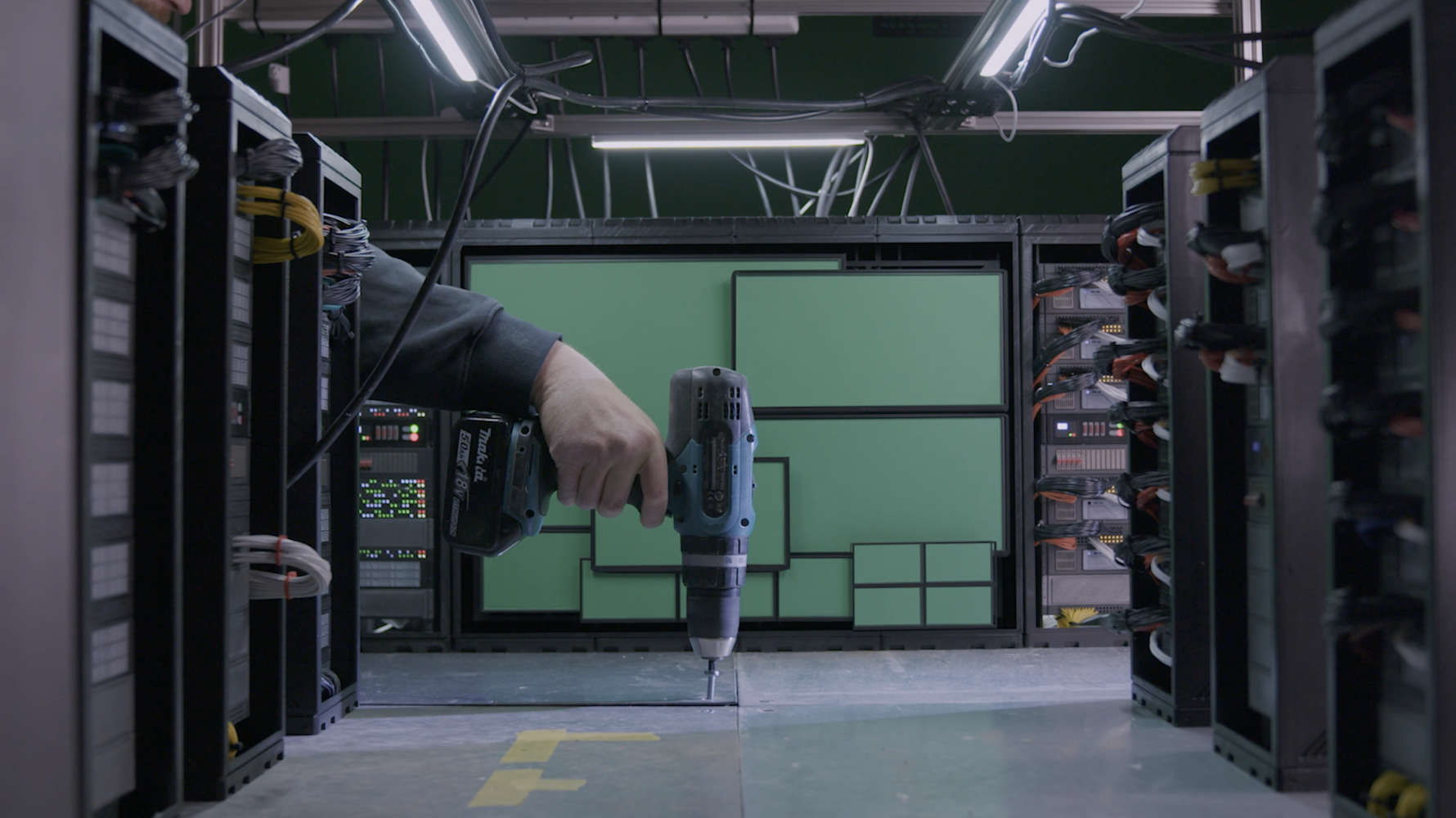
The personal Notes series explores how artists think, feel, and create, as they share what’s been on their minds lately…
Joe Moss is a British artist and trained mosaicist with a practice that spans sculpture and video. He weaves together fictional worlds that rarely meet, high fantasy, literary myth, and Internet culture. In creating these assemblages, traditional mosaic craftsmanship is integrated alongside recycled materials, cardboard, and 3D-printed components. This pull toward invented worlds started early, Moss recalls saving up for a second-hand Nintendo 64 just to play The Legend of Zelda: Ocarina of Time, an experience he describes as a first real portal into another world. Later, he became fascinated by Don Quixote, particularly its exploration of how hard it is to see things as they truly are and of the gap between how we perceive something and what it actually is. That idea has stayed with him, shaping how he approaches making work.
Selected for Bloomberg New Contemporaries in 2023, Moss recently participated in the group exhibition Phantasmagoria: Folkloric Sculpture for the Digital Age at Leeds’ Henry Moore Institute, which runs until 30 August. There, he unveiled Infinite Customisation, a live opening-night performance centred around a modified car, paired with a five-speaker audio piece composed from car-culture soundscapes. gowithYamo sat with Joe to discuss Not Hollows, his latest show at Chemist Gallery in London. We discussed his ongoing interest in drones, exploring how these makeshift mechanical objects occupy a curious middle ground yet are continually perceived by viewers as possessing an inner life.
Your work has a strong pull towards fictional worlds. At what point in your practice did fictional worlds start becoming a recurring territory for you? Maybe there was one you were obsessed with that sparked this journey.
One thing I remember is that I saved up for a Nintendo 64 when I was a kid, bought it second-hand, and played The Legend of Zelda: Ocarina of Time for the first time. I remember being absolutely obsessed. It's an incredible game, still considered quite good now, but I remember it feeling like the first portal into another world – probably one of the most seminal or formative experiences I've had. When I started thinking about fiction as a term was probably around 2019, when I was in the Condition Studio program and became completely obsessed with the book Don Quixote. I did some research into the medical theory of the time, which informs the character's attitude. The book was published in the early 1600s, but you can see its ideas repeated all over the place, in different wrappers. Much of it is about trying to see things as they really are, and how that relates directly to the distance from the thing we're trying to see, and to the interior of a person, how we often treat them similarly in many ways. We might not always say that, but we feel it. Most importantly, it's about how those things are elusive, so that the researcher and Don Quixote eventually opened up for me into a kind of attitude about how I make my work.
Drones have become a fascinating part of your shows. When did you first decide you wanted to pull that apart and really explore what they mean to your art?
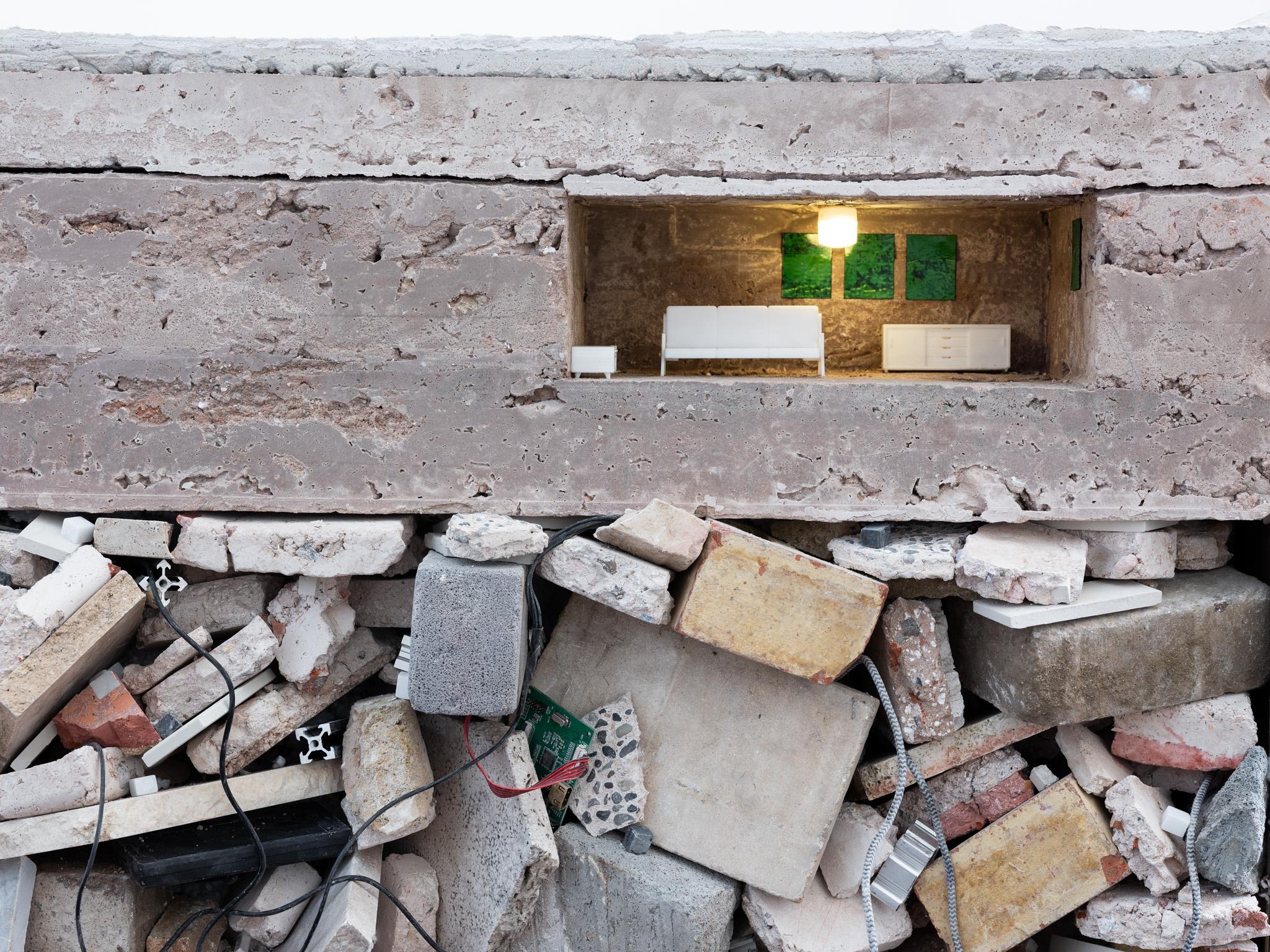
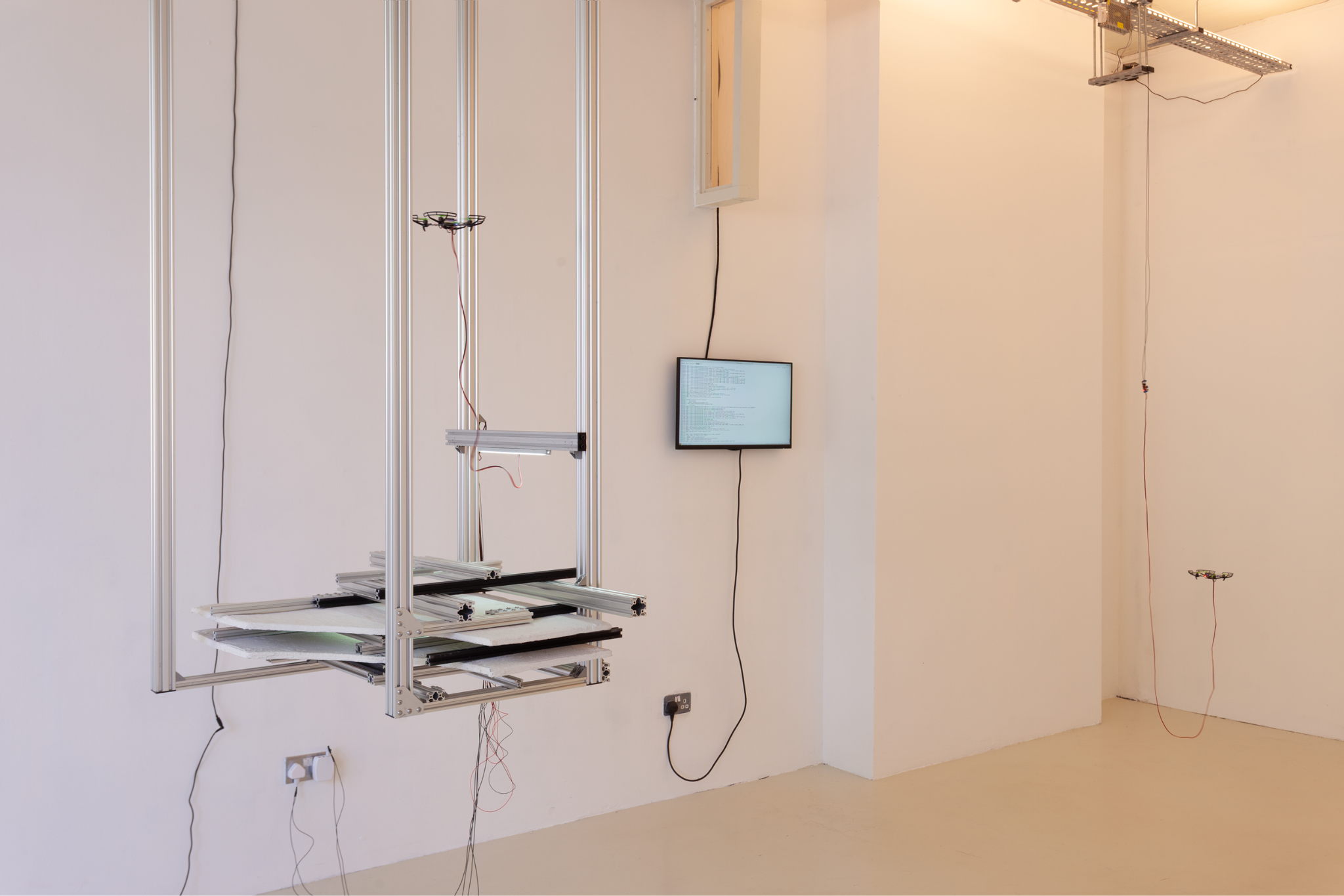
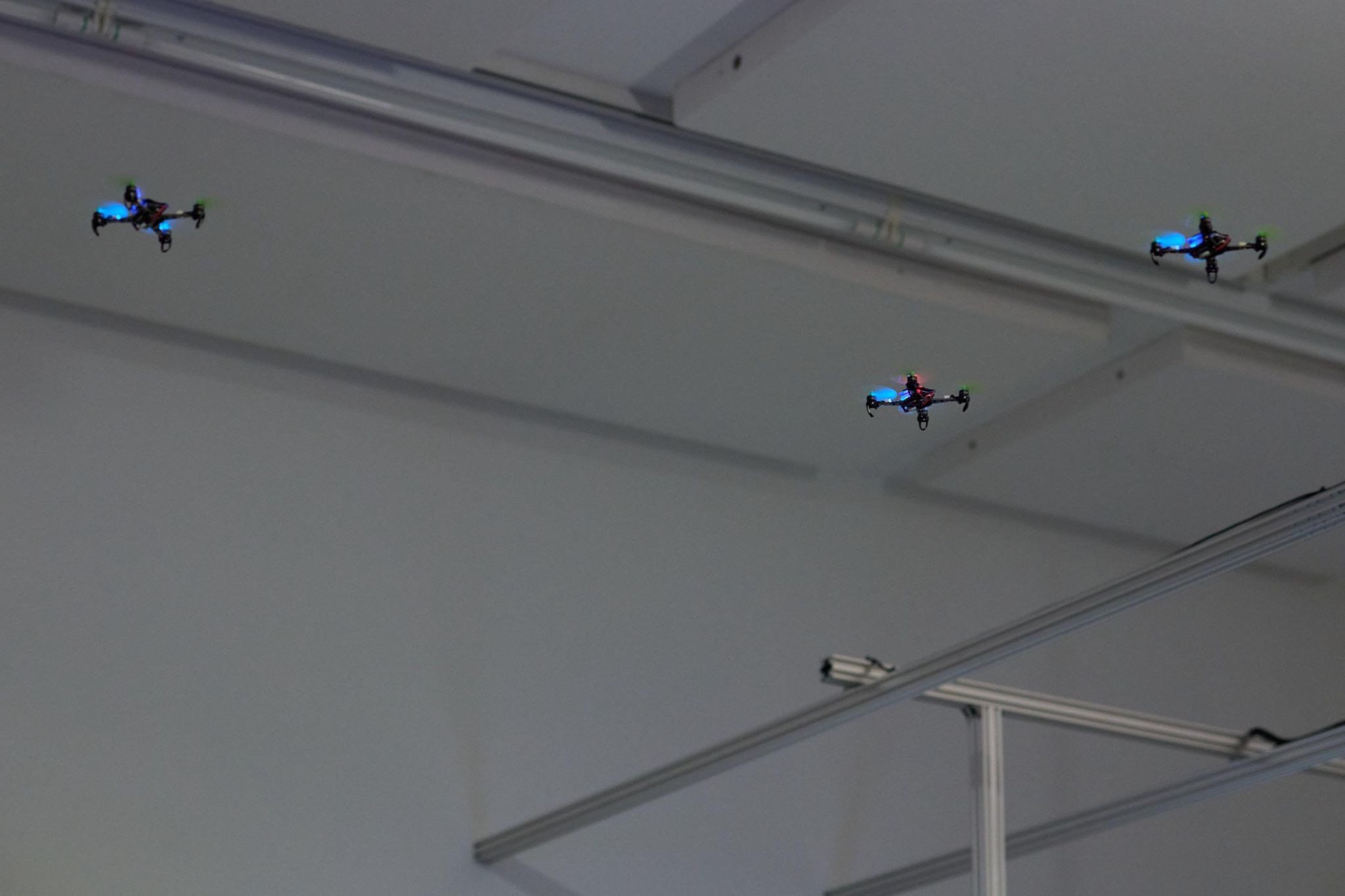
I think drones are really interesting. They have this hybrid status; they're like an object, but also an agent. There's still this temptation to read into a drone as though it has a sense of its own interior. What I've been trying to do with this show is make a scenario where you're tempted to read an interior space into things. These objects are quite provisional, stacked up from different bits of material, but they generate this sense of an interior space. And then there's minor architectural stuff we've done as well: we've tinted the windows the same colour as this architectural element, the lights have the same tint as the windows, so the threshold is the same colour as the light in the room. There's all this pointing towards things that make an interior space.
I think I'm interested in that temptation to read them as human, and that is going to become increasingly more complicated as time goes on and functionality gets added to drones and things like that. When I say interior space, I mean the sort of thing that we feel is us inside ourselves, and I think we ascribe that to drones as well. They have a character, and they sit in a register that is not yet fully defined. They can be cute and make mistakes. In the last show, towards the end, everyone was saying, "Well, they've been going for two months, so they're probably getting tired", but of course, they're not getting tired, because they're little machines with batteries. I think that's what I find interesting about drones.
That notion of hybrid status seems central to how you think about your work. Were there any specific works or references that first pulled you in that direction?
Something I read a few years ago, I was specifically thinking about things that have two statuses at once, or are very complicated in what they are. It's a book called The Vampire Lestat by Anne Rice, which I think is being turned into a TV series now. Jury's out on whether it's going to be good. Anyway, the book is a sequel to Interview with the Vampire, which is very famous. The first book is very melancholy and kind of beautiful. The second book is told from the perspective of this vampire, Lestat, who wakes up in the late 80s, early 90s and wants to become a rock star, a Bon Jovi type, but the band pretends to be vampires, even though he actually is one. It's so cheesy that it becomes trashy, yet it also has all this subtext about morality and performance.
So you're kind of on the edge of knowing whether it's actually just a really trashy novel that's not very good but very fun, or whether it's an absolutely brilliant novel that is doing the thing the plot is already doing, and there's no way of resolving that. It just has this dual status: is it very, very good, or is it merely entertaining? I think that's really interesting. I wouldn't say it's something I put directly into my work. I don't really make work about vampires, though I have. I like the idea that one thing can be two things, or sit right in the middle of two things, and that this is a crucial part of what it is.
Could you tell me a bit more about your love for cars and your collaboration with Yokomuki and Sattire? What do cars represent in your show at the Henry Moore?
I’ve been into cars since I was a teenager, and the collaboration with Yokomoki and Satire was an event for the opening night of the show Phantasmagoria at the Henry Moore Institute in Leeds. The show was about folkloric sculpture for the digital age. The work, Infinite Customisation, consisted of a car, me, and a sound work composed from songs and audio associated with car culture. The visual languages of modified car culture are incredibly advanced, emerging through both online and offline exchanges. I like to think that the car, as a symbol of progress tied to the production line, has now been replaced by these modified cars, which function more like memes.
In the audio work, existing tracks associated with the subculture were disassembled and restructured through different processes, then distributed across five car sound systems. In that way, the cars swap parts and communicate with each other, giving the work this eerie, folkloric quality. It’s a subculture built around speed and progress, with a strongly mimetic quality, and it introduces these incredible objects into spaces outside sculpture institutions. Even so, it still functions as an interruption, and within that interruption all sorts of tensions emerge: the folk and the sacral, the suburban and the urban, fantasy and reality. At the private view, the setup became almost like one fantasy interrupting another.
That, to me, was the true success of the work. A byproduct of that success was that it became quite divisive. You could tell that some people simply could not recognise it as an art event, despite the exhibition's framing. It then becomes a question of faith, what we choose to accept from these cycles of imagery and culture, especially with loud exhausts sounding outside the institution. So yes, I’m very grateful to the Henry Moore Institute for allowing us to do that, for letting that interruption happen, and for giving me the opportunity to work with something I unashamedly love. That was important too.
Is there anything personal that's been on your mind lately that you'd like to share?
I went to Leeds to set up for the show and to film lots of abandoned abbeys with my drone. I was going to use the footage in this show, but I'm not going to now. I'll probably still make something with it. I was really pleased with myself because it was around 8 pm, the sunset was absolutely beautiful, and I found this abbey without a roof, so I could fly the drone and look down through it. You see the church's layout from above. It is shaped like a cross, and as you go up, there's a lake. It was absolutely beautiful, and I was feeling really smug about it. Then I walked back to the car through a field of cows that were really aggressive, and I fell into a pit of cow shit up to my knees. I had to drive four hours home with my shoes and socks off, and my trousers rolled up. Because it was so late, I had to get dinner from a service station, and I walked in looking like a man who had obviously just killed someone. So embarrassing.
I'd been thinking a lot about perspective shift and what drones introduced to visual culture in terms of seeing things from a top-down perspective, which is why I thought it was so interesting to go and film the Abbeys, but also because my grandmother had just died. It was an amazing person and also a very religious Catholic, so I've been thinking a lot about the perspective of a drone looking down and abbeys and distance and sights and our sense of our own interior, all of that stuff, and I think it's all wrapped up in the same thing. I don't quite know what to do with it yet, I think it's territory that will take a lot of thought.