
Marilyn Monroe: A Portrait at the National Portrait Gallery

The most advertised woman of the 20th century, Marilyn Monroe, was flattened into an icon. Like many successful female artists, her work was overshadowed by the public’s interest in her mythology. She is the subject of outlandish political conspiracy theories and cautionary tales. Marilyn Monroe: A Portrait at the National Portrait Gallery is a centenary survey of the photographers who closely collaborated with and photographed Monroe, the conspirators behind Hollywood’s most enduring simulacrum.
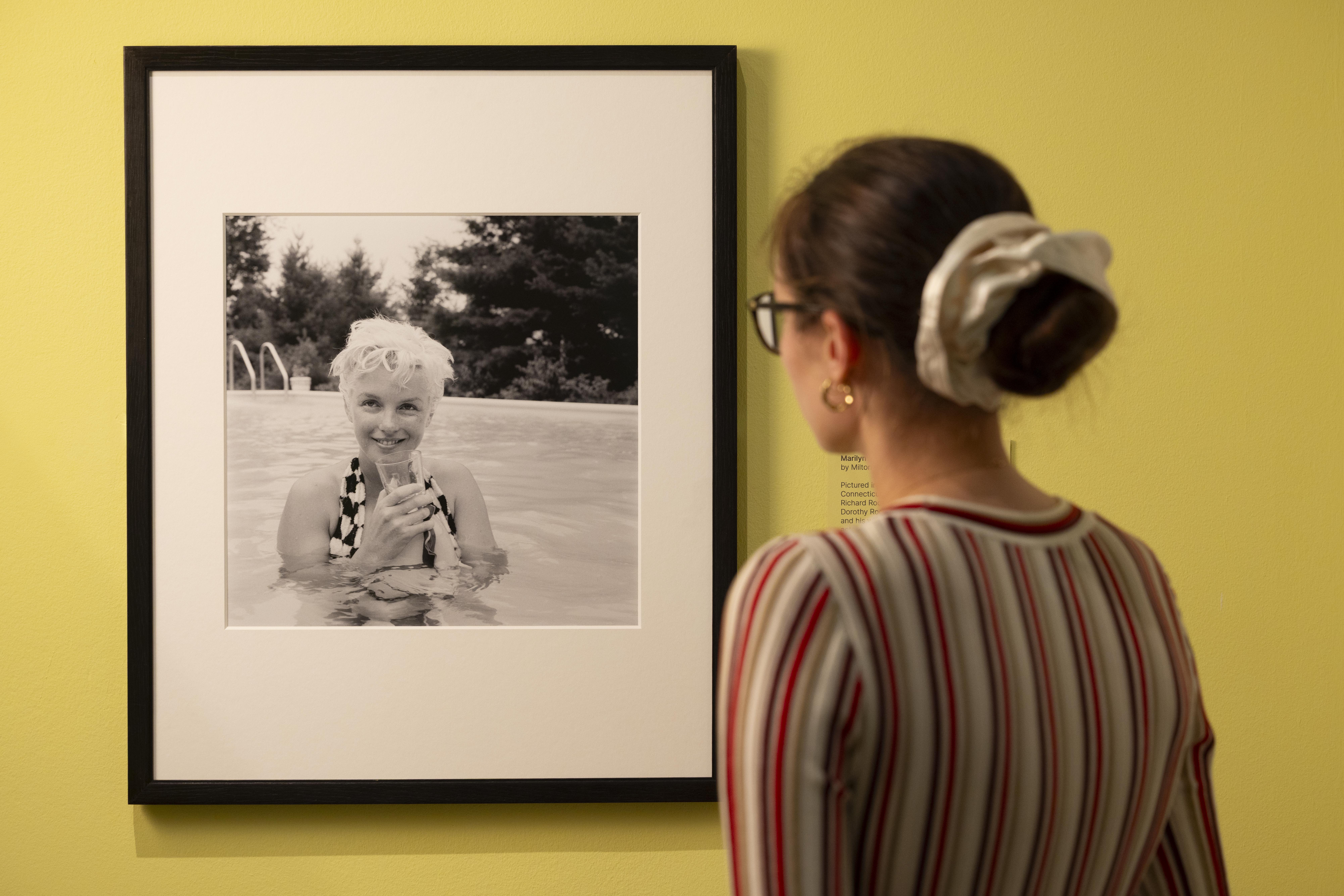
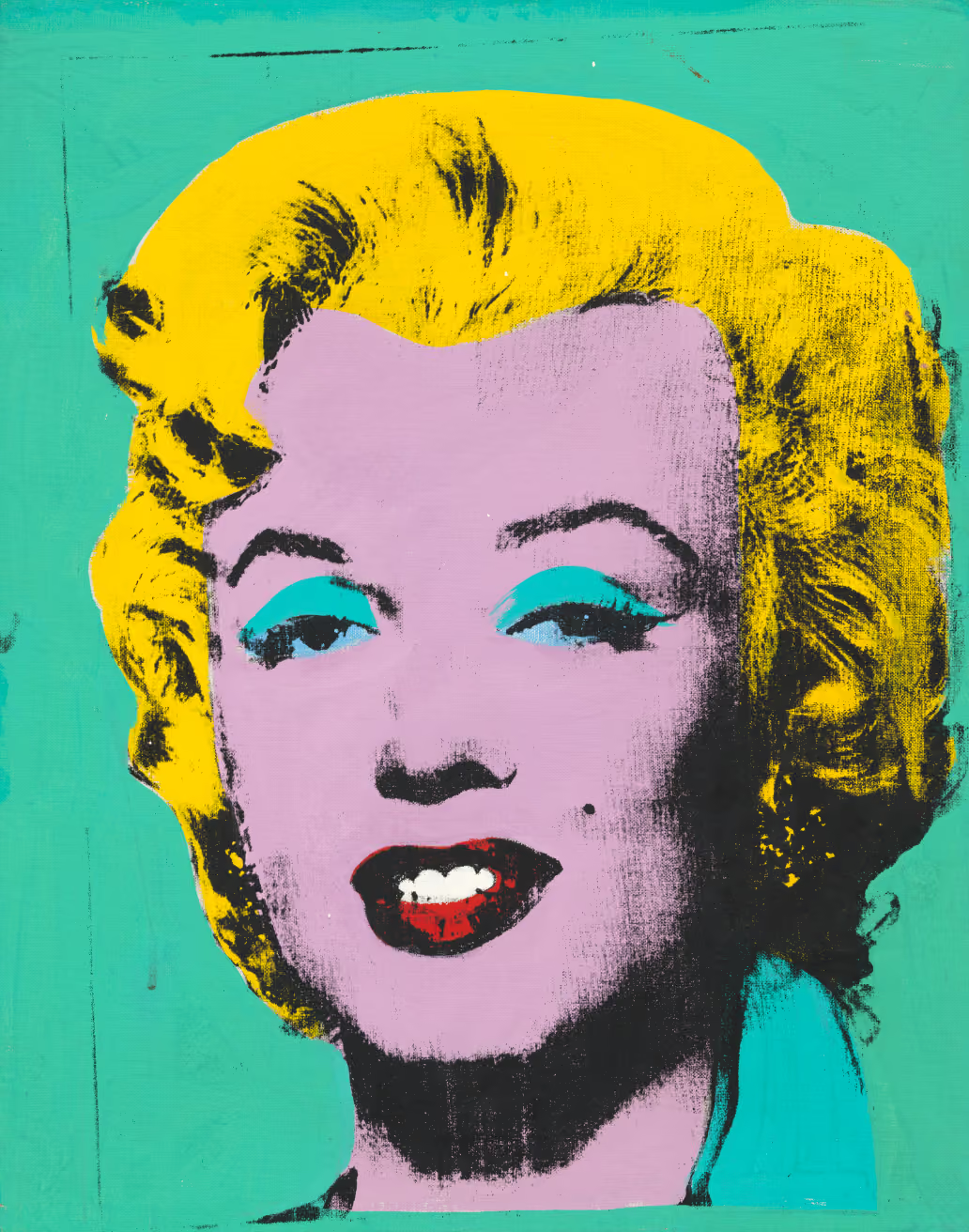
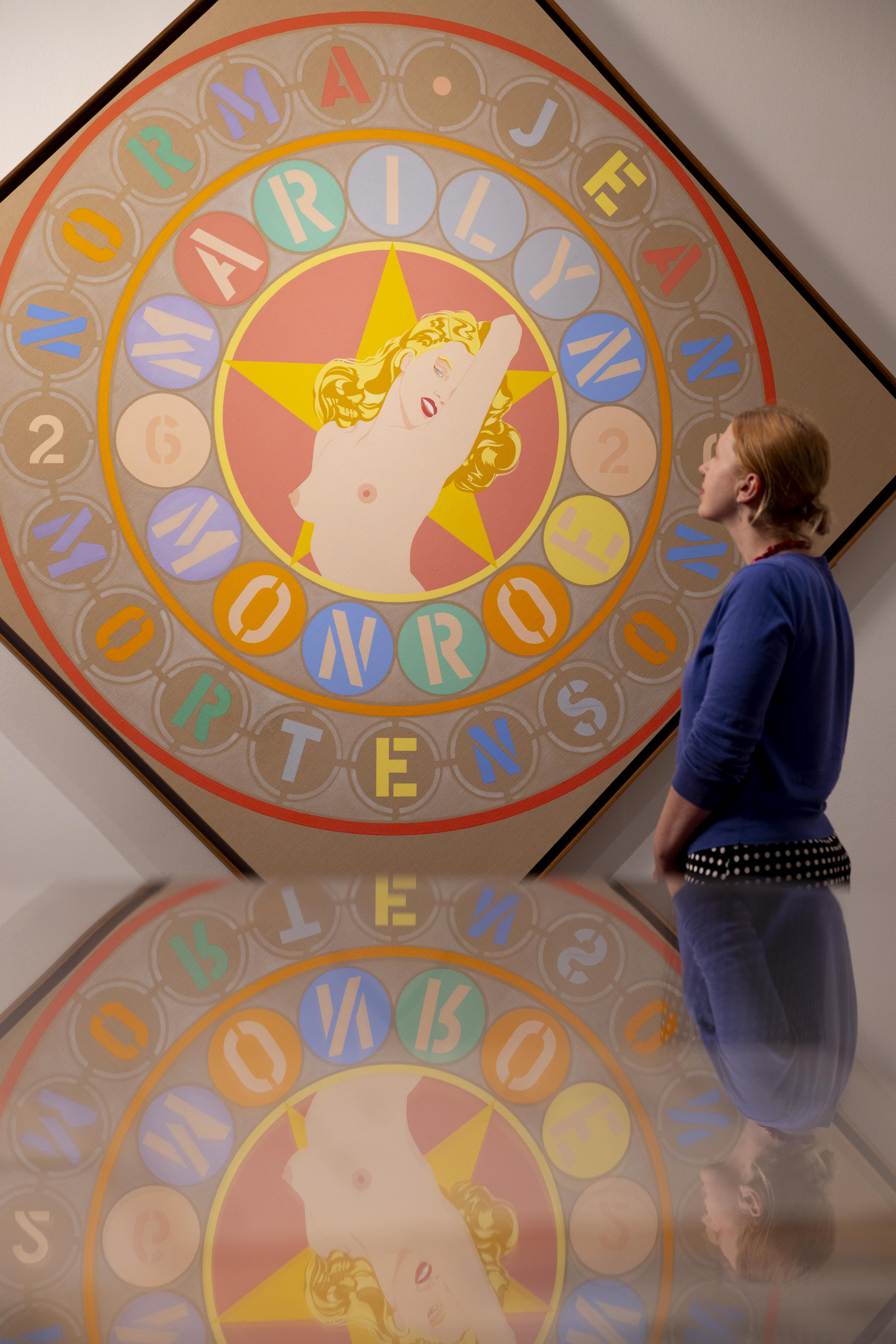
The exhibition opens with a photobooth self-portrait of a teenage Monroe when she was simply Norma Jeane. Donning a straw hat, tweed jacket, and wide smile, Jeane poses playfully, emulating the movie-star studio portraits of the time. This is hung opposite one of the many Warhols in the exhibition. The layout and organisation of the exhibition is slightly perplexing; it’s not chronological, but not entirely non-chronological either. Most of the work is grouped by photographer, while other rooms are organised around themes. You leave the same way you enter the exhibition, which means the gift shop is one of the first things you see when you walk in.
Philippe Halsman is one of the first photographers highlighted. Projected onto the wall are images of Monroe he took as part of his “Jump” series, in which she wears a black beaded dress, bare feet, and folded legs suspended mid-air. It was an ongoing series in which Halsman had celebrities, royals, and politicians jump in front of his camera because he believed it revealed a hidden aspect of their personality. He considered it a psychological tool. Monroe and Halsman collaborated on multiple Life magazine cover shoots together, including her first, which they photographed in her apartment. The selection of images from that shoot includes Monroe lifting dumbbells in a bikini top, at a time when weight training did not align with rigid ideas of femininity and fitness.
I loved the piece Marilyn Monroe as Chairman Mao Zedong (1952), one of her lesser-known roles for sure. Conceived by Halsman and executed by Salvador Dalí, one of Halsman’s portraits of Monroe was superimposed onto a portrait of Mao Zedong, founder of the People’s Republic of China. A visual marriage of Western culture and Communist ideology. This was one of the first, but certainly not the last, times Monroe’s image was used in political artwork as a stand-in symbol for the West.
The exhibition is predominantly photography, with a few films, fashion items, and personal artefacts of Monroe sprinkled throughout, including her film camera, face powder compact, and the silver gown she wore in the 1957 film The Prince and the Showgirl. This was one of the two major motion pictures produced by Monroe’s co-founded Marilyn Monroe Productions, Inc., a production company she started alongside photographer Milton Greene in an effort to secure greater creative control. Three years later, she would win a Golden Globe for her performance in Some Like It Hot.
A running thread throughout the exhibition, and Monroe’s collaborations with photographers, was the vigilant supervision of her own image, scratching out negatives she did not like on contact sheets so they were unusable. Two images from Bert Stern’s The Last Sitting (1962), Monroe’s final formal photoshoot before her death, are displayed. In one image, Monroe drapes a sheer scarf over her topless body, her winged eyeliner and blonde bob the epitome of 1960s glamour. The second photograph has been scratched out with an X drawn by Monroe herself. In this marred image, she is caught mid-blink with beads in her mouth.
For an exhibition that discusses Monroe’s struggle for authority over her career and her intense desire to regain control over her image, what does it mean to exhibit images that the star very clearly did not want seen by the public? How many times do well-intended cautionary tales about women’s struggles for agency perpetuate the very issue they attempt to criticise? The 2022 fictionalised biopic Blonde comes to mind.
Monroe’s beauty is astonishing: the perfect face for the American dream. Eve Arnold is one of the few—perhaps only two—professional female photographers included in the exhibition. Her images of Monroe on the set of the 1961 film The Misfits, written by her then-husband Arthur Miller, feel like a departure from the other photographs. It was Monroe’s last completed film, with a production process rife with health struggles, personal conflicts, and environmental difficulties. Monroe looks like a person trying to get to the end of the workday: present, but somewhere else entirely.

Some of the other standouts in the exhibition for me were the photographs taken by the Monroe Six, a group of devoted teenage fans who tracked her movements around New York. In most of the shots, Monroe is being led through a crowd or into the back seat of a car, but she looks happy. Despite being taken by fans rather than collaborators, these images manage to make her feel more real than many of the others on display. Perhaps it is their caught-off-guard quality and lack of poise. Or maybe it has to do with the gaze of those holding the camera.
Contemporary British artist Alex Morgan Arden had two paintings on display: Condition Report II and Condition Report III (2024). The paintings detail the back seam of the dress Monroe wore when she sang “Happy Birthday” to President Kennedy, before and after Kim Kardashian infamously wore and damaged it at the 2022 Met Gala. This diptych, along with the rest of the exhibition, explores how much one’s legacy is cultivated and protected by those who come after: how we remember, what we perpetuate, and what we choose to frame.
Marilyn Monroe: A Portrait begs the question of how much control one can have over one's own image and legacy as an artist and public figure, more specifically, as a female artist and public figure. Following Monroe’s incredible yet short career and those who documented it, it is difficult not to make connections between her and the starlets of today. Taking place 100 years after Monroe was born, the exhibition allows us to reflect on whether we have treated the ingénues who came after her any better.
