
Jemila Isa's 'Dreams Lost Upon Waking' at Maureen Paley
Please can you tell me about how faith influences your artistic practice?
My practice often centres around religion and the way in which it ties in with the female experience, specifically of women from the African diaspora. Faith is something that I can't escape because it was such a big part of my life growing up. When I first started painting, it was something that I had to work through because much of it was pushed upon me in a really forceful way. I grew up in a household where it wasn't just faith in the traditional sense, but it also mixed with forms of African spirituality. It was very dogmatic. There was a lot of beauty in the ritual of it, but there were also quite sinister aspects.
How does your current exhibition, “Dreams Lost Upon Waking” at Maureen Paley, differ from previous exhibitions?
This show is more personal. Up until this point, my practice has been very faith-centred. Faith is something you can pull so much from, as it encompasses so much. But very recently, I started feeling that I’d like to look at faith as more of a symbol or idea. I'm currently really interested in relationships and the ritual of marriage and weddings. You can't really avoid faith and religion when you're speaking about these things, but I want to move away from focusing so much on Christian marriage and weddings and instead think about the concept in general. Because it is a part of me, my work is always going to incorporate some element of faith, but moving forward, I'm going to approach it in a more abstract way.
The exhibition is based on a dream you had. Please can you tell me about it?
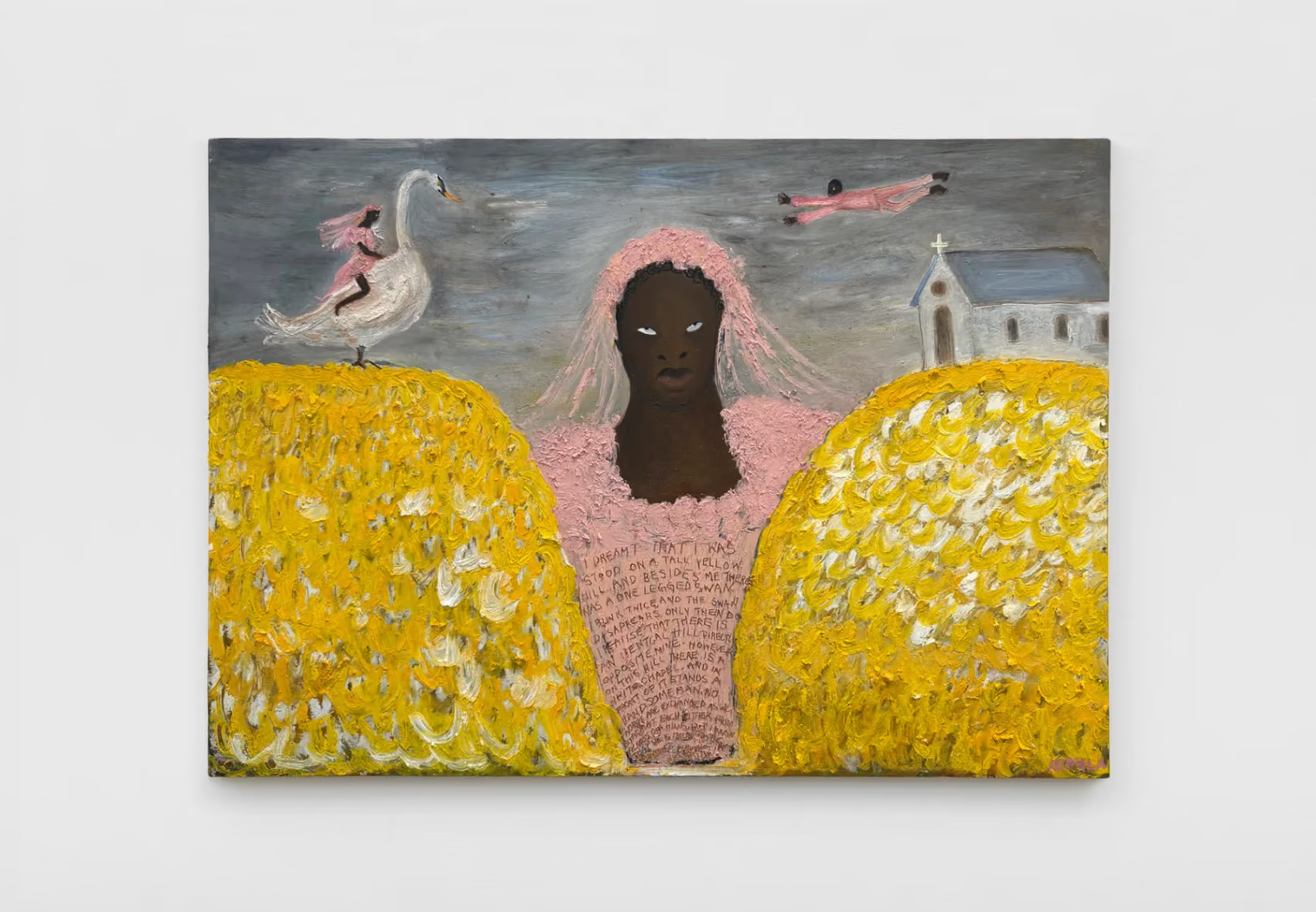
It was a simple but visually striking dream I had about ten years ago. I was stood on a yellow hill, and there was a one-legged swan beside me. I looked across from my hill, and there was another hill, and a man stood beside a chapel. In the dream, it wasn't spoken, but I assumed that we were going to be married. Then I woke up, and that was it, but for whatever reason, it stuck with me. It was so poignant to me that I immediately wrote it down in my phone notes. A work in the show entitled The Dream has the dream written out word for word in it.
Does it also touch on your own experiences of marriage?
At the time of the dream, I hadn't been married yet, so like most people, I held onto certain ideals around marriage. Then, about three years ago, I got married, and then not long after that, I got divorced, so the marriage didn't last very long. Having actually experienced it and come out of the other end, those ideals changed. Those ideas around marriage changed, and that's what the crux of the show is about.
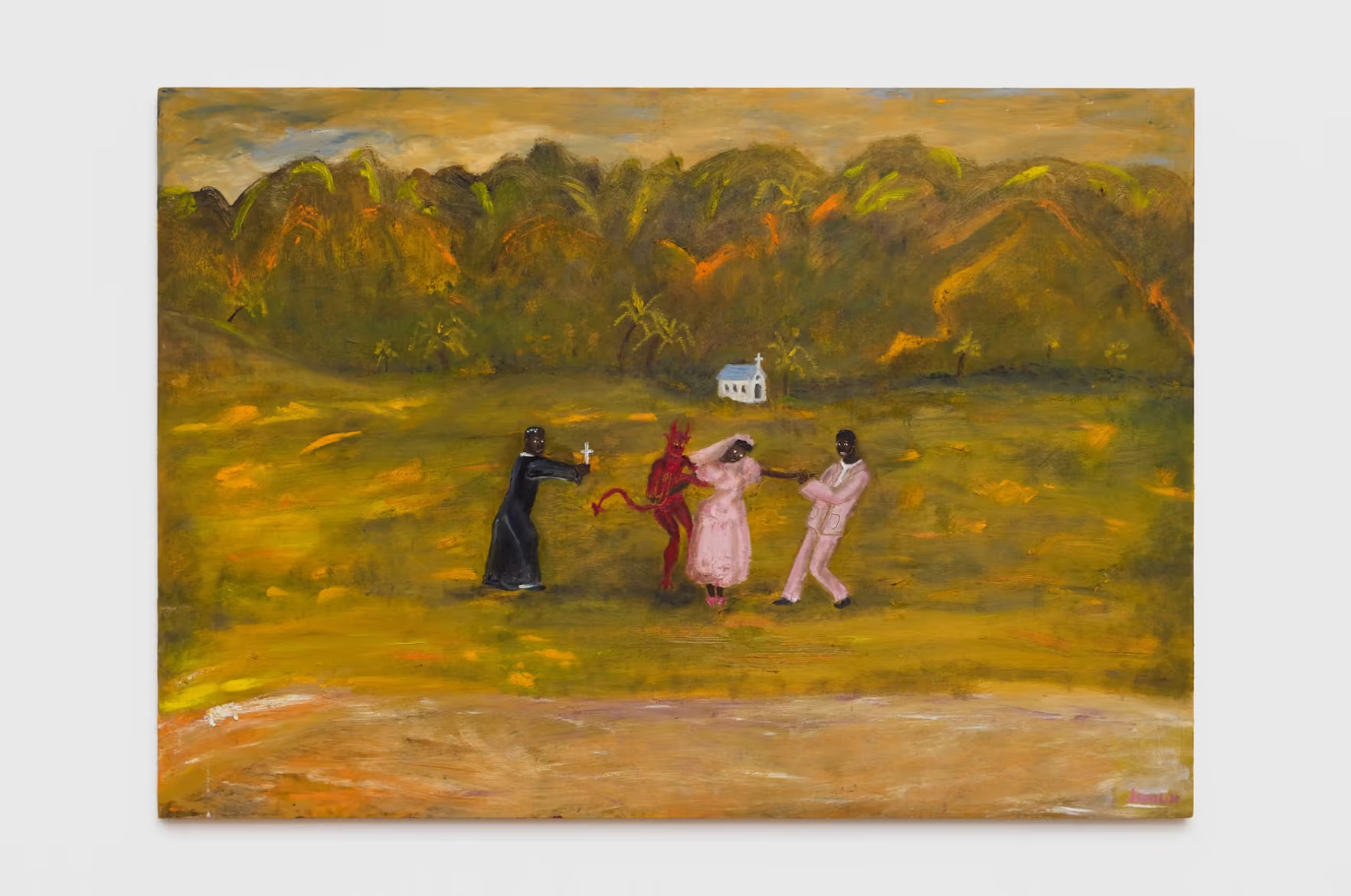
A devil figure features within many of the paintings. What is his significance?
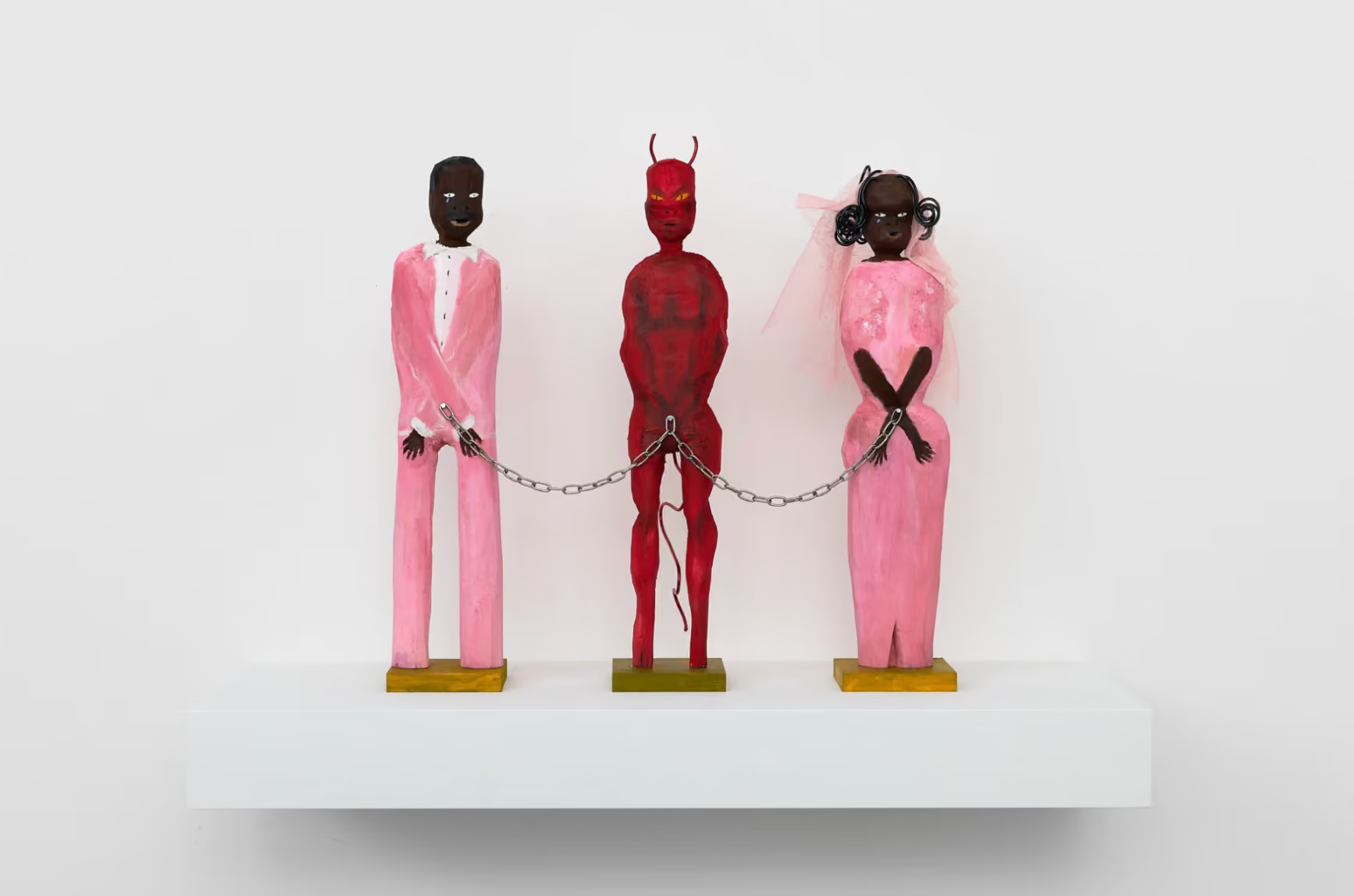
He stands as this camp, an illustrative figure that, on the surface, seems like the bad guy. But in reality, he's there to save. In a way, he's there to break her free from this chain, this thing that she believes she wants, which is marriage and tradition. There's a piece in the exhibition called Emancipation in which the little devil figure ultimately kills the groom. Ultimately, when I was leaving my marriage, I realised that there were a lot of ideas that I had about marriage that were not my own, and it wasn't necessarily something that I even wanted.
I think most women find, after marriage or even a long-term relationship, that it's not necessarily what we're looking for. Sometimes it takes having experienced it to know.
Would you say the incorporation of the devil is quite tongue-in-cheek?
Yes. I was looking at these books from the 1800s that illustrated scenes from the Bible, witchcraft, and the like. They always illustrated the devil in this really funny, cartoonish way. So I took a lot of inspiration from that whilst I was making these paintings, as well as from Haitian art. A lot of Haitian artists depict the devil - not necessarily in red - but in this really menacing, cartoonish way, which I like.
Tell me about your artistic influences.
Alongside Haitian art, I’m really inspired by Retablos, a South American style of art. I'm also a major fan of “outsider art,” specifically from the Deep South of America. Ironically, many of the artists that I like from that genre typically suffered from mental health issues, and a lot of the time it manifests in this sort of religious, fanatical way in their work, which is a tie between us. Black Orpheus (1959) is a film that I had on my mind a lot whilst working on this show. I watched it about a year after I had the dream, and I was struck by how visually similar it was, with the pinks and the yellows used.
Can you tell me about some of your titles, such as Between the Devil and the Deep Blue Sea?
In general conversations, I often use these dated idioms. It's similar to the saying "between a rock and a hard place," but it sounds more poetic. I already had a piece that was titled The Rock and a Hard Place, and obviously, with the devil being in the work, it just made so much sense. But also, when I think of the sea and the colour blue, I think of love and relationships, and how those can sometimes take over us like a wave. So much of the show is about that.
You work in a fairly small-scale environment, why is that?
Small is the scale that I felt most comfortable working in, though I am trying to challenge myself to go a little bit bigger. When I first started, I was working on A5, then went up to A4, and now I think the largest in the show is A1. I like to think of my work like these little snapshots. I approach my painting not as a photograph, because obviously my work is far from photorealistic, but like a snapshot of a moment. Photographs are often small things that we hold in our hands.
Please could you talk about your sculptures?
When I started making them, I just wanted them to flesh out the shows a bit more. I didn't really give them too much thought. Now they're still doing that, because there's often only about one to three sculptures in any given show. I like something about having something three-dimensional in the room that adds this texture.
Do you have a favourite work in the show?
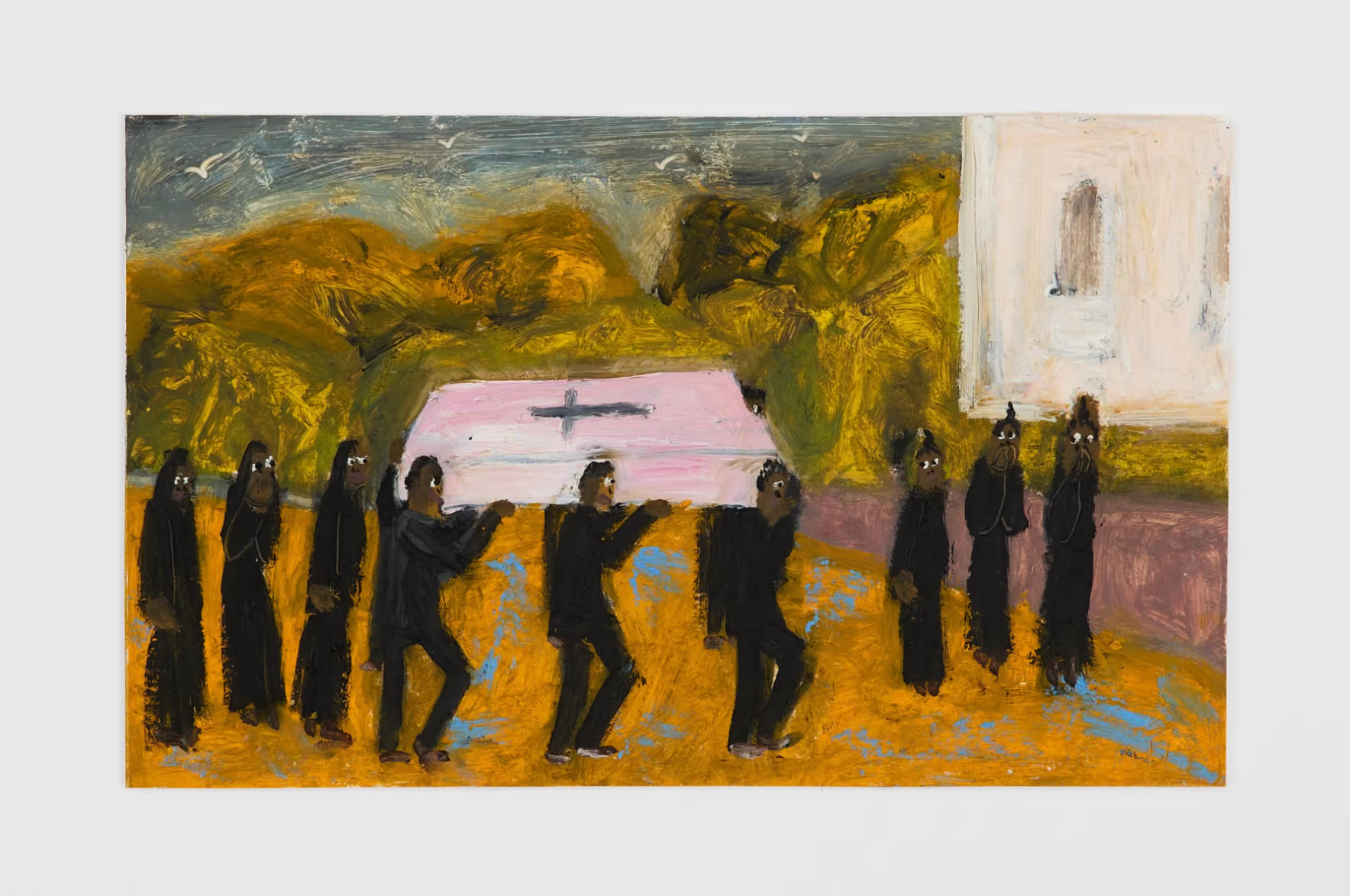
I like the painting Transition, where they're carrying the coffin, and I also like Emancipation, with the groom dead in her arms - she's lying on the floor with him, and the little devils are walking away. I really enjoyed making those two works in particular. Sometimes when you're painting, it can be quite a process. You like it, you don't like it, etc. But with those two, I liked them right away. They just worked and didn’t require much tweaking.
What do you hope that people take away from the exhibition?
I hope they experience something that really touches them, or at least something that visually excites them when they walk in. The show, for me, was really about working through this process of love, marriage, and what it means. I think they’re topics that we can all relate to. Also, maybe somebody who is questioning their relationship, or what relationships mean to them, or what they want them to mean going forward, might have a moment of feeling seen.