
15 Questions with... Camila Barvo

Welcome to 15 Questions With…, an interview series in which art writer Gary Grimes picks the brains of artists, curators and other creatives to understand what makes them tick through a series of quick-fire questions. This series aims to showcase the varying approaches creatives take to making art and how their relationships to the so-called art world differ, but also reveal what unifies those responsible for the art we love.
Camila Barvo is a London-based Colombian artist whose fibre-based practice explores gesture, structure, and material tension through processes including braiding, knotting, and binding. Her Latin American cultural heritage permeates her work, where materials speak as form. Fique, jute, and coffee dyes frequently appear in her pieces, not merely as raw materials, but as living symbols of Colombia’s rich textile legacy, celebrating its material tradition.
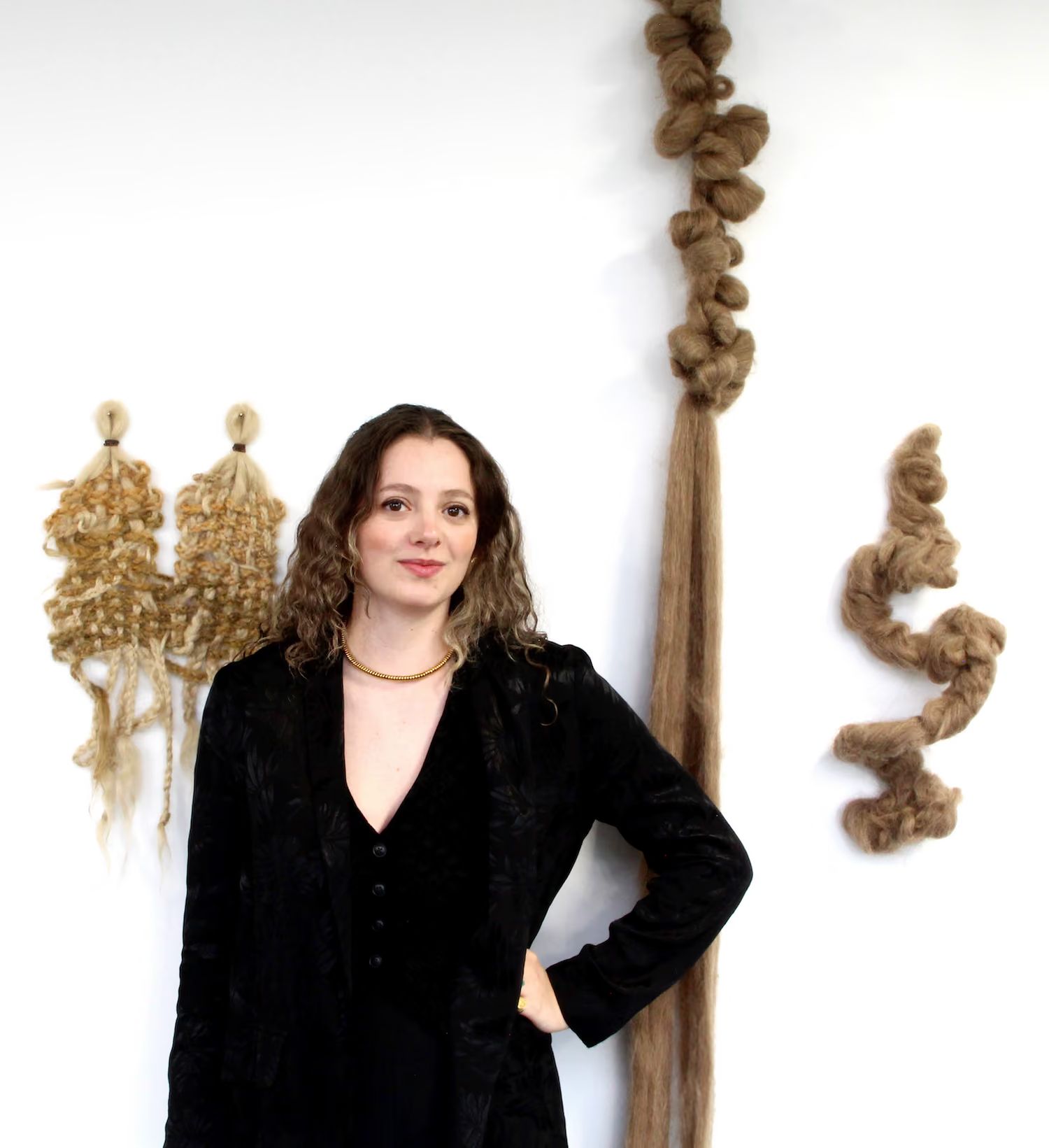
With a background in design from La Universidad de los Andes in Bogotá, she moved to London to pursue her Master’s degree in Textiles at the Royal College of Art, expanding her practice towards fine art sculptural pieces, graduating in 2024. Currently based in the UK, she has been working with local wool fibres to expand her material research. Following her graduation, she was selected as a 2024/25 resident at the Sarabande Foundation, established by Lee Alexander McQueen. This June, she participated in a group exhibition at Hypha Gallery entitled Invasive Species, which is on view through 11 July.
Barvo also collaborated with Wyn Wine to produce and exhibit a number of new sculptures inspired by and incorporating the wine, as well as a series of limited edition bottles, which were on view in an exhibition entitled Entangled at General Assembly during London Gallery Weekend.
1. What is your earliest memory of a work of art?
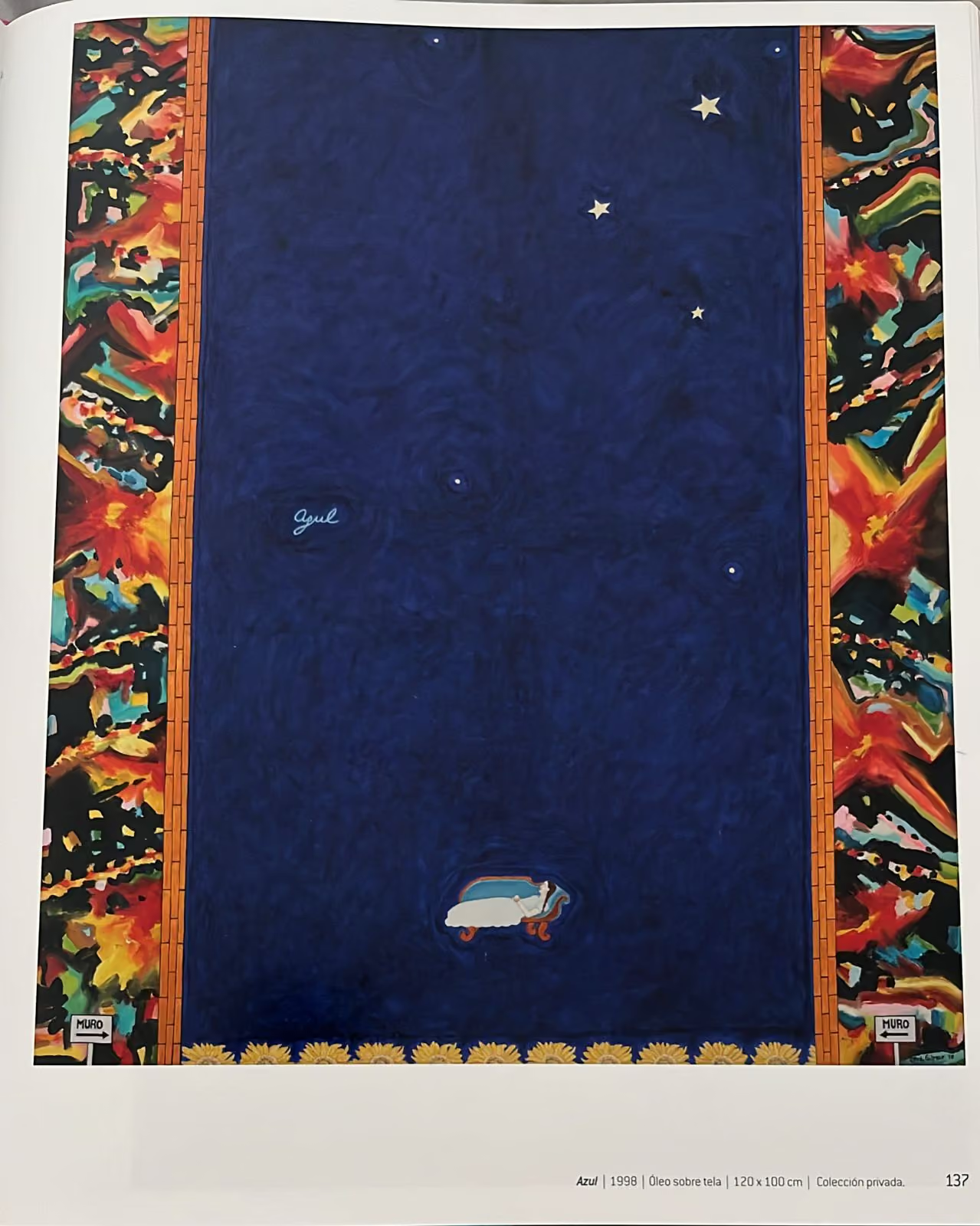
Ethel Gilmour’s ‘Azul’ (1998) painting is about her experience of becoming a Colombian, living in Medellín in the 80s. I saw it as a child and remember being drawn to how present the colour blue is, how the strokes echo the shape of her lying between chaos and how protected she seems.
2. Where do you turn to when you’re in need of inspiration?
Objects saved by my grandparents, and watching trees with huge roots or unexpected entangled growth.
3. What do you like to do when you need to take a break from your practice?
I love to salsa dance, I feel it’s one of the most efficient and fun ways to reset and relax your brain.
4. Who is your favourite artist?
Olga de Amaral. I’ve always admired the way her work simultaneously evolves, challenges and preserves textile mastery.
5. What’s the biggest crime an artist can commit?
Never sharing their work. An artwork comes alive through conversation. If a work of art is never shared, we'll never find out what it ignites in others. I feel that’s what reveals what a piece is truly about.
6. Which gallery or museum should everyone try to visit at least once in their life?
El Claustro de San Agustín (Cloister of Saint Augustine) in Bogotá. I remember one specific exhibition, El Testigo, from the photographer Jesús Abad Colorado. I was deeply touched by the way he could frame an image with such beauty in composition that it revealed the complexity of Colombia as a country.
7. What is the worst thing about the art world?
Textile still being often misconceived as a ‘feminine’ or decorative craft, when it’s really a serious art form that has been commissioned, practised, and mastered over centuries.
8. Whose opinions on art do you actually care about?
Erika Martinez, a curator and professor who taught me at the university in Bogotá. She changed my whole perception of the act of creation in a class called ‘Design as a cultural phenomenon’.
9. Who are the last three musical artists you listened to?
Rawayana, Celia Cruz, and old school Shakira (her songs from the 90s).
10. What’s your favourite colour and why?
Palo rosa / pale pink with a touch of rust. It makes me think of the body, and how beauty can co-exist with the mundane and complex.
11. What three items would you grab if your house was burning down?
‘Des-Hilado’ - the first embroidered piece I made, telling the story of my hair. My journal. And my childhood photo albums.
12. Is there an artistic skill you wish you were better at?
I’d love to know how to play the piano.
13. What can you tell us about your exhibition Invasive Species, currently on view at Hypha Gallery?
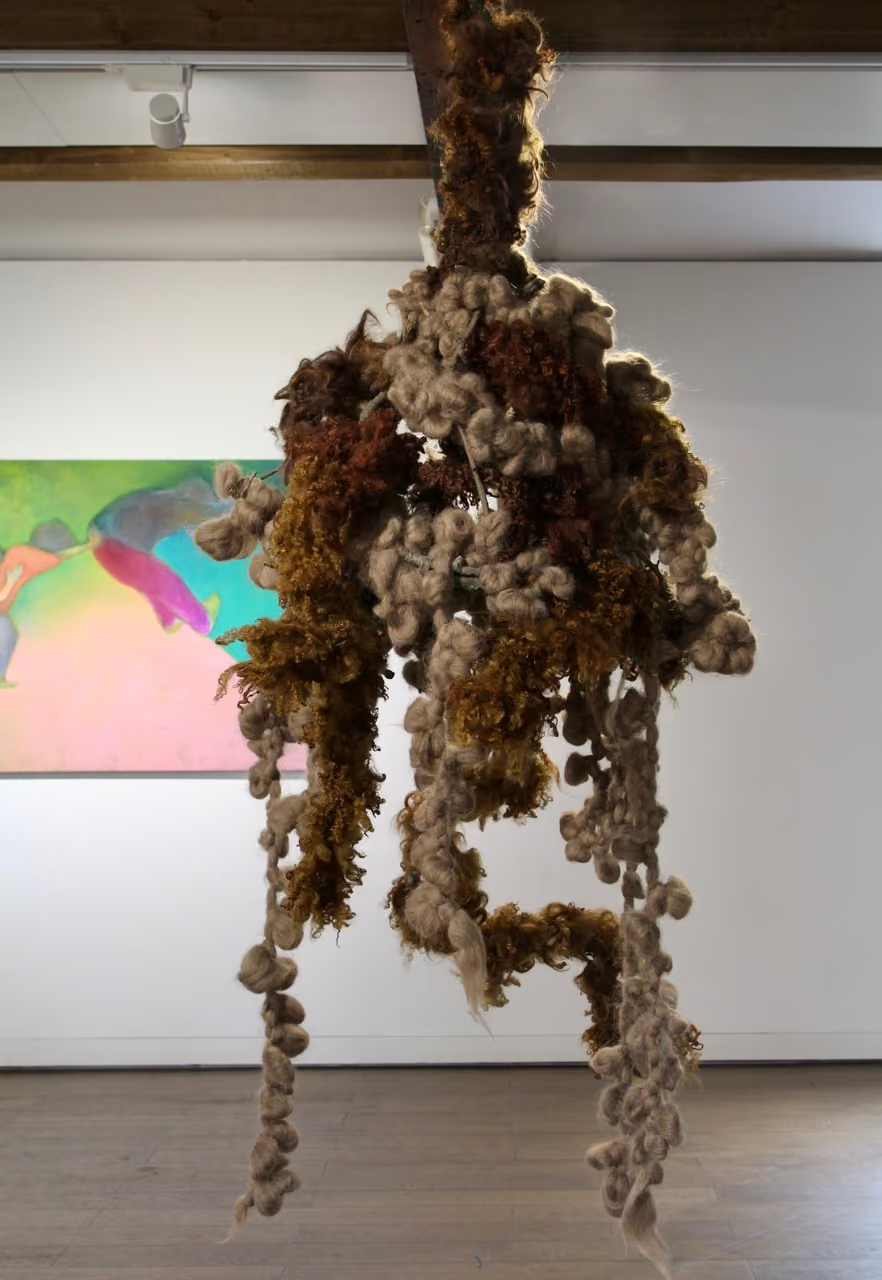
In Invasive Species, I’m exhibiting all the sculptures I’ve made while living in London in the past three years. ‘Gesture Forest’ is an installation made of six suspended wool sculptures, made with everyday hair gestures in repetition, such as knotting, braiding, and stitching. All the sculptures were infused with a scent created by artist Misia’O, so the installation invites viewers to walk through, smell and spend some time within the fibre forest.
14. Which piece in the show took the longest to perfect and why?
‘Woolnest’ (2025) the centrepiece of the installation. I felt the need to create a wool piece that resembled an inverted nest, that felt like a familiar shape in nature, that could capture how fibres and hair can imitate the way in which a plant blooms. It took a while to find the branches and wood pieces that had a certain curved angle that allowed them to be woven into the concave structure. Testing the height of the piece was the most fun. I wanted it to resemble a wig that could be worn, so that visitors could see the piece from within. The process of detaching myself from the piece to allow any interaction to happen was also something that challenged me.
15. How does that work compare to your recent collaboration with Wyn Wine?
A lot of my practice is about how the hand controls, resists against, but also works with natural materials. Since moving to the UK, I started working with local materials and wools. The Wyn commission further expanded this line of enquiry to the vineyard, a relatively nascent English agricultural practice that is inseparable from the sense of locality. I was inspired by the vine forms that I saw there, and also maps of the vineyards situating the site of growth and harvest, but also how human-made materials help guide vine growth over time.
.jpg)
‘El nudo, como la vid, crece en silencio / The knot, as the vine, grows in silence’ (2026) reveals the central idea of the collaboration: how human-made structures in vineyards coexist, negotiate and entangle with natural structures of growth. To create the piece, I was drawn to the idea of a wire structure being silently and patiently engulfed by a grape vine, which is constantly growing.
.jpg)
