
Elvira Dyangani Ose on Project a Black Planet: The Art and Culture of Panafrica, at the Barbican
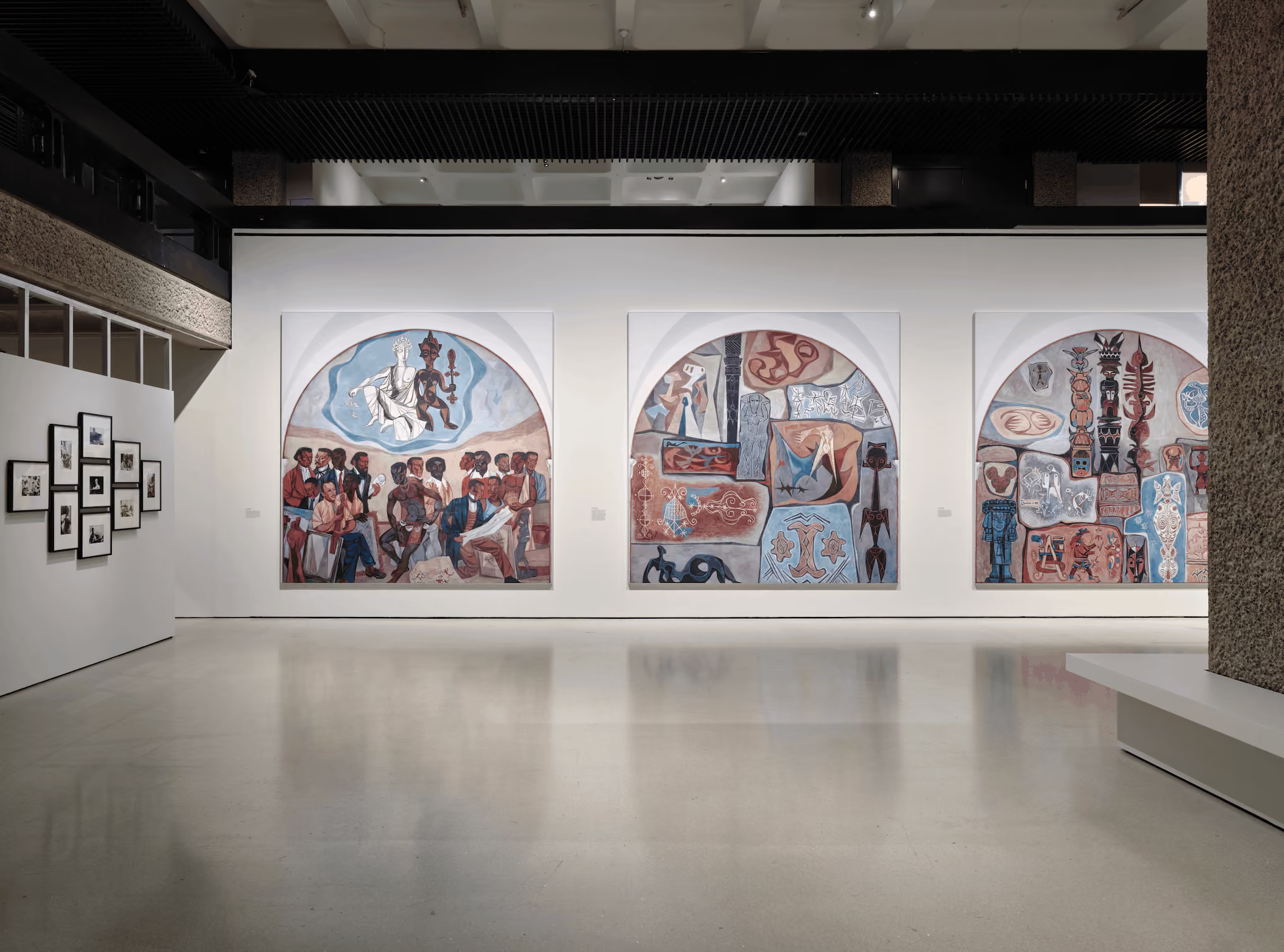
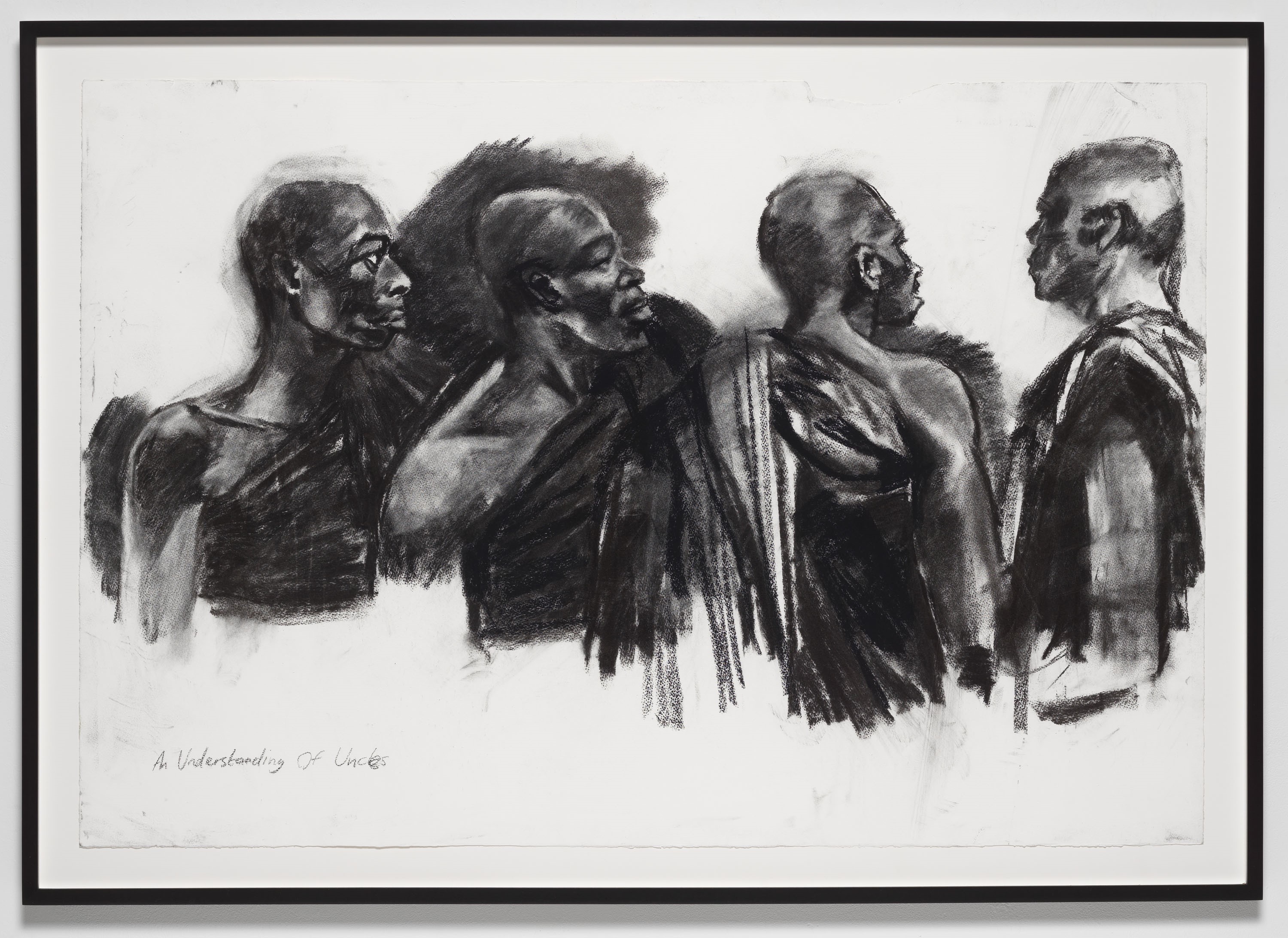
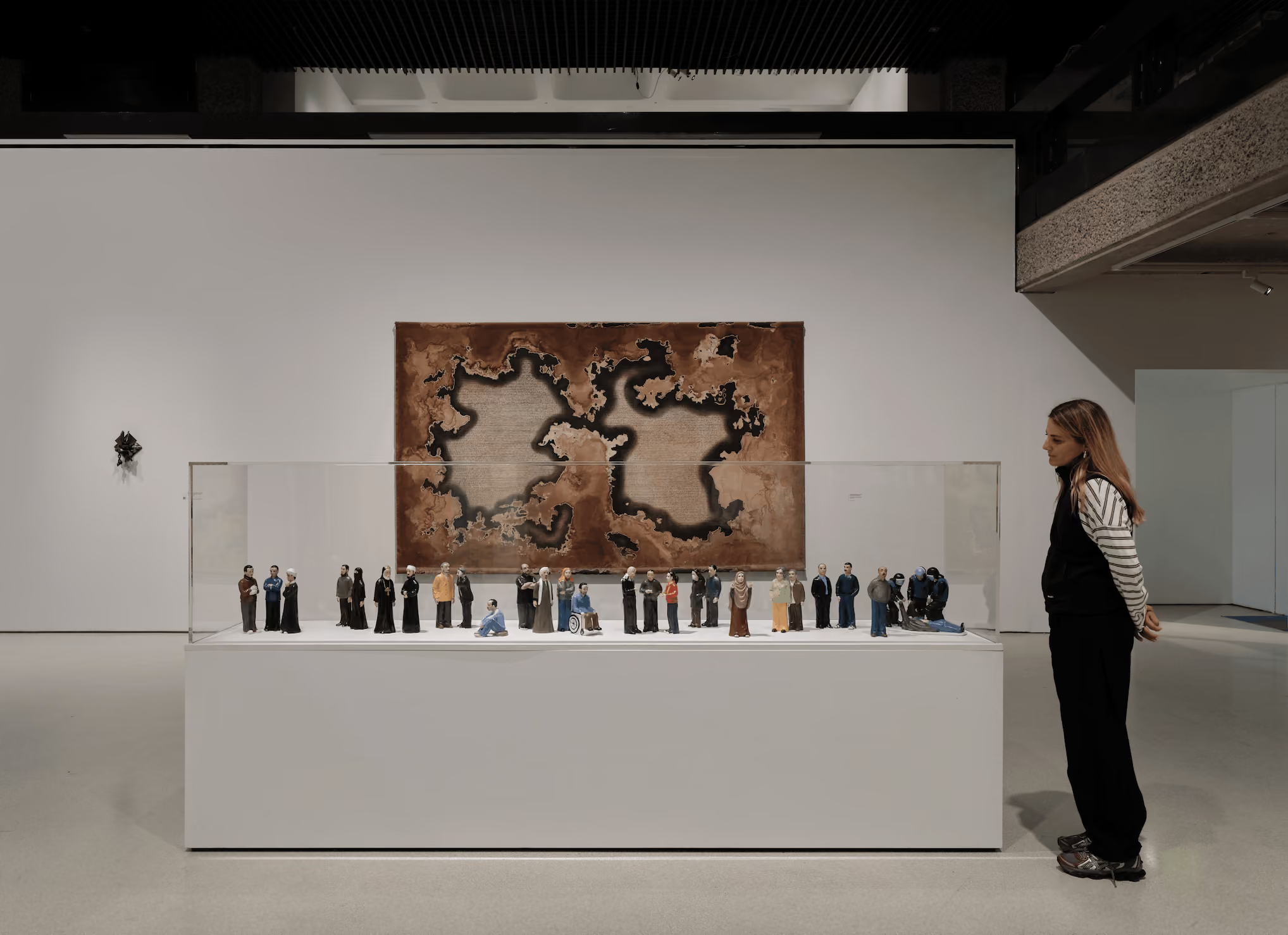
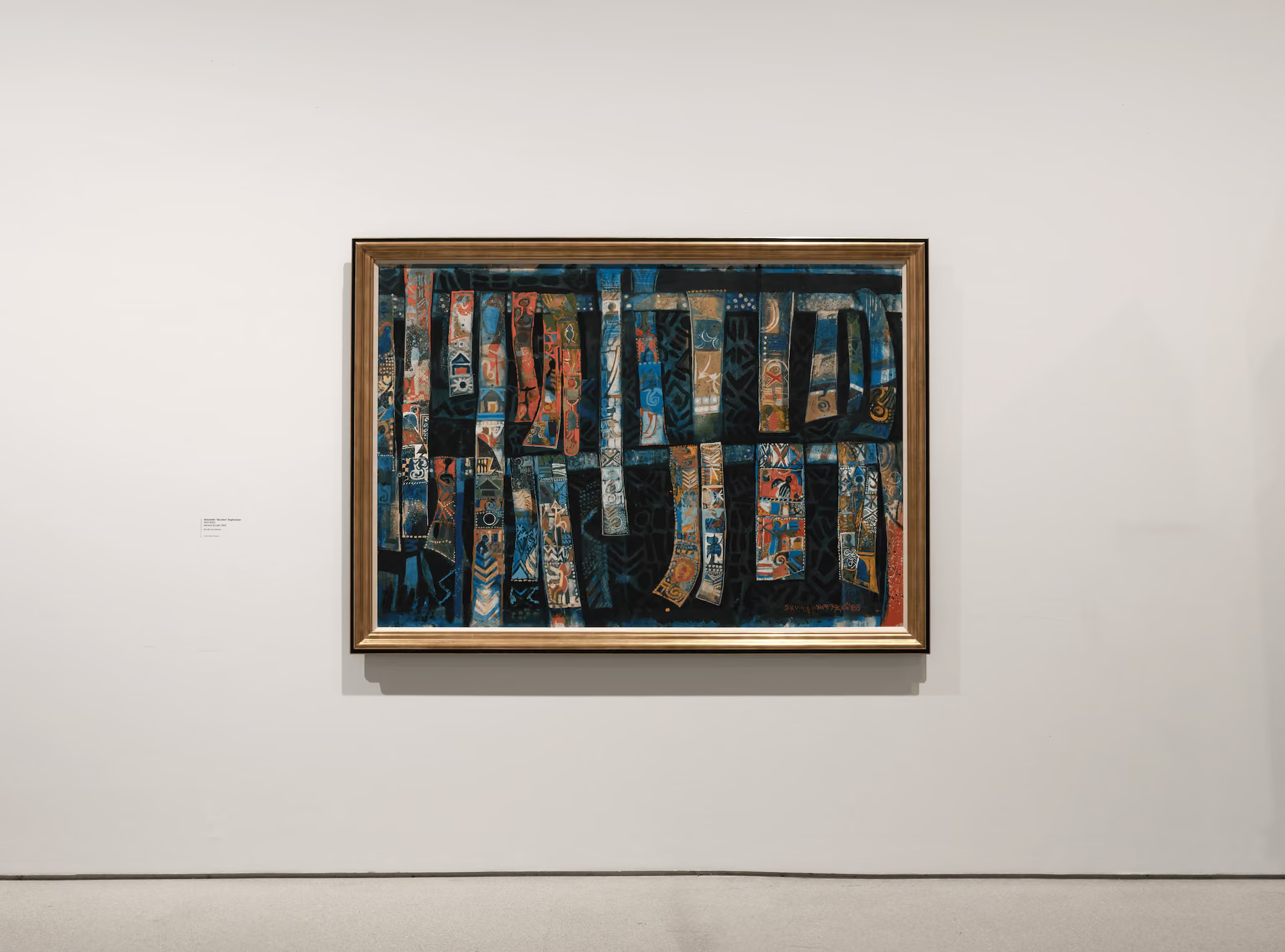
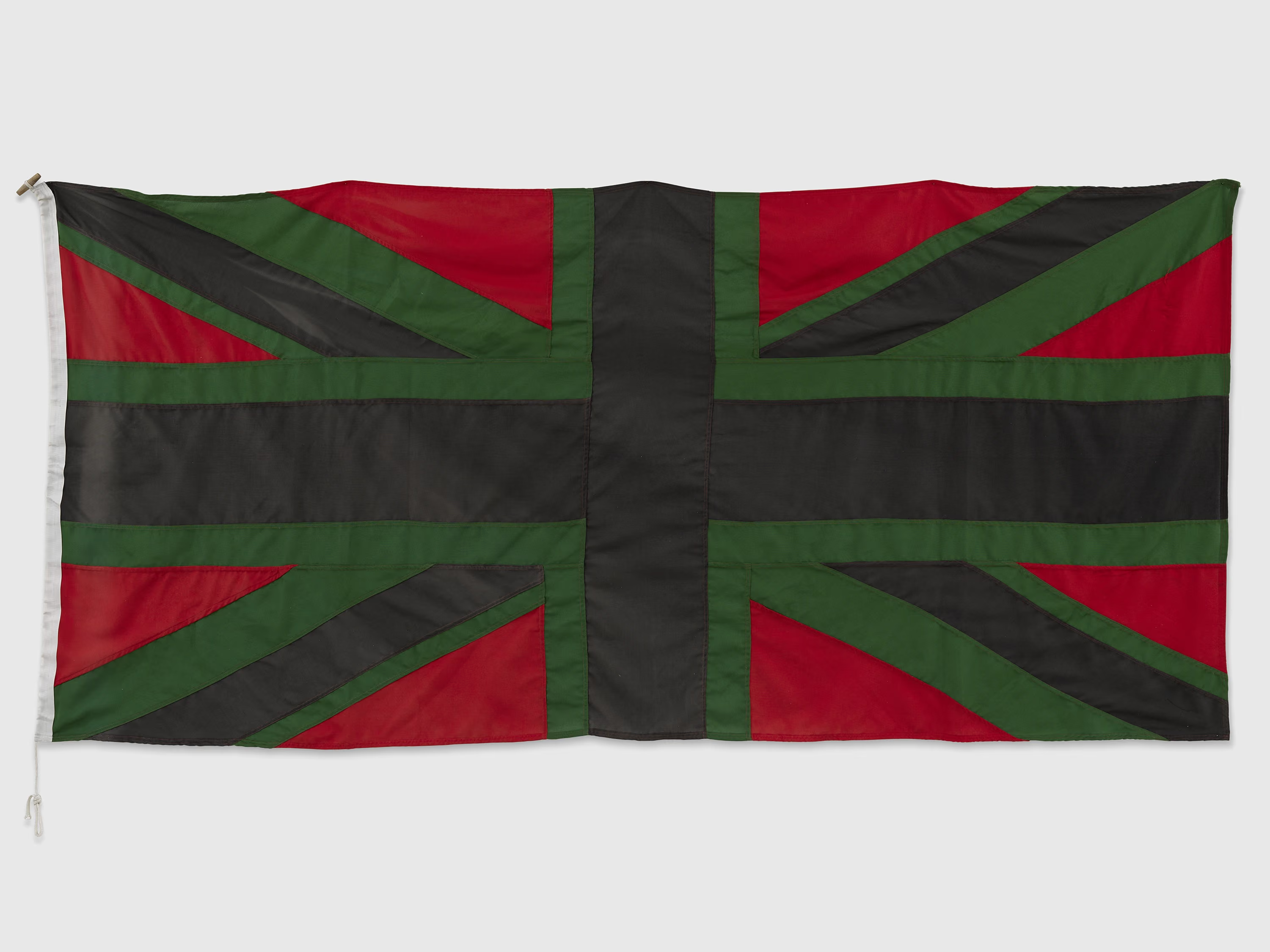
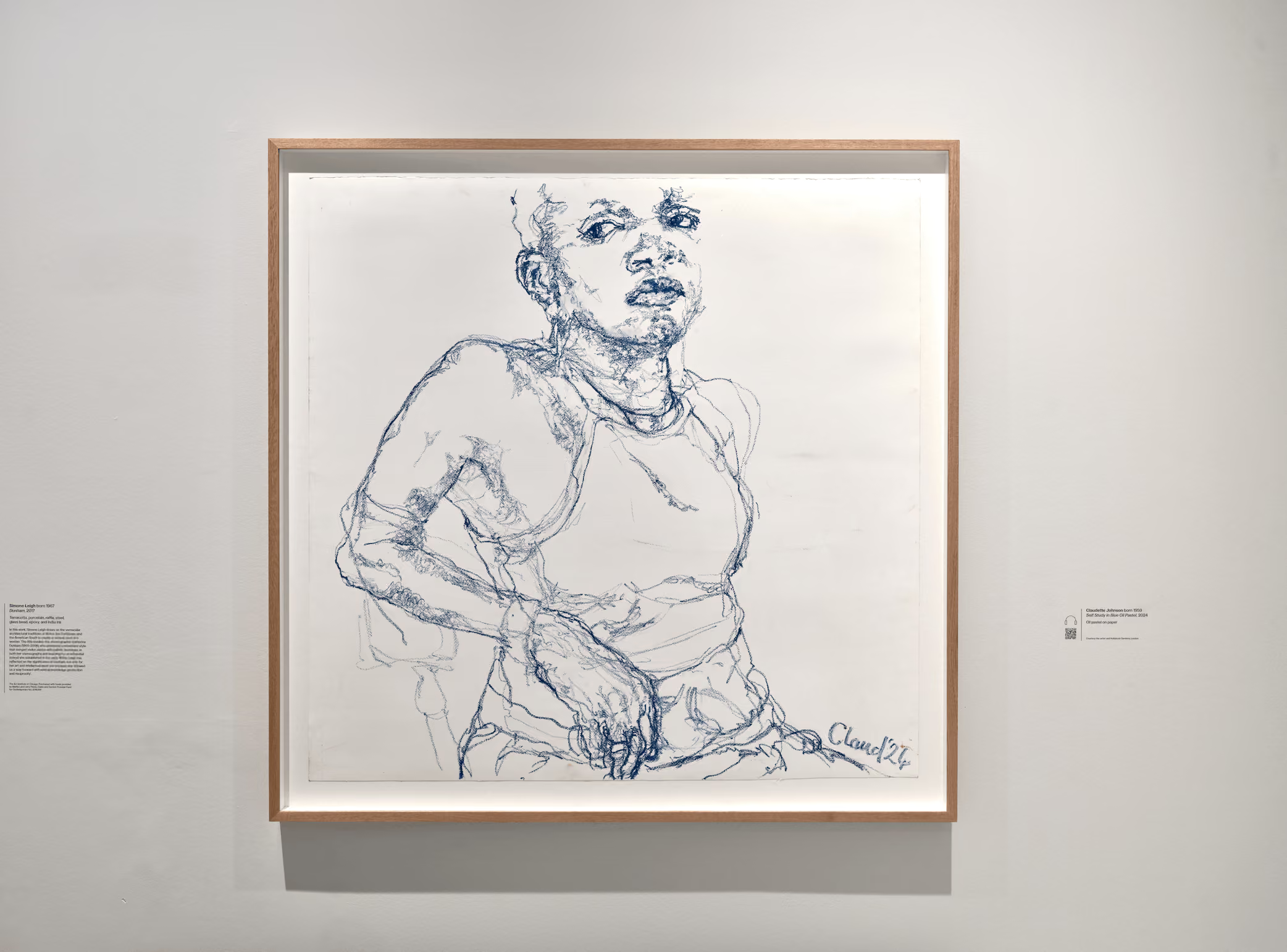
Project a Black Planet: The Art and Culture of Panafrica opened at the Barbican last month. It is the first major exhibition to examine how Pan-Africanism, the movement for solidarity, self-determination and liberation among people of African descent and formerly colonised communities worldwide, shaped visual art and culture across more than a century. Over 300 works by artists including Chris Ofili, Simone Leigh, Claudette Johnson, Lubaina Himid, Ingrid Pollard, Lynette Yiadom-Boakye and Liz Johnson Artur sit alongside posters, pamphlets, journals and film. The show has already travelled from the Art Institute of Chicago to MACBA in Barcelona, and after London moves to Brussels in 2027. Co-curated by Elvira Dyangani Ose, Antawan I. Byrd, Adom Getachew and Matthew S. Witkovsky, it is vast, urgent and long overdue. We sat down with Elvira to talk about what London brings to this story, and she shares her own intimate relationship with it.
Project a Black Planet has been at the Art Institute of Chicago and MACBA, and after London, it goes to Brussels. Each city brings a different history to the work. What does London bring to this show?
London—and the UK more broadly—has a history inseparable from Pan-Africanism. On the one hand, two major Pan-African congresses were held there. In 1900, the first gathering was organised by Trinidadian Henry Sylvester Williams, bringing together the African diaspora, including the North American Anna Julia Cooper and W.E.B. Du Bois, in the first global fight against colonialism. Manchester’s congress in 1945 was for many the vanguard of the African revolution and independence movement against imperialism and colonisation worldwide. Attended by some of the most remarkable politicians who would soon become the leaders of newly established nations, including Jomo Kenyatta and Kwame Nkrumah, as well as activists and community organisers such as Amy Ashwood Garvey, the first spouse of Marcus Garvey and co-founder of the UNIA with him.
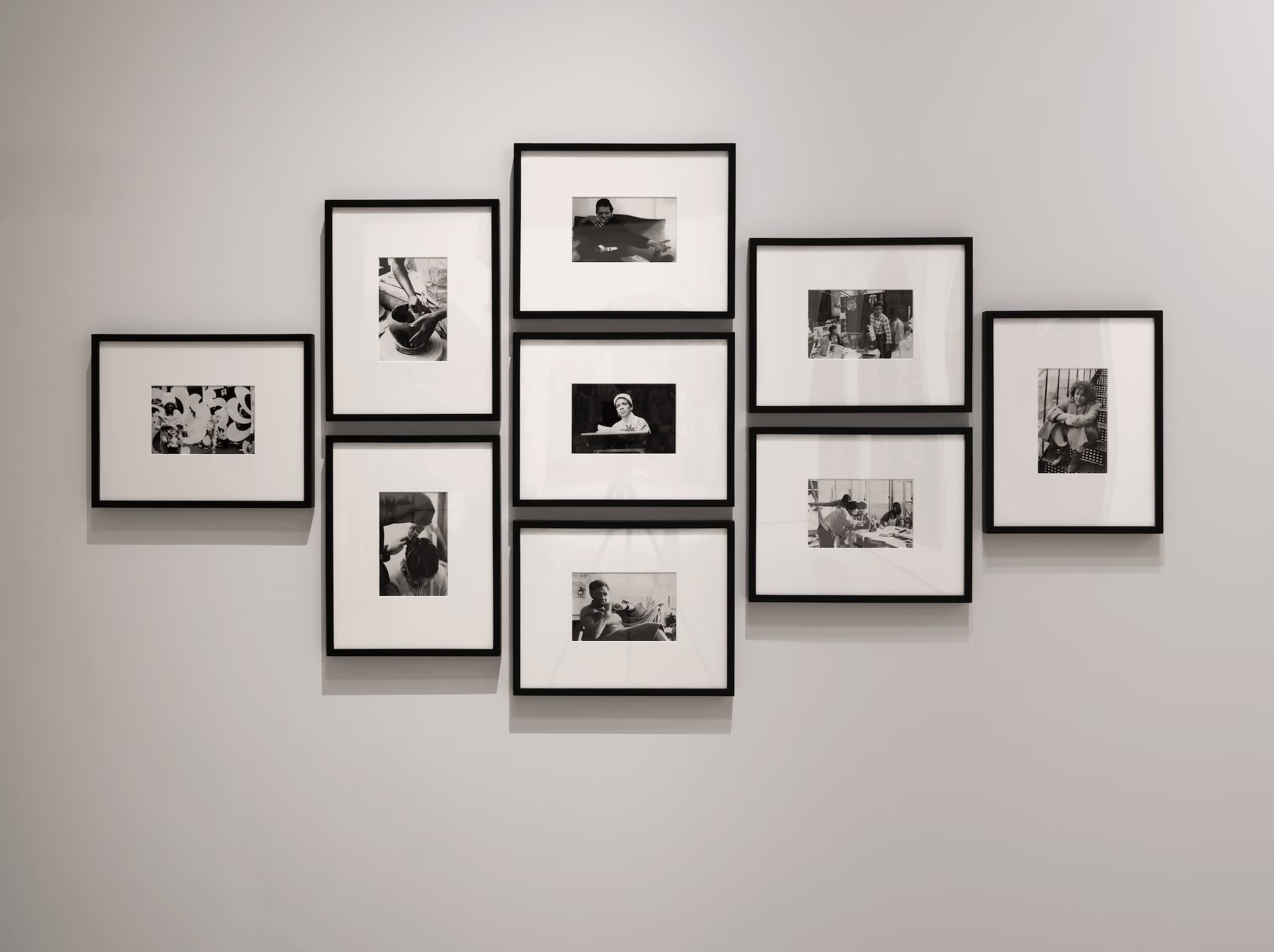
It also carries the history of many Black experiences: the legacy of the Caribbean community, the Windrush generation, the socialist women’s organisations and associations from the 1970s to 1980s, the popular intellectual Claudia Jones, and the Notting Hill Carnival—some of them documented in Ingrid Pollard’s photographs. As well as the Black Manifesto by Rasheed Aareen and its plural understanding of Blackness, the politics of Stuart Hall and A. Sivanandan, and the connection between the struggles for workers' rights and those of postcolonial intellectuals. The Barbican itself sits in a city shaped by these solidarities. What changes, venue by venue, is the perspective from which a transnational, transgeographical, and multitemporal Pan-Africanism is experienced and projected.
The show spans over a century, from the 1920s to now. Over 300 works by artists including Chris Ofili, Simone Leigh, Claudette Johnson, Lubaina Himid, Ingrid Pollard, and Liz Johnson Artur. What holds all these works and their narratives together without them becoming one story?
Pan-African history is fragmented, episodic and complex in terms of social and political imaginaries. We always thought to reflect on the enormous plurality of this history, incorporating for the first time the myriad of aesthetics those thoughts and desires generated. What holds the works together –and by works, I mean, the art, the music, but also the documentary, the ephemera and the printed matter— is not a single narrative but a shared aspiration for an image of the world made otherwise. The show wonders how those forms of aesthetics help us envision a new planetary thinking, as did all those artists, intellectuals, politicians, and, importantly, the people who believed in them. It goes beyond the construct of race as a schematic to unify people of African descent and former colonised communities worldwide in solidarity, communion, self-determination, and self-representation. Posters and pamphlets, poetry and political discourses, alongside painting and sculpture. Garveyism, alongside Négritude and Quilombismo, is explored here not as fixed ideas but as dynamic exchanges across disciplines and geographies. The urgency of their claims feels even more pertinent when paired with gender and queer experiences that have too often been relegated to the margins of Pan-African history. In a cultural moment where these voices face renewed pressure and erasure, bringing them to the surface feels not only relevant but necessary.
.jpg)
Pan-Africanism is described in the exhibition as a conceptual terrain rather than a fixed territory. What did that framing allow you to do that a more geographical framing wouldn’t have?
A geographical or chronological framing would have fixed us in narratives that would almost contradict the very nature of the cultural politics and aesthetics we hoped to capture. Panafrica, the symbolic site invoked in the title, the speculative atemporality that it pursues, appears not as a fixed territory or time, but as a conceptual terrain where rupture, dissent, and collective imagination converge toward emancipatory futures. We can think through Marxism as an understanding of people who want to be liberated from an imposed “us” and create a self-determined narrative with a Pan-humanist agenda. Pan-Africanism has never been only about Africa in the strict sense. It is a politics of imagination — and imagination cannot be contained by borders, not even those of its diaspora.
Léopold Sédar Senghor, the Senegalese poet and philosopher who co-founded the Négritude movement, argued that African art is not decoration but a way of knowing the world. You’ve spoken about how his thinking, as reflected in the writings of Souleymane Bachir Diagne, shaped your approach and how restoring that knowledge-making is essential. What knowledge does Project a Black Planet restore that has been missing from how we understand this part of art history?
As you mention, Souleymane Bachir Diagne sheds a new light on Senghor’s notion of the African modern artist, here to be read as “the artist of yesterday” — akin to Franz Fanon's "native intellectual" — both driven to overcome a colonised psycho-affective disequilibrium, becoming both subject and agent of modern African art. His approach to art is to consider it philosophy, a true mode of knowledge. We need to restore knowledge-making beyond Western notions of reason, which have led to an incredible failure.
There are so many aspects of the history of African art and its diaspora to be restored, as you put it. We hope the project has generated a multitude of entry points to histories, as much as we are aware of the way in which the show is preceded by a lineage of landmark exhibitions in the 1990s and 2000s, engaging with modern and contemporary art of Africa and its diasporas — from Enwezor’s The Short Century to the ÀSÌKÒ multisite, transdisciplinary project initiated by the late curator Bisi Silva. Acknowledging these histories felt essential, as much as some other theoretical milieus that have come to define the role of art and that of the artists in the formulation of this field of cultural production.
Your family is Ndowé, from the coast of Equatorial Guinea, and you were born and raised in Spain. You’ve curated at Tate Modern, led The Showroom in London, and directed MACBA. Where does your own rich story fit within this exhibition?
My personal trajectory is marked by the experiences you discussed above and by the understanding that my household was always larger than the four walls that defined it. The connection, both with my family and with something beyond what we were encountering as a family of four, led by a single mum struggling to develop her vision in Spain of the late 70s and early 80s, was also linked to the history of a country dealing with the disillusionment of the dictatorship. I see some of that failure embedded in the imaginary brought into Lynette Yiadom-Boakye’s works. In the promise of an unfulfilled independence and self-determination –Ghana, in her case— in the realisation of being a half-liberated subject. In that sense, the show was almost cathartic in Barcelona's iteration, particularly as it reflected the perspective of black Spaniards and what it meant to be invisible in the formulation of a collective aim that began after Franco’s dictatorship. I don't think anyone can escape the engagement that exists between one word and the other, between the individual and the collective, when it comes to experiences like ours.
The Barbican has built a packed programme of events around the show. Can you tell us about an element that took on a life of its own during planning—one that expanded your initial expectations—and what you’re most looking forward to seeing happen?
Barbican is in an incredible position to unfold a programme that accompanies, as has happened in Chicago and Barcelona, across the city. Here, on one side, the audience is coming to London and will engage with elements that the exhibition itself cannot deliver. From June to September, more than 50 events across arts, cinema, music, performance, and talks will definitely bring the richness of the artistic world, thinkers, filmmakers, and communities, contemporary and historical, from across the continent and the diaspora.
To me, the most important aspect of these is that, as you said, what I think took a life of its own is the whole programme. Creative collaborations where you can see that there is a sense of eagerness to bring together the liveness, the lightness of the black experience in the city, into the Barbican. In that respect, I want to, of course, thank all the colleagues across all the departments, including the Visual Arts team, but more specifically Karena Johnson and her team, who have developed an incredible series exploring the idea of reasoning about what community is. Carnival, political demonstrations and popular movements become the aesthetic expression of progress and transformation — when the agency of the crowd pushes toward change through the simple fact of being together for a cause. This is significant, particularly in the history of the UK, where parts of its community continue to struggle for self-determination and political representation within the larger society.
What do you want someone who has never thought about Pan-Africanism to feel when leaving?
The spirit of people who understood the possibility of a new world arising — people who lost the battle against fascism but kept imagining otherwise — is very much alive in what we’re doing now, in opposing the most recent rise of fascism across the world. I want someone to leave understanding that Pan-Africanism was never only a Black story, even if it was rooted in Black experience. It was — it is — a vision of what the planet could be if we insisted on solidarity over hierarchy, on self-determination over imposed categories. And I want them to feel the continuity. This exhibition takes the first Pan-African Congress of the 1900s as its starting point to explore the concept of Pan-Africanism as a cultural and political movement capable of offering an alternative vision to world-making. More than a century later, that alternative is still being built. The artists in these rooms have been doing that work all along. I want people to leave knowing that — and feeling some responsibility toward it.
Project a Black Planet: The Art and Culture of Panafrica is showing at the Barbican Art Gallery, Silk Street, London EC2Y 8DS until 6 September 2026. Tickets from £20.50. Pay What You Can every Thursday, 5 to 8pm and Friday 10am to 12pm.
Don't forget to check in and leave your review on the gowithYamo app!