Personal Notes #7: Jack Scollard, Cruising Archaeology, A Catalogue of Pleasure
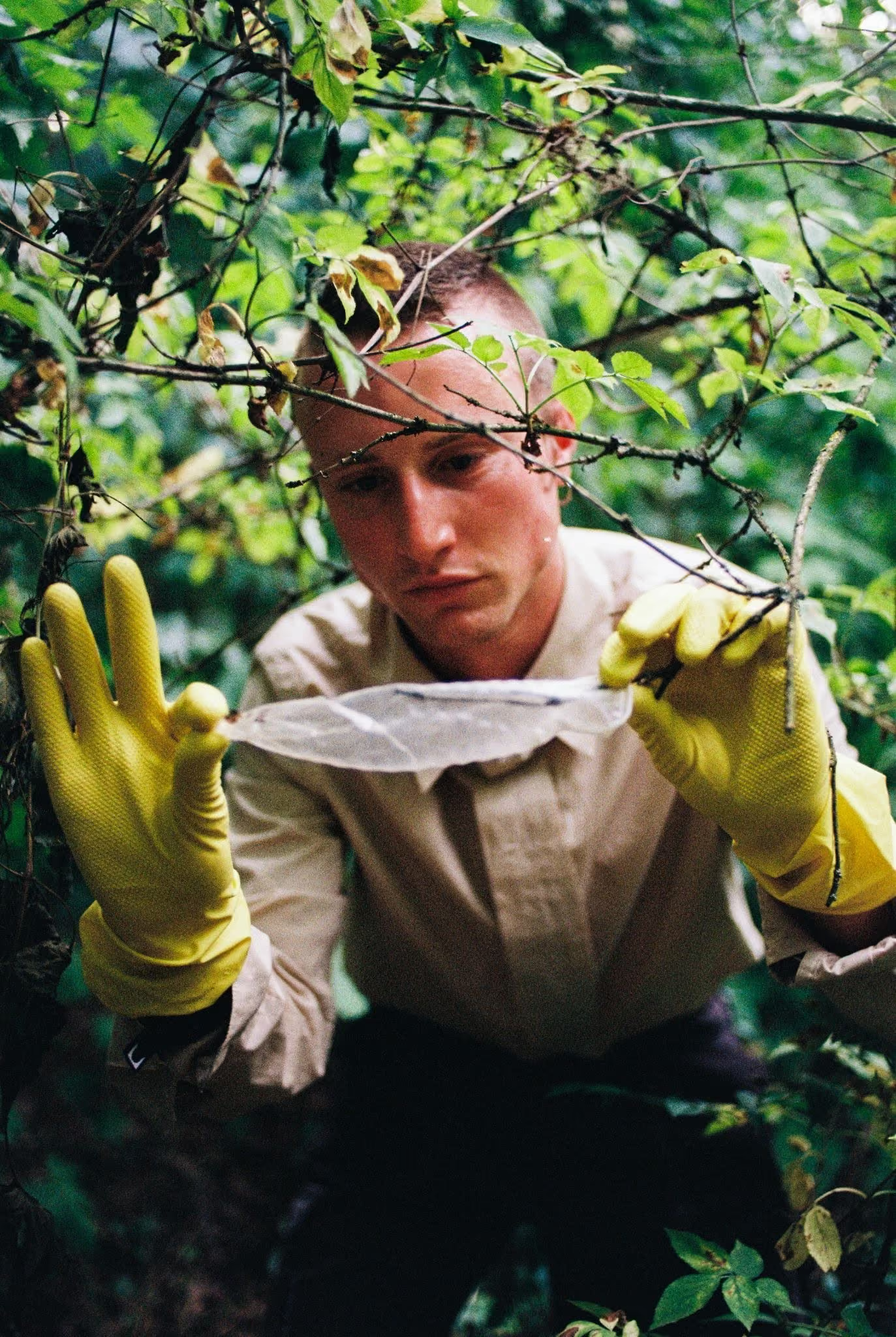
Cruising Archaeology began with condom wrappers spotted at a local cruising site, scanned and stored in a laptop folder, before Jack Scollard thought to upload them to an Instagram account. What started as a personal habit, sat with for ages before it had a name, has since grown into two photobooks and now a physical exhibition, The Pleasure Archive Research Centre, at Studio Voltaire until 5 July. There, the found objects return not as themselves, cast in Jesmonite, white and uniform, stripped of their labels and owners. In this chapter, we spoke to Jack about collecting without judgment, the ethics of authorship, and sitting with the unknown stories behind every object left behind.
How did your interest in collecting objects at cruising spots start?
There's a cruising area near my house. That is also a nude sunbathing area, so people would just go there to hang out. I was really fascinated by the emotional attachment people had to this area, which I also developed over time. I started to notice some of the condom wrappers. I guess the reason that I became interested in collecting the artefacts was that cruising is a seasonal activity. It doesn't happen so much when it's wet or cold. These kinds of objects left behind become the only signifier of a place being used for cruising when no people are actually cruising there.
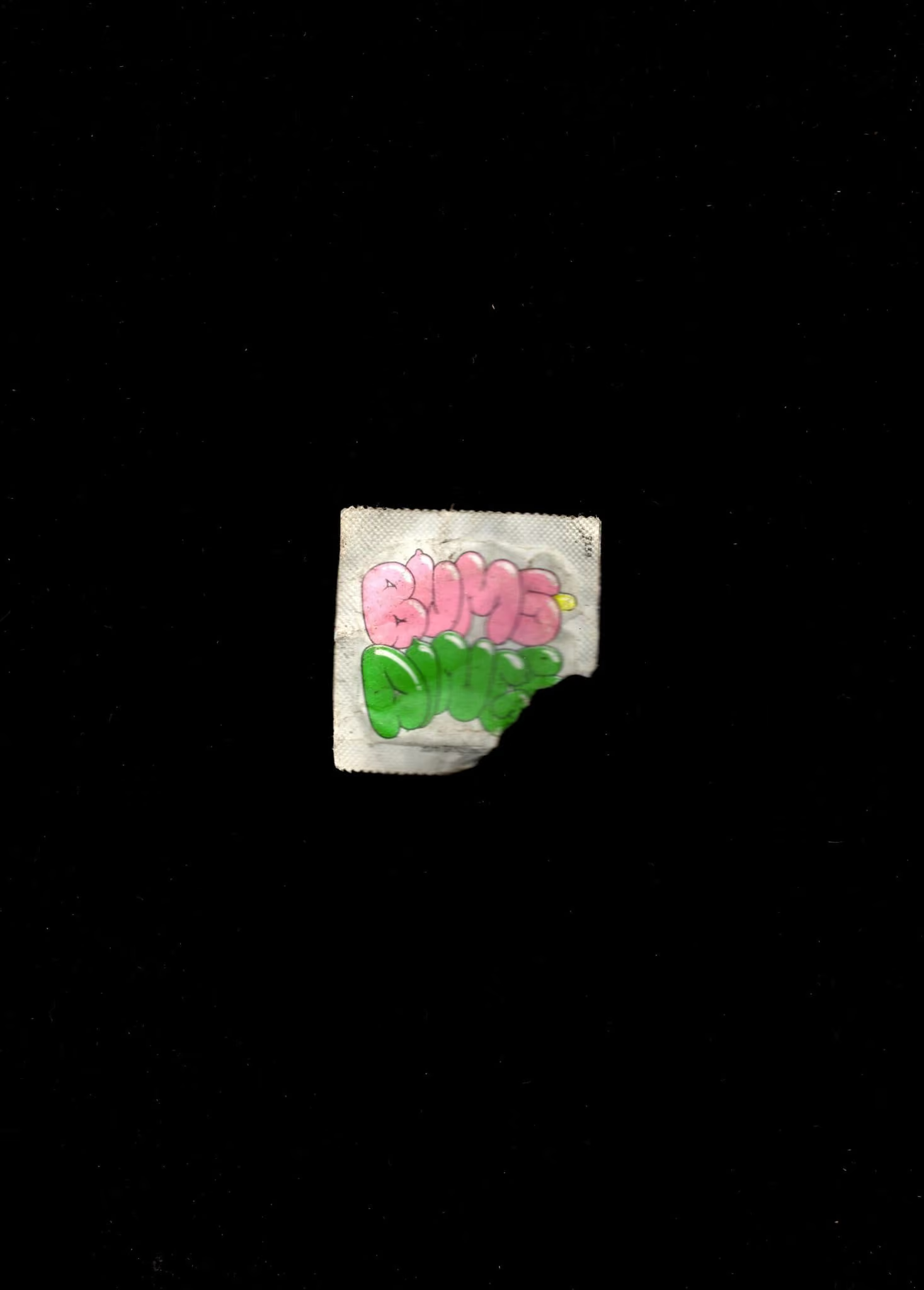
I just started collecting some of the objects, scanning them, and keeping the scans in a folder on my laptop. I never really thought about it beyond that. And then I just thought, what if I started uploading them to an Instagram account? I sat with the objects for ages, and then one day I was cycling, thinking about the objects and the project and thinking of a name. And then the minute this idea of ‘Cruising Archaeology’ came to my head, it all slotted into place.
I started going to more cruising areas, initially just in London, and the idea around archaeology was to focus on what you could learn about the kind of sex and the kind of pleasure happening in these spaces, and who was going to these spaces based on material culture. By calling it archaeology, I was trying to interrogate ideas around value. Why do some cultural artefacts, like notes, have particular value as historical pieces, while others, like condom wrappers, don't? My background is in fine art printmaking. I'm not an anthropologist or a sociologist. I thought it'd be interesting to engage with something like archaeology very much from an amateur perspective, or to take on an authoritative role in defining what constitutes an artefact. The use of the term 'archaeology' in this context became a way not only to think about the objects, but also to reframe what motivated me about them and to put a particular framework around the objects I was finding.
When you pick up an object from a cruising site, what makes you take it rather than leave it? I'm curious what you're looking for or whether it's more that the object finds you.
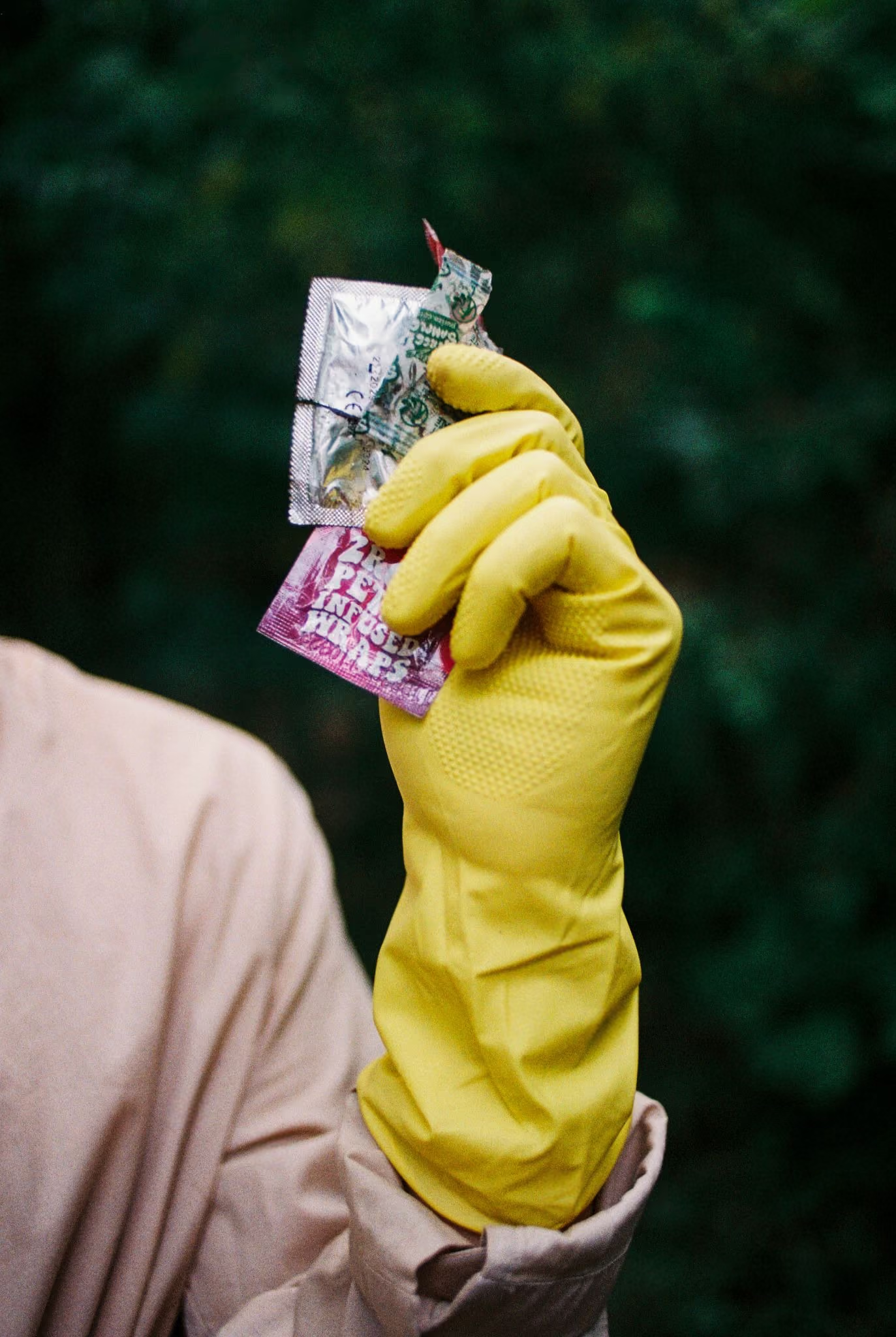
Some of the objects are very obvious: condom packets, Viagra, and underwear, because they relate to the material cultures around sex and the body. Other factors that inform my decision, like whether to take an object, are about the limitations of the size of things, since my scanner is limited to a certain size. I prefer more unusual objects. Any of the sex toys I found were obviously used there. The tourniquet was used to wrap around someone's upper arm to stop blood flow to the veins so they could inject. Those were some of the ones that conjured up a particular imagery that felt quite dark.
There were other objects, like testosterone gel, because obviously cruising is often dominated by gay men. It was interesting to think that not everyone who used these spaces necessarily fit the dominant bracket we associate with them. Maybe it wasn't used by a trans person, and I'm projecting onto it. But what if it was? Those kinds of questions were left unanswered. What was the story behind an object being left there? It’s what has made the project compelling, because there is no conclusion. I never thought to find the people who left the objects behind, because this wasn't, like, a sociology or anthropology kind of project, and I wasn't trying to connect people back with the owners. The beauty was the unknown and the unanswered. I believe the project's engagement on Instagram stems from some of the objects being so peculiar and strange.
Is there an experience you want viewers to have when they observe your work? Are you aiming to direct their perceptions, or to let them explore the object as you did, approaching it with curiosity and without judgement? Or is there a narrative you want to convey, especially now that you've completed two books and your project is expanding?
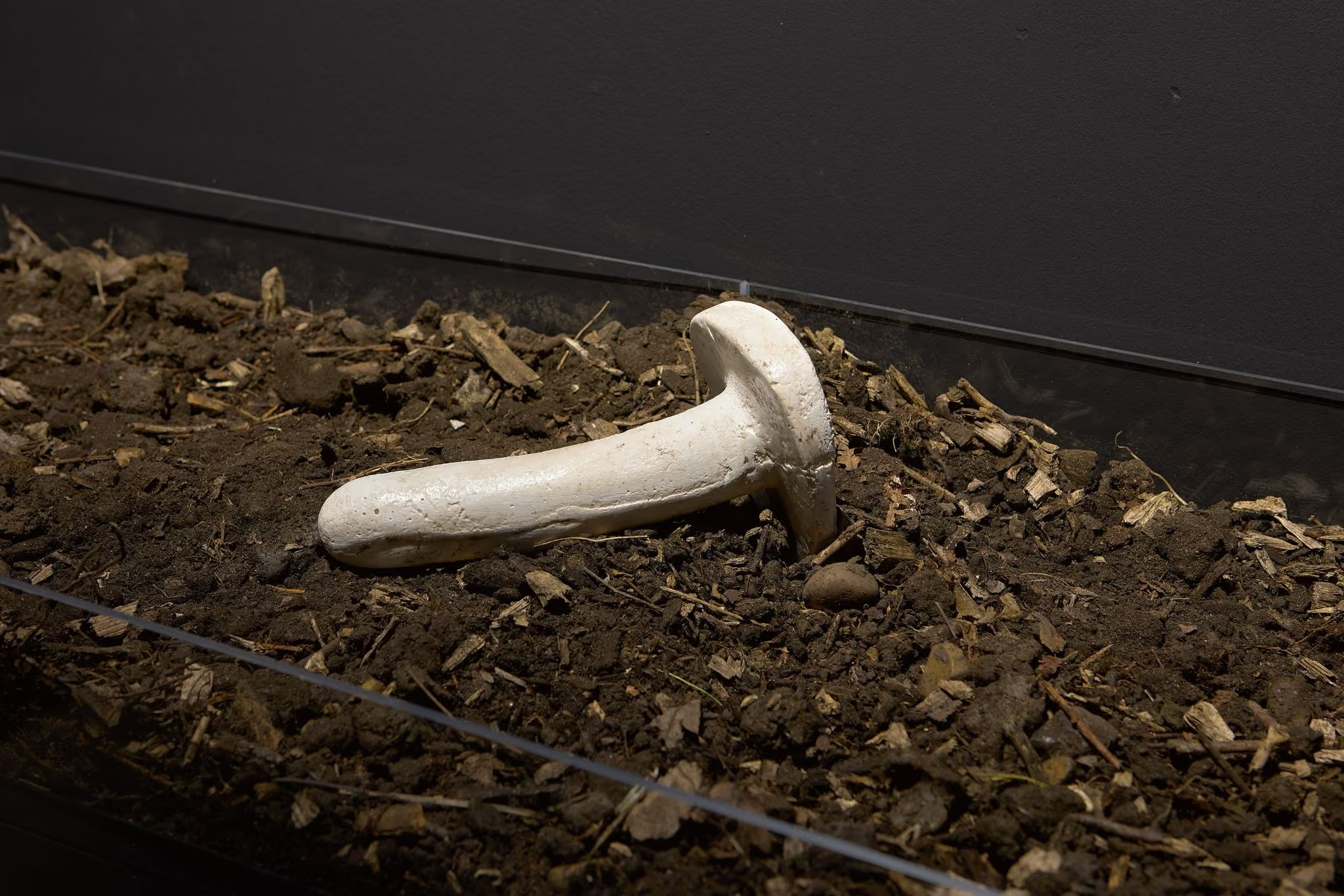
My idea was to present cruising in all its beauty and its ugliness, and to capture as many different perspectives on it as possible. The show at Studio Voltaire feels quiet and clean. The objects are all white and uniform. You have to think about what they are. I am obviously interested in the objects, but also in the process of casting them and in what casting does. How can we think of it as a mode of preservation, or as a physical way of archiving an object? I think that's what I am interested in. Or how can we keep these objects physically in the space without actually putting the objects in? People had asked me many times about putting on an exhibition of all the objects I found, and it just did not sit right with me to put the actual objects on display in a gallery. Maybe some people did leave them, but maybe some people actually wanted to get them back. It would be a bit weird if you came to a gallery and saw your own thing that you didn't consent to.
I was kind of careful about this question of authorship and ownership. I wondered if there was something a bit more compelling to put them through a process that allows them to be physically there, but not the original objects. In the case of the cast of the popper bottle, you don't see what the label is anymore; it becomes uniform and non-specific. I was interested in turning these objects into Jesmonite sculptures and how this materiality changes them. In the exhibition, the sex toy’s identity is not so clear. Unlike the original rubber object, which is light and flexible, this version is rigid, heavy, and static. While the rubber material makes its purpose as a sex toy immediately obvious, the transition to Jesmonite transforms it into something different. Maybe it still remains functional, but it now possesses the fixed quality of a sculpture.
Have you realised anything about yourself or your practice through these objects or this project? I wonder if you've had any internal reflections or conversations about it.
Particularly with the show at Studio Voltaire, I initially found it very daunting, even scary, the prospect of doing an exhibition with this project, because I felt like I was managing a lot of people's expectations. People didn't know if it was going to be a show that included all of the scans from Instagram on a wall, as if it were a photography project. Maybe people expected to see all of the objects on a big table. All of these thoughts were in my head about wanting it to feel like an exhibition that related to the project, or a display of what this project could look like, and also trying to avoid it feeling predictable or unexciting.