
The Mnemosyne: inside curated moodboards is where we ask artists to walk us through their artistic research with an archive of visual bits (archived images, camera roll pictures, book pages, videos), to contrast algorithmic feeds and restore the fun in personally-curated visual boards.
When we asked Berlin-based artist Mario Mu to walk us through his artistic practice, which deals with virtual environments, borders, maps and how they shape political power, he invited us to meet him online for a literal walking tour into his mind as an artist, materialised in a digital space where we positioned all of his work (mostly films). Mario’s interests shift between game design, LARPing, 3D animation, performance, and filmmaking: he studied in Vienna with artist Hito Steyerl – with whom he still collaborates to this day – and is he one of the most compelling artists when it comes to investigating how virtual environments can reveal the systems of control that emerge between space (physical or virtual), representation, power and intimacy.
This is a still from my film Before and Above Us (2024). Our connection to the heavens has always been important. From early observation of the skies, humans identified patterns in the movement of celestial bodies, allowing them to predict events and tell stories about collective belonging. Today, the space above us is polluted and blurred, and that connection is being lost. What remains is the collective anxiety. The question arises, who is the weatherman and what is stored in the clouds?
I started working on this project while researching police and military archives, focusing on aerial sound recordings. I worked through audio materials from different contexts: drones used to record weddings, police helicopters chasing suspects, soldiers making private recordings during warfare, and the everyday routines of astronauts aboard the space station. The film is composed by editing these sound recordings of real events together with cinematic images created within virtual environments. The work emerges from the tension between sound and image, suspended in the space above us. Drones become helicopters, jet planes, satellites, and finally butterflies, as unexpected mediators between the virtual and the real.

The science fiction of human relationships where the working class has been disguised as an alien civilisation. Expecting another financial crisis is like watching a UFO silently floating in the skies for months, a quiet invasion that never escalates into a struggle.
Border Control is an example of a built environment where human identities are literally the currency. What goes and what does not, a point of differentiation between human and non-human. I grew up in the borderlands between two countries with a very similar culture, but as a Croatian, I can travel around Europe without any obstacles, and as a Bosnian-Herzegovinian, things are different. There are people living in areas where their passport is checked every time they go to buy groceries or walk a dog. What do we do with the parts of ourselves that don't fit the template? We forget them. Forgetting is active, it's structural, it's political.
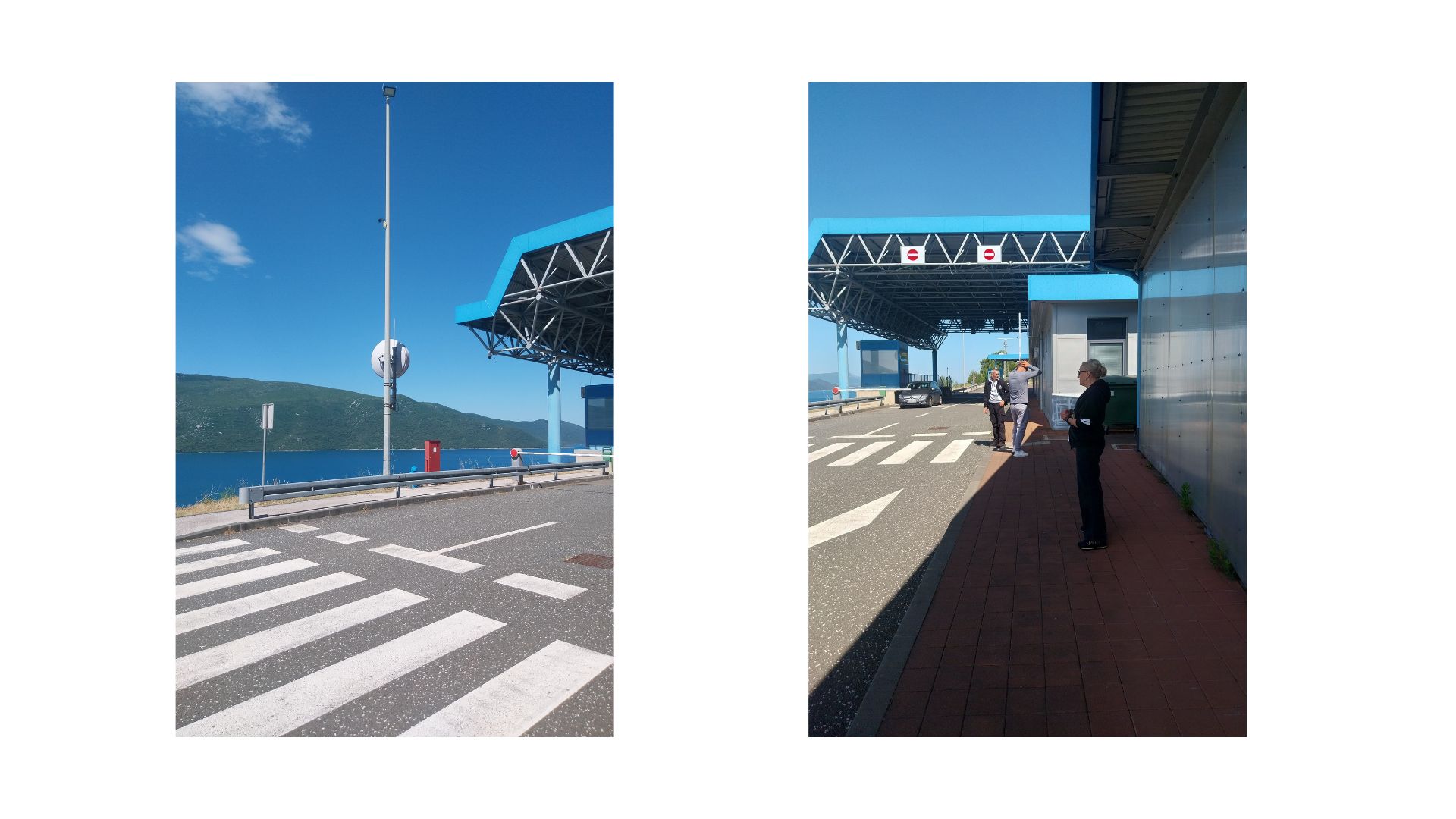
My ongoing interest is understanding how space takes shape as the necessary condition and enabler of politics. I work with virtual environments to activate certain events, and then I observe how they unfold. The process consists of creating situations, building worlds, and then documenting them, archiving, editing. The architecture of a virtual environment is a medium or platform where images are constructed. There is no script. Simulation enables this process of learning, while editing a film sequence is a response, it is how I arrive at conclusions.
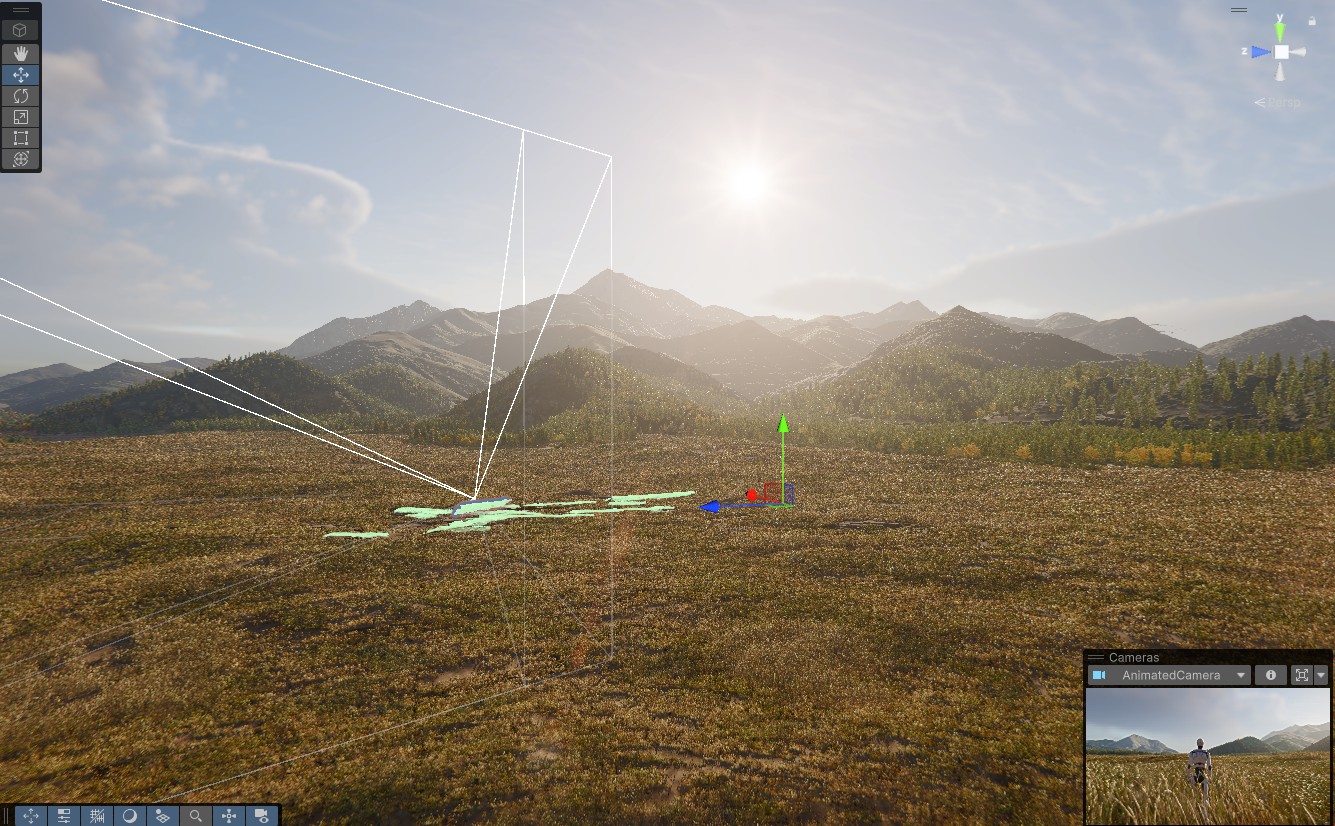
In the Round (2025) is a new film that will premiere this spring. For this project, I wanted to bring together the many voices of protest. The work is staged like a theatre in the round, with performers warming up at its centre, suggesting the audience that surrounds them but is out of focus. Again, I was sourcing archival recordings, this time focusing on the collective memory of demonstrations and mass movements, extracting sonic fragments from their original historical contexts and mapping them onto a digitally constructed environment. What unfolds is an acoustic field where different political movements converge and resonate, their voices lingering together in a shared space. The world does not wait, and everything tilts forward, messy, breathless, mid-sentence, always in motion.
.png)


The Mnemosyne: inside curated moodboards is where we ask artists to walk us through their artistic research with an archive of visual bits (archived images, camera roll pictures, book pages, videos), to contrast algorithmic feeds and restore the fun in personally-curated visual boards.
When we asked Berlin-based artist Mario Mu to walk us through his artistic practice, which deals with virtual environments, borders, maps and how they shape political power, he invited us to meet him online for a literal walking tour into his mind as an artist, materialised in a digital space where we positioned all of his work (mostly films). Mario’s interests shift between game design, LARPing, 3D animation, performance, and filmmaking: he studied in Vienna with artist Hito Steyerl – with whom he still collaborates to this day – and is he one of the most compelling artists when it comes to investigating how virtual environments can reveal the systems of control that emerge between space (physical or virtual), representation, power and intimacy.
This is a still from my film Before and Above Us (2024). Our connection to the heavens has always been important. From early observation of the skies, humans identified patterns in the movement of celestial bodies, allowing them to predict events and tell stories about collective belonging. Today, the space above us is polluted and blurred, and that connection is being lost. What remains is the collective anxiety. The question arises, who is the weatherman and what is stored in the clouds?
I started working on this project while researching police and military archives, focusing on aerial sound recordings. I worked through audio materials from different contexts: drones used to record weddings, police helicopters chasing suspects, soldiers making private recordings during warfare, and the everyday routines of astronauts aboard the space station. The film is composed by editing these sound recordings of real events together with cinematic images created within virtual environments. The work emerges from the tension between sound and image, suspended in the space above us. Drones become helicopters, jet planes, satellites, and finally butterflies, as unexpected mediators between the virtual and the real.
The science fiction of human relationships where the working class has been disguised as an alien civilisation. Expecting another financial crisis is like watching a UFO silently floating in the skies for months, a quiet invasion that never escalates into a struggle.
Border Control is an example of a built environment where human identities are literally the currency. What goes and what does not, a point of differentiation between human and non-human. I grew up in the borderlands between two countries with a very similar culture, but as a Croatian, I can travel around Europe without any obstacles, and as a Bosnian-Herzegovinian, things are different. There are people living in areas where their passport is checked every time they go to buy groceries or walk a dog. What do we do with the parts of ourselves that don't fit the template? We forget them. Forgetting is active, it's structural, it's political.
My ongoing interest is understanding how space takes shape as the necessary condition and enabler of politics. I work with virtual environments to activate certain events, and then I observe how they unfold. The process consists of creating situations, building worlds, and then documenting them, archiving, editing. The architecture of a virtual environment is a medium or platform where images are constructed. There is no script. Simulation enables this process of learning, while editing a film sequence is a response, it is how I arrive at conclusions.
In the Round (2025) is a new film that will premiere this spring. For this project, I wanted to bring together the many voices of protest. The work is staged like a theatre in the round, with performers warming up at its centre, suggesting the audience that surrounds them but is out of focus. Again, I was sourcing archival recordings, this time focusing on the collective memory of demonstrations and mass movements, extracting sonic fragments from their original historical contexts and mapping them onto a digitally constructed environment. What unfolds is an acoustic field where different political movements converge and resonate, their voices lingering together in a shared space. The world does not wait, and everything tilts forward, messy, breathless, mid-sentence, always in motion.
The Mnemosyne: inside curated moodboards is where we ask artists to walk us through their artistic research with an archive of visual bits (archived images, camera roll pictures, book pages, videos), to contrast algorithmic feeds and restore the fun in personally-curated visual boards.
When we asked Berlin-based artist Mario Mu to walk us through his artistic practice, which deals with virtual environments, borders, maps and how they shape political power, he invited us to meet him online for a literal walking tour into his mind as an artist, materialised in a digital space where we positioned all of his work (mostly films). Mario’s interests shift between game design, LARPing, 3D animation, performance, and filmmaking: he studied in Vienna with artist Hito Steyerl – with whom he still collaborates to this day – and is he one of the most compelling artists when it comes to investigating how virtual environments can reveal the systems of control that emerge between space (physical or virtual), representation, power and intimacy.
This is a still from my film Before and Above Us (2024). Our connection to the heavens has always been important. From early observation of the skies, humans identified patterns in the movement of celestial bodies, allowing them to predict events and tell stories about collective belonging. Today, the space above us is polluted and blurred, and that connection is being lost. What remains is the collective anxiety. The question arises, who is the weatherman and what is stored in the clouds?
I started working on this project while researching police and military archives, focusing on aerial sound recordings. I worked through audio materials from different contexts: drones used to record weddings, police helicopters chasing suspects, soldiers making private recordings during warfare, and the everyday routines of astronauts aboard the space station. The film is composed by editing these sound recordings of real events together with cinematic images created within virtual environments. The work emerges from the tension between sound and image, suspended in the space above us. Drones become helicopters, jet planes, satellites, and finally butterflies, as unexpected mediators between the virtual and the real.
The science fiction of human relationships where the working class has been disguised as an alien civilisation. Expecting another financial crisis is like watching a UFO silently floating in the skies for months, a quiet invasion that never escalates into a struggle.
Border Control is an example of a built environment where human identities are literally the currency. What goes and what does not, a point of differentiation between human and non-human. I grew up in the borderlands between two countries with a very similar culture, but as a Croatian, I can travel around Europe without any obstacles, and as a Bosnian-Herzegovinian, things are different. There are people living in areas where their passport is checked every time they go to buy groceries or walk a dog. What do we do with the parts of ourselves that don't fit the template? We forget them. Forgetting is active, it's structural, it's political.
My ongoing interest is understanding how space takes shape as the necessary condition and enabler of politics. I work with virtual environments to activate certain events, and then I observe how they unfold. The process consists of creating situations, building worlds, and then documenting them, archiving, editing. The architecture of a virtual environment is a medium or platform where images are constructed. There is no script. Simulation enables this process of learning, while editing a film sequence is a response, it is how I arrive at conclusions.
In the Round (2025) is a new film that will premiere this spring. For this project, I wanted to bring together the many voices of protest. The work is staged like a theatre in the round, with performers warming up at its centre, suggesting the audience that surrounds them but is out of focus. Again, I was sourcing archival recordings, this time focusing on the collective memory of demonstrations and mass movements, extracting sonic fragments from their original historical contexts and mapping them onto a digitally constructed environment. What unfolds is an acoustic field where different political movements converge and resonate, their voices lingering together in a shared space. The world does not wait, and everything tilts forward, messy, breathless, mid-sentence, always in motion.
The Mnemosyne: inside curated moodboards is where we ask artists to walk us through their artistic research with an archive of visual bits (archived images, camera roll pictures, book pages, videos), to contrast algorithmic feeds and restore the fun in personally-curated visual boards.
When we asked Berlin-based artist Mario Mu to walk us through his artistic practice, which deals with virtual environments, borders, maps and how they shape political power, he invited us to meet him online for a literal walking tour into his mind as an artist, materialised in a digital space where we positioned all of his work (mostly films). Mario’s interests shift between game design, LARPing, 3D animation, performance, and filmmaking: he studied in Vienna with artist Hito Steyerl – with whom he still collaborates to this day – and is he one of the most compelling artists when it comes to investigating how virtual environments can reveal the systems of control that emerge between space (physical or virtual), representation, power and intimacy.
This is a still from my film Before and Above Us (2024). Our connection to the heavens has always been important. From early observation of the skies, humans identified patterns in the movement of celestial bodies, allowing them to predict events and tell stories about collective belonging. Today, the space above us is polluted and blurred, and that connection is being lost. What remains is the collective anxiety. The question arises, who is the weatherman and what is stored in the clouds?
I started working on this project while researching police and military archives, focusing on aerial sound recordings. I worked through audio materials from different contexts: drones used to record weddings, police helicopters chasing suspects, soldiers making private recordings during warfare, and the everyday routines of astronauts aboard the space station. The film is composed by editing these sound recordings of real events together with cinematic images created within virtual environments. The work emerges from the tension between sound and image, suspended in the space above us. Drones become helicopters, jet planes, satellites, and finally butterflies, as unexpected mediators between the virtual and the real.
The science fiction of human relationships where the working class has been disguised as an alien civilisation. Expecting another financial crisis is like watching a UFO silently floating in the skies for months, a quiet invasion that never escalates into a struggle.
Border Control is an example of a built environment where human identities are literally the currency. What goes and what does not, a point of differentiation between human and non-human. I grew up in the borderlands between two countries with a very similar culture, but as a Croatian, I can travel around Europe without any obstacles, and as a Bosnian-Herzegovinian, things are different. There are people living in areas where their passport is checked every time they go to buy groceries or walk a dog. What do we do with the parts of ourselves that don't fit the template? We forget them. Forgetting is active, it's structural, it's political.
My ongoing interest is understanding how space takes shape as the necessary condition and enabler of politics. I work with virtual environments to activate certain events, and then I observe how they unfold. The process consists of creating situations, building worlds, and then documenting them, archiving, editing. The architecture of a virtual environment is a medium or platform where images are constructed. There is no script. Simulation enables this process of learning, while editing a film sequence is a response, it is how I arrive at conclusions.
In the Round (2025) is a new film that will premiere this spring. For this project, I wanted to bring together the many voices of protest. The work is staged like a theatre in the round, with performers warming up at its centre, suggesting the audience that surrounds them but is out of focus. Again, I was sourcing archival recordings, this time focusing on the collective memory of demonstrations and mass movements, extracting sonic fragments from their original historical contexts and mapping them onto a digitally constructed environment. What unfolds is an acoustic field where different political movements converge and resonate, their voices lingering together in a shared space. The world does not wait, and everything tilts forward, messy, breathless, mid-sentence, always in motion.
The Mnemosyne: inside curated moodboards is where we ask artists to walk us through their artistic research with an archive of visual bits (archived images, camera roll pictures, book pages, videos), to contrast algorithmic feeds and restore the fun in personally-curated visual boards.
When we asked Berlin-based artist Mario Mu to walk us through his artistic practice, which deals with virtual environments, borders, maps and how they shape political power, he invited us to meet him online for a literal walking tour into his mind as an artist, materialised in a digital space where we positioned all of his work (mostly films). Mario’s interests shift between game design, LARPing, 3D animation, performance, and filmmaking: he studied in Vienna with artist Hito Steyerl – with whom he still collaborates to this day – and is he one of the most compelling artists when it comes to investigating how virtual environments can reveal the systems of control that emerge between space (physical or virtual), representation, power and intimacy.
This is a still from my film Before and Above Us (2024). Our connection to the heavens has always been important. From early observation of the skies, humans identified patterns in the movement of celestial bodies, allowing them to predict events and tell stories about collective belonging. Today, the space above us is polluted and blurred, and that connection is being lost. What remains is the collective anxiety. The question arises, who is the weatherman and what is stored in the clouds?
I started working on this project while researching police and military archives, focusing on aerial sound recordings. I worked through audio materials from different contexts: drones used to record weddings, police helicopters chasing suspects, soldiers making private recordings during warfare, and the everyday routines of astronauts aboard the space station. The film is composed by editing these sound recordings of real events together with cinematic images created within virtual environments. The work emerges from the tension between sound and image, suspended in the space above us. Drones become helicopters, jet planes, satellites, and finally butterflies, as unexpected mediators between the virtual and the real.
The science fiction of human relationships where the working class has been disguised as an alien civilisation. Expecting another financial crisis is like watching a UFO silently floating in the skies for months, a quiet invasion that never escalates into a struggle.
Border Control is an example of a built environment where human identities are literally the currency. What goes and what does not, a point of differentiation between human and non-human. I grew up in the borderlands between two countries with a very similar culture, but as a Croatian, I can travel around Europe without any obstacles, and as a Bosnian-Herzegovinian, things are different. There are people living in areas where their passport is checked every time they go to buy groceries or walk a dog. What do we do with the parts of ourselves that don't fit the template? We forget them. Forgetting is active, it's structural, it's political.
My ongoing interest is understanding how space takes shape as the necessary condition and enabler of politics. I work with virtual environments to activate certain events, and then I observe how they unfold. The process consists of creating situations, building worlds, and then documenting them, archiving, editing. The architecture of a virtual environment is a medium or platform where images are constructed. There is no script. Simulation enables this process of learning, while editing a film sequence is a response, it is how I arrive at conclusions.
In the Round (2025) is a new film that will premiere this spring. For this project, I wanted to bring together the many voices of protest. The work is staged like a theatre in the round, with performers warming up at its centre, suggesting the audience that surrounds them but is out of focus. Again, I was sourcing archival recordings, this time focusing on the collective memory of demonstrations and mass movements, extracting sonic fragments from their original historical contexts and mapping them onto a digitally constructed environment. What unfolds is an acoustic field where different political movements converge and resonate, their voices lingering together in a shared space. The world does not wait, and everything tilts forward, messy, breathless, mid-sentence, always in motion.
The Mnemosyne: inside curated moodboards is where we ask artists to walk us through their artistic research with an archive of visual bits (archived images, camera roll pictures, book pages, videos), to contrast algorithmic feeds and restore the fun in personally-curated visual boards.
When we asked Berlin-based artist Mario Mu to walk us through his artistic practice, which deals with virtual environments, borders, maps and how they shape political power, he invited us to meet him online for a literal walking tour into his mind as an artist, materialised in a digital space where we positioned all of his work (mostly films). Mario’s interests shift between game design, LARPing, 3D animation, performance, and filmmaking: he studied in Vienna with artist Hito Steyerl – with whom he still collaborates to this day – and is he one of the most compelling artists when it comes to investigating how virtual environments can reveal the systems of control that emerge between space (physical or virtual), representation, power and intimacy.
This is a still from my film Before and Above Us (2024). Our connection to the heavens has always been important. From early observation of the skies, humans identified patterns in the movement of celestial bodies, allowing them to predict events and tell stories about collective belonging. Today, the space above us is polluted and blurred, and that connection is being lost. What remains is the collective anxiety. The question arises, who is the weatherman and what is stored in the clouds?
I started working on this project while researching police and military archives, focusing on aerial sound recordings. I worked through audio materials from different contexts: drones used to record weddings, police helicopters chasing suspects, soldiers making private recordings during warfare, and the everyday routines of astronauts aboard the space station. The film is composed by editing these sound recordings of real events together with cinematic images created within virtual environments. The work emerges from the tension between sound and image, suspended in the space above us. Drones become helicopters, jet planes, satellites, and finally butterflies, as unexpected mediators between the virtual and the real.
The science fiction of human relationships where the working class has been disguised as an alien civilisation. Expecting another financial crisis is like watching a UFO silently floating in the skies for months, a quiet invasion that never escalates into a struggle.
Border Control is an example of a built environment where human identities are literally the currency. What goes and what does not, a point of differentiation between human and non-human. I grew up in the borderlands between two countries with a very similar culture, but as a Croatian, I can travel around Europe without any obstacles, and as a Bosnian-Herzegovinian, things are different. There are people living in areas where their passport is checked every time they go to buy groceries or walk a dog. What do we do with the parts of ourselves that don't fit the template? We forget them. Forgetting is active, it's structural, it's political.
My ongoing interest is understanding how space takes shape as the necessary condition and enabler of politics. I work with virtual environments to activate certain events, and then I observe how they unfold. The process consists of creating situations, building worlds, and then documenting them, archiving, editing. The architecture of a virtual environment is a medium or platform where images are constructed. There is no script. Simulation enables this process of learning, while editing a film sequence is a response, it is how I arrive at conclusions.
In the Round (2025) is a new film that will premiere this spring. For this project, I wanted to bring together the many voices of protest. The work is staged like a theatre in the round, with performers warming up at its centre, suggesting the audience that surrounds them but is out of focus. Again, I was sourcing archival recordings, this time focusing on the collective memory of demonstrations and mass movements, extracting sonic fragments from their original historical contexts and mapping them onto a digitally constructed environment. What unfolds is an acoustic field where different political movements converge and resonate, their voices lingering together in a shared space. The world does not wait, and everything tilts forward, messy, breathless, mid-sentence, always in motion.
The Mnemosyne: inside curated moodboards is where we ask artists to walk us through their artistic research with an archive of visual bits (archived images, camera roll pictures, book pages, videos), to contrast algorithmic feeds and restore the fun in personally-curated visual boards.
When we asked Berlin-based artist Mario Mu to walk us through his artistic practice, which deals with virtual environments, borders, maps and how they shape political power, he invited us to meet him online for a literal walking tour into his mind as an artist, materialised in a digital space where we positioned all of his work (mostly films). Mario’s interests shift between game design, LARPing, 3D animation, performance, and filmmaking: he studied in Vienna with artist Hito Steyerl – with whom he still collaborates to this day – and is he one of the most compelling artists when it comes to investigating how virtual environments can reveal the systems of control that emerge between space (physical or virtual), representation, power and intimacy.
This is a still from my film Before and Above Us (2024). Our connection to the heavens has always been important. From early observation of the skies, humans identified patterns in the movement of celestial bodies, allowing them to predict events and tell stories about collective belonging. Today, the space above us is polluted and blurred, and that connection is being lost. What remains is the collective anxiety. The question arises, who is the weatherman and what is stored in the clouds?
I started working on this project while researching police and military archives, focusing on aerial sound recordings. I worked through audio materials from different contexts: drones used to record weddings, police helicopters chasing suspects, soldiers making private recordings during warfare, and the everyday routines of astronauts aboard the space station. The film is composed by editing these sound recordings of real events together with cinematic images created within virtual environments. The work emerges from the tension between sound and image, suspended in the space above us. Drones become helicopters, jet planes, satellites, and finally butterflies, as unexpected mediators between the virtual and the real.
The science fiction of human relationships where the working class has been disguised as an alien civilisation. Expecting another financial crisis is like watching a UFO silently floating in the skies for months, a quiet invasion that never escalates into a struggle.
Border Control is an example of a built environment where human identities are literally the currency. What goes and what does not, a point of differentiation between human and non-human. I grew up in the borderlands between two countries with a very similar culture, but as a Croatian, I can travel around Europe without any obstacles, and as a Bosnian-Herzegovinian, things are different. There are people living in areas where their passport is checked every time they go to buy groceries or walk a dog. What do we do with the parts of ourselves that don't fit the template? We forget them. Forgetting is active, it's structural, it's political.
My ongoing interest is understanding how space takes shape as the necessary condition and enabler of politics. I work with virtual environments to activate certain events, and then I observe how they unfold. The process consists of creating situations, building worlds, and then documenting them, archiving, editing. The architecture of a virtual environment is a medium or platform where images are constructed. There is no script. Simulation enables this process of learning, while editing a film sequence is a response, it is how I arrive at conclusions.
In the Round (2025) is a new film that will premiere this spring. For this project, I wanted to bring together the many voices of protest. The work is staged like a theatre in the round, with performers warming up at its centre, suggesting the audience that surrounds them but is out of focus. Again, I was sourcing archival recordings, this time focusing on the collective memory of demonstrations and mass movements, extracting sonic fragments from their original historical contexts and mapping them onto a digitally constructed environment. What unfolds is an acoustic field where different political movements converge and resonate, their voices lingering together in a shared space. The world does not wait, and everything tilts forward, messy, breathless, mid-sentence, always in motion.
The Mnemosyne: inside curated moodboards is where we ask artists to walk us through their artistic research with an archive of visual bits (archived images, camera roll pictures, book pages, videos), to contrast algorithmic feeds and restore the fun in personally-curated visual boards.
When we asked Berlin-based artist Mario Mu to walk us through his artistic practice, which deals with virtual environments, borders, maps and how they shape political power, he invited us to meet him online for a literal walking tour into his mind as an artist, materialised in a digital space where we positioned all of his work (mostly films). Mario’s interests shift between game design, LARPing, 3D animation, performance, and filmmaking: he studied in Vienna with artist Hito Steyerl – with whom he still collaborates to this day – and is he one of the most compelling artists when it comes to investigating how virtual environments can reveal the systems of control that emerge between space (physical or virtual), representation, power and intimacy.
This is a still from my film Before and Above Us (2024). Our connection to the heavens has always been important. From early observation of the skies, humans identified patterns in the movement of celestial bodies, allowing them to predict events and tell stories about collective belonging. Today, the space above us is polluted and blurred, and that connection is being lost. What remains is the collective anxiety. The question arises, who is the weatherman and what is stored in the clouds?
I started working on this project while researching police and military archives, focusing on aerial sound recordings. I worked through audio materials from different contexts: drones used to record weddings, police helicopters chasing suspects, soldiers making private recordings during warfare, and the everyday routines of astronauts aboard the space station. The film is composed by editing these sound recordings of real events together with cinematic images created within virtual environments. The work emerges from the tension between sound and image, suspended in the space above us. Drones become helicopters, jet planes, satellites, and finally butterflies, as unexpected mediators between the virtual and the real.
The science fiction of human relationships where the working class has been disguised as an alien civilisation. Expecting another financial crisis is like watching a UFO silently floating in the skies for months, a quiet invasion that never escalates into a struggle.
Border Control is an example of a built environment where human identities are literally the currency. What goes and what does not, a point of differentiation between human and non-human. I grew up in the borderlands between two countries with a very similar culture, but as a Croatian, I can travel around Europe without any obstacles, and as a Bosnian-Herzegovinian, things are different. There are people living in areas where their passport is checked every time they go to buy groceries or walk a dog. What do we do with the parts of ourselves that don't fit the template? We forget them. Forgetting is active, it's structural, it's political.
My ongoing interest is understanding how space takes shape as the necessary condition and enabler of politics. I work with virtual environments to activate certain events, and then I observe how they unfold. The process consists of creating situations, building worlds, and then documenting them, archiving, editing. The architecture of a virtual environment is a medium or platform where images are constructed. There is no script. Simulation enables this process of learning, while editing a film sequence is a response, it is how I arrive at conclusions.
In the Round (2025) is a new film that will premiere this spring. For this project, I wanted to bring together the many voices of protest. The work is staged like a theatre in the round, with performers warming up at its centre, suggesting the audience that surrounds them but is out of focus. Again, I was sourcing archival recordings, this time focusing on the collective memory of demonstrations and mass movements, extracting sonic fragments from their original historical contexts and mapping them onto a digitally constructed environment. What unfolds is an acoustic field where different political movements converge and resonate, their voices lingering together in a shared space. The world does not wait, and everything tilts forward, messy, breathless, mid-sentence, always in motion.
The Mnemosyne: inside curated moodboards is where we ask artists to walk us through their artistic research with an archive of visual bits (archived images, camera roll pictures, book pages, videos), to contrast algorithmic feeds and restore the fun in personally-curated visual boards.
When we asked Berlin-based artist Mario Mu to walk us through his artistic practice, which deals with virtual environments, borders, maps and how they shape political power, he invited us to meet him online for a literal walking tour into his mind as an artist, materialised in a digital space where we positioned all of his work (mostly films). Mario’s interests shift between game design, LARPing, 3D animation, performance, and filmmaking: he studied in Vienna with artist Hito Steyerl – with whom he still collaborates to this day – and is he one of the most compelling artists when it comes to investigating how virtual environments can reveal the systems of control that emerge between space (physical or virtual), representation, power and intimacy.
This is a still from my film Before and Above Us (2024). Our connection to the heavens has always been important. From early observation of the skies, humans identified patterns in the movement of celestial bodies, allowing them to predict events and tell stories about collective belonging. Today, the space above us is polluted and blurred, and that connection is being lost. What remains is the collective anxiety. The question arises, who is the weatherman and what is stored in the clouds?
I started working on this project while researching police and military archives, focusing on aerial sound recordings. I worked through audio materials from different contexts: drones used to record weddings, police helicopters chasing suspects, soldiers making private recordings during warfare, and the everyday routines of astronauts aboard the space station. The film is composed by editing these sound recordings of real events together with cinematic images created within virtual environments. The work emerges from the tension between sound and image, suspended in the space above us. Drones become helicopters, jet planes, satellites, and finally butterflies, as unexpected mediators between the virtual and the real.
The science fiction of human relationships where the working class has been disguised as an alien civilisation. Expecting another financial crisis is like watching a UFO silently floating in the skies for months, a quiet invasion that never escalates into a struggle.
Border Control is an example of a built environment where human identities are literally the currency. What goes and what does not, a point of differentiation between human and non-human. I grew up in the borderlands between two countries with a very similar culture, but as a Croatian, I can travel around Europe without any obstacles, and as a Bosnian-Herzegovinian, things are different. There are people living in areas where their passport is checked every time they go to buy groceries or walk a dog. What do we do with the parts of ourselves that don't fit the template? We forget them. Forgetting is active, it's structural, it's political.
My ongoing interest is understanding how space takes shape as the necessary condition and enabler of politics. I work with virtual environments to activate certain events, and then I observe how they unfold. The process consists of creating situations, building worlds, and then documenting them, archiving, editing. The architecture of a virtual environment is a medium or platform where images are constructed. There is no script. Simulation enables this process of learning, while editing a film sequence is a response, it is how I arrive at conclusions.
In the Round (2025) is a new film that will premiere this spring. For this project, I wanted to bring together the many voices of protest. The work is staged like a theatre in the round, with performers warming up at its centre, suggesting the audience that surrounds them but is out of focus. Again, I was sourcing archival recordings, this time focusing on the collective memory of demonstrations and mass movements, extracting sonic fragments from their original historical contexts and mapping them onto a digitally constructed environment. What unfolds is an acoustic field where different political movements converge and resonate, their voices lingering together in a shared space. The world does not wait, and everything tilts forward, messy, breathless, mid-sentence, always in motion.
The Mnemosyne: inside curated moodboards is where we ask artists to walk us through their artistic research with an archive of visual bits (archived images, camera roll pictures, book pages, videos), to contrast algorithmic feeds and restore the fun in personally-curated visual boards.
When we asked Berlin-based artist Mario Mu to walk us through his artistic practice, which deals with virtual environments, borders, maps and how they shape political power, he invited us to meet him online for a literal walking tour into his mind as an artist, materialised in a digital space where we positioned all of his work (mostly films). Mario’s interests shift between game design, LARPing, 3D animation, performance, and filmmaking: he studied in Vienna with artist Hito Steyerl – with whom he still collaborates to this day – and is he one of the most compelling artists when it comes to investigating how virtual environments can reveal the systems of control that emerge between space (physical or virtual), representation, power and intimacy.
This is a still from my film Before and Above Us (2024). Our connection to the heavens has always been important. From early observation of the skies, humans identified patterns in the movement of celestial bodies, allowing them to predict events and tell stories about collective belonging. Today, the space above us is polluted and blurred, and that connection is being lost. What remains is the collective anxiety. The question arises, who is the weatherman and what is stored in the clouds?
I started working on this project while researching police and military archives, focusing on aerial sound recordings. I worked through audio materials from different contexts: drones used to record weddings, police helicopters chasing suspects, soldiers making private recordings during warfare, and the everyday routines of astronauts aboard the space station. The film is composed by editing these sound recordings of real events together with cinematic images created within virtual environments. The work emerges from the tension between sound and image, suspended in the space above us. Drones become helicopters, jet planes, satellites, and finally butterflies, as unexpected mediators between the virtual and the real.
The science fiction of human relationships where the working class has been disguised as an alien civilisation. Expecting another financial crisis is like watching a UFO silently floating in the skies for months, a quiet invasion that never escalates into a struggle.
Border Control is an example of a built environment where human identities are literally the currency. What goes and what does not, a point of differentiation between human and non-human. I grew up in the borderlands between two countries with a very similar culture, but as a Croatian, I can travel around Europe without any obstacles, and as a Bosnian-Herzegovinian, things are different. There are people living in areas where their passport is checked every time they go to buy groceries or walk a dog. What do we do with the parts of ourselves that don't fit the template? We forget them. Forgetting is active, it's structural, it's political.
My ongoing interest is understanding how space takes shape as the necessary condition and enabler of politics. I work with virtual environments to activate certain events, and then I observe how they unfold. The process consists of creating situations, building worlds, and then documenting them, archiving, editing. The architecture of a virtual environment is a medium or platform where images are constructed. There is no script. Simulation enables this process of learning, while editing a film sequence is a response, it is how I arrive at conclusions.
In the Round (2025) is a new film that will premiere this spring. For this project, I wanted to bring together the many voices of protest. The work is staged like a theatre in the round, with performers warming up at its centre, suggesting the audience that surrounds them but is out of focus. Again, I was sourcing archival recordings, this time focusing on the collective memory of demonstrations and mass movements, extracting sonic fragments from their original historical contexts and mapping them onto a digitally constructed environment. What unfolds is an acoustic field where different political movements converge and resonate, their voices lingering together in a shared space. The world does not wait, and everything tilts forward, messy, breathless, mid-sentence, always in motion.
The Mnemosyne: inside curated moodboards is where we ask artists to walk us through their artistic research with an archive of visual bits (archived images, camera roll pictures, book pages, videos), to contrast algorithmic feeds and restore the fun in personally-curated visual boards.
When we asked Berlin-based artist Mario Mu to walk us through his artistic practice, which deals with virtual environments, borders, maps and how they shape political power, he invited us to meet him online for a literal walking tour into his mind as an artist, materialised in a digital space where we positioned all of his work (mostly films). Mario’s interests shift between game design, LARPing, 3D animation, performance, and filmmaking: he studied in Vienna with artist Hito Steyerl – with whom he still collaborates to this day – and is he one of the most compelling artists when it comes to investigating how virtual environments can reveal the systems of control that emerge between space (physical or virtual), representation, power and intimacy.
This is a still from my film Before and Above Us (2024). Our connection to the heavens has always been important. From early observation of the skies, humans identified patterns in the movement of celestial bodies, allowing them to predict events and tell stories about collective belonging. Today, the space above us is polluted and blurred, and that connection is being lost. What remains is the collective anxiety. The question arises, who is the weatherman and what is stored in the clouds?
I started working on this project while researching police and military archives, focusing on aerial sound recordings. I worked through audio materials from different contexts: drones used to record weddings, police helicopters chasing suspects, soldiers making private recordings during warfare, and the everyday routines of astronauts aboard the space station. The film is composed by editing these sound recordings of real events together with cinematic images created within virtual environments. The work emerges from the tension between sound and image, suspended in the space above us. Drones become helicopters, jet planes, satellites, and finally butterflies, as unexpected mediators between the virtual and the real.
The science fiction of human relationships where the working class has been disguised as an alien civilisation. Expecting another financial crisis is like watching a UFO silently floating in the skies for months, a quiet invasion that never escalates into a struggle.
Border Control is an example of a built environment where human identities are literally the currency. What goes and what does not, a point of differentiation between human and non-human. I grew up in the borderlands between two countries with a very similar culture, but as a Croatian, I can travel around Europe without any obstacles, and as a Bosnian-Herzegovinian, things are different. There are people living in areas where their passport is checked every time they go to buy groceries or walk a dog. What do we do with the parts of ourselves that don't fit the template? We forget them. Forgetting is active, it's structural, it's political.
My ongoing interest is understanding how space takes shape as the necessary condition and enabler of politics. I work with virtual environments to activate certain events, and then I observe how they unfold. The process consists of creating situations, building worlds, and then documenting them, archiving, editing. The architecture of a virtual environment is a medium or platform where images are constructed. There is no script. Simulation enables this process of learning, while editing a film sequence is a response, it is how I arrive at conclusions.
In the Round (2025) is a new film that will premiere this spring. For this project, I wanted to bring together the many voices of protest. The work is staged like a theatre in the round, with performers warming up at its centre, suggesting the audience that surrounds them but is out of focus. Again, I was sourcing archival recordings, this time focusing on the collective memory of demonstrations and mass movements, extracting sonic fragments from their original historical contexts and mapping them onto a digitally constructed environment. What unfolds is an acoustic field where different political movements converge and resonate, their voices lingering together in a shared space. The world does not wait, and everything tilts forward, messy, breathless, mid-sentence, always in motion.


.png)


.svg)


