.jpg)
The Mnemosyne: inside curated moodboards is where we ask artists to walk us through their artistic research with an archive of visual bits (archived images, camera roll pictures, book pages, videos), to contrast algorithmic feeds and restore the fun in personally-curated visual boards.
What’s a pyramid for our collective unconscious? An ancient symbol, a mystery, the overwhelming proof of the existence of a perfect higher entity, an image on a postcard and a history book, the Illuminati triangle in a Katy Perry video, a glitch or loophole in the history of architecture.
Apart from being all these things at once, pyramids are also one of the biggest objects of study for artist Marko Obradović (1998, Belgrade, Serbia), interested in how the meaning of the word “ritual” continuously shifts from ancient times to the contemporary era. In his works, ancient symbols travel all the way from antiquity into the contemporary visual culture shaped by capitalism, as if time were compressing into a spiral just to ensure the eternal life of an icon across the centuries.
Almost three years ago, Obradović began noticing pyramids all around Belgrade, the city where he lives and where he received his painting degree. He noticed that post-Yugoslav architecture occasionally features pyramids as part of its aesthetic, and he immediately connected these strange apparitions to a contemporary capitalist mythology: the story of Semir Osmanagić, a Bosnian-American businessman convinced that the Bosnian mountains in the Visoko area are actually the largest human-made pyramids on Earth.
The mythologies emerging as coping mechanisms from the collective processing of historic wounds — and their hybridisation with conspiracy theories, clickbaiting, and pseudo-archaeology — is the starting point of the visual board Marko put together for this piece. What follows is the artist guiding us through fragments of symbols, myths, and a few uncanny presences in Belgrade’s shopping malls.
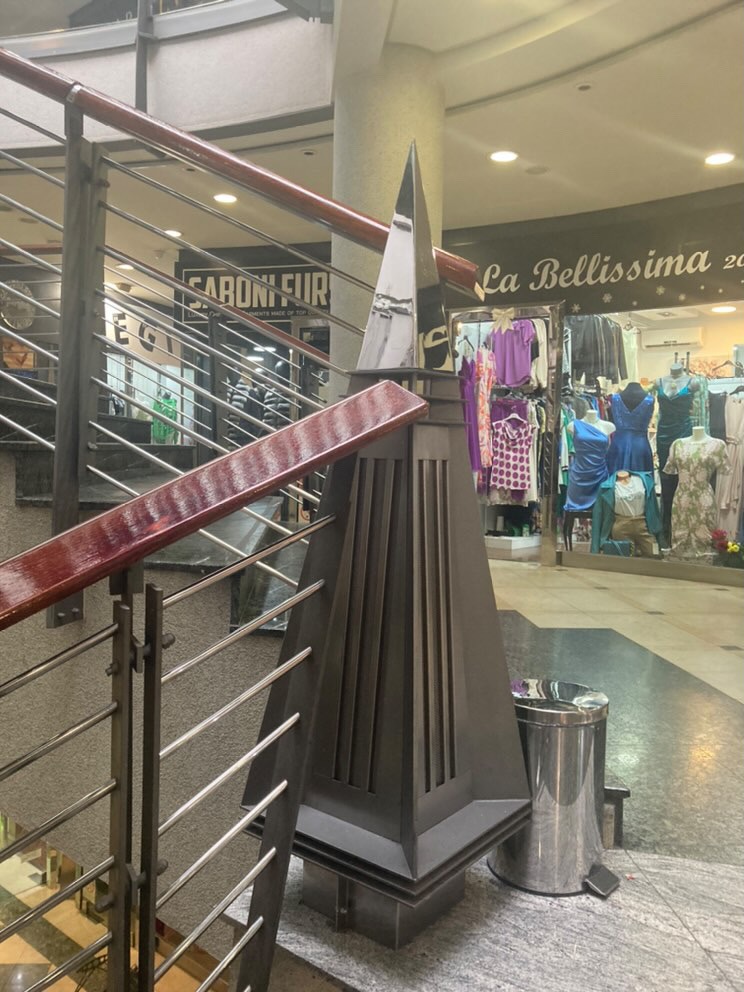
MO: In 2023, I started noticing a series of pyramid-like structures around Belgrade, where I live. They often had an esoteric quality that intrigued me, even though they weren’t official monuments or particularly attention-grabbing, despite their imposing presence. I hadn’t truly noticed them before.
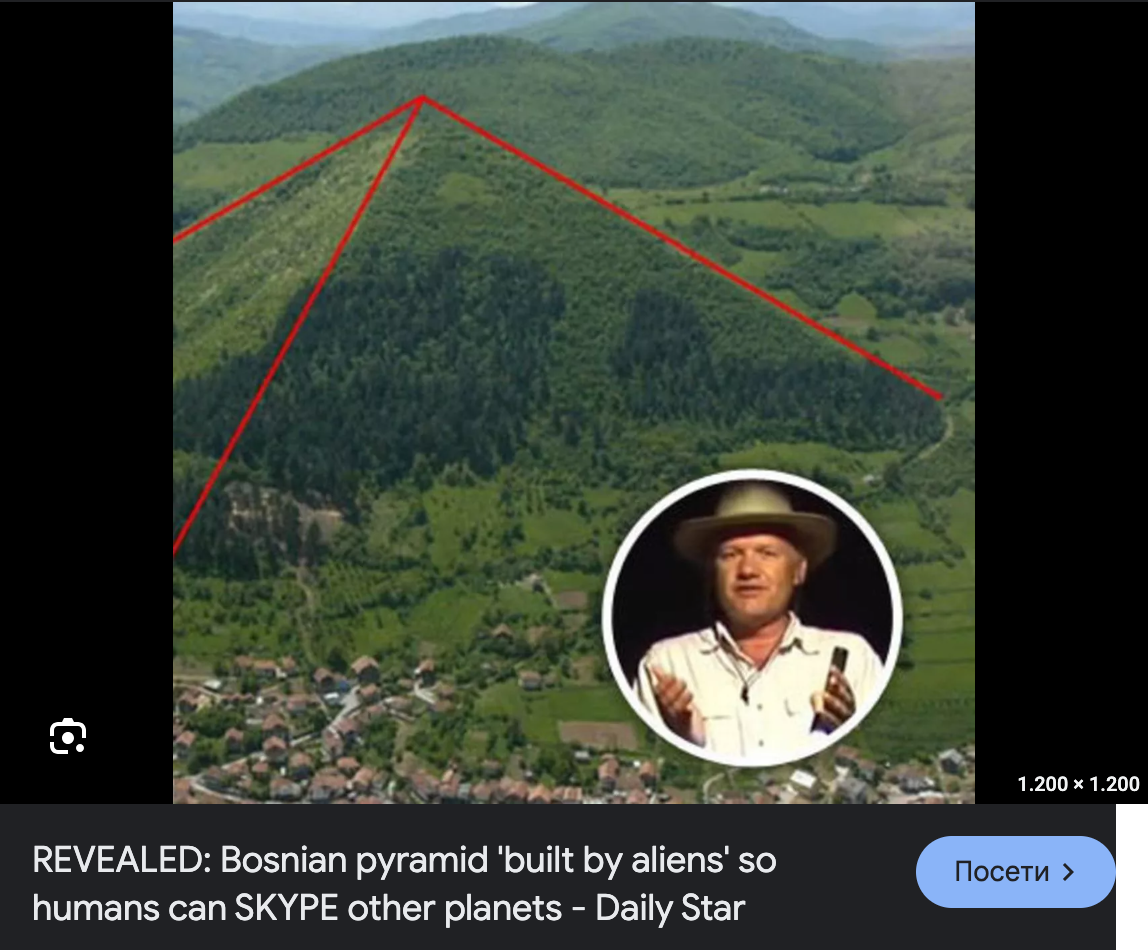
I began to imagine these structures as accumulation points, mysterious centres that might hold deeper meanings. This curiosity led me to the myth of the Bosnian Pyramids, a pseudoarchaeological theory proposed to explain a cluster of natural hills in Visoko, central Bosnia and Herzegovina. Since 2005, Semir Osmanagić, a Bosnian-American businessman based in Houston, has claimed that these hills are the largest human-made pyramids on Earth. Despite overwhelming scientific refutation, Osmanagić continues to promote the site as a tourist attraction.
MO: What fascinated me most was how this blend of pseudoarchaeology, capitalism, and spirituality exemplifies a broader cultural phenomenon. It seems to serve as a way to escape or reinterpret a dark and complicated historical past, particularly in the Balkan region, which has long struggled with its collective memory. Superstition, in this context, can function as a self-soothing tool, providing comfort and meaning.
However, when such myths become collective beliefs, they can also challenge established hierarchies and power structures, asserting alternative narratives and fostering a form of cultural resistance. This intersection of myth-making, capitalism, and spiritual longing reveals much about how communities seek to redefine and reclaim their identities amid history’s shadows.
MO: When I started thinking further about esotericism and accumulation points, I couldn’t skip over Wilhelm Reich: a brilliant Austrian psychoanalyst whose later inventions sparked a lot of controversy.
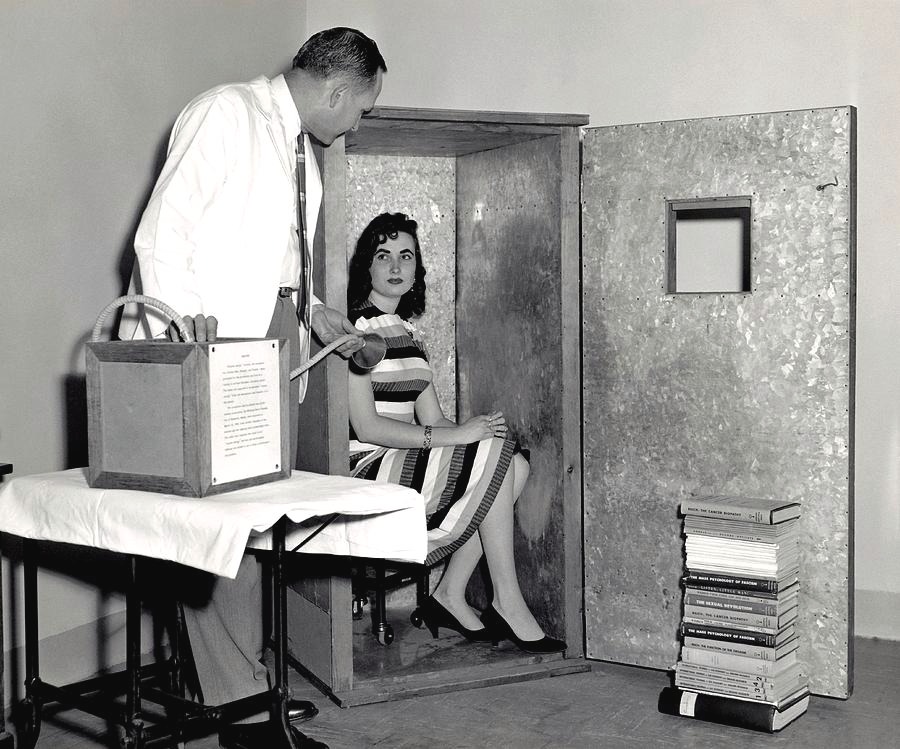
During his five years in Oslo, he had coined the term "orgone energy"—from "orgasm" and "organism"—for the notion of life energy. In 1940, he started building orgone accumulators, modified Faraday cages that he claimed were beneficial for cancer patients. He claimed that his laboratory cancer mice had had remarkable positive effects from being kept in a Faraday cage, so he built human-size versions, where one could sit inside. This led to newspaper stories about "sex boxes" that cured cancer.
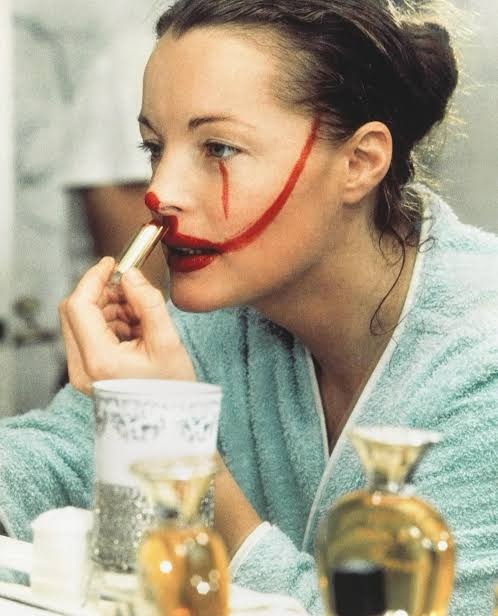
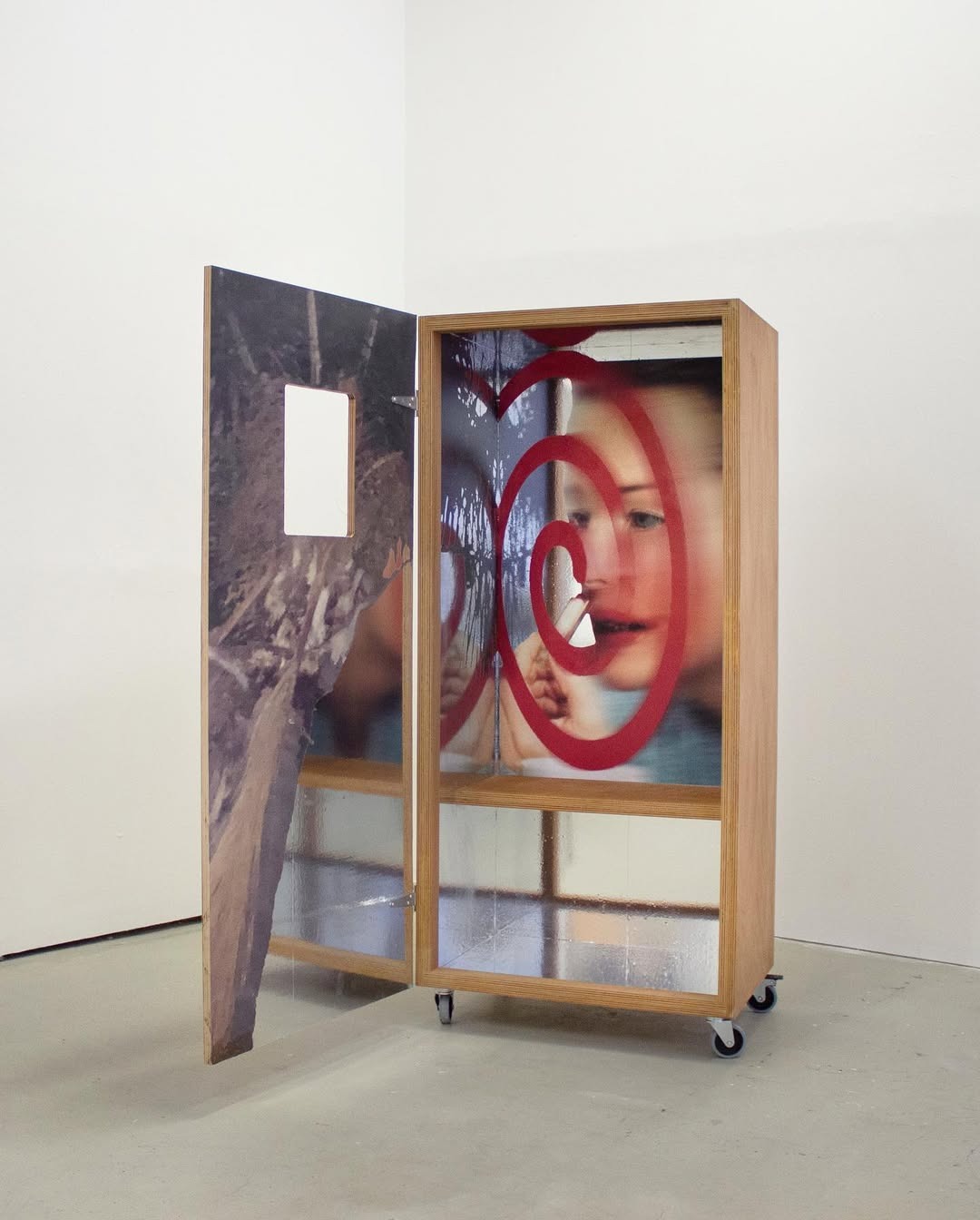
MO: I first got introduced to Reich when I first watched Dušan Makavejev's film W.R. – Mysteries of the Organism (1971), a classic in Yugoslav black wave cinema. The film explores Reich’s theories and the potential of sexual desire as a tool for political revolution and collective freedom. When I stumbled upon this beautiful photo of Romy Schneider applying lipstick to her face at her vanity, it echoed this idea of beauty and desire. I imagined her putting this lipstick all over her face in circles, almost as a lustful ritual. So I wanted to encapsulate this scene as an imprint in an orgone chamber. Almost as a visual diary of a personal ritual and its power.

MO: Symbols have long been central to my practice. They carry a semiotic charge that becomes engraved in the collective subconscious, allowing them to signal multiple and contradictory meanings. I am mostly interested in ambiguous symbols that exist across different cultures and epochs because they resist fixed interpretation. I like to combine and layer these symbols and see in which ways they can be deconstructed.


The Mnemosyne: inside curated moodboards is where we ask artists to walk us through their artistic research with an archive of visual bits (archived images, camera roll pictures, book pages, videos), to contrast algorithmic feeds and restore the fun in personally-curated visual boards.
What’s a pyramid for our collective unconscious? An ancient symbol, a mystery, the overwhelming proof of the existence of a perfect higher entity, an image on a postcard and a history book, the Illuminati triangle in a Katy Perry video, a glitch or loophole in the history of architecture.
Apart from being all these things at once, pyramids are also one of the biggest objects of study for artist Marko Obradović (1998, Belgrade, Serbia), interested in how the meaning of the word “ritual” continuously shifts from ancient times to the contemporary era. In his works, ancient symbols travel all the way from antiquity into the contemporary visual culture shaped by capitalism, as if time were compressing into a spiral just to ensure the eternal life of an icon across the centuries.
Almost three years ago, Obradović began noticing pyramids all around Belgrade, the city where he lives and where he received his painting degree. He noticed that post-Yugoslav architecture occasionally features pyramids as part of its aesthetic, and he immediately connected these strange apparitions to a contemporary capitalist mythology: the story of Semir Osmanagić, a Bosnian-American businessman convinced that the Bosnian mountains in the Visoko area are actually the largest human-made pyramids on Earth.
The mythologies emerging as coping mechanisms from the collective processing of historic wounds — and their hybridisation with conspiracy theories, clickbaiting, and pseudo-archaeology — is the starting point of the visual board Marko put together for this piece. What follows is the artist guiding us through fragments of symbols, myths, and a few uncanny presences in Belgrade’s shopping malls.
MO: In 2023, I started noticing a series of pyramid-like structures around Belgrade, where I live. They often had an esoteric quality that intrigued me, even though they weren’t official monuments or particularly attention-grabbing, despite their imposing presence. I hadn’t truly noticed them before.
I began to imagine these structures as accumulation points, mysterious centres that might hold deeper meanings. This curiosity led me to the myth of the Bosnian Pyramids, a pseudoarchaeological theory proposed to explain a cluster of natural hills in Visoko, central Bosnia and Herzegovina. Since 2005, Semir Osmanagić, a Bosnian-American businessman based in Houston, has claimed that these hills are the largest human-made pyramids on Earth. Despite overwhelming scientific refutation, Osmanagić continues to promote the site as a tourist attraction.
MO: What fascinated me most was how this blend of pseudoarchaeology, capitalism, and spirituality exemplifies a broader cultural phenomenon. It seems to serve as a way to escape or reinterpret a dark and complicated historical past, particularly in the Balkan region, which has long struggled with its collective memory. Superstition, in this context, can function as a self-soothing tool, providing comfort and meaning.
However, when such myths become collective beliefs, they can also challenge established hierarchies and power structures, asserting alternative narratives and fostering a form of cultural resistance. This intersection of myth-making, capitalism, and spiritual longing reveals much about how communities seek to redefine and reclaim their identities amid history’s shadows.
MO: When I started thinking further about esotericism and accumulation points, I couldn’t skip over Wilhelm Reich: a brilliant Austrian psychoanalyst whose later inventions sparked a lot of controversy.
During his five years in Oslo, he had coined the term "orgone energy"—from "orgasm" and "organism"—for the notion of life energy. In 1940, he started building orgone accumulators, modified Faraday cages that he claimed were beneficial for cancer patients. He claimed that his laboratory cancer mice had had remarkable positive effects from being kept in a Faraday cage, so he built human-size versions, where one could sit inside. This led to newspaper stories about "sex boxes" that cured cancer.
MO: I first got introduced to Reich when I first watched Dušan Makavejev's film W.R. – Mysteries of the Organism (1971), a classic in Yugoslav black wave cinema. The film explores Reich’s theories and the potential of sexual desire as a tool for political revolution and collective freedom. When I stumbled upon this beautiful photo of Romy Schneider applying lipstick to her face at her vanity, it echoed this idea of beauty and desire. I imagined her putting this lipstick all over her face in circles, almost as a lustful ritual. So I wanted to encapsulate this scene as an imprint in an orgone chamber. Almost as a visual diary of a personal ritual and its power.
MO: Symbols have long been central to my practice. They carry a semiotic charge that becomes engraved in the collective subconscious, allowing them to signal multiple and contradictory meanings. I am mostly interested in ambiguous symbols that exist across different cultures and epochs because they resist fixed interpretation. I like to combine and layer these symbols and see in which ways they can be deconstructed.
The Mnemosyne: inside curated moodboards is where we ask artists to walk us through their artistic research with an archive of visual bits (archived images, camera roll pictures, book pages, videos), to contrast algorithmic feeds and restore the fun in personally-curated visual boards.
What’s a pyramid for our collective unconscious? An ancient symbol, a mystery, the overwhelming proof of the existence of a perfect higher entity, an image on a postcard and a history book, the Illuminati triangle in a Katy Perry video, a glitch or loophole in the history of architecture.
Apart from being all these things at once, pyramids are also one of the biggest objects of study for artist Marko Obradović (1998, Belgrade, Serbia), interested in how the meaning of the word “ritual” continuously shifts from ancient times to the contemporary era. In his works, ancient symbols travel all the way from antiquity into the contemporary visual culture shaped by capitalism, as if time were compressing into a spiral just to ensure the eternal life of an icon across the centuries.
Almost three years ago, Obradović began noticing pyramids all around Belgrade, the city where he lives and where he received his painting degree. He noticed that post-Yugoslav architecture occasionally features pyramids as part of its aesthetic, and he immediately connected these strange apparitions to a contemporary capitalist mythology: the story of Semir Osmanagić, a Bosnian-American businessman convinced that the Bosnian mountains in the Visoko area are actually the largest human-made pyramids on Earth.
The mythologies emerging as coping mechanisms from the collective processing of historic wounds — and their hybridisation with conspiracy theories, clickbaiting, and pseudo-archaeology — is the starting point of the visual board Marko put together for this piece. What follows is the artist guiding us through fragments of symbols, myths, and a few uncanny presences in Belgrade’s shopping malls.
MO: In 2023, I started noticing a series of pyramid-like structures around Belgrade, where I live. They often had an esoteric quality that intrigued me, even though they weren’t official monuments or particularly attention-grabbing, despite their imposing presence. I hadn’t truly noticed them before.
I began to imagine these structures as accumulation points, mysterious centres that might hold deeper meanings. This curiosity led me to the myth of the Bosnian Pyramids, a pseudoarchaeological theory proposed to explain a cluster of natural hills in Visoko, central Bosnia and Herzegovina. Since 2005, Semir Osmanagić, a Bosnian-American businessman based in Houston, has claimed that these hills are the largest human-made pyramids on Earth. Despite overwhelming scientific refutation, Osmanagić continues to promote the site as a tourist attraction.
MO: What fascinated me most was how this blend of pseudoarchaeology, capitalism, and spirituality exemplifies a broader cultural phenomenon. It seems to serve as a way to escape or reinterpret a dark and complicated historical past, particularly in the Balkan region, which has long struggled with its collective memory. Superstition, in this context, can function as a self-soothing tool, providing comfort and meaning.
However, when such myths become collective beliefs, they can also challenge established hierarchies and power structures, asserting alternative narratives and fostering a form of cultural resistance. This intersection of myth-making, capitalism, and spiritual longing reveals much about how communities seek to redefine and reclaim their identities amid history’s shadows.
MO: When I started thinking further about esotericism and accumulation points, I couldn’t skip over Wilhelm Reich: a brilliant Austrian psychoanalyst whose later inventions sparked a lot of controversy.
During his five years in Oslo, he had coined the term "orgone energy"—from "orgasm" and "organism"—for the notion of life energy. In 1940, he started building orgone accumulators, modified Faraday cages that he claimed were beneficial for cancer patients. He claimed that his laboratory cancer mice had had remarkable positive effects from being kept in a Faraday cage, so he built human-size versions, where one could sit inside. This led to newspaper stories about "sex boxes" that cured cancer.
MO: I first got introduced to Reich when I first watched Dušan Makavejev's film W.R. – Mysteries of the Organism (1971), a classic in Yugoslav black wave cinema. The film explores Reich’s theories and the potential of sexual desire as a tool for political revolution and collective freedom. When I stumbled upon this beautiful photo of Romy Schneider applying lipstick to her face at her vanity, it echoed this idea of beauty and desire. I imagined her putting this lipstick all over her face in circles, almost as a lustful ritual. So I wanted to encapsulate this scene as an imprint in an orgone chamber. Almost as a visual diary of a personal ritual and its power.
MO: Symbols have long been central to my practice. They carry a semiotic charge that becomes engraved in the collective subconscious, allowing them to signal multiple and contradictory meanings. I am mostly interested in ambiguous symbols that exist across different cultures and epochs because they resist fixed interpretation. I like to combine and layer these symbols and see in which ways they can be deconstructed.
The Mnemosyne: inside curated moodboards is where we ask artists to walk us through their artistic research with an archive of visual bits (archived images, camera roll pictures, book pages, videos), to contrast algorithmic feeds and restore the fun in personally-curated visual boards.
What’s a pyramid for our collective unconscious? An ancient symbol, a mystery, the overwhelming proof of the existence of a perfect higher entity, an image on a postcard and a history book, the Illuminati triangle in a Katy Perry video, a glitch or loophole in the history of architecture.
Apart from being all these things at once, pyramids are also one of the biggest objects of study for artist Marko Obradović (1998, Belgrade, Serbia), interested in how the meaning of the word “ritual” continuously shifts from ancient times to the contemporary era. In his works, ancient symbols travel all the way from antiquity into the contemporary visual culture shaped by capitalism, as if time were compressing into a spiral just to ensure the eternal life of an icon across the centuries.
Almost three years ago, Obradović began noticing pyramids all around Belgrade, the city where he lives and where he received his painting degree. He noticed that post-Yugoslav architecture occasionally features pyramids as part of its aesthetic, and he immediately connected these strange apparitions to a contemporary capitalist mythology: the story of Semir Osmanagić, a Bosnian-American businessman convinced that the Bosnian mountains in the Visoko area are actually the largest human-made pyramids on Earth.
The mythologies emerging as coping mechanisms from the collective processing of historic wounds — and their hybridisation with conspiracy theories, clickbaiting, and pseudo-archaeology — is the starting point of the visual board Marko put together for this piece. What follows is the artist guiding us through fragments of symbols, myths, and a few uncanny presences in Belgrade’s shopping malls.
MO: In 2023, I started noticing a series of pyramid-like structures around Belgrade, where I live. They often had an esoteric quality that intrigued me, even though they weren’t official monuments or particularly attention-grabbing, despite their imposing presence. I hadn’t truly noticed them before.
I began to imagine these structures as accumulation points, mysterious centres that might hold deeper meanings. This curiosity led me to the myth of the Bosnian Pyramids, a pseudoarchaeological theory proposed to explain a cluster of natural hills in Visoko, central Bosnia and Herzegovina. Since 2005, Semir Osmanagić, a Bosnian-American businessman based in Houston, has claimed that these hills are the largest human-made pyramids on Earth. Despite overwhelming scientific refutation, Osmanagić continues to promote the site as a tourist attraction.
MO: What fascinated me most was how this blend of pseudoarchaeology, capitalism, and spirituality exemplifies a broader cultural phenomenon. It seems to serve as a way to escape or reinterpret a dark and complicated historical past, particularly in the Balkan region, which has long struggled with its collective memory. Superstition, in this context, can function as a self-soothing tool, providing comfort and meaning.
However, when such myths become collective beliefs, they can also challenge established hierarchies and power structures, asserting alternative narratives and fostering a form of cultural resistance. This intersection of myth-making, capitalism, and spiritual longing reveals much about how communities seek to redefine and reclaim their identities amid history’s shadows.
MO: When I started thinking further about esotericism and accumulation points, I couldn’t skip over Wilhelm Reich: a brilliant Austrian psychoanalyst whose later inventions sparked a lot of controversy.
During his five years in Oslo, he had coined the term "orgone energy"—from "orgasm" and "organism"—for the notion of life energy. In 1940, he started building orgone accumulators, modified Faraday cages that he claimed were beneficial for cancer patients. He claimed that his laboratory cancer mice had had remarkable positive effects from being kept in a Faraday cage, so he built human-size versions, where one could sit inside. This led to newspaper stories about "sex boxes" that cured cancer.
MO: I first got introduced to Reich when I first watched Dušan Makavejev's film W.R. – Mysteries of the Organism (1971), a classic in Yugoslav black wave cinema. The film explores Reich’s theories and the potential of sexual desire as a tool for political revolution and collective freedom. When I stumbled upon this beautiful photo of Romy Schneider applying lipstick to her face at her vanity, it echoed this idea of beauty and desire. I imagined her putting this lipstick all over her face in circles, almost as a lustful ritual. So I wanted to encapsulate this scene as an imprint in an orgone chamber. Almost as a visual diary of a personal ritual and its power.
MO: Symbols have long been central to my practice. They carry a semiotic charge that becomes engraved in the collective subconscious, allowing them to signal multiple and contradictory meanings. I am mostly interested in ambiguous symbols that exist across different cultures and epochs because they resist fixed interpretation. I like to combine and layer these symbols and see in which ways they can be deconstructed.
The Mnemosyne: inside curated moodboards is where we ask artists to walk us through their artistic research with an archive of visual bits (archived images, camera roll pictures, book pages, videos), to contrast algorithmic feeds and restore the fun in personally-curated visual boards.
What’s a pyramid for our collective unconscious? An ancient symbol, a mystery, the overwhelming proof of the existence of a perfect higher entity, an image on a postcard and a history book, the Illuminati triangle in a Katy Perry video, a glitch or loophole in the history of architecture.
Apart from being all these things at once, pyramids are also one of the biggest objects of study for artist Marko Obradović (1998, Belgrade, Serbia), interested in how the meaning of the word “ritual” continuously shifts from ancient times to the contemporary era. In his works, ancient symbols travel all the way from antiquity into the contemporary visual culture shaped by capitalism, as if time were compressing into a spiral just to ensure the eternal life of an icon across the centuries.
Almost three years ago, Obradović began noticing pyramids all around Belgrade, the city where he lives and where he received his painting degree. He noticed that post-Yugoslav architecture occasionally features pyramids as part of its aesthetic, and he immediately connected these strange apparitions to a contemporary capitalist mythology: the story of Semir Osmanagić, a Bosnian-American businessman convinced that the Bosnian mountains in the Visoko area are actually the largest human-made pyramids on Earth.
The mythologies emerging as coping mechanisms from the collective processing of historic wounds — and their hybridisation with conspiracy theories, clickbaiting, and pseudo-archaeology — is the starting point of the visual board Marko put together for this piece. What follows is the artist guiding us through fragments of symbols, myths, and a few uncanny presences in Belgrade’s shopping malls.
MO: In 2023, I started noticing a series of pyramid-like structures around Belgrade, where I live. They often had an esoteric quality that intrigued me, even though they weren’t official monuments or particularly attention-grabbing, despite their imposing presence. I hadn’t truly noticed them before.
I began to imagine these structures as accumulation points, mysterious centres that might hold deeper meanings. This curiosity led me to the myth of the Bosnian Pyramids, a pseudoarchaeological theory proposed to explain a cluster of natural hills in Visoko, central Bosnia and Herzegovina. Since 2005, Semir Osmanagić, a Bosnian-American businessman based in Houston, has claimed that these hills are the largest human-made pyramids on Earth. Despite overwhelming scientific refutation, Osmanagić continues to promote the site as a tourist attraction.
MO: What fascinated me most was how this blend of pseudoarchaeology, capitalism, and spirituality exemplifies a broader cultural phenomenon. It seems to serve as a way to escape or reinterpret a dark and complicated historical past, particularly in the Balkan region, which has long struggled with its collective memory. Superstition, in this context, can function as a self-soothing tool, providing comfort and meaning.
However, when such myths become collective beliefs, they can also challenge established hierarchies and power structures, asserting alternative narratives and fostering a form of cultural resistance. This intersection of myth-making, capitalism, and spiritual longing reveals much about how communities seek to redefine and reclaim their identities amid history’s shadows.
MO: When I started thinking further about esotericism and accumulation points, I couldn’t skip over Wilhelm Reich: a brilliant Austrian psychoanalyst whose later inventions sparked a lot of controversy.
During his five years in Oslo, he had coined the term "orgone energy"—from "orgasm" and "organism"—for the notion of life energy. In 1940, he started building orgone accumulators, modified Faraday cages that he claimed were beneficial for cancer patients. He claimed that his laboratory cancer mice had had remarkable positive effects from being kept in a Faraday cage, so he built human-size versions, where one could sit inside. This led to newspaper stories about "sex boxes" that cured cancer.
MO: I first got introduced to Reich when I first watched Dušan Makavejev's film W.R. – Mysteries of the Organism (1971), a classic in Yugoslav black wave cinema. The film explores Reich’s theories and the potential of sexual desire as a tool for political revolution and collective freedom. When I stumbled upon this beautiful photo of Romy Schneider applying lipstick to her face at her vanity, it echoed this idea of beauty and desire. I imagined her putting this lipstick all over her face in circles, almost as a lustful ritual. So I wanted to encapsulate this scene as an imprint in an orgone chamber. Almost as a visual diary of a personal ritual and its power.
MO: Symbols have long been central to my practice. They carry a semiotic charge that becomes engraved in the collective subconscious, allowing them to signal multiple and contradictory meanings. I am mostly interested in ambiguous symbols that exist across different cultures and epochs because they resist fixed interpretation. I like to combine and layer these symbols and see in which ways they can be deconstructed.
The Mnemosyne: inside curated moodboards is where we ask artists to walk us through their artistic research with an archive of visual bits (archived images, camera roll pictures, book pages, videos), to contrast algorithmic feeds and restore the fun in personally-curated visual boards.
What’s a pyramid for our collective unconscious? An ancient symbol, a mystery, the overwhelming proof of the existence of a perfect higher entity, an image on a postcard and a history book, the Illuminati triangle in a Katy Perry video, a glitch or loophole in the history of architecture.
Apart from being all these things at once, pyramids are also one of the biggest objects of study for artist Marko Obradović (1998, Belgrade, Serbia), interested in how the meaning of the word “ritual” continuously shifts from ancient times to the contemporary era. In his works, ancient symbols travel all the way from antiquity into the contemporary visual culture shaped by capitalism, as if time were compressing into a spiral just to ensure the eternal life of an icon across the centuries.
Almost three years ago, Obradović began noticing pyramids all around Belgrade, the city where he lives and where he received his painting degree. He noticed that post-Yugoslav architecture occasionally features pyramids as part of its aesthetic, and he immediately connected these strange apparitions to a contemporary capitalist mythology: the story of Semir Osmanagić, a Bosnian-American businessman convinced that the Bosnian mountains in the Visoko area are actually the largest human-made pyramids on Earth.
The mythologies emerging as coping mechanisms from the collective processing of historic wounds — and their hybridisation with conspiracy theories, clickbaiting, and pseudo-archaeology — is the starting point of the visual board Marko put together for this piece. What follows is the artist guiding us through fragments of symbols, myths, and a few uncanny presences in Belgrade’s shopping malls.
MO: In 2023, I started noticing a series of pyramid-like structures around Belgrade, where I live. They often had an esoteric quality that intrigued me, even though they weren’t official monuments or particularly attention-grabbing, despite their imposing presence. I hadn’t truly noticed them before.
I began to imagine these structures as accumulation points, mysterious centres that might hold deeper meanings. This curiosity led me to the myth of the Bosnian Pyramids, a pseudoarchaeological theory proposed to explain a cluster of natural hills in Visoko, central Bosnia and Herzegovina. Since 2005, Semir Osmanagić, a Bosnian-American businessman based in Houston, has claimed that these hills are the largest human-made pyramids on Earth. Despite overwhelming scientific refutation, Osmanagić continues to promote the site as a tourist attraction.
MO: What fascinated me most was how this blend of pseudoarchaeology, capitalism, and spirituality exemplifies a broader cultural phenomenon. It seems to serve as a way to escape or reinterpret a dark and complicated historical past, particularly in the Balkan region, which has long struggled with its collective memory. Superstition, in this context, can function as a self-soothing tool, providing comfort and meaning.
However, when such myths become collective beliefs, they can also challenge established hierarchies and power structures, asserting alternative narratives and fostering a form of cultural resistance. This intersection of myth-making, capitalism, and spiritual longing reveals much about how communities seek to redefine and reclaim their identities amid history’s shadows.
MO: When I started thinking further about esotericism and accumulation points, I couldn’t skip over Wilhelm Reich: a brilliant Austrian psychoanalyst whose later inventions sparked a lot of controversy.
During his five years in Oslo, he had coined the term "orgone energy"—from "orgasm" and "organism"—for the notion of life energy. In 1940, he started building orgone accumulators, modified Faraday cages that he claimed were beneficial for cancer patients. He claimed that his laboratory cancer mice had had remarkable positive effects from being kept in a Faraday cage, so he built human-size versions, where one could sit inside. This led to newspaper stories about "sex boxes" that cured cancer.
MO: I first got introduced to Reich when I first watched Dušan Makavejev's film W.R. – Mysteries of the Organism (1971), a classic in Yugoslav black wave cinema. The film explores Reich’s theories and the potential of sexual desire as a tool for political revolution and collective freedom. When I stumbled upon this beautiful photo of Romy Schneider applying lipstick to her face at her vanity, it echoed this idea of beauty and desire. I imagined her putting this lipstick all over her face in circles, almost as a lustful ritual. So I wanted to encapsulate this scene as an imprint in an orgone chamber. Almost as a visual diary of a personal ritual and its power.
MO: Symbols have long been central to my practice. They carry a semiotic charge that becomes engraved in the collective subconscious, allowing them to signal multiple and contradictory meanings. I am mostly interested in ambiguous symbols that exist across different cultures and epochs because they resist fixed interpretation. I like to combine and layer these symbols and see in which ways they can be deconstructed.
The Mnemosyne: inside curated moodboards is where we ask artists to walk us through their artistic research with an archive of visual bits (archived images, camera roll pictures, book pages, videos), to contrast algorithmic feeds and restore the fun in personally-curated visual boards.
What’s a pyramid for our collective unconscious? An ancient symbol, a mystery, the overwhelming proof of the existence of a perfect higher entity, an image on a postcard and a history book, the Illuminati triangle in a Katy Perry video, a glitch or loophole in the history of architecture.
Apart from being all these things at once, pyramids are also one of the biggest objects of study for artist Marko Obradović (1998, Belgrade, Serbia), interested in how the meaning of the word “ritual” continuously shifts from ancient times to the contemporary era. In his works, ancient symbols travel all the way from antiquity into the contemporary visual culture shaped by capitalism, as if time were compressing into a spiral just to ensure the eternal life of an icon across the centuries.
Almost three years ago, Obradović began noticing pyramids all around Belgrade, the city where he lives and where he received his painting degree. He noticed that post-Yugoslav architecture occasionally features pyramids as part of its aesthetic, and he immediately connected these strange apparitions to a contemporary capitalist mythology: the story of Semir Osmanagić, a Bosnian-American businessman convinced that the Bosnian mountains in the Visoko area are actually the largest human-made pyramids on Earth.
The mythologies emerging as coping mechanisms from the collective processing of historic wounds — and their hybridisation with conspiracy theories, clickbaiting, and pseudo-archaeology — is the starting point of the visual board Marko put together for this piece. What follows is the artist guiding us through fragments of symbols, myths, and a few uncanny presences in Belgrade’s shopping malls.
MO: In 2023, I started noticing a series of pyramid-like structures around Belgrade, where I live. They often had an esoteric quality that intrigued me, even though they weren’t official monuments or particularly attention-grabbing, despite their imposing presence. I hadn’t truly noticed them before.
I began to imagine these structures as accumulation points, mysterious centres that might hold deeper meanings. This curiosity led me to the myth of the Bosnian Pyramids, a pseudoarchaeological theory proposed to explain a cluster of natural hills in Visoko, central Bosnia and Herzegovina. Since 2005, Semir Osmanagić, a Bosnian-American businessman based in Houston, has claimed that these hills are the largest human-made pyramids on Earth. Despite overwhelming scientific refutation, Osmanagić continues to promote the site as a tourist attraction.
MO: What fascinated me most was how this blend of pseudoarchaeology, capitalism, and spirituality exemplifies a broader cultural phenomenon. It seems to serve as a way to escape or reinterpret a dark and complicated historical past, particularly in the Balkan region, which has long struggled with its collective memory. Superstition, in this context, can function as a self-soothing tool, providing comfort and meaning.
However, when such myths become collective beliefs, they can also challenge established hierarchies and power structures, asserting alternative narratives and fostering a form of cultural resistance. This intersection of myth-making, capitalism, and spiritual longing reveals much about how communities seek to redefine and reclaim their identities amid history’s shadows.
MO: When I started thinking further about esotericism and accumulation points, I couldn’t skip over Wilhelm Reich: a brilliant Austrian psychoanalyst whose later inventions sparked a lot of controversy.
During his five years in Oslo, he had coined the term "orgone energy"—from "orgasm" and "organism"—for the notion of life energy. In 1940, he started building orgone accumulators, modified Faraday cages that he claimed were beneficial for cancer patients. He claimed that his laboratory cancer mice had had remarkable positive effects from being kept in a Faraday cage, so he built human-size versions, where one could sit inside. This led to newspaper stories about "sex boxes" that cured cancer.
MO: I first got introduced to Reich when I first watched Dušan Makavejev's film W.R. – Mysteries of the Organism (1971), a classic in Yugoslav black wave cinema. The film explores Reich’s theories and the potential of sexual desire as a tool for political revolution and collective freedom. When I stumbled upon this beautiful photo of Romy Schneider applying lipstick to her face at her vanity, it echoed this idea of beauty and desire. I imagined her putting this lipstick all over her face in circles, almost as a lustful ritual. So I wanted to encapsulate this scene as an imprint in an orgone chamber. Almost as a visual diary of a personal ritual and its power.
MO: Symbols have long been central to my practice. They carry a semiotic charge that becomes engraved in the collective subconscious, allowing them to signal multiple and contradictory meanings. I am mostly interested in ambiguous symbols that exist across different cultures and epochs because they resist fixed interpretation. I like to combine and layer these symbols and see in which ways they can be deconstructed.
The Mnemosyne: inside curated moodboards is where we ask artists to walk us through their artistic research with an archive of visual bits (archived images, camera roll pictures, book pages, videos), to contrast algorithmic feeds and restore the fun in personally-curated visual boards.
What’s a pyramid for our collective unconscious? An ancient symbol, a mystery, the overwhelming proof of the existence of a perfect higher entity, an image on a postcard and a history book, the Illuminati triangle in a Katy Perry video, a glitch or loophole in the history of architecture.
Apart from being all these things at once, pyramids are also one of the biggest objects of study for artist Marko Obradović (1998, Belgrade, Serbia), interested in how the meaning of the word “ritual” continuously shifts from ancient times to the contemporary era. In his works, ancient symbols travel all the way from antiquity into the contemporary visual culture shaped by capitalism, as if time were compressing into a spiral just to ensure the eternal life of an icon across the centuries.
Almost three years ago, Obradović began noticing pyramids all around Belgrade, the city where he lives and where he received his painting degree. He noticed that post-Yugoslav architecture occasionally features pyramids as part of its aesthetic, and he immediately connected these strange apparitions to a contemporary capitalist mythology: the story of Semir Osmanagić, a Bosnian-American businessman convinced that the Bosnian mountains in the Visoko area are actually the largest human-made pyramids on Earth.
The mythologies emerging as coping mechanisms from the collective processing of historic wounds — and their hybridisation with conspiracy theories, clickbaiting, and pseudo-archaeology — is the starting point of the visual board Marko put together for this piece. What follows is the artist guiding us through fragments of symbols, myths, and a few uncanny presences in Belgrade’s shopping malls.
MO: In 2023, I started noticing a series of pyramid-like structures around Belgrade, where I live. They often had an esoteric quality that intrigued me, even though they weren’t official monuments or particularly attention-grabbing, despite their imposing presence. I hadn’t truly noticed them before.
I began to imagine these structures as accumulation points, mysterious centres that might hold deeper meanings. This curiosity led me to the myth of the Bosnian Pyramids, a pseudoarchaeological theory proposed to explain a cluster of natural hills in Visoko, central Bosnia and Herzegovina. Since 2005, Semir Osmanagić, a Bosnian-American businessman based in Houston, has claimed that these hills are the largest human-made pyramids on Earth. Despite overwhelming scientific refutation, Osmanagić continues to promote the site as a tourist attraction.
MO: What fascinated me most was how this blend of pseudoarchaeology, capitalism, and spirituality exemplifies a broader cultural phenomenon. It seems to serve as a way to escape or reinterpret a dark and complicated historical past, particularly in the Balkan region, which has long struggled with its collective memory. Superstition, in this context, can function as a self-soothing tool, providing comfort and meaning.
However, when such myths become collective beliefs, they can also challenge established hierarchies and power structures, asserting alternative narratives and fostering a form of cultural resistance. This intersection of myth-making, capitalism, and spiritual longing reveals much about how communities seek to redefine and reclaim their identities amid history’s shadows.
MO: When I started thinking further about esotericism and accumulation points, I couldn’t skip over Wilhelm Reich: a brilliant Austrian psychoanalyst whose later inventions sparked a lot of controversy.
During his five years in Oslo, he had coined the term "orgone energy"—from "orgasm" and "organism"—for the notion of life energy. In 1940, he started building orgone accumulators, modified Faraday cages that he claimed were beneficial for cancer patients. He claimed that his laboratory cancer mice had had remarkable positive effects from being kept in a Faraday cage, so he built human-size versions, where one could sit inside. This led to newspaper stories about "sex boxes" that cured cancer.
MO: I first got introduced to Reich when I first watched Dušan Makavejev's film W.R. – Mysteries of the Organism (1971), a classic in Yugoslav black wave cinema. The film explores Reich’s theories and the potential of sexual desire as a tool for political revolution and collective freedom. When I stumbled upon this beautiful photo of Romy Schneider applying lipstick to her face at her vanity, it echoed this idea of beauty and desire. I imagined her putting this lipstick all over her face in circles, almost as a lustful ritual. So I wanted to encapsulate this scene as an imprint in an orgone chamber. Almost as a visual diary of a personal ritual and its power.
MO: Symbols have long been central to my practice. They carry a semiotic charge that becomes engraved in the collective subconscious, allowing them to signal multiple and contradictory meanings. I am mostly interested in ambiguous symbols that exist across different cultures and epochs because they resist fixed interpretation. I like to combine and layer these symbols and see in which ways they can be deconstructed.
The Mnemosyne: inside curated moodboards is where we ask artists to walk us through their artistic research with an archive of visual bits (archived images, camera roll pictures, book pages, videos), to contrast algorithmic feeds and restore the fun in personally-curated visual boards.
What’s a pyramid for our collective unconscious? An ancient symbol, a mystery, the overwhelming proof of the existence of a perfect higher entity, an image on a postcard and a history book, the Illuminati triangle in a Katy Perry video, a glitch or loophole in the history of architecture.
Apart from being all these things at once, pyramids are also one of the biggest objects of study for artist Marko Obradović (1998, Belgrade, Serbia), interested in how the meaning of the word “ritual” continuously shifts from ancient times to the contemporary era. In his works, ancient symbols travel all the way from antiquity into the contemporary visual culture shaped by capitalism, as if time were compressing into a spiral just to ensure the eternal life of an icon across the centuries.
Almost three years ago, Obradović began noticing pyramids all around Belgrade, the city where he lives and where he received his painting degree. He noticed that post-Yugoslav architecture occasionally features pyramids as part of its aesthetic, and he immediately connected these strange apparitions to a contemporary capitalist mythology: the story of Semir Osmanagić, a Bosnian-American businessman convinced that the Bosnian mountains in the Visoko area are actually the largest human-made pyramids on Earth.
The mythologies emerging as coping mechanisms from the collective processing of historic wounds — and their hybridisation with conspiracy theories, clickbaiting, and pseudo-archaeology — is the starting point of the visual board Marko put together for this piece. What follows is the artist guiding us through fragments of symbols, myths, and a few uncanny presences in Belgrade’s shopping malls.
MO: In 2023, I started noticing a series of pyramid-like structures around Belgrade, where I live. They often had an esoteric quality that intrigued me, even though they weren’t official monuments or particularly attention-grabbing, despite their imposing presence. I hadn’t truly noticed them before.
I began to imagine these structures as accumulation points, mysterious centres that might hold deeper meanings. This curiosity led me to the myth of the Bosnian Pyramids, a pseudoarchaeological theory proposed to explain a cluster of natural hills in Visoko, central Bosnia and Herzegovina. Since 2005, Semir Osmanagić, a Bosnian-American businessman based in Houston, has claimed that these hills are the largest human-made pyramids on Earth. Despite overwhelming scientific refutation, Osmanagić continues to promote the site as a tourist attraction.
MO: What fascinated me most was how this blend of pseudoarchaeology, capitalism, and spirituality exemplifies a broader cultural phenomenon. It seems to serve as a way to escape or reinterpret a dark and complicated historical past, particularly in the Balkan region, which has long struggled with its collective memory. Superstition, in this context, can function as a self-soothing tool, providing comfort and meaning.
However, when such myths become collective beliefs, they can also challenge established hierarchies and power structures, asserting alternative narratives and fostering a form of cultural resistance. This intersection of myth-making, capitalism, and spiritual longing reveals much about how communities seek to redefine and reclaim their identities amid history’s shadows.
MO: When I started thinking further about esotericism and accumulation points, I couldn’t skip over Wilhelm Reich: a brilliant Austrian psychoanalyst whose later inventions sparked a lot of controversy.
During his five years in Oslo, he had coined the term "orgone energy"—from "orgasm" and "organism"—for the notion of life energy. In 1940, he started building orgone accumulators, modified Faraday cages that he claimed were beneficial for cancer patients. He claimed that his laboratory cancer mice had had remarkable positive effects from being kept in a Faraday cage, so he built human-size versions, where one could sit inside. This led to newspaper stories about "sex boxes" that cured cancer.
MO: I first got introduced to Reich when I first watched Dušan Makavejev's film W.R. – Mysteries of the Organism (1971), a classic in Yugoslav black wave cinema. The film explores Reich’s theories and the potential of sexual desire as a tool for political revolution and collective freedom. When I stumbled upon this beautiful photo of Romy Schneider applying lipstick to her face at her vanity, it echoed this idea of beauty and desire. I imagined her putting this lipstick all over her face in circles, almost as a lustful ritual. So I wanted to encapsulate this scene as an imprint in an orgone chamber. Almost as a visual diary of a personal ritual and its power.
MO: Symbols have long been central to my practice. They carry a semiotic charge that becomes engraved in the collective subconscious, allowing them to signal multiple and contradictory meanings. I am mostly interested in ambiguous symbols that exist across different cultures and epochs because they resist fixed interpretation. I like to combine and layer these symbols and see in which ways they can be deconstructed.
The Mnemosyne: inside curated moodboards is where we ask artists to walk us through their artistic research with an archive of visual bits (archived images, camera roll pictures, book pages, videos), to contrast algorithmic feeds and restore the fun in personally-curated visual boards.
What’s a pyramid for our collective unconscious? An ancient symbol, a mystery, the overwhelming proof of the existence of a perfect higher entity, an image on a postcard and a history book, the Illuminati triangle in a Katy Perry video, a glitch or loophole in the history of architecture.
Apart from being all these things at once, pyramids are also one of the biggest objects of study for artist Marko Obradović (1998, Belgrade, Serbia), interested in how the meaning of the word “ritual” continuously shifts from ancient times to the contemporary era. In his works, ancient symbols travel all the way from antiquity into the contemporary visual culture shaped by capitalism, as if time were compressing into a spiral just to ensure the eternal life of an icon across the centuries.
Almost three years ago, Obradović began noticing pyramids all around Belgrade, the city where he lives and where he received his painting degree. He noticed that post-Yugoslav architecture occasionally features pyramids as part of its aesthetic, and he immediately connected these strange apparitions to a contemporary capitalist mythology: the story of Semir Osmanagić, a Bosnian-American businessman convinced that the Bosnian mountains in the Visoko area are actually the largest human-made pyramids on Earth.
The mythologies emerging as coping mechanisms from the collective processing of historic wounds — and their hybridisation with conspiracy theories, clickbaiting, and pseudo-archaeology — is the starting point of the visual board Marko put together for this piece. What follows is the artist guiding us through fragments of symbols, myths, and a few uncanny presences in Belgrade’s shopping malls.
MO: In 2023, I started noticing a series of pyramid-like structures around Belgrade, where I live. They often had an esoteric quality that intrigued me, even though they weren’t official monuments or particularly attention-grabbing, despite their imposing presence. I hadn’t truly noticed them before.
I began to imagine these structures as accumulation points, mysterious centres that might hold deeper meanings. This curiosity led me to the myth of the Bosnian Pyramids, a pseudoarchaeological theory proposed to explain a cluster of natural hills in Visoko, central Bosnia and Herzegovina. Since 2005, Semir Osmanagić, a Bosnian-American businessman based in Houston, has claimed that these hills are the largest human-made pyramids on Earth. Despite overwhelming scientific refutation, Osmanagić continues to promote the site as a tourist attraction.
MO: What fascinated me most was how this blend of pseudoarchaeology, capitalism, and spirituality exemplifies a broader cultural phenomenon. It seems to serve as a way to escape or reinterpret a dark and complicated historical past, particularly in the Balkan region, which has long struggled with its collective memory. Superstition, in this context, can function as a self-soothing tool, providing comfort and meaning.
However, when such myths become collective beliefs, they can also challenge established hierarchies and power structures, asserting alternative narratives and fostering a form of cultural resistance. This intersection of myth-making, capitalism, and spiritual longing reveals much about how communities seek to redefine and reclaim their identities amid history’s shadows.
MO: When I started thinking further about esotericism and accumulation points, I couldn’t skip over Wilhelm Reich: a brilliant Austrian psychoanalyst whose later inventions sparked a lot of controversy.
During his five years in Oslo, he had coined the term "orgone energy"—from "orgasm" and "organism"—for the notion of life energy. In 1940, he started building orgone accumulators, modified Faraday cages that he claimed were beneficial for cancer patients. He claimed that his laboratory cancer mice had had remarkable positive effects from being kept in a Faraday cage, so he built human-size versions, where one could sit inside. This led to newspaper stories about "sex boxes" that cured cancer.
MO: I first got introduced to Reich when I first watched Dušan Makavejev's film W.R. – Mysteries of the Organism (1971), a classic in Yugoslav black wave cinema. The film explores Reich’s theories and the potential of sexual desire as a tool for political revolution and collective freedom. When I stumbled upon this beautiful photo of Romy Schneider applying lipstick to her face at her vanity, it echoed this idea of beauty and desire. I imagined her putting this lipstick all over her face in circles, almost as a lustful ritual. So I wanted to encapsulate this scene as an imprint in an orgone chamber. Almost as a visual diary of a personal ritual and its power.
MO: Symbols have long been central to my practice. They carry a semiotic charge that becomes engraved in the collective subconscious, allowing them to signal multiple and contradictory meanings. I am mostly interested in ambiguous symbols that exist across different cultures and epochs because they resist fixed interpretation. I like to combine and layer these symbols and see in which ways they can be deconstructed.
The Mnemosyne: inside curated moodboards is where we ask artists to walk us through their artistic research with an archive of visual bits (archived images, camera roll pictures, book pages, videos), to contrast algorithmic feeds and restore the fun in personally-curated visual boards.
What’s a pyramid for our collective unconscious? An ancient symbol, a mystery, the overwhelming proof of the existence of a perfect higher entity, an image on a postcard and a history book, the Illuminati triangle in a Katy Perry video, a glitch or loophole in the history of architecture.
Apart from being all these things at once, pyramids are also one of the biggest objects of study for artist Marko Obradović (1998, Belgrade, Serbia), interested in how the meaning of the word “ritual” continuously shifts from ancient times to the contemporary era. In his works, ancient symbols travel all the way from antiquity into the contemporary visual culture shaped by capitalism, as if time were compressing into a spiral just to ensure the eternal life of an icon across the centuries.
Almost three years ago, Obradović began noticing pyramids all around Belgrade, the city where he lives and where he received his painting degree. He noticed that post-Yugoslav architecture occasionally features pyramids as part of its aesthetic, and he immediately connected these strange apparitions to a contemporary capitalist mythology: the story of Semir Osmanagić, a Bosnian-American businessman convinced that the Bosnian mountains in the Visoko area are actually the largest human-made pyramids on Earth.
The mythologies emerging as coping mechanisms from the collective processing of historic wounds — and their hybridisation with conspiracy theories, clickbaiting, and pseudo-archaeology — is the starting point of the visual board Marko put together for this piece. What follows is the artist guiding us through fragments of symbols, myths, and a few uncanny presences in Belgrade’s shopping malls.
MO: In 2023, I started noticing a series of pyramid-like structures around Belgrade, where I live. They often had an esoteric quality that intrigued me, even though they weren’t official monuments or particularly attention-grabbing, despite their imposing presence. I hadn’t truly noticed them before.
I began to imagine these structures as accumulation points, mysterious centres that might hold deeper meanings. This curiosity led me to the myth of the Bosnian Pyramids, a pseudoarchaeological theory proposed to explain a cluster of natural hills in Visoko, central Bosnia and Herzegovina. Since 2005, Semir Osmanagić, a Bosnian-American businessman based in Houston, has claimed that these hills are the largest human-made pyramids on Earth. Despite overwhelming scientific refutation, Osmanagić continues to promote the site as a tourist attraction.
MO: What fascinated me most was how this blend of pseudoarchaeology, capitalism, and spirituality exemplifies a broader cultural phenomenon. It seems to serve as a way to escape or reinterpret a dark and complicated historical past, particularly in the Balkan region, which has long struggled with its collective memory. Superstition, in this context, can function as a self-soothing tool, providing comfort and meaning.
However, when such myths become collective beliefs, they can also challenge established hierarchies and power structures, asserting alternative narratives and fostering a form of cultural resistance. This intersection of myth-making, capitalism, and spiritual longing reveals much about how communities seek to redefine and reclaim their identities amid history’s shadows.
MO: When I started thinking further about esotericism and accumulation points, I couldn’t skip over Wilhelm Reich: a brilliant Austrian psychoanalyst whose later inventions sparked a lot of controversy.
During his five years in Oslo, he had coined the term "orgone energy"—from "orgasm" and "organism"—for the notion of life energy. In 1940, he started building orgone accumulators, modified Faraday cages that he claimed were beneficial for cancer patients. He claimed that his laboratory cancer mice had had remarkable positive effects from being kept in a Faraday cage, so he built human-size versions, where one could sit inside. This led to newspaper stories about "sex boxes" that cured cancer.
MO: I first got introduced to Reich when I first watched Dušan Makavejev's film W.R. – Mysteries of the Organism (1971), a classic in Yugoslav black wave cinema. The film explores Reich’s theories and the potential of sexual desire as a tool for political revolution and collective freedom. When I stumbled upon this beautiful photo of Romy Schneider applying lipstick to her face at her vanity, it echoed this idea of beauty and desire. I imagined her putting this lipstick all over her face in circles, almost as a lustful ritual. So I wanted to encapsulate this scene as an imprint in an orgone chamber. Almost as a visual diary of a personal ritual and its power.
MO: Symbols have long been central to my practice. They carry a semiotic charge that becomes engraved in the collective subconscious, allowing them to signal multiple and contradictory meanings. I am mostly interested in ambiguous symbols that exist across different cultures and epochs because they resist fixed interpretation. I like to combine and layer these symbols and see in which ways they can be deconstructed.


.png)


.svg)


