
That Which Grows the Swamp is Swallowed by the Stomach at SET Vauxhall
A ripped piece of cardboard is duct-taped to the lift button panel. It reads ‘Exhibition on 16th floor’ in red marker. The third iteration of That Which Grows the Swamp is Swallowed by the Stomach, an ongoing exhibition series, is taking place at the SET Vauxhall building. Founded in 2016 by three artists, SET is a contemporary arts organisation and charity that repurposes abandoned buildings into creative community spaces.
Back in January, SET put out a call to its members for exhibition proposals. Artists Dani Smith, Andie Aylsworth and Keyannah Issacs responded with a proposal for a new iteration of an ongoing project, which began as Issacs and Aylsworth’s degree show at Central Saint Martins in 2023. For this edition, Smith took on the role of Guest Curator, while Issacs and Aylsworth worked as Production Coordinators.
Six artists are included in the exhibition, connected through their SET association membership and the theme of posthumanism. The work explores existential tensions such as human and non-human agency, and organic and inorganic matter. Aylsworth explains, “Rather than positioning landscape as a passive backdrop to human experience, the exhibition considers landscape and body as mutually constitutive: porous, shifting and shaping one another.” She is a London-based textile artist whose practice interrogates the relationship between planet and people through the lens of Traditional Ecological Knowledge (TEK).
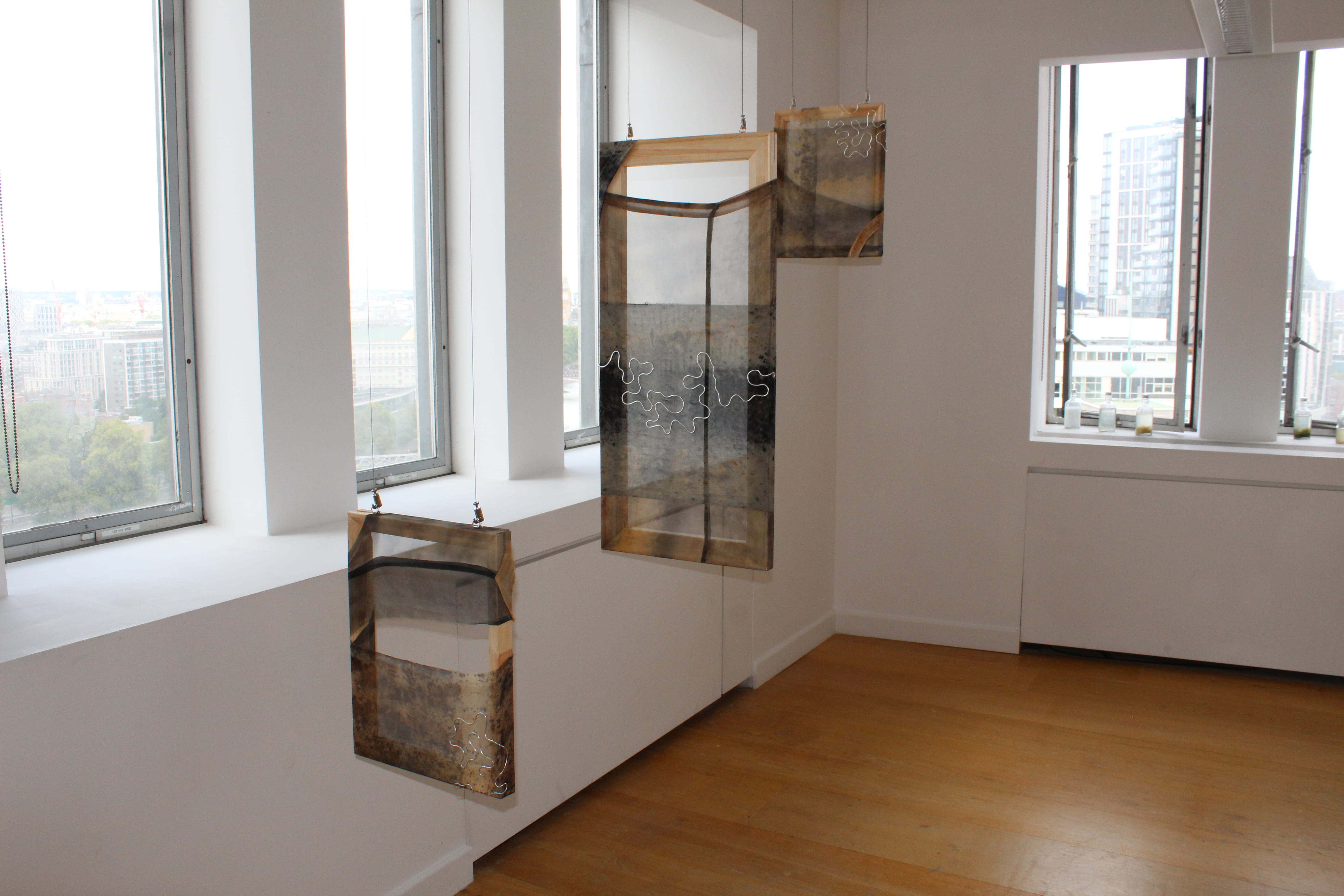
Aylsworth’s piece Untitled XXXII (Curated Nature) (2026) is a triptych hung by the windows overlooking the Thames. Deadstock georgette dyed with botanical pigments is stretched across a wooden frame and suspended in the air. Steel wire envelops the translucent fabric, as if only to highlight its fragility.
The title of the exhibition, which Aylsworth admits is “pretentiously long”, was the result of a word soup exercise she did with her co-founder Issacs at university. “We took a bunch of words and put them on cut-up pieces of paper and moved them around like puzzle pieces. The title was the first one we came up with, and two hours later, it was still our favourite option.”
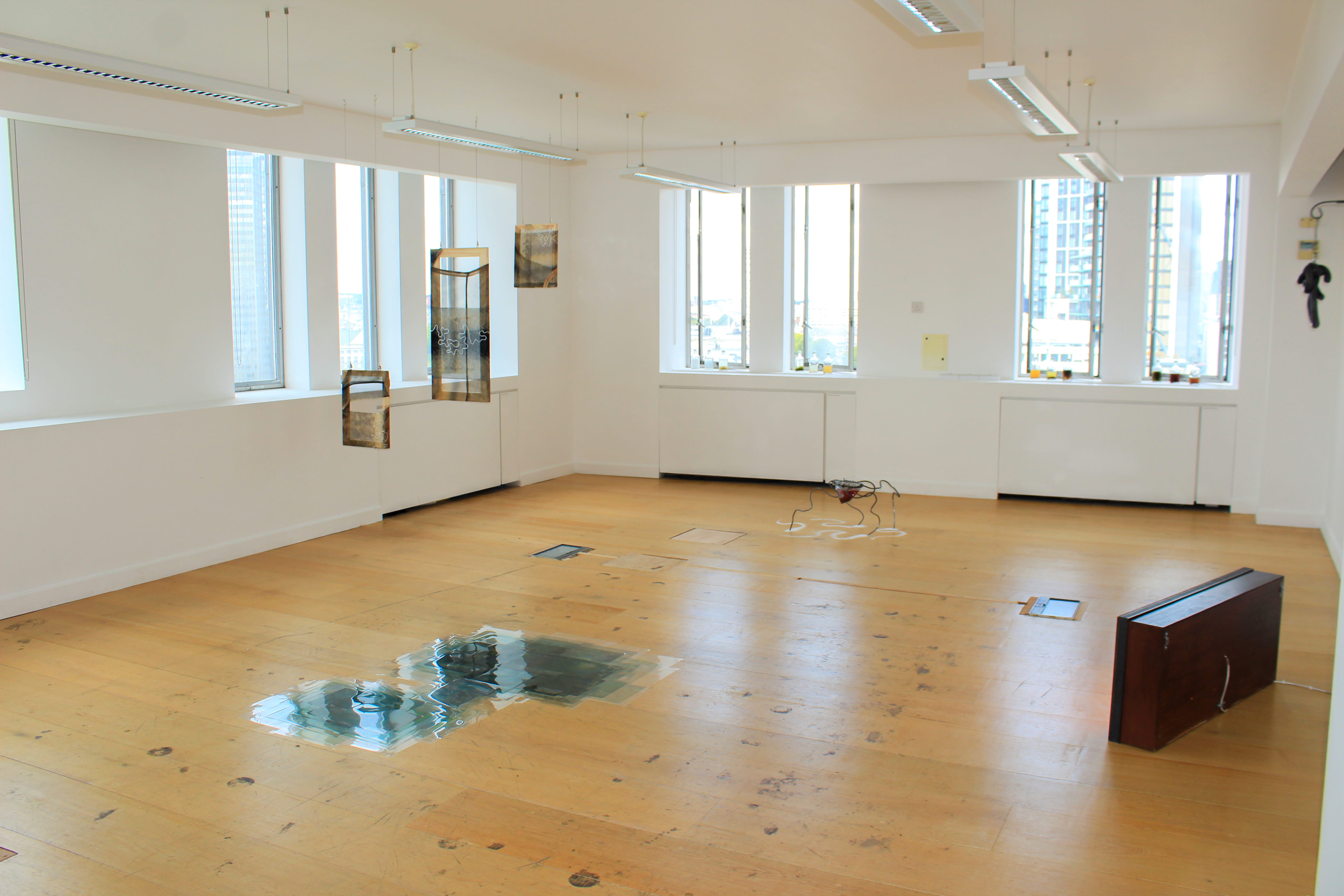
A solitary man in paint-covered board shorts enters the exhibition space and beelines for a piece of work by Rinsanga Leivang. A pile of inkjet-printed acetate sheets are meticulously assembled across the floor, creating a collage of barely-there images that feel like subsiding memories. The young man crouches down next to the piece, titled Tui ka duh (2026), and quietly acquaints himself with it. He tells me he had seen the work on Instagram and had specifically come to the exhibition to see it offline: “It’s even more beautiful in person.”
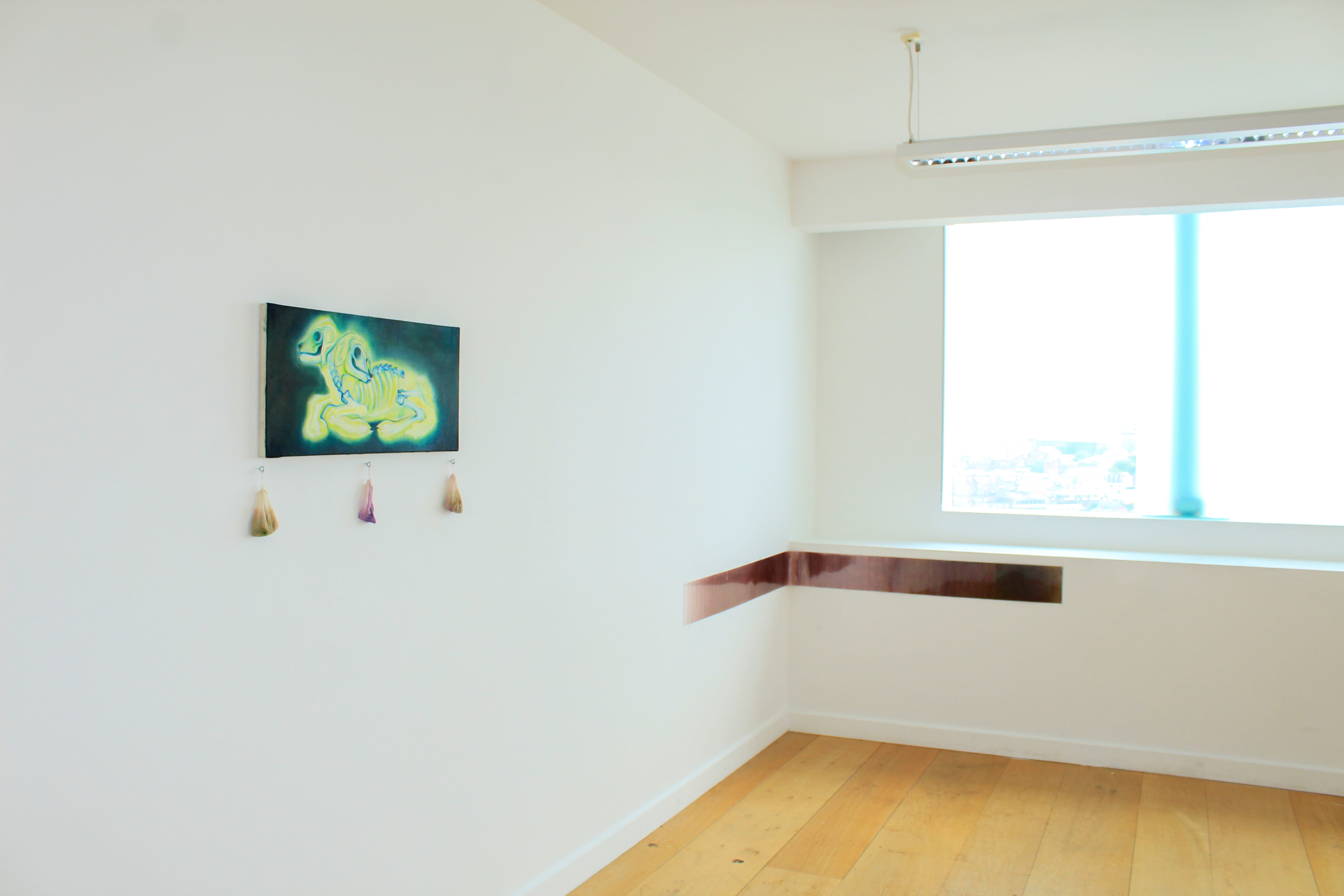
Dani Smith’s practice also deals in memory and world-building. Her piece, Holding Passage (2026), is crafted out of found wood and metal, watercolour and jewel CD cases. The mythological CD holder reminds me of all the sounds I’ll never hear again and the ones that would take me right back to a specific moment in time. Later, I googled if new cars still come with built-in CD players. The answer is no, no they don’t.
While chatting at the opening, Aylsworth explains that “the value in attending these community-led, organised events and exhibitions is the shared value. Not only does the visitor get to reach the art world at the entry-level point where it's accessible and fun, but also on the other side, the artists and the curators and the organisers are equally as excited that they're coming in through the door.” I spend the evening running into old friends and meeting friends of friends.
As the government in the UK and governments across the world continue to cut funding for the arts, organisations such as SET, which provide accessibly priced spaces and programmes, are vital. It was recently announced that SET Social in Peckham, an events and studio space that hosts frequent art workshops and events, is currently under threat of closure due to proposed redevelopment plans. SET Social is currently fundraising £23,000 to cover the costs resulting from an unexpected six-week closure that started in June.
Aylsworth mentions that producing an exhibition like this is “fundamentally impossible” without grants or subsidised spaces. She says, “I think this has been proven quite frequently recently, if you invest time and money into emerging creatives, it really does pay off.” She cites Curry Barker’s 2026 blockbuster film Obsession and Hauser & Wirth’s representation of George Roy as examples, adding, “we're reaching a turning point because places like blue-chip galleries are hurting so badly right now that these emerging community-centred spaces are where artists are flocking to.”
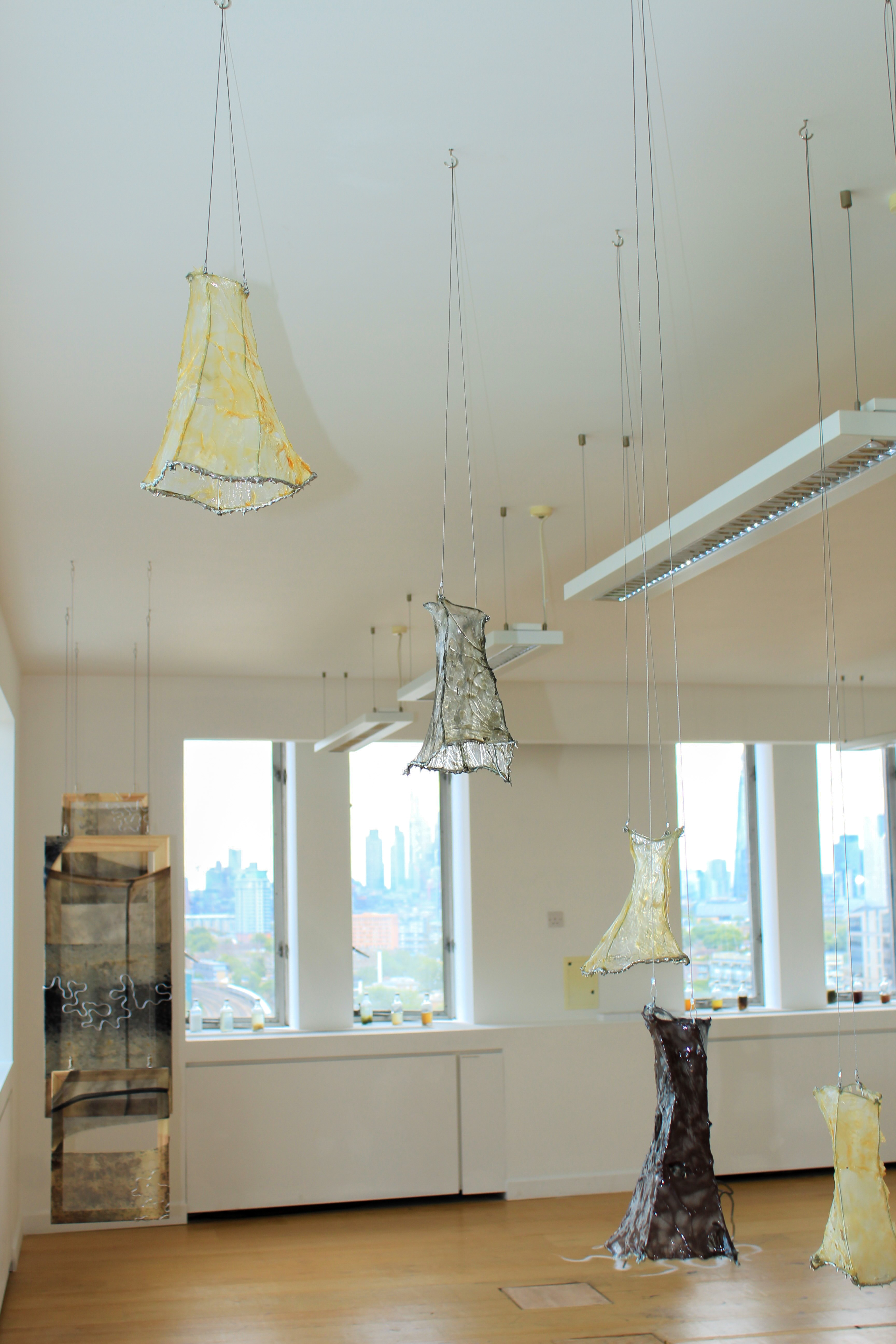
There are windows on the north and east sides of the exhibition space, directly overlooking the Thames on one side and a picturesque view of a rainbow skipping over Greenwich on the other. LED-illuminated beeswax with bronze shadow-puppet poppies, Isis Powers-Bird’s Opium Theatre (2025), transforms as the sun sets. It’s like the black figures that dance behind your shut eyelids in the sun. There is a lived-in quality to a lot of the work on display; the materials are not stagnant but evolving. Posthumanism, as a school of thought, offers alternative definitions of what it means to be human—definitions that suggest that what it means to be human is not fixed.
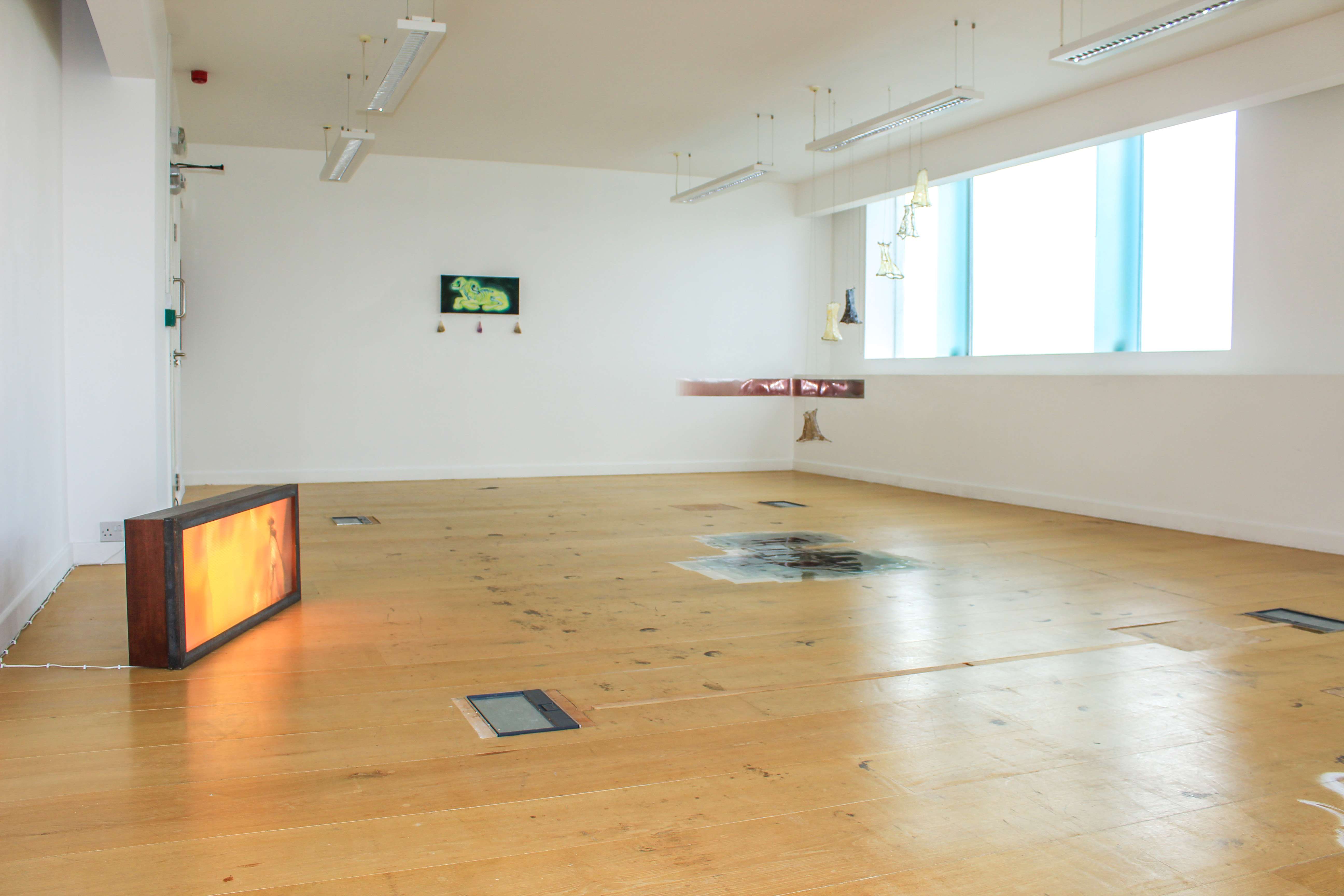
That Which Grows the Swamp is Swallowed by the Stomach is on from 21 August to 6 September 2026.
Find out more information on Instagram: @thatwhichgrows_
Don't forget to check in and leave your review on the gowithYamo app!