
Photo London 2026: Standout photographers to follow from the fair
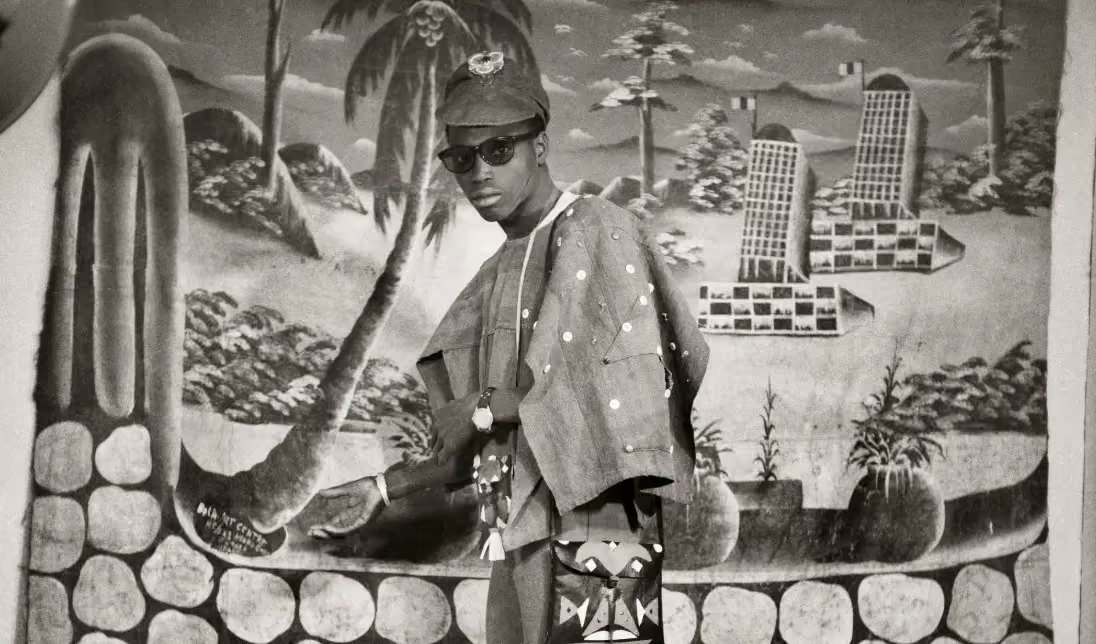
Lead image: Detail of Sanlé Sory, La Détermination, 1980 © Sanlé Sory / Tezeta, courtesy David Hill Gallery.
This year, Photo London moved from Somerset House to Olympia in Kensington, with new sections, an expanded publishing hall and a film screening room for the first time. Here are the standout photographers from the fair, who have shows to catch this summer and autumn.
Looking back at the week, what stayed with me was how much of the strongest work was rooted in process, from Sama Alshaibi working in 19th-century photogravure to artist Cyrus Mahboubian’s Polaroid-only exhibition.
David Campany — curator, writer and Creative Director of the International Center of Photography — has talked about how financial pressures on art institutions have pushed photography to simplify its language in the name of accessibility. He is right, but the problem runs in both directions: a significant part of the sector responds instead by drowning work in over-academic text, as if the image alone needs to be argued into existence. At Olympia, I found myself hardly looking beyond the work itself, toward the wall text, which is surely a mark of a successful photograph?
Here are my highlights from the fair, and who you should check out beyond Photo London.
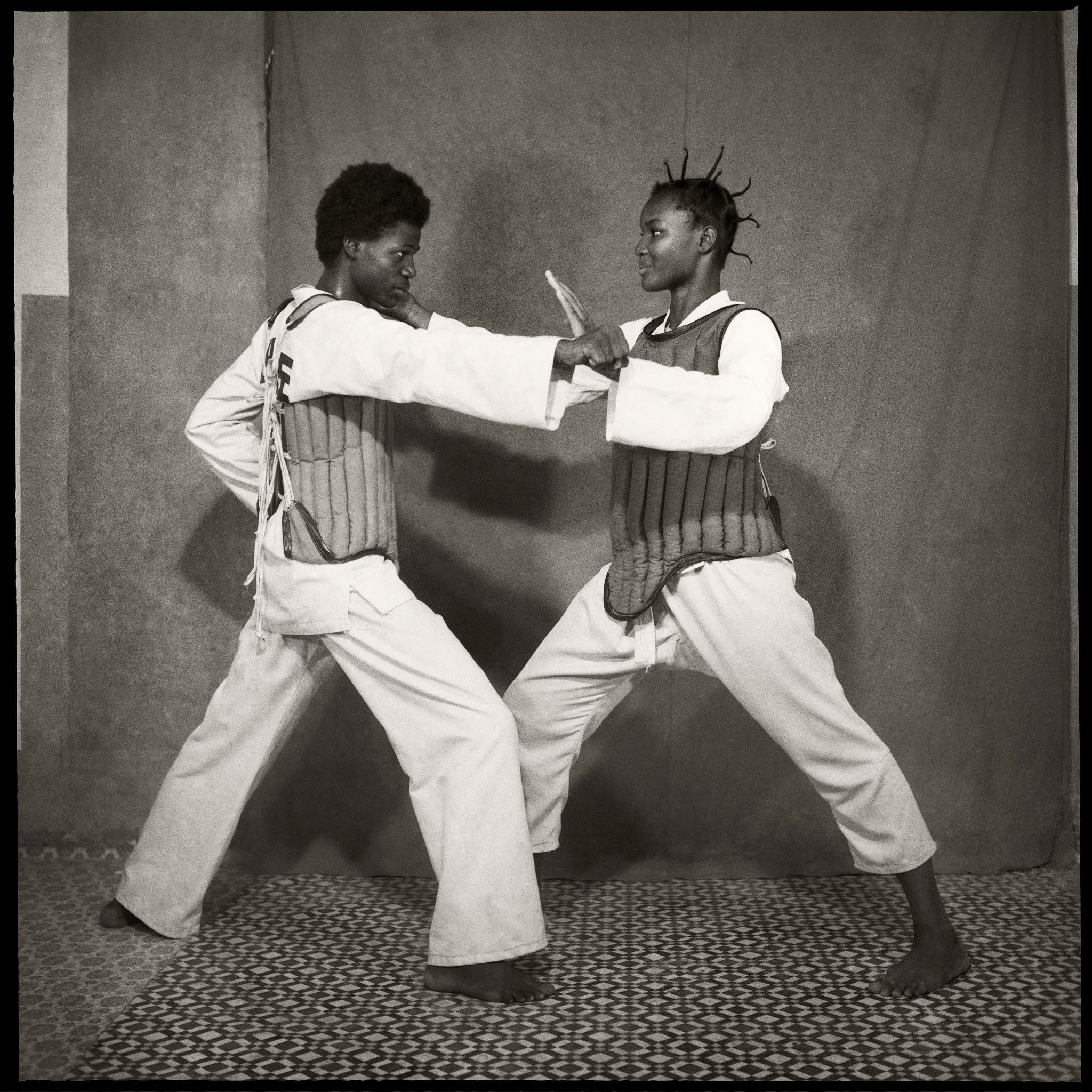
Their highlight was Sanlé Sory, a photographer born in 1943 in Burkina Faso, who opened his Volta Photo studio in 1960, the year his country gained independence from France. He worked as the official photographer for Volta Jazz and staged his own Bals Poussière, travelling out into the countryside with a sound system to photograph people dancing until sunrise. His studio portraits and nightlife images from the 1960s and 70s show youth culture, fashion and movement. The Photographers' Gallery opens a full show of his colour work this October.
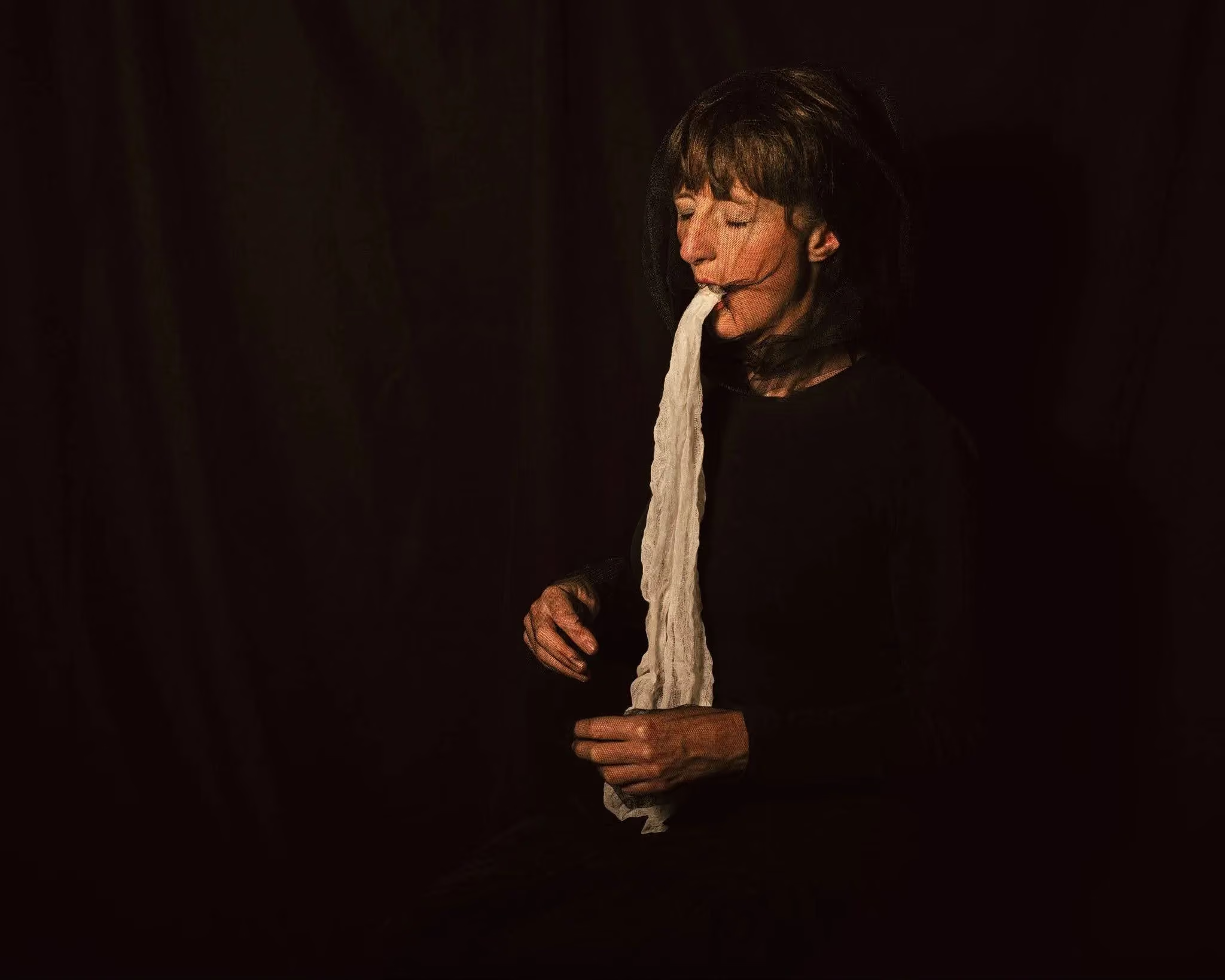
Close Gallery, based in Somerset, showed Trish Morrissey and Gordon Cheung. Morrissey's photographs sit between self-portraiture and performance: formally composed, slow-burning, and psychologically pressurised. She creates self-portraits built from characters from archival research and her own biography. The work is filmic in its structure and dramatic in its staging. Her work is held in the V&A and the Martin Parr Foundation. Gordon Cheung presented his large-scale works built on pages of Financial Times stock listings, with digital processes and 3D printing producing surfaces that read as classical landscape until you look closer and find data running through them. Close open a major Cheung survey in Somerset from 6 June.
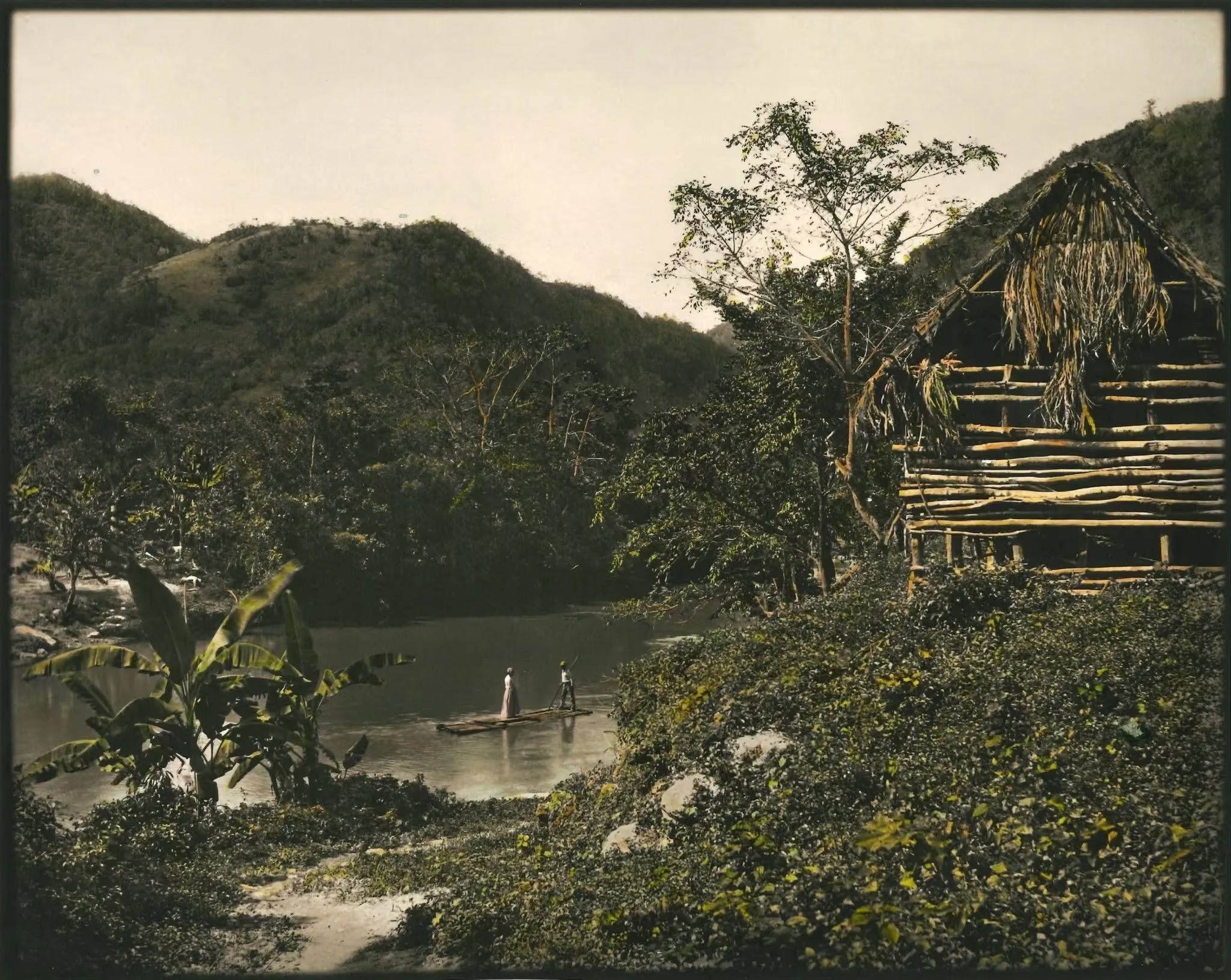
Autograph's presentation We Are the Ones We Have Been Waiting For asked who is seen, remembered and represented in the canon of photography, drawing on their own collection and commissions. Eileen Perrier's images from the Afro Hair and Beauty Show series (1998–2003) document Black hair culture. Silvia Rosi's Neither Could Exist Alone (2020) recreates photographs from her parents' archive in Togo, inserting herself into images that predate her. Ingrid Pollard's The Valentine Days (2017) works with 1890s promotional postcards of Jamaica made by the Scottish firm Valentine & Sons to sell the island to investors. Pollard spent hours hand-tinting the images, recovering colour and agency to the Black figures the original photographers treated as incidental. Nhu Xuan Hua's newly commissioned New Chapter – Archive from the year '85 (2026) works with family archives and intergenerational silence. Her first major UK solo show, Of Walking on Fire, is now open at Autograph until 19 September.
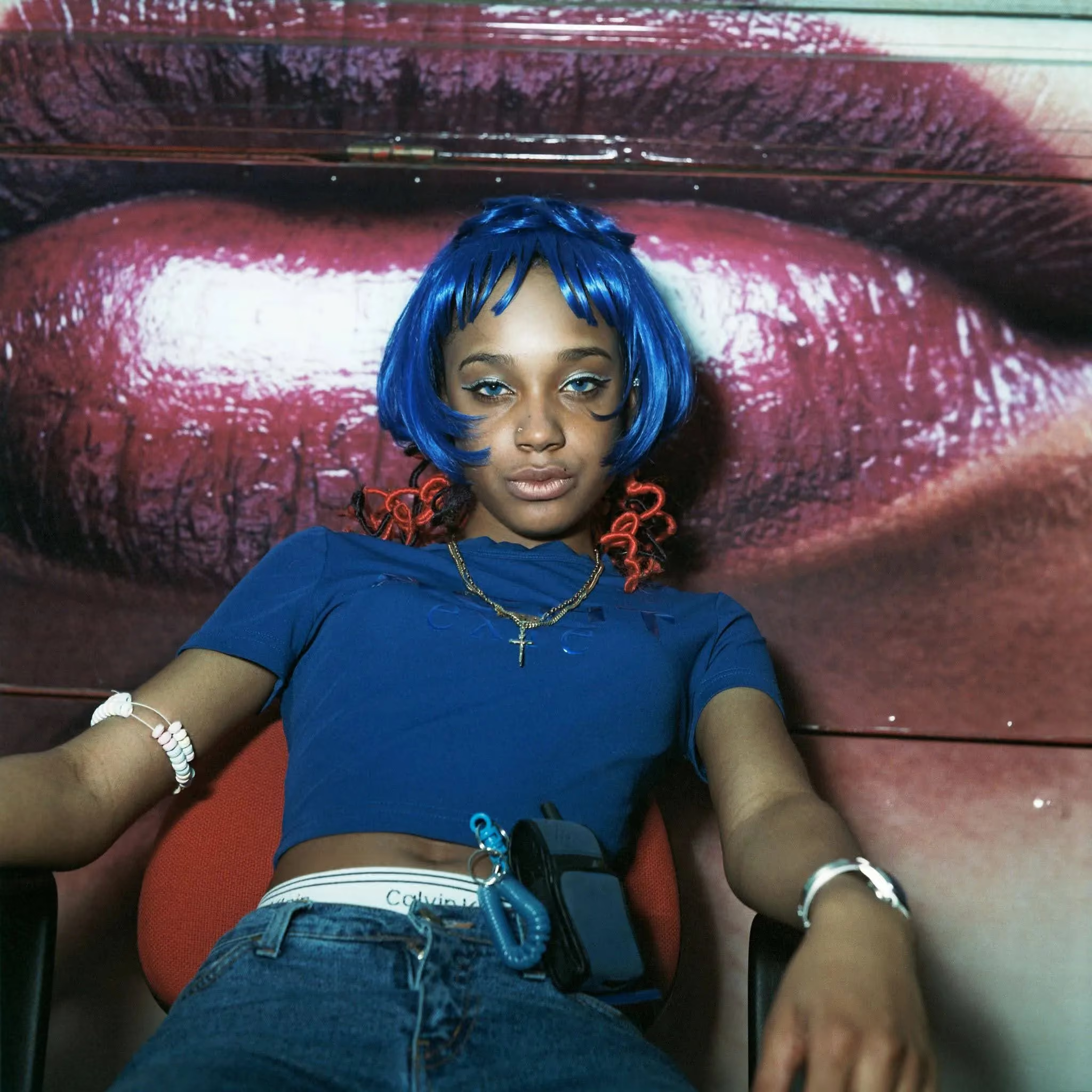
Discover their work from around the globe
Sama Alshaibi showed three photogravures with blind embossing from the series Carry Over at Galerie Esther Woerdehoff — images made to subvert and reclaim the Orientalist portrait photographs that defined how Arab women were pictured for the West. Find her work here.
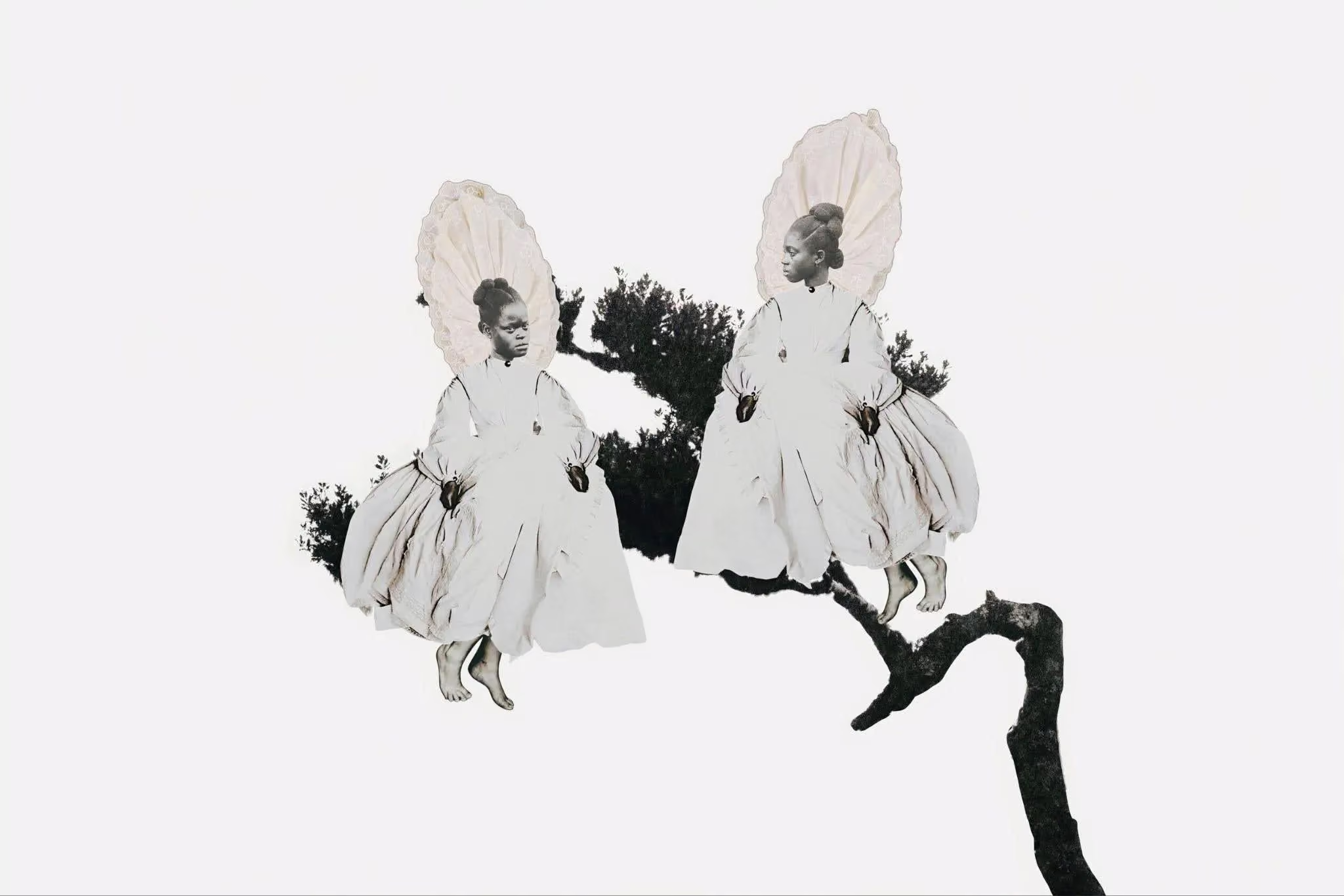
Tshepiso Moropa, the South African collage artist represented by THK Gallery, won the V&A Parasol Foundation Prize for Women in Photography in 2025. Her hand-crafted collages draw on African archives and Setswana oral histories.
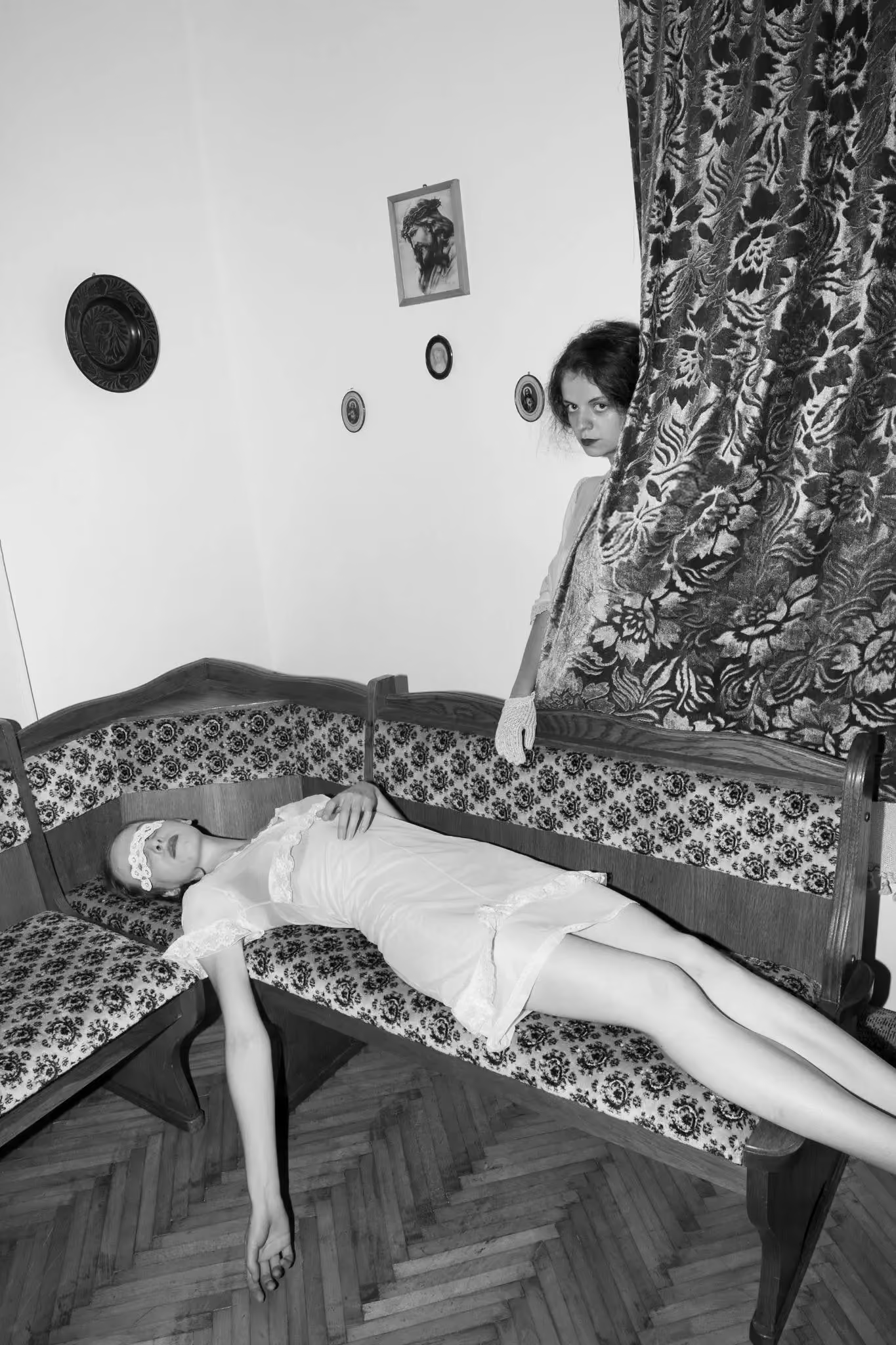
TOBE Gallery, Budapest, brought a selection of emerging photographers, and Kincső Bede was exceptional. A Romanian artist with Hungarian roots, Bede's work deals with the atmosphere of communism's long aftermath. Follow her work here.
Antidote, curated by artist Cyrus Mahboubian, co-director of Maison Pan, brought a Polaroid-only group show built on the idea that Polaroid is an antidote to digital excess, each image a tactile, unreproducible object. As someone who has been shooting a lot of Polaroid lately on a vintage SX-70 and an I-2, I agree! Among the artists shown were Roger Ballen, Maryam Eisler and Alexei Riboud.
Catch these UK photo exhibitions
Deutsche Börse Photography Foundation Prize 2026 — The Photographers' Gallery, London. Until 7 June 2026
Bristol Photo Festival — across Bristol. October 2026
Nhu Xuan Hua: Of Walking on Fire — Autograph, Rivington Place, London EC2A 3BA. Until 19 September 2026. Free
Gordon Cheung: Many Worlds, One Mind — Close Gallery, Somerset. 6 June – 15 August 2026
Sanlé Sory: Colour Years — The Photographers' Gallery, London. 14 October 2026 – 21 February 2027
Sanlé Sory: In Fine Style — David Hill Gallery, London. September 2026
Light and Magic: The Birth of Art Photography — Tate Modern, London. 14 October 2026 – 21 February 2027