Personal Notes #6: In conversation with Space Afrika & Valentin Noujaïm, The Dark Wood at the ICA
In the middle of the journey of our life, I found myself in a dark wood – The Dark Wood, a new film and sound installation by Space Afrika & Valentin Noujaïm, featuring Opera Omnia (2025) at The Institute of Contemporary Arts (ICA).
Valentin Noujaïm is an artist and filmmaker based in Paris and Athens. Born in France to Egyptian and Lebanese parents, his work probes the structures of power, racial and colonial, that continue to shape the present. Through fictions that weave political history with personal memory, he gives voice to the quiet revolts of communities pushed to the margins.
Space Afrika is the powerful Manchester-born duo formed by Joshua Inyang and Joshua Reid, shaped by the stories they both share. Inspired by the visual and sonic aspects of industrialism, the duo pays homage to their lived suburban environments. For them, the work is inseparable from lived experience, driven by a desire to dismantle the boundaries Black individuals are expected to stay within. The duo has created a distinct, genuine sound that is synth-driven, blending modern classical, grime, pop, trip-hop, and more.
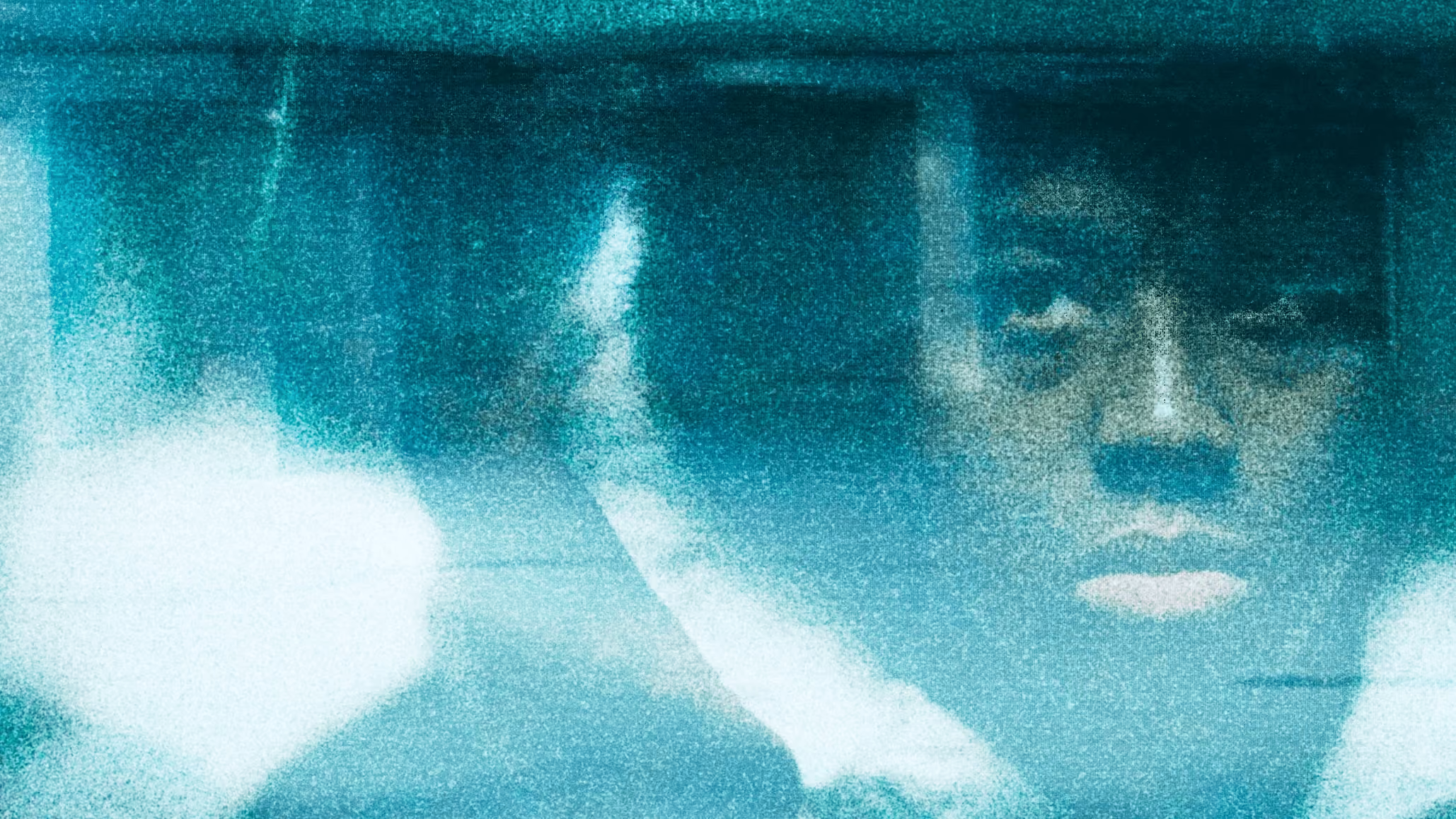
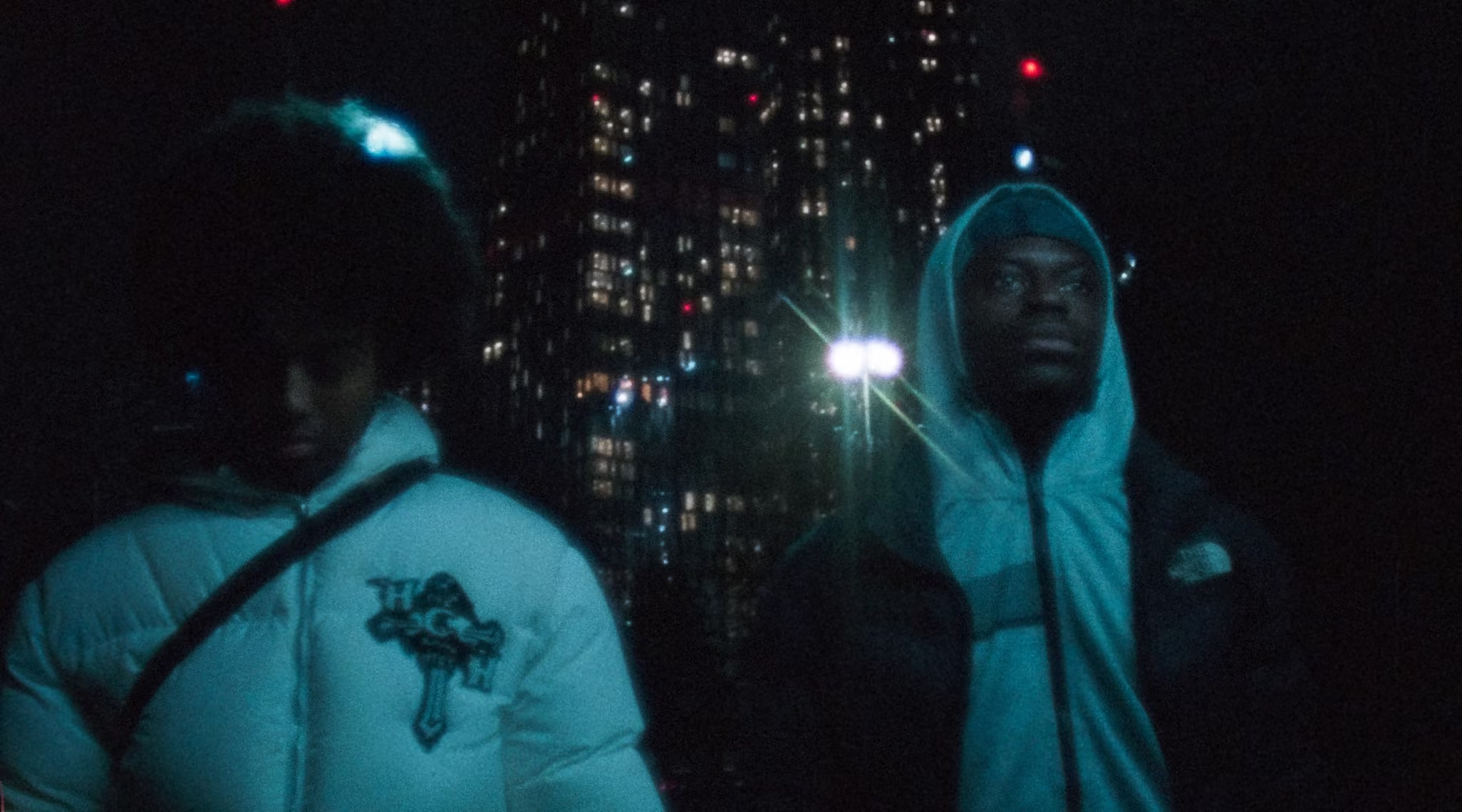
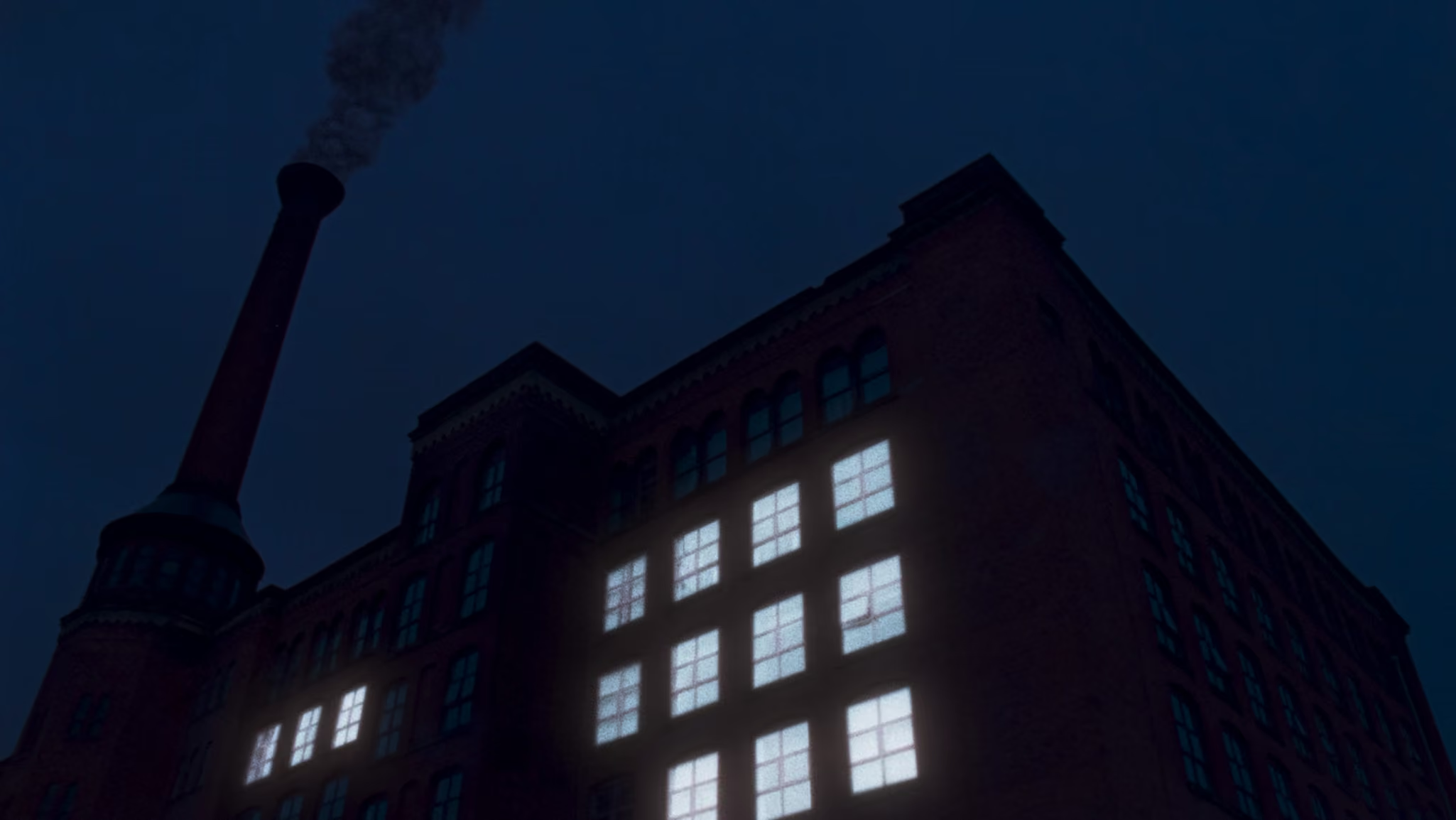
Inspired by Dante Alighieri's Inferno, Opera Omnia follows the strange nighttime journey of two Black teenagers through Manchester's abandoned spaces. A large, smoky cloud, exuding 80s horror energy, becomes the portal that pulls the boys into an urban odyssey. The film, shot on 35mm, becomes a Lynchian, surreal-chiaroscuro exploration of the city's underground, guided by Space Afrika's soundscapes. In what appears to be a ghostly, empty factory, a spotlight cuts through the darkness, illuminating the scene's protagonist, opera singer Axelle Fanyo. She is surrounded by a round table and chairs, with people dressed in office attire, seated and watching her. Smoke comes out of her mouth, and her singing, charged with pathos, carries almost a sense of despair. The scene immediately reminded me of Rebekah Del Rio's a cappella rendition of Llorando in Mulholland Drive (2001) by David Lynch, a Spanish cover of Roy Orbison's Crying. Axelle's performance carries that same quality, mysterious and beautiful, yet deeply melancholy.
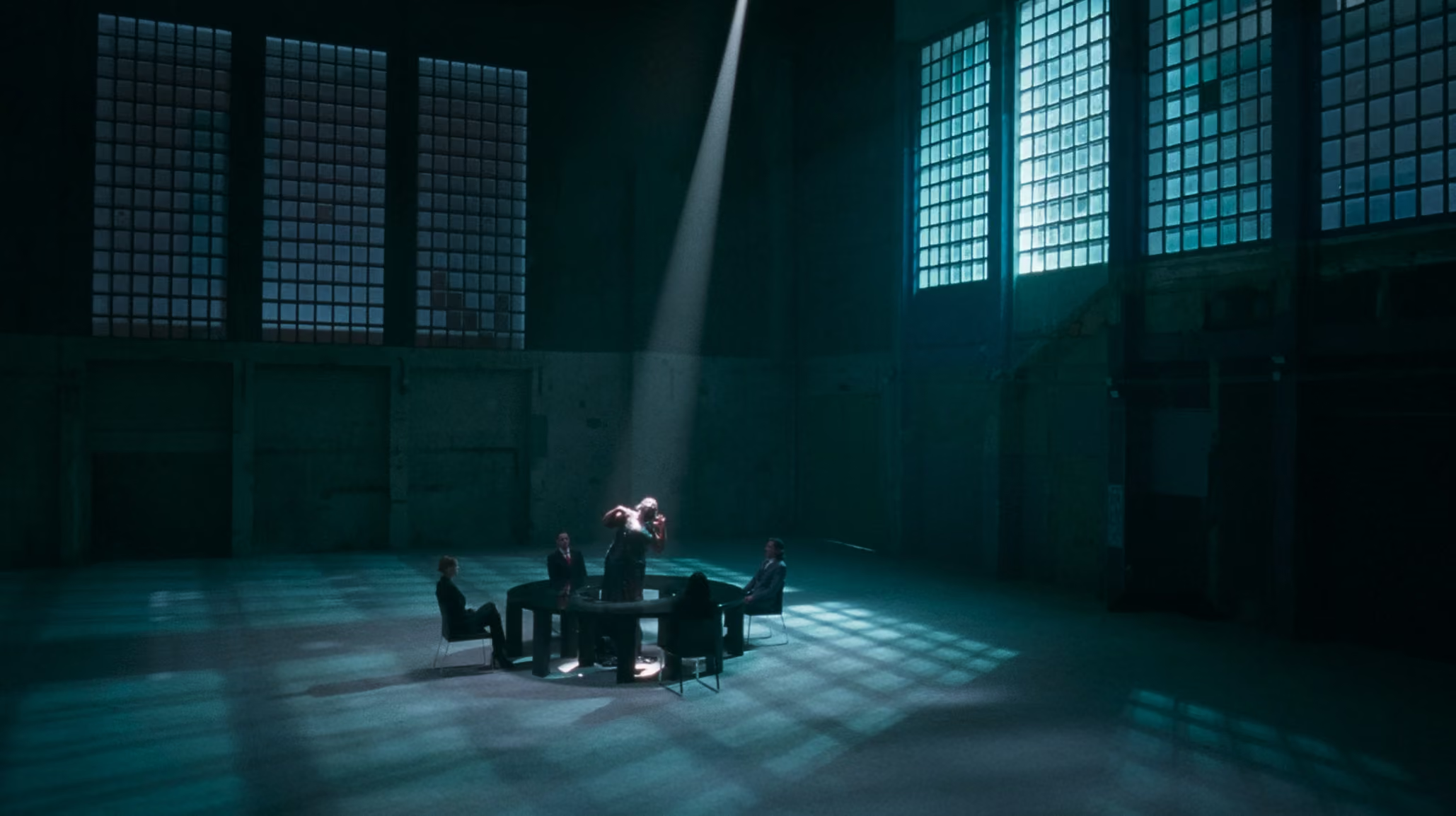
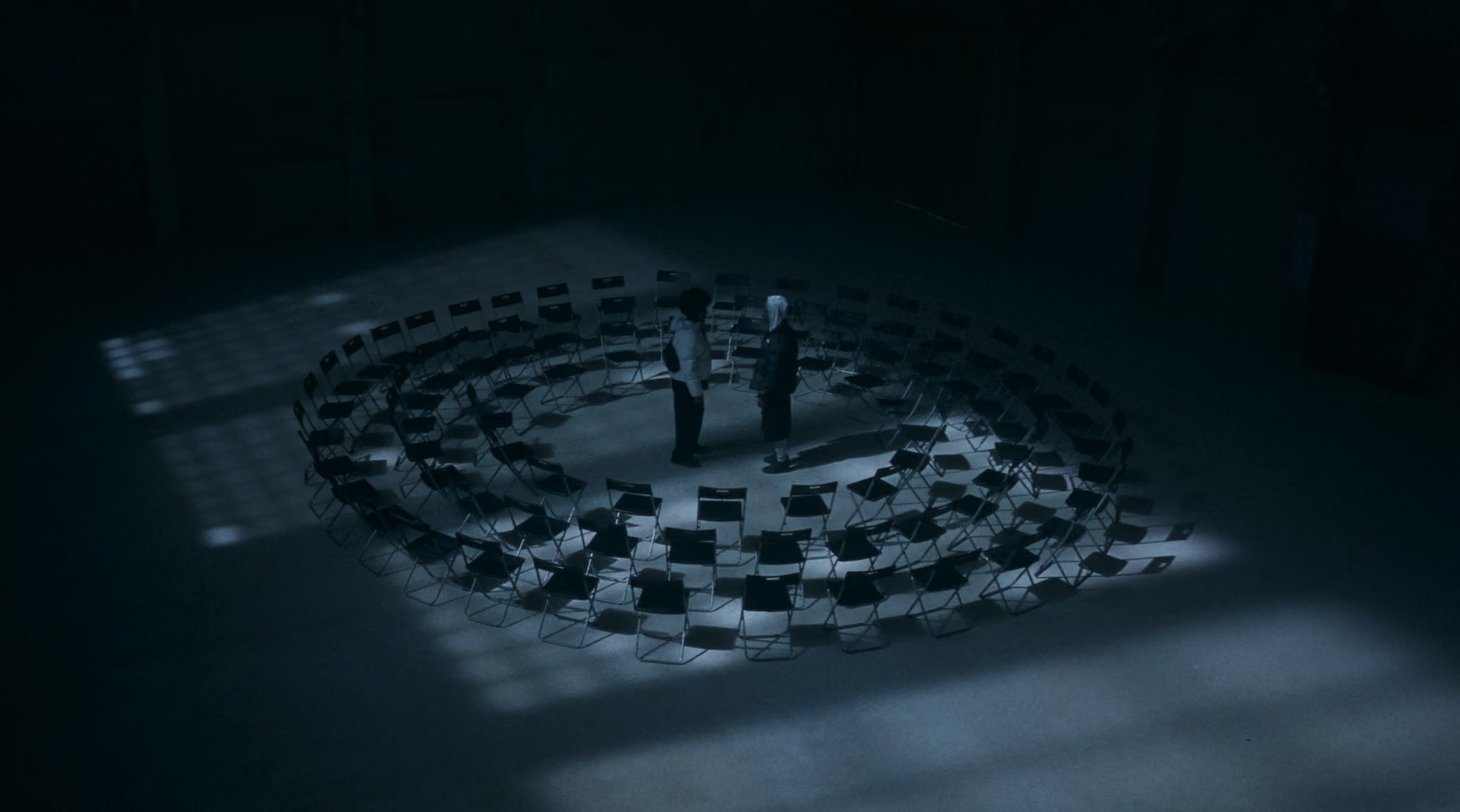
Her singing pulled me back to the theatre scene in Donnie Darko. Donnie interacts with the bunny, Frank, while For Whom the Bell Tolls by Carmen Daye and Steven Baker plays in the background. Carmen's voice is operatic and mournful, sitting somewhere between classical soprano and liturgical chant. That same mournfulness runs through Valentin's scene, lending it the weight of a ceremonial ending. CCTV screens appear to capture the path the boys travelled. An eerie, bleak industrial texture echoes Chris Cunningham's Come to Daddy, shot on a brutalist social housing estate. In a room full of empty office chairs, slowly, the two boys fade into the scene, like ghosts materialising from nothing. There's an overall sense of dystopian realism and the feeling that everyone in this nocturnal world is being watched.
In the sound installation room, the windows were tinted blue, giving it a nocturnal quality. It felt like an extension of the film. Visitors were welcomed to sit in a circle of chairs or walk around the space as the sound piece played. It was a weekday morning; three people were visiting the show, and many chairs around me were empty. Abstract soundscapes moved through the room, such as dripping water and distant voices. It is as if they are carried from a conversation happening somewhere across a rainy car park at night. What came over me was a strange mix of loneliness and melancholy. Feelings I found myself sinking into rather than resisting, until they became something close to comfort. The whole show conjures a rich emotional landscape, pulling me into the same dreamy odyssey as those two boys. Like waking from an intense dream and carrying it through the day, I still felt the remnants of that world on my skin as I stepped out of the show.
gowithYamo invited Valentin and Space Afrika to imagine themselves as Dante in the boat, navigating their own odyssey through the making of this work.
What does the dark wood mean to you? I think we all carry one within us. I'm curious what yours looks like, and whether making this work changed it.
In the Middle Ages, the forest was a place of danger, wild animals, darkness – everything that escaped control. We have since colonised every last forest, every last margin of uncontrolled nature in Europe. But the disorientation didn't disappear; it just moved. The dark wood today is the postmodern city: a place of confusion and erasure, where the memories of entire working-class generations dissolve floor by floor. This tension between control and disappearance, between built space and erased memory, lies at the heart of both our practices. It's what we tried to render in the show.
Valentin – Which ghosts or characters did you encounter along the way? What do you feel they were trying to communicate to you, or through you?
In Manchester at night, shooting on 35mm, you encounter people the city has made invisible. Security guards, night workers, those who sleep in the margins of architectures built for capital. But behind them, deeper in the image, are older silences: the workers of the industrial city, and further still, the enslaved people whose labour and whose bodies financed these buildings, these streets, these skylines. Dante's guides were poets and saints. Mine were much quieter figures. But they were all pointing at the same thing: a world built on deliberate political erasure.
Space Afrika – I'd love to know more about the journey behind creating the soundscore for Dark Wood. How did you find your way into Valentin's world, and how did you begin to translate it sonically? Were there specific sounds, textures, or sources that helped you reflect Dante's Inferno's descent and the themes of return and encounter that run through the work?
Understanding Valentin's vision and process was vital to creating the score. This came from formal and informal dialogue, as well as previous collaboration. We wanted to weave together the vignettes and moments he constructs in his films, paying attention to spacing, time, and framing. The use of light and shadow is a key element when thinking about the overall mood and tone of the sound, and how it moves from one frame to another. In regard to the descent of Dante's Inferno, it was important to attempt to represent these stages through the subconscious mind, letting these thoughts flow in and out of each other, specifically looking at how delay and reverb processing affects time and space. Sounds such as haunting vocals, industrial drones, and field recordings are all key signifiers and sources.
There's something about making a work that feels like giving birth – not just to an object, but to a process, a life of its own. Looking back to the very beginning, to the seed of this project: how did The Dark Wood start, and how did your collaboration begin?
It started with Pacific Club – Valentin's first chapter of his La Défense Trilogy. The film brought us together as Space Afrika scored it, and something clicked that went beyond a simple commission. The collaboration deepened from there until the idea emerged of making a film for Space Afrika's upcoming album. That became Opera Omnia. The Dante reference wasn't there from the start. It came out of a conversation about wanting to tell the story of two Black boys from a working-class neighbourhood in Manchester, navigating the city at night, a city transforming rapidly around them and over them. When that idea took shape, the Inferno came immediately: the descent, the night journey, the figures encountered along the way.
What is the engine behind your practice, not the work itself, but the place everything is drawn from?
Something between indignation and grief, a refusal to accept the naturalness of what is presented as inevitable. And something that isn't quite sadness, not melancholy, not nostalgia, but the particular weight of witnessing. Watching empires complete their collapse, watching the architectures of power hollow themselves out, watching things that were built to last dissolve inside a single generation. There is something almost theological about it: angels falling, orders ending, the sky reorganising itself around new absences. That witness is the engine. The work is an attempt to hold what is disappearing long enough to understand what it meant, and who it cost.
Is there something in this work that had to remain silent, something that couldn't be expressed and had to stay absent?
There is always something that resists being said in films, and in a collaboration, that silence is shared – it lives between people as much as in the work itself. Some of what exists between us and what drives this project couldn't be translated into image or sound directly. It had to remain present as an absence, felt rather than shown. But there is also something else: this film and this installation were never conceived as a complete statement. They are a preamble. A first circle. We think of The Dark Wood as the opening movement of something much larger: a longer journey, the way Dante's work was never just one night but an entire architecture of the world.