15 Questions with Susie Hamilton...
Welcome to 15 Questions With…, an interview series in which art writer Gary Grimes picks the brains of artists, curators and other creatives to understand what makes them tick through a series of quick-fire questions. This series aims to showcase the varying approaches creatives take to making art and how their relationships to the so-called art world differ, but also reveal what unifies those responsible for the art we love.
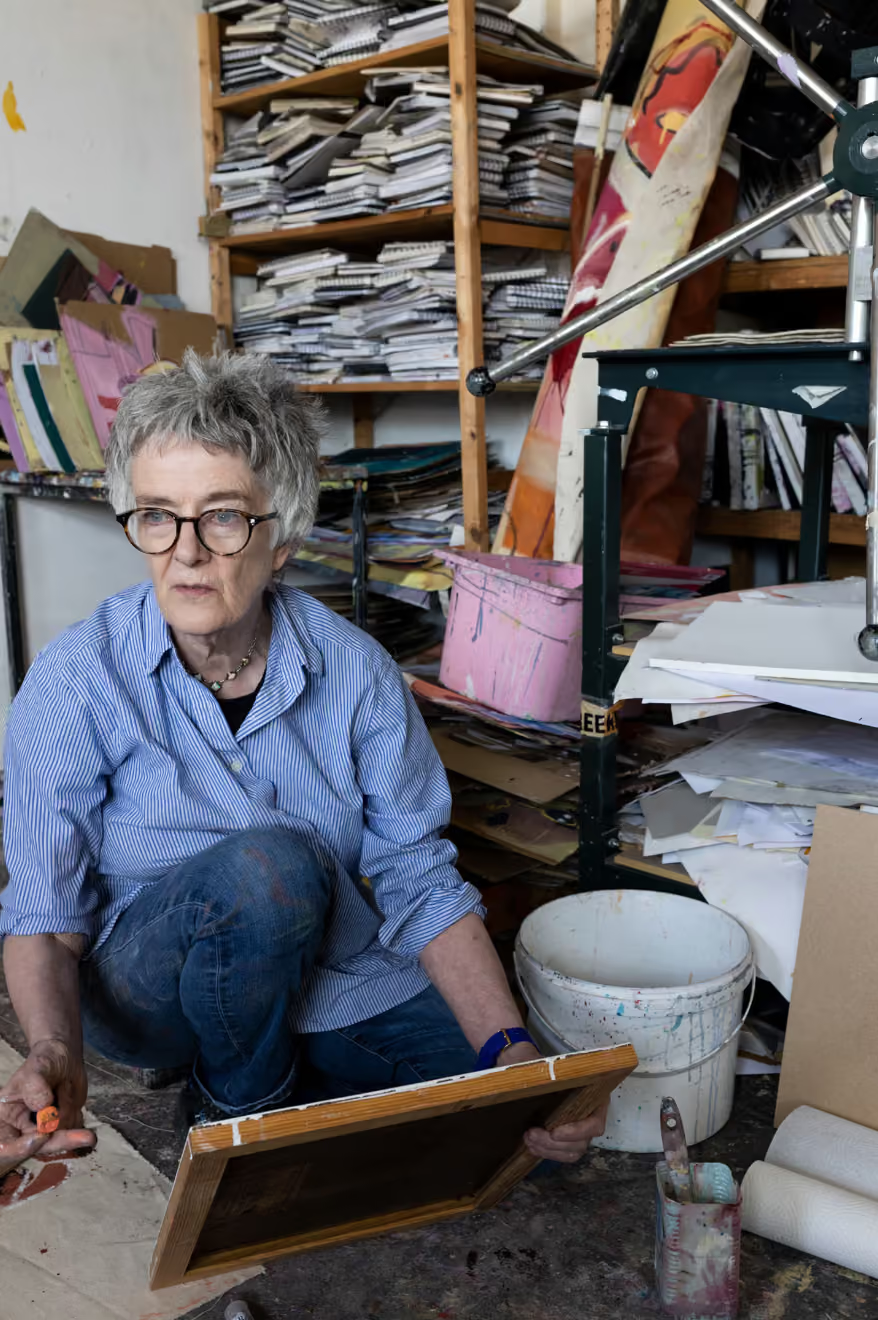
Susie Hamilton is a painter who lives and works in London. Since 2018, she has been commissioned by the mental health charity Hospital Rooms to paint murals in psychiatric units. Her work is in numerous public and private collections, and paintings from her 2020 ‘Covid’ series were acquired by The Government Art Collection, The British Museum, The Science Museum and Imperial College. A monograph of her work was published by Anomie in 2024, and ‘Underground’, drawings and paintings from the London Tube, was published by Hurtwood in 2025.
She is currently showing in the Royal Academy Summer Exhibition and in The Shared Now at Kunstmuseum, Magdeburg, Germany. In September, she will be exhibiting in Edge at Hastings Contemporary. Hamilton recently participated in a group exhibition, Salon, at the Paul Stolper Gallery in London, alongside artists including Susannah Baker-Smith, Helen Beard, and Lauren Bryden. The exhibition spans a period of almost thirty years, focusing on paintings, prints, needlework, and sculptures, and remains on view through to August 14.
1. What is your earliest memory of a work of art?
A double-page illustration of surreal monsters called ‘Babar’s Dream’ in Babar the King by Jean de Brunhoff. I must have been about 4 years old. It scared me so much that the pages had to be glued together, but this hiddenness made it seem even more threatening.
2. Where do you turn to when you're in need of inspiration?
I take my sketchbooks to parks, beaches, supermarkets and the Tube. I also get continual inspiration from literature, especially plays and poems about metamorphosis: Ovid, Shakespeare, T.S. Eliot and Andrew Marvell.
3. What do you like to do when you need to take a break from your practice?
I like reading art history and contemporary fiction, watching TV, cooking and going to restaurants.
4. Who is your favourite artist?
Cy Twombly, but there are many contenders, including Titian, Poussin, Kitaj, de Chirico and Bacon.
5. What's the biggest crime an artist can commit?
Being complacent and too easily satisfied.
6. Which gallery or museum should everyone try to visit at least once in their life?
There are lots I’ve never been to, but I really admire Berlin’s Gemäldegalerie and its astonishing collection, including Caravaggio’s ‘Cupid’, which was recently shown at The Wallace Collection.
7. What is the worst thing about the art world?
Shallow self-importance.
8. Whose opinions on art do you actually care about?
Those of Peter Hamilton (my husband) and Paul Stolper (my gallerist), and strangely, without conferring, they often agree. I also greatly value the opinions of a number of critics who have been to my studio and written about my work.
9. What trend in art makes you roll your eyes?
Didactic, polemical art and also tricksy conceptualism, which thwarts and taunts the viewer. Hockney said that art is about sharing, and this kind of game-playing is the opposite.
10. Who are the last three musical artists you listened to?
Handel, Ravel, Messiaen.
11. What's your favourite colour and why?
Pink because it looks artificial, and I’m interested in different kinds of artificiality. I’ve used sugar-pink in paintings of garish, sickly casinos/hotels/cruise ships, but also in my ‘Flamboyant Jungle’ sequence of unrealistic, tropical paradises, which were inspired by the gardens of delight in Hindu miniatures. I’m interested in the artificial signifying something transcendent, something better than the natural, as well as, and in contrast to, its association with the synthetic, trashy and commercial.

12. What three items would you grab if your house was burning down?
Phone, a framed drawing of a baboon, bank card.
13. What can you tell us about your work in Salon that's currently on view at Paul Stolper Gallery?
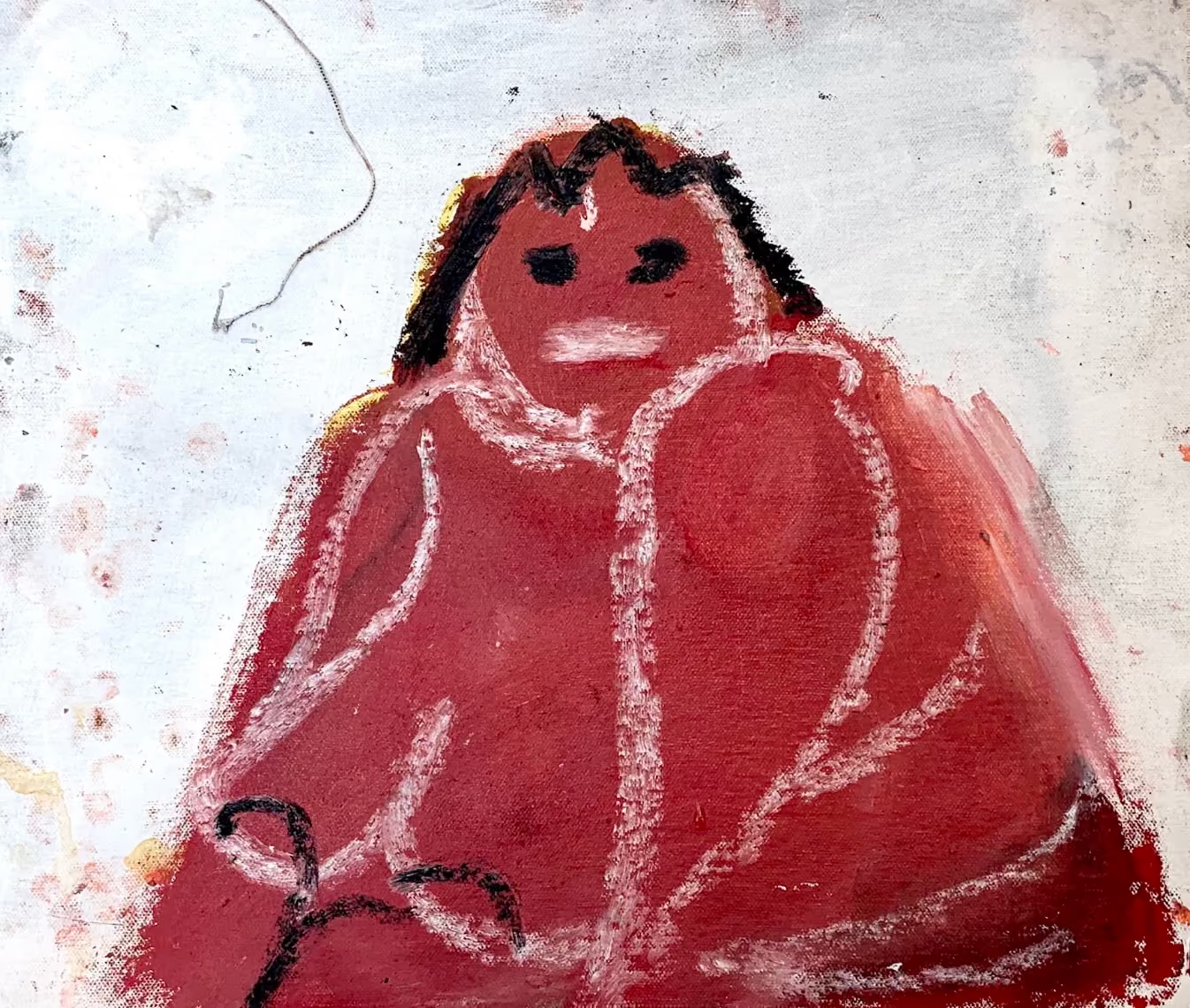
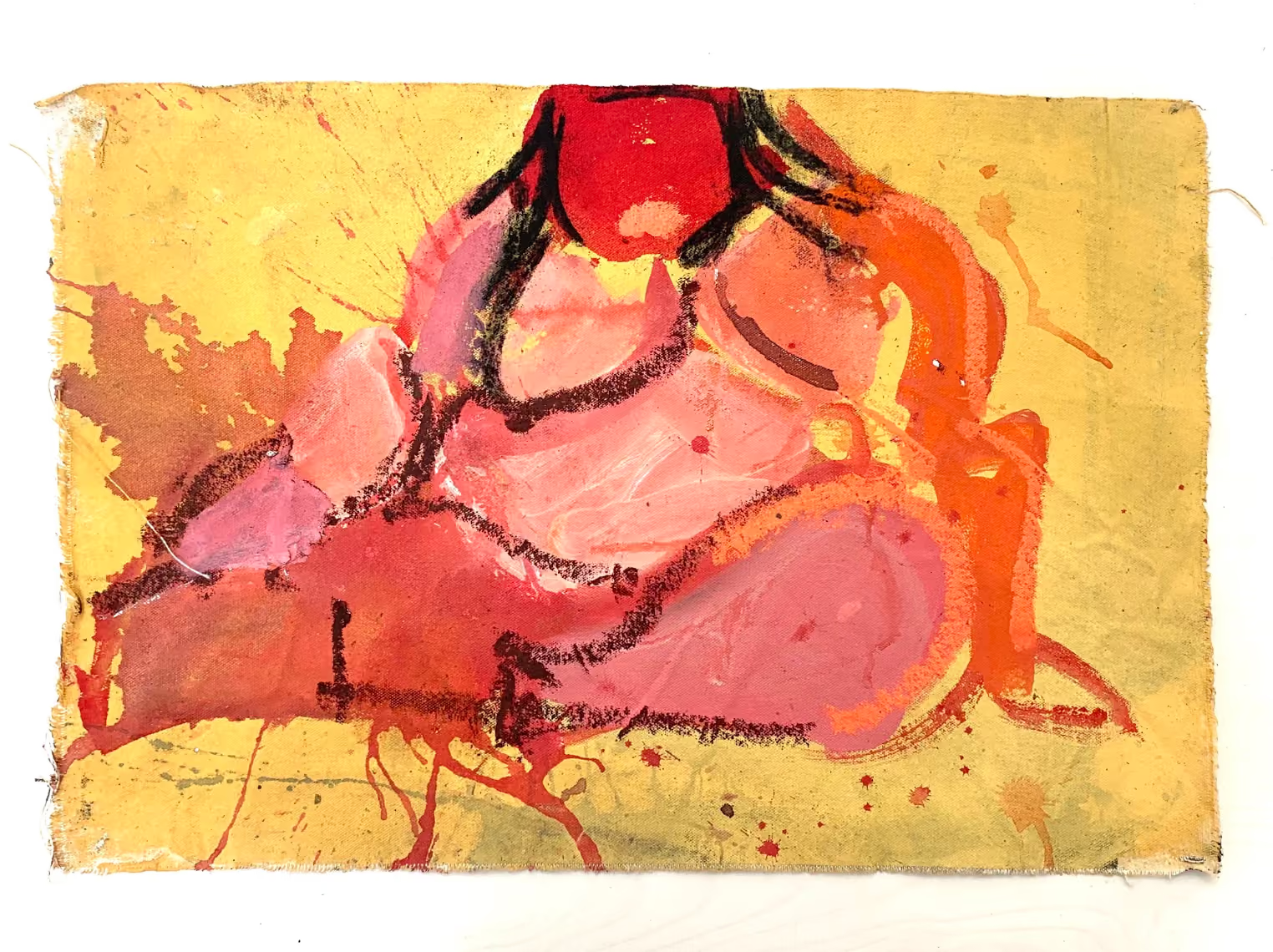
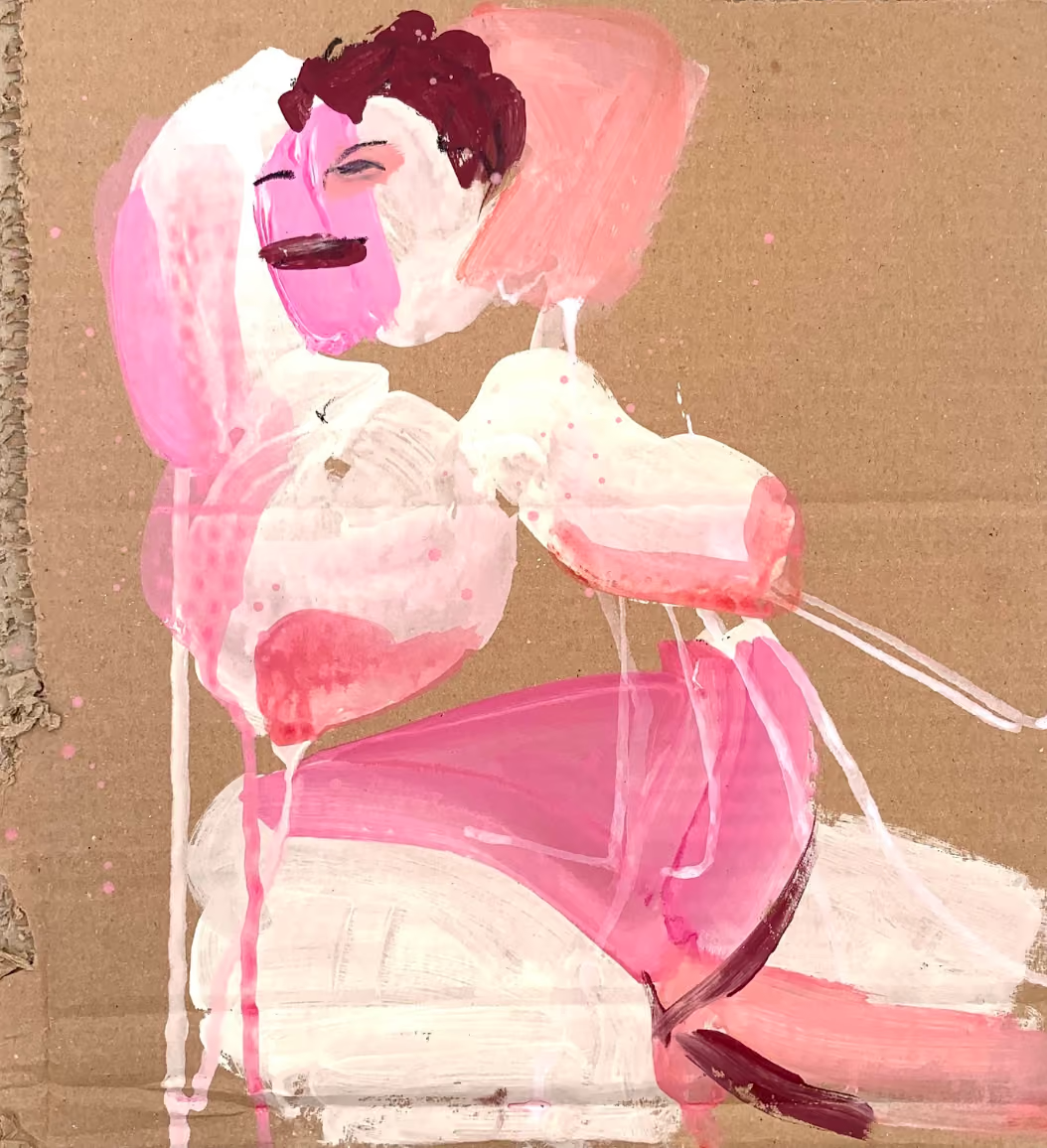
The paintings are new versions of a series I started in 2006 after drawing big women on Berck-Plage in northern France, as well as seeing images in a men’s magazine called Plumpers.
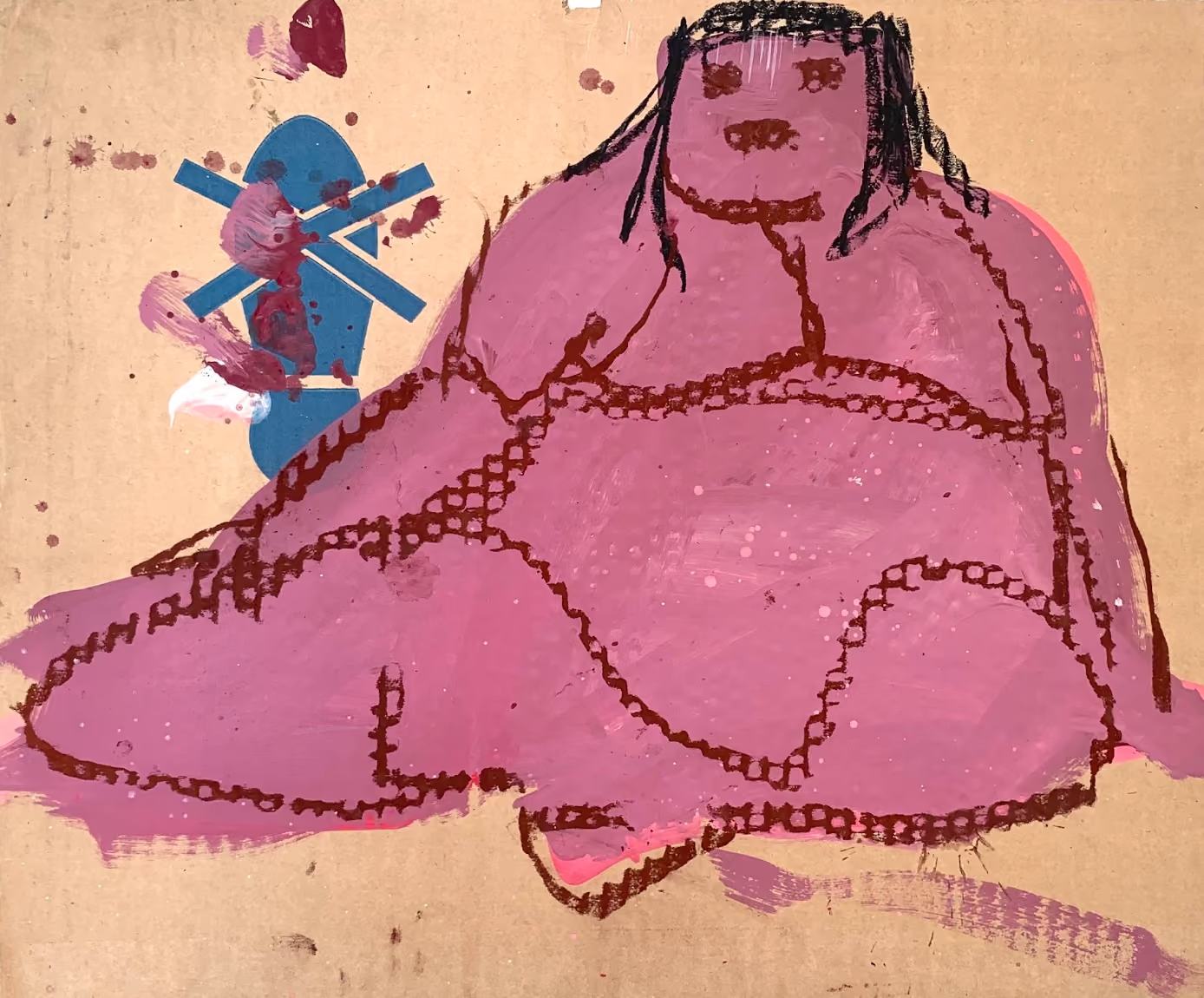
Other influences came into play, like Julia Kristeva’s idea of the abject in Powers of Horror and hostile attitudes to female bodies in Shakespeare, Swift, Eliot, Early Church Fathers, etc. So the paintings started with an attitude of negativity and disquiet, with nude figures isolated, abject and marooned. However, as they developed, they reminded me more of assertive, fearsome goddesses in Celtic or Classical myth. They were also carnivalesque, dissolving in delight, influenced by Twombly’s abstract ‘Bacchanalia’ of smears and scribbles. My fluid, unbounded acrylic changed from expressing disgust to suggesting ecstasy with forms bursting boundaries and contours. The new ‘Plumpers’ painted recently for Salon are varied. Some seem alarming, some ebullient, some gross, but all emphasise materiality with the torn, unstretched scraps of canvas, the irregular pieces of cardboard and the painterly and mixed-media messes and marks.
14. What impression do you hope people get after seeing your show?
I hope they find them powerful despite the small scale.
15. What else are you working on at the moment?
The ‘Plumpers’ are on little pieces of canvas or cardboard, and I’m also planning to do them big, on giant ‘rags’ like my paintings, based on drawings of passengers on the Tube. Then I’m continuing to think about ecstasy, revelry and female figures, again influenced by literature. I’m combining Shakespeare’s A Midsummer Night's Dream, Euripides’ The Bacchae and drawings of seated figures in Victoria Park to make images of metamorphic figures, including Bacchoi and Maenads.