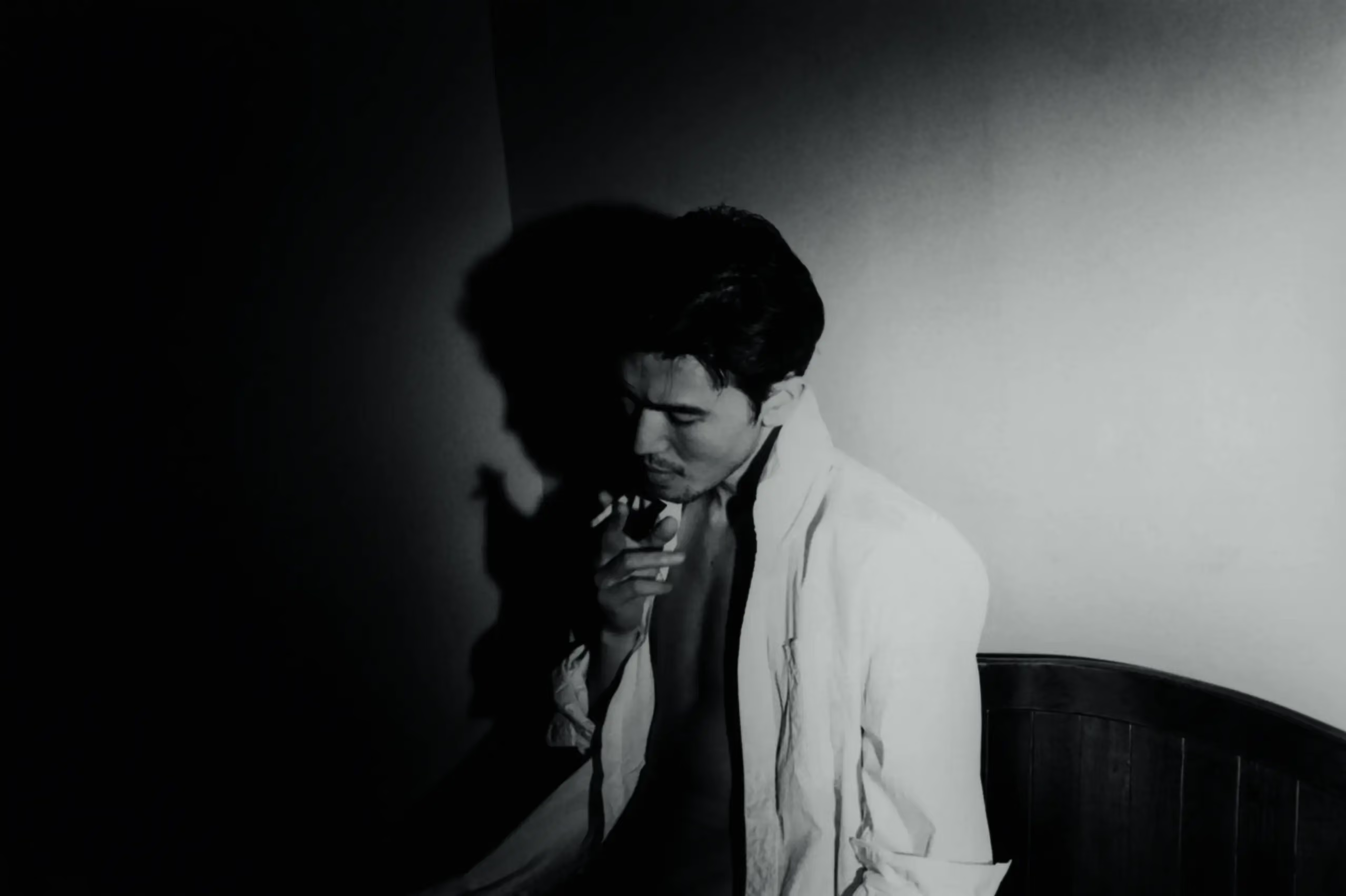
Taous Dahmani on her curation of 'Japanese Women Photographers: From 1950s to Now'
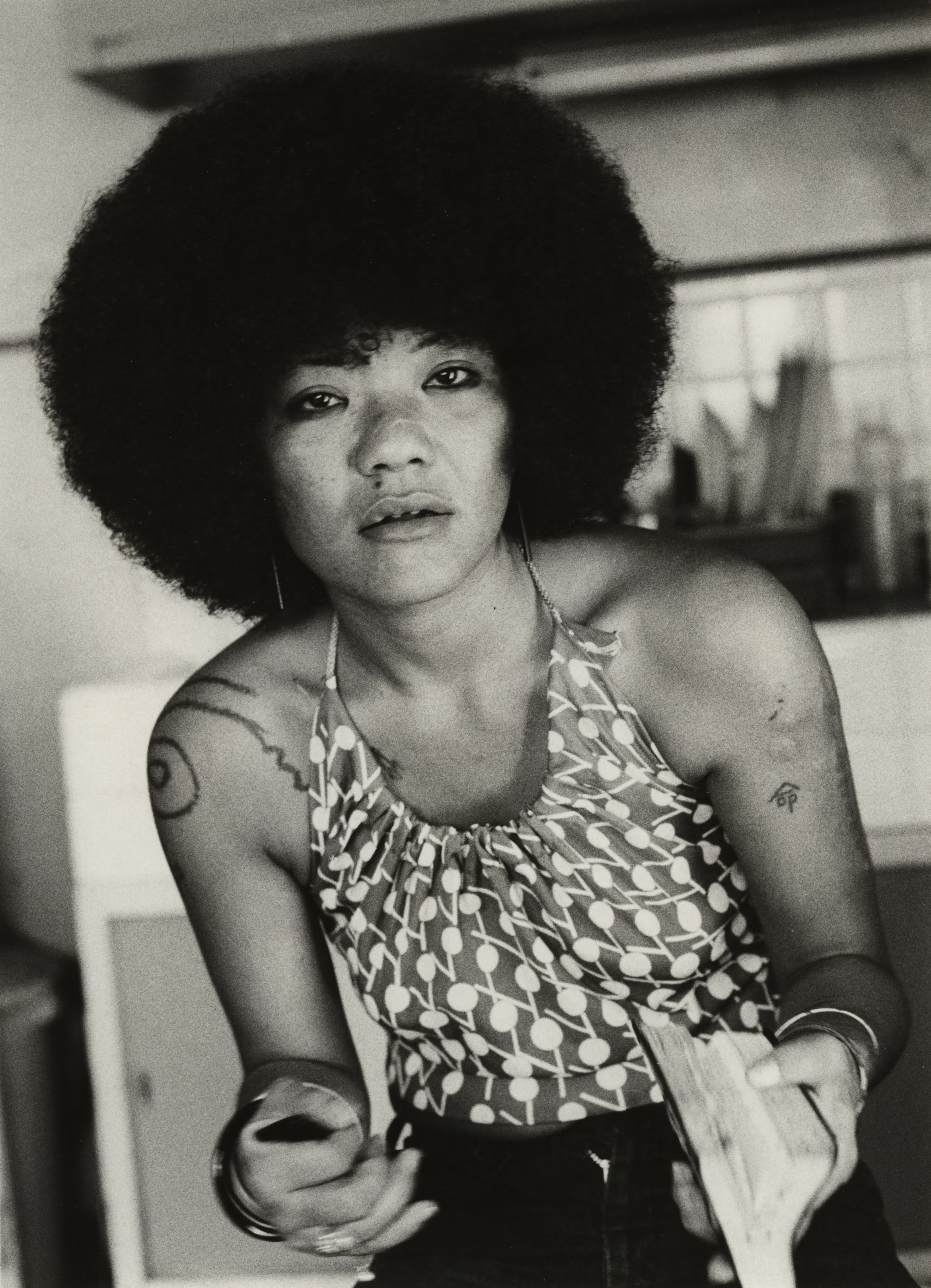
"Visibility is important, but it isn't enough.”
Japanese Women Photographers: From 1950s to Now is showing at The Photographers' Gallery until 27 September. Over 200 works by 27 photographers across seven decades. The show originated with Aperture and Rencontres d'Arles and has travelled through The Hague and Frankfurt before Taous Dahmani reshaped it for London. We sat down with her to talk about what awaits visitors and why these photographers matter now.
How did this exhibition come about, and what was the starting point for bringing it to London?
I'm always interested in the stories that sit just outside the established narrative. Photography has an incredibly rich history, but it's often been written through a relatively limited perspective. My work has always been about asking what happens when we shift that perspective.
When I was working with Joy Gregory on Shining Lights, it made me realise that, at the same time, many curators and scholars across the world were engaged in similar research, trying to make visible artists and histories that had been overlooked. Then, when Aperture published I'm So Happy You Are Here, edited by Pauline Vermare, Lesley A. Martin, and Takeuchi Tamiko, I immediately recognised it as a landmark project. What impressed me wasn't simply the selection of artists; it was the depth of the research, the generosity of the methodology, and the collaborative spirit behind it.
When I joined The Photographers' Gallery in September 2025, I couldn't stop thinking about the importance of that book. I asked myself what it might mean to bring that conversation to London—not by reproducing the publication, but by creating an exhibition that could open up new dialogues and reach new audiences.
For me, this exhibition is about making the history of Japanese photography more complete. For decades, our understanding has largely been shaped by a handful of celebrated male photographers. Yet women have always been there: experimenting, documenting, challenging conventions and expanding what photography could be. Once you begin to look beyond the familiar names, you discover an astonishing diversity of practices, aesthetics and lived experiences.
I also love that this exhibition resonates with the history of The Photographers' Gallery itself. In 1991, the gallery presented Make-Believe, which introduced UK audiences to artists including ISHIUCHI Miyako and KON Michiko. So there is a sense of continuity here. We're building on an important legacy while also widening the conversation and introducing audiences to many more artists. This exhibition is a natural expression of the Gallery’s commitment to tell richer, more inclusive and more international histories of photography.
Looking at your recent projects, from your work as associate editor on the book Lights: Black Women Photographers in 1980s-90s Britain to bringing this exhibition, Japanese Women Photographers to London, there's a clear thread running through your work around recovering and platforming women's photography histories. Where are we right now in terms of how women photographers are recognised and represented, and what still needs to change?
I think we're in a very different place than we were even a decade ago, thanks to the remarkable work of scholars, writers, editors, curators, archivists and photographers who have broadened our understanding of photographic history. Today, it's no longer credible to say, as people once did, "There just weren't any women photographers." They were always there. The research exists, the archives exist, the publications exist. The challenge now is whether institutions are prepared to act on that knowledge.
But progress is never fixed. Every generation has to decide which histories it wants to preserve and which it allows to fade into the background. That's why books matter. They leave an enduring trace. And that's why museum collections matter just as much. Collections don't simply preserve photographs—they shape the histories that future audiences will inherit.
At the same time, I'm wary of talking about "women photographers" as though they form a single category. One of the joys of working on this exhibition was discovering just how irreducible these practices are. There isn't one aesthetic, one political position or one shared experience. What connects these artists is not their gender but the originality of their responses to photography.

Many of them were extraordinarily experimental. They questioned what a photograph could be: its materiality, its relationship to the body, to memory, to publishing, to performance, to colour and to narrative. In many cases, they weren't following the history of photography—they were actively reshaping it.
That's why I don't see this exhibition as simply an exercise in visibility. Visibility is important, of course, but it isn't enough. If we only celebrate these artists because they are women, we risk overlooking what makes their work so remarkable. They deserve to be recognised because they transformed the language of photography, because they expanded its possibilities, and because they influenced photography in ways we are still discovering today.
Ultimately, I hope we reach a point where exhibitions like this are no longer understood as exceptional. Not because the work has become less urgent, but because our institutions, our collections and our publishing have finally caught up with the richness of photographic history. For me, the goal has never been to replace one canon with another. It's to make the history of photography more truthful, more generous and more complex.
The exhibition has been to Arles, The Hague and Frankfurt before arriving here. Did those earlier iterations shape how you approached the London version, and if so, how?
Yes, absolutely. I learned a tremendous amount from the previous iterations of the exhibition and from the thoughtful ways my colleagues approached its display and design. But I also believe that exhibitions should never be static. Every venue brings a different architecture, a different audience and a different cultural context, so each iteration should respond to those conditions.
When we started working on the exhibition at The Photographers' Gallery, my question was, "What can this exhibition say here, in London, and what kinds of conversations can it open?" Context became central to that thinking. I don't see photographs as isolated objects; they exist within wider histories—of publishing, of politics, of social change and of artistic exchange. That's why we introduced two new chronologies. One situates the artists within the broader history of Japanese photography alongside key moments in modern Japanese society. The other focuses on women's publishing, magazines and photobooks, highlighting the networks through which many of these photographers circulated their work and influenced one another. I hope these timelines encourage visitors to see the exhibition not simply as a collection of individual artists, but as an ecosystem of ideas and practices.
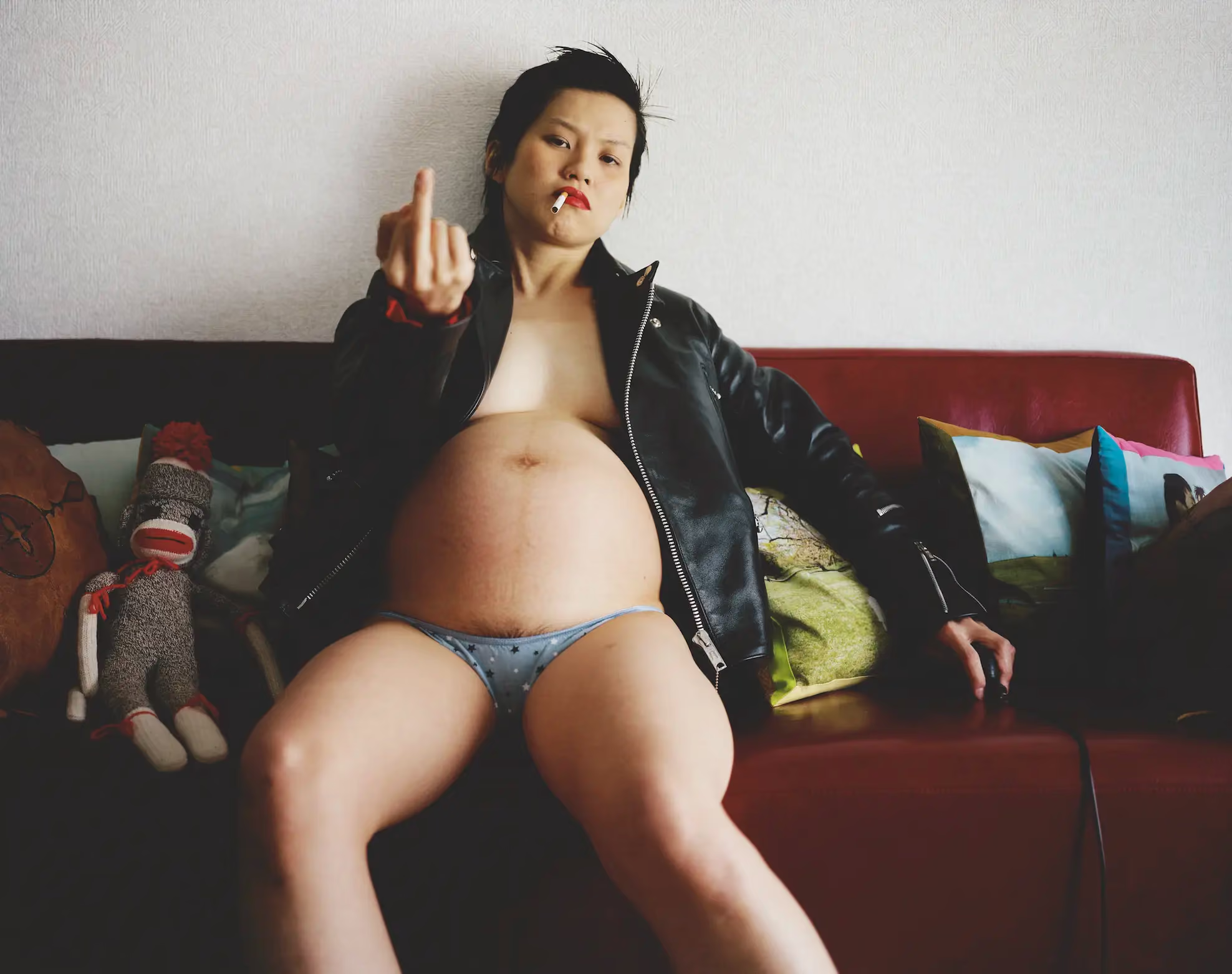
One of the changes I'm particularly pleased with is in the opening gallery, dedicated to the pioneering generation. Many of these photographers were extraordinary printers of their own work, and that material dimension is an essential part of how they conceived their images. Whenever possible, we replaced modern exhibition prints with vintage prints so that visitors can experience the photographs as closely as possible to how the artists intended them to be seen. That was only possible because of the remarkable generosity of our lenders, who entrusted us with rare and often unique works. Their support has been invaluable.
For me, though, an exhibition is never confined to the gallery walls. It's also a platform for conversation. That's why the public programme is such an important part of the project. This summer, we are hosting talks, gallery tours and a course to dive deeper into the themes of the exhibition. In September 2026, we'll host a symposium bringing together artists, curators and scholars to discuss feminism, gender and women's rights in Japan, and to reflect on how those histories intersect with the practices of the artists in the exhibition. My hope is that visitors leave not only having discovered extraordinary photographs, but also with new questions about photography, history and the ways we construct cultural narratives.
When our readers visit, they'll experience over 200 works by 27 photographers across seven decades, spanning photography, video, installation and rare photobooks. Can you give us a sense of what the exhibition feels like to walk through?
From the outset, one of my main goals was very simple: I wanted visitors to leave the exhibition remembering names, not numbers. It's easy, with an exhibition that spans several decades and brings together so many artists, to come away thinking, "There were X women photographers," But numbers don't create lasting connections. I wanted visitors to remember artists like HARA Mikiko, ISHIKAWA Mao, KOMATSU Hiroko, NAGASHIMA Yurie, TAWADA Yuki, TYONEDA Tomoko, WATANABE Hitomi, and YAMAZAWA Eiko, and to leave feeling they had encountered individual voices rather than a collective idea. That idea shaped the exhibition design. We chose to introduce visitors to the artists through their names, which appear prominently as you enter each section and recur throughout the galleries. We also included quotations from the photographers themselves, because I want our visitors to hear their voices alongside seeing their work. Too often, women artists have been spoken about rather than listened to. Bringing their own words into the exhibition felt like an important way of restoring that sense of presence and agency.
I worked very closely with the exhibition designer, Masaki Miwa, to create a display that gives each practice the space it deserves. The exhibition brings together an extraordinary diversity of photographic languages, and we wanted visitors to experience that richness without feeling overwhelmed. The pacing, the rhythm of the galleries and the balance between photographs, texts and archival material were all carefully considered to encourage looking slowly and making connections. Even the colour palette carries meaning. Purple became the guiding colour throughout the exhibition because of its long association with women's rights movements in both Japan and Britain. It's a subtle thread running through the galleries—a reminder that these histories resonate across different places and different generations.
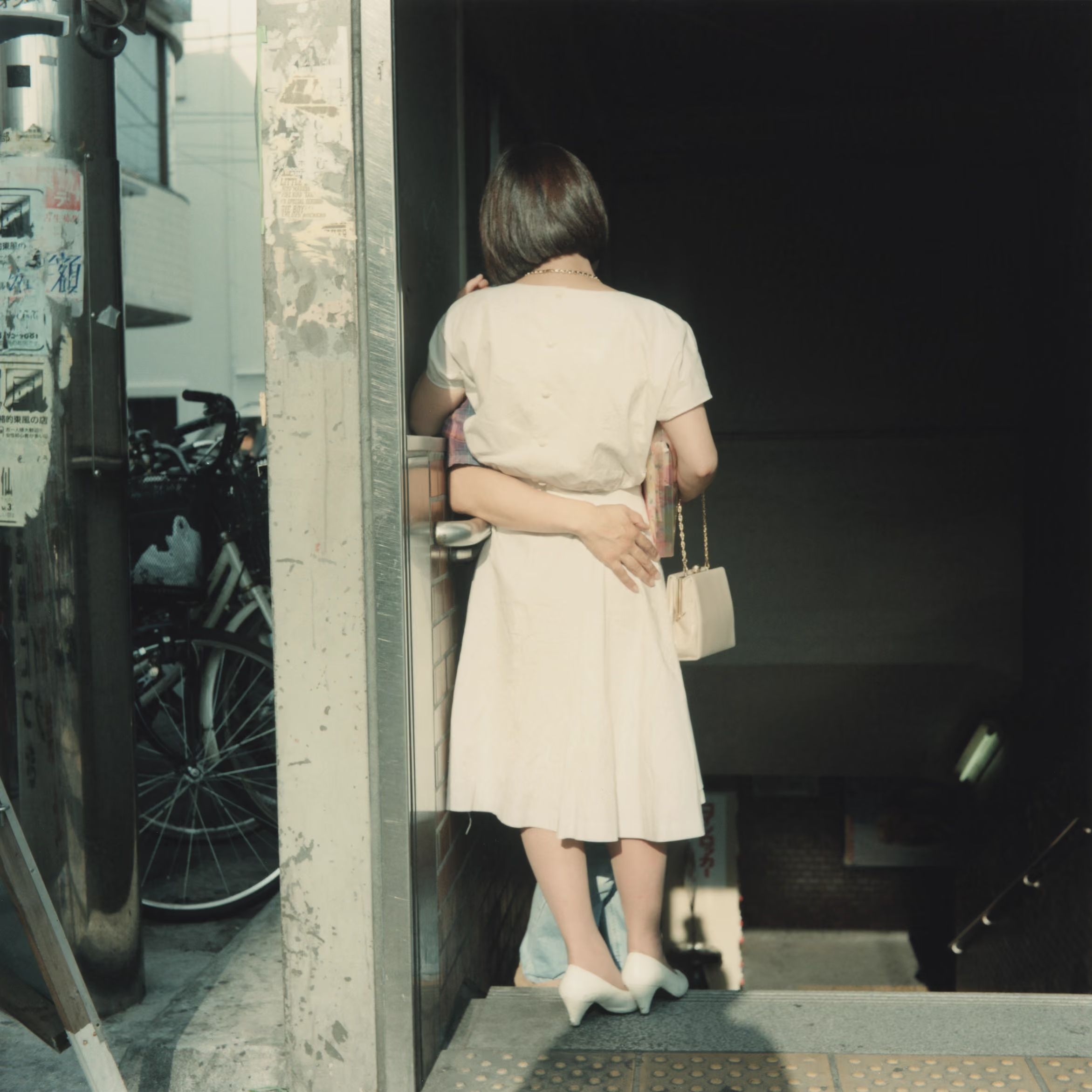
Katayama Mari is a disabled artist who has built her practice around her lived experience of disability, making self-portraits and sculptural installations that sit powerfully within this show. As a disabled woman and photographer myself, her inclusion matters significantly. Can you talk about what her work brings to the conversation around disability and representation in contemporary photography?
I'm so pleased to hear that. KATAYAMA Mari is an extraordinary artist. In my curatorial practice, I always think about gender—and identity more broadly—in an intersectional way. But I'm also careful not to reduce artists to a single aspect of who they are. That's something I felt very strongly while working on Shining Lights, where we included artists such as Samena Rana. What interested me wasn't identity in itself, but the way each artist transformed their lived experience into a rich and compelling artistic language.
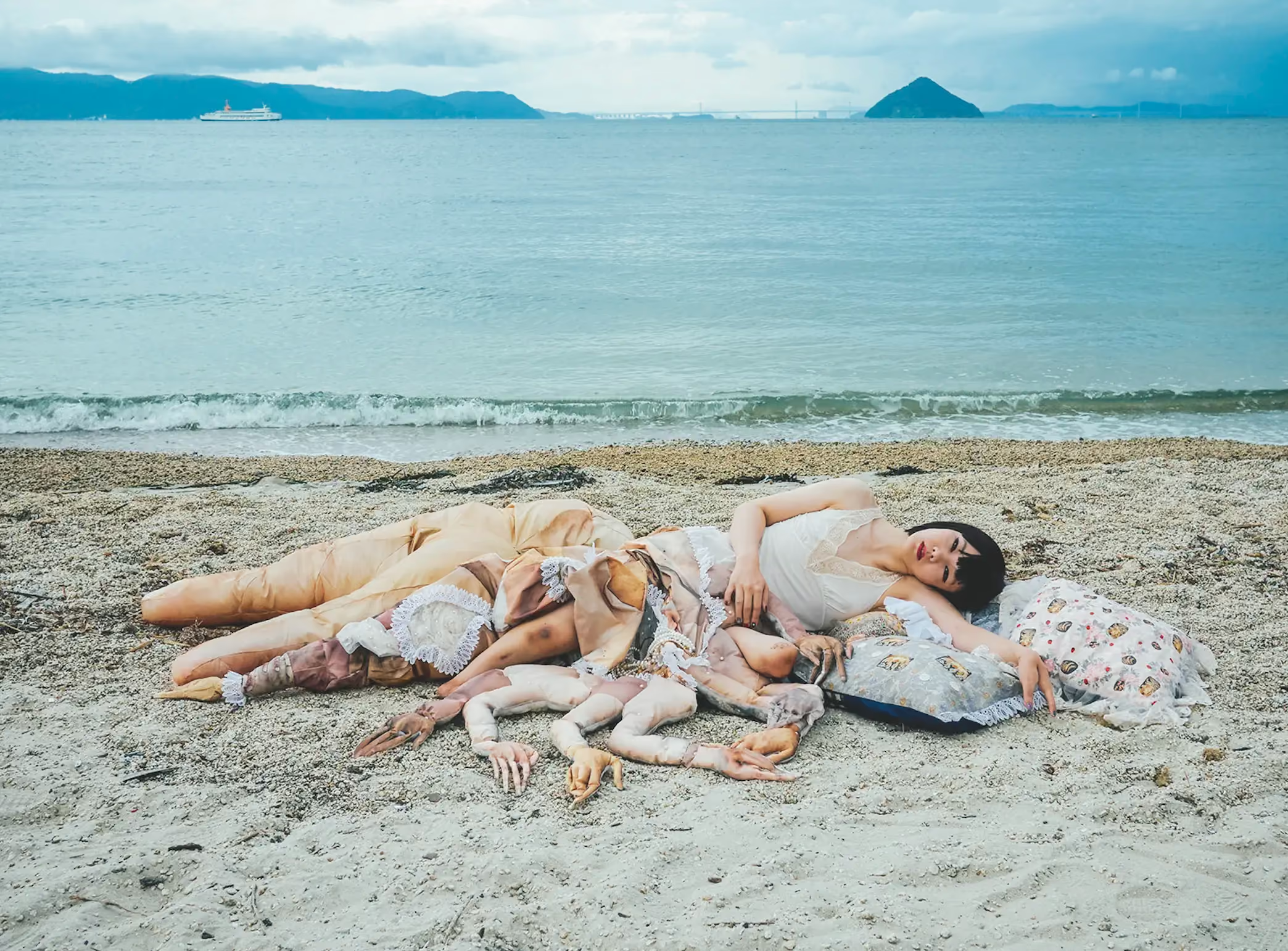
The same is true of Katayama Mari. She isn't important because she embodies a particular identity; she's important because she has developed one of the most distinctive photographic practices of her generation. Photography is only one part of her practice. She also works through installation, sculpture, textiles and performance, and she draws on music, fashion and craft. Her work resists simple categorisation, and I think that's one of its greatest strengths. Her self-portraits invite us to reflect on the ways bodies are looked at, represented and interpreted. They expose the social expectations and assumptions that shape our gaze, while refusing to let those assumptions define the work. At the same time, her photographed installations and performances expand those questions into broader reflections on landscape, domestic space, identity and the roles that society assigns to each of us.
What I admire most is that Katayama never asks us simply to look at her biography. She asks us to engage with her artistic vision. She transforms deeply personal experience into something formally inventive and intellectually complex.
Many of these photographers turned to the photobook because it is a powerful route to circulate their work. There's a dedicated reading room alongside the exhibition. What role does print play in the stories told in this exhibition?
I think one of the great responsibilities of scholars, researchers and curators is to recover the traces of artistic practices that might otherwise disappear. That's why photobooks are so important to me. They are much more than publications; they are historical documents. Even when an artist didn't receive institutional recognition during their lifetime, the book remains. It becomes tangible evidence of a practice, of an artistic community, and of a place within the history of photography.
Many of the women in this exhibition understood that. Publishing was not always easy, and women were often not a priority for publishers or institutions. Yet they persisted because they recognised the importance of putting their work into the world. A photobook has a remarkable capacity to travel. It moves between hands, across countries and generations, finding readers and viewers in ways that are often very different from an exhibition. That's one of the reasons we wanted to foreground printed matter in this exhibition. Magazines, photobooks, artist publications and independent publishing initiatives were spaces where ideas circulated, communities formed, and new photographic languages emerged.
The Photographers' Gallery has long recognised the importance of the photobook, and I think that's one of its great strengths. Photography has always had a particularly close relationship with print. In many ways, books are photography's natural home.
This show is running in London and Tokyo simultaneously this summer. Are you hearing different responses from each audience, and has anything from either side surprised you?
What has been very encouraging so far is seeing how eager visitors are to deepen their understanding of Japanese photography. Many people arrive with reference points such as Moriyama Daidō or Araki Nobuyoshi, whose contributions are undeniable. But one of the ambitions of this exhibition is to show that the history of Japanese photography is far richer and more diverse than the handful of names that have traditionally dominated international narratives.
These artists don't simply expand our knowledge of Japanese photography—they also expand our understanding of Japan itself. Through their photographs, we encounter different experiences, different perspectives and different ways of thinking about society, family, the body, labour, memory and everyday life. In that sense, the exhibition offers another way of looking at Japan: one seen through the practices of women whose voices have too often been overlooked.
I think audiences recognise the importance of that. There is a genuine curiosity about histories that have remained on the margins, not simply because they are "missing," but because they enrich and complicate the stories we thought we already knew.
If an exhibition prompts debate, encourages people to question inherited narratives or even makes some visitors slightly uncomfortable, then it has done something meaningful. At best, exhibitions invite us to think differently.
Don't forget to check in and leave your review on the gowithYamo app!
More works on show: