
Lou Mensah meets Fatoş Üstek, curator of Frieze Sculpture 2026, Regent's Park
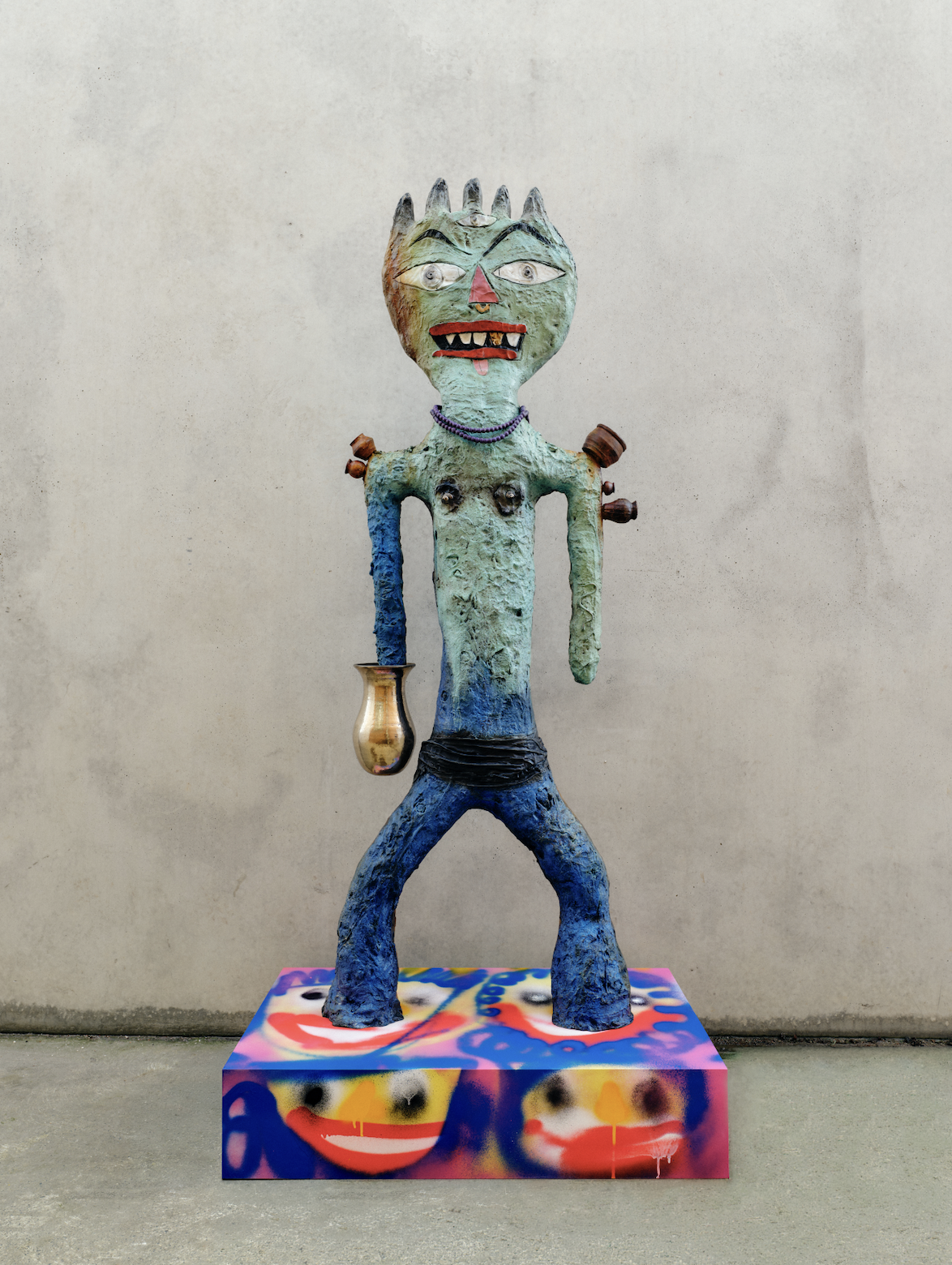
"Placing sculpture here is an act of choreography and careful listening."
Frieze Sculpture returns to the English Gardens in Regent's Park for its 14th edition. In her fourth and final year as curator, Fatoş tells Lou what the experience has taught her, and as co-founder of FRANK Fair Artist Pay, shares where the sector is falling short on fair pay for artists.
1. This is your fourth and final year curating Frieze Sculpture. How has your relationship with the English Gardens changed over those four editions, and what has been revealed to you about placing sculpture in that landscape and how we interact with it?
Over four editions, my relationship with the English Gardens has become wonderfully rich, intuitive, and deeply reciprocal. In the beginning, my main focus was on finding the right spot for each sculpture within the landscape. Over time, though, I’ve come to appreciate how much the environment actively gives back to the art. The park is never static; it shifts constantly with the light, weather, seasons, and the flow of people passing through. Today, I see the landscape not just as a backdrop, but as a living partner in a continuous conversation with each work.
What has really revealed itself to me is that placing sculpture here is an act of choreography and careful listening. The gardens naturally invite visitors to slow down and linger, creating space for all kinds of spontaneous encounters, whether someone is intentionally visiting, pausing on a walk, or simply stumbling upon a piece unexpectedly. The true essence of the artwork emerges in those fluid moments: in how light frames a structure, how a piece catches your eye or recedes into the greenery, and how people interact with the space both physically and emotionally.
2. Angel Otero's Dreams and Salt is a doorway that descends beneath the grass. That's a bold move in a public park, physically embedding a work underground. Can you talk about how that piece developed with Angel and what the conversation with the Royal Parks looked like?
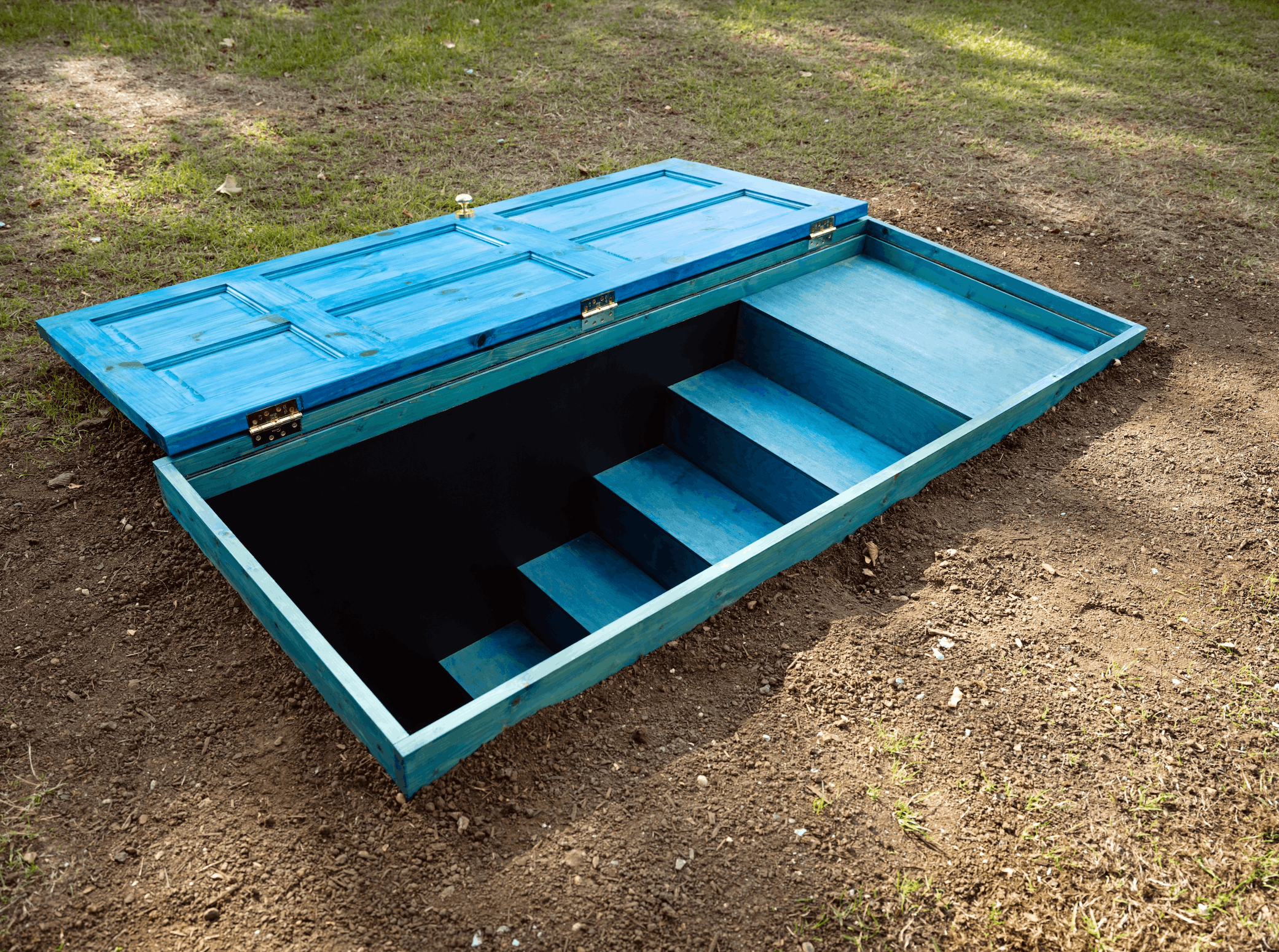
Angel Otero’s Dreams and Salt grew out of a fascinating dialogue around threshold, descent, and the idea of sculpture as an immersive journey, initially made for Gran Bienal Tropical in Puerto Rico last year. I loved the idea of creating a doorway at ground level that leads the viewer’s eye and mind downward, transforming how they experience the space around them. I see this piece as a painting made on the land. From the beginning, our goal was to make the portal feel like an organic part of the terrain rather than an addition placed on top of it, inviting visitors to step into a new imaginative realm within a familiar public setting.
Bringing a concept like this to life in a public park required a truly collaborative effort. Working closely with Angel, we refined the location so it felt seamlessly woven into the landscape. At the same time, our conversations with the Royal Parks were exceptionally open and supportive. They were remarkably thoughtful in balancing practical considerations, public safety, and park preservation with a genuine enthusiasm for the artistic vision, thus we had to introduce ropes and posts to the sculpture’s placement and a glass top to protect public safety.
3. Eleven artists from ten countries are participating. How do you build a conversation between works that have never been in the same space before, and what emerged between them that was perhaps surprising?
Building a dialogue between works from across the globe is one of the most rewarding parts of curating Frieze Sculpture. This year, beautiful thematic threads connected the pieces in unexpected ways. For instance, Tarini Sethi's rich engagement with Hindu iconography resonates with Ramesh Mario Nithiyendran's work, while shared explorations of duality bridge the pieces by Angel Otero, Ramesh, Tarini, and Catriona Robertson. We also see striking "portals" and gateways emerging in the sculptures of Conrad Shawcross, Carolina Aguirre, Ivana Bašić, Elena Nemkova, and Tarini, where art becomes an invitation to step into another realm. At the same time, Özlem Guenyol and Mustafa Kunt, Ivana Basic, and Matyas Chochola offer captivating, fresh perspectives on scale and monumentalism. These connections are wonderfully fluid, and I love leaving room for visitors to discover their own personal threads as they wander through the exhibition.
4. The Mtec Bursary covers installation and de-installation costs for galleries that couldn't otherwise afford to participate. This year it went to Dom Art Gallery for Elena Nemkova's Agony in the Garden. Can you talk us through the ideas behind this work.
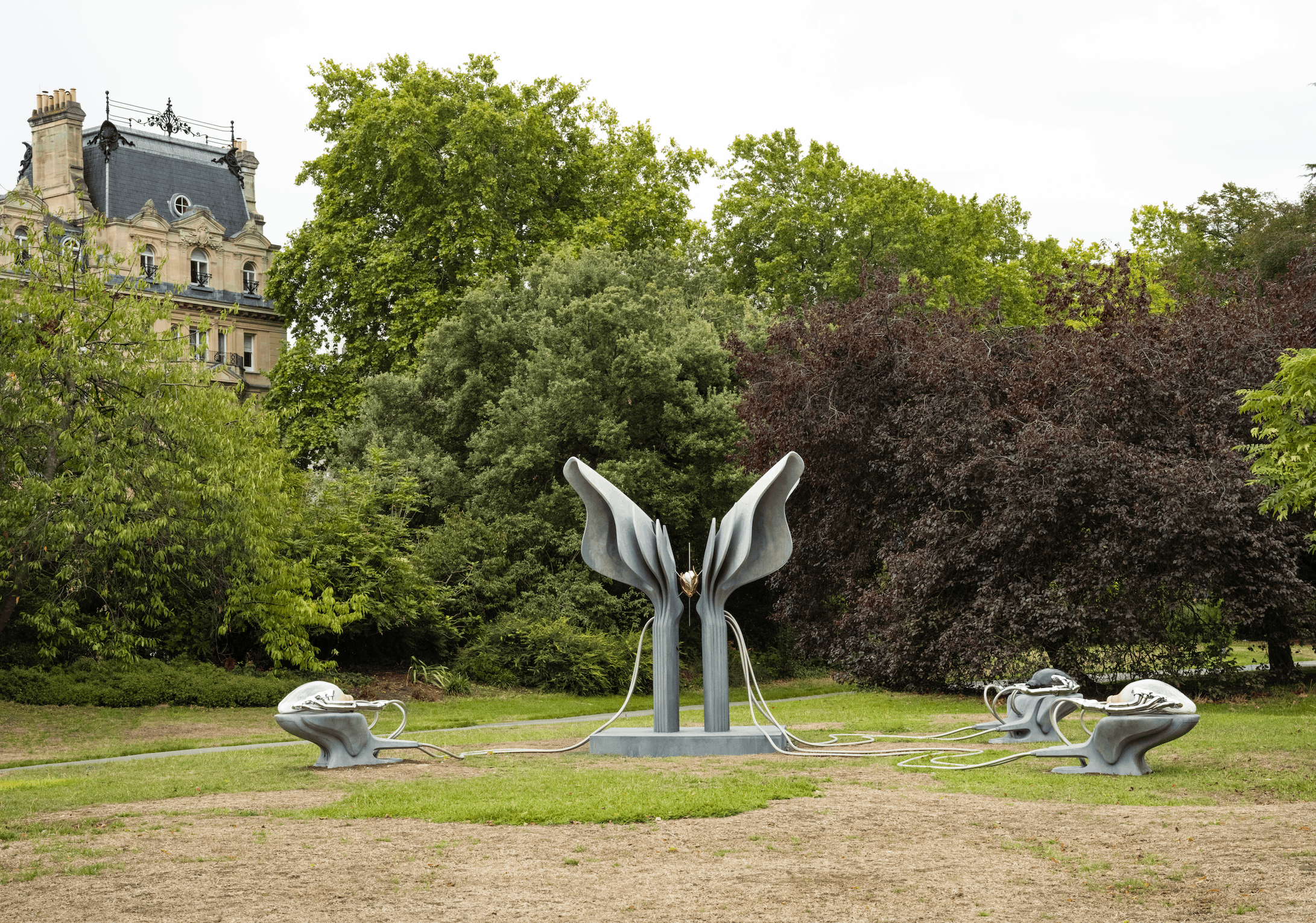
Elena Nemkova’s Agony in the Garden is a remarkably moving work that explores vulnerability, tension, and subtle transformation. What immediately captivated me was the way it inhabits a delicate middle ground, poised between organic forms and architectural structure, intimacy and grandeur, fragility and strength. It holds a quiet intensity that draws you in, where the material resonates the pressures it has been through and the figure of two hands in salvation pose evokes imagination to wonder what animal might be living in the ground beneath our feet and what agony they might be enduring with our post-industrial anthropocene era.
While the title hints at historical and narrative references, the sculpture feels strikingly modern and universal. It speaks to internal transition and personal struggle in a way that feels open and resonant. This is precisely why the Mtec Bursary is so vital. By helping galleries cover essential logistics, it opens the door for ambitious, deeply thoughtful works that might otherwise face insurmountable barriers to outdoor exhibition. Supporting Elena's work ensured that a piece of such extraordinary emotional resonance and technical craft could be shared openly with the public.
5. You co-founded FRANK Fair Artist Pay in 2021 with Anne Hardy and Lindsay Seers. Last year's UK Visual Arts Support Ecology Summit, hosted by FRANK alongside CVAN, DACS and a-n, showed how precarious the sector still is, from below living wage pay rates and hidden labour to studio affordability. Where has FRANK made the most progress and where is the sector still falling short?
Where FRANK has had the greatest impact is in helping to shift the cultural conversation around artist pay and working conditions. Fair practice is no longer something that can be treated as an aside; thanks to collective advocacy alongside organisations such as CVAN, DACS and a-n, it is now much more firmly at the centre of sector-wide discussion. Institutions can no longer ignore the ethical responsibility of paying artists properly, recognising their labour, and building more equitable relationships from the outset.
We have also made real progress in making hidden labour visible. There is now far greater awareness of the research, administration, travel, installation and preparatory work that underpin artistic production. Bringing those invisible hours into view is essential if we are serious about creating a more sustainable visual arts ecology.
That said, the sector still falls short in implementation. Many organisations support fair pay in principle, but struggle to embed it in initial budgets, timelines and structures. At the same time, systemic pressures such as rising studio rents and chronically low levels of funding continue to place enormous strain on artists. The next crucial step is to move from shared values to enforceable standards, long-term accountability and proper financial commitment across the board.
6. When our readers visit the English Gardens this autumn, where should they start and what should they look out for?
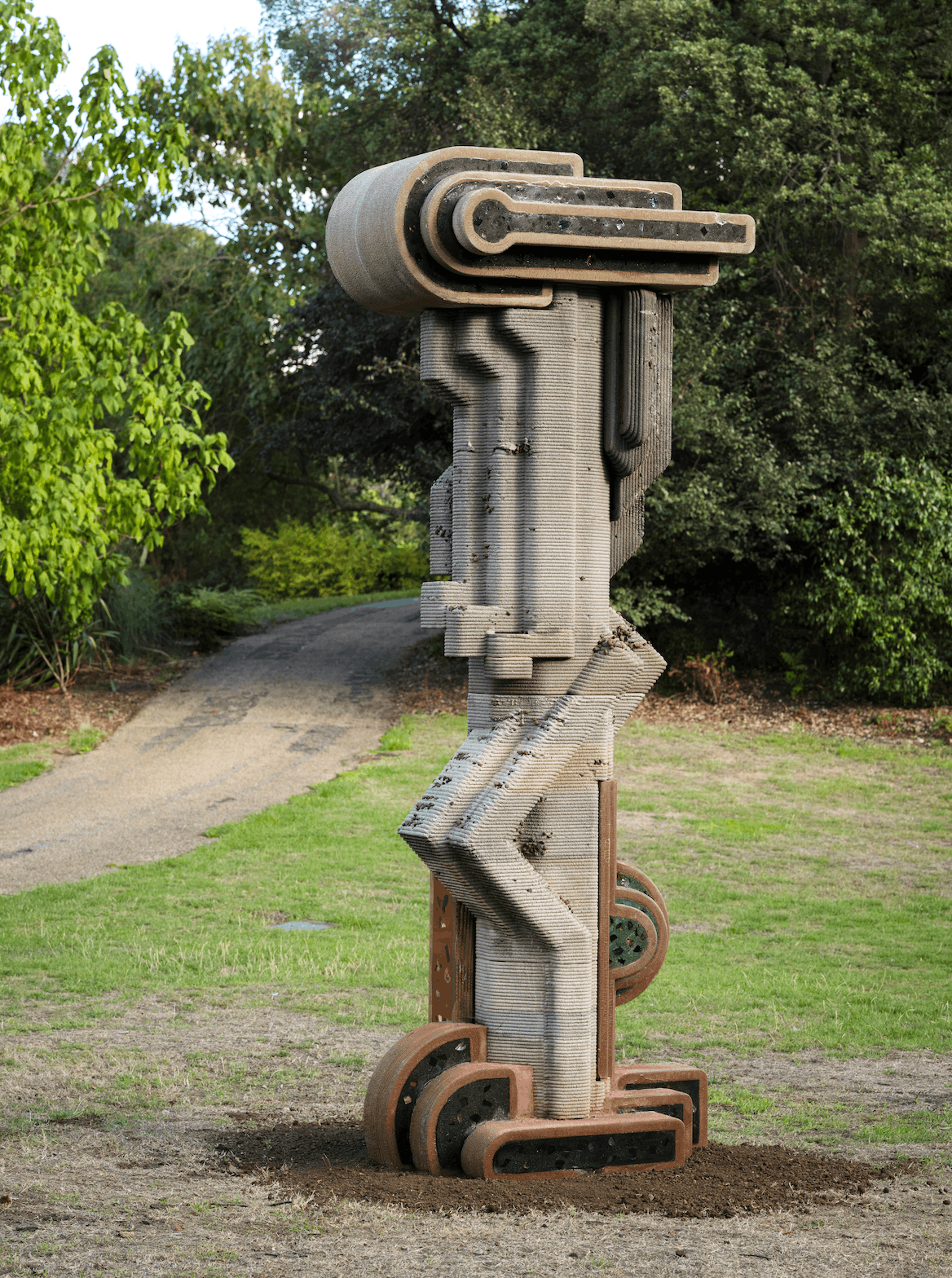
I encourage visitors to take their time and immerse themselves in the rich variety of ways these artists create. You'll find works born from quick, intuitive sparks alongside pieces developed through deep scientific research or pure imagination. Some artists have harnessed cutting-edge technology to reimagine ancient concepts, while others work with timeless materials like quartz, tapping into centuries of geological memory to craft new stories.
As you wander through the gardens, look beyond the human figure and consider how spiritual and alternative perspectives help us see our world anew. Imagine a narrative thread flowing through the space, sculptures reaching upward, anchoring into the earth, or dipping below the surface as if telling a story that spans above and below ground. Notice the textures, the industrial materials, and the sheer collaborative craftsmanship that brought each piece into being.
Above all, let your own curiosity lead the way. Pay attention to how your physical steps, emotional responses, and imagination weave together to shape your unique experience of the exhibition.