
Fastened, as in Devotion, a duo show by Jen O’Farrell and Maria Vittoria Faldini at Allotment
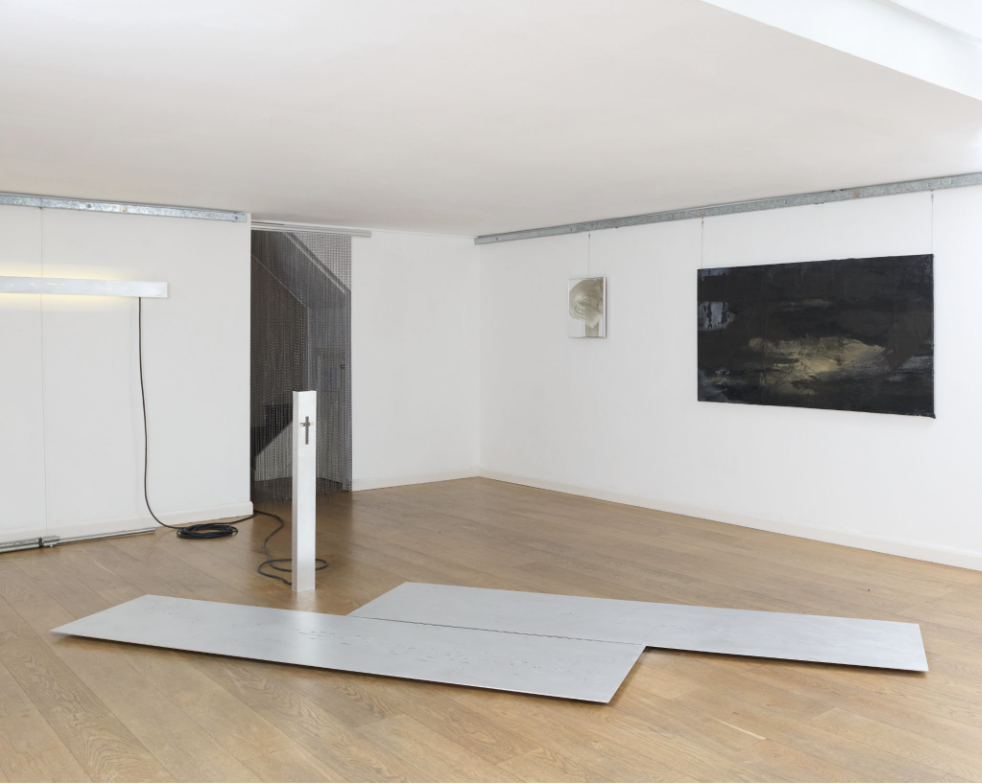
Jen O’Farrell (b. 1990, Liverpool) and Maria Vittoria Faldini (b. 1997, Milan) are London-based artists whose independent practices meet in material, transformation and devotion. O’Farrell explores the intersections between urban infrastructures and natural terrains, using naturally derived and industrial materials, from estuary mud and dune sand to concrete, to investigate the fragility and resilience of the systems they represent. Faldini examines the physical properties of materials alongside broader questions of spatial perception and structural instability, often drawing on domestic space, religious architecture and devotional imagery, transforming industrial materials into sacred objects.
Their duo show Fastened, as in Devotion, has just ended at Allotment, the East London space founded by Ollie Olanipekun. The exhibition brought together two separate practices in conversation, asking what it means for materials to be held together, and what happens when they come apart.
S: How did the idea for this show come about?
M: We've known Ollie (founder of Allotment and OpenArea) for a while and have been watching what he's been doing with Allotment. It's great how he is opening up the space to the community, creating a support network for artists and fueling collaborations and conversations. Jen and I have been wanting to work together since sharing a studio, and when we were offered the space at Allotment, it seemed like the perfect time to do it.
J: The beautiful thing about this exhibition is the dialogue between our works despite the fact that we have very independent practices. It is not a designed collaboration, and we’re not an artist duo, but we realised from making alongside each other that a shared material language was emerging. So it started with a conversation: that it would be nice to bring what we are doing in the studio into a public space and to allow people to interact with the works.
M: When we first started talking about the exhibition, we were still sharing a studio and were planning on more of a work-in-progress-type show, with our day-to-day materials lying around and being playful. Then, when I moved out of that studio, we started sending each other images of what we were working on, the pieces were progressing, and we naturally started to move away from that idea.
When we were in the studio together, our materials were sharing that space and creating conversations. It didn't feel right to try and recreate those moments, and the idea of finally seeing the finished pieces come together was exciting.
S: What does “fastening” mean in this collaboration?
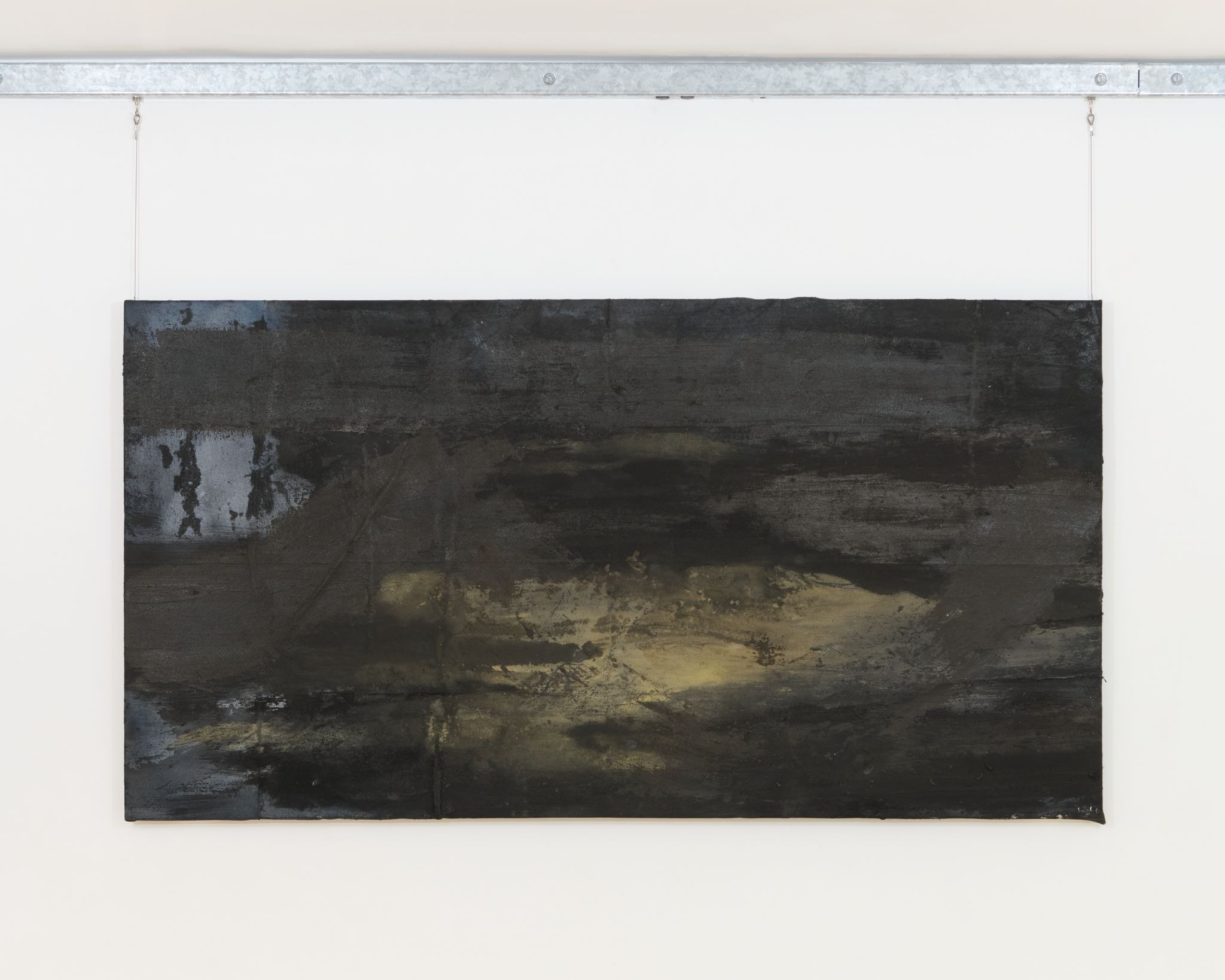
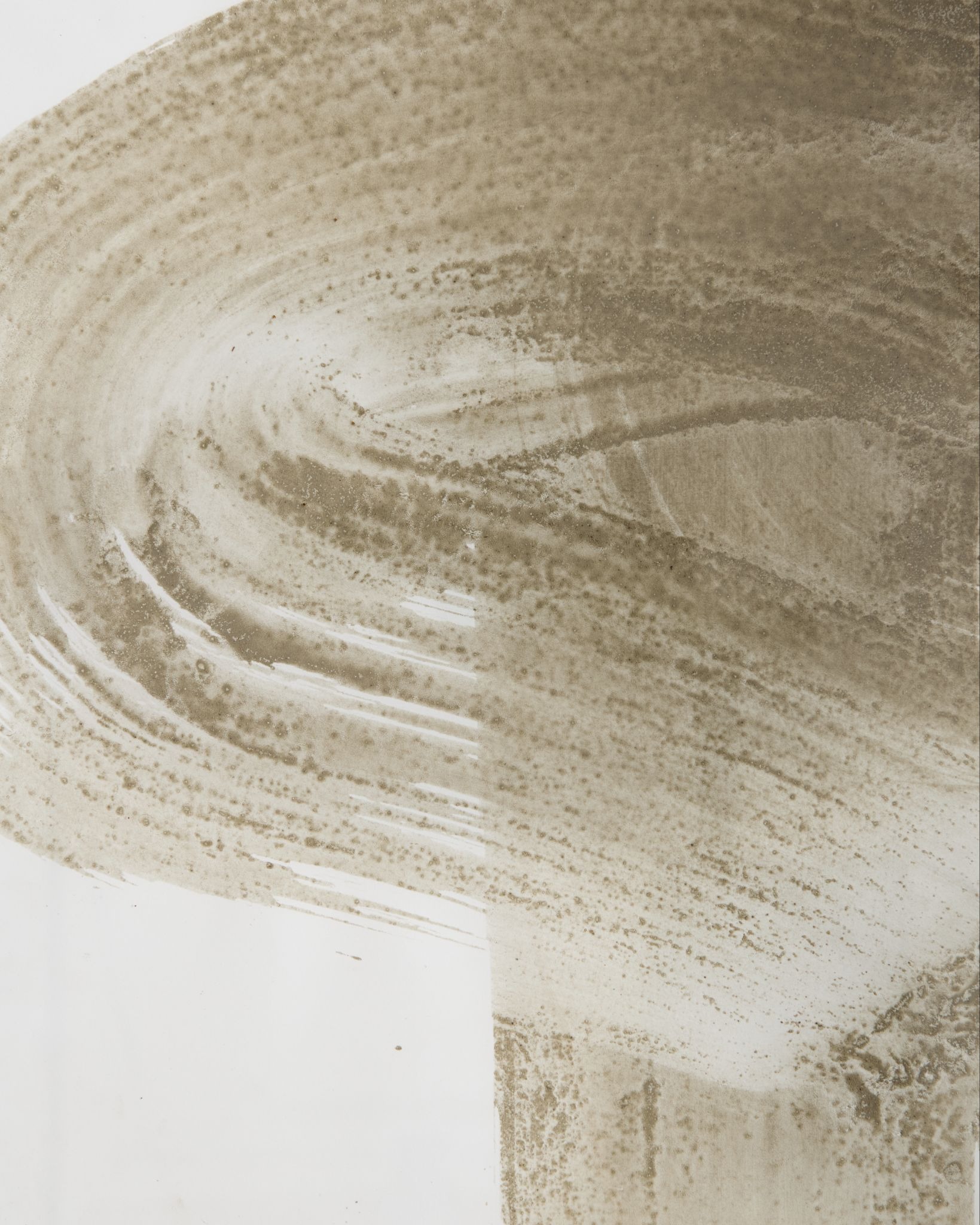
J: For me, fastened relates to materials that embody transformation. There’s the transportation of sediment, the action of a gesture, and a sentiment of impermanence. For example, in Suspension, there are pigments from estuary mud and sand collected from a dune; dunes are shaped by water or wind-driven forces. In Basin, the material used is a sand-based concrete, so there is a space where these two worlds co-exist, one represents a state of permanence, and the other a continual motion, drifting or changeability.
It’s a fastening that is not quite permanent, and yet by fastening sediment and materials together, there’s a space for contemplation. What interests me is that something fastened can become unfastened, which represents the continual flux of our environments; systems that can coexist whilst being pulled apart.
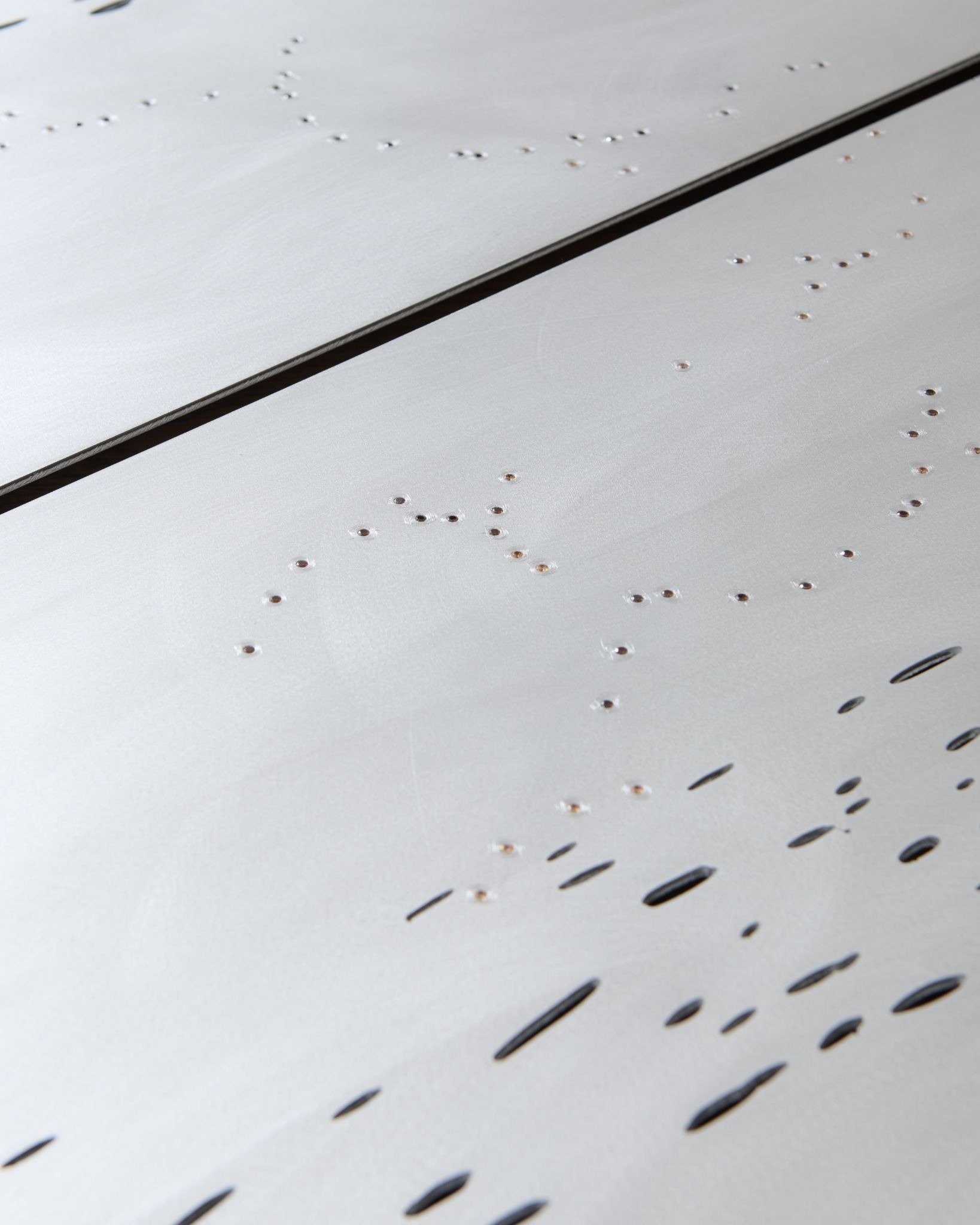
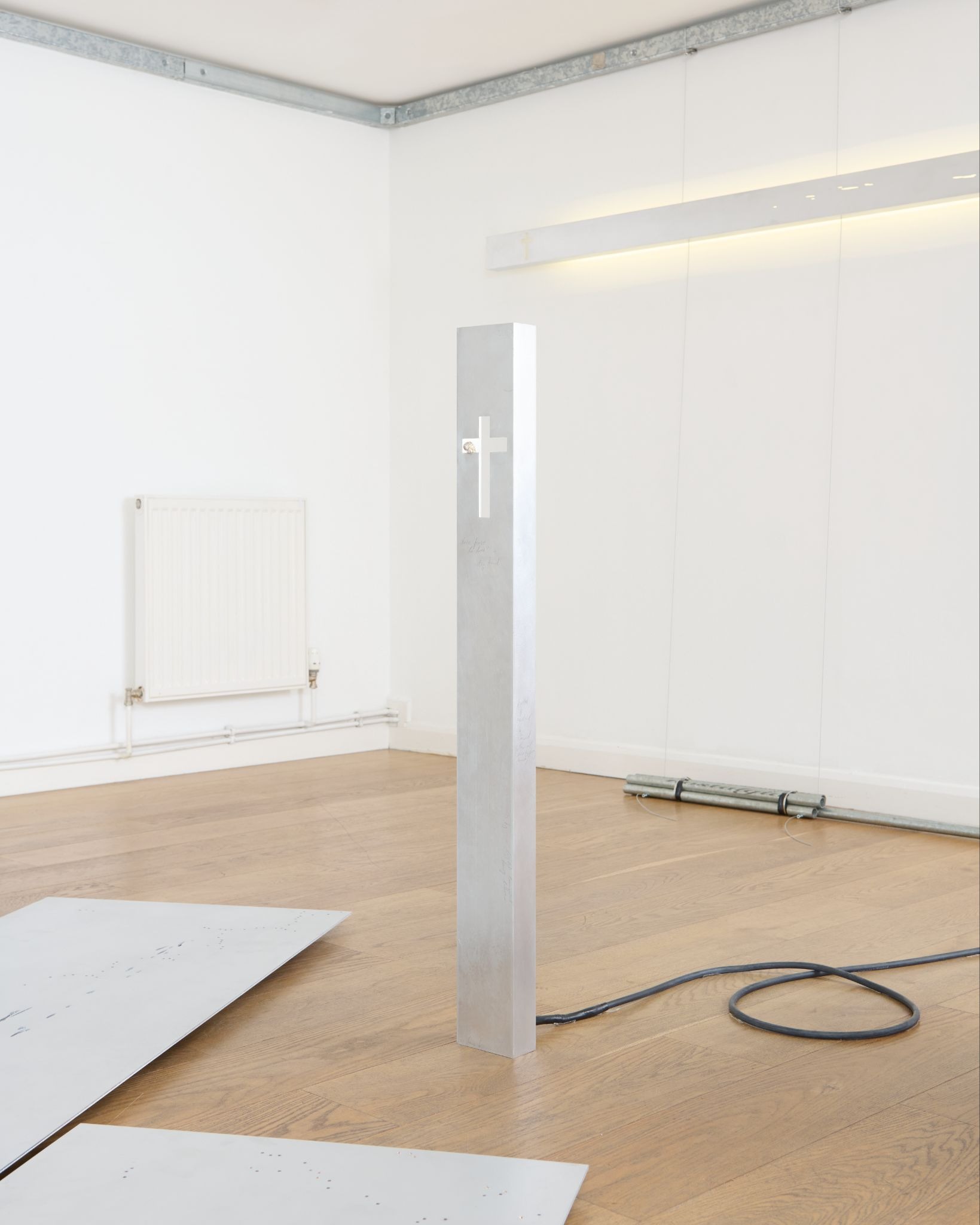
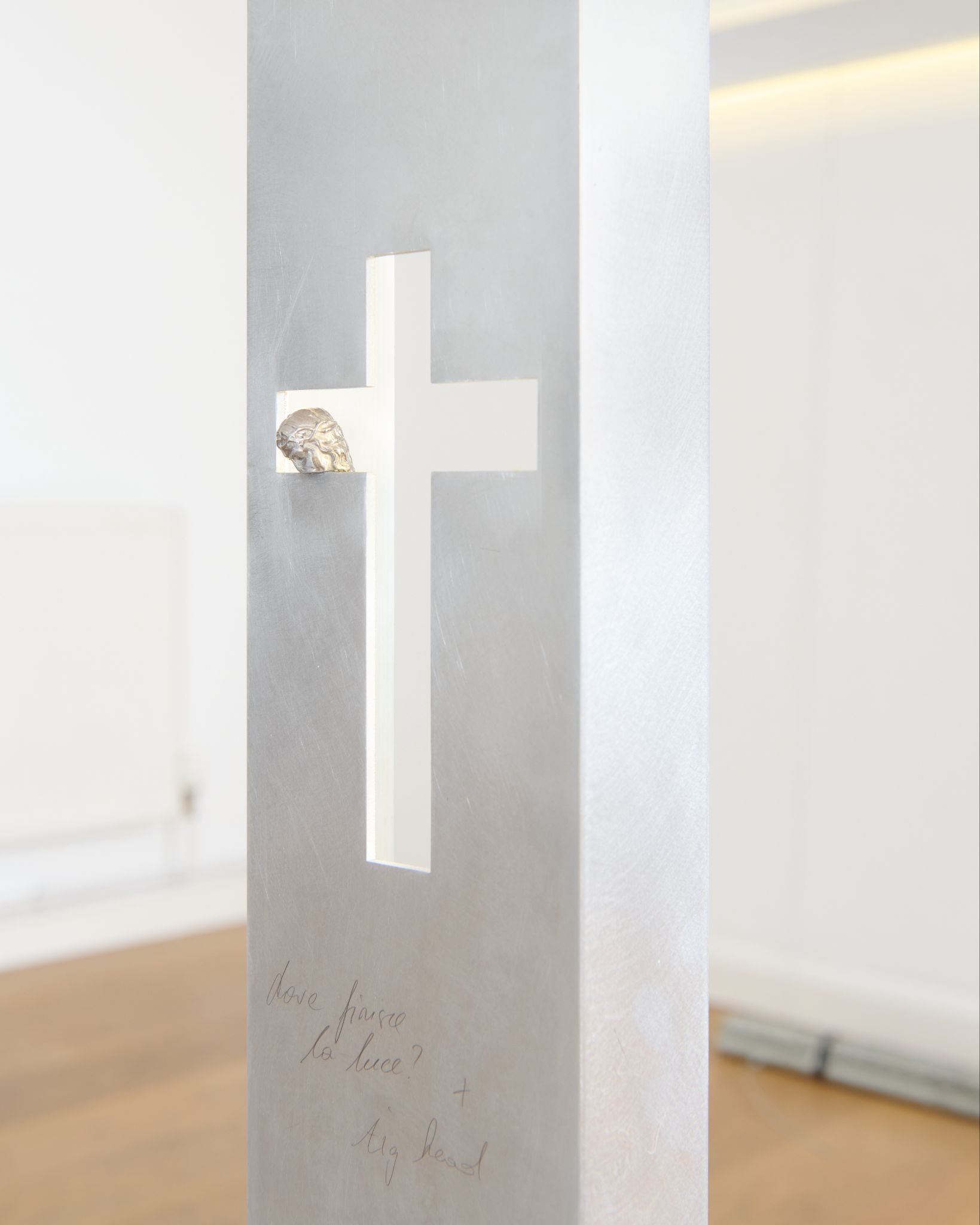
M: Fastening exists both visually and emotionally within my work. It lives within the industrial materials and the hardware I often use. In Feeble Ground, Heavy Petals, the metal has been pushed around the CZ stones to secure them in and be flush set within the aluminium sheet. It’s a very delicate process which contrasts with the forceful way the steel wire and fasteners are pulling Crossbeam I into position. I’m intrigued by how objects can be kept together and how they resist opposing forces, often thinking about how far something can be stretched or pulled before it ruptures.
Emotionally, I see fastening as a representation of passion and worship, and attachment to a certain object or a ritualistic action.
S: How did your interest in transformation, fragility, corrosion and collapse begin?
M: We’re surrounded by industrial materials, piles of them in the streets which we don't really notice. I’ll often be picking up a rogue piece of metal from the side of the road to be brought back to the studio, maybe use it as a tool or polish it up. Objects of devotion are not necessarily inherently precious; they can become precious through the care, craft and meaning invested in their transformation. This is something I’ve also been thinking about through The Reliquary Effect by Cynthia Hahn, which talks about how objects come to hold devotional and sacred value. An industrial material can be transformed into something intimate and emotionally charged.
I am interested in how we come to cherish objects, and how the act of making can turn industrial materials into something sacred. The craft involved in their transformation, alongside the addition of religious imagery and “decorative” elements, introduces a sense of care and preciousness into materials which we wouldn't usually associate those things with. Through this process, the object becomes more than its material or function but also something we form an attachment to.
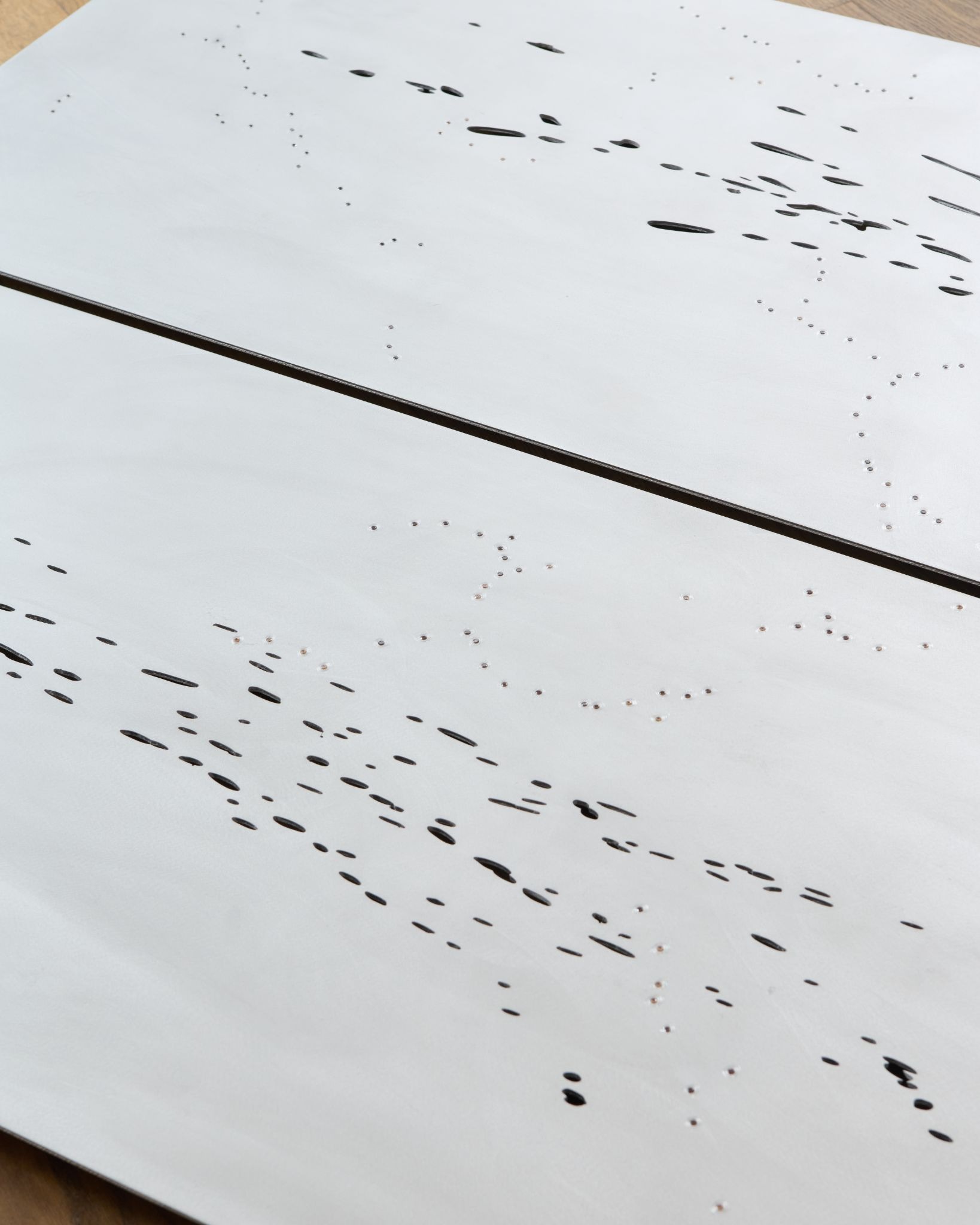
Corrosion is another important part of this transformation because it reveals the life of the material. The aluminium beams and sheet metal develop a patina as they age, their surfaces accumulate marks, traces and different colours which will naturally keep changing over time. In Feeble Ground, Heavy Petals, I allowed the material to oxidise first and then used the marks left by this initial stage of corrosion to guide where the stones are set. I like that the corrosion continues over time, meaning the surface will keep changing, but the stones are fixed. The works are never really permanent, if you see them weeks, months or years later, they’ll have continued to change.
S: What do fragility and resilience look like in your materials?
J: Growing up in Liverpool, an industrial city, I was exposed to the collision of urban and natural environments from an early age. I lived next to a coastal dune and forest area, which is continually eroding and under development. As the sand erodes, mounds of landfill rubble emerge, revealing decades of material histories.
I am drawn to materials that embody transformation, shaped by continual forces both natural and industrial. Through these materials, I’m interested in exploring the tension between extraction and preservation, and how our environments are shaped by both intervention and restraint.
Fragility and resilience in my work are not solely qualities of the materials themselves, but reflect the wider systems they represent, which are in continual states of construction and deconstruction.
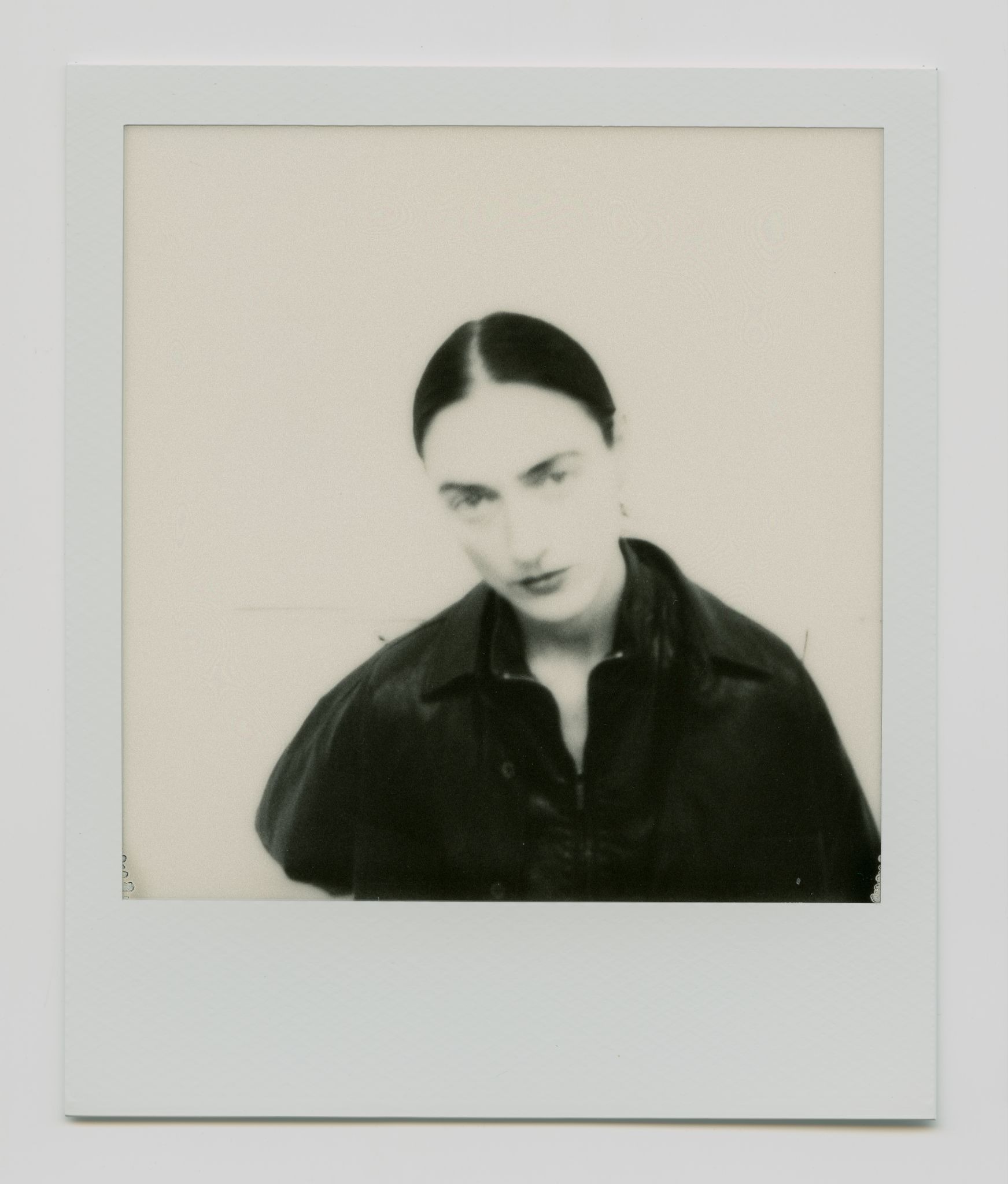
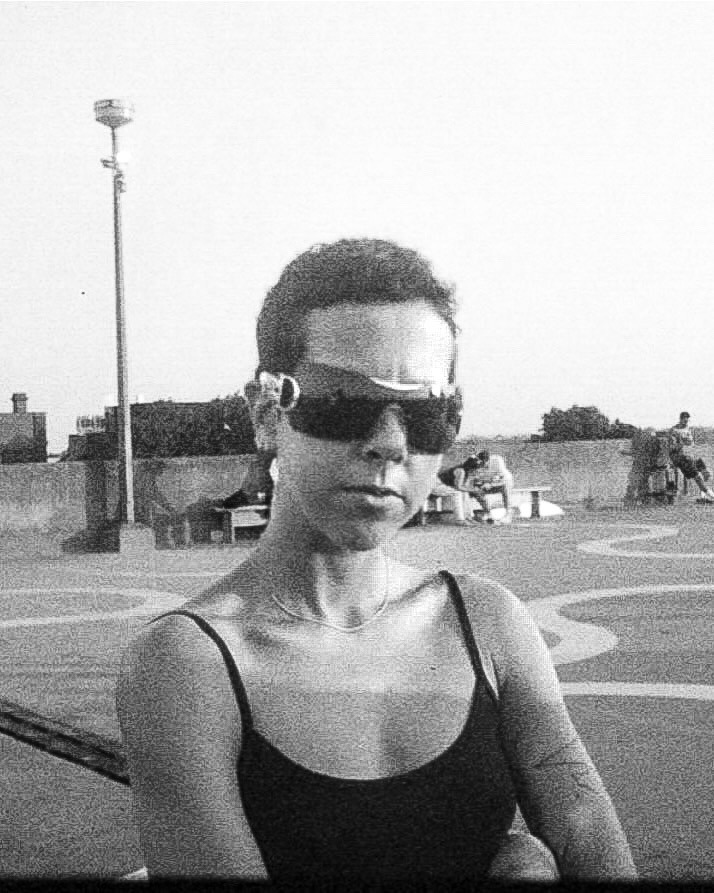
(top photo) Jen O’Farrell & Maria Vittoria Faldini (bottom side)