
Joana Galego at Soho Revue
Tell me a bit about yourself.
I come from Portugal, and I moved to London 10 years ago to study at the Royal Drawing School. I was very lucky to receive an award at the end of the year, a grant to prepare a solo show over the course of the year after graduating. That was life-changing, because it allowed me to stay and start creating works here. I had a solo show with Soho Revue in 2023, and I've been working with them ever since. I also teach art to children and adults.
Which artists are you enjoying at the moment?
Pierre Bonnard, Paula Modersohn-Becker, Watteau and Balthus. I’m currently looking at this book called “Dreams of a Summer Night”. It features Scandinavian painting from the turn of the century that is quite sombre, dark and magical. I like a lot of contemporary painters, too. I saw an exhibition of Graça Morais in Portugal in the summer - she’s a great painter. I’m curious to see Jonathan Wateridge’s show at Grimm Gallery.
Your background is in drawing. How do you form your compositions?
Sometimes I work in a way that feels planned, with a black & white sketch. I’ll have a clear idea and make a drawing based on a memory or feeling. Sometimes I’ll do colour studies before moving on to the canvas. Other times, I’ll be more spontaneous and start on the canvas right away, perhaps with colour as a starting point, or working more with abstractions or washes, and being led by what they suggest. If they start to suggest faces or bodies, I follow that. Even when the work starts in a more spontaneous, abstract way, eventually I find a way of connecting to it through narrative or association with past experiences.
Do you draw and paint from photographs, models or memory?
Either drawings from my sketchbook, photos, by looking things up online or looking at my own photos. Several paintings in this show start from small sketches - quite specific things. Once I have the sketches, I start to inform the drawing and painting with more observation. Sometimes I take photos of my boyfriend in a certain pose, or I look at my own hands. I am my own model, because I don't really have a model who comes to the studio. Recently, I went on Google Maps and looked up my grandma’s house, and I saw that they store past photos of the building, which has changed over the years. In this way, I could go back in time.
Tell me about your exhibition at Soho Revue.
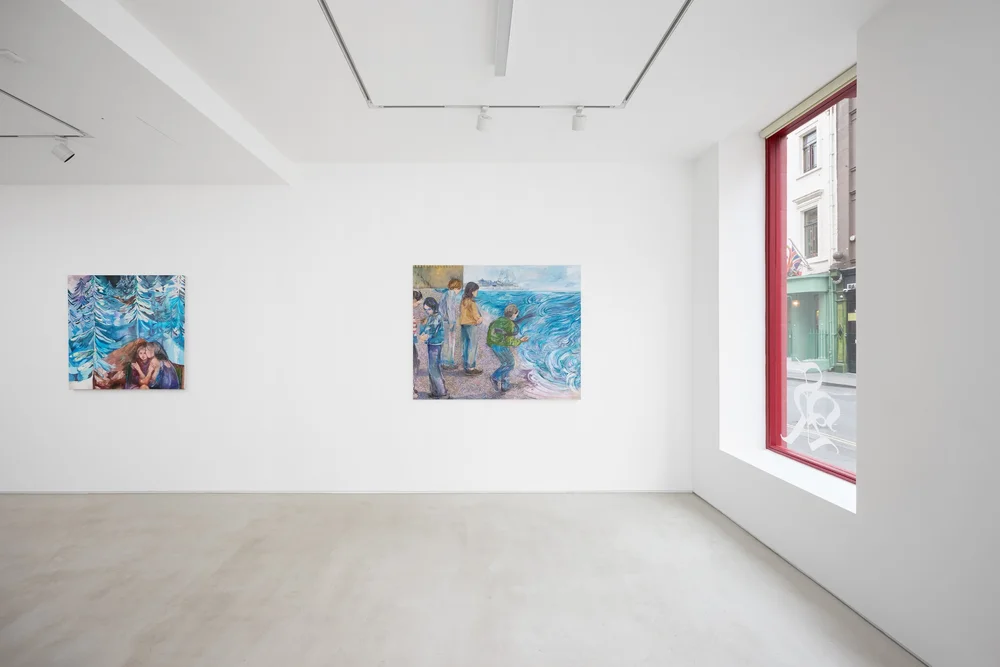
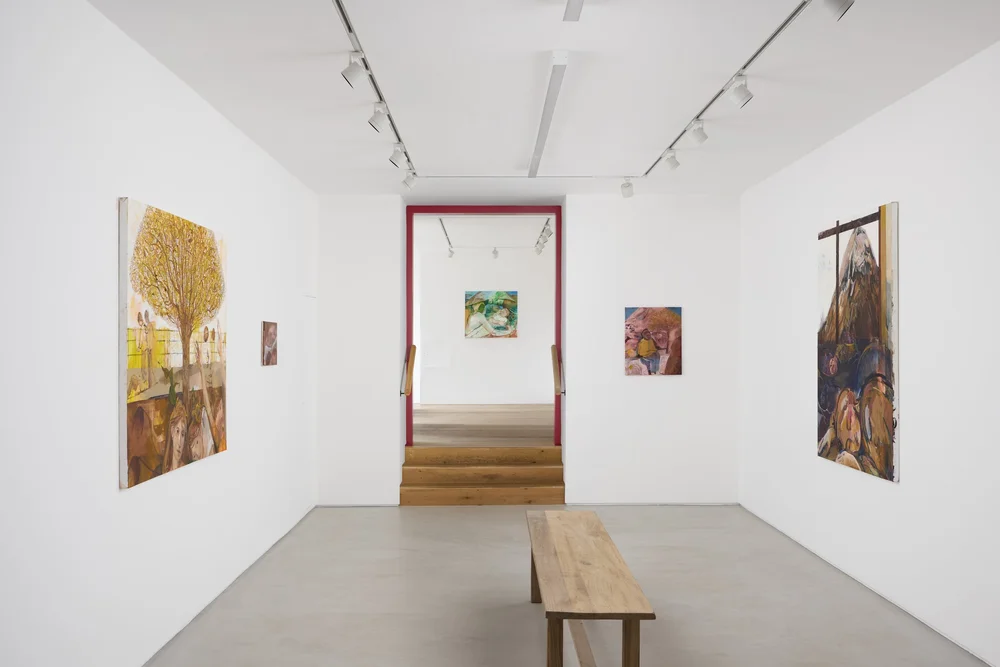
After living in London for 10 years, I am a very different person. I've been trying to explore how that change translates in the works. Tenderness is something that comes to my mind in the process of making, because I think about relationships between family members, friends and lovers. There's a genuine attempt to preserve and talk about those aspects of life. I think the show is made of paintings that look both outwards, at the present, and also to the past, trying to find empathy throughout these relationships and different life choices. I want to accept that it's okay to take different paths in life, whilst also contemplating what it would be like if it were different.
Tell me about the exhibition title: “Different Ways of Staying”.
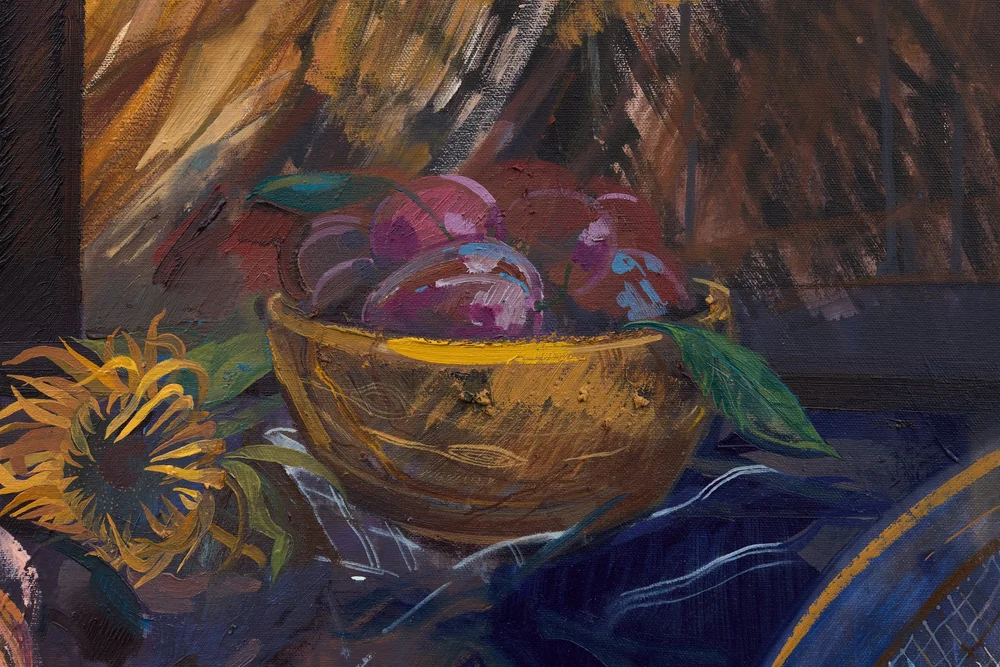
It's about different paths and life choices, but also the fact that the paintings are quite different from one another. It’s about accepting that my process leads to different results, and that I enjoy moving between different materials. There are paintings with a mixture of wet mediums, dry pastels and different surfaces. The word staying alludes to the fact that, through painting, you can also make people stay. Painting is a process of accessing your memory as well as making it tactile and visible. The title brings all these things together because, through painting, I can really live in the memory. While I'm working on a physical thing, my brain travels in time and is very present either in the past or in the essence of a present relationship.
How is the experience of coming up with titles in English, your second language?
I love language, and I love words. The title of my first solo show with Soho Revue, Mole Lunar Sinal, was a play between Portuguese, English and Spanish. Sometimes I’ll read a poem, and I’ll write it down in English and Portuguese and see what makes more sense. I think there's a lot of music in words. The meaning can be there, but if it sounds a bit off, then I will change specific words to change the rhythm of the phrase or sentence. I'm glad that I can find different things that express what I want to say in two languages, or even more. I like the potential of it. I don't think that each language exactly mirrors the other. It's almost like the more words you learn in different languages, the more possibilities you have to express yourself in specific, subtle ways.
The titles of the works are very enigmatic and poetic. Could you explain Translation in Amber and Telepathic Kiss?
Translation is about the way that painting is a means of translating something, something very abstract that I cannot quite define. It's a way of making something visible. Amber evokes fossils and things - such as memories - being preserved. There is also something about the flow of that painting. It has lots of flowers, and there's a sense of nature and accessing memory through the things that we share. Telepathic because many of my paintings used to be more about what I wanted to do but couldn't - things that would just stay in my thoughts. Painting was a way of leaving something that only existed in my mind. Telepathic refers to this idea of connecting with others through thinking and keeping them in your mind, rather than through physical touch. The figures are very close together, and I think there's some secrecy between them.
In the paintings, there are either one or two figures. Are these works primarily about relationships?
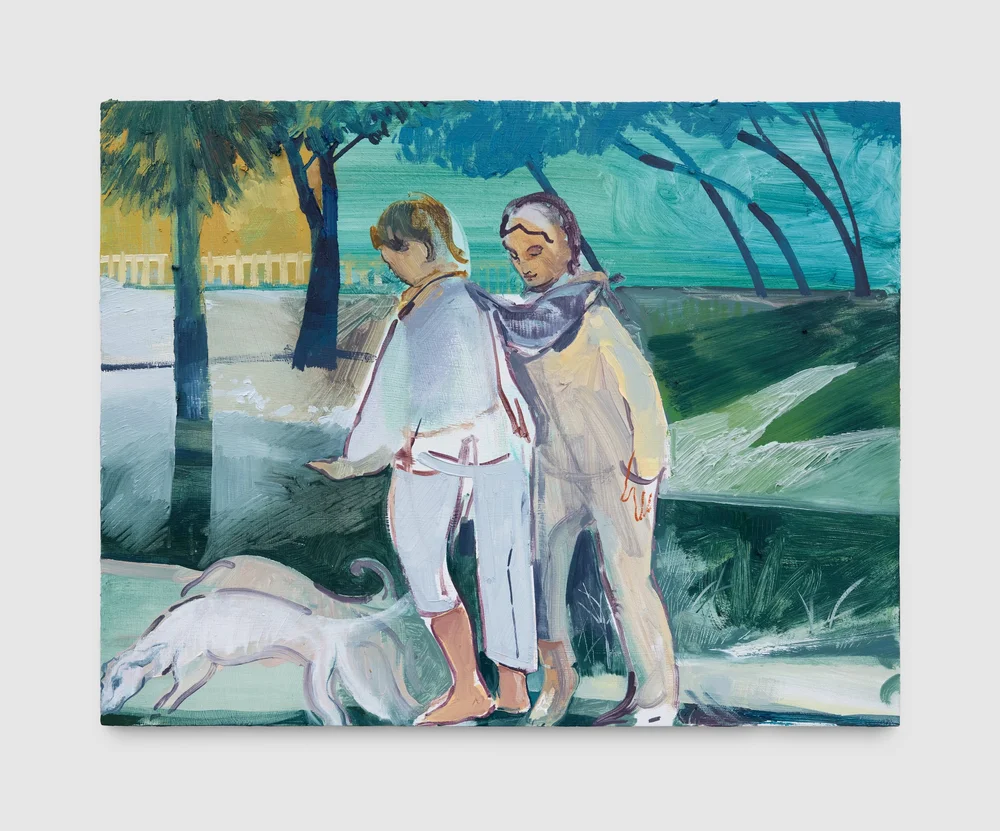
Yes, absolutely. If I had to put it down to one word, it's relationships. My mother is a recurring character – they are not portraits of her, but an evocation of a presence. There are also relationships across different stages of life, and how those dynamics change as you get older and become more aware of everyone's reasons to be one way or the other.
Do you work quickly or slowly?
I tend to work slowly. I have an affinity for details and small things because they comfort me. It comes from childhood. Details are comforting and calming. We live in a time with a lot of anxiety and uncertainty about the future, and I find focusing on something like grain for a sustained period of time - in the show, there is a painting with lots of small grains of sand - is like meditation. Plus, I have an addiction to small brushes. So the paintings take a long time.
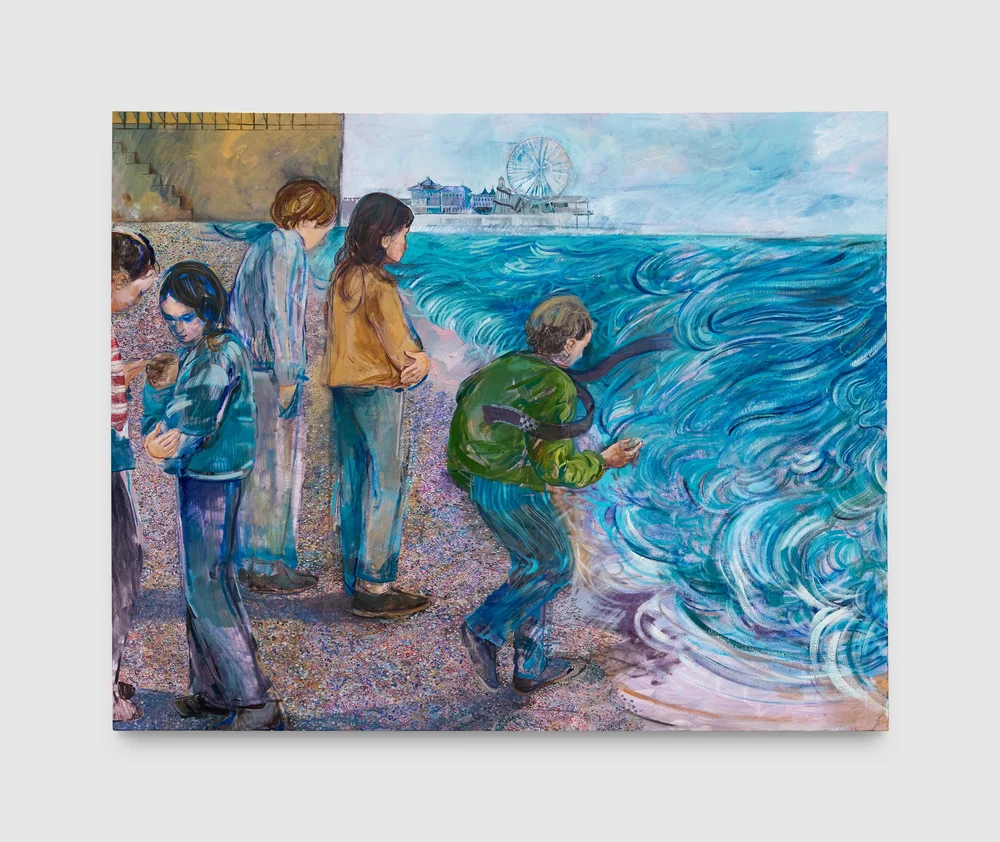
You depict motion and movement beautifully. Where does your inspiration come from?
I love the emotion that can come from body language. We say so many things by moving our bodies, and in social settings, our posture can say so much. I'm very tuned into these things. In my life outside of the studio, I try to assess how everyone is feeling. There are some types of figures that always recur. There is always someone who is shy or introverted in my paintings, and they tend to curl slightly inwards. Some figures are moving in a way that feels freer.
How do you explore time and memory?
For me, painting is a way of time-travelling. When I paint someone, I go back to the memory of seeing that person at a particular time of day. Then I think about the sky on a specific day, and I bring all these different memories and fragments together. There's a painting in the show that has been in me for years. Some parts of the painting are very meticulous. During the painting process, I become really entangled in all the emotions and feelings that those memories evoke, and I begin to see from a new perspective. I see who I am today.
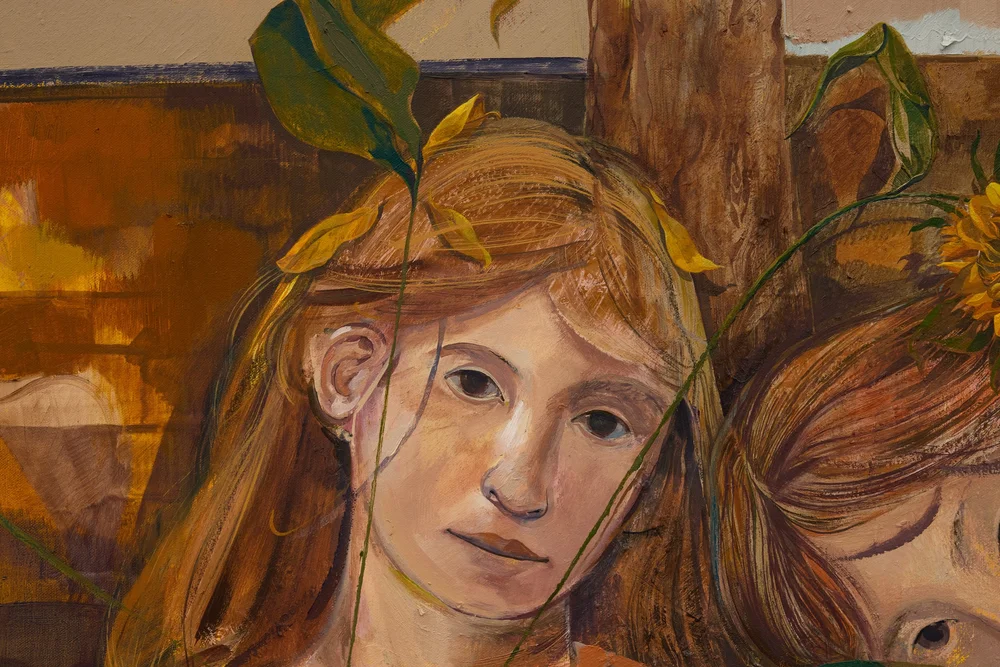
Different Ways of Staying is currently on display at Soho Revue, until 31 October.
Don't forget to check in and leave your review on the gowithYamo app!