
Lou Mensah in conversation with Anne Kimunguyi of Tate Modern on Light & Magic: The Birth of Art Photography
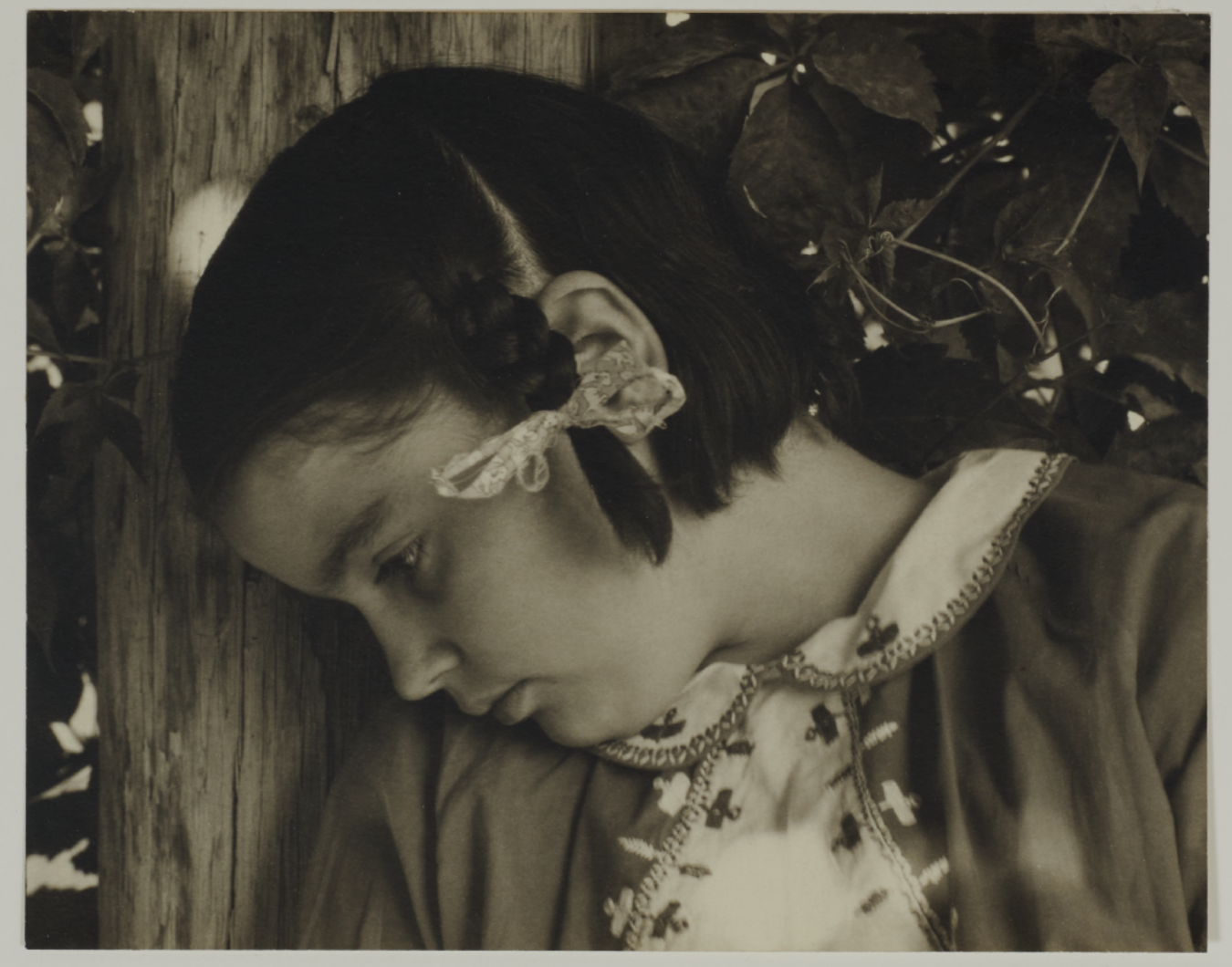
The first major exhibition to explore Pictorialism as a global movement, Light and Magic brings together over 200 rare vintage prints by more than 80 global artists, half of which have never been shown in the UK. The exhibition traces how photographers from the 1880s to the 1960s used darkroom techniques to transform photography from a documentary tool into an art form.
Lou Mensah: What were the main ideas or connections surrounding Pictorialism that you wanted to explore through this exhibition?
Anne Kimunguyi: Pictorialism as a movement has for a long time been understood as the first sustained effort to establish photography as a fine art emerging at a time when it was principally viewed as a documentary practice. Yet this idea of pictorialism has been confined to a European and North American context and restricted to a fixed demise in the early twentieth century, giving way to the development of modernist art practices and aesthetics.
With Light & Magic: The Birth of Art Photography, we wanted to redefine this understanding of pictorialism through an explicitly transnational lens. A key desire was to move away from the restrictive geography through which it is most often discussed. Importantly, through tracking the international networks of photo clubs and salons across South and East Asia, South Africa, Eastern Europe, Australia and Latin America, our understanding of the movement’s temporal parameters blurred too. Not only were pictorialists engaging in conversations and connections that transgressed national boundaries, but understanding of its assumed subsidence in the first half of the twentieth century and the advent of modernism was challenged too. Through these international networks, pictorialism continued through to the late 1960s, prompting a re-evaluation of the foundations of modernism.
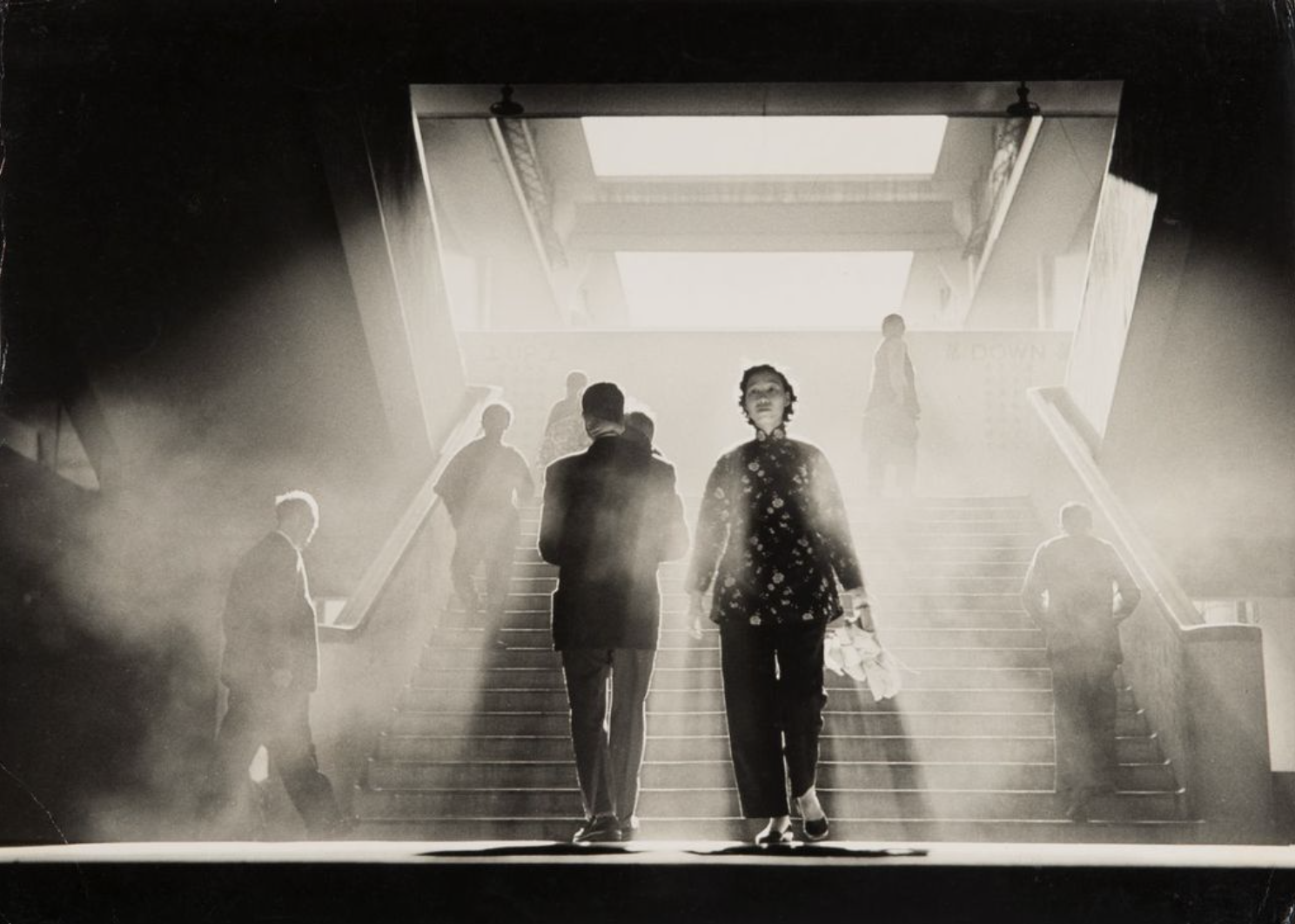
The depth and breadth of the research are remarkable, with around half the works never having been shown in the UK before. Were there any works you encountered during your research that steered your approach?
Light & Magic features photographs from artists more commonly associated with the pictorialist movement, with recognisable names like Edward Steichen, Alfred Stieglitz and Peter Henry Emerson. There are a significant number of works in the show that came from the Royal Photographic Society (RPS) archive, now held within the V&A collection. At the time of exhibition development, many were not yet digitised. The research process for the show, therefore, was almost analogue at times. Charmaine (the lead curator) would physically sort through boxes of hundreds of old prints and photographs. It was in this way that we came across the work of Emma Barton – an English photographer whose work remains largely unknown, but who, in the early 1900s, was widely shown within photographic salons and societies both in London, including at the RPS, and beyond. We have three of her carbon prints on display, St Margaret, The Awakening and St Catherine, all of which have a textural, almost ethereal quality to them. Two generations after their production, her photographs were rediscovered by her grandson in the attic of their family home as he was clearing it for sale.
Similar stories run through the course of pictorialism more widely. Many families of amateur photographers in Singapore, for example, had already given or discarded much of the photographs by the time we came to prepare ‘Light & Magic’.
These discoveries raised interesting questions for us around the practice of archiving and collecting amateur photography, and which works are assumed to not be desirable or acquirable by a museum collection. Many women photographers, like Emma Barton or Violet Blaiklock, who made significant contributions to the development of colour photography and whose photographs we also have included in the show, were very well known at the time of their activity but are not nearly as well remembered as, say, Emerson. It became key to reaffirm their contributions to pictorialist development.
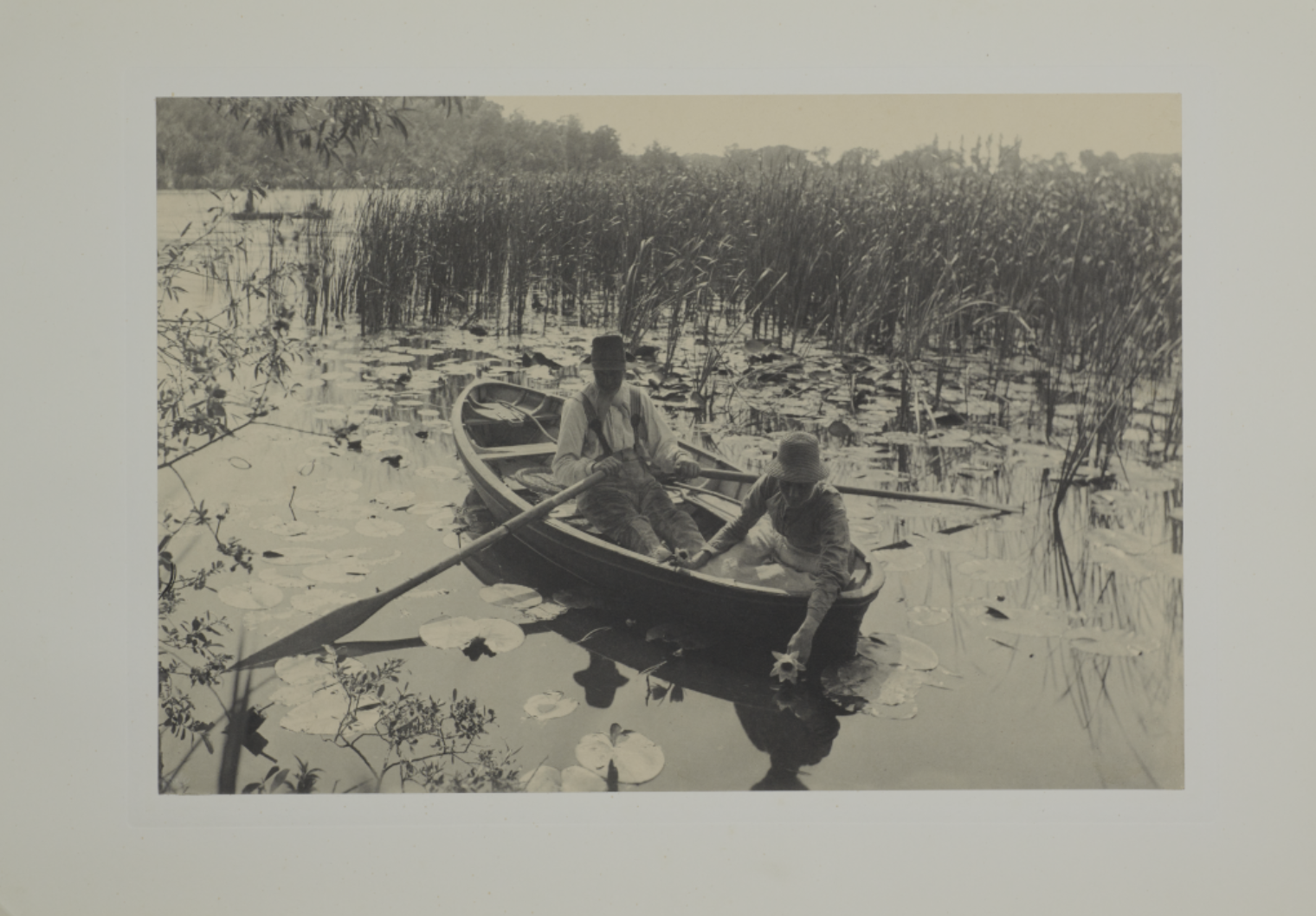
Beyond Van Leo’s work from Cairo, Africa and the Caribbean are less represented. How did you approach the geographical scope, and what does it tell us about which histories of photography have been preserved and studied?
It is an important point, and one that was central to our thinking behind the show. With Light & Magic, we wanted to widen the geographic scope beyond the largely European and North American contexts in which pictorialism is considered, to show the transnational lines of connection and exchange that underpinned the art historical movement. Our research particularly highlighted the presence of established camera salons in Asia and Latin America, but also Eastern Europe and Australia, as persisting well into the mid-twentieth century, challenging pictorialism’s delineation with modernism. Crucially, gaps in both records of the movement’s practitioners and in regional representation raise important questions around the significance of infrastructures of preservation and collection – of which museums and galleries play a central role.
One artist worth mentioning is Minna Keene, a South African photographer working out of Cape Town in the early twentieth century. We have included two of her works, Sunshine and Shadows and Basuto Girl. Keene was one of the few photographers to not only be working out of a studio in South Africa at the time, but also to enjoy international recognition, with work exhibited in photography salons in England and North America.
Photographic societies such as Guangshe in Shanghai, The New Line Group in South Korea and the Photographic Society of Singapore brought photographers together to share ideas and develop their practice. What kinds of photographic approaches did these groups exchange, and how did they shape Pictorialism in their local contexts?
Several of the artists on display in Light & Magic were instrumental in the development of camera clubs and associations across Asia, such as the New Line Group in South Korea and The Photographic Society in Singapore. Photographic societies were built with the intention of creating institutions that could stand in for the absence of museums and galleries open to exhibiting their photographs. In South Korea and Singapore, these clubs emerged in a post-war, postcolonial context, where emancipation from Japanese and British forces, respectively, encouraged intense debate on the formation of a new national identity. These debates fostered divergences in photographic practices. In South Korea, for instance, artist Lee Hyung-rok split from the New Line Group to form Salon Arts in 1960. Here, a rejection of humanist documentary modes in favour of pure aesthetics that recalled the early days of pictorialism was fostered. Photographic aesthetics in this context did not follow a linear path of progression from pictorialism to modernism, as a more limited understanding of the movement suggests, but instead remained expansive and transnational in its development. These clubs were significant sites for building professional networks that sought a degree of international visibility and cultivating an aesthetic discourse, closely interlinked with the geopolitical reality of increased US cultural influence in the country.

You’ve described these clubs debating national identity after independence. Did that produce photographers who actively broke from the colonial-era aesthetic?
In Korea, the first half of the twentieth century oversaw a period of occupation by Japanese colonial forces (1910-45) and later Soviet and American forces, triggering the Korean War and the formalised division of Korea by 1957. New photographic styles emerged from within the postcolonial period and in response to the new South Korean nation. A leading figure in post-liberation Korean photography, Limb Eung-sik, whose works Homeward Route and Feet 2 (Young-sook Han) feature in the show, pushed to develop a distinct photographic style that departed from the colonial era ‘salon picture’. This emphasis oversaw the development of a new photographic aesthetic, which rejected the perceived imitation of painterly qualities within the photographic medium. Within this context, photographers worked within photo clubs to search for an authentically South Korean photographic identity, weaving between pictorialism, realism and modernist aesthetics.
Lionel Wendt’s portraits of young Sri Lankan men depict desire in ways that were rarely expressed openly at the time. More broadly, the history of photography raises questions about who has had the freedom to represent their own identity and desire, and on whose terms. How did these questions emerge in your research, both in Wendt’s work and beyond?
As with painting, portraiture was a crucial element of photography, from the camera’s early deployment in documentary practices through to pictorialism. What was unique to the pictorialists at the time was their manipulation of the image to infuse their photographs with an atmosphere that pushed their subjects into an entirely different direction – theatrical, mythological, sensitive or otherwise. This is particularly striking in the work of Lionel Wendt, an influential Sri Lankan photographer, active in the first half of the twentieth century. Wendt was heavily drawn towards dance and music, regularly documenting Kandyan dancers in his work. More often associated with modernism, Wendt’s return to colonial Ceylon (present-day Sri Lanka) saw him experiment with darkroom techniques like solarisation, montage and multiple exposure to create bodies of work that were at once intimate and dynamic, as with Male Youth, Ceylon, which we have placed in the final room of the show.

This relationship between dance and pictorialist photography was not unusual, becoming clearer over the course of our research and to which we have dedicated an entire room of the exhibition. Another notable example here is the work of Zenta Dzividzinska, whose Riga Pantomime series employs the photochemical process to document the rehearsal of an amateur ensemble at a time when pantomime was a popular form of performance within youth counterculture under the Soviet Regime in Latvia.
For pictorialists, the dancing figure was a vehicle for expression. In capturing the body and its movements, a living art form in and of itself, pictorialists experimented with darkroom techniques that allowed for new forms of ambiguity, identity and subjectivity to emerge within photography that had not been previously possible, and which continue to shape the practice well into the twentieth century.
To end, could you point us towards any contemporary photographers in Tate’s collection, including a photographer from the global majority, whose work carries forward some of Pictorialism’s ideas?
In recognising pictorialism as not merely a style which embraced painterly aesthetics but as a movement that sought to liberate the photograph from its documentary function, one that experimented with realism, image manipulation and interpretation, the echoes within contemporary digital practices are incredibly clear. Artists such as Wolfgang Tillmans, who features heavily in Tate's collection, Dr Ajamu X, whose usage of the darkroom is central to his practice that centres the body and Black queer communities, and Dayanita Singh, whose work moves fluidly between the gallery, the photobook and the archive – come to mind. Their work testifies to the pictorialist belief that the photograph is an authored object, one that constitutes a genuine art form, as many of us today have come to know it.

Light and Magic: The Birth of Art Photography at Tate Modern until 21 February 2027.