
15 Questions with... Dean Fox
.webp)
Welcome to 15 Questions With…, an interview series in which art writer Gary Grimes picks the brains of artists, curators and other creatives to understand what makes them tick through a series of quick-fire questions. This series aims to showcase the varying approaches creatives take to making art and how their relationships to the so-called art world differ, but also reveal what unifies those responsible for the art we love.
.avif)
Dean Fox is a painter born in 1979 in Essex, who now lives and works in Epping. He has participated in several presentations both in the UK and internationally, including shows in London, Los Angeles, Antwerp, New Orleans, and New York.
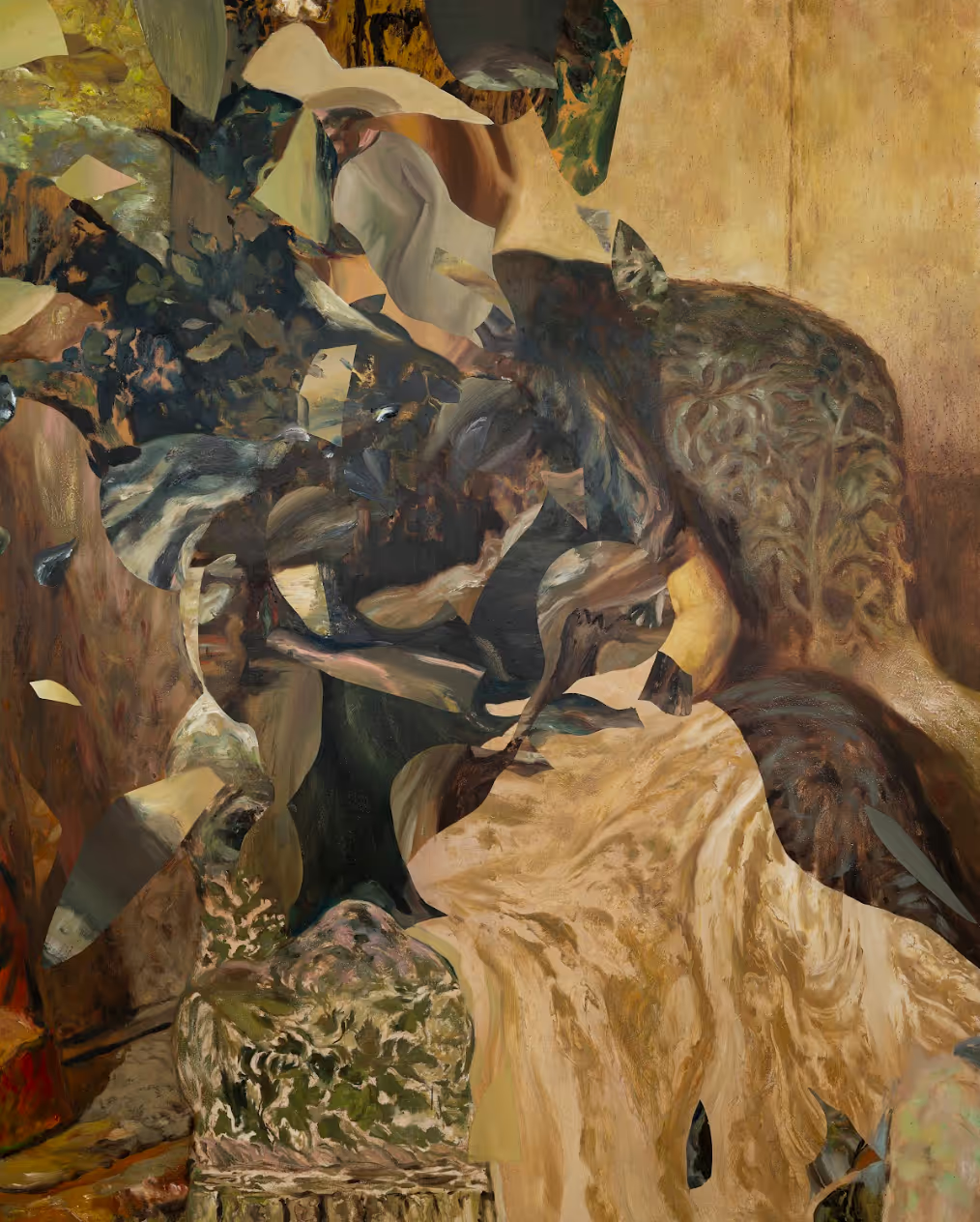
Fox’s image first starts out as a digital collage, born from a tessellation of various works by artists such as Manet, Monet, Gauguin or Degas. Once he has digitally sewn together various vignettes from his chosen artist(s) source, he then transfers his montage onto his canvas in paint.
The artist recently opened a solo show of new work entitled Keeping the Books on the Shelf at Matt Carey-Williams in London. The show will be on view through 8 May.
1. What is your earliest memory of a work of art?
My earliest memory of a work of art was just a small print of a Van Gogh painting, ‘The Potato Eaters’. I remember being drawn to its play of light and dark and how the marks felt alive, like they had their own weight and presence. I think it’s something I still look for in my own work.
2. Where do you turn to when you're in need of inspiration?
Rather than looking for inspiration, I try to remove myself as much as possible from intent and trying to find inspiration. I allow failure and a flow of creating to lead me to something that seems to come about spontaneously or naturally. In other words, I’d say my inspiration comes when I forget myself and don’t force it. Instead of aiming for success, I allow failure to grow my creative process and the work arrives almost of its own accord.
3. What do you like to do when you need to take a break from your practice?
I play music a lot and love to visit garden centres lol. I am obsessed with buying plants, maybe it’s an age thing! Anyway, it’s just as beneficial to step away from the art as it is to do it! I feel something significant happens in that absence.
4. Who is your favourite artist?
My favourite artist currently is Édouard Vuillard who I have heavily focused on with my recent works. His interiors are so intimate, so layered - they’re not just windows into a room but moments of stillness, almost dissolving. I return to him because he holds a delicate balance between presence and ambiguity.
5. What's the biggest crime an artist can commit?
In my view, the greatest crime an artist can commit is losing touch with their own truth and creating with others in mind or for others. When one starts creating just to please others or chase trends, instead of staying anchored in what moves them. That’s when the work becomes empty, and I think it loses its power to connect. Also, I feel the artist has to battle and not allow intention to drive their practice. Intention kills the work stone dead. Works have to be alive and carry an essence of your heart rather than your mind.
6. Which gallery or museum should everyone try to visit at least once in their life?
I’d say everyone should try to visit the Musée d’Orsay in Paris. There’s something about being in that space, surrounded by those Impressionist and Post-Impressionist works, that really grounds you in what texture and brushwork can do for a painting. The place reminded me of the beauty of letting go and loosening up.
7. What is the worst thing about the art world?
I’d say the worst thing about the art world is when you see the work becoming just a product.
8. Whose opinions on art do you actually care about?
I care about all opinions to a degree, as I think everyone, whether they understand art or not, has something to say. Obviously, I value the opinions of people I consider mentors, and so I can’t answer this question without mentioning Matt Carey-Williams, who understands the work like no other and has been a steady, thoughtful voice who pushes me out of my comfort zone.
9. What trend in art makes you roll your eyes?
I’d say the trend that really frustrates me is when artists get stuck repeating the same formula - painting the same idea just because it worked once, without asking new questions. That kind of repetition can feel empty - it stops the work from evolving and from staying fresh and alive.
10. Who are the last three musical artists you listened to?
Pink Floyd, Fleet Foxes and Neil Young.
11. What's your favourite colour and why?
I’d say my favourite colour is burnt umber. I love its roots in classicism and practicality.
12. What three items would you grab if your house was burning down?
Probably any paintings I have, so I can help pay for any damages? My guitar if I need to busk for money, and my kids’ Xbox - otherwise I’d never be forgiven.
13. Is there an artistic skill you wish you were better at?
I’d say the skill I’d most like to be better at is knowing when a painting is truly finished, having patience with it, but not allowing myself to ever overwork something. I was always told art is about what you leave out rather than what you put in so I want the work to reflect that and retain its energy so it doesn’t lose something vital in overworking.
13. What can you tell us about your upcoming show Keeping the Books on the Shelf at Matt Carey-Williams?
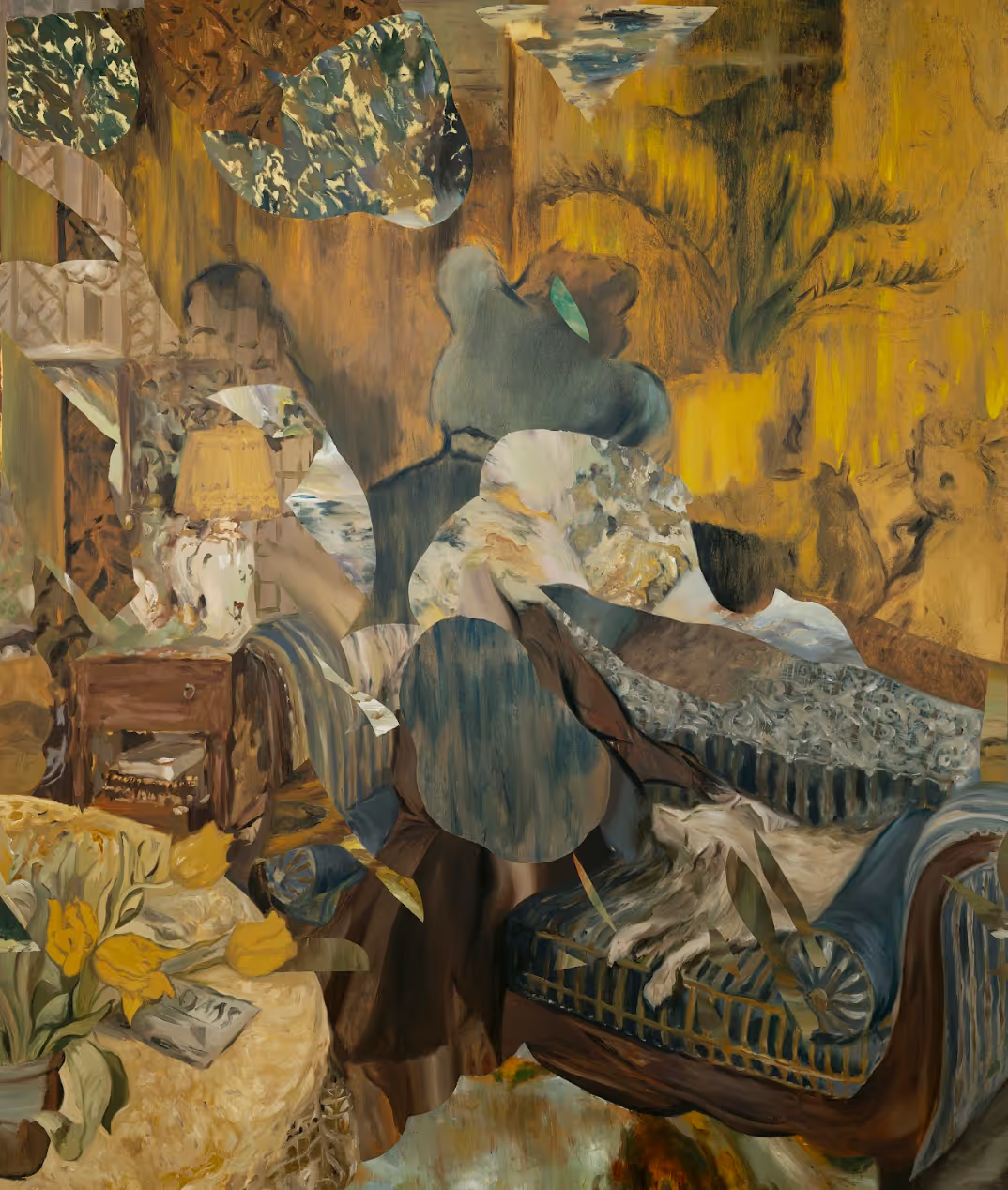
I’d say my upcoming show, Keeping the Books on the Shelf, is really about how we are taught to organise our thoughts, our memories, like books we place on a shelf. It’s also a reflection on what we take ourselves to be. We are in a room, and this room is a kind of mind, and counselling, for me, is about putting those books back in place, keeping a tidy mind from the clutter and learning how to manage, keeping the books on the shelf, but yet every now and then they keep falling off. We are often taught an arduous process that keeps us locked in the same confines, repeating ourselves indefinitely. What I want to point to is that there’s a door and we can walk out at any moment once we realise this. The paintings hold that tension - between containment and freedom - and I hope people feel that shift when they look at them.
14. Which piece in the show took the longest to perfect and why?
I’d say ‘The Games Room’ took the longest to perfect in this series. It was a piece I kept returning to, especially because of the fragmented figures and that complex interior. Each time I adjusted it, the painting resisted being pinned down - it needed that time. I wanted it to feel like a memory - fragmented, but still present - so it took weeks of small refinements to get that balance just right.
15. What impression do you hope people get after seeing your show?
I’d say I hope people come away from the show with a memory of mood, a detail, or a moment they loved. I want them to see that painting is about these small, quiet gestures - so that, after they leave, they’re still thinking about how it felt to see them.