
15 Questions with... BIEN
Welcome to 15 Questions With…, an interview series in which art writer Gary Grimes picks the brains of artists, curators and other creatives to understand what makes them tick through a series of quick-fire questions. This series aims to showcase the varying approaches creatives take to making art and how their relationships to the so-called art world differ, but also reveal what unifies those responsible for the art we love.
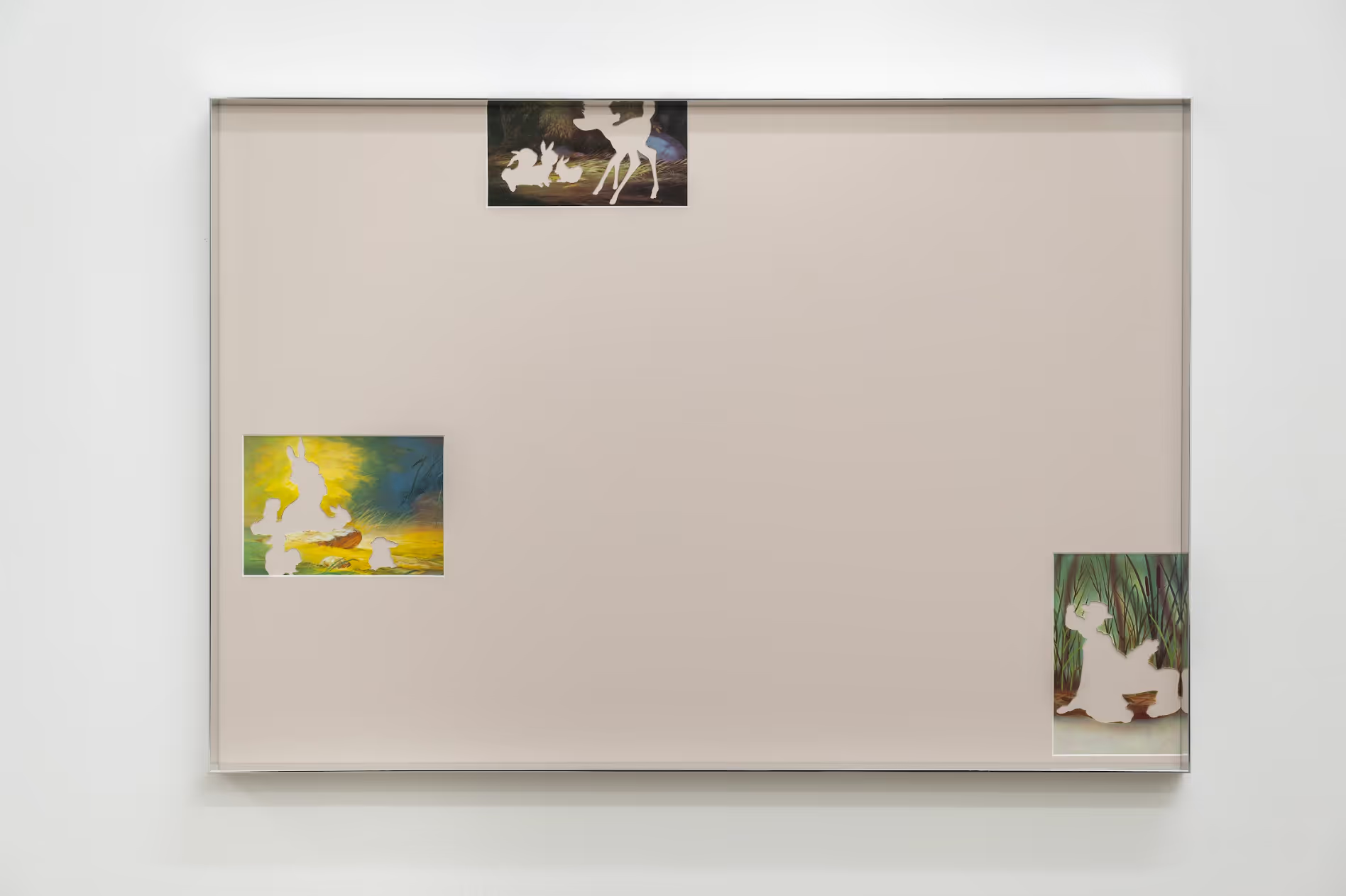
BIEN is a London/Tokyo-based artist whose practice centres on a distinctive drawing language influenced by animation. Working across video, sculpture, instruction, and installation, he examines the mechanisms through which the world is perceived and collectively constructed through images.
Over the course of his career, he has exhibited extensively throughout Tokyo. Last month, he opened his first solo exhibition, entitled, In A Grove of Lights, in London at Season 4 Episode 6 gallery. The show is on view through 16 May.
1. What is your earliest memory of a work of art?
When I was in primary school, I loved the illustrations by Makoto Wada that appeared in books by the novelist Shinichi Hoshi. I still love his work to this day.
2. Where do you turn to when you're in need of inspiration?
When I create work, I reflect on things I notice or feel curious about in my daily life and develop them further. Re-examining myself at those moments may be what leads to inspiration. I often look back at photos on my phone or revisit my notes to reconsider what shapes who I am.
3. What do you like to do when you need to take a break from your practice?
Smoking. Going to the park, being in nature. Sleeping.
4. Who is your favourite artist?
It’s very difficult to choose just one. Recently, I’ve been interested in film and theatre, and among them, Ryusuke Hamaguchi and Samuel Beckett do things that feel very close to my own interests.
5. What's the biggest crime an artist can commit?
Lying to yourself about what you truly want to do.
6. Which gallery or museum should everyone try to visit at least once in their life?
I think it’s best for each person to find interesting places around them, but if I had to choose one, I would say the Teshima Art Museum in Naoshima. It feels more like a single artwork than a museum, and I remember being deeply moved when I first visited.
7. Whose opinions on art do you actually care about?
My friends’.
8. What trend in art makes you roll your eyes?
Honestly, I’m not exactly sure what the current trends are. They seem to be constantly shifting and changing. I think it’s important to be aware of them, but I try not to be influenced and instead focus on developing my own expression.
9. Who are the last three musical artists you listened to?
KOHH, Duval Timothy, Penguin Cafe Orchestra,
10. What's your favourite colour and why?
I generally like muted colours - greenish indigo, like the sea, and purple as well. But if I had to choose one, it would be black. It exists in shadows and darkness and appears everywhere. Since I mainly work with drawing, black is a fundamental colour for creating lines. Ink in Japanese calligraphy, pencils, markers - black feels the most natural to me.
11. What three items would you grab if your house was burning down?
PC, phone, and whatever I’m wearing.
12. Is there an artistic skill you wish you were better at?
If I could learn something new, I’d like to explore filmmaking or theatre, such as shooting, writing, or acting. I always want to challenge myself with new forms of expression. However, I also believe that good work is not determined solely by technical skill.
13. What can you tell us about your show, A Grove of Lights, at Season 4, Episode 6?
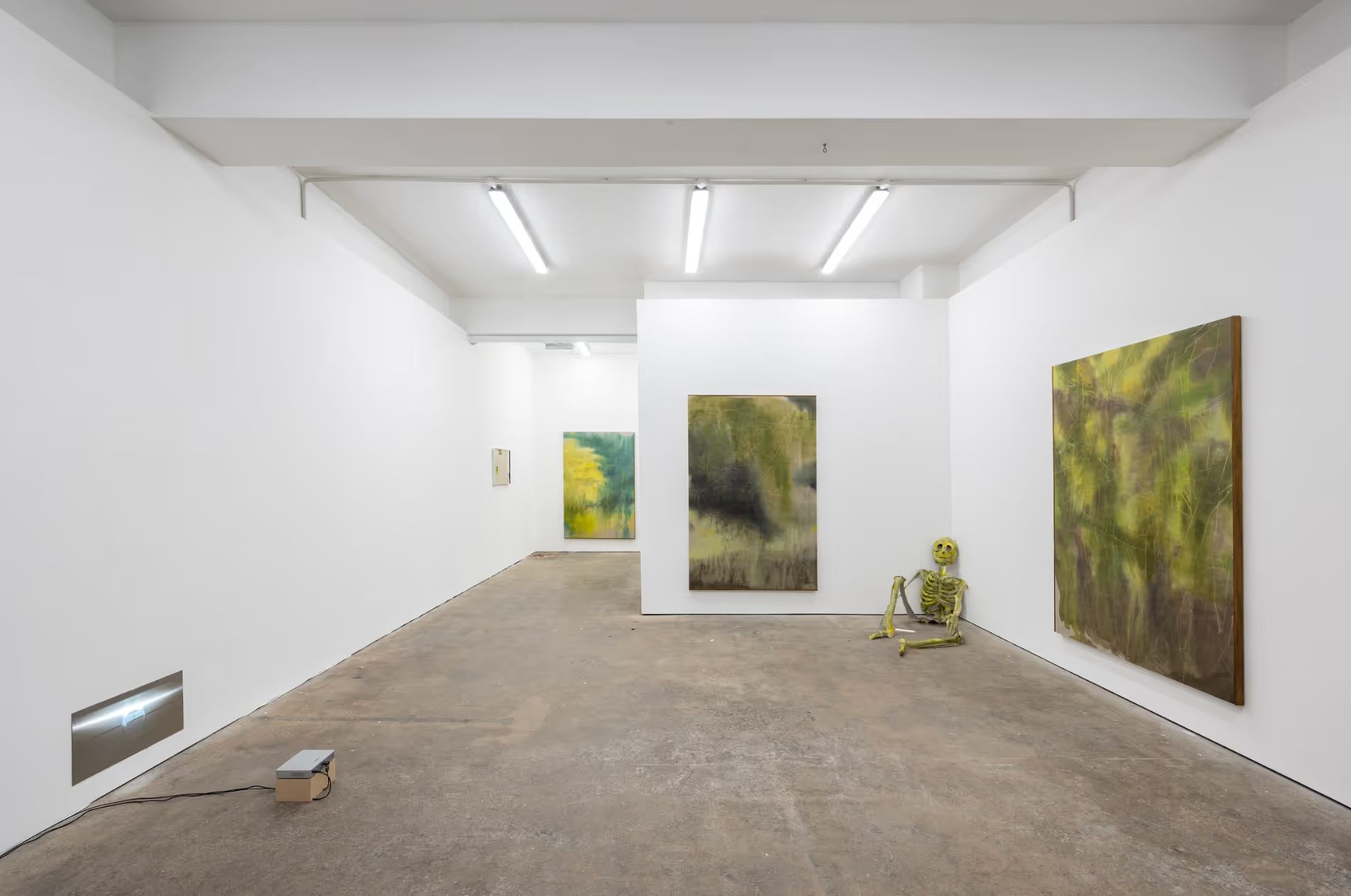
I have done various exhibitions before, but this one feels particularly narrative-driven. It is based on Ryunosuke Akutagawa’s 1922 short story In a Grove. In the story, three main characters encounter each other in a grove, and one is killed. However, the testimonies that follow - including that of the victim, spoken through a medium - are all different, and the truth remains unknown. What interests me is not what the truth is, but the idea that each person has their own reality.
These realities are shaped by the images we receive and cannot be fully shared with others. I hope viewers can feel the difficulty, beauty, and fragility of this and reflect on how we live in such a mysterious world.
For me, the gallery feels like a stage. Each element functions as a part of the space, and the entire exhibition becomes a single work.
14. Which piece in the show took the longest to perfect and why?
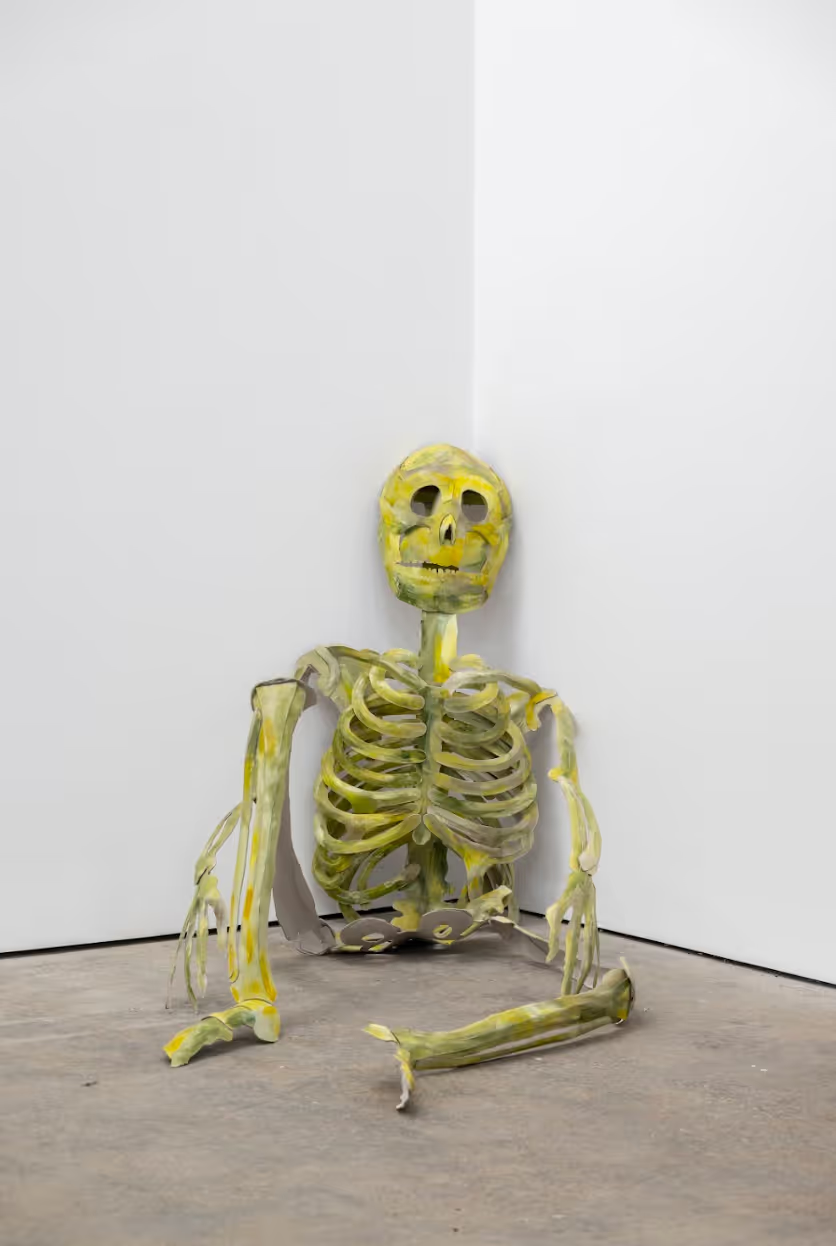
The skeleton piece made from greyboard took the longest. Since it’s made of thick paper, cutting it was very challenging, and I managed to complete it with the help of many friends.
15. What impression do you hope people get after seeing your show?
People are free to take away whatever impression they like, but I hope they take their time to really engage with the work. I’d love for them to think about how the objects, images, and even the scenery outside the gallery connect within themselves, and I would be interested to hear each person’s perspective.