
15 Questions with... Alessandra Risi Castoldi
.avif)
Welcome to 15 Questions With…, an interview series in which art writer Gary Grimes picks the brains of artists, curators and other creatives to understand what makes them tick through a series of quick-fire questions. This series aims to showcase the varying approaches creatives take to making art and how their relationships to the so-called art world differ, but also reveal what unifies those responsible for the art we love.
Alessandra Risi Castoldi was born and raised in Lima, Peru. She is a graduate of the Royal College of Art in London and holds diplomas from the Nuova Accademia Di Belle Arti di Milano and Corriente Alterna Lima. Her work has been exhibited internationally at Art Basel Miami, South Korea, Revolver Galeria Lima, Mucciaccia Gallery London, and MO.CA Brescia, amongst others.
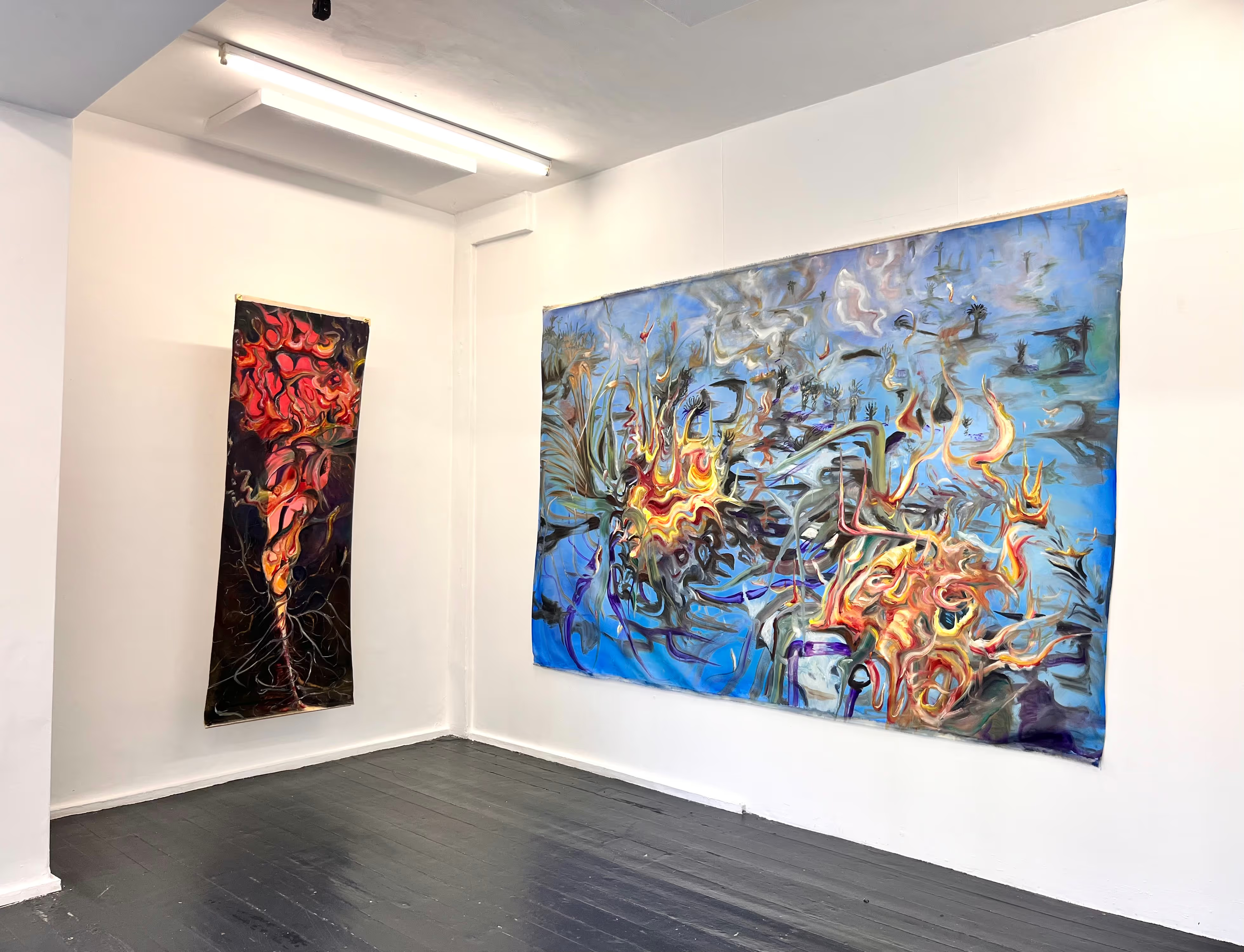
Earlier this year, in February, the artist showed a number of new paintings in Reassemblage, a group exhibition presented by Teaspoon Projects at General Assembly in London.
1. What is your earliest memory of a work of art?
My earliest memory of an artwork is the paintings that were hung in my grandmother’s house.
2. Where do you turn to when you're in need of inspiration?
I don’t believe in searching for inspiration; you just need to start working, and ideas will appear in the process of making.
3. What do you like to do when you need to take a break from your practice?
Painting is part of me, you can’t divide work from life. It is all packed in one. When I shower, I think of colours, even on a trip, my mind doesn't stop, and I continue thinking of the next painting. It is an infinite search for the painting.
4. Who is your favourite artist?
I’m currently observing the artistic practice of Lucia Pizzani and Sandra Gamarra.
5. What's the biggest crime an artist can commit?
The biggest crime is to make copies of a painting they made before.
6. Which gallery or museum should everyone try to visit at least once in their life?
More than a museum, I will tell people to travel, to travel to far destinations and see with different eyes, visit the museums that are in those towns. Sometimes interesting art might be in places you would never think.
7. What is the worst thing about the art world?
Waiting to be paid.
8. Whose opinions on art do you actually care about?
My friends - Carlos Marsano, a collector, and Max Hernandez Calvo, a curator.
9. Who are the last three musical artists you listened to?
La Fania All-Stars.
10. What's your favourite colour and why?
My favourite colour changes depending on the season or on what I want to transmit in the painting, it is a powerful language. I search for colour while cleaning the layers of the painting, discovering old ones behind new ones, just like history.
11. What three items would you grab if your house was burning down?
My phone, my laptop and the keys.
12. Is there an artistic skill you wish you were better at?
Caring less and not giving importance to problems.
13. What can you tell us about Reassemblage, your recent show at General Assembly?
Reassemblage was an exhibition about material memory presented by Teaspoon Projects, in collaboration with General Assembly. Showcasing new work by myself, Roudhah Al Mazrouei and Natalya Marconini Falconer, this exhibition began from a shared intuition: that landscapes and materials remember. Rocks, pastes, copper sheets, stamps, industrial remnants and plant matter are treated as materials that quietly store the pressures of migration, ritual, extraction and care.
14. Which piece in the show took the longest to perfect and why?
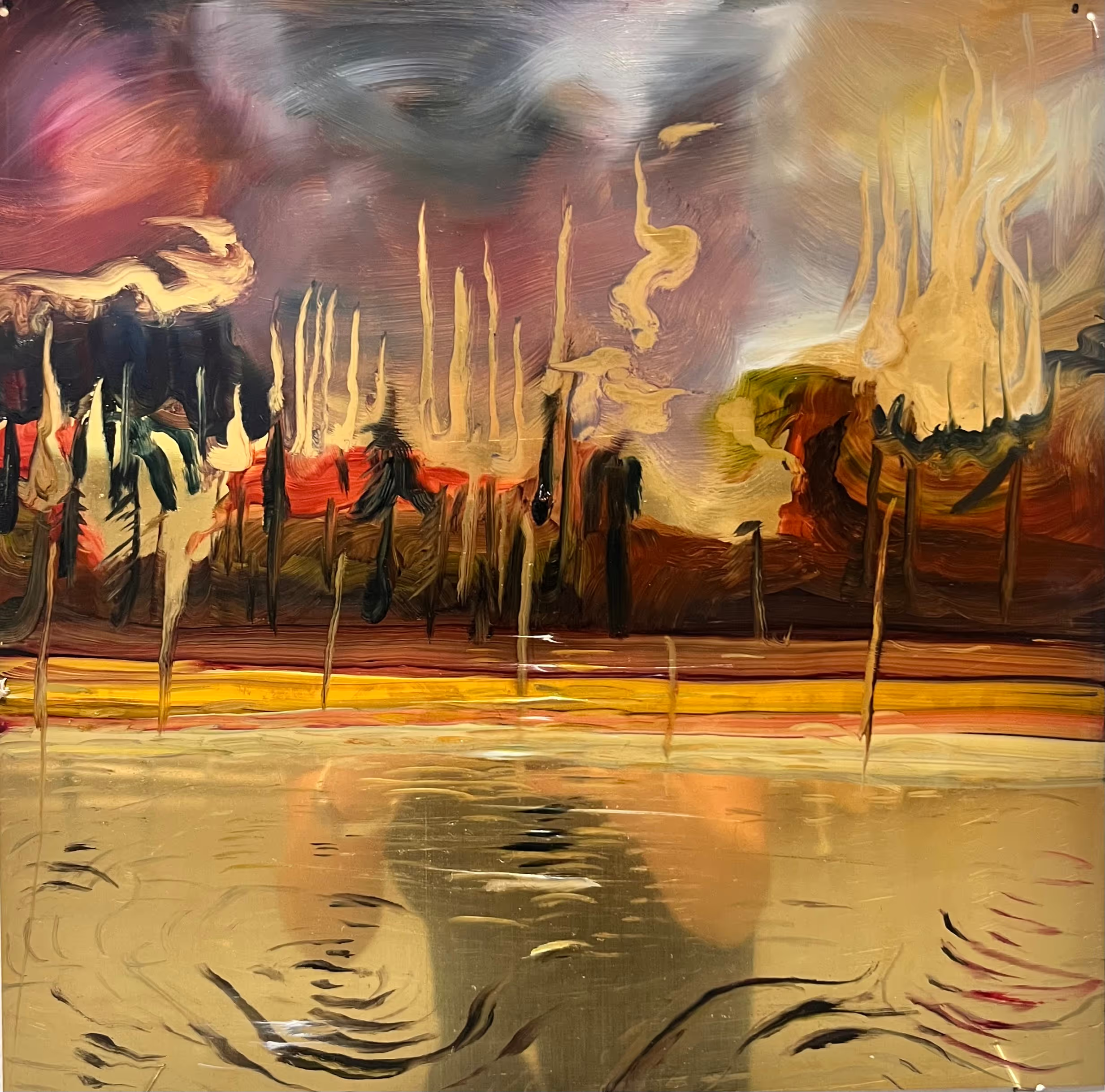
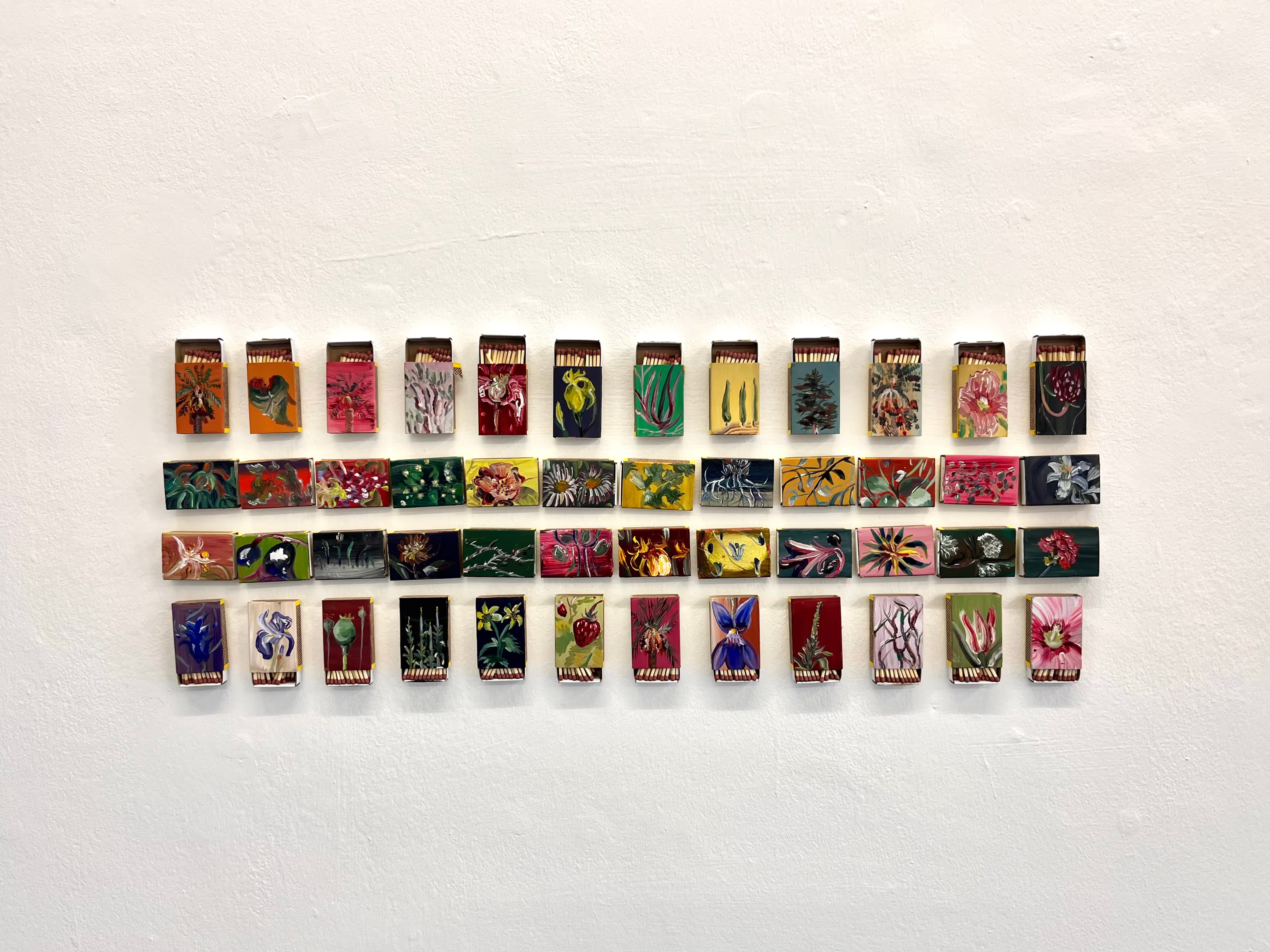
Each piece is totally different from other pieces, especially in the process. Normally, I have a loose brushstroke, some of them, like the light box, are from another project I presented in Italy, but this time I changed the display. In the case of the metal ones, I worked the dialogue through the material composition, and the one on canvas is developing the energy of the work.
15. What impression do you hope people get after seeing your show?
Having the opportunity to exhibit for me is the opportunity to really show the strong problems of my own country, especially in the Amazon of Peru. I hope people care and are aware of the realities.