
Personal Notes #5: Varvara Uhlik
The personal Notes series explores how artists think, feel, and create, as they share what’s been on their minds lately…
Notes on: The shadow of Russian imperialism, post-Soviet identity and memory
Hi, I am Varvara Uhlik, a visual artist from Ukraine. I am based in London, and we are here in my studio in Deptford Art Hub. Welcome!
What inspired you to explore Soviet themes of identity and memory, and why do they matter to you? How did you reach a point in your work where you felt strongly drawn to explore them?
Exploring Soviet identity and memory came very naturally to me. I come from the east of Ukraine, so my childhood was quite Soviet. As I was exploring my own identity, I had to look into the Soviet times and our history. I was looking through my family photographs at first, and feeding myself all that, all those visuals from my childhood, and realising how much of this brutalist aesthetic was around.
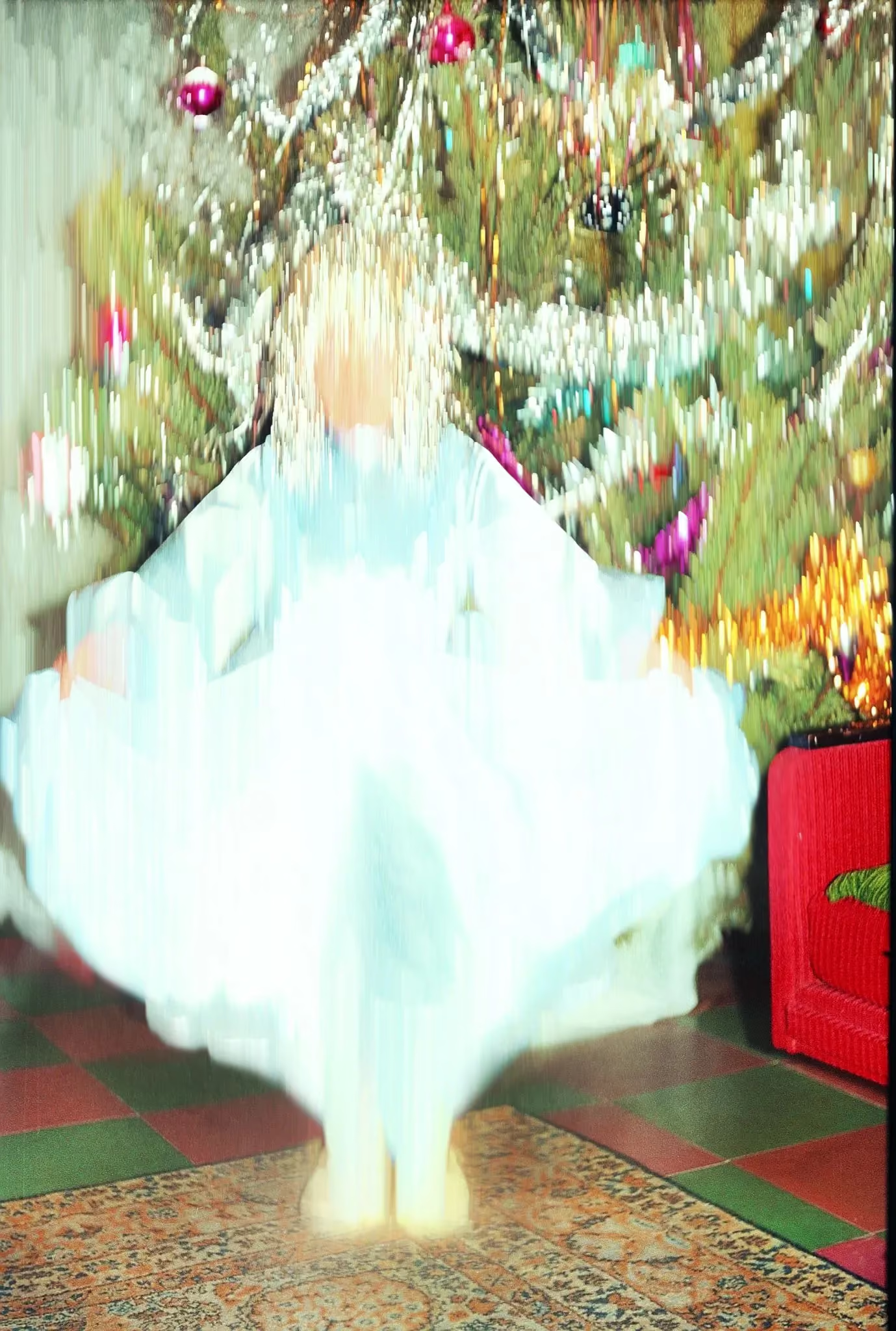
It was me at home, me at the playground. There were many specific images of New Year's. For someone from Ukraine, a post-Soviet country, New Year’s is a very Soviet holiday because Christmas was forbidden. Back then, they were anti-religious, so that it couldn't exist. At some point, Stalin decided to bring people a holiday, and so it had to be New Year’s.
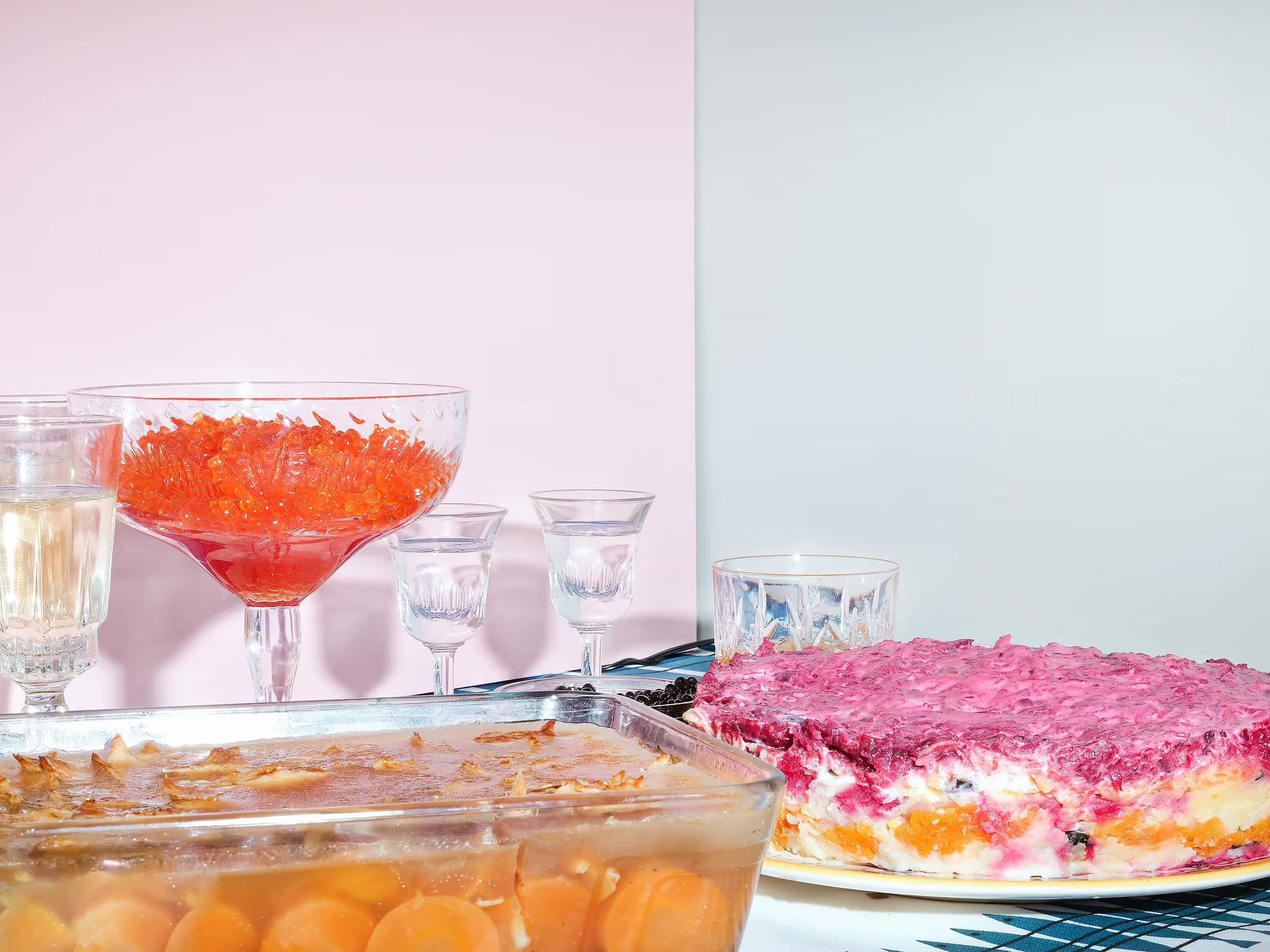
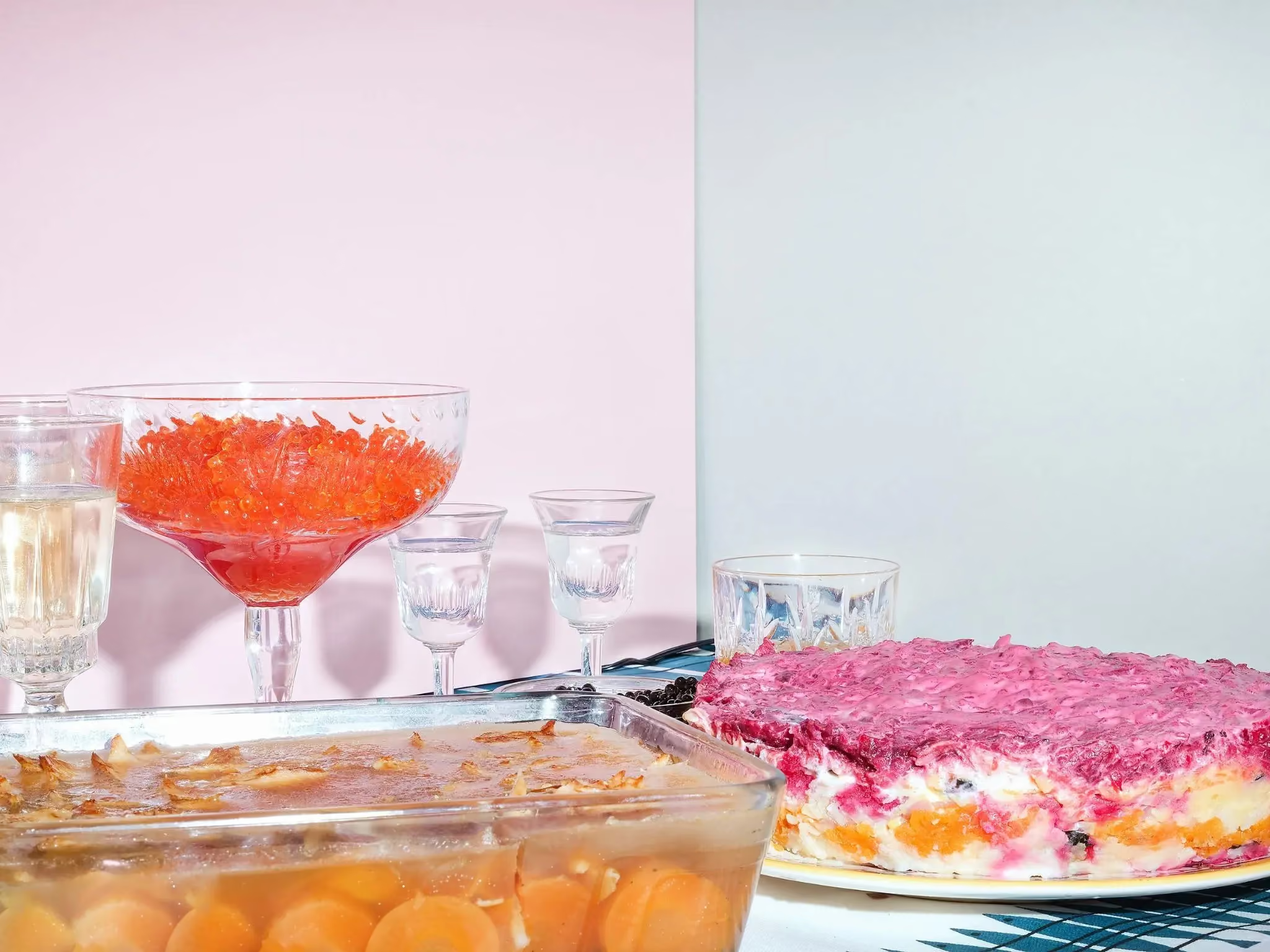
It's when you celebrate the hope for the future. You make wishes, and you know it is a very bright holiday. It's very important. We don't have what's widely known as a Christmas tree; it's Yolka, which is basically a New Year's tree. And it used to be that you put a red star on top for communism, but I think it's dying out now. The foods we eat for New Year's are inherently Soviet, such as salads that look like cakes and are layered with mayonnaise, fish, and caviar.
It makes me think of those tacky 70s cookbooks
Yeah! I think it was because Soviet times were really scarce, with shortages of everything, including produce and materials, so people had to get creative and reuse things. But also, I guess, because of that, there was, like, a shortage of taste, in a way, so you couldn't really make beautiful designs all the time. I guess you just had to improvise. I think, though, during Soviet times, there was, you know, some money coming in from the government, and if you made propagandist works, they would end up looking quite good. But I think growing up post-Soviet, I was born after the Soviet Union's dissolution, and things were quite tough on the aesthetics front.
How would you describe the aesthetic of the post-Soviet playground?
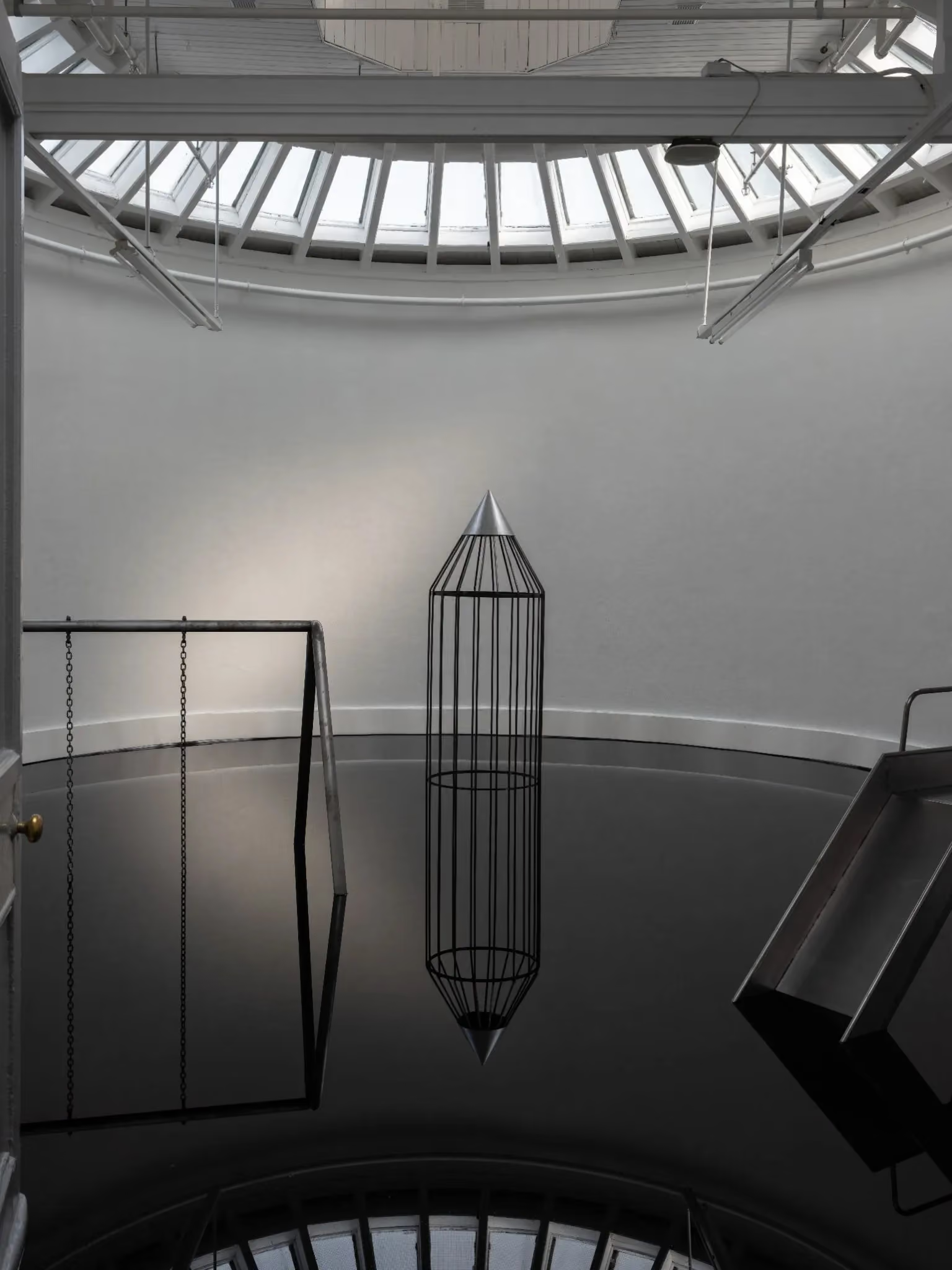
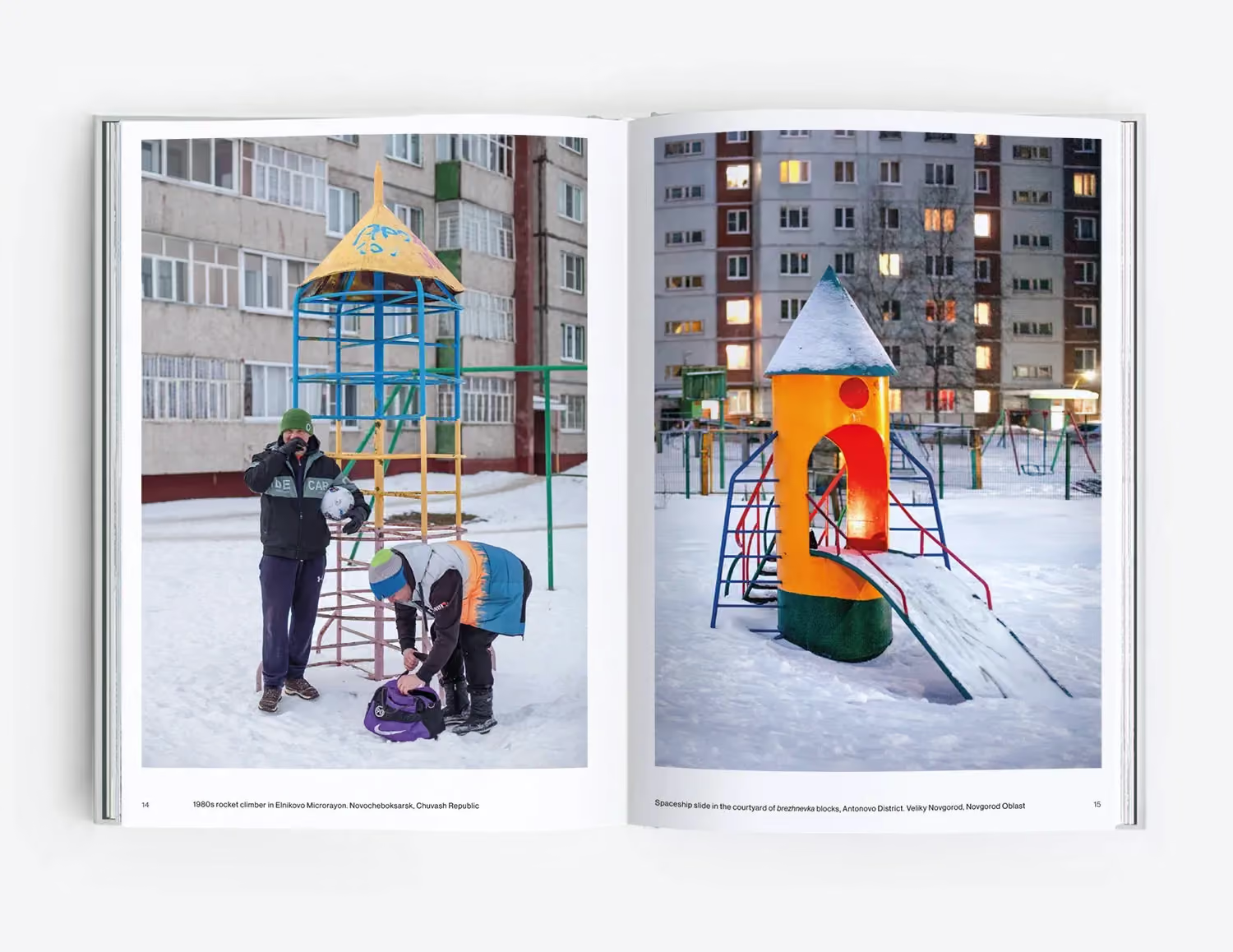
The aesthetics depend on what I'm referencing, because the foods come out more in my photography, which is another medium in my practice. If we're talking about playgrounds and more, Soviet architecture is very brutalist. It's dark, grey, dull, and quite scary at times. Soviet playgrounds, to me, are the ultimate symbol of the Soviet regime, because they were built on a massive scale, reproduced all over the Soviet territories, and most of them were space-themed. Hence, there is a rocket piece.
So it was all just a continuation of an ideology. And, you know, you just start embedding it from childhood. These days, those Soviet playgrounds still stand there. Still, nobody has taken them down. People use them. That's the thing, you know, playgrounds I grew up on, my parents grew up on, you know, they just degrade. They get more and more dangerous, but they still exist, and they're still being used. And I think that's also why I find that important. This is just like this regime that has fallen, but it hasn't completely disappeared.
The food, you said, is another element of your practice. Would you like to say a bit more about that?
Yes, I mean, I just explore every little thing that reflects my identity and culture, and I think Soviet food is a big symbol of those traditions I grew up with, which only existed because of the Soviet Union. You know, they're very specific to those times, but they, of course, persevered, and we still eat those. So, I often reference those in my photographs, or like from a recent exhibition at the Palmer gallery. I made pickles, pickle jars with photographs in them. So I pickled my family photos together with fruits and vegetables. And it was a way of trying to preserve memory. This is a reference point for me to my childhood again, growing up, you know, with my grandma and seeing her root cellar full of pickles. This is also a very Soviet thing. Because of food shortages, people had to preserve food for winter. And it was a big thing that you would start pickling a lot for the winter, so you had food to eat for the coming month.
You've been exploring so much about yourself. Is there something that you came up with, like, is there something you have realised about yourself that perhaps you have not thought about before delving into your identity?
I guess growing up, I never questioned my identity. You know, I'm just me and whatever, but becoming more critical as an adult and just trying to know more about why I'm this way. I've realised how much Russian imperialism affected my family and me, and I mean a lot of people who grew up in Ukraine, and especially in the east of Ukraine, where I predominantly speak Russian. I also speak Ukrainian, but all my life I've spoken Russian, and that's also the effect of our history and the Soviet traditions we follow.
I think that was a big realisation for me: how this New Year celebration that I love so dearly is also embedded in this Soviet, oppressive history. I think my big realisation was that a lot of the things I love these days come from traumatic history.
The main themes that I explore are being Ukrainian, being post-Soviet, and childhood and memory, and I often explore how unreliable memory is. It's always quite vivid in your mind, and you think you remember the things the way they were, but it's not necessarily true. And you know just how I'm looking back at my childhood. I was so happy, such a happy child, but then there was so much trauma involved.
Tell me a bit more about your references
This is my main reference book. It's a book of photographs of Soviet playgrounds from all the post-Soviet territories. This was really useful for me to look into how the structures are built and get some inspiration for how I want my slide to look, because it's more of a Frankenstein made from various Soviet slides.
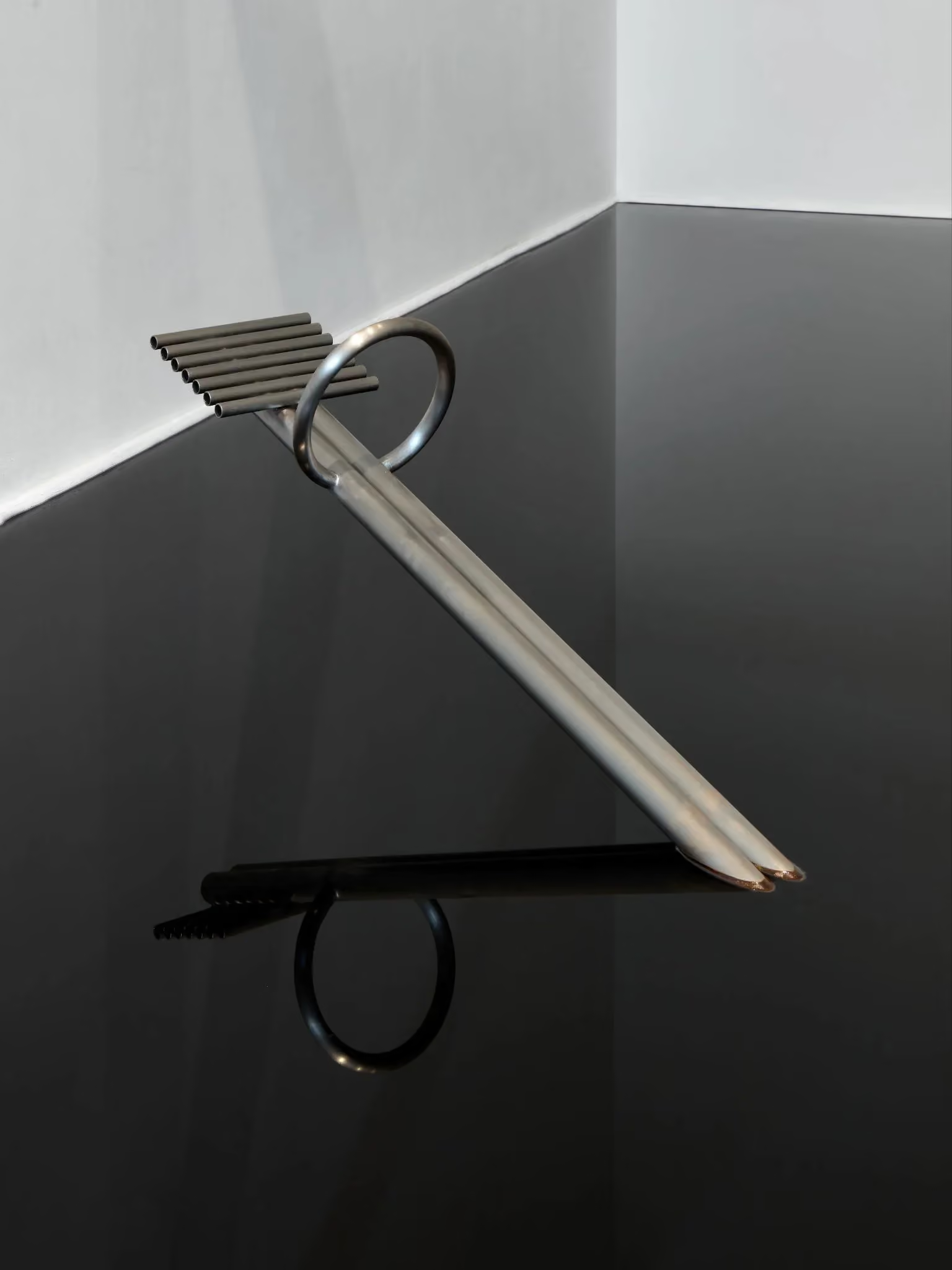
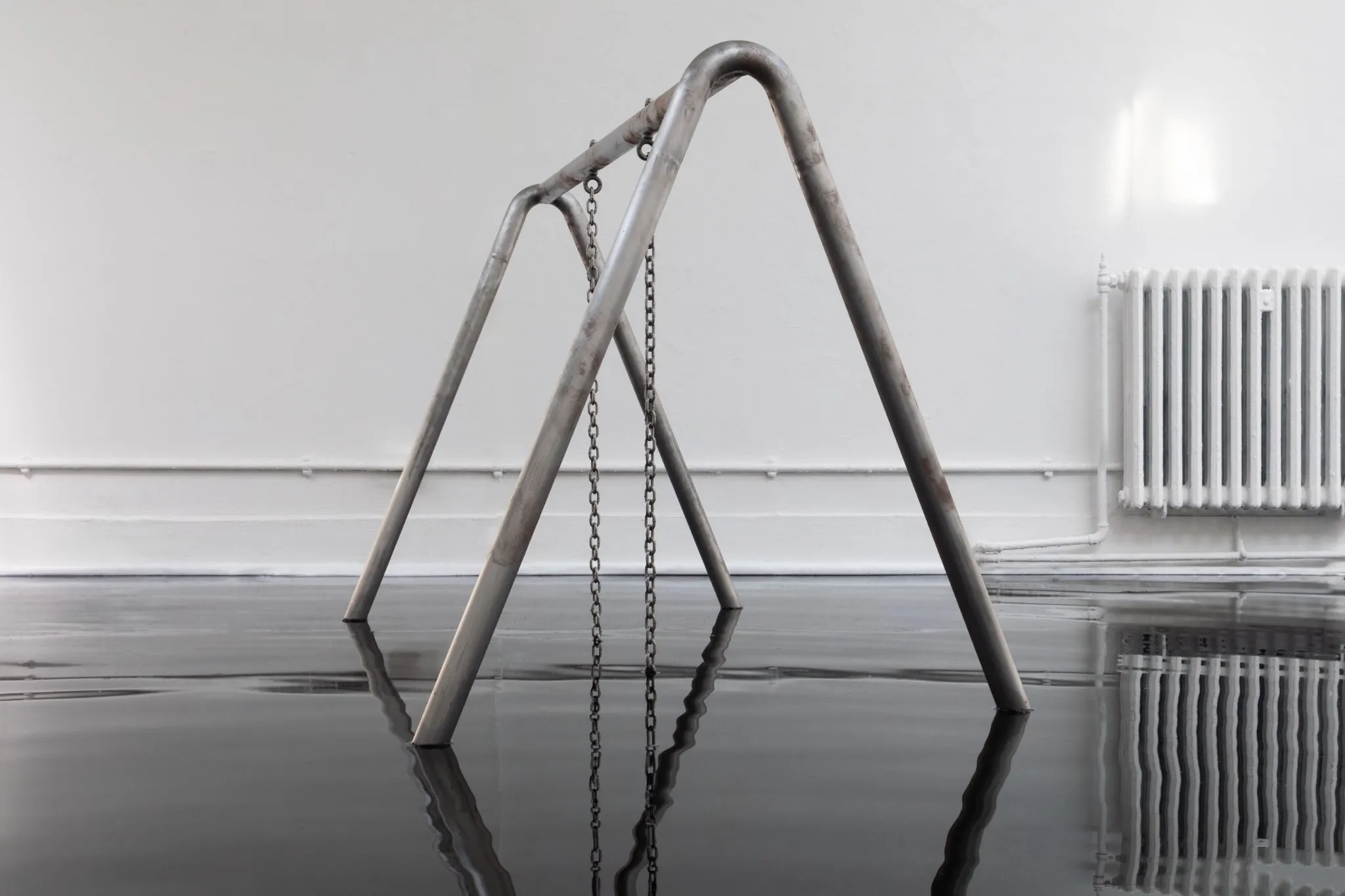
I was looking at these rocket slides, and I wanted to make one. But then I realised I needed to scale it down, because it was for my degree show, it was late, and I had to work within the doorways and hallways we had. And that's also how I came up with the idea of making everything half a size, basically. So I recreated the top halves of the playground pieces. That's why the idea is that you don't see it here, but there are chains, and then there's no seat. The idea is that it continues beneath the water. So it has a sharp end. Because the idea was always that I would stand in black water, which would create the illusion of it being submerged.
In my view, because you're exploring something from the past, I think it looks more interesting that they appear as if they are submerged; they are kind of emerging. You know the psychological term “the edge of the iceberg”. This is the edge of your iceberg. Like, there is so much story underneath.
Flooding the whole room was quite a task. But it worked quite well in the end, because I was thinking that it would be more like a full playground and it's standing a little bit of water. But then I thought, why not make it? The illusion of the playground being half-submerged in the water. You know, it's even more drastic.
What’s the Swan work about?
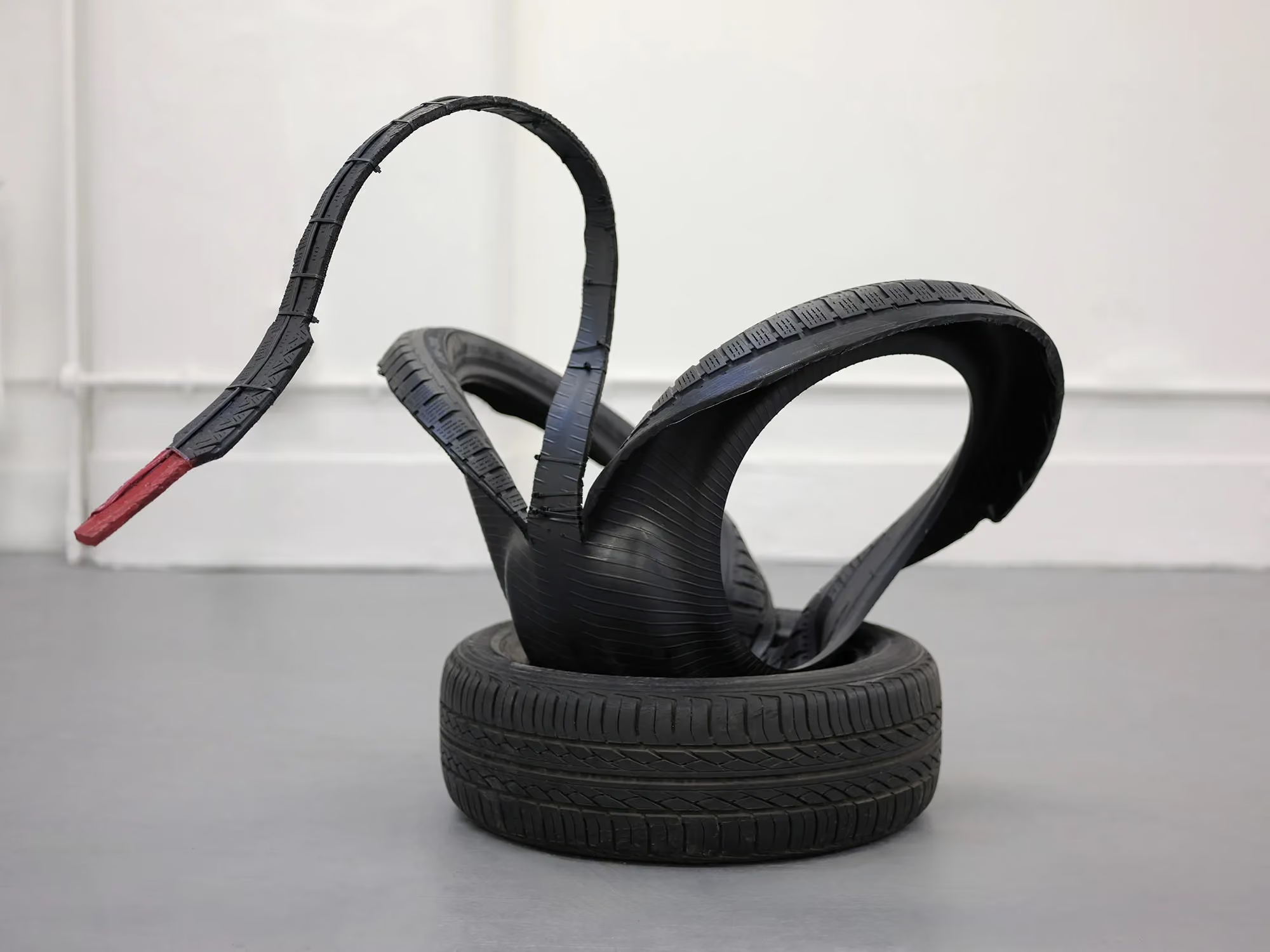
So the swan is made out of used tyres I found here in London. And this is just how, in post-Soviet countries, you use tyres to decorate public spaces. Several times again, because of the scarcity of materials, people had to use and reuse things they already had, so tyres became quite a popular material for decorating parks, playgrounds and public spaces. In Ukraine, you can see beheaded swan sculptures in parks and near kindergartens, often made from tyres. Typically, these sculptures depict white swans on blue tyres, resembling a pond scene.
It reminds me of the tacky swan decorations from the early 2000s, like the folded napkins or towels shaped as swans often seen on honeymoon holidays.
It's quite tacky! It's really funny because they are quite ugly in a way. And you know, they're already so old, a lot of them are missing heads, and they’re like this white, dirty swans.
A personal thought you want to share with me today.
The thing that I think rings true to me is that dreams always come true.
Whether you're a creative person or pursuing a different dream career? What do you believe matters most?
Well, I think the only ingredient is not giving up, because you'll keep falling and you'll keep failing, and the only way to get there is to get up and continue.