
15 Questions with... Adam Rose
Welcome to 15 Questions With…, an interview series in which art writer Gary Grimes picks the brains of artists, curators and other creatives to understand what makes them tick through a series of quick-fire questions. This series aims to showcase the varying approaches creatives take to making art and how their relationships to the so-called art world differ, but also reveal what unifies those responsible for the art we love.
Adam Rose is an independent curator based in London whose practice centres on lived experiences of health, accessibility and social justice. In 2025, he co-curated Zines Forever! DIY Publishing and Disability Justice at Wellcome Collection. He has also worked as assistant curator on Wellcome exhibitions In Plain Sight (2022), The Cult of Beauty (2023) and Thirst: In Search of Freshwater (2025).
He graduated from SOAS with a degree in Japanese and History in 2016 and completed an MA Apprenticeship in Curating from Teesside University in 2025. He is currently working on the exhibition Tenderness and Rage, opening at Wellcome Collection on 29 May 2026.
1. What is your earliest memory of a work of art?
I was a huge Star Trek fan as a kid, and recently started rewatching old episodes over winter. It’s been a lovely nostalgia trip to come back to episodes of Deep Space Nine and Next Generation as an adult. There’s something about the optimism of their vision of the future in the 90s that seems really quaint and touching today.
2. Where do you turn to when you're in need of inspiration?
Ursula le Guin. Her science fiction and essays are something I keep coming back to - there are very few people who can build worlds and radical futures with so much detail and thoughtfulness whilst writing so generously. She sits at the root of a genealogy of entanglements with so many of my favourite queer/feminist/ecologist/radical thinkers (Donna Haraway, adrienne maree brown, So Mayer, etc.)
3. What do you like to do when you need to take a break from your practice?
I’m weirdly blessed to have a lot of close friends who have nothing to do with the art. There’s no palette cleanser like a lot of completely off-topic yap!
4. Who is your favourite artist?
This usually changes on a weekly basis. At the moment, I’ve been really loving Lindsey Mendick’s sculptures. She creates these immensely detailed ceramics of people and objects teeming with symbols of decay (worms, cigarette butts, mice, etc.) They are beautiful, grotesque and mesmerising.
5. What's the biggest crime an artist can commit?
Plagiarism.
6. Which gallery or museum should everyone try to visit at least once in their life?
The Cinema Museum in Kennington. It’s one of those places that feels like a pure passion project by the people who work there. The downstairs feels like a high school corridor that is just covered with film memorabilia. Then upstairs, there is this gorgeous hall they use for screenings. Having mostly worked at a museum that has occasionally overbearing standards for conservation, wayfinding and clean design, there’s something wonderful about somewhere that is so ramshackle, chaotic and an absolute love letter to cinema. It reminds me of some of those queer bars that feel like an eccentric grandmother's living room.
7. What is the worst thing about the art world?
Especially working in an institutional context, the ‘culture wars’ have cast a really long shadow on a lot of curatorial work. Even when you are working with an organisation which is supportive, the amount of time that is eaten up by planning for risk and hostile press can be quite draining. Amongst all of that, you also have a deep sense of responsibility for the artists and collaborators you are working with to make sure they are looked after and their perspectives are heard.
8. Whose opinions on art do you actually care about?
Shon Faye can always tell me what to think.
9. What trend in art makes you roll your eyes?
Inaccessible curatorial captions - it actually makes my blood boil whenever I read the interpretation of an artwork, and it’s some kind of reductive waffle about how ‘this work explores themes of queer identity and being’. It’s complete white noise that turns people off and feels like a disservice to the artist. So much time, research, and production go into their practice, and there are so many more interesting ways to give audiences a means to experience and appreciate it.
%2C%20(1).webp)
10. Who are the last three musical artists you listened to?
Olivia Dean - it's very much Spring romance season, and she is the best backing track you could ask for. Paris Paloma - I discovered her recently as the support act for Florence + the Machine, she is stellar. And PVA - weird, rich sounds.
11. What's your favourite colour and why?
I absolutely love anything in the blue range of the spectrum. It always feels like the colour of potential. There’s a lovely part in Hannah Gadsby’s stand-up show Nanette where they’re taking down the idea of blue as the colour of masculinity and instead talk about blue as a colour of contradictions: "If you’re feeling blue... you’re sad. But optimism? Blue skies ahead!” Also, I look good wearing it.
13. Is there an artistic skill you wish you were better at?
I would give anything to be good at choreography and dance. With most other art forms, although there are very few things I can do, I can at least visualise or understand the steps and technical skills involved. Dancing and people who can move their bodies in that way will always be wizardry to me.
13. What can you tell us about your upcoming show, Tenderness and Rage at the Wellcome Collection?
Tenderness and Rage traces stories of intimacy and protest, from the height of the UK AIDS epidemic to contemporary experiences of HIV in the Global South. Through photography, film and archival material, the exhibition connects everyday acts of care with activists’ fight for dignity, rights and equitable access to treatment and aims to highlight the vital role of protest in asking uncomfortable questions of those in power and advocating for dignity, rights and healthcare.
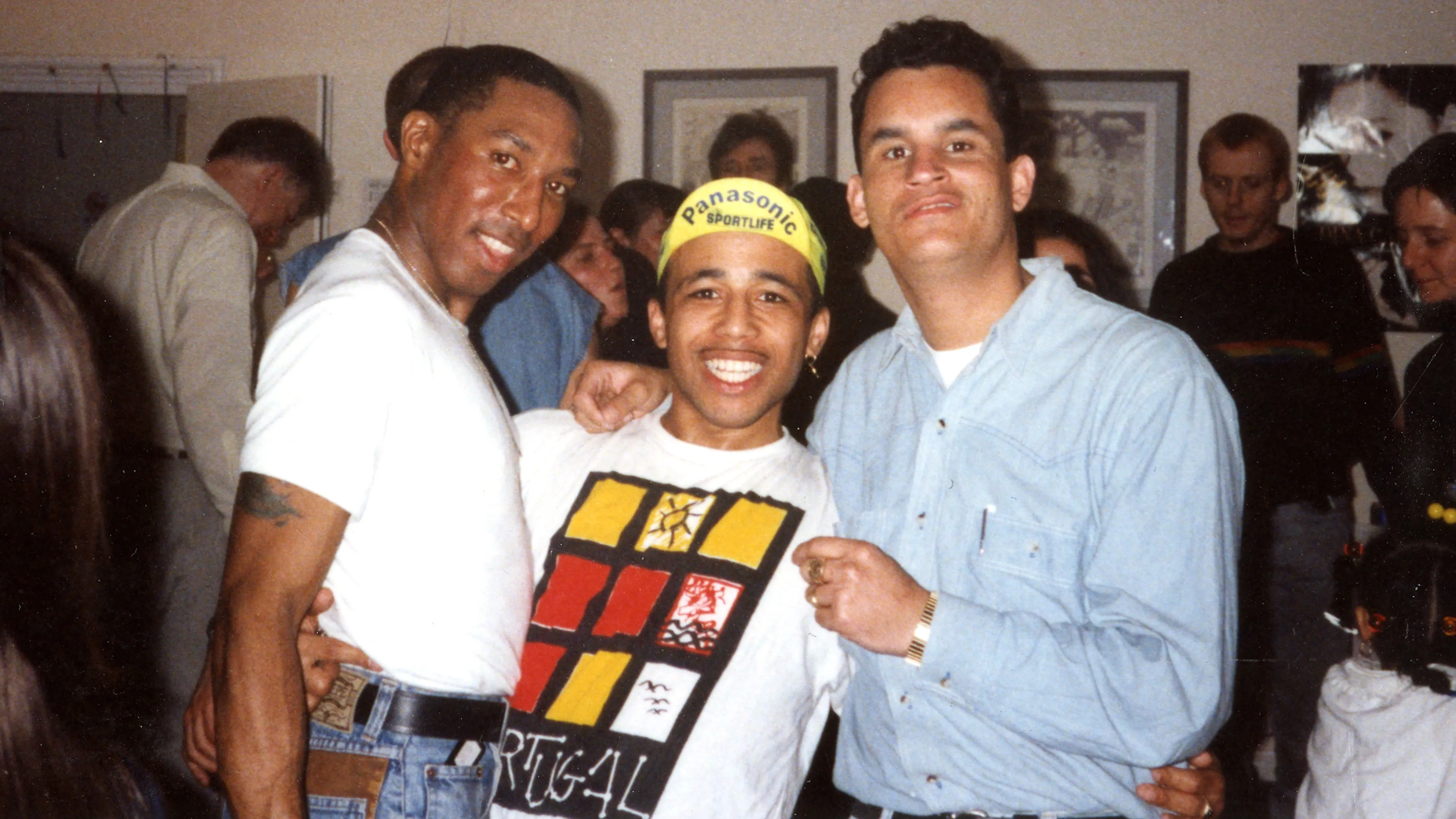
The first room looks at London in the late 80s and early 90s. In the second room, the show features five stories from Through Positive Eyes, a photo-storytelling project that centres the perspectives of HIV activists worldwide, challenging stigma through participants' own images and testimonies. These include photographs and texts created by contributors in South Africa, Haiti, London and Ukraine
The frequently marginalised experiences of women living with HIV are highlighted through the work of peer support groups featured in the display. The collective Catwalk4Power advocates for migrant and global majority women living with HIV in the UK and around the world through creative community-based activity.
14. Which piece in the show means the most to you, and why?
I’m going to be really cheeky and pick two. One is Gideon Mendel’s image of 'John lying on a hospital bed, chatting’ from 'The Ward' series in 1993. It’s such a beautiful and tender image. When you think about the fact that there were no effective treatments for AIDS at the time, and the immense fear and stigma that existed in the media and broader society, the fact that medical staff went above and beyond to create spaces of safety was truly groundbreaking. This care was also directly tied to the activism and advocacy taking place outside the hospital, patients demanded agency and dignity in their treatment, and nurses and doctors responded.
%20Phindile_Through%20Positive%20Eyes.webp)
The other is a photograph Phindile took of herself embracing her partner in Johannesburg, South Africa, from the 'Through Positive Eyes’ project in 2010. As part of the process of putting together the exhibition, we worked with Phindile to produce a new text around how she looks back on this image so many years later. She talks about how she found work as an HIV counsellor, but then lost her job due to Donald Trump's cuts to USAID funding and is now selling cleaning products to make ends meet. When we think about the impact of cuts to HIV funding and prevention, we are often forced to deal with the problem of the ‘vulgarity of numbers’ - stats and figures that obscure the human cost. At the end of her text, Phindile writes:
"Reflecting on these images now, I still believe in love and intimacy. I deserve to be loved unconditionally and taken care of, irrespective of my HIV status."
15. What impression do you hope people get after seeing your show?
One of the greatest joys of this project has been working with so many incredible people involved in HIV activism, research and charity work, both in the UK and around the world. I definitely hope there will be a call to action of sorts. There is a really lovely quote from an activist perspective by Dan Glass (one of the refounders of ACT UP London’s present incarnation who I have been collaborating with on some of the research) which really wonderfully captures some this, and has framed a lot of my thinking around this exhibition: “Let us not only commemorate and celebrate the progress made so far but also inspire and provoke necessary action for what we face today."
%2C.webp)