Personal Notes #4: Elsa Rouy
.avif)
The personal Notes series explores how artists think, feel, and create, as they share what’s been on their minds lately…
Notes on: The “worst” version of yourself
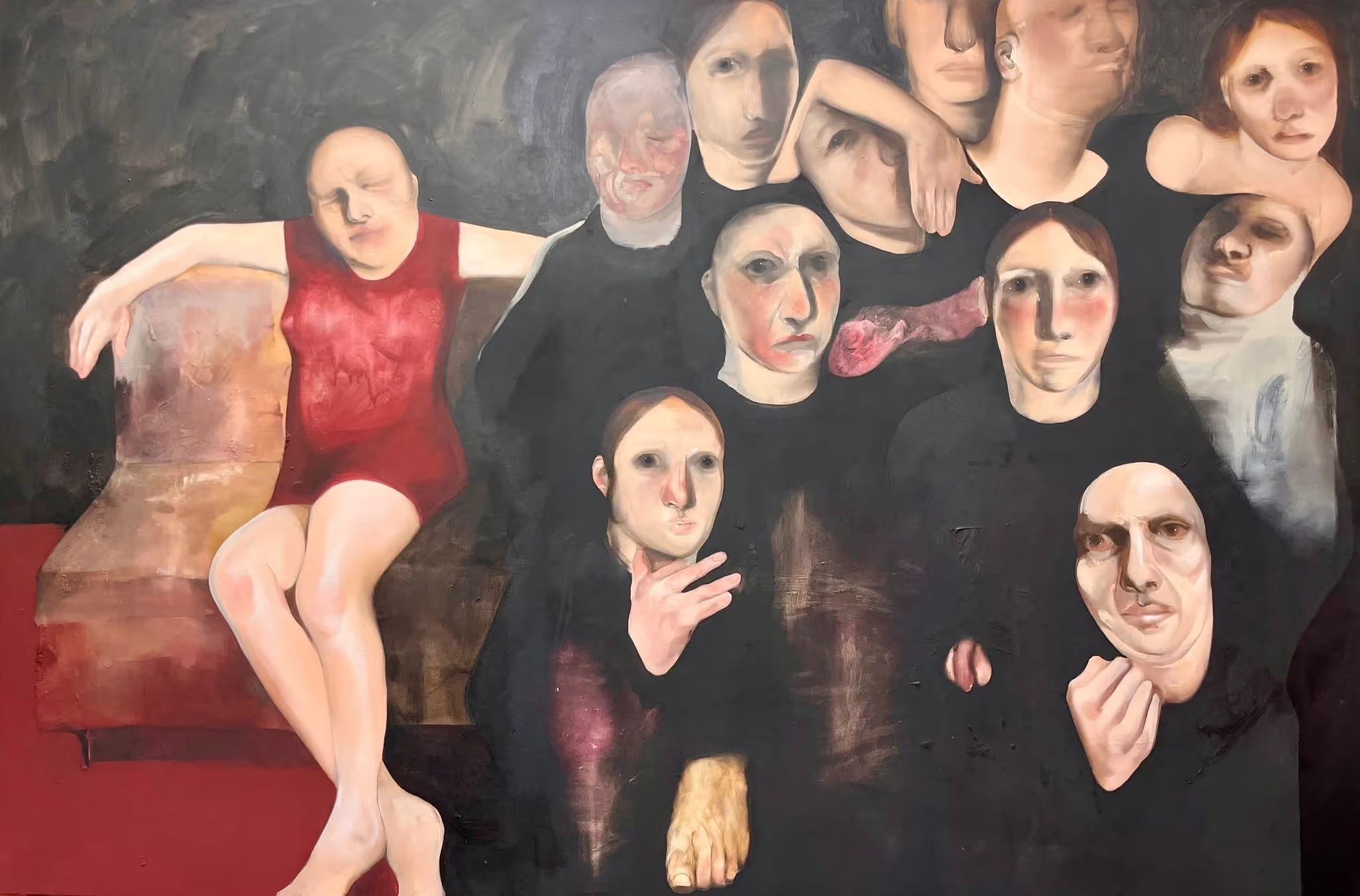
Hi, I am Elsa Rouy, and I'm a painter. I started exploring painting at uni. I was doing embroidery and painting on it, which were okay but not great. But then, at the end of the first year, I got really bored because I felt like I couldn't expand much beyond that size-wise, and it was very repetitive. So I decided to have a crack at painting without the embroidery, which I'd done as a teenager, but not very seriously. It was always blended in with doing watercolours, and I'd never learned how to use oils or anything, so I tried my best with acrylics in the first few paintings I did. They didn't come out very well. I'd already been interested in bodies, I think, before I went to uni. I had lots of different ideas about what I wanted to do. I thought about going into chemistry, becoming a writer, and being a fashion designer. I think when I was thinking about being a fashion designer, I was more interested in the actual form of the fashion drawings and the bodies than in the clothes themselves and the making of the clothes.
I guess I was interested in chemistry and biology, in how things are made up, in stories and story-making, and in this kind of world-building aspect of stories and literature, which I always really enjoyed. I enjoyed reading as a kid and creating these worlds. So then, from that, I started building these worlds. I used to predominantly do just like naked women, and it was more along the lines of self-expression and sexual expression. But I think that as I went on, I got deeper into what I was interested in, particularly the body and the emotional outlets it can have. And I think as I grew as a person, I also felt more things and understood myself better and my emotions better. So then this all kind of played into me when I create the paintings, I paint.
I think I'd always been slightly interested in more, like darker themes. Even as a child, I loved ghost stories. And I think I wrote a story once where there was, like, a man who got set on fire or something. But then I started looking into darker themes and then applying that to my artworks. And it felt like it really sat well with me and what I was interested in. From there, I've started developing it and turning it into my own language.
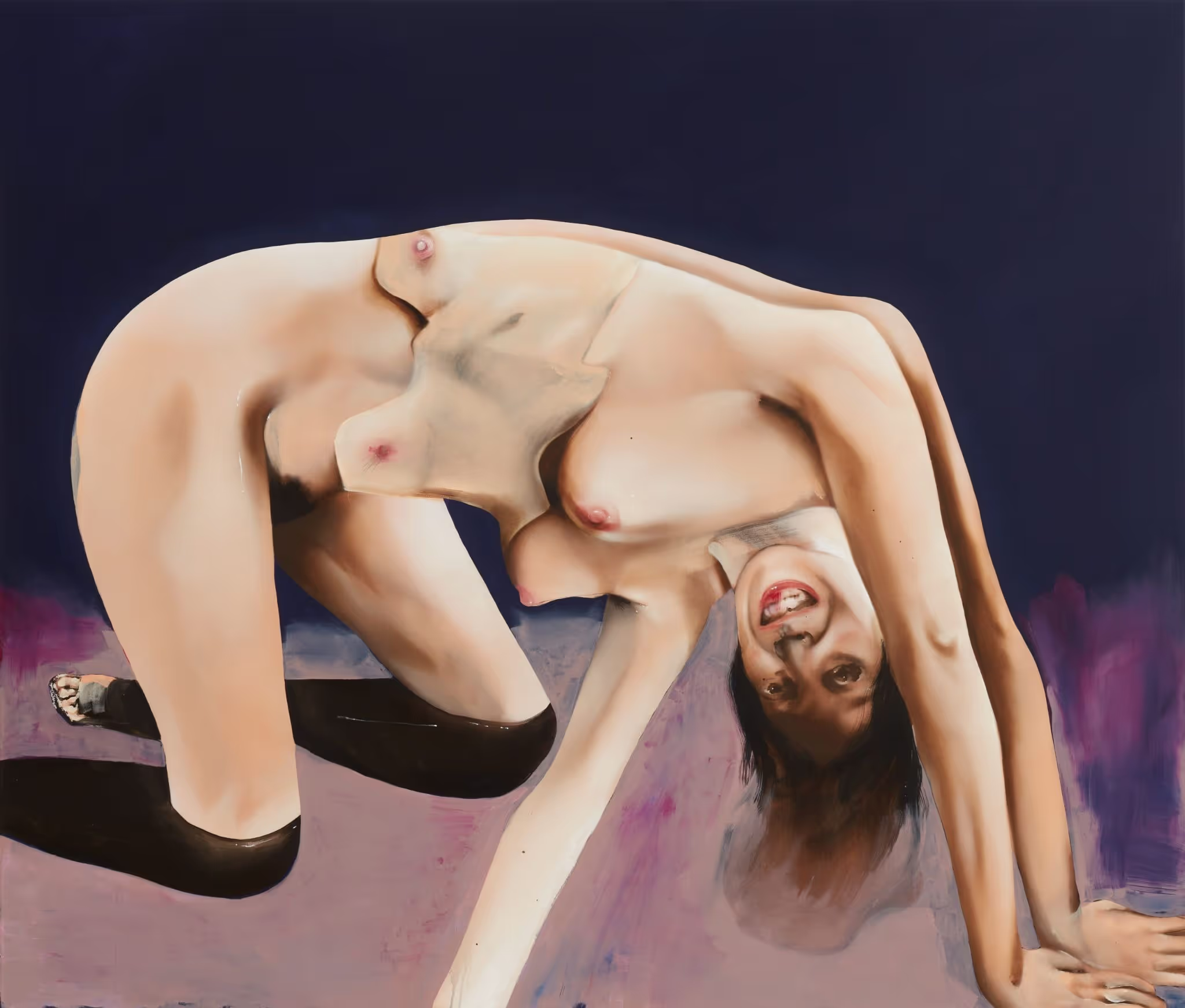
You realise that exploring darker themes felt like a click. Why do you think you were drawn to those themes? When I look at your work, I see a body-horror element. At university, when I studied this in cinematography, I realised my interest was linked to traumatic experiences expressed through the body. I was curious if there is an inner emotional response involved…
When I was a kid, I was interested in the boundaries between what was good and what was bad. When I was at uni, I developed OCD quite badly and had it quite chronically during that time. It was a lot to do with the body and probably traumatic things, and I think that kind of made the OCD come on. At the same time, that really messed up my periods, and I think I was having lots of issues with everything because it made my whole body go out of whack. It made me much more interested in dissecting this. I think it started to make me question the boundaries of what is a good and not a good person. I think it's more related to having low self-esteem and not feeling good enough. So then, when it comes to OCD, it would give me reasons why, how I could be bad, and then I'd get convinced there were them.
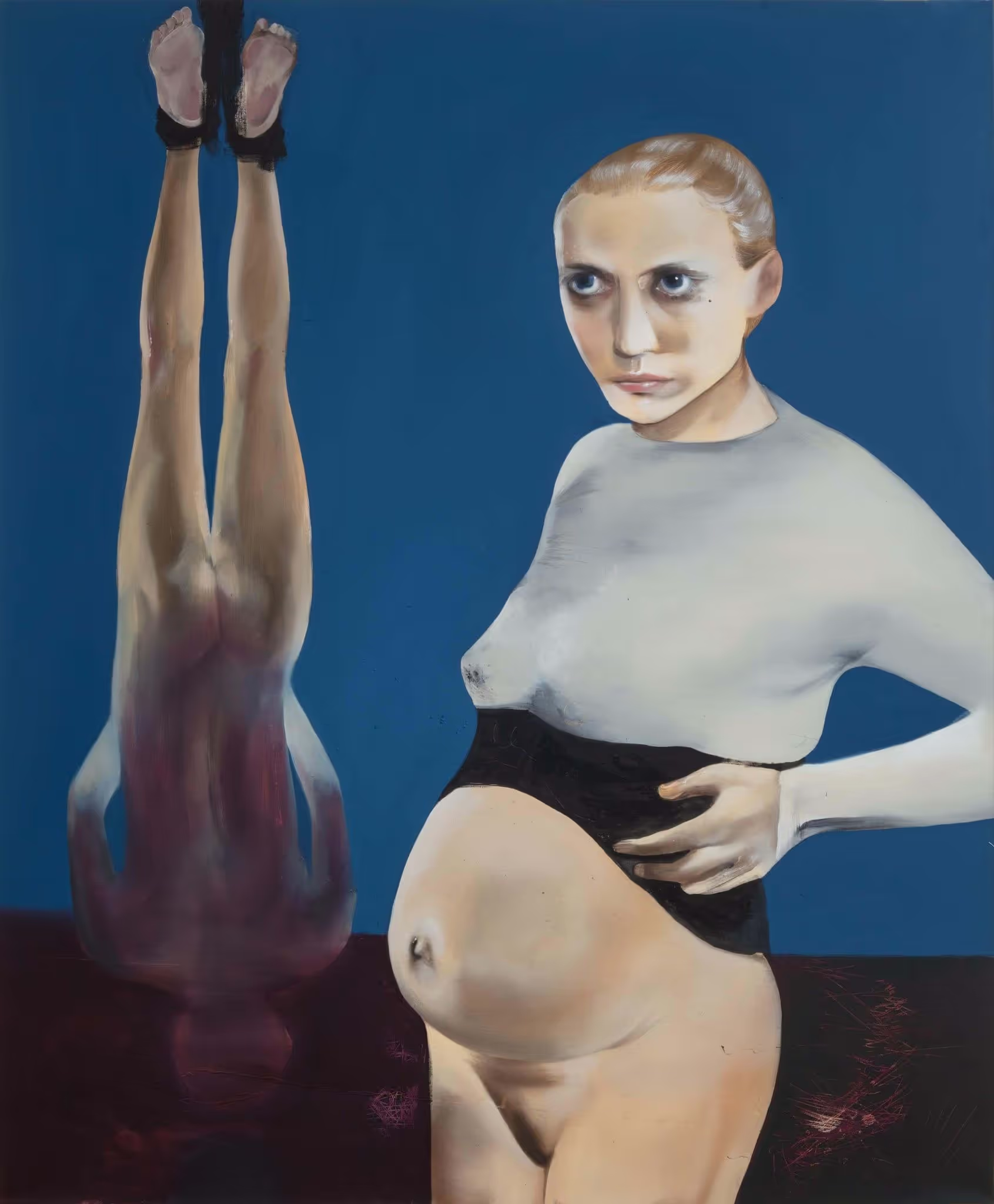
I also developed OCD in response to certain traumatic experiences, and I think this is why I developed an interest in bodies and body horror at uni.
I think that definitely made a big change. I also think the honesty in how I dealt with the bodies, rather than trying to make them, like, you know, pretty and beautiful, or, like, hot, made me realise that I found that very boring in artworks. You know, if you see a nice-looking artwork, I found it didn't really, well, I guess it didn't really, I guess, like, you see artworks for your own experiences, and when I'd seen artwork like that, I felt like it wasn't very accurate to any experience I'd ever kind of had, yeah, so it felt like not very interesting. So I guess I wanted to make works that felt interesting to myself.
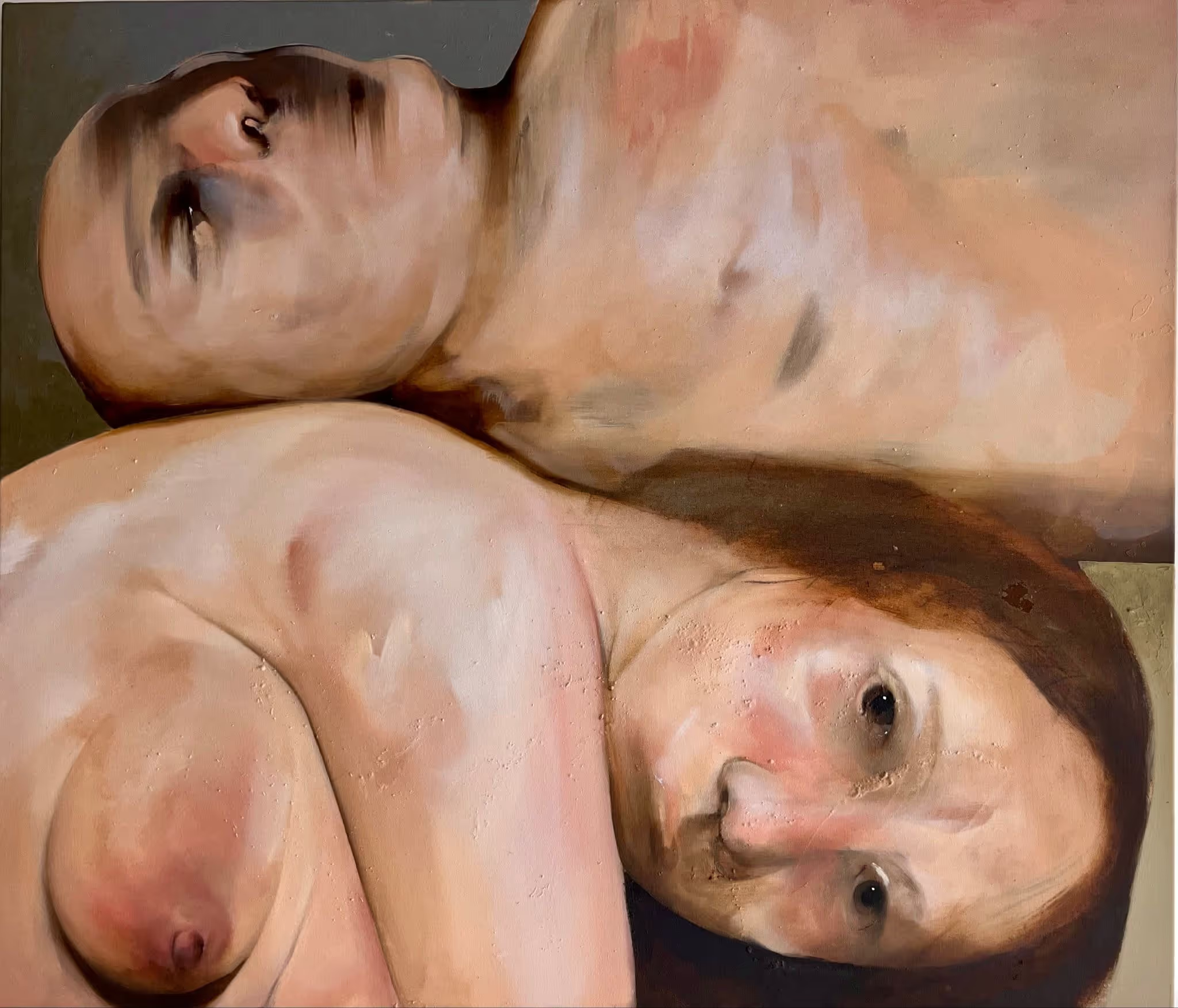
Your work reminds me of Aphex Twin’s music video directed by Chris Cunningham, almost like you’re their painter counterpart. Aphex Twin mentioned that he and Cunningham aimed to push an ugly, distorted portrait style as an anti-celebrity statement, rather than appearing attractive in magazines.
Yeah, that is pretty accurate to how I kind of view it as well. I think if you're going to represent yourself, I feel like it's so easy to represent yourself in the very best version of yourself, and it's like, what if you represent the worst version of yourself?
Yeah. But I also think that with the other Chris Cunningham, the Window Liquor music video, I remember seeing that when I was quite young. It's funny you mentioned these, because I feel like they're subconscious influences that I remember, and I think they actually made a very big impact, especially Come to Daddy. That music video really scared me.
Talking about subconscious references. Is there something you look back on and feel a spark, a connection?
I feel like I'm getting that feeling less and less these days. I really liked the Jenny Savile show at the National Portrait Gallery last year. It was good, and it was the first show I'd seen in a while that actually made me feel something other than, like, it's not or like I enjoyed it. Yeah, she made me have that gut feeling.
Why do you feel like now you’re not getting that? Do you think it’s because the scene is saturated?
With social media — the same thing everyone says — it's not just art from London; it's art from everywhere. And you're seeing so many images all the time. I think I'm just oversaturated with the amount of things I'm seeing. It's not that they shouldn't all be shown; it's just the way I think they're being delivered. It's like a continual stream. It's overwhelming, and it kind of causes a detachment from the actual work itself, making you see it more as just another image to be compared.
And I think the comparison side of it is quite difficult to let go of. I constantly feel like when you're seeing one work after another in a very formulaic way, your brain instantly decides which one it likes better through that kind of flick-and-forget process. Whereas when you go to a show — and I think maybe this is also about the way shows are being put on now — a lot of them are very Instagram-friendly. They're not really pushing the boat out that far with what they're going to show, because they want to be able to post all the pictures on Instagram and whatever. I think it's become a bit bland.
My brother, who’s also an artist, told me once, “Stop looking at new things and look at things from the past. Look at the books you’ve got on your shelf.”
That’s what my brother said to me as well. That’s so funny — my brother said the exact same thing. He was like, “Never look at contemporary things. Just look really far back.”
Talking about old references, is there one you always keep in mind?
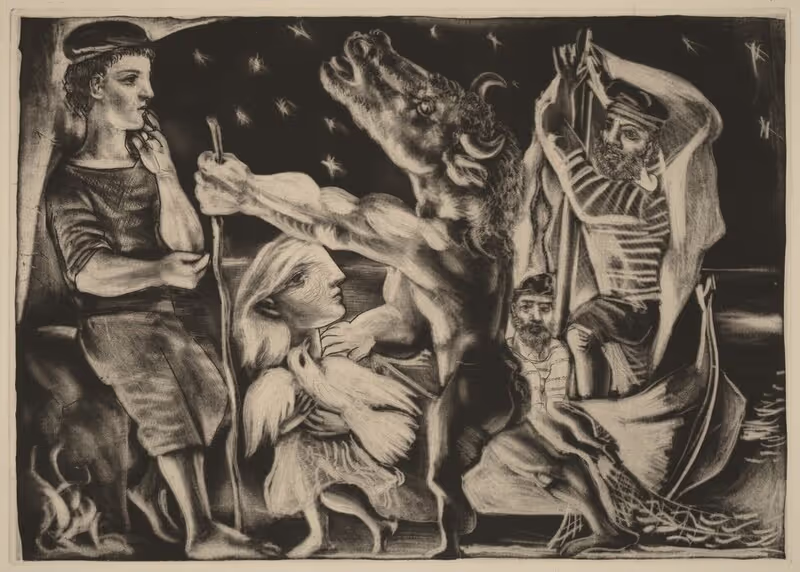
There’s actually this one, it’s on my wall. I’m not generally the biggest fan of Picasso and all his work, but I really like this particular print. Partly because I really like minotaurs and bulls, and it has one of them in it.
But I also think the composition works really well for what I consider a good composition. And the shadow and the light in it are very strong. I find it really interesting — it has this kind of hyper-realistic light, but the image itself is very stylised and unrealistic. It kind of fools your brain into thinking it’s quite realistic when it’s actually not. The proportions are all very wrong as well, and I quite like that about it.
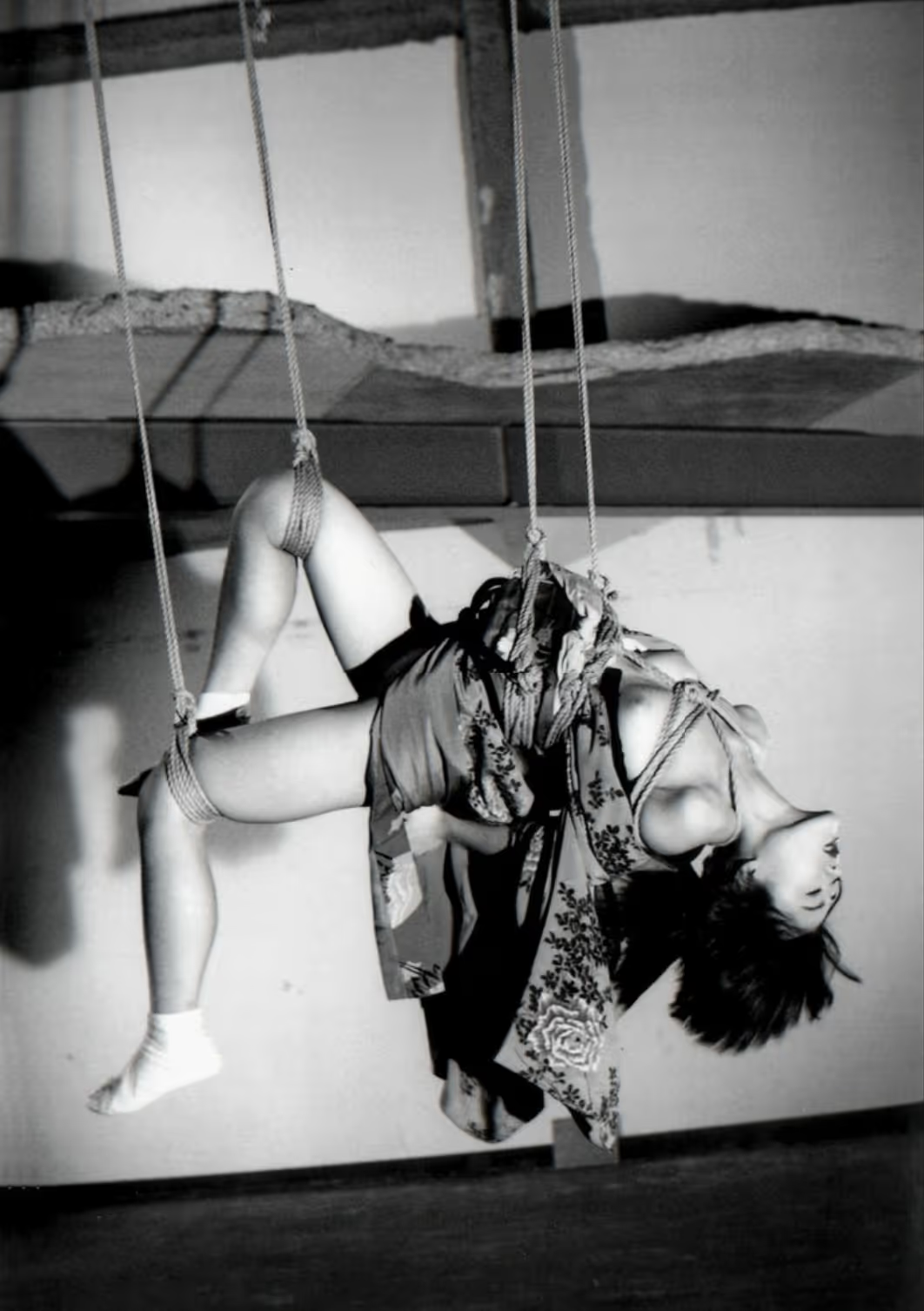
I like all those works where the figures feel kind of bonkers and super alien. A lot of his work — especially these ones of Tokyo — I just find super interesting. I also really like the layouts.
But again, he’s quite controversial, and probably not the best reference for me to use. He photographed a lot of sex workers as well, and I think the question of consent around some of the work has been raised. I haven’t really looked into it deeply, but I know there’s discussion around it.
But the works themselves are just so well done, and the colours are incredible too — especially the coloured ones, since many are in black and white.