
The Mnemosyne: inside curated moodboards is where we ask artists to walk us through their artistic research with an archive of visual bits (archived images, camera roll pictures, book pages, videos), to contrast algorithmic feeds and restore the fun in personally-curated visual boards.
For the first time in 2023, an artist was invited to curate a major exhibition based on the collection of the ARKEN Museum of Contemporary Art in Copenhagen. BUTTERFLY!, curated by Danish artist Esben Weile Kjær, aimed to show the key works from ARKEN’s collection in a new light. It’s significant that, to do so, the project was placed in the hands of a young artist who — having graduated not long before from the Royal Danish Academy of Fine Arts — had already proven himself to be a leading voice in the Danish contemporary art scene and one of the most interesting artists globally.
Transforming ARKEN’s exhibition space into a giant skate park with graffiti-covered walls, Weile Kjær introduced one of the themes closest to his practice: a fascination with transformative places, those sites that shift in social function thanks to the elements inhabiting them, creating spatial détournements that disrupt the normal flow of things. His large inflatable sculptures are another example: big aluminium mice become shelters for the park guards where they are displayed, a giant carnivorous plant fills the rooms of an exhibition hall like a children’s bouncy house and a labyrinthine scenography set, all at once.
The Danish artist’s research reveals a fascination with icons and what makes a visual configuration “fashionable,” “consumable,” or “replicable.”
Weile Kjær works in the tradition of artists like Damien Hirst —think of his glittered animals or his ambiguous bronze sculpture with an alien touch, GRAVITY! — but for the internet age.
Themes such as collective memory — and what it does to icons — run throughout his work. The very transience of icons and trends, and how they can appear both familiar or foreign for different people, produces what the artist describes as a “strange feeling of uncanniness,” which becomes a field of inquiry in his projects.
We speak with Esben Weile Kjær while he’s doing an artist residency in Pietrasanta, Tuscany (Italy), where he is collecting sculptures of poodles and clowns — two recurring figures in his work — as well as gift-shop objects that reinterpret major icons of contemporary art for mass consumption. The residency will give rise to a new series of sculptures presented in the artist’s first Norwegian solo show, opening on 23 April in Oslo and on view until 21 June. Here, he shares five puzzle pieces of what he’s been looking at to create this new body of work. Five images from his camera roll explaining his (not-so-secret) fascinations and offering hints of what will come next.
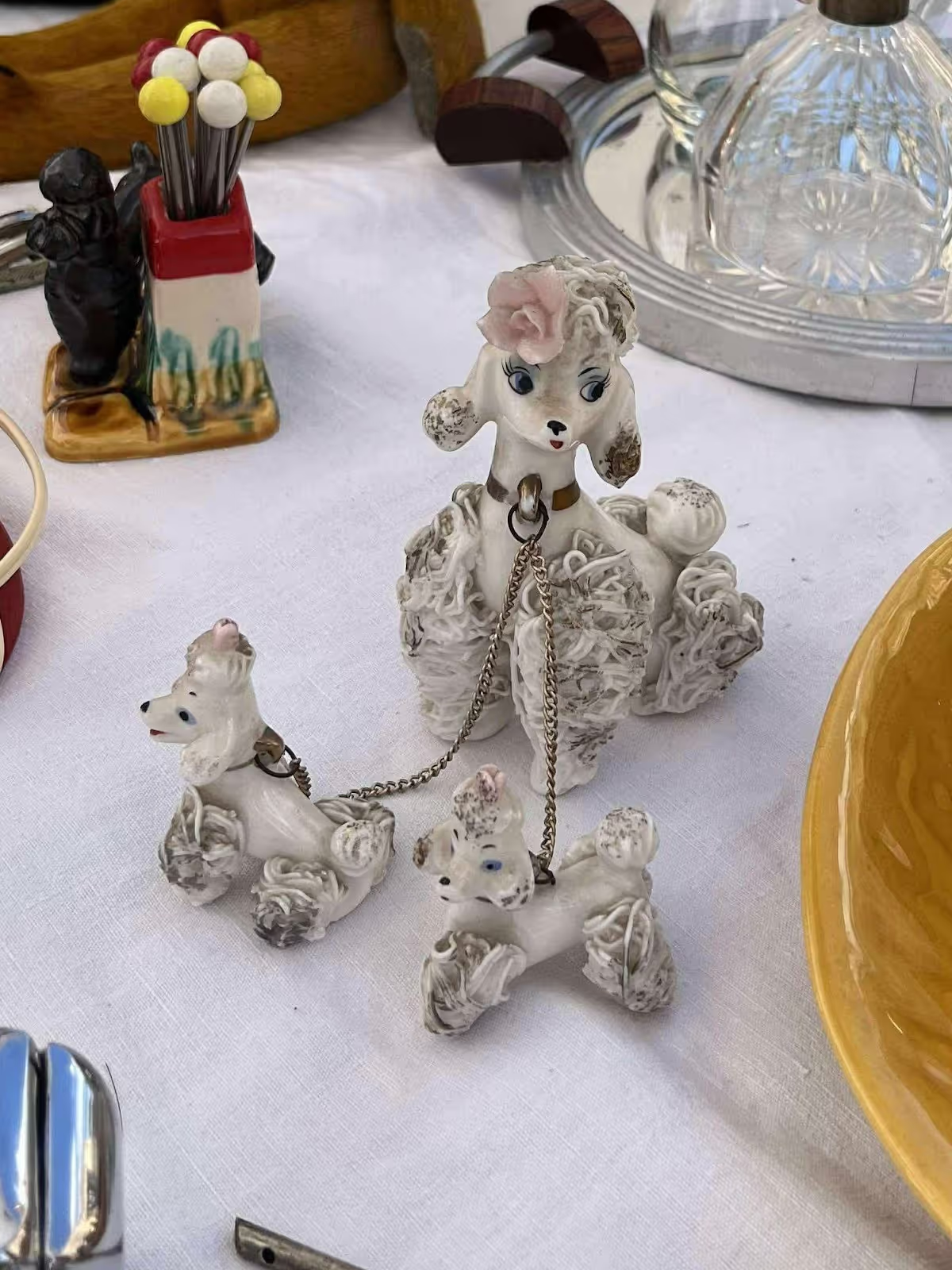
EWK: I’m fascinated by poodles as a cultural symbol. It’s personal, in a way, since I had a poodle when I was a kid. I just made 3 bronze poodles for a sculpture park in Denmark. They are titled The Poodles Core after Goethe’s Faust, where the devil is inside of the poodle. Poodles core is Mephistopheles.
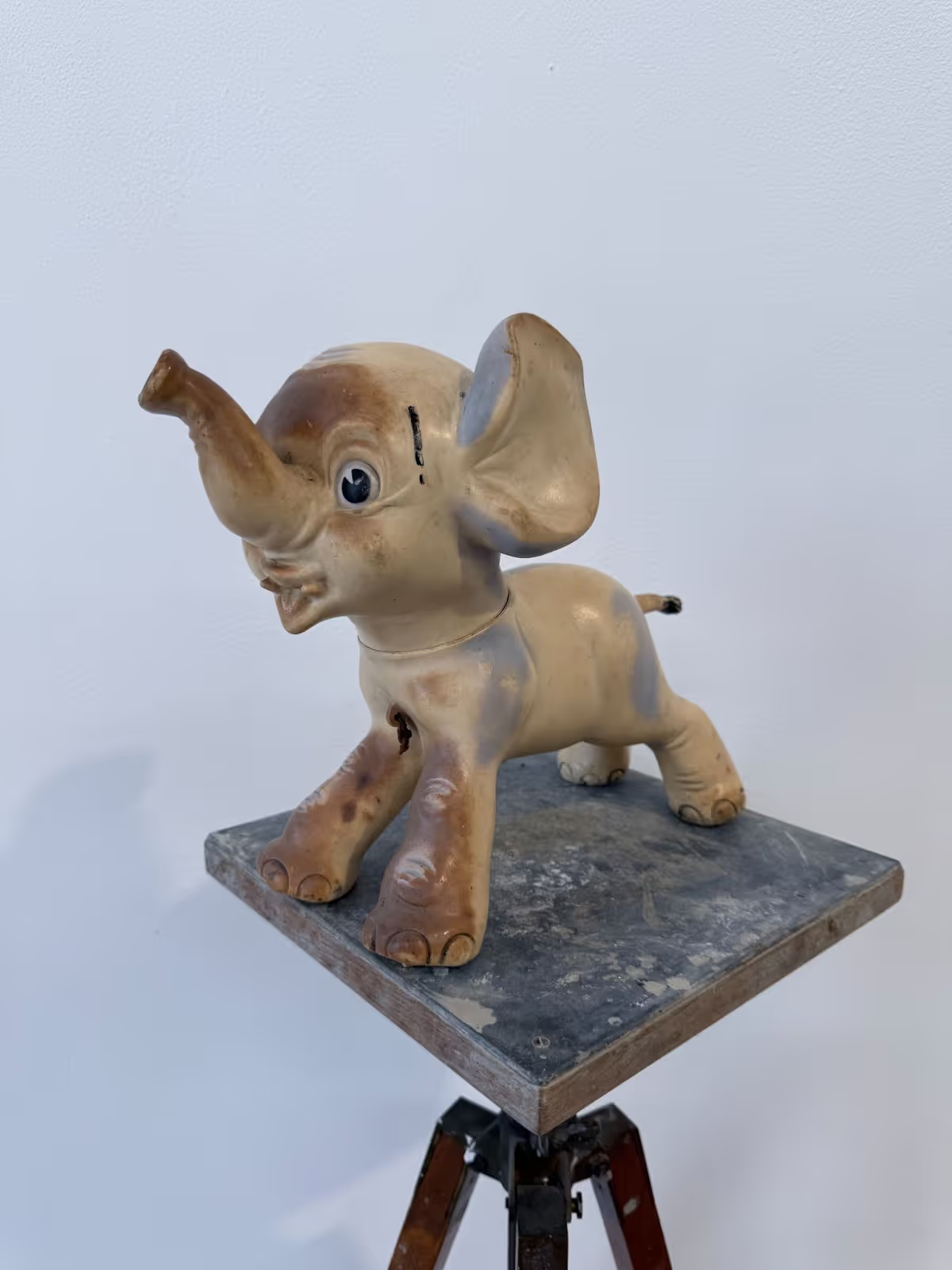
EWK: I bought this rubber elephant from the 1950s at an antique market. I like its facial expression. It looks both scared and brave at the same time.
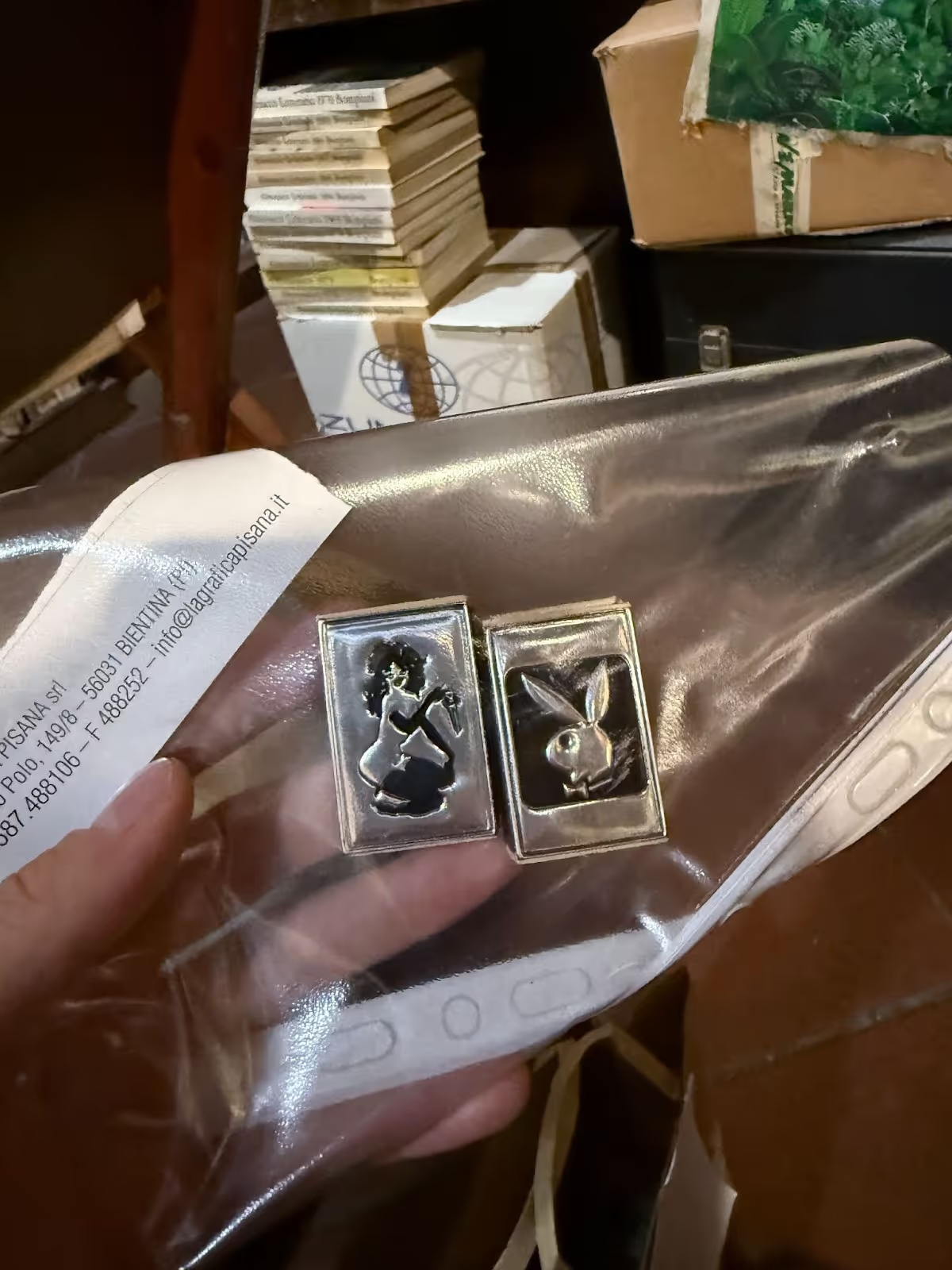
EWK: These are two Swedish-made matchboxes from Playboy’s very early days. I love lighters and matches — small objects that can ignite a big fire. Tiny potential explosions in your pocket.
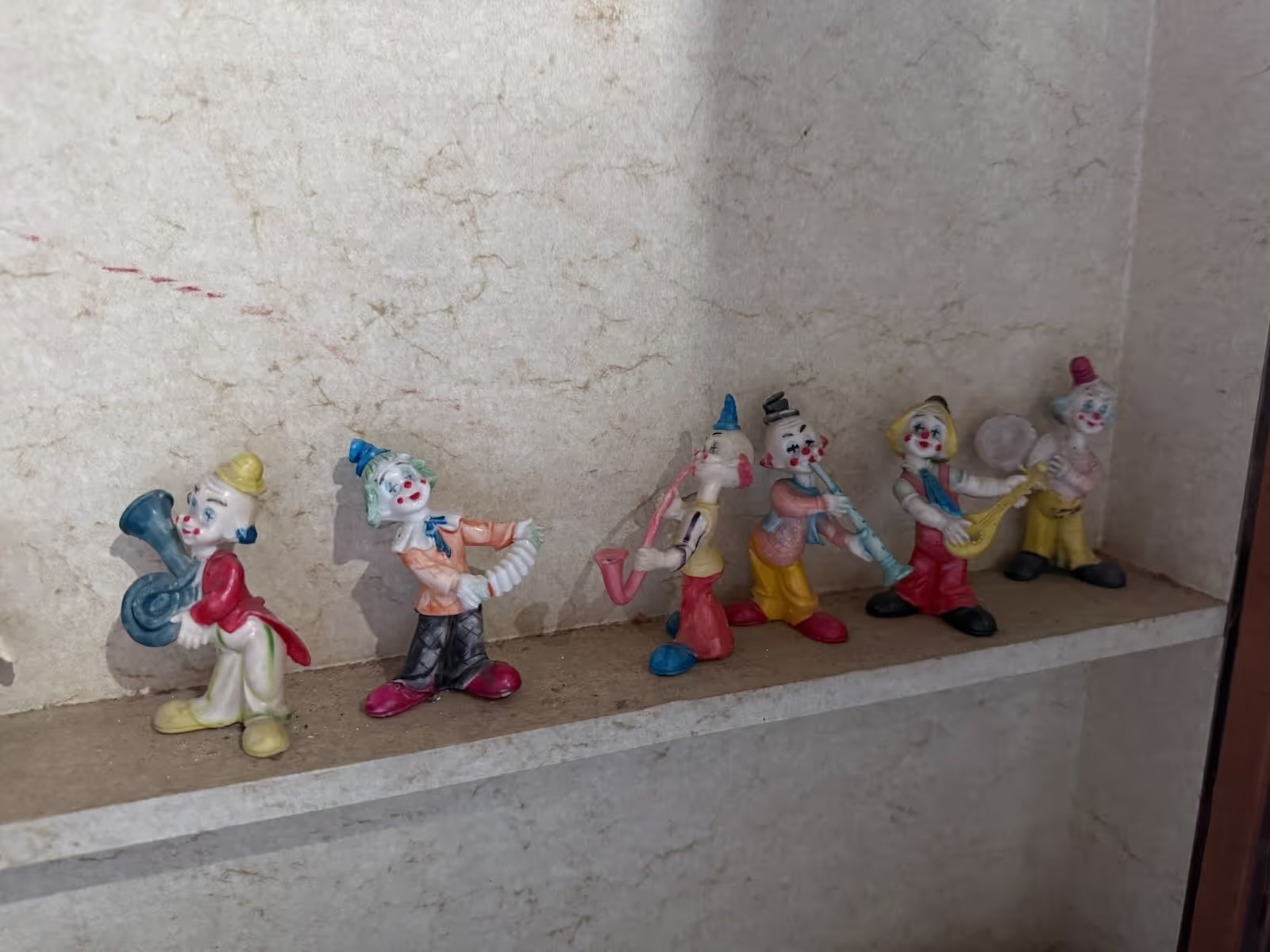
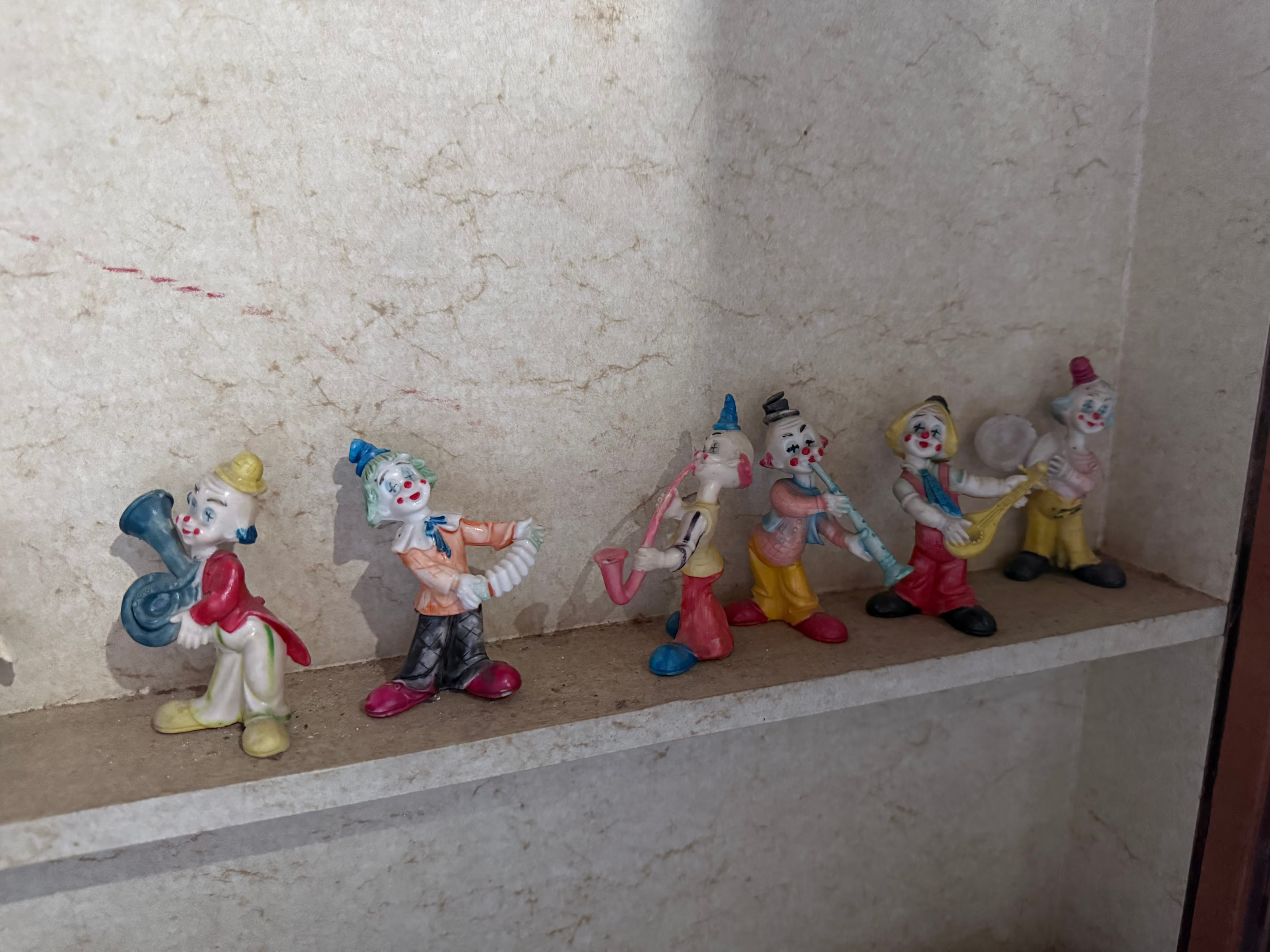
EWK: I’m working on a sculpture of a clown orchestra standing on top of each other in a tower formation. These old Italian clown figures have been the preliminary study for the sculpture.
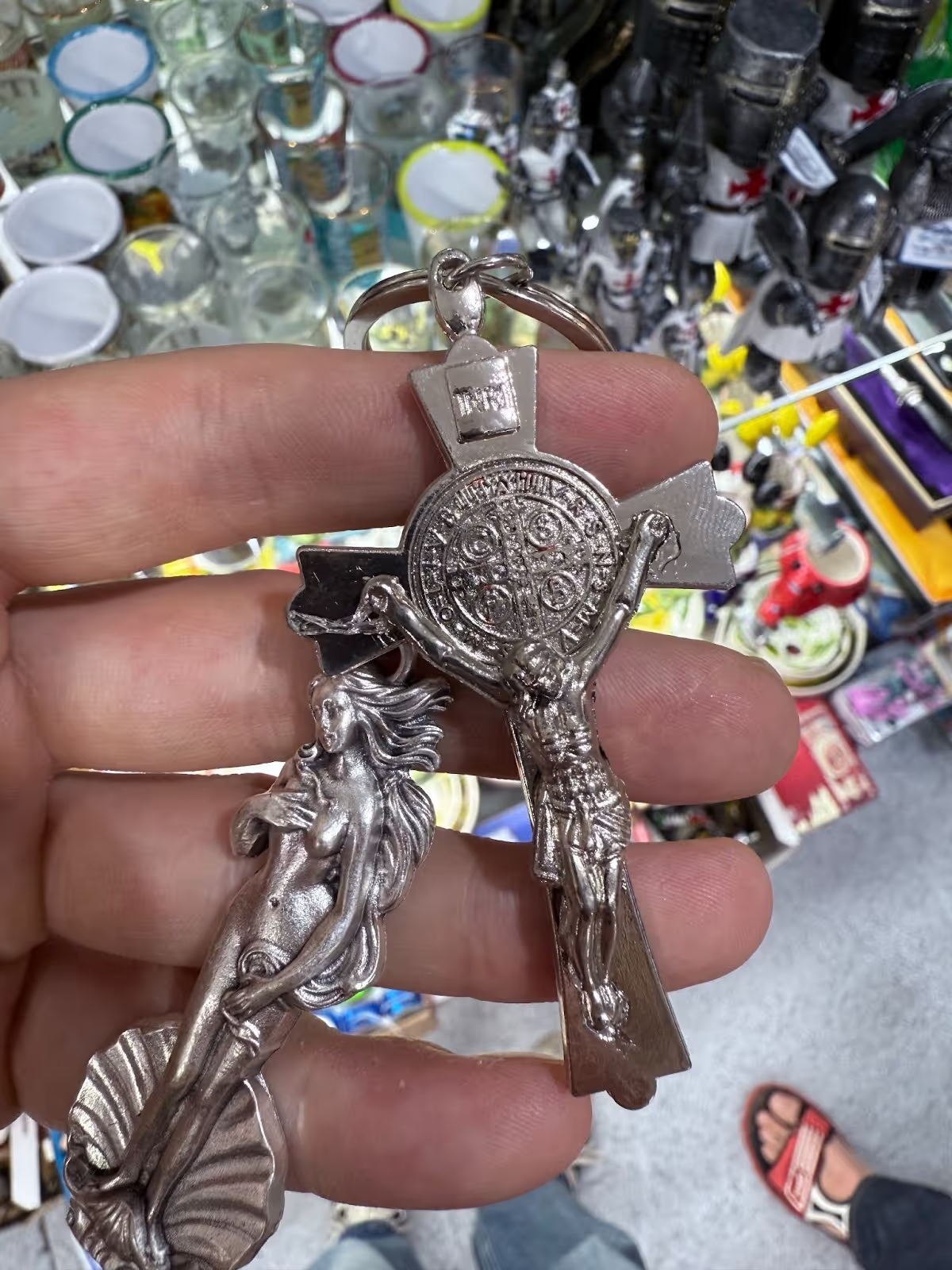
EWK: I’ve collected large amounts of keychains for my research. I’m very interested in mass-produced cast objects that we carry around with us. The Birth of Venus and Jesus on the Cross look beautiful together here.
The Mnemosyne: inside curated moodboards is where we ask artists to walk us through their artistic research with an archive of visual bits (archived images, camera roll pictures, book pages, videos), to contrast algorithmic feeds and restore the fun in personally-curated visual boards.
For the first time in 2023, an artist was invited to curate a major exhibition based on the collection of the ARKEN Museum of Contemporary Art in Copenhagen. BUTTERFLY!, curated by Danish artist Esben Weile Kjær, aimed to show the key works from ARKEN’s collection in a new light. It’s significant that, to do so, the project was placed in the hands of a young artist who — having graduated not long before from the Royal Danish Academy of Fine Arts — had already proven himself to be a leading voice in the Danish contemporary art scene and one of the most interesting artists globally.
Transforming ARKEN’s exhibition space into a giant skate park with graffiti-covered walls, Weile Kjær introduced one of the themes closest to his practice: a fascination with transformative places, those sites that shift in social function thanks to the elements inhabiting them, creating spatial détournements that disrupt the normal flow of things. His large inflatable sculptures are another example: big aluminium mice become shelters for the park guards where they are displayed, a giant carnivorous plant fills the rooms of an exhibition hall like a children’s bouncy house and a labyrinthine scenography set, all at once.
The Danish artist’s research reveals a fascination with icons and what makes a visual configuration “fashionable,” “consumable,” or “replicable.”
Weile Kjær works in the tradition of artists like Damien Hirst —think of his glittered animals or his ambiguous bronze sculpture with an alien touch, GRAVITY! — but for the internet age.
Themes such as collective memory — and what it does to icons — run throughout his work. The very transience of icons and trends, and how they can appear both familiar or foreign for different people, produces what the artist describes as a “strange feeling of uncanniness,” which becomes a field of inquiry in his projects.
We speak with Esben Weile Kjær while he’s doing an artist residency in Pietrasanta, Tuscany (Italy), where he is collecting sculptures of poodles and clowns — two recurring figures in his work — as well as gift-shop objects that reinterpret major icons of contemporary art for mass consumption. The residency will give rise to a new series of sculptures presented in the artist’s first Norwegian solo show, opening on 23 April in Oslo and on view until 21 June. Here, he shares five puzzle pieces of what he’s been looking at to create this new body of work. Five images from his camera roll explaining his (not-so-secret) fascinations and offering hints of what will come next.

EWK: I’m fascinated by poodles as a cultural symbol. It’s personal, in a way, since I had a poodle when I was a kid. I just made 3 bronze poodles for a sculpture park in Denmark. They are titled The Poodles Core after Goethe’s Faust, where the devil is inside of the poodle. Poodles core is Mephistopheles.

EWK: I bought this rubber elephant from the 1950s at an antique market. I like its facial expression. It looks both scared and brave at the same time.

EWK: These are two Swedish-made matchboxes from Playboy’s very early days. I love lighters and matches — small objects that can ignite a big fire. Tiny potential explosions in your pocket.

EWK: I’m working on a sculpture of a clown orchestra standing on top of each other in a tower formation. These old Italian clown figures have been the preliminary study for the sculpture.

EWK: I’ve collected large amounts of keychains for my research. I’m very interested in mass-produced cast objects that we carry around with us. The Birth of Venus and Jesus on the Cross look beautiful together here.
The Mnemosyne: inside curated moodboards is where we ask artists to walk us through their artistic research with an archive of visual bits (archived images, camera roll pictures, book pages, videos), to contrast algorithmic feeds and restore the fun in personally-curated visual boards.
For the first time in 2023, an artist was invited to curate a major exhibition based on the collection of the ARKEN Museum of Contemporary Art in Copenhagen. BUTTERFLY!, curated by Danish artist Esben Weile Kjær, aimed to show the key works from ARKEN’s collection in a new light. It’s significant that, to do so, the project was placed in the hands of a young artist who — having graduated not long before from the Royal Danish Academy of Fine Arts — had already proven himself to be a leading voice in the Danish contemporary art scene and one of the most interesting artists globally.
Transforming ARKEN’s exhibition space into a giant skate park with graffiti-covered walls, Weile Kjær introduced one of the themes closest to his practice: a fascination with transformative places, those sites that shift in social function thanks to the elements inhabiting them, creating spatial détournements that disrupt the normal flow of things. His large inflatable sculptures are another example: big aluminium mice become shelters for the park guards where they are displayed, a giant carnivorous plant fills the rooms of an exhibition hall like a children’s bouncy house and a labyrinthine scenography set, all at once.
The Danish artist’s research reveals a fascination with icons and what makes a visual configuration “fashionable,” “consumable,” or “replicable.”
Weile Kjær works in the tradition of artists like Damien Hirst —think of his glittered animals or his ambiguous bronze sculpture with an alien touch, GRAVITY! — but for the internet age.
Themes such as collective memory — and what it does to icons — run throughout his work. The very transience of icons and trends, and how they can appear both familiar or foreign for different people, produces what the artist describes as a “strange feeling of uncanniness,” which becomes a field of inquiry in his projects.
We speak with Esben Weile Kjær while he’s doing an artist residency in Pietrasanta, Tuscany (Italy), where he is collecting sculptures of poodles and clowns — two recurring figures in his work — as well as gift-shop objects that reinterpret major icons of contemporary art for mass consumption. The residency will give rise to a new series of sculptures presented in the artist’s first Norwegian solo show, opening on 23 April in Oslo and on view until 21 June. Here, he shares five puzzle pieces of what he’s been looking at to create this new body of work. Five images from his camera roll explaining his (not-so-secret) fascinations and offering hints of what will come next.

EWK: I’m fascinated by poodles as a cultural symbol. It’s personal, in a way, since I had a poodle when I was a kid. I just made 3 bronze poodles for a sculpture park in Denmark. They are titled The Poodles Core after Goethe’s Faust, where the devil is inside of the poodle. Poodles core is Mephistopheles.

EWK: I bought this rubber elephant from the 1950s at an antique market. I like its facial expression. It looks both scared and brave at the same time.

EWK: These are two Swedish-made matchboxes from Playboy’s very early days. I love lighters and matches — small objects that can ignite a big fire. Tiny potential explosions in your pocket.

EWK: I’m working on a sculpture of a clown orchestra standing on top of each other in a tower formation. These old Italian clown figures have been the preliminary study for the sculpture.

EWK: I’ve collected large amounts of keychains for my research. I’m very interested in mass-produced cast objects that we carry around with us. The Birth of Venus and Jesus on the Cross look beautiful together here.
The Mnemosyne: inside curated moodboards is where we ask artists to walk us through their artistic research with an archive of visual bits (archived images, camera roll pictures, book pages, videos), to contrast algorithmic feeds and restore the fun in personally-curated visual boards.
For the first time in 2023, an artist was invited to curate a major exhibition based on the collection of the ARKEN Museum of Contemporary Art in Copenhagen. BUTTERFLY!, curated by Danish artist Esben Weile Kjær, aimed to show the key works from ARKEN’s collection in a new light. It’s significant that, to do so, the project was placed in the hands of a young artist who — having graduated not long before from the Royal Danish Academy of Fine Arts — had already proven himself to be a leading voice in the Danish contemporary art scene and one of the most interesting artists globally.
Transforming ARKEN’s exhibition space into a giant skate park with graffiti-covered walls, Weile Kjær introduced one of the themes closest to his practice: a fascination with transformative places, those sites that shift in social function thanks to the elements inhabiting them, creating spatial détournements that disrupt the normal flow of things. His large inflatable sculptures are another example: big aluminium mice become shelters for the park guards where they are displayed, a giant carnivorous plant fills the rooms of an exhibition hall like a children’s bouncy house and a labyrinthine scenography set, all at once.
The Danish artist’s research reveals a fascination with icons and what makes a visual configuration “fashionable,” “consumable,” or “replicable.”
Weile Kjær works in the tradition of artists like Damien Hirst —think of his glittered animals or his ambiguous bronze sculpture with an alien touch, GRAVITY! — but for the internet age.
Themes such as collective memory — and what it does to icons — run throughout his work. The very transience of icons and trends, and how they can appear both familiar or foreign for different people, produces what the artist describes as a “strange feeling of uncanniness,” which becomes a field of inquiry in his projects.
We speak with Esben Weile Kjær while he’s doing an artist residency in Pietrasanta, Tuscany (Italy), where he is collecting sculptures of poodles and clowns — two recurring figures in his work — as well as gift-shop objects that reinterpret major icons of contemporary art for mass consumption. The residency will give rise to a new series of sculptures presented in the artist’s first Norwegian solo show, opening on 23 April in Oslo and on view until 21 June. Here, he shares five puzzle pieces of what he’s been looking at to create this new body of work. Five images from his camera roll explaining his (not-so-secret) fascinations and offering hints of what will come next.

EWK: I’m fascinated by poodles as a cultural symbol. It’s personal, in a way, since I had a poodle when I was a kid. I just made 3 bronze poodles for a sculpture park in Denmark. They are titled The Poodles Core after Goethe’s Faust, where the devil is inside of the poodle. Poodles core is Mephistopheles.

EWK: I bought this rubber elephant from the 1950s at an antique market. I like its facial expression. It looks both scared and brave at the same time.

EWK: These are two Swedish-made matchboxes from Playboy’s very early days. I love lighters and matches — small objects that can ignite a big fire. Tiny potential explosions in your pocket.

EWK: I’m working on a sculpture of a clown orchestra standing on top of each other in a tower formation. These old Italian clown figures have been the preliminary study for the sculpture.

EWK: I’ve collected large amounts of keychains for my research. I’m very interested in mass-produced cast objects that we carry around with us. The Birth of Venus and Jesus on the Cross look beautiful together here.
The Mnemosyne: inside curated moodboards is where we ask artists to walk us through their artistic research with an archive of visual bits (archived images, camera roll pictures, book pages, videos), to contrast algorithmic feeds and restore the fun in personally-curated visual boards.
For the first time in 2023, an artist was invited to curate a major exhibition based on the collection of the ARKEN Museum of Contemporary Art in Copenhagen. BUTTERFLY!, curated by Danish artist Esben Weile Kjær, aimed to show the key works from ARKEN’s collection in a new light. It’s significant that, to do so, the project was placed in the hands of a young artist who — having graduated not long before from the Royal Danish Academy of Fine Arts — had already proven himself to be a leading voice in the Danish contemporary art scene and one of the most interesting artists globally.
Transforming ARKEN’s exhibition space into a giant skate park with graffiti-covered walls, Weile Kjær introduced one of the themes closest to his practice: a fascination with transformative places, those sites that shift in social function thanks to the elements inhabiting them, creating spatial détournements that disrupt the normal flow of things. His large inflatable sculptures are another example: big aluminium mice become shelters for the park guards where they are displayed, a giant carnivorous plant fills the rooms of an exhibition hall like a children’s bouncy house and a labyrinthine scenography set, all at once.
The Danish artist’s research reveals a fascination with icons and what makes a visual configuration “fashionable,” “consumable,” or “replicable.”
Weile Kjær works in the tradition of artists like Damien Hirst —think of his glittered animals or his ambiguous bronze sculpture with an alien touch, GRAVITY! — but for the internet age.
Themes such as collective memory — and what it does to icons — run throughout his work. The very transience of icons and trends, and how they can appear both familiar or foreign for different people, produces what the artist describes as a “strange feeling of uncanniness,” which becomes a field of inquiry in his projects.
We speak with Esben Weile Kjær while he’s doing an artist residency in Pietrasanta, Tuscany (Italy), where he is collecting sculptures of poodles and clowns — two recurring figures in his work — as well as gift-shop objects that reinterpret major icons of contemporary art for mass consumption. The residency will give rise to a new series of sculptures presented in the artist’s first Norwegian solo show, opening on 23 April in Oslo and on view until 21 June. Here, he shares five puzzle pieces of what he’s been looking at to create this new body of work. Five images from his camera roll explaining his (not-so-secret) fascinations and offering hints of what will come next.

EWK: I’m fascinated by poodles as a cultural symbol. It’s personal, in a way, since I had a poodle when I was a kid. I just made 3 bronze poodles for a sculpture park in Denmark. They are titled The Poodles Core after Goethe’s Faust, where the devil is inside of the poodle. Poodles core is Mephistopheles.

EWK: I bought this rubber elephant from the 1950s at an antique market. I like its facial expression. It looks both scared and brave at the same time.

EWK: These are two Swedish-made matchboxes from Playboy’s very early days. I love lighters and matches — small objects that can ignite a big fire. Tiny potential explosions in your pocket.

EWK: I’m working on a sculpture of a clown orchestra standing on top of each other in a tower formation. These old Italian clown figures have been the preliminary study for the sculpture.

EWK: I’ve collected large amounts of keychains for my research. I’m very interested in mass-produced cast objects that we carry around with us. The Birth of Venus and Jesus on the Cross look beautiful together here.
The Mnemosyne: inside curated moodboards is where we ask artists to walk us through their artistic research with an archive of visual bits (archived images, camera roll pictures, book pages, videos), to contrast algorithmic feeds and restore the fun in personally-curated visual boards.
For the first time in 2023, an artist was invited to curate a major exhibition based on the collection of the ARKEN Museum of Contemporary Art in Copenhagen. BUTTERFLY!, curated by Danish artist Esben Weile Kjær, aimed to show the key works from ARKEN’s collection in a new light. It’s significant that, to do so, the project was placed in the hands of a young artist who — having graduated not long before from the Royal Danish Academy of Fine Arts — had already proven himself to be a leading voice in the Danish contemporary art scene and one of the most interesting artists globally.
Transforming ARKEN’s exhibition space into a giant skate park with graffiti-covered walls, Weile Kjær introduced one of the themes closest to his practice: a fascination with transformative places, those sites that shift in social function thanks to the elements inhabiting them, creating spatial détournements that disrupt the normal flow of things. His large inflatable sculptures are another example: big aluminium mice become shelters for the park guards where they are displayed, a giant carnivorous plant fills the rooms of an exhibition hall like a children’s bouncy house and a labyrinthine scenography set, all at once.
The Danish artist’s research reveals a fascination with icons and what makes a visual configuration “fashionable,” “consumable,” or “replicable.”
Weile Kjær works in the tradition of artists like Damien Hirst —think of his glittered animals or his ambiguous bronze sculpture with an alien touch, GRAVITY! — but for the internet age.
Themes such as collective memory — and what it does to icons — run throughout his work. The very transience of icons and trends, and how they can appear both familiar or foreign for different people, produces what the artist describes as a “strange feeling of uncanniness,” which becomes a field of inquiry in his projects.
We speak with Esben Weile Kjær while he’s doing an artist residency in Pietrasanta, Tuscany (Italy), where he is collecting sculptures of poodles and clowns — two recurring figures in his work — as well as gift-shop objects that reinterpret major icons of contemporary art for mass consumption. The residency will give rise to a new series of sculptures presented in the artist’s first Norwegian solo show, opening on 23 April in Oslo and on view until 21 June. Here, he shares five puzzle pieces of what he’s been looking at to create this new body of work. Five images from his camera roll explaining his (not-so-secret) fascinations and offering hints of what will come next.

EWK: I’m fascinated by poodles as a cultural symbol. It’s personal, in a way, since I had a poodle when I was a kid. I just made 3 bronze poodles for a sculpture park in Denmark. They are titled The Poodles Core after Goethe’s Faust, where the devil is inside of the poodle. Poodles core is Mephistopheles.

EWK: I bought this rubber elephant from the 1950s at an antique market. I like its facial expression. It looks both scared and brave at the same time.

EWK: These are two Swedish-made matchboxes from Playboy’s very early days. I love lighters and matches — small objects that can ignite a big fire. Tiny potential explosions in your pocket.

EWK: I’m working on a sculpture of a clown orchestra standing on top of each other in a tower formation. These old Italian clown figures have been the preliminary study for the sculpture.

EWK: I’ve collected large amounts of keychains for my research. I’m very interested in mass-produced cast objects that we carry around with us. The Birth of Venus and Jesus on the Cross look beautiful together here.
The Mnemosyne: inside curated moodboards is where we ask artists to walk us through their artistic research with an archive of visual bits (archived images, camera roll pictures, book pages, videos), to contrast algorithmic feeds and restore the fun in personally-curated visual boards.
For the first time in 2023, an artist was invited to curate a major exhibition based on the collection of the ARKEN Museum of Contemporary Art in Copenhagen. BUTTERFLY!, curated by Danish artist Esben Weile Kjær, aimed to show the key works from ARKEN’s collection in a new light. It’s significant that, to do so, the project was placed in the hands of a young artist who — having graduated not long before from the Royal Danish Academy of Fine Arts — had already proven himself to be a leading voice in the Danish contemporary art scene and one of the most interesting artists globally.
Transforming ARKEN’s exhibition space into a giant skate park with graffiti-covered walls, Weile Kjær introduced one of the themes closest to his practice: a fascination with transformative places, those sites that shift in social function thanks to the elements inhabiting them, creating spatial détournements that disrupt the normal flow of things. His large inflatable sculptures are another example: big aluminium mice become shelters for the park guards where they are displayed, a giant carnivorous plant fills the rooms of an exhibition hall like a children’s bouncy house and a labyrinthine scenography set, all at once.
The Danish artist’s research reveals a fascination with icons and what makes a visual configuration “fashionable,” “consumable,” or “replicable.”
Weile Kjær works in the tradition of artists like Damien Hirst —think of his glittered animals or his ambiguous bronze sculpture with an alien touch, GRAVITY! — but for the internet age.
Themes such as collective memory — and what it does to icons — run throughout his work. The very transience of icons and trends, and how they can appear both familiar or foreign for different people, produces what the artist describes as a “strange feeling of uncanniness,” which becomes a field of inquiry in his projects.
We speak with Esben Weile Kjær while he’s doing an artist residency in Pietrasanta, Tuscany (Italy), where he is collecting sculptures of poodles and clowns — two recurring figures in his work — as well as gift-shop objects that reinterpret major icons of contemporary art for mass consumption. The residency will give rise to a new series of sculptures presented in the artist’s first Norwegian solo show, opening on 23 April in Oslo and on view until 21 June. Here, he shares five puzzle pieces of what he’s been looking at to create this new body of work. Five images from his camera roll explaining his (not-so-secret) fascinations and offering hints of what will come next.

EWK: I’m fascinated by poodles as a cultural symbol. It’s personal, in a way, since I had a poodle when I was a kid. I just made 3 bronze poodles for a sculpture park in Denmark. They are titled The Poodles Core after Goethe’s Faust, where the devil is inside of the poodle. Poodles core is Mephistopheles.

EWK: I bought this rubber elephant from the 1950s at an antique market. I like its facial expression. It looks both scared and brave at the same time.

EWK: These are two Swedish-made matchboxes from Playboy’s very early days. I love lighters and matches — small objects that can ignite a big fire. Tiny potential explosions in your pocket.

EWK: I’m working on a sculpture of a clown orchestra standing on top of each other in a tower formation. These old Italian clown figures have been the preliminary study for the sculpture.

EWK: I’ve collected large amounts of keychains for my research. I’m very interested in mass-produced cast objects that we carry around with us. The Birth of Venus and Jesus on the Cross look beautiful together here.
The Mnemosyne: inside curated moodboards is where we ask artists to walk us through their artistic research with an archive of visual bits (archived images, camera roll pictures, book pages, videos), to contrast algorithmic feeds and restore the fun in personally-curated visual boards.
For the first time in 2023, an artist was invited to curate a major exhibition based on the collection of the ARKEN Museum of Contemporary Art in Copenhagen. BUTTERFLY!, curated by Danish artist Esben Weile Kjær, aimed to show the key works from ARKEN’s collection in a new light. It’s significant that, to do so, the project was placed in the hands of a young artist who — having graduated not long before from the Royal Danish Academy of Fine Arts — had already proven himself to be a leading voice in the Danish contemporary art scene and one of the most interesting artists globally.
Transforming ARKEN’s exhibition space into a giant skate park with graffiti-covered walls, Weile Kjær introduced one of the themes closest to his practice: a fascination with transformative places, those sites that shift in social function thanks to the elements inhabiting them, creating spatial détournements that disrupt the normal flow of things. His large inflatable sculptures are another example: big aluminium mice become shelters for the park guards where they are displayed, a giant carnivorous plant fills the rooms of an exhibition hall like a children’s bouncy house and a labyrinthine scenography set, all at once.
The Danish artist’s research reveals a fascination with icons and what makes a visual configuration “fashionable,” “consumable,” or “replicable.”
Weile Kjær works in the tradition of artists like Damien Hirst —think of his glittered animals or his ambiguous bronze sculpture with an alien touch, GRAVITY! — but for the internet age.
Themes such as collective memory — and what it does to icons — run throughout his work. The very transience of icons and trends, and how they can appear both familiar or foreign for different people, produces what the artist describes as a “strange feeling of uncanniness,” which becomes a field of inquiry in his projects.
We speak with Esben Weile Kjær while he’s doing an artist residency in Pietrasanta, Tuscany (Italy), where he is collecting sculptures of poodles and clowns — two recurring figures in his work — as well as gift-shop objects that reinterpret major icons of contemporary art for mass consumption. The residency will give rise to a new series of sculptures presented in the artist’s first Norwegian solo show, opening on 23 April in Oslo and on view until 21 June. Here, he shares five puzzle pieces of what he’s been looking at to create this new body of work. Five images from his camera roll explaining his (not-so-secret) fascinations and offering hints of what will come next.

EWK: I’m fascinated by poodles as a cultural symbol. It’s personal, in a way, since I had a poodle when I was a kid. I just made 3 bronze poodles for a sculpture park in Denmark. They are titled The Poodles Core after Goethe’s Faust, where the devil is inside of the poodle. Poodles core is Mephistopheles.

EWK: I bought this rubber elephant from the 1950s at an antique market. I like its facial expression. It looks both scared and brave at the same time.

EWK: These are two Swedish-made matchboxes from Playboy’s very early days. I love lighters and matches — small objects that can ignite a big fire. Tiny potential explosions in your pocket.

EWK: I’m working on a sculpture of a clown orchestra standing on top of each other in a tower formation. These old Italian clown figures have been the preliminary study for the sculpture.

EWK: I’ve collected large amounts of keychains for my research. I’m very interested in mass-produced cast objects that we carry around with us. The Birth of Venus and Jesus on the Cross look beautiful together here.
The Mnemosyne: inside curated moodboards is where we ask artists to walk us through their artistic research with an archive of visual bits (archived images, camera roll pictures, book pages, videos), to contrast algorithmic feeds and restore the fun in personally-curated visual boards.
For the first time in 2023, an artist was invited to curate a major exhibition based on the collection of the ARKEN Museum of Contemporary Art in Copenhagen. BUTTERFLY!, curated by Danish artist Esben Weile Kjær, aimed to show the key works from ARKEN’s collection in a new light. It’s significant that, to do so, the project was placed in the hands of a young artist who — having graduated not long before from the Royal Danish Academy of Fine Arts — had already proven himself to be a leading voice in the Danish contemporary art scene and one of the most interesting artists globally.
Transforming ARKEN’s exhibition space into a giant skate park with graffiti-covered walls, Weile Kjær introduced one of the themes closest to his practice: a fascination with transformative places, those sites that shift in social function thanks to the elements inhabiting them, creating spatial détournements that disrupt the normal flow of things. His large inflatable sculptures are another example: big aluminium mice become shelters for the park guards where they are displayed, a giant carnivorous plant fills the rooms of an exhibition hall like a children’s bouncy house and a labyrinthine scenography set, all at once.
The Danish artist’s research reveals a fascination with icons and what makes a visual configuration “fashionable,” “consumable,” or “replicable.”
Weile Kjær works in the tradition of artists like Damien Hirst —think of his glittered animals or his ambiguous bronze sculpture with an alien touch, GRAVITY! — but for the internet age.
Themes such as collective memory — and what it does to icons — run throughout his work. The very transience of icons and trends, and how they can appear both familiar or foreign for different people, produces what the artist describes as a “strange feeling of uncanniness,” which becomes a field of inquiry in his projects.
We speak with Esben Weile Kjær while he’s doing an artist residency in Pietrasanta, Tuscany (Italy), where he is collecting sculptures of poodles and clowns — two recurring figures in his work — as well as gift-shop objects that reinterpret major icons of contemporary art for mass consumption. The residency will give rise to a new series of sculptures presented in the artist’s first Norwegian solo show, opening on 23 April in Oslo and on view until 21 June. Here, he shares five puzzle pieces of what he’s been looking at to create this new body of work. Five images from his camera roll explaining his (not-so-secret) fascinations and offering hints of what will come next.

EWK: I’m fascinated by poodles as a cultural symbol. It’s personal, in a way, since I had a poodle when I was a kid. I just made 3 bronze poodles for a sculpture park in Denmark. They are titled The Poodles Core after Goethe’s Faust, where the devil is inside of the poodle. Poodles core is Mephistopheles.

EWK: I bought this rubber elephant from the 1950s at an antique market. I like its facial expression. It looks both scared and brave at the same time.

EWK: These are two Swedish-made matchboxes from Playboy’s very early days. I love lighters and matches — small objects that can ignite a big fire. Tiny potential explosions in your pocket.

EWK: I’m working on a sculpture of a clown orchestra standing on top of each other in a tower formation. These old Italian clown figures have been the preliminary study for the sculpture.

EWK: I’ve collected large amounts of keychains for my research. I’m very interested in mass-produced cast objects that we carry around with us. The Birth of Venus and Jesus on the Cross look beautiful together here.
The Mnemosyne: inside curated moodboards is where we ask artists to walk us through their artistic research with an archive of visual bits (archived images, camera roll pictures, book pages, videos), to contrast algorithmic feeds and restore the fun in personally-curated visual boards.
For the first time in 2023, an artist was invited to curate a major exhibition based on the collection of the ARKEN Museum of Contemporary Art in Copenhagen. BUTTERFLY!, curated by Danish artist Esben Weile Kjær, aimed to show the key works from ARKEN’s collection in a new light. It’s significant that, to do so, the project was placed in the hands of a young artist who — having graduated not long before from the Royal Danish Academy of Fine Arts — had already proven himself to be a leading voice in the Danish contemporary art scene and one of the most interesting artists globally.
Transforming ARKEN’s exhibition space into a giant skate park with graffiti-covered walls, Weile Kjær introduced one of the themes closest to his practice: a fascination with transformative places, those sites that shift in social function thanks to the elements inhabiting them, creating spatial détournements that disrupt the normal flow of things. His large inflatable sculptures are another example: big aluminium mice become shelters for the park guards where they are displayed, a giant carnivorous plant fills the rooms of an exhibition hall like a children’s bouncy house and a labyrinthine scenography set, all at once.
The Danish artist’s research reveals a fascination with icons and what makes a visual configuration “fashionable,” “consumable,” or “replicable.”
Weile Kjær works in the tradition of artists like Damien Hirst —think of his glittered animals or his ambiguous bronze sculpture with an alien touch, GRAVITY! — but for the internet age.
Themes such as collective memory — and what it does to icons — run throughout his work. The very transience of icons and trends, and how they can appear both familiar or foreign for different people, produces what the artist describes as a “strange feeling of uncanniness,” which becomes a field of inquiry in his projects.
We speak with Esben Weile Kjær while he’s doing an artist residency in Pietrasanta, Tuscany (Italy), where he is collecting sculptures of poodles and clowns — two recurring figures in his work — as well as gift-shop objects that reinterpret major icons of contemporary art for mass consumption. The residency will give rise to a new series of sculptures presented in the artist’s first Norwegian solo show, opening on 23 April in Oslo and on view until 21 June. Here, he shares five puzzle pieces of what he’s been looking at to create this new body of work. Five images from his camera roll explaining his (not-so-secret) fascinations and offering hints of what will come next.

EWK: I’m fascinated by poodles as a cultural symbol. It’s personal, in a way, since I had a poodle when I was a kid. I just made 3 bronze poodles for a sculpture park in Denmark. They are titled The Poodles Core after Goethe’s Faust, where the devil is inside of the poodle. Poodles core is Mephistopheles.

EWK: I bought this rubber elephant from the 1950s at an antique market. I like its facial expression. It looks both scared and brave at the same time.

EWK: These are two Swedish-made matchboxes from Playboy’s very early days. I love lighters and matches — small objects that can ignite a big fire. Tiny potential explosions in your pocket.

EWK: I’m working on a sculpture of a clown orchestra standing on top of each other in a tower formation. These old Italian clown figures have been the preliminary study for the sculpture.

EWK: I’ve collected large amounts of keychains for my research. I’m very interested in mass-produced cast objects that we carry around with us. The Birth of Venus and Jesus on the Cross look beautiful together here.
The Mnemosyne: inside curated moodboards is where we ask artists to walk us through their artistic research with an archive of visual bits (archived images, camera roll pictures, book pages, videos), to contrast algorithmic feeds and restore the fun in personally-curated visual boards.
For the first time in 2023, an artist was invited to curate a major exhibition based on the collection of the ARKEN Museum of Contemporary Art in Copenhagen. BUTTERFLY!, curated by Danish artist Esben Weile Kjær, aimed to show the key works from ARKEN’s collection in a new light. It’s significant that, to do so, the project was placed in the hands of a young artist who — having graduated not long before from the Royal Danish Academy of Fine Arts — had already proven himself to be a leading voice in the Danish contemporary art scene and one of the most interesting artists globally.
Transforming ARKEN’s exhibition space into a giant skate park with graffiti-covered walls, Weile Kjær introduced one of the themes closest to his practice: a fascination with transformative places, those sites that shift in social function thanks to the elements inhabiting them, creating spatial détournements that disrupt the normal flow of things. His large inflatable sculptures are another example: big aluminium mice become shelters for the park guards where they are displayed, a giant carnivorous plant fills the rooms of an exhibition hall like a children’s bouncy house and a labyrinthine scenography set, all at once.
The Danish artist’s research reveals a fascination with icons and what makes a visual configuration “fashionable,” “consumable,” or “replicable.”
Weile Kjær works in the tradition of artists like Damien Hirst —think of his glittered animals or his ambiguous bronze sculpture with an alien touch, GRAVITY! — but for the internet age.
Themes such as collective memory — and what it does to icons — run throughout his work. The very transience of icons and trends, and how they can appear both familiar or foreign for different people, produces what the artist describes as a “strange feeling of uncanniness,” which becomes a field of inquiry in his projects.
We speak with Esben Weile Kjær while he’s doing an artist residency in Pietrasanta, Tuscany (Italy), where he is collecting sculptures of poodles and clowns — two recurring figures in his work — as well as gift-shop objects that reinterpret major icons of contemporary art for mass consumption. The residency will give rise to a new series of sculptures presented in the artist’s first Norwegian solo show, opening on 23 April in Oslo and on view until 21 June. Here, he shares five puzzle pieces of what he’s been looking at to create this new body of work. Five images from his camera roll explaining his (not-so-secret) fascinations and offering hints of what will come next.

EWK: I’m fascinated by poodles as a cultural symbol. It’s personal, in a way, since I had a poodle when I was a kid. I just made 3 bronze poodles for a sculpture park in Denmark. They are titled The Poodles Core after Goethe’s Faust, where the devil is inside of the poodle. Poodles core is Mephistopheles.

EWK: I bought this rubber elephant from the 1950s at an antique market. I like its facial expression. It looks both scared and brave at the same time.

EWK: These are two Swedish-made matchboxes from Playboy’s very early days. I love lighters and matches — small objects that can ignite a big fire. Tiny potential explosions in your pocket.

EWK: I’m working on a sculpture of a clown orchestra standing on top of each other in a tower formation. These old Italian clown figures have been the preliminary study for the sculpture.

EWK: I’ve collected large amounts of keychains for my research. I’m very interested in mass-produced cast objects that we carry around with us. The Birth of Venus and Jesus on the Cross look beautiful together here.