

Phoebe Leech on her debut solo exhibition: Hidden Boys, Open Blue at JD Malat Gallery
January 6, 2026
No items found.

It was a bitterly cold Wednesday evening in the heart of winter, and I skilfully weave through the after-work holiday shopping crowd as I make my way to the opening of Phoebe Leech’s debut solo exhibition Hidden Boys, Open Blue at JD Malat Gallery. She’s only 24 and freshly graduated from City & Guilds of London Art School.

The paintings are arresting in both size and colour. Fragmented scenes and figures float on top of a sea of blue—a shade that strings the works together—as if smudged and distorted by an unrelenting current. Leech’s practice explores memory; flashes of the familiar (tiger-themed face paint, baby tees, and cigarette butts) invade her paintings. Recollection met with melancholy. 

Masculinity, and its various performances, is a central theme throughout the exhibition, including paintings from her ongoing series Male Domesticity. Inspired by watching her brother grow up and a trip to Cuba, the work is buffed with her earnest desire to understand. 

A week or two later, Phoebe and I catch up on the phone to discuss her practice and her first solo exhibition, while her cat Tybalt vies for her attention on the other end.

Tigerboy Luke, 2025

When did you realise you wanted to be an artist?

Art was just something that I always knew that I wanted to do. I was never someone to go out and socialise. A lot of the time, I would just be in my room, drawing or making something. I'm heavily dyslexic, so I struggled a lot at school. I found it very difficult to work at the pace that everyone else was working. I just really understood art. I didn't find it complicated. My parents were divorced, and I had an awful time at my father’s house. But art was safe and comforting; it wasn’t scary.

I'm quite an intense person and put an obscene amount of pressure on myself. So I think I just, from then on, made it a huge ambition to be an artist and to be a successful one. That’s still yet to be determined. (Laughs)

You have previously collaborated with Justin Mortimer. Who are some artists that you revere or have been influential to your practice?

That is such a hard one. Ever since I was little, I’ve had a massive obsession with Jenny Saville. When I was 11, I went to see her work in Oxford, and it blew me away. The level of craftsmanship and emotion that she can channel was overwhelming.

Also, photographer Wolfgang Tillmans. I went to see his exhibition, and you almost feel like you’re in someone's bedroom. It's that intimate and unfiltered, yet looks as though it's been put together like a Renaissance painting. That's what I'm drawn to: the everyday shown in a way that’s extraordinary.
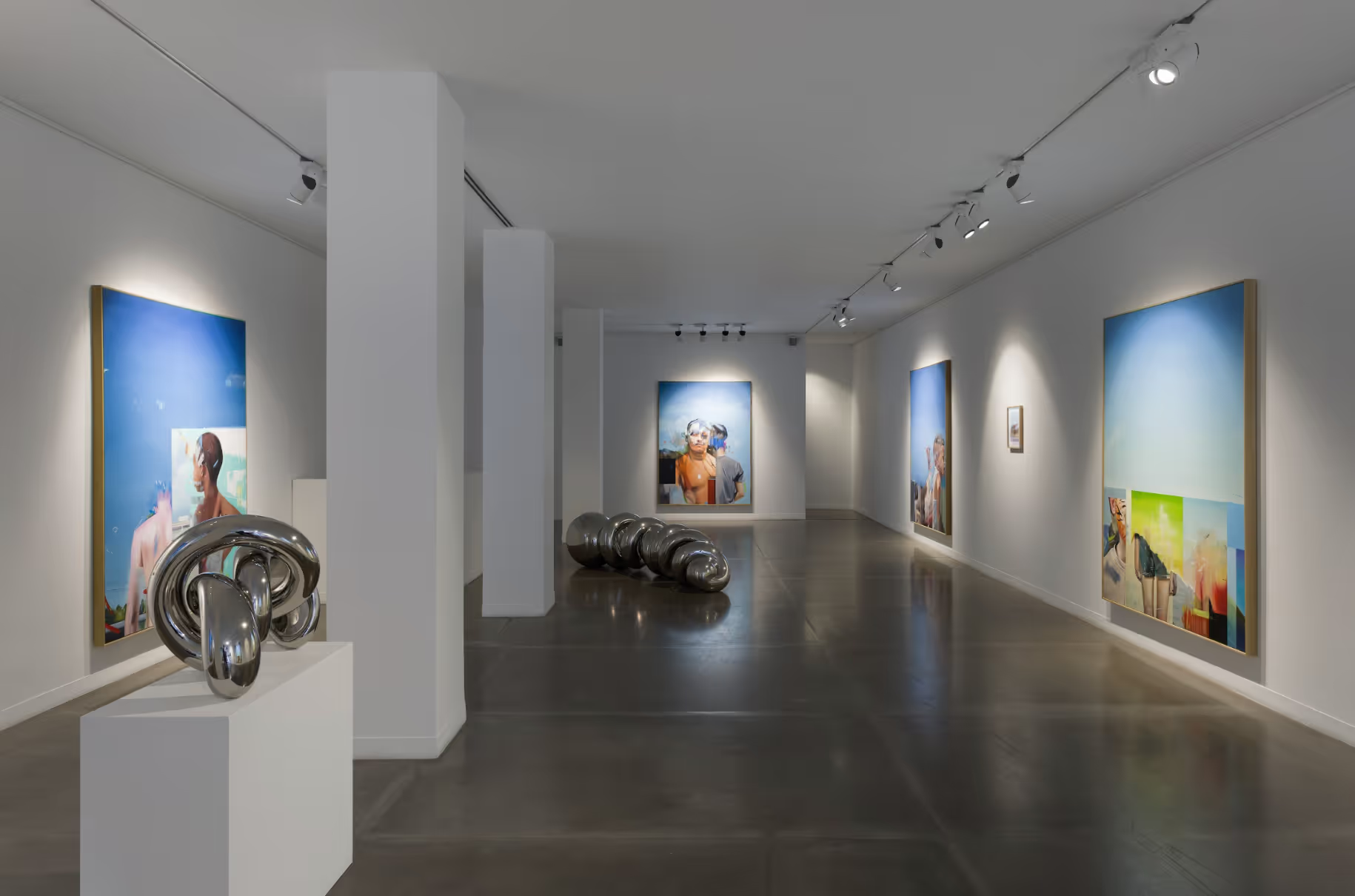
JD Malat 12 November 2025

Your work often deals with the tension between one's internal emotional, private life and its public expression, or the lack of expression. What intrigues you about that line between public and private?

They're just so different. They're in tension with each other, almost in battle. With masculinity and the male subjects in my work, there's this expectation that you have to be something you're not, or you have to be better than you are.

Everything is filtered and edited. Everything is hidden from view.. Then you compare that to what’s private, the rawness of being human. It's a relationship, and it's a duality. I make them exist in the same painting. In my work, there’s a tear, and you're looking through the tear to see what's being covered up.

What is your research process like? What happens before you even pick up the paintbrush?

Back in the day, I used to have a blank canvas on the wall and go, ‘I guess I'm just going to start and see what happens.’ That's really freeing, but it's very hard to do that and at the same time really express what you want to express. Now, before I do a painting, I create the concept in Photoshop, and then I put it into a Keynote and use the eyedropper tool to construct the first layer of the painting. I create a palette for my paint by replicating the colours that I've eyedropped from the computer. That's the level of accuracy that I go into.

Sometimes I go through the act of painting, and it doesn't work, and I remove a lot or notice things that work better when I'm in the moment. I have a bit of leeway room, but the initial concept and the whole first draft is very meticulously designed on Photoshop.

Havana Crest, 2025

Talk me through the Hidden Boys, Open Blue exhibition. What inspired it?

It's an exploration of my brother's past, and my brother's experience of being a boy and growing up in my father's household. My father was a very sinister, abusive character. I became an observer. I was watching someone go through exactly the same thing as me, but experiencing it completely differently. When you're a young girl, and you're watching a young boy, the pressures and expectations are so different. I was fascinated by my brother's experience and how he dealt with our childhood. I put quotation marks around ‘dealt with’. That's what sparked this journey through masculinity.

And then, at 18, my trip to Cuba was an eye-opener to a completely different realm. I went from being trapped in a little cottage, constantly aware of mine and my brother's suffering, to this exotic, beautiful country with little boys running around in shorts and T-shirts in the middle of the street, not caring about anything. I found a sort of escapism in Cuba, which the blue sky represents in my work. Different expressions of masculinity. Duality of two different existences being expressed in one.

Finny & The Crown, 2025

Many of your paintings are inspired by found photographs of your childhood. Does your process alter the way you hold or view certain memories?

When I'm working on these paintings, I’m unpicking memories even further because I’m taking an image that’s full of memories, trauma, beauty, and painting every little part of it. It's like taking a magnifying glass and looking at your childhood and staring intensely at the things that make you feel strange for hours on end. It’s a continuous reflection of my own life.

A memory starts off as its own entity and becomes a completely different thing by the time I finish the painting. It encapsulates everything I’ve done—me in my studio—a memory layered on top of another memory.

Hunch, 2025

Instagram: @phoebeleech.

Jamison Kent
Read more about...
No items found.
No items found.
06/01/2026
Interview
Jamison Kent
Phoebe Leech on her debut solo exhibition: Hidden Boys, Open Blue at JD Malat Gallery
Written by
Jamison Kent
Date Published
06/01/2026
No items found.

It was a bitterly cold Wednesday evening in the heart of winter, and I skilfully weave through the after-work holiday shopping crowd as I make my way to the opening of Phoebe Leech’s debut solo exhibition Hidden Boys, Open Blue at JD Malat Gallery. She’s only 24 and freshly graduated from City & Guilds of London Art School.

The paintings are arresting in both size and colour. Fragmented scenes and figures float on top of a sea of blue—a shade that strings the works together—as if smudged and distorted by an unrelenting current. Leech’s practice explores memory; flashes of the familiar (tiger-themed face paint, baby tees, and cigarette butts) invade her paintings. Recollection met with melancholy. 

Masculinity, and its various performances, is a central theme throughout the exhibition, including paintings from her ongoing series Male Domesticity. Inspired by watching her brother grow up and a trip to Cuba, the work is buffed with her earnest desire to understand. 

A week or two later, Phoebe and I catch up on the phone to discuss her practice and her first solo exhibition, while her cat Tybalt vies for her attention on the other end.

Tigerboy Luke, 2025

When did you realise you wanted to be an artist?

Art was just something that I always knew that I wanted to do. I was never someone to go out and socialise. A lot of the time, I would just be in my room, drawing or making something. I'm heavily dyslexic, so I struggled a lot at school. I found it very difficult to work at the pace that everyone else was working. I just really understood art. I didn't find it complicated. My parents were divorced, and I had an awful time at my father’s house. But art was safe and comforting; it wasn’t scary.

I'm quite an intense person and put an obscene amount of pressure on myself. So I think I just, from then on, made it a huge ambition to be an artist and to be a successful one. That’s still yet to be determined. (Laughs)

You have previously collaborated with Justin Mortimer. Who are some artists that you revere or have been influential to your practice?

That is such a hard one. Ever since I was little, I’ve had a massive obsession with Jenny Saville. When I was 11, I went to see her work in Oxford, and it blew me away. The level of craftsmanship and emotion that she can channel was overwhelming.

Also, photographer Wolfgang Tillmans. I went to see his exhibition, and you almost feel like you’re in someone's bedroom. It's that intimate and unfiltered, yet looks as though it's been put together like a Renaissance painting. That's what I'm drawn to: the everyday shown in a way that’s extraordinary.

JD Malat 12 November 2025

Your work often deals with the tension between one's internal emotional, private life and its public expression, or the lack of expression. What intrigues you about that line between public and private?

They're just so different. They're in tension with each other, almost in battle. With masculinity and the male subjects in my work, there's this expectation that you have to be something you're not, or you have to be better than you are.

Everything is filtered and edited. Everything is hidden from view.. Then you compare that to what’s private, the rawness of being human. It's a relationship, and it's a duality. I make them exist in the same painting. In my work, there’s a tear, and you're looking through the tear to see what's being covered up.

What is your research process like? What happens before you even pick up the paintbrush?

Back in the day, I used to have a blank canvas on the wall and go, ‘I guess I'm just going to start and see what happens.’ That's really freeing, but it's very hard to do that and at the same time really express what you want to express. Now, before I do a painting, I create the concept in Photoshop, and then I put it into a Keynote and use the eyedropper tool to construct the first layer of the painting. I create a palette for my paint by replicating the colours that I've eyedropped from the computer. That's the level of accuracy that I go into.

Sometimes I go through the act of painting, and it doesn't work, and I remove a lot or notice things that work better when I'm in the moment. I have a bit of leeway room, but the initial concept and the whole first draft is very meticulously designed on Photoshop.

Havana Crest, 2025

Talk me through the Hidden Boys, Open Blue exhibition. What inspired it?

It's an exploration of my brother's past, and my brother's experience of being a boy and growing up in my father's household. My father was a very sinister, abusive character. I became an observer. I was watching someone go through exactly the same thing as me, but experiencing it completely differently. When you're a young girl, and you're watching a young boy, the pressures and expectations are so different. I was fascinated by my brother's experience and how he dealt with our childhood. I put quotation marks around ‘dealt with’. That's what sparked this journey through masculinity.

And then, at 18, my trip to Cuba was an eye-opener to a completely different realm. I went from being trapped in a little cottage, constantly aware of mine and my brother's suffering, to this exotic, beautiful country with little boys running around in shorts and T-shirts in the middle of the street, not caring about anything. I found a sort of escapism in Cuba, which the blue sky represents in my work. Different expressions of masculinity. Duality of two different existences being expressed in one.

Finny & The Crown, 2025

Many of your paintings are inspired by found photographs of your childhood. Does your process alter the way you hold or view certain memories?

When I'm working on these paintings, I’m unpicking memories even further because I’m taking an image that’s full of memories, trauma, beauty, and painting every little part of it. It's like taking a magnifying glass and looking at your childhood and staring intensely at the things that make you feel strange for hours on end. It’s a continuous reflection of my own life.

A memory starts off as its own entity and becomes a completely different thing by the time I finish the painting. It encapsulates everything I’ve done—me in my studio—a memory layered on top of another memory.

Hunch, 2025

Instagram: @phoebeleech.

Thanks for reading
Collect your 5 yamos below
REDEEM YAMOS
Phoebe Leech on her debut solo exhibition: Hidden Boys, Open Blue at JD Malat Gallery
Interview
Jamison Kent
Written by
Jamison Kent
Date Published
06/01/2026
No items found.

It was a bitterly cold Wednesday evening in the heart of winter, and I skilfully weave through the after-work holiday shopping crowd as I make my way to the opening of Phoebe Leech’s debut solo exhibition Hidden Boys, Open Blue at JD Malat Gallery. She’s only 24 and freshly graduated from City & Guilds of London Art School.

The paintings are arresting in both size and colour. Fragmented scenes and figures float on top of a sea of blue—a shade that strings the works together—as if smudged and distorted by an unrelenting current. Leech’s practice explores memory; flashes of the familiar (tiger-themed face paint, baby tees, and cigarette butts) invade her paintings. Recollection met with melancholy. 

Masculinity, and its various performances, is a central theme throughout the exhibition, including paintings from her ongoing series Male Domesticity. Inspired by watching her brother grow up and a trip to Cuba, the work is buffed with her earnest desire to understand. 

A week or two later, Phoebe and I catch up on the phone to discuss her practice and her first solo exhibition, while her cat Tybalt vies for her attention on the other end.

Tigerboy Luke, 2025

When did you realise you wanted to be an artist?

Art was just something that I always knew that I wanted to do. I was never someone to go out and socialise. A lot of the time, I would just be in my room, drawing or making something. I'm heavily dyslexic, so I struggled a lot at school. I found it very difficult to work at the pace that everyone else was working. I just really understood art. I didn't find it complicated. My parents were divorced, and I had an awful time at my father’s house. But art was safe and comforting; it wasn’t scary.

I'm quite an intense person and put an obscene amount of pressure on myself. So I think I just, from then on, made it a huge ambition to be an artist and to be a successful one. That’s still yet to be determined. (Laughs)

You have previously collaborated with Justin Mortimer. Who are some artists that you revere or have been influential to your practice?

That is such a hard one. Ever since I was little, I’ve had a massive obsession with Jenny Saville. When I was 11, I went to see her work in Oxford, and it blew me away. The level of craftsmanship and emotion that she can channel was overwhelming.

Also, photographer Wolfgang Tillmans. I went to see his exhibition, and you almost feel like you’re in someone's bedroom. It's that intimate and unfiltered, yet looks as though it's been put together like a Renaissance painting. That's what I'm drawn to: the everyday shown in a way that’s extraordinary.

JD Malat 12 November 2025

Your work often deals with the tension between one's internal emotional, private life and its public expression, or the lack of expression. What intrigues you about that line between public and private?

They're just so different. They're in tension with each other, almost in battle. With masculinity and the male subjects in my work, there's this expectation that you have to be something you're not, or you have to be better than you are.

Everything is filtered and edited. Everything is hidden from view.. Then you compare that to what’s private, the rawness of being human. It's a relationship, and it's a duality. I make them exist in the same painting. In my work, there’s a tear, and you're looking through the tear to see what's being covered up.

What is your research process like? What happens before you even pick up the paintbrush?

Back in the day, I used to have a blank canvas on the wall and go, ‘I guess I'm just going to start and see what happens.’ That's really freeing, but it's very hard to do that and at the same time really express what you want to express. Now, before I do a painting, I create the concept in Photoshop, and then I put it into a Keynote and use the eyedropper tool to construct the first layer of the painting. I create a palette for my paint by replicating the colours that I've eyedropped from the computer. That's the level of accuracy that I go into.

Sometimes I go through the act of painting, and it doesn't work, and I remove a lot or notice things that work better when I'm in the moment. I have a bit of leeway room, but the initial concept and the whole first draft is very meticulously designed on Photoshop.

Havana Crest, 2025

Talk me through the Hidden Boys, Open Blue exhibition. What inspired it?

It's an exploration of my brother's past, and my brother's experience of being a boy and growing up in my father's household. My father was a very sinister, abusive character. I became an observer. I was watching someone go through exactly the same thing as me, but experiencing it completely differently. When you're a young girl, and you're watching a young boy, the pressures and expectations are so different. I was fascinated by my brother's experience and how he dealt with our childhood. I put quotation marks around ‘dealt with’. That's what sparked this journey through masculinity.

And then, at 18, my trip to Cuba was an eye-opener to a completely different realm. I went from being trapped in a little cottage, constantly aware of mine and my brother's suffering, to this exotic, beautiful country with little boys running around in shorts and T-shirts in the middle of the street, not caring about anything. I found a sort of escapism in Cuba, which the blue sky represents in my work. Different expressions of masculinity. Duality of two different existences being expressed in one.

Finny & The Crown, 2025

Many of your paintings are inspired by found photographs of your childhood. Does your process alter the way you hold or view certain memories?

When I'm working on these paintings, I’m unpicking memories even further because I’m taking an image that’s full of memories, trauma, beauty, and painting every little part of it. It's like taking a magnifying glass and looking at your childhood and staring intensely at the things that make you feel strange for hours on end. It’s a continuous reflection of my own life.

A memory starts off as its own entity and becomes a completely different thing by the time I finish the painting. It encapsulates everything I’ve done—me in my studio—a memory layered on top of another memory.

Hunch, 2025

Instagram: @phoebeleech.

Thanks for reading
Collect your 5 yamos below
REDEEM YAMOS
06/01/2026
Interview
Jamison Kent
Phoebe Leech on her debut solo exhibition: Hidden Boys, Open Blue at JD Malat Gallery
Written by
Jamison Kent
Date Published
06/01/2026
No items found.

It was a bitterly cold Wednesday evening in the heart of winter, and I skilfully weave through the after-work holiday shopping crowd as I make my way to the opening of Phoebe Leech’s debut solo exhibition Hidden Boys, Open Blue at JD Malat Gallery. She’s only 24 and freshly graduated from City & Guilds of London Art School.

The paintings are arresting in both size and colour. Fragmented scenes and figures float on top of a sea of blue—a shade that strings the works together—as if smudged and distorted by an unrelenting current. Leech’s practice explores memory; flashes of the familiar (tiger-themed face paint, baby tees, and cigarette butts) invade her paintings. Recollection met with melancholy. 

Masculinity, and its various performances, is a central theme throughout the exhibition, including paintings from her ongoing series Male Domesticity. Inspired by watching her brother grow up and a trip to Cuba, the work is buffed with her earnest desire to understand. 

A week or two later, Phoebe and I catch up on the phone to discuss her practice and her first solo exhibition, while her cat Tybalt vies for her attention on the other end.

Tigerboy Luke, 2025

When did you realise you wanted to be an artist?

Art was just something that I always knew that I wanted to do. I was never someone to go out and socialise. A lot of the time, I would just be in my room, drawing or making something. I'm heavily dyslexic, so I struggled a lot at school. I found it very difficult to work at the pace that everyone else was working. I just really understood art. I didn't find it complicated. My parents were divorced, and I had an awful time at my father’s house. But art was safe and comforting; it wasn’t scary.

I'm quite an intense person and put an obscene amount of pressure on myself. So I think I just, from then on, made it a huge ambition to be an artist and to be a successful one. That’s still yet to be determined. (Laughs)

You have previously collaborated with Justin Mortimer. Who are some artists that you revere or have been influential to your practice?

That is such a hard one. Ever since I was little, I’ve had a massive obsession with Jenny Saville. When I was 11, I went to see her work in Oxford, and it blew me away. The level of craftsmanship and emotion that she can channel was overwhelming.

Also, photographer Wolfgang Tillmans. I went to see his exhibition, and you almost feel like you’re in someone's bedroom. It's that intimate and unfiltered, yet looks as though it's been put together like a Renaissance painting. That's what I'm drawn to: the everyday shown in a way that’s extraordinary.

JD Malat 12 November 2025

Your work often deals with the tension between one's internal emotional, private life and its public expression, or the lack of expression. What intrigues you about that line between public and private?

They're just so different. They're in tension with each other, almost in battle. With masculinity and the male subjects in my work, there's this expectation that you have to be something you're not, or you have to be better than you are.

Everything is filtered and edited. Everything is hidden from view.. Then you compare that to what’s private, the rawness of being human. It's a relationship, and it's a duality. I make them exist in the same painting. In my work, there’s a tear, and you're looking through the tear to see what's being covered up.

What is your research process like? What happens before you even pick up the paintbrush?

Back in the day, I used to have a blank canvas on the wall and go, ‘I guess I'm just going to start and see what happens.’ That's really freeing, but it's very hard to do that and at the same time really express what you want to express. Now, before I do a painting, I create the concept in Photoshop, and then I put it into a Keynote and use the eyedropper tool to construct the first layer of the painting. I create a palette for my paint by replicating the colours that I've eyedropped from the computer. That's the level of accuracy that I go into.

Sometimes I go through the act of painting, and it doesn't work, and I remove a lot or notice things that work better when I'm in the moment. I have a bit of leeway room, but the initial concept and the whole first draft is very meticulously designed on Photoshop.

Havana Crest, 2025

Talk me through the Hidden Boys, Open Blue exhibition. What inspired it?

It's an exploration of my brother's past, and my brother's experience of being a boy and growing up in my father's household. My father was a very sinister, abusive character. I became an observer. I was watching someone go through exactly the same thing as me, but experiencing it completely differently. When you're a young girl, and you're watching a young boy, the pressures and expectations are so different. I was fascinated by my brother's experience and how he dealt with our childhood. I put quotation marks around ‘dealt with’. That's what sparked this journey through masculinity.

And then, at 18, my trip to Cuba was an eye-opener to a completely different realm. I went from being trapped in a little cottage, constantly aware of mine and my brother's suffering, to this exotic, beautiful country with little boys running around in shorts and T-shirts in the middle of the street, not caring about anything. I found a sort of escapism in Cuba, which the blue sky represents in my work. Different expressions of masculinity. Duality of two different existences being expressed in one.

Finny & The Crown, 2025

Many of your paintings are inspired by found photographs of your childhood. Does your process alter the way you hold or view certain memories?

When I'm working on these paintings, I’m unpicking memories even further because I’m taking an image that’s full of memories, trauma, beauty, and painting every little part of it. It's like taking a magnifying glass and looking at your childhood and staring intensely at the things that make you feel strange for hours on end. It’s a continuous reflection of my own life.

A memory starts off as its own entity and becomes a completely different thing by the time I finish the painting. It encapsulates everything I’ve done—me in my studio—a memory layered on top of another memory.

Hunch, 2025

Instagram: @phoebeleech.

Thanks for reading
Collect your 5 yamos below
REDEEM YAMOS
06/01/2026
Interview
Jamison Kent
Phoebe Leech on her debut solo exhibition: Hidden Boys, Open Blue at JD Malat Gallery
Written by
Jamison Kent
Date Published
06/01/2026
No items found.

It was a bitterly cold Wednesday evening in the heart of winter, and I skilfully weave through the after-work holiday shopping crowd as I make my way to the opening of Phoebe Leech’s debut solo exhibition Hidden Boys, Open Blue at JD Malat Gallery. She’s only 24 and freshly graduated from City & Guilds of London Art School.

The paintings are arresting in both size and colour. Fragmented scenes and figures float on top of a sea of blue—a shade that strings the works together—as if smudged and distorted by an unrelenting current. Leech’s practice explores memory; flashes of the familiar (tiger-themed face paint, baby tees, and cigarette butts) invade her paintings. Recollection met with melancholy. 

Masculinity, and its various performances, is a central theme throughout the exhibition, including paintings from her ongoing series Male Domesticity. Inspired by watching her brother grow up and a trip to Cuba, the work is buffed with her earnest desire to understand. 

A week or two later, Phoebe and I catch up on the phone to discuss her practice and her first solo exhibition, while her cat Tybalt vies for her attention on the other end.

Tigerboy Luke, 2025

When did you realise you wanted to be an artist?

Art was just something that I always knew that I wanted to do. I was never someone to go out and socialise. A lot of the time, I would just be in my room, drawing or making something. I'm heavily dyslexic, so I struggled a lot at school. I found it very difficult to work at the pace that everyone else was working. I just really understood art. I didn't find it complicated. My parents were divorced, and I had an awful time at my father’s house. But art was safe and comforting; it wasn’t scary.

I'm quite an intense person and put an obscene amount of pressure on myself. So I think I just, from then on, made it a huge ambition to be an artist and to be a successful one. That’s still yet to be determined. (Laughs)

You have previously collaborated with Justin Mortimer. Who are some artists that you revere or have been influential to your practice?

That is such a hard one. Ever since I was little, I’ve had a massive obsession with Jenny Saville. When I was 11, I went to see her work in Oxford, and it blew me away. The level of craftsmanship and emotion that she can channel was overwhelming.

Also, photographer Wolfgang Tillmans. I went to see his exhibition, and you almost feel like you’re in someone's bedroom. It's that intimate and unfiltered, yet looks as though it's been put together like a Renaissance painting. That's what I'm drawn to: the everyday shown in a way that’s extraordinary.

JD Malat 12 November 2025

Your work often deals with the tension between one's internal emotional, private life and its public expression, or the lack of expression. What intrigues you about that line between public and private?

They're just so different. They're in tension with each other, almost in battle. With masculinity and the male subjects in my work, there's this expectation that you have to be something you're not, or you have to be better than you are.

Everything is filtered and edited. Everything is hidden from view.. Then you compare that to what’s private, the rawness of being human. It's a relationship, and it's a duality. I make them exist in the same painting. In my work, there’s a tear, and you're looking through the tear to see what's being covered up.

What is your research process like? What happens before you even pick up the paintbrush?

Back in the day, I used to have a blank canvas on the wall and go, ‘I guess I'm just going to start and see what happens.’ That's really freeing, but it's very hard to do that and at the same time really express what you want to express. Now, before I do a painting, I create the concept in Photoshop, and then I put it into a Keynote and use the eyedropper tool to construct the first layer of the painting. I create a palette for my paint by replicating the colours that I've eyedropped from the computer. That's the level of accuracy that I go into.

Sometimes I go through the act of painting, and it doesn't work, and I remove a lot or notice things that work better when I'm in the moment. I have a bit of leeway room, but the initial concept and the whole first draft is very meticulously designed on Photoshop.

Havana Crest, 2025

Talk me through the Hidden Boys, Open Blue exhibition. What inspired it?

It's an exploration of my brother's past, and my brother's experience of being a boy and growing up in my father's household. My father was a very sinister, abusive character. I became an observer. I was watching someone go through exactly the same thing as me, but experiencing it completely differently. When you're a young girl, and you're watching a young boy, the pressures and expectations are so different. I was fascinated by my brother's experience and how he dealt with our childhood. I put quotation marks around ‘dealt with’. That's what sparked this journey through masculinity.

And then, at 18, my trip to Cuba was an eye-opener to a completely different realm. I went from being trapped in a little cottage, constantly aware of mine and my brother's suffering, to this exotic, beautiful country with little boys running around in shorts and T-shirts in the middle of the street, not caring about anything. I found a sort of escapism in Cuba, which the blue sky represents in my work. Different expressions of masculinity. Duality of two different existences being expressed in one.

Finny & The Crown, 2025

Many of your paintings are inspired by found photographs of your childhood. Does your process alter the way you hold or view certain memories?

When I'm working on these paintings, I’m unpicking memories even further because I’m taking an image that’s full of memories, trauma, beauty, and painting every little part of it. It's like taking a magnifying glass and looking at your childhood and staring intensely at the things that make you feel strange for hours on end. It’s a continuous reflection of my own life.

A memory starts off as its own entity and becomes a completely different thing by the time I finish the painting. It encapsulates everything I’ve done—me in my studio—a memory layered on top of another memory.

Hunch, 2025

Instagram: @phoebeleech.

Thanks for reading
Collect your 5 yamos below
REDEEM YAMOS
06/01/2026
Interview
Jamison Kent
Phoebe Leech on her debut solo exhibition: Hidden Boys, Open Blue at JD Malat Gallery
Written by
Jamison Kent
Date Published
06/01/2026
No items found.

It was a bitterly cold Wednesday evening in the heart of winter, and I skilfully weave through the after-work holiday shopping crowd as I make my way to the opening of Phoebe Leech’s debut solo exhibition Hidden Boys, Open Blue at JD Malat Gallery. She’s only 24 and freshly graduated from City & Guilds of London Art School.

The paintings are arresting in both size and colour. Fragmented scenes and figures float on top of a sea of blue—a shade that strings the works together—as if smudged and distorted by an unrelenting current. Leech’s practice explores memory; flashes of the familiar (tiger-themed face paint, baby tees, and cigarette butts) invade her paintings. Recollection met with melancholy. 

Masculinity, and its various performances, is a central theme throughout the exhibition, including paintings from her ongoing series Male Domesticity. Inspired by watching her brother grow up and a trip to Cuba, the work is buffed with her earnest desire to understand. 

A week or two later, Phoebe and I catch up on the phone to discuss her practice and her first solo exhibition, while her cat Tybalt vies for her attention on the other end.

Tigerboy Luke, 2025

When did you realise you wanted to be an artist?

Art was just something that I always knew that I wanted to do. I was never someone to go out and socialise. A lot of the time, I would just be in my room, drawing or making something. I'm heavily dyslexic, so I struggled a lot at school. I found it very difficult to work at the pace that everyone else was working. I just really understood art. I didn't find it complicated. My parents were divorced, and I had an awful time at my father’s house. But art was safe and comforting; it wasn’t scary.

I'm quite an intense person and put an obscene amount of pressure on myself. So I think I just, from then on, made it a huge ambition to be an artist and to be a successful one. That’s still yet to be determined. (Laughs)

You have previously collaborated with Justin Mortimer. Who are some artists that you revere or have been influential to your practice?

That is such a hard one. Ever since I was little, I’ve had a massive obsession with Jenny Saville. When I was 11, I went to see her work in Oxford, and it blew me away. The level of craftsmanship and emotion that she can channel was overwhelming.

Also, photographer Wolfgang Tillmans. I went to see his exhibition, and you almost feel like you’re in someone's bedroom. It's that intimate and unfiltered, yet looks as though it's been put together like a Renaissance painting. That's what I'm drawn to: the everyday shown in a way that’s extraordinary.

JD Malat 12 November 2025

Your work often deals with the tension between one's internal emotional, private life and its public expression, or the lack of expression. What intrigues you about that line between public and private?

They're just so different. They're in tension with each other, almost in battle. With masculinity and the male subjects in my work, there's this expectation that you have to be something you're not, or you have to be better than you are.

Everything is filtered and edited. Everything is hidden from view.. Then you compare that to what’s private, the rawness of being human. It's a relationship, and it's a duality. I make them exist in the same painting. In my work, there’s a tear, and you're looking through the tear to see what's being covered up.

What is your research process like? What happens before you even pick up the paintbrush?

Back in the day, I used to have a blank canvas on the wall and go, ‘I guess I'm just going to start and see what happens.’ That's really freeing, but it's very hard to do that and at the same time really express what you want to express. Now, before I do a painting, I create the concept in Photoshop, and then I put it into a Keynote and use the eyedropper tool to construct the first layer of the painting. I create a palette for my paint by replicating the colours that I've eyedropped from the computer. That's the level of accuracy that I go into.

Sometimes I go through the act of painting, and it doesn't work, and I remove a lot or notice things that work better when I'm in the moment. I have a bit of leeway room, but the initial concept and the whole first draft is very meticulously designed on Photoshop.

Havana Crest, 2025

Talk me through the Hidden Boys, Open Blue exhibition. What inspired it?

It's an exploration of my brother's past, and my brother's experience of being a boy and growing up in my father's household. My father was a very sinister, abusive character. I became an observer. I was watching someone go through exactly the same thing as me, but experiencing it completely differently. When you're a young girl, and you're watching a young boy, the pressures and expectations are so different. I was fascinated by my brother's experience and how he dealt with our childhood. I put quotation marks around ‘dealt with’. That's what sparked this journey through masculinity.

And then, at 18, my trip to Cuba was an eye-opener to a completely different realm. I went from being trapped in a little cottage, constantly aware of mine and my brother's suffering, to this exotic, beautiful country with little boys running around in shorts and T-shirts in the middle of the street, not caring about anything. I found a sort of escapism in Cuba, which the blue sky represents in my work. Different expressions of masculinity. Duality of two different existences being expressed in one.

Finny & The Crown, 2025

Many of your paintings are inspired by found photographs of your childhood. Does your process alter the way you hold or view certain memories?

When I'm working on these paintings, I’m unpicking memories even further because I’m taking an image that’s full of memories, trauma, beauty, and painting every little part of it. It's like taking a magnifying glass and looking at your childhood and staring intensely at the things that make you feel strange for hours on end. It’s a continuous reflection of my own life.

A memory starts off as its own entity and becomes a completely different thing by the time I finish the painting. It encapsulates everything I’ve done—me in my studio—a memory layered on top of another memory.

Hunch, 2025

Instagram: @phoebeleech.

Thanks for reading
Collect your 5 yamos below
REDEEM YAMOS
Written by
Jamison Kent
Date Published
06/01/2026
No items found.
06/01/2026
Interview
Jamison Kent
Phoebe Leech on her debut solo exhibition: Hidden Boys, Open Blue at JD Malat Gallery

It was a bitterly cold Wednesday evening in the heart of winter, and I skilfully weave through the after-work holiday shopping crowd as I make my way to the opening of Phoebe Leech’s debut solo exhibition Hidden Boys, Open Blue at JD Malat Gallery. She’s only 24 and freshly graduated from City & Guilds of London Art School.

The paintings are arresting in both size and colour. Fragmented scenes and figures float on top of a sea of blue—a shade that strings the works together—as if smudged and distorted by an unrelenting current. Leech’s practice explores memory; flashes of the familiar (tiger-themed face paint, baby tees, and cigarette butts) invade her paintings. Recollection met with melancholy. 

Masculinity, and its various performances, is a central theme throughout the exhibition, including paintings from her ongoing series Male Domesticity. Inspired by watching her brother grow up and a trip to Cuba, the work is buffed with her earnest desire to understand. 

A week or two later, Phoebe and I catch up on the phone to discuss her practice and her first solo exhibition, while her cat Tybalt vies for her attention on the other end.

Tigerboy Luke, 2025

When did you realise you wanted to be an artist?

Art was just something that I always knew that I wanted to do. I was never someone to go out and socialise. A lot of the time, I would just be in my room, drawing or making something. I'm heavily dyslexic, so I struggled a lot at school. I found it very difficult to work at the pace that everyone else was working. I just really understood art. I didn't find it complicated. My parents were divorced, and I had an awful time at my father’s house. But art was safe and comforting; it wasn’t scary.

I'm quite an intense person and put an obscene amount of pressure on myself. So I think I just, from then on, made it a huge ambition to be an artist and to be a successful one. That’s still yet to be determined. (Laughs)

You have previously collaborated with Justin Mortimer. Who are some artists that you revere or have been influential to your practice?

That is such a hard one. Ever since I was little, I’ve had a massive obsession with Jenny Saville. When I was 11, I went to see her work in Oxford, and it blew me away. The level of craftsmanship and emotion that she can channel was overwhelming.

Also, photographer Wolfgang Tillmans. I went to see his exhibition, and you almost feel like you’re in someone's bedroom. It's that intimate and unfiltered, yet looks as though it's been put together like a Renaissance painting. That's what I'm drawn to: the everyday shown in a way that’s extraordinary.

JD Malat 12 November 2025

Your work often deals with the tension between one's internal emotional, private life and its public expression, or the lack of expression. What intrigues you about that line between public and private?

They're just so different. They're in tension with each other, almost in battle. With masculinity and the male subjects in my work, there's this expectation that you have to be something you're not, or you have to be better than you are.

Everything is filtered and edited. Everything is hidden from view.. Then you compare that to what’s private, the rawness of being human. It's a relationship, and it's a duality. I make them exist in the same painting. In my work, there’s a tear, and you're looking through the tear to see what's being covered up.

What is your research process like? What happens before you even pick up the paintbrush?

Back in the day, I used to have a blank canvas on the wall and go, ‘I guess I'm just going to start and see what happens.’ That's really freeing, but it's very hard to do that and at the same time really express what you want to express. Now, before I do a painting, I create the concept in Photoshop, and then I put it into a Keynote and use the eyedropper tool to construct the first layer of the painting. I create a palette for my paint by replicating the colours that I've eyedropped from the computer. That's the level of accuracy that I go into.

Sometimes I go through the act of painting, and it doesn't work, and I remove a lot or notice things that work better when I'm in the moment. I have a bit of leeway room, but the initial concept and the whole first draft is very meticulously designed on Photoshop.

Havana Crest, 2025

Talk me through the Hidden Boys, Open Blue exhibition. What inspired it?

It's an exploration of my brother's past, and my brother's experience of being a boy and growing up in my father's household. My father was a very sinister, abusive character. I became an observer. I was watching someone go through exactly the same thing as me, but experiencing it completely differently. When you're a young girl, and you're watching a young boy, the pressures and expectations are so different. I was fascinated by my brother's experience and how he dealt with our childhood. I put quotation marks around ‘dealt with’. That's what sparked this journey through masculinity.

And then, at 18, my trip to Cuba was an eye-opener to a completely different realm. I went from being trapped in a little cottage, constantly aware of mine and my brother's suffering, to this exotic, beautiful country with little boys running around in shorts and T-shirts in the middle of the street, not caring about anything. I found a sort of escapism in Cuba, which the blue sky represents in my work. Different expressions of masculinity. Duality of two different existences being expressed in one.

Finny & The Crown, 2025

Many of your paintings are inspired by found photographs of your childhood. Does your process alter the way you hold or view certain memories?

When I'm working on these paintings, I’m unpicking memories even further because I’m taking an image that’s full of memories, trauma, beauty, and painting every little part of it. It's like taking a magnifying glass and looking at your childhood and staring intensely at the things that make you feel strange for hours on end. It’s a continuous reflection of my own life.

A memory starts off as its own entity and becomes a completely different thing by the time I finish the painting. It encapsulates everything I’ve done—me in my studio—a memory layered on top of another memory.

Hunch, 2025

Instagram: @phoebeleech.

Thanks for reading
Collect your 5 yamos below
REDEEM YAMOS
Phoebe Leech on her debut solo exhibition: Hidden Boys, Open Blue at JD Malat Gallery
06/01/2026
Interview
Jamison Kent
Written by
Jamison Kent
Date Published
06/01/2026
No items found.

It was a bitterly cold Wednesday evening in the heart of winter, and I skilfully weave through the after-work holiday shopping crowd as I make my way to the opening of Phoebe Leech’s debut solo exhibition Hidden Boys, Open Blue at JD Malat Gallery. She’s only 24 and freshly graduated from City & Guilds of London Art School.

The paintings are arresting in both size and colour. Fragmented scenes and figures float on top of a sea of blue—a shade that strings the works together—as if smudged and distorted by an unrelenting current. Leech’s practice explores memory; flashes of the familiar (tiger-themed face paint, baby tees, and cigarette butts) invade her paintings. Recollection met with melancholy. 

Masculinity, and its various performances, is a central theme throughout the exhibition, including paintings from her ongoing series Male Domesticity. Inspired by watching her brother grow up and a trip to Cuba, the work is buffed with her earnest desire to understand. 

A week or two later, Phoebe and I catch up on the phone to discuss her practice and her first solo exhibition, while her cat Tybalt vies for her attention on the other end.

Tigerboy Luke, 2025

When did you realise you wanted to be an artist?

Art was just something that I always knew that I wanted to do. I was never someone to go out and socialise. A lot of the time, I would just be in my room, drawing or making something. I'm heavily dyslexic, so I struggled a lot at school. I found it very difficult to work at the pace that everyone else was working. I just really understood art. I didn't find it complicated. My parents were divorced, and I had an awful time at my father’s house. But art was safe and comforting; it wasn’t scary.

I'm quite an intense person and put an obscene amount of pressure on myself. So I think I just, from then on, made it a huge ambition to be an artist and to be a successful one. That’s still yet to be determined. (Laughs)

You have previously collaborated with Justin Mortimer. Who are some artists that you revere or have been influential to your practice?

That is such a hard one. Ever since I was little, I’ve had a massive obsession with Jenny Saville. When I was 11, I went to see her work in Oxford, and it blew me away. The level of craftsmanship and emotion that she can channel was overwhelming.

Also, photographer Wolfgang Tillmans. I went to see his exhibition, and you almost feel like you’re in someone's bedroom. It's that intimate and unfiltered, yet looks as though it's been put together like a Renaissance painting. That's what I'm drawn to: the everyday shown in a way that’s extraordinary.

JD Malat 12 November 2025

Your work often deals with the tension between one's internal emotional, private life and its public expression, or the lack of expression. What intrigues you about that line between public and private?

They're just so different. They're in tension with each other, almost in battle. With masculinity and the male subjects in my work, there's this expectation that you have to be something you're not, or you have to be better than you are.

Everything is filtered and edited. Everything is hidden from view.. Then you compare that to what’s private, the rawness of being human. It's a relationship, and it's a duality. I make them exist in the same painting. In my work, there’s a tear, and you're looking through the tear to see what's being covered up.

What is your research process like? What happens before you even pick up the paintbrush?

Back in the day, I used to have a blank canvas on the wall and go, ‘I guess I'm just going to start and see what happens.’ That's really freeing, but it's very hard to do that and at the same time really express what you want to express. Now, before I do a painting, I create the concept in Photoshop, and then I put it into a Keynote and use the eyedropper tool to construct the first layer of the painting. I create a palette for my paint by replicating the colours that I've eyedropped from the computer. That's the level of accuracy that I go into.

Sometimes I go through the act of painting, and it doesn't work, and I remove a lot or notice things that work better when I'm in the moment. I have a bit of leeway room, but the initial concept and the whole first draft is very meticulously designed on Photoshop.

Havana Crest, 2025

Talk me through the Hidden Boys, Open Blue exhibition. What inspired it?

It's an exploration of my brother's past, and my brother's experience of being a boy and growing up in my father's household. My father was a very sinister, abusive character. I became an observer. I was watching someone go through exactly the same thing as me, but experiencing it completely differently. When you're a young girl, and you're watching a young boy, the pressures and expectations are so different. I was fascinated by my brother's experience and how he dealt with our childhood. I put quotation marks around ‘dealt with’. That's what sparked this journey through masculinity.

And then, at 18, my trip to Cuba was an eye-opener to a completely different realm. I went from being trapped in a little cottage, constantly aware of mine and my brother's suffering, to this exotic, beautiful country with little boys running around in shorts and T-shirts in the middle of the street, not caring about anything. I found a sort of escapism in Cuba, which the blue sky represents in my work. Different expressions of masculinity. Duality of two different existences being expressed in one.

Finny & The Crown, 2025

Many of your paintings are inspired by found photographs of your childhood. Does your process alter the way you hold or view certain memories?

When I'm working on these paintings, I’m unpicking memories even further because I’m taking an image that’s full of memories, trauma, beauty, and painting every little part of it. It's like taking a magnifying glass and looking at your childhood and staring intensely at the things that make you feel strange for hours on end. It’s a continuous reflection of my own life.

A memory starts off as its own entity and becomes a completely different thing by the time I finish the painting. It encapsulates everything I’ve done—me in my studio—a memory layered on top of another memory.

Hunch, 2025

Instagram: @phoebeleech.

Thanks for reading
Collect your 5 yamos below
REDEEM YAMOS
Phoebe Leech on her debut solo exhibition: Hidden Boys, Open Blue at JD Malat Gallery
Written by
Jamison Kent
Date Published
06/01/2026
06/01/2026
Interview
Jamison Kent

It was a bitterly cold Wednesday evening in the heart of winter, and I skilfully weave through the after-work holiday shopping crowd as I make my way to the opening of Phoebe Leech’s debut solo exhibition Hidden Boys, Open Blue at JD Malat Gallery. She’s only 24 and freshly graduated from City & Guilds of London Art School.

The paintings are arresting in both size and colour. Fragmented scenes and figures float on top of a sea of blue—a shade that strings the works together—as if smudged and distorted by an unrelenting current. Leech’s practice explores memory; flashes of the familiar (tiger-themed face paint, baby tees, and cigarette butts) invade her paintings. Recollection met with melancholy. 

Masculinity, and its various performances, is a central theme throughout the exhibition, including paintings from her ongoing series Male Domesticity. Inspired by watching her brother grow up and a trip to Cuba, the work is buffed with her earnest desire to understand. 

A week or two later, Phoebe and I catch up on the phone to discuss her practice and her first solo exhibition, while her cat Tybalt vies for her attention on the other end.

Tigerboy Luke, 2025

When did you realise you wanted to be an artist?

Art was just something that I always knew that I wanted to do. I was never someone to go out and socialise. A lot of the time, I would just be in my room, drawing or making something. I'm heavily dyslexic, so I struggled a lot at school. I found it very difficult to work at the pace that everyone else was working. I just really understood art. I didn't find it complicated. My parents were divorced, and I had an awful time at my father’s house. But art was safe and comforting; it wasn’t scary.

I'm quite an intense person and put an obscene amount of pressure on myself. So I think I just, from then on, made it a huge ambition to be an artist and to be a successful one. That’s still yet to be determined. (Laughs)

You have previously collaborated with Justin Mortimer. Who are some artists that you revere or have been influential to your practice?

That is such a hard one. Ever since I was little, I’ve had a massive obsession with Jenny Saville. When I was 11, I went to see her work in Oxford, and it blew me away. The level of craftsmanship and emotion that she can channel was overwhelming.

Also, photographer Wolfgang Tillmans. I went to see his exhibition, and you almost feel like you’re in someone's bedroom. It's that intimate and unfiltered, yet looks as though it's been put together like a Renaissance painting. That's what I'm drawn to: the everyday shown in a way that’s extraordinary.

JD Malat 12 November 2025

Your work often deals with the tension between one's internal emotional, private life and its public expression, or the lack of expression. What intrigues you about that line between public and private?

They're just so different. They're in tension with each other, almost in battle. With masculinity and the male subjects in my work, there's this expectation that you have to be something you're not, or you have to be better than you are.

Everything is filtered and edited. Everything is hidden from view.. Then you compare that to what’s private, the rawness of being human. It's a relationship, and it's a duality. I make them exist in the same painting. In my work, there’s a tear, and you're looking through the tear to see what's being covered up.

What is your research process like? What happens before you even pick up the paintbrush?

Back in the day, I used to have a blank canvas on the wall and go, ‘I guess I'm just going to start and see what happens.’ That's really freeing, but it's very hard to do that and at the same time really express what you want to express. Now, before I do a painting, I create the concept in Photoshop, and then I put it into a Keynote and use the eyedropper tool to construct the first layer of the painting. I create a palette for my paint by replicating the colours that I've eyedropped from the computer. That's the level of accuracy that I go into.

Sometimes I go through the act of painting, and it doesn't work, and I remove a lot or notice things that work better when I'm in the moment. I have a bit of leeway room, but the initial concept and the whole first draft is very meticulously designed on Photoshop.

Havana Crest, 2025

Talk me through the Hidden Boys, Open Blue exhibition. What inspired it?

It's an exploration of my brother's past, and my brother's experience of being a boy and growing up in my father's household. My father was a very sinister, abusive character. I became an observer. I was watching someone go through exactly the same thing as me, but experiencing it completely differently. When you're a young girl, and you're watching a young boy, the pressures and expectations are so different. I was fascinated by my brother's experience and how he dealt with our childhood. I put quotation marks around ‘dealt with’. That's what sparked this journey through masculinity.

And then, at 18, my trip to Cuba was an eye-opener to a completely different realm. I went from being trapped in a little cottage, constantly aware of mine and my brother's suffering, to this exotic, beautiful country with little boys running around in shorts and T-shirts in the middle of the street, not caring about anything. I found a sort of escapism in Cuba, which the blue sky represents in my work. Different expressions of masculinity. Duality of two different existences being expressed in one.

Finny & The Crown, 2025

Many of your paintings are inspired by found photographs of your childhood. Does your process alter the way you hold or view certain memories?

When I'm working on these paintings, I’m unpicking memories even further because I’m taking an image that’s full of memories, trauma, beauty, and painting every little part of it. It's like taking a magnifying glass and looking at your childhood and staring intensely at the things that make you feel strange for hours on end. It’s a continuous reflection of my own life.

A memory starts off as its own entity and becomes a completely different thing by the time I finish the painting. It encapsulates everything I’ve done—me in my studio—a memory layered on top of another memory.

Hunch, 2025

Instagram: @phoebeleech.

Thanks for reading
Collect your 5 yamos below
REDEEM YAMOS
Phoebe Leech on her debut solo exhibition: Hidden Boys, Open Blue at JD Malat Gallery
Written by
Jamison Kent
Date Published
06/01/2026
No items found.
06/01/2026
Interview
Jamison Kent

It was a bitterly cold Wednesday evening in the heart of winter, and I skilfully weave through the after-work holiday shopping crowd as I make my way to the opening of Phoebe Leech’s debut solo exhibition Hidden Boys, Open Blue at JD Malat Gallery. She’s only 24 and freshly graduated from City & Guilds of London Art School.

The paintings are arresting in both size and colour. Fragmented scenes and figures float on top of a sea of blue—a shade that strings the works together—as if smudged and distorted by an unrelenting current. Leech’s practice explores memory; flashes of the familiar (tiger-themed face paint, baby tees, and cigarette butts) invade her paintings. Recollection met with melancholy. 

Masculinity, and its various performances, is a central theme throughout the exhibition, including paintings from her ongoing series Male Domesticity. Inspired by watching her brother grow up and a trip to Cuba, the work is buffed with her earnest desire to understand. 

A week or two later, Phoebe and I catch up on the phone to discuss her practice and her first solo exhibition, while her cat Tybalt vies for her attention on the other end.

Tigerboy Luke, 2025

When did you realise you wanted to be an artist?

Art was just something that I always knew that I wanted to do. I was never someone to go out and socialise. A lot of the time, I would just be in my room, drawing or making something. I'm heavily dyslexic, so I struggled a lot at school. I found it very difficult to work at the pace that everyone else was working. I just really understood art. I didn't find it complicated. My parents were divorced, and I had an awful time at my father’s house. But art was safe and comforting; it wasn’t scary.

I'm quite an intense person and put an obscene amount of pressure on myself. So I think I just, from then on, made it a huge ambition to be an artist and to be a successful one. That’s still yet to be determined. (Laughs)

You have previously collaborated with Justin Mortimer. Who are some artists that you revere or have been influential to your practice?

That is such a hard one. Ever since I was little, I’ve had a massive obsession with Jenny Saville. When I was 11, I went to see her work in Oxford, and it blew me away. The level of craftsmanship and emotion that she can channel was overwhelming.

Also, photographer Wolfgang Tillmans. I went to see his exhibition, and you almost feel like you’re in someone's bedroom. It's that intimate and unfiltered, yet looks as though it's been put together like a Renaissance painting. That's what I'm drawn to: the everyday shown in a way that’s extraordinary.

JD Malat 12 November 2025

Your work often deals with the tension between one's internal emotional, private life and its public expression, or the lack of expression. What intrigues you about that line between public and private?

They're just so different. They're in tension with each other, almost in battle. With masculinity and the male subjects in my work, there's this expectation that you have to be something you're not, or you have to be better than you are.

Everything is filtered and edited. Everything is hidden from view.. Then you compare that to what’s private, the rawness of being human. It's a relationship, and it's a duality. I make them exist in the same painting. In my work, there’s a tear, and you're looking through the tear to see what's being covered up.

What is your research process like? What happens before you even pick up the paintbrush?

Back in the day, I used to have a blank canvas on the wall and go, ‘I guess I'm just going to start and see what happens.’ That's really freeing, but it's very hard to do that and at the same time really express what you want to express. Now, before I do a painting, I create the concept in Photoshop, and then I put it into a Keynote and use the eyedropper tool to construct the first layer of the painting. I create a palette for my paint by replicating the colours that I've eyedropped from the computer. That's the level of accuracy that I go into.

Sometimes I go through the act of painting, and it doesn't work, and I remove a lot or notice things that work better when I'm in the moment. I have a bit of leeway room, but the initial concept and the whole first draft is very meticulously designed on Photoshop.

Havana Crest, 2025

Talk me through the Hidden Boys, Open Blue exhibition. What inspired it?

It's an exploration of my brother's past, and my brother's experience of being a boy and growing up in my father's household. My father was a very sinister, abusive character. I became an observer. I was watching someone go through exactly the same thing as me, but experiencing it completely differently. When you're a young girl, and you're watching a young boy, the pressures and expectations are so different. I was fascinated by my brother's experience and how he dealt with our childhood. I put quotation marks around ‘dealt with’. That's what sparked this journey through masculinity.

And then, at 18, my trip to Cuba was an eye-opener to a completely different realm. I went from being trapped in a little cottage, constantly aware of mine and my brother's suffering, to this exotic, beautiful country with little boys running around in shorts and T-shirts in the middle of the street, not caring about anything. I found a sort of escapism in Cuba, which the blue sky represents in my work. Different expressions of masculinity. Duality of two different existences being expressed in one.

Finny & The Crown, 2025

Many of your paintings are inspired by found photographs of your childhood. Does your process alter the way you hold or view certain memories?

When I'm working on these paintings, I’m unpicking memories even further because I’m taking an image that’s full of memories, trauma, beauty, and painting every little part of it. It's like taking a magnifying glass and looking at your childhood and staring intensely at the things that make you feel strange for hours on end. It’s a continuous reflection of my own life.

A memory starts off as its own entity and becomes a completely different thing by the time I finish the painting. It encapsulates everything I’ve done—me in my studio—a memory layered on top of another memory.

Hunch, 2025

Instagram: @phoebeleech.

Thanks for reading
Collect your 5 yamos below
REDEEM YAMOS
06/01/2026
Interview
Jamison Kent
Phoebe Leech on her debut solo exhibition: Hidden Boys, Open Blue at JD Malat Gallery

It was a bitterly cold Wednesday evening in the heart of winter, and I skilfully weave through the after-work holiday shopping crowd as I make my way to the opening of Phoebe Leech’s debut solo exhibition Hidden Boys, Open Blue at JD Malat Gallery. She’s only 24 and freshly graduated from City & Guilds of London Art School.

The paintings are arresting in both size and colour. Fragmented scenes and figures float on top of a sea of blue—a shade that strings the works together—as if smudged and distorted by an unrelenting current. Leech’s practice explores memory; flashes of the familiar (tiger-themed face paint, baby tees, and cigarette butts) invade her paintings. Recollection met with melancholy. 

Masculinity, and its various performances, is a central theme throughout the exhibition, including paintings from her ongoing series Male Domesticity. Inspired by watching her brother grow up and a trip to Cuba, the work is buffed with her earnest desire to understand. 

A week or two later, Phoebe and I catch up on the phone to discuss her practice and her first solo exhibition, while her cat Tybalt vies for her attention on the other end.

Tigerboy Luke, 2025

When did you realise you wanted to be an artist?

Art was just something that I always knew that I wanted to do. I was never someone to go out and socialise. A lot of the time, I would just be in my room, drawing or making something. I'm heavily dyslexic, so I struggled a lot at school. I found it very difficult to work at the pace that everyone else was working. I just really understood art. I didn't find it complicated. My parents were divorced, and I had an awful time at my father’s house. But art was safe and comforting; it wasn’t scary.

I'm quite an intense person and put an obscene amount of pressure on myself. So I think I just, from then on, made it a huge ambition to be an artist and to be a successful one. That’s still yet to be determined. (Laughs)

You have previously collaborated with Justin Mortimer. Who are some artists that you revere or have been influential to your practice?

That is such a hard one. Ever since I was little, I’ve had a massive obsession with Jenny Saville. When I was 11, I went to see her work in Oxford, and it blew me away. The level of craftsmanship and emotion that she can channel was overwhelming.

Also, photographer Wolfgang Tillmans. I went to see his exhibition, and you almost feel like you’re in someone's bedroom. It's that intimate and unfiltered, yet looks as though it's been put together like a Renaissance painting. That's what I'm drawn to: the everyday shown in a way that’s extraordinary.

JD Malat 12 November 2025

Your work often deals with the tension between one's internal emotional, private life and its public expression, or the lack of expression. What intrigues you about that line between public and private?

They're just so different. They're in tension with each other, almost in battle. With masculinity and the male subjects in my work, there's this expectation that you have to be something you're not, or you have to be better than you are.

Everything is filtered and edited. Everything is hidden from view.. Then you compare that to what’s private, the rawness of being human. It's a relationship, and it's a duality. I make them exist in the same painting. In my work, there’s a tear, and you're looking through the tear to see what's being covered up.

What is your research process like? What happens before you even pick up the paintbrush?

Back in the day, I used to have a blank canvas on the wall and go, ‘I guess I'm just going to start and see what happens.’ That's really freeing, but it's very hard to do that and at the same time really express what you want to express. Now, before I do a painting, I create the concept in Photoshop, and then I put it into a Keynote and use the eyedropper tool to construct the first layer of the painting. I create a palette for my paint by replicating the colours that I've eyedropped from the computer. That's the level of accuracy that I go into.

Sometimes I go through the act of painting, and it doesn't work, and I remove a lot or notice things that work better when I'm in the moment. I have a bit of leeway room, but the initial concept and the whole first draft is very meticulously designed on Photoshop.

Havana Crest, 2025

Talk me through the Hidden Boys, Open Blue exhibition. What inspired it?

It's an exploration of my brother's past, and my brother's experience of being a boy and growing up in my father's household. My father was a very sinister, abusive character. I became an observer. I was watching someone go through exactly the same thing as me, but experiencing it completely differently. When you're a young girl, and you're watching a young boy, the pressures and expectations are so different. I was fascinated by my brother's experience and how he dealt with our childhood. I put quotation marks around ‘dealt with’. That's what sparked this journey through masculinity.

And then, at 18, my trip to Cuba was an eye-opener to a completely different realm. I went from being trapped in a little cottage, constantly aware of mine and my brother's suffering, to this exotic, beautiful country with little boys running around in shorts and T-shirts in the middle of the street, not caring about anything. I found a sort of escapism in Cuba, which the blue sky represents in my work. Different expressions of masculinity. Duality of two different existences being expressed in one.

Finny & The Crown, 2025

Many of your paintings are inspired by found photographs of your childhood. Does your process alter the way you hold or view certain memories?

When I'm working on these paintings, I’m unpicking memories even further because I’m taking an image that’s full of memories, trauma, beauty, and painting every little part of it. It's like taking a magnifying glass and looking at your childhood and staring intensely at the things that make you feel strange for hours on end. It’s a continuous reflection of my own life.

A memory starts off as its own entity and becomes a completely different thing by the time I finish the painting. It encapsulates everything I’ve done—me in my studio—a memory layered on top of another memory.

Hunch, 2025

Instagram: @phoebeleech.

Thanks for reading
Collect your 5 yamos below
REDEEM YAMOS
*NEW* LONDON ART + CLIMATE WEEK