Welcome to 15 Questions With…, an interview series in which art writer Gary Grimes picks the brains of artists, curators and other creatives to understand what makes them tick through a series of quick-fire questions. This series aims to showcase the varying approaches creatives take to making art and how their relationships to the so-called art world differ, but also reveal what unifies those responsible for the art we love.
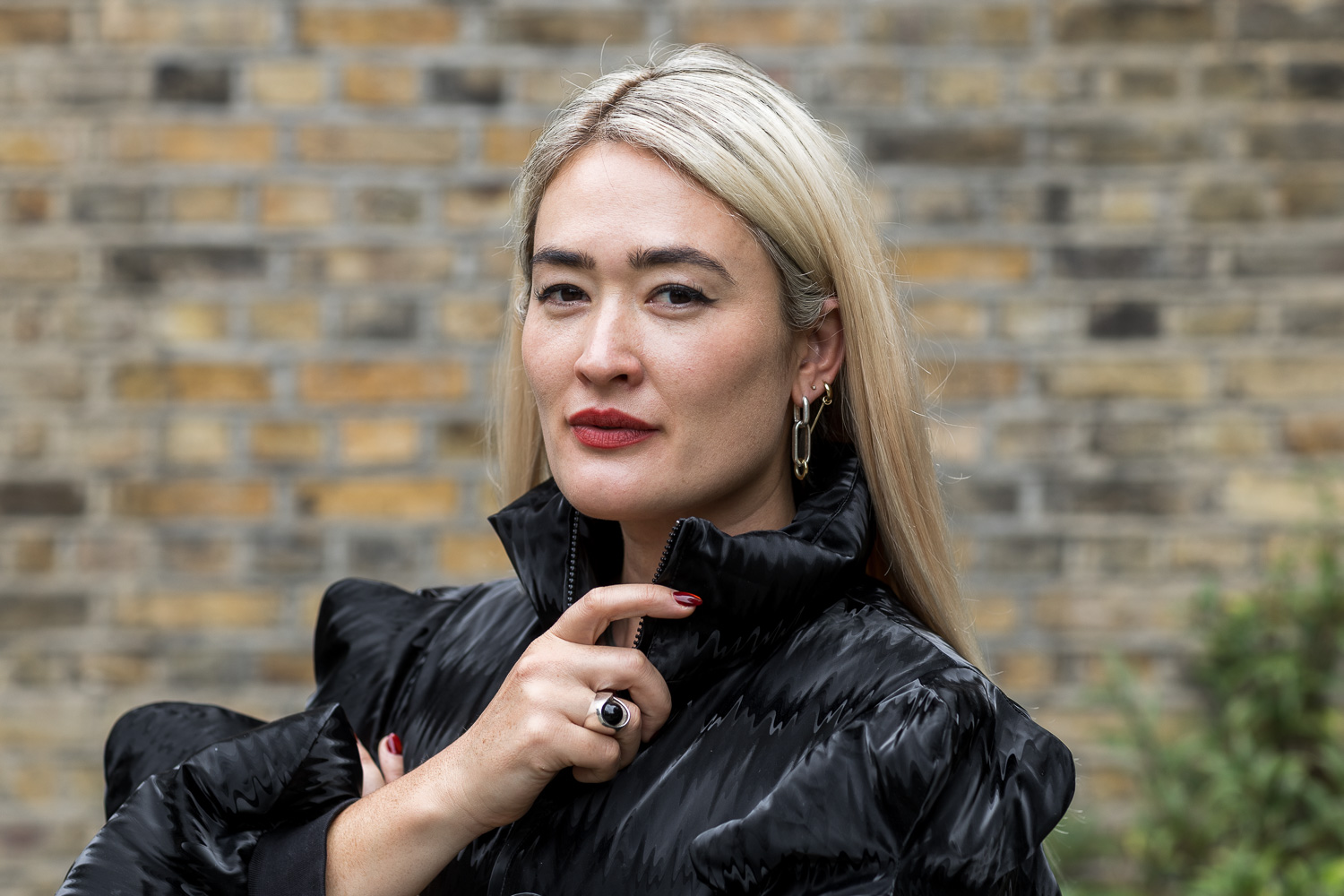
Born in the Netherlands and based in London, Makiko Harris is an interdisciplinary artist exploring feminism, identity, and desire through painting, sculpture, moving image, and sound. Merging symbolic forms and digital processes, her work questions intimacy, spectatorship, and corporeal knowledge.
Exhibitions include Lacquered Rebellion, Kristin Hjellegjerde Gallery, London, 2024, Confront and Constrain, Ames Yavuz Gallery, Singapore, 2024 and Textiles and the Female Nude, Villa Schöningen, Berlin, 2025. Makiko was selected for the Cass Art Prize 2025, Women in Art Prize 2025, Ingram Prize 2024, HIGH Prize 2023, Sasakawa Foundation grant 2022, and undertook residencies including Arts Connected 2025 and PADA 2024.
In 2025, Harris was named as one of the 26 artists selected for New Contemporaries. As chosen by artists Pio Abad, Louise Giovanelli and Grace Ndiritu, her work will be included in the upcoming New Contemporaries exhibition at South London Gallery, which will be on view from 30 January through 12 April. The show will then travel to MIMA, Middlesbrough, opening on 8 May.
1. What is your earliest memory of a work of art?
Hmm, I don't remember, but my earliest memory of making a work of art is painting on the walls at the Boston Children's Museum as a toddler. They have a huge room with floor-to-ceiling butcher paper and big jars of paint. I would go wild in there. That was my first sensation of creating with no limits.
2. Where do you turn to when you're in need of inspiration?
Getting out of my head is helpful, that usually means being out and about, seeing new things in adjacent fields like design, fashion, theatre, dance, and meeting new people. If that doesn't work, I need solitude in nature; I especially love the expanse of the desert.
3. What do you like to do when you need to take a break from your practice?
Lose myself to music and dance. Or lift at the gym.
4. Who is your favourite artist?
Impossible to say, that's like choosing a favourite child... but I am very much looking forward to Chiharu Shiota's exhibition at Hayward Gallery, which is opening next month. She is one of my absolute favourite artists.
5. What's the biggest crime an artist can commit?
Being dishonest with yourself.
6. Which gallery or museum should everyone try to visit at least once in their life?
Whichever one is in your backyard, local arts organisations need your support. Art is a part of the fabric of society, it is not a luxury, yet we see so many small institutions and organisations closing. Go visit that space down your block that you've never been to before and talk to them, make a new friend, see what creators in your own community think is interesting enough to make artwork about.
7. What is the worst thing about the art world?
People who treat it like a chessboard - always strategising, scheming, and angling to 'win' and get across the board as fast as possible, collecting the maximum amount of accolades and money. In reality, to me, it's about the stories and people you meet along the way. It's about the person you become on the journey.
8. Whose opinions on art do you actually care about?
Children, including my own child self. Would the 7-year-old me be proud and excited about what I'm making now?
9. What trend in art makes you roll your eyes?
Work that is so very cerebral that it nearly does not need to exist physically. For me, artmaking is an exchange with ideas, yes, but it's also about a physical engagement with material. If it's 100% cognitive and not somatic at all, I wonder why it needs to be an artwork, and I am also sceptical about the process by which the work was made. I believe somatic, body-based intelligence has so much to tell us, and an embodied (as opposed to cognitive) consciousness is usually the space from which creativity can flow.
10. Who are the last three musical artists you listened to?
Monkey Safari, Aname, and Emil Brandqvist Trio.
11. What's your favourite colour and why?
Vermilion red-orange. In ancient Japan, this colour was created by crushing beni flowers to make pigment used to paint temples and worn by geisha as lipstick. In the same era in the West, the shade was produced using mercury, rendering it toxic. The same colour carried radically different meanings depending on context. This has always felt true to me as a biracial person who has grown up internationally across cultures, how the surface of my body is read differently depending on where I am, how meaning shifts with proximity and history. Vermilion reminds me that identity, like colour, is slippery: never fixed, always contingent on who is looking.
12. What three items would you grab if your house was burning down?
My acoustic violin, my electric violin, and a fur coat.
13. Is there an artistic skill you wish you were better at?
Nearly everything, but I'd choose a detailed oil painting! I'd also love to do a residency in Japan someday and learn traditional crafts skills in lacquerware, ceramics, or woodworking.
13. What can you tell us about your piece in the New Contemporaries show at South London Gallery?
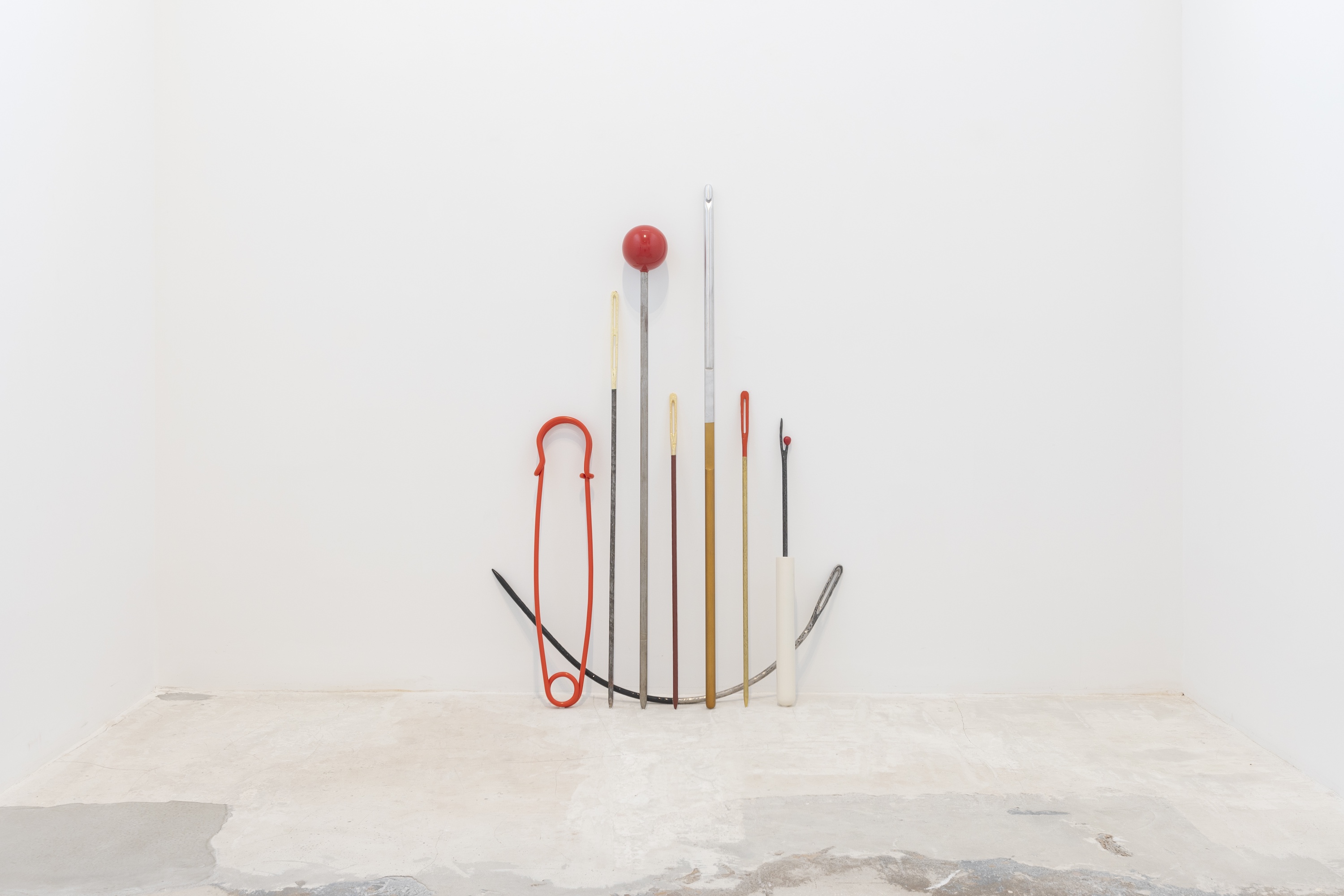
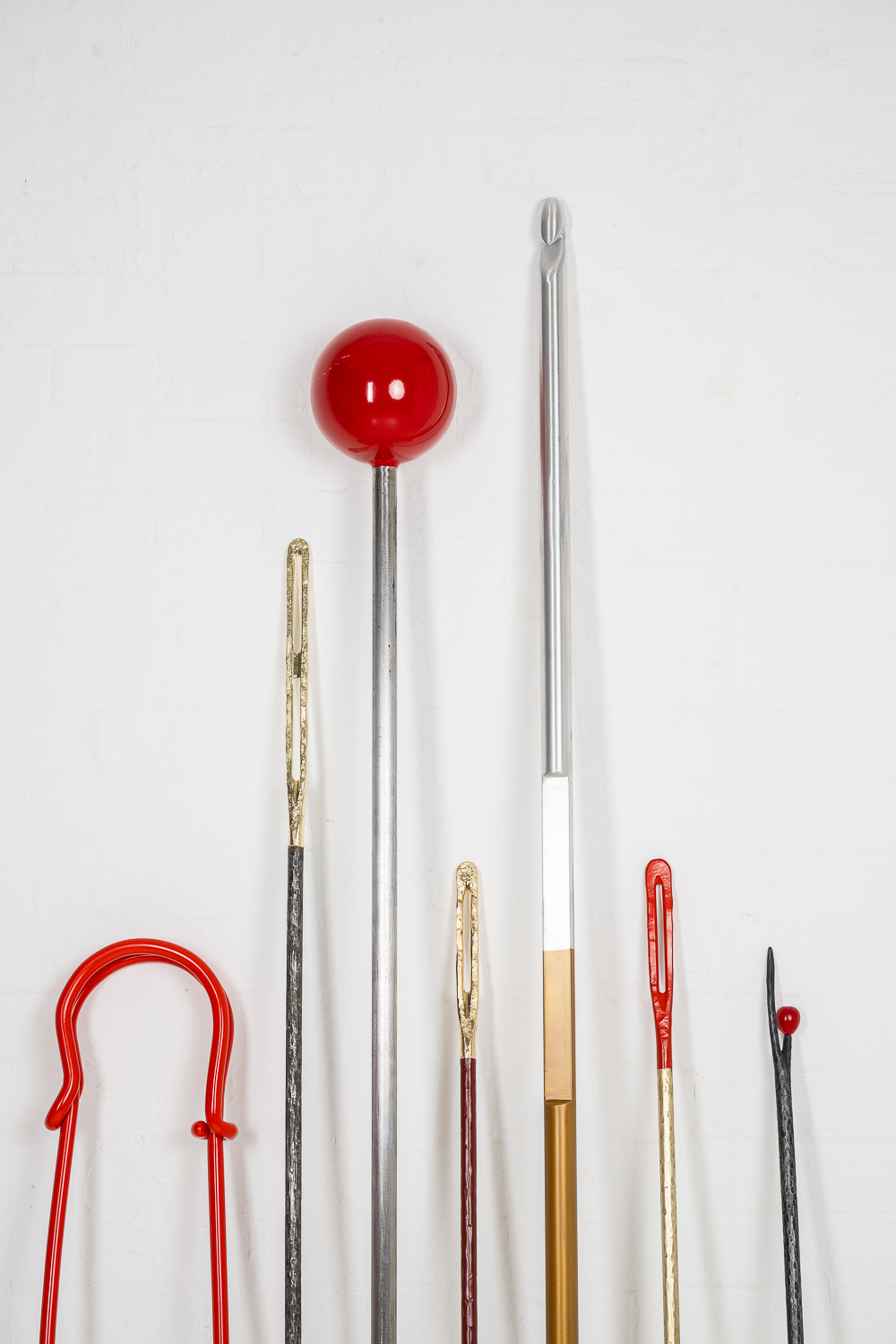
The sculpture installation ‘Sentinel’ is a continued exploration of my needle sculpture series. The works were originally inspired by memories of doing handicrafts with my grandmother in Japan. When she passed away a few years ago, I inherited her sewing box. The needles are a powerful symbol of repair, care, and love - as well as a tool in my grandmother's creative agency. Enlarging them to up to 2m tall, I anthropomorphise them, turning them into weaponlike tools but also watchful, bodily presences. Standing upright in the space, they function as sentinels, guardians on the viewer’s path and tools towards their relational and creative liberation.
14. What did it mean to you to be selected for New Contemporaries?
It has felt like a homecoming. I arrived in the UK in late 2021, and my first few years in London were rocky to say the least. To be selected by one of the most established organisations in contemporary art in the UK is a massive honour and has felt hard-won. Thank you!
15. What impression do you hope people get after seeing the piece?
I hope viewers feel connected to each other and empowered in their creative autonomy to forge their own path.


Welcome to 15 Questions With…, an interview series in which art writer Gary Grimes picks the brains of artists, curators and other creatives to understand what makes them tick through a series of quick-fire questions. This series aims to showcase the varying approaches creatives take to making art and how their relationships to the so-called art world differ, but also reveal what unifies those responsible for the art we love.
Born in the Netherlands and based in London, Makiko Harris is an interdisciplinary artist exploring feminism, identity, and desire through painting, sculpture, moving image, and sound. Merging symbolic forms and digital processes, her work questions intimacy, spectatorship, and corporeal knowledge.
Exhibitions include Lacquered Rebellion, Kristin Hjellegjerde Gallery, London, 2024, Confront and Constrain, Ames Yavuz Gallery, Singapore, 2024 and Textiles and the Female Nude, Villa Schöningen, Berlin, 2025. Makiko was selected for the Cass Art Prize 2025, Women in Art Prize 2025, Ingram Prize 2024, HIGH Prize 2023, Sasakawa Foundation grant 2022, and undertook residencies including Arts Connected 2025 and PADA 2024.
In 2025, Harris was named as one of the 26 artists selected for New Contemporaries. As chosen by artists Pio Abad, Louise Giovanelli and Grace Ndiritu, her work will be included in the upcoming New Contemporaries exhibition at South London Gallery, which will be on view from 30 January through 12 April. The show will then travel to MIMA, Middlesbrough, opening on 8 May.
1. What is your earliest memory of a work of art?
Hmm, I don't remember, but my earliest memory of making a work of art is painting on the walls at the Boston Children's Museum as a toddler. They have a huge room with floor-to-ceiling butcher paper and big jars of paint. I would go wild in there. That was my first sensation of creating with no limits.
2. Where do you turn to when you're in need of inspiration?
Getting out of my head is helpful, that usually means being out and about, seeing new things in adjacent fields like design, fashion, theatre, dance, and meeting new people. If that doesn't work, I need solitude in nature; I especially love the expanse of the desert.
3. What do you like to do when you need to take a break from your practice?
Lose myself to music and dance. Or lift at the gym.
4. Who is your favourite artist?
Impossible to say, that's like choosing a favourite child... but I am very much looking forward to Chiharu Shiota's exhibition at Hayward Gallery, which is opening next month. She is one of my absolute favourite artists.
5. What's the biggest crime an artist can commit?
Being dishonest with yourself.
6. Which gallery or museum should everyone try to visit at least once in their life?
Whichever one is in your backyard, local arts organisations need your support. Art is a part of the fabric of society, it is not a luxury, yet we see so many small institutions and organisations closing. Go visit that space down your block that you've never been to before and talk to them, make a new friend, see what creators in your own community think is interesting enough to make artwork about.
7. What is the worst thing about the art world?
People who treat it like a chessboard - always strategising, scheming, and angling to 'win' and get across the board as fast as possible, collecting the maximum amount of accolades and money. In reality, to me, it's about the stories and people you meet along the way. It's about the person you become on the journey.
8. Whose opinions on art do you actually care about?
Children, including my own child self. Would the 7-year-old me be proud and excited about what I'm making now?
9. What trend in art makes you roll your eyes?
Work that is so very cerebral that it nearly does not need to exist physically. For me, artmaking is an exchange with ideas, yes, but it's also about a physical engagement with material. If it's 100% cognitive and not somatic at all, I wonder why it needs to be an artwork, and I am also sceptical about the process by which the work was made. I believe somatic, body-based intelligence has so much to tell us, and an embodied (as opposed to cognitive) consciousness is usually the space from which creativity can flow.
10. Who are the last three musical artists you listened to?
Monkey Safari, Aname, and Emil Brandqvist Trio.
11. What's your favourite colour and why?
Vermilion red-orange. In ancient Japan, this colour was created by crushing beni flowers to make pigment used to paint temples and worn by geisha as lipstick. In the same era in the West, the shade was produced using mercury, rendering it toxic. The same colour carried radically different meanings depending on context. This has always felt true to me as a biracial person who has grown up internationally across cultures, how the surface of my body is read differently depending on where I am, how meaning shifts with proximity and history. Vermilion reminds me that identity, like colour, is slippery: never fixed, always contingent on who is looking.
12. What three items would you grab if your house was burning down?
My acoustic violin, my electric violin, and a fur coat.
13. Is there an artistic skill you wish you were better at?
Nearly everything, but I'd choose a detailed oil painting! I'd also love to do a residency in Japan someday and learn traditional crafts skills in lacquerware, ceramics, or woodworking.
13. What can you tell us about your piece in the New Contemporaries show at South London Gallery?
The sculpture installation ‘Sentinel’ is a continued exploration of my needle sculpture series. The works were originally inspired by memories of doing handicrafts with my grandmother in Japan. When she passed away a few years ago, I inherited her sewing box. The needles are a powerful symbol of repair, care, and love - as well as a tool in my grandmother's creative agency. Enlarging them to up to 2m tall, I anthropomorphise them, turning them into weaponlike tools but also watchful, bodily presences. Standing upright in the space, they function as sentinels, guardians on the viewer’s path and tools towards their relational and creative liberation.
14. What did it mean to you to be selected for New Contemporaries?
It has felt like a homecoming. I arrived in the UK in late 2021, and my first few years in London were rocky to say the least. To be selected by one of the most established organisations in contemporary art in the UK is a massive honour and has felt hard-won. Thank you!
15. What impression do you hope people get after seeing the piece?
I hope viewers feel connected to each other and empowered in their creative autonomy to forge their own path.
Welcome to 15 Questions With…, an interview series in which art writer Gary Grimes picks the brains of artists, curators and other creatives to understand what makes them tick through a series of quick-fire questions. This series aims to showcase the varying approaches creatives take to making art and how their relationships to the so-called art world differ, but also reveal what unifies those responsible for the art we love.
Born in the Netherlands and based in London, Makiko Harris is an interdisciplinary artist exploring feminism, identity, and desire through painting, sculpture, moving image, and sound. Merging symbolic forms and digital processes, her work questions intimacy, spectatorship, and corporeal knowledge.
Exhibitions include Lacquered Rebellion, Kristin Hjellegjerde Gallery, London, 2024, Confront and Constrain, Ames Yavuz Gallery, Singapore, 2024 and Textiles and the Female Nude, Villa Schöningen, Berlin, 2025. Makiko was selected for the Cass Art Prize 2025, Women in Art Prize 2025, Ingram Prize 2024, HIGH Prize 2023, Sasakawa Foundation grant 2022, and undertook residencies including Arts Connected 2025 and PADA 2024.
In 2025, Harris was named as one of the 26 artists selected for New Contemporaries. As chosen by artists Pio Abad, Louise Giovanelli and Grace Ndiritu, her work will be included in the upcoming New Contemporaries exhibition at South London Gallery, which will be on view from 30 January through 12 April. The show will then travel to MIMA, Middlesbrough, opening on 8 May.
1. What is your earliest memory of a work of art?
Hmm, I don't remember, but my earliest memory of making a work of art is painting on the walls at the Boston Children's Museum as a toddler. They have a huge room with floor-to-ceiling butcher paper and big jars of paint. I would go wild in there. That was my first sensation of creating with no limits.
2. Where do you turn to when you're in need of inspiration?
Getting out of my head is helpful, that usually means being out and about, seeing new things in adjacent fields like design, fashion, theatre, dance, and meeting new people. If that doesn't work, I need solitude in nature; I especially love the expanse of the desert.
3. What do you like to do when you need to take a break from your practice?
Lose myself to music and dance. Or lift at the gym.
4. Who is your favourite artist?
Impossible to say, that's like choosing a favourite child... but I am very much looking forward to Chiharu Shiota's exhibition at Hayward Gallery, which is opening next month. She is one of my absolute favourite artists.
5. What's the biggest crime an artist can commit?
Being dishonest with yourself.
6. Which gallery or museum should everyone try to visit at least once in their life?
Whichever one is in your backyard, local arts organisations need your support. Art is a part of the fabric of society, it is not a luxury, yet we see so many small institutions and organisations closing. Go visit that space down your block that you've never been to before and talk to them, make a new friend, see what creators in your own community think is interesting enough to make artwork about.
7. What is the worst thing about the art world?
People who treat it like a chessboard - always strategising, scheming, and angling to 'win' and get across the board as fast as possible, collecting the maximum amount of accolades and money. In reality, to me, it's about the stories and people you meet along the way. It's about the person you become on the journey.
8. Whose opinions on art do you actually care about?
Children, including my own child self. Would the 7-year-old me be proud and excited about what I'm making now?
9. What trend in art makes you roll your eyes?
Work that is so very cerebral that it nearly does not need to exist physically. For me, artmaking is an exchange with ideas, yes, but it's also about a physical engagement with material. If it's 100% cognitive and not somatic at all, I wonder why it needs to be an artwork, and I am also sceptical about the process by which the work was made. I believe somatic, body-based intelligence has so much to tell us, and an embodied (as opposed to cognitive) consciousness is usually the space from which creativity can flow.
10. Who are the last three musical artists you listened to?
Monkey Safari, Aname, and Emil Brandqvist Trio.
11. What's your favourite colour and why?
Vermilion red-orange. In ancient Japan, this colour was created by crushing beni flowers to make pigment used to paint temples and worn by geisha as lipstick. In the same era in the West, the shade was produced using mercury, rendering it toxic. The same colour carried radically different meanings depending on context. This has always felt true to me as a biracial person who has grown up internationally across cultures, how the surface of my body is read differently depending on where I am, how meaning shifts with proximity and history. Vermilion reminds me that identity, like colour, is slippery: never fixed, always contingent on who is looking.
12. What three items would you grab if your house was burning down?
My acoustic violin, my electric violin, and a fur coat.
13. Is there an artistic skill you wish you were better at?
Nearly everything, but I'd choose a detailed oil painting! I'd also love to do a residency in Japan someday and learn traditional crafts skills in lacquerware, ceramics, or woodworking.
13. What can you tell us about your piece in the New Contemporaries show at South London Gallery?
The sculpture installation ‘Sentinel’ is a continued exploration of my needle sculpture series. The works were originally inspired by memories of doing handicrafts with my grandmother in Japan. When she passed away a few years ago, I inherited her sewing box. The needles are a powerful symbol of repair, care, and love - as well as a tool in my grandmother's creative agency. Enlarging them to up to 2m tall, I anthropomorphise them, turning them into weaponlike tools but also watchful, bodily presences. Standing upright in the space, they function as sentinels, guardians on the viewer’s path and tools towards their relational and creative liberation.
14. What did it mean to you to be selected for New Contemporaries?
It has felt like a homecoming. I arrived in the UK in late 2021, and my first few years in London were rocky to say the least. To be selected by one of the most established organisations in contemporary art in the UK is a massive honour and has felt hard-won. Thank you!
15. What impression do you hope people get after seeing the piece?
I hope viewers feel connected to each other and empowered in their creative autonomy to forge their own path.
Welcome to 15 Questions With…, an interview series in which art writer Gary Grimes picks the brains of artists, curators and other creatives to understand what makes them tick through a series of quick-fire questions. This series aims to showcase the varying approaches creatives take to making art and how their relationships to the so-called art world differ, but also reveal what unifies those responsible for the art we love.
Born in the Netherlands and based in London, Makiko Harris is an interdisciplinary artist exploring feminism, identity, and desire through painting, sculpture, moving image, and sound. Merging symbolic forms and digital processes, her work questions intimacy, spectatorship, and corporeal knowledge.
Exhibitions include Lacquered Rebellion, Kristin Hjellegjerde Gallery, London, 2024, Confront and Constrain, Ames Yavuz Gallery, Singapore, 2024 and Textiles and the Female Nude, Villa Schöningen, Berlin, 2025. Makiko was selected for the Cass Art Prize 2025, Women in Art Prize 2025, Ingram Prize 2024, HIGH Prize 2023, Sasakawa Foundation grant 2022, and undertook residencies including Arts Connected 2025 and PADA 2024.
In 2025, Harris was named as one of the 26 artists selected for New Contemporaries. As chosen by artists Pio Abad, Louise Giovanelli and Grace Ndiritu, her work will be included in the upcoming New Contemporaries exhibition at South London Gallery, which will be on view from 30 January through 12 April. The show will then travel to MIMA, Middlesbrough, opening on 8 May.
1. What is your earliest memory of a work of art?
Hmm, I don't remember, but my earliest memory of making a work of art is painting on the walls at the Boston Children's Museum as a toddler. They have a huge room with floor-to-ceiling butcher paper and big jars of paint. I would go wild in there. That was my first sensation of creating with no limits.
2. Where do you turn to when you're in need of inspiration?
Getting out of my head is helpful, that usually means being out and about, seeing new things in adjacent fields like design, fashion, theatre, dance, and meeting new people. If that doesn't work, I need solitude in nature; I especially love the expanse of the desert.
3. What do you like to do when you need to take a break from your practice?
Lose myself to music and dance. Or lift at the gym.
4. Who is your favourite artist?
Impossible to say, that's like choosing a favourite child... but I am very much looking forward to Chiharu Shiota's exhibition at Hayward Gallery, which is opening next month. She is one of my absolute favourite artists.
5. What's the biggest crime an artist can commit?
Being dishonest with yourself.
6. Which gallery or museum should everyone try to visit at least once in their life?
Whichever one is in your backyard, local arts organisations need your support. Art is a part of the fabric of society, it is not a luxury, yet we see so many small institutions and organisations closing. Go visit that space down your block that you've never been to before and talk to them, make a new friend, see what creators in your own community think is interesting enough to make artwork about.
7. What is the worst thing about the art world?
People who treat it like a chessboard - always strategising, scheming, and angling to 'win' and get across the board as fast as possible, collecting the maximum amount of accolades and money. In reality, to me, it's about the stories and people you meet along the way. It's about the person you become on the journey.
8. Whose opinions on art do you actually care about?
Children, including my own child self. Would the 7-year-old me be proud and excited about what I'm making now?
9. What trend in art makes you roll your eyes?
Work that is so very cerebral that it nearly does not need to exist physically. For me, artmaking is an exchange with ideas, yes, but it's also about a physical engagement with material. If it's 100% cognitive and not somatic at all, I wonder why it needs to be an artwork, and I am also sceptical about the process by which the work was made. I believe somatic, body-based intelligence has so much to tell us, and an embodied (as opposed to cognitive) consciousness is usually the space from which creativity can flow.
10. Who are the last three musical artists you listened to?
Monkey Safari, Aname, and Emil Brandqvist Trio.
11. What's your favourite colour and why?
Vermilion red-orange. In ancient Japan, this colour was created by crushing beni flowers to make pigment used to paint temples and worn by geisha as lipstick. In the same era in the West, the shade was produced using mercury, rendering it toxic. The same colour carried radically different meanings depending on context. This has always felt true to me as a biracial person who has grown up internationally across cultures, how the surface of my body is read differently depending on where I am, how meaning shifts with proximity and history. Vermilion reminds me that identity, like colour, is slippery: never fixed, always contingent on who is looking.
12. What three items would you grab if your house was burning down?
My acoustic violin, my electric violin, and a fur coat.
13. Is there an artistic skill you wish you were better at?
Nearly everything, but I'd choose a detailed oil painting! I'd also love to do a residency in Japan someday and learn traditional crafts skills in lacquerware, ceramics, or woodworking.
13. What can you tell us about your piece in the New Contemporaries show at South London Gallery?
The sculpture installation ‘Sentinel’ is a continued exploration of my needle sculpture series. The works were originally inspired by memories of doing handicrafts with my grandmother in Japan. When she passed away a few years ago, I inherited her sewing box. The needles are a powerful symbol of repair, care, and love - as well as a tool in my grandmother's creative agency. Enlarging them to up to 2m tall, I anthropomorphise them, turning them into weaponlike tools but also watchful, bodily presences. Standing upright in the space, they function as sentinels, guardians on the viewer’s path and tools towards their relational and creative liberation.
14. What did it mean to you to be selected for New Contemporaries?
It has felt like a homecoming. I arrived in the UK in late 2021, and my first few years in London were rocky to say the least. To be selected by one of the most established organisations in contemporary art in the UK is a massive honour and has felt hard-won. Thank you!
15. What impression do you hope people get after seeing the piece?
I hope viewers feel connected to each other and empowered in their creative autonomy to forge their own path.
Welcome to 15 Questions With…, an interview series in which art writer Gary Grimes picks the brains of artists, curators and other creatives to understand what makes them tick through a series of quick-fire questions. This series aims to showcase the varying approaches creatives take to making art and how their relationships to the so-called art world differ, but also reveal what unifies those responsible for the art we love.
Born in the Netherlands and based in London, Makiko Harris is an interdisciplinary artist exploring feminism, identity, and desire through painting, sculpture, moving image, and sound. Merging symbolic forms and digital processes, her work questions intimacy, spectatorship, and corporeal knowledge.
Exhibitions include Lacquered Rebellion, Kristin Hjellegjerde Gallery, London, 2024, Confront and Constrain, Ames Yavuz Gallery, Singapore, 2024 and Textiles and the Female Nude, Villa Schöningen, Berlin, 2025. Makiko was selected for the Cass Art Prize 2025, Women in Art Prize 2025, Ingram Prize 2024, HIGH Prize 2023, Sasakawa Foundation grant 2022, and undertook residencies including Arts Connected 2025 and PADA 2024.
In 2025, Harris was named as one of the 26 artists selected for New Contemporaries. As chosen by artists Pio Abad, Louise Giovanelli and Grace Ndiritu, her work will be included in the upcoming New Contemporaries exhibition at South London Gallery, which will be on view from 30 January through 12 April. The show will then travel to MIMA, Middlesbrough, opening on 8 May.
1. What is your earliest memory of a work of art?
Hmm, I don't remember, but my earliest memory of making a work of art is painting on the walls at the Boston Children's Museum as a toddler. They have a huge room with floor-to-ceiling butcher paper and big jars of paint. I would go wild in there. That was my first sensation of creating with no limits.
2. Where do you turn to when you're in need of inspiration?
Getting out of my head is helpful, that usually means being out and about, seeing new things in adjacent fields like design, fashion, theatre, dance, and meeting new people. If that doesn't work, I need solitude in nature; I especially love the expanse of the desert.
3. What do you like to do when you need to take a break from your practice?
Lose myself to music and dance. Or lift at the gym.
4. Who is your favourite artist?
Impossible to say, that's like choosing a favourite child... but I am very much looking forward to Chiharu Shiota's exhibition at Hayward Gallery, which is opening next month. She is one of my absolute favourite artists.
5. What's the biggest crime an artist can commit?
Being dishonest with yourself.
6. Which gallery or museum should everyone try to visit at least once in their life?
Whichever one is in your backyard, local arts organisations need your support. Art is a part of the fabric of society, it is not a luxury, yet we see so many small institutions and organisations closing. Go visit that space down your block that you've never been to before and talk to them, make a new friend, see what creators in your own community think is interesting enough to make artwork about.
7. What is the worst thing about the art world?
People who treat it like a chessboard - always strategising, scheming, and angling to 'win' and get across the board as fast as possible, collecting the maximum amount of accolades and money. In reality, to me, it's about the stories and people you meet along the way. It's about the person you become on the journey.
8. Whose opinions on art do you actually care about?
Children, including my own child self. Would the 7-year-old me be proud and excited about what I'm making now?
9. What trend in art makes you roll your eyes?
Work that is so very cerebral that it nearly does not need to exist physically. For me, artmaking is an exchange with ideas, yes, but it's also about a physical engagement with material. If it's 100% cognitive and not somatic at all, I wonder why it needs to be an artwork, and I am also sceptical about the process by which the work was made. I believe somatic, body-based intelligence has so much to tell us, and an embodied (as opposed to cognitive) consciousness is usually the space from which creativity can flow.
10. Who are the last three musical artists you listened to?
Monkey Safari, Aname, and Emil Brandqvist Trio.
11. What's your favourite colour and why?
Vermilion red-orange. In ancient Japan, this colour was created by crushing beni flowers to make pigment used to paint temples and worn by geisha as lipstick. In the same era in the West, the shade was produced using mercury, rendering it toxic. The same colour carried radically different meanings depending on context. This has always felt true to me as a biracial person who has grown up internationally across cultures, how the surface of my body is read differently depending on where I am, how meaning shifts with proximity and history. Vermilion reminds me that identity, like colour, is slippery: never fixed, always contingent on who is looking.
12. What three items would you grab if your house was burning down?
My acoustic violin, my electric violin, and a fur coat.
13. Is there an artistic skill you wish you were better at?
Nearly everything, but I'd choose a detailed oil painting! I'd also love to do a residency in Japan someday and learn traditional crafts skills in lacquerware, ceramics, or woodworking.
13. What can you tell us about your piece in the New Contemporaries show at South London Gallery?
The sculpture installation ‘Sentinel’ is a continued exploration of my needle sculpture series. The works were originally inspired by memories of doing handicrafts with my grandmother in Japan. When she passed away a few years ago, I inherited her sewing box. The needles are a powerful symbol of repair, care, and love - as well as a tool in my grandmother's creative agency. Enlarging them to up to 2m tall, I anthropomorphise them, turning them into weaponlike tools but also watchful, bodily presences. Standing upright in the space, they function as sentinels, guardians on the viewer’s path and tools towards their relational and creative liberation.
14. What did it mean to you to be selected for New Contemporaries?
It has felt like a homecoming. I arrived in the UK in late 2021, and my first few years in London were rocky to say the least. To be selected by one of the most established organisations in contemporary art in the UK is a massive honour and has felt hard-won. Thank you!
15. What impression do you hope people get after seeing the piece?
I hope viewers feel connected to each other and empowered in their creative autonomy to forge their own path.
Welcome to 15 Questions With…, an interview series in which art writer Gary Grimes picks the brains of artists, curators and other creatives to understand what makes them tick through a series of quick-fire questions. This series aims to showcase the varying approaches creatives take to making art and how their relationships to the so-called art world differ, but also reveal what unifies those responsible for the art we love.
Born in the Netherlands and based in London, Makiko Harris is an interdisciplinary artist exploring feminism, identity, and desire through painting, sculpture, moving image, and sound. Merging symbolic forms and digital processes, her work questions intimacy, spectatorship, and corporeal knowledge.
Exhibitions include Lacquered Rebellion, Kristin Hjellegjerde Gallery, London, 2024, Confront and Constrain, Ames Yavuz Gallery, Singapore, 2024 and Textiles and the Female Nude, Villa Schöningen, Berlin, 2025. Makiko was selected for the Cass Art Prize 2025, Women in Art Prize 2025, Ingram Prize 2024, HIGH Prize 2023, Sasakawa Foundation grant 2022, and undertook residencies including Arts Connected 2025 and PADA 2024.
In 2025, Harris was named as one of the 26 artists selected for New Contemporaries. As chosen by artists Pio Abad, Louise Giovanelli and Grace Ndiritu, her work will be included in the upcoming New Contemporaries exhibition at South London Gallery, which will be on view from 30 January through 12 April. The show will then travel to MIMA, Middlesbrough, opening on 8 May.
1. What is your earliest memory of a work of art?
Hmm, I don't remember, but my earliest memory of making a work of art is painting on the walls at the Boston Children's Museum as a toddler. They have a huge room with floor-to-ceiling butcher paper and big jars of paint. I would go wild in there. That was my first sensation of creating with no limits.
2. Where do you turn to when you're in need of inspiration?
Getting out of my head is helpful, that usually means being out and about, seeing new things in adjacent fields like design, fashion, theatre, dance, and meeting new people. If that doesn't work, I need solitude in nature; I especially love the expanse of the desert.
3. What do you like to do when you need to take a break from your practice?
Lose myself to music and dance. Or lift at the gym.
4. Who is your favourite artist?
Impossible to say, that's like choosing a favourite child... but I am very much looking forward to Chiharu Shiota's exhibition at Hayward Gallery, which is opening next month. She is one of my absolute favourite artists.
5. What's the biggest crime an artist can commit?
Being dishonest with yourself.
6. Which gallery or museum should everyone try to visit at least once in their life?
Whichever one is in your backyard, local arts organisations need your support. Art is a part of the fabric of society, it is not a luxury, yet we see so many small institutions and organisations closing. Go visit that space down your block that you've never been to before and talk to them, make a new friend, see what creators in your own community think is interesting enough to make artwork about.
7. What is the worst thing about the art world?
People who treat it like a chessboard - always strategising, scheming, and angling to 'win' and get across the board as fast as possible, collecting the maximum amount of accolades and money. In reality, to me, it's about the stories and people you meet along the way. It's about the person you become on the journey.
8. Whose opinions on art do you actually care about?
Children, including my own child self. Would the 7-year-old me be proud and excited about what I'm making now?
9. What trend in art makes you roll your eyes?
Work that is so very cerebral that it nearly does not need to exist physically. For me, artmaking is an exchange with ideas, yes, but it's also about a physical engagement with material. If it's 100% cognitive and not somatic at all, I wonder why it needs to be an artwork, and I am also sceptical about the process by which the work was made. I believe somatic, body-based intelligence has so much to tell us, and an embodied (as opposed to cognitive) consciousness is usually the space from which creativity can flow.
10. Who are the last three musical artists you listened to?
Monkey Safari, Aname, and Emil Brandqvist Trio.
11. What's your favourite colour and why?
Vermilion red-orange. In ancient Japan, this colour was created by crushing beni flowers to make pigment used to paint temples and worn by geisha as lipstick. In the same era in the West, the shade was produced using mercury, rendering it toxic. The same colour carried radically different meanings depending on context. This has always felt true to me as a biracial person who has grown up internationally across cultures, how the surface of my body is read differently depending on where I am, how meaning shifts with proximity and history. Vermilion reminds me that identity, like colour, is slippery: never fixed, always contingent on who is looking.
12. What three items would you grab if your house was burning down?
My acoustic violin, my electric violin, and a fur coat.
13. Is there an artistic skill you wish you were better at?
Nearly everything, but I'd choose a detailed oil painting! I'd also love to do a residency in Japan someday and learn traditional crafts skills in lacquerware, ceramics, or woodworking.
13. What can you tell us about your piece in the New Contemporaries show at South London Gallery?
The sculpture installation ‘Sentinel’ is a continued exploration of my needle sculpture series. The works were originally inspired by memories of doing handicrafts with my grandmother in Japan. When she passed away a few years ago, I inherited her sewing box. The needles are a powerful symbol of repair, care, and love - as well as a tool in my grandmother's creative agency. Enlarging them to up to 2m tall, I anthropomorphise them, turning them into weaponlike tools but also watchful, bodily presences. Standing upright in the space, they function as sentinels, guardians on the viewer’s path and tools towards their relational and creative liberation.
14. What did it mean to you to be selected for New Contemporaries?
It has felt like a homecoming. I arrived in the UK in late 2021, and my first few years in London were rocky to say the least. To be selected by one of the most established organisations in contemporary art in the UK is a massive honour and has felt hard-won. Thank you!
15. What impression do you hope people get after seeing the piece?
I hope viewers feel connected to each other and empowered in their creative autonomy to forge their own path.
Welcome to 15 Questions With…, an interview series in which art writer Gary Grimes picks the brains of artists, curators and other creatives to understand what makes them tick through a series of quick-fire questions. This series aims to showcase the varying approaches creatives take to making art and how their relationships to the so-called art world differ, but also reveal what unifies those responsible for the art we love.
Born in the Netherlands and based in London, Makiko Harris is an interdisciplinary artist exploring feminism, identity, and desire through painting, sculpture, moving image, and sound. Merging symbolic forms and digital processes, her work questions intimacy, spectatorship, and corporeal knowledge.
Exhibitions include Lacquered Rebellion, Kristin Hjellegjerde Gallery, London, 2024, Confront and Constrain, Ames Yavuz Gallery, Singapore, 2024 and Textiles and the Female Nude, Villa Schöningen, Berlin, 2025. Makiko was selected for the Cass Art Prize 2025, Women in Art Prize 2025, Ingram Prize 2024, HIGH Prize 2023, Sasakawa Foundation grant 2022, and undertook residencies including Arts Connected 2025 and PADA 2024.
In 2025, Harris was named as one of the 26 artists selected for New Contemporaries. As chosen by artists Pio Abad, Louise Giovanelli and Grace Ndiritu, her work will be included in the upcoming New Contemporaries exhibition at South London Gallery, which will be on view from 30 January through 12 April. The show will then travel to MIMA, Middlesbrough, opening on 8 May.
1. What is your earliest memory of a work of art?
Hmm, I don't remember, but my earliest memory of making a work of art is painting on the walls at the Boston Children's Museum as a toddler. They have a huge room with floor-to-ceiling butcher paper and big jars of paint. I would go wild in there. That was my first sensation of creating with no limits.
2. Where do you turn to when you're in need of inspiration?
Getting out of my head is helpful, that usually means being out and about, seeing new things in adjacent fields like design, fashion, theatre, dance, and meeting new people. If that doesn't work, I need solitude in nature; I especially love the expanse of the desert.
3. What do you like to do when you need to take a break from your practice?
Lose myself to music and dance. Or lift at the gym.
4. Who is your favourite artist?
Impossible to say, that's like choosing a favourite child... but I am very much looking forward to Chiharu Shiota's exhibition at Hayward Gallery, which is opening next month. She is one of my absolute favourite artists.
5. What's the biggest crime an artist can commit?
Being dishonest with yourself.
6. Which gallery or museum should everyone try to visit at least once in their life?
Whichever one is in your backyard, local arts organisations need your support. Art is a part of the fabric of society, it is not a luxury, yet we see so many small institutions and organisations closing. Go visit that space down your block that you've never been to before and talk to them, make a new friend, see what creators in your own community think is interesting enough to make artwork about.
7. What is the worst thing about the art world?
People who treat it like a chessboard - always strategising, scheming, and angling to 'win' and get across the board as fast as possible, collecting the maximum amount of accolades and money. In reality, to me, it's about the stories and people you meet along the way. It's about the person you become on the journey.
8. Whose opinions on art do you actually care about?
Children, including my own child self. Would the 7-year-old me be proud and excited about what I'm making now?
9. What trend in art makes you roll your eyes?
Work that is so very cerebral that it nearly does not need to exist physically. For me, artmaking is an exchange with ideas, yes, but it's also about a physical engagement with material. If it's 100% cognitive and not somatic at all, I wonder why it needs to be an artwork, and I am also sceptical about the process by which the work was made. I believe somatic, body-based intelligence has so much to tell us, and an embodied (as opposed to cognitive) consciousness is usually the space from which creativity can flow.
10. Who are the last three musical artists you listened to?
Monkey Safari, Aname, and Emil Brandqvist Trio.
11. What's your favourite colour and why?
Vermilion red-orange. In ancient Japan, this colour was created by crushing beni flowers to make pigment used to paint temples and worn by geisha as lipstick. In the same era in the West, the shade was produced using mercury, rendering it toxic. The same colour carried radically different meanings depending on context. This has always felt true to me as a biracial person who has grown up internationally across cultures, how the surface of my body is read differently depending on where I am, how meaning shifts with proximity and history. Vermilion reminds me that identity, like colour, is slippery: never fixed, always contingent on who is looking.
12. What three items would you grab if your house was burning down?
My acoustic violin, my electric violin, and a fur coat.
13. Is there an artistic skill you wish you were better at?
Nearly everything, but I'd choose a detailed oil painting! I'd also love to do a residency in Japan someday and learn traditional crafts skills in lacquerware, ceramics, or woodworking.
13. What can you tell us about your piece in the New Contemporaries show at South London Gallery?
The sculpture installation ‘Sentinel’ is a continued exploration of my needle sculpture series. The works were originally inspired by memories of doing handicrafts with my grandmother in Japan. When she passed away a few years ago, I inherited her sewing box. The needles are a powerful symbol of repair, care, and love - as well as a tool in my grandmother's creative agency. Enlarging them to up to 2m tall, I anthropomorphise them, turning them into weaponlike tools but also watchful, bodily presences. Standing upright in the space, they function as sentinels, guardians on the viewer’s path and tools towards their relational and creative liberation.
14. What did it mean to you to be selected for New Contemporaries?
It has felt like a homecoming. I arrived in the UK in late 2021, and my first few years in London were rocky to say the least. To be selected by one of the most established organisations in contemporary art in the UK is a massive honour and has felt hard-won. Thank you!
15. What impression do you hope people get after seeing the piece?
I hope viewers feel connected to each other and empowered in their creative autonomy to forge their own path.
Welcome to 15 Questions With…, an interview series in which art writer Gary Grimes picks the brains of artists, curators and other creatives to understand what makes them tick through a series of quick-fire questions. This series aims to showcase the varying approaches creatives take to making art and how their relationships to the so-called art world differ, but also reveal what unifies those responsible for the art we love.
Born in the Netherlands and based in London, Makiko Harris is an interdisciplinary artist exploring feminism, identity, and desire through painting, sculpture, moving image, and sound. Merging symbolic forms and digital processes, her work questions intimacy, spectatorship, and corporeal knowledge.
Exhibitions include Lacquered Rebellion, Kristin Hjellegjerde Gallery, London, 2024, Confront and Constrain, Ames Yavuz Gallery, Singapore, 2024 and Textiles and the Female Nude, Villa Schöningen, Berlin, 2025. Makiko was selected for the Cass Art Prize 2025, Women in Art Prize 2025, Ingram Prize 2024, HIGH Prize 2023, Sasakawa Foundation grant 2022, and undertook residencies including Arts Connected 2025 and PADA 2024.
In 2025, Harris was named as one of the 26 artists selected for New Contemporaries. As chosen by artists Pio Abad, Louise Giovanelli and Grace Ndiritu, her work will be included in the upcoming New Contemporaries exhibition at South London Gallery, which will be on view from 30 January through 12 April. The show will then travel to MIMA, Middlesbrough, opening on 8 May.
1. What is your earliest memory of a work of art?
Hmm, I don't remember, but my earliest memory of making a work of art is painting on the walls at the Boston Children's Museum as a toddler. They have a huge room with floor-to-ceiling butcher paper and big jars of paint. I would go wild in there. That was my first sensation of creating with no limits.
2. Where do you turn to when you're in need of inspiration?
Getting out of my head is helpful, that usually means being out and about, seeing new things in adjacent fields like design, fashion, theatre, dance, and meeting new people. If that doesn't work, I need solitude in nature; I especially love the expanse of the desert.
3. What do you like to do when you need to take a break from your practice?
Lose myself to music and dance. Or lift at the gym.
4. Who is your favourite artist?
Impossible to say, that's like choosing a favourite child... but I am very much looking forward to Chiharu Shiota's exhibition at Hayward Gallery, which is opening next month. She is one of my absolute favourite artists.
5. What's the biggest crime an artist can commit?
Being dishonest with yourself.
6. Which gallery or museum should everyone try to visit at least once in their life?
Whichever one is in your backyard, local arts organisations need your support. Art is a part of the fabric of society, it is not a luxury, yet we see so many small institutions and organisations closing. Go visit that space down your block that you've never been to before and talk to them, make a new friend, see what creators in your own community think is interesting enough to make artwork about.
7. What is the worst thing about the art world?
People who treat it like a chessboard - always strategising, scheming, and angling to 'win' and get across the board as fast as possible, collecting the maximum amount of accolades and money. In reality, to me, it's about the stories and people you meet along the way. It's about the person you become on the journey.
8. Whose opinions on art do you actually care about?
Children, including my own child self. Would the 7-year-old me be proud and excited about what I'm making now?
9. What trend in art makes you roll your eyes?
Work that is so very cerebral that it nearly does not need to exist physically. For me, artmaking is an exchange with ideas, yes, but it's also about a physical engagement with material. If it's 100% cognitive and not somatic at all, I wonder why it needs to be an artwork, and I am also sceptical about the process by which the work was made. I believe somatic, body-based intelligence has so much to tell us, and an embodied (as opposed to cognitive) consciousness is usually the space from which creativity can flow.
10. Who are the last three musical artists you listened to?
Monkey Safari, Aname, and Emil Brandqvist Trio.
11. What's your favourite colour and why?
Vermilion red-orange. In ancient Japan, this colour was created by crushing beni flowers to make pigment used to paint temples and worn by geisha as lipstick. In the same era in the West, the shade was produced using mercury, rendering it toxic. The same colour carried radically different meanings depending on context. This has always felt true to me as a biracial person who has grown up internationally across cultures, how the surface of my body is read differently depending on where I am, how meaning shifts with proximity and history. Vermilion reminds me that identity, like colour, is slippery: never fixed, always contingent on who is looking.
12. What three items would you grab if your house was burning down?
My acoustic violin, my electric violin, and a fur coat.
13. Is there an artistic skill you wish you were better at?
Nearly everything, but I'd choose a detailed oil painting! I'd also love to do a residency in Japan someday and learn traditional crafts skills in lacquerware, ceramics, or woodworking.
13. What can you tell us about your piece in the New Contemporaries show at South London Gallery?
The sculpture installation ‘Sentinel’ is a continued exploration of my needle sculpture series. The works were originally inspired by memories of doing handicrafts with my grandmother in Japan. When she passed away a few years ago, I inherited her sewing box. The needles are a powerful symbol of repair, care, and love - as well as a tool in my grandmother's creative agency. Enlarging them to up to 2m tall, I anthropomorphise them, turning them into weaponlike tools but also watchful, bodily presences. Standing upright in the space, they function as sentinels, guardians on the viewer’s path and tools towards their relational and creative liberation.
14. What did it mean to you to be selected for New Contemporaries?
It has felt like a homecoming. I arrived in the UK in late 2021, and my first few years in London were rocky to say the least. To be selected by one of the most established organisations in contemporary art in the UK is a massive honour and has felt hard-won. Thank you!
15. What impression do you hope people get after seeing the piece?
I hope viewers feel connected to each other and empowered in their creative autonomy to forge their own path.
Welcome to 15 Questions With…, an interview series in which art writer Gary Grimes picks the brains of artists, curators and other creatives to understand what makes them tick through a series of quick-fire questions. This series aims to showcase the varying approaches creatives take to making art and how their relationships to the so-called art world differ, but also reveal what unifies those responsible for the art we love.
Born in the Netherlands and based in London, Makiko Harris is an interdisciplinary artist exploring feminism, identity, and desire through painting, sculpture, moving image, and sound. Merging symbolic forms and digital processes, her work questions intimacy, spectatorship, and corporeal knowledge.
Exhibitions include Lacquered Rebellion, Kristin Hjellegjerde Gallery, London, 2024, Confront and Constrain, Ames Yavuz Gallery, Singapore, 2024 and Textiles and the Female Nude, Villa Schöningen, Berlin, 2025. Makiko was selected for the Cass Art Prize 2025, Women in Art Prize 2025, Ingram Prize 2024, HIGH Prize 2023, Sasakawa Foundation grant 2022, and undertook residencies including Arts Connected 2025 and PADA 2024.
In 2025, Harris was named as one of the 26 artists selected for New Contemporaries. As chosen by artists Pio Abad, Louise Giovanelli and Grace Ndiritu, her work will be included in the upcoming New Contemporaries exhibition at South London Gallery, which will be on view from 30 January through 12 April. The show will then travel to MIMA, Middlesbrough, opening on 8 May.
1. What is your earliest memory of a work of art?
Hmm, I don't remember, but my earliest memory of making a work of art is painting on the walls at the Boston Children's Museum as a toddler. They have a huge room with floor-to-ceiling butcher paper and big jars of paint. I would go wild in there. That was my first sensation of creating with no limits.
2. Where do you turn to when you're in need of inspiration?
Getting out of my head is helpful, that usually means being out and about, seeing new things in adjacent fields like design, fashion, theatre, dance, and meeting new people. If that doesn't work, I need solitude in nature; I especially love the expanse of the desert.
3. What do you like to do when you need to take a break from your practice?
Lose myself to music and dance. Or lift at the gym.
4. Who is your favourite artist?
Impossible to say, that's like choosing a favourite child... but I am very much looking forward to Chiharu Shiota's exhibition at Hayward Gallery, which is opening next month. She is one of my absolute favourite artists.
5. What's the biggest crime an artist can commit?
Being dishonest with yourself.
6. Which gallery or museum should everyone try to visit at least once in their life?
Whichever one is in your backyard, local arts organisations need your support. Art is a part of the fabric of society, it is not a luxury, yet we see so many small institutions and organisations closing. Go visit that space down your block that you've never been to before and talk to them, make a new friend, see what creators in your own community think is interesting enough to make artwork about.
7. What is the worst thing about the art world?
People who treat it like a chessboard - always strategising, scheming, and angling to 'win' and get across the board as fast as possible, collecting the maximum amount of accolades and money. In reality, to me, it's about the stories and people you meet along the way. It's about the person you become on the journey.
8. Whose opinions on art do you actually care about?
Children, including my own child self. Would the 7-year-old me be proud and excited about what I'm making now?
9. What trend in art makes you roll your eyes?
Work that is so very cerebral that it nearly does not need to exist physically. For me, artmaking is an exchange with ideas, yes, but it's also about a physical engagement with material. If it's 100% cognitive and not somatic at all, I wonder why it needs to be an artwork, and I am also sceptical about the process by which the work was made. I believe somatic, body-based intelligence has so much to tell us, and an embodied (as opposed to cognitive) consciousness is usually the space from which creativity can flow.
10. Who are the last three musical artists you listened to?
Monkey Safari, Aname, and Emil Brandqvist Trio.
11. What's your favourite colour and why?
Vermilion red-orange. In ancient Japan, this colour was created by crushing beni flowers to make pigment used to paint temples and worn by geisha as lipstick. In the same era in the West, the shade was produced using mercury, rendering it toxic. The same colour carried radically different meanings depending on context. This has always felt true to me as a biracial person who has grown up internationally across cultures, how the surface of my body is read differently depending on where I am, how meaning shifts with proximity and history. Vermilion reminds me that identity, like colour, is slippery: never fixed, always contingent on who is looking.
12. What three items would you grab if your house was burning down?
My acoustic violin, my electric violin, and a fur coat.
13. Is there an artistic skill you wish you were better at?
Nearly everything, but I'd choose a detailed oil painting! I'd also love to do a residency in Japan someday and learn traditional crafts skills in lacquerware, ceramics, or woodworking.
13. What can you tell us about your piece in the New Contemporaries show at South London Gallery?
The sculpture installation ‘Sentinel’ is a continued exploration of my needle sculpture series. The works were originally inspired by memories of doing handicrafts with my grandmother in Japan. When she passed away a few years ago, I inherited her sewing box. The needles are a powerful symbol of repair, care, and love - as well as a tool in my grandmother's creative agency. Enlarging them to up to 2m tall, I anthropomorphise them, turning them into weaponlike tools but also watchful, bodily presences. Standing upright in the space, they function as sentinels, guardians on the viewer’s path and tools towards their relational and creative liberation.
14. What did it mean to you to be selected for New Contemporaries?
It has felt like a homecoming. I arrived in the UK in late 2021, and my first few years in London were rocky to say the least. To be selected by one of the most established organisations in contemporary art in the UK is a massive honour and has felt hard-won. Thank you!
15. What impression do you hope people get after seeing the piece?
I hope viewers feel connected to each other and empowered in their creative autonomy to forge their own path.
Welcome to 15 Questions With…, an interview series in which art writer Gary Grimes picks the brains of artists, curators and other creatives to understand what makes them tick through a series of quick-fire questions. This series aims to showcase the varying approaches creatives take to making art and how their relationships to the so-called art world differ, but also reveal what unifies those responsible for the art we love.
Born in the Netherlands and based in London, Makiko Harris is an interdisciplinary artist exploring feminism, identity, and desire through painting, sculpture, moving image, and sound. Merging symbolic forms and digital processes, her work questions intimacy, spectatorship, and corporeal knowledge.
Exhibitions include Lacquered Rebellion, Kristin Hjellegjerde Gallery, London, 2024, Confront and Constrain, Ames Yavuz Gallery, Singapore, 2024 and Textiles and the Female Nude, Villa Schöningen, Berlin, 2025. Makiko was selected for the Cass Art Prize 2025, Women in Art Prize 2025, Ingram Prize 2024, HIGH Prize 2023, Sasakawa Foundation grant 2022, and undertook residencies including Arts Connected 2025 and PADA 2024.
In 2025, Harris was named as one of the 26 artists selected for New Contemporaries. As chosen by artists Pio Abad, Louise Giovanelli and Grace Ndiritu, her work will be included in the upcoming New Contemporaries exhibition at South London Gallery, which will be on view from 30 January through 12 April. The show will then travel to MIMA, Middlesbrough, opening on 8 May.
1. What is your earliest memory of a work of art?
Hmm, I don't remember, but my earliest memory of making a work of art is painting on the walls at the Boston Children's Museum as a toddler. They have a huge room with floor-to-ceiling butcher paper and big jars of paint. I would go wild in there. That was my first sensation of creating with no limits.
2. Where do you turn to when you're in need of inspiration?
Getting out of my head is helpful, that usually means being out and about, seeing new things in adjacent fields like design, fashion, theatre, dance, and meeting new people. If that doesn't work, I need solitude in nature; I especially love the expanse of the desert.
3. What do you like to do when you need to take a break from your practice?
Lose myself to music and dance. Or lift at the gym.
4. Who is your favourite artist?
Impossible to say, that's like choosing a favourite child... but I am very much looking forward to Chiharu Shiota's exhibition at Hayward Gallery, which is opening next month. She is one of my absolute favourite artists.
5. What's the biggest crime an artist can commit?
Being dishonest with yourself.
6. Which gallery or museum should everyone try to visit at least once in their life?
Whichever one is in your backyard, local arts organisations need your support. Art is a part of the fabric of society, it is not a luxury, yet we see so many small institutions and organisations closing. Go visit that space down your block that you've never been to before and talk to them, make a new friend, see what creators in your own community think is interesting enough to make artwork about.
7. What is the worst thing about the art world?
People who treat it like a chessboard - always strategising, scheming, and angling to 'win' and get across the board as fast as possible, collecting the maximum amount of accolades and money. In reality, to me, it's about the stories and people you meet along the way. It's about the person you become on the journey.
8. Whose opinions on art do you actually care about?
Children, including my own child self. Would the 7-year-old me be proud and excited about what I'm making now?
9. What trend in art makes you roll your eyes?
Work that is so very cerebral that it nearly does not need to exist physically. For me, artmaking is an exchange with ideas, yes, but it's also about a physical engagement with material. If it's 100% cognitive and not somatic at all, I wonder why it needs to be an artwork, and I am also sceptical about the process by which the work was made. I believe somatic, body-based intelligence has so much to tell us, and an embodied (as opposed to cognitive) consciousness is usually the space from which creativity can flow.
10. Who are the last three musical artists you listened to?
Monkey Safari, Aname, and Emil Brandqvist Trio.
11. What's your favourite colour and why?
Vermilion red-orange. In ancient Japan, this colour was created by crushing beni flowers to make pigment used to paint temples and worn by geisha as lipstick. In the same era in the West, the shade was produced using mercury, rendering it toxic. The same colour carried radically different meanings depending on context. This has always felt true to me as a biracial person who has grown up internationally across cultures, how the surface of my body is read differently depending on where I am, how meaning shifts with proximity and history. Vermilion reminds me that identity, like colour, is slippery: never fixed, always contingent on who is looking.
12. What three items would you grab if your house was burning down?
My acoustic violin, my electric violin, and a fur coat.
13. Is there an artistic skill you wish you were better at?
Nearly everything, but I'd choose a detailed oil painting! I'd also love to do a residency in Japan someday and learn traditional crafts skills in lacquerware, ceramics, or woodworking.
13. What can you tell us about your piece in the New Contemporaries show at South London Gallery?
The sculpture installation ‘Sentinel’ is a continued exploration of my needle sculpture series. The works were originally inspired by memories of doing handicrafts with my grandmother in Japan. When she passed away a few years ago, I inherited her sewing box. The needles are a powerful symbol of repair, care, and love - as well as a tool in my grandmother's creative agency. Enlarging them to up to 2m tall, I anthropomorphise them, turning them into weaponlike tools but also watchful, bodily presences. Standing upright in the space, they function as sentinels, guardians on the viewer’s path and tools towards their relational and creative liberation.
14. What did it mean to you to be selected for New Contemporaries?
It has felt like a homecoming. I arrived in the UK in late 2021, and my first few years in London were rocky to say the least. To be selected by one of the most established organisations in contemporary art in the UK is a massive honour and has felt hard-won. Thank you!
15. What impression do you hope people get after seeing the piece?
I hope viewers feel connected to each other and empowered in their creative autonomy to forge their own path.
Welcome to 15 Questions With…, an interview series in which art writer Gary Grimes picks the brains of artists, curators and other creatives to understand what makes them tick through a series of quick-fire questions. This series aims to showcase the varying approaches creatives take to making art and how their relationships to the so-called art world differ, but also reveal what unifies those responsible for the art we love.
Born in the Netherlands and based in London, Makiko Harris is an interdisciplinary artist exploring feminism, identity, and desire through painting, sculpture, moving image, and sound. Merging symbolic forms and digital processes, her work questions intimacy, spectatorship, and corporeal knowledge.
Exhibitions include Lacquered Rebellion, Kristin Hjellegjerde Gallery, London, 2024, Confront and Constrain, Ames Yavuz Gallery, Singapore, 2024 and Textiles and the Female Nude, Villa Schöningen, Berlin, 2025. Makiko was selected for the Cass Art Prize 2025, Women in Art Prize 2025, Ingram Prize 2024, HIGH Prize 2023, Sasakawa Foundation grant 2022, and undertook residencies including Arts Connected 2025 and PADA 2024.
In 2025, Harris was named as one of the 26 artists selected for New Contemporaries. As chosen by artists Pio Abad, Louise Giovanelli and Grace Ndiritu, her work will be included in the upcoming New Contemporaries exhibition at South London Gallery, which will be on view from 30 January through 12 April. The show will then travel to MIMA, Middlesbrough, opening on 8 May.
1. What is your earliest memory of a work of art?
Hmm, I don't remember, but my earliest memory of making a work of art is painting on the walls at the Boston Children's Museum as a toddler. They have a huge room with floor-to-ceiling butcher paper and big jars of paint. I would go wild in there. That was my first sensation of creating with no limits.
2. Where do you turn to when you're in need of inspiration?
Getting out of my head is helpful, that usually means being out and about, seeing new things in adjacent fields like design, fashion, theatre, dance, and meeting new people. If that doesn't work, I need solitude in nature; I especially love the expanse of the desert.
3. What do you like to do when you need to take a break from your practice?
Lose myself to music and dance. Or lift at the gym.
4. Who is your favourite artist?
Impossible to say, that's like choosing a favourite child... but I am very much looking forward to Chiharu Shiota's exhibition at Hayward Gallery, which is opening next month. She is one of my absolute favourite artists.
5. What's the biggest crime an artist can commit?
Being dishonest with yourself.
6. Which gallery or museum should everyone try to visit at least once in their life?
Whichever one is in your backyard, local arts organisations need your support. Art is a part of the fabric of society, it is not a luxury, yet we see so many small institutions and organisations closing. Go visit that space down your block that you've never been to before and talk to them, make a new friend, see what creators in your own community think is interesting enough to make artwork about.
7. What is the worst thing about the art world?
People who treat it like a chessboard - always strategising, scheming, and angling to 'win' and get across the board as fast as possible, collecting the maximum amount of accolades and money. In reality, to me, it's about the stories and people you meet along the way. It's about the person you become on the journey.
8. Whose opinions on art do you actually care about?
Children, including my own child self. Would the 7-year-old me be proud and excited about what I'm making now?
9. What trend in art makes you roll your eyes?
Work that is so very cerebral that it nearly does not need to exist physically. For me, artmaking is an exchange with ideas, yes, but it's also about a physical engagement with material. If it's 100% cognitive and not somatic at all, I wonder why it needs to be an artwork, and I am also sceptical about the process by which the work was made. I believe somatic, body-based intelligence has so much to tell us, and an embodied (as opposed to cognitive) consciousness is usually the space from which creativity can flow.
10. Who are the last three musical artists you listened to?
Monkey Safari, Aname, and Emil Brandqvist Trio.
11. What's your favourite colour and why?
Vermilion red-orange. In ancient Japan, this colour was created by crushing beni flowers to make pigment used to paint temples and worn by geisha as lipstick. In the same era in the West, the shade was produced using mercury, rendering it toxic. The same colour carried radically different meanings depending on context. This has always felt true to me as a biracial person who has grown up internationally across cultures, how the surface of my body is read differently depending on where I am, how meaning shifts with proximity and history. Vermilion reminds me that identity, like colour, is slippery: never fixed, always contingent on who is looking.
12. What three items would you grab if your house was burning down?
My acoustic violin, my electric violin, and a fur coat.
13. Is there an artistic skill you wish you were better at?
Nearly everything, but I'd choose a detailed oil painting! I'd also love to do a residency in Japan someday and learn traditional crafts skills in lacquerware, ceramics, or woodworking.
13. What can you tell us about your piece in the New Contemporaries show at South London Gallery?
The sculpture installation ‘Sentinel’ is a continued exploration of my needle sculpture series. The works were originally inspired by memories of doing handicrafts with my grandmother in Japan. When she passed away a few years ago, I inherited her sewing box. The needles are a powerful symbol of repair, care, and love - as well as a tool in my grandmother's creative agency. Enlarging them to up to 2m tall, I anthropomorphise them, turning them into weaponlike tools but also watchful, bodily presences. Standing upright in the space, they function as sentinels, guardians on the viewer’s path and tools towards their relational and creative liberation.
14. What did it mean to you to be selected for New Contemporaries?
It has felt like a homecoming. I arrived in the UK in late 2021, and my first few years in London were rocky to say the least. To be selected by one of the most established organisations in contemporary art in the UK is a massive honour and has felt hard-won. Thank you!
15. What impression do you hope people get after seeing the piece?
I hope viewers feel connected to each other and empowered in their creative autonomy to forge their own path.


.png)


.svg)


