
Museum of the Home: ‘Rooms Through Time’ and ‘Winter Past’
January 5, 2026
Every year, as the cold sets in, the pace of life slows, and we start to settle down at home for the winter, preparing for Christmas or other festive celebrations with family and friends, one museum in London puts on a very timely display. Every year, at the start of December, the Museum of the Home gets the tinsel and the holly out and dresses its ‘Rooms Through Time’ in their best festive attire.
The ‘Rooms Through Time’ are a series of spaces that demonstrate the ways in which people have furnished and lived in their homes over the centuries, spanning from 1630 to an imagined future in 2049. These spaces reflect the lives and personalities of the fictional characters who inhabit them, the activities that take place within those walls, the games people play, the food on the table and so on. The result is a little like walking through IKEA, but in a far more diverse, characterful, and informative way. It’s very atmospheric; carol songs and chatter are projected through speakers, whilst smells, temperature and other atmospheric elements are conveyed in the exhibition texts.
Each room comes with a series of panels which set the scene. One of them describes the fictional people and place at hand, while others provide the real historical context of the time as well as personal stories, quoted from real people, in order to provide depth and understanding to each scenario. Because the museum partners with different organisations for their research, these interpretations are always very rich and layered.

The appearance and character of every home is shaped by its historical, social, cultural and economic contexts. For example, some homes are sparse – like the Huguenots’ home of 1745 or the Jewish tenement flat of 1913 – whilst others are lavish – like the Victorian townhouse of 1878 or the ‘front room’ of 1979. This opulence or austerity could be a reflection of the religious or cultural customs that a family practices, or it could be a reflection of the zeitgeist, of the general economic situation, or any combination of these factors. This multiplicity of interpretations is precisely what makes these rooms within the Museum of the Home so enticing.

During the winter months, the museum puts on a temporary exhibition called ‘Winter Past’, where it dresses up these rooms to demonstrate how people celebrate the season’s festivities. All sorts of different winter celebrations are represented here: Midwinter (the shortest day of the year), Christmas (the Christian festival celebrating the birth of Jesus Christ), Yule (the Christmas period), Hanukkah (the Jewish festival of light), Lunar New Year (the East Asian festival marking the start of the new year on the lunar calendar), and even Friendmas (a celebration of Christmas with friends rather than family).
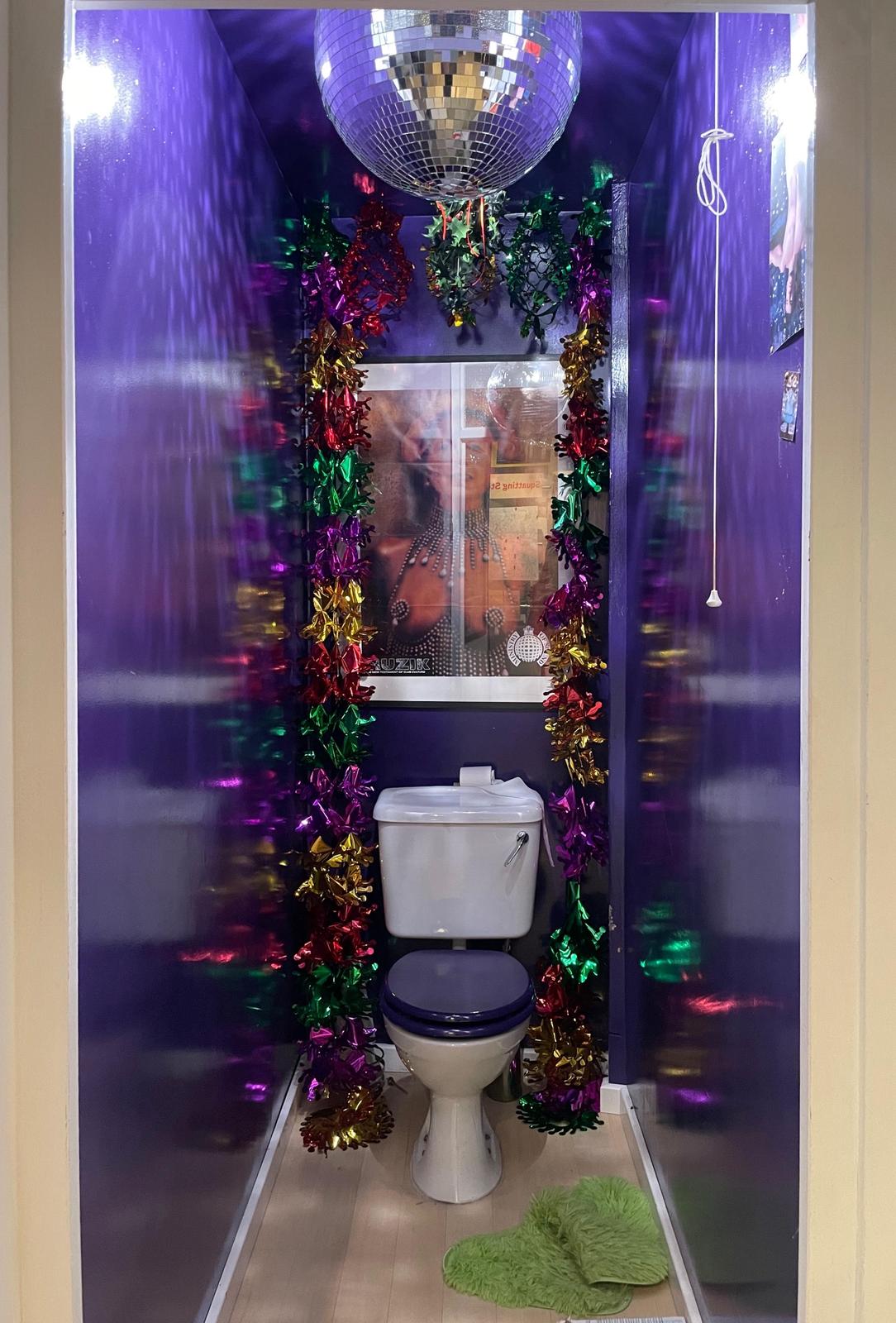
The chronological nature of these exhibits allows us to observe how celebrations have changed and continue to change over time. Christmas, for example, started as a pious festival, but went on to become a deeply commercialised holiday. With the industrial era of the late 19th century came the spread of mass production and consumption, the arrival of department stores, shopping catalogues and the Royal Mail delivery service, and that’s also when Christmas as we know it started to boom. Even Christmas trees were popularised in 1848 when Queen Victoria and her family were represented gathering around one in a widely publicised illustration at the time. Nowadays, Christmas is deeply entwined with the idea of spending; Christmas advertising is everywhere, and no matter where we turn, we cannot escape the ubiquitous ‘perfect gift’ for family and friends. In contrast to this endless overabundance, there’s something quite appealing about the concept of the ‘no buy gift exchange’ that the family of the future practices in the Museum of the Home’s 2049 room, whereby 'all the gifts are not bought, but found, fixed, or rejuvenated.'
What prevails throughout these exhibits then is the idea that the end of the year is a time for generosity, to look beyond one’s own needs and tend to others, to share food, to present gifts and to lend a helping hand. As the cold weather seeps in, winter is also considered to be a time for families, friends and communities to gather. It can be an opportunity to nurture supportive communities in the face of challenging circumstances like poverty, bigotry or xenophobia. In another positive endnote, the museum predicts that in the future, we might come together to celebrate 'Renew Year's Eve', a festivity 'introduced in the late 2030s as a way of uniting people from all faiths and backgrounds' – an idea that certainly cheers me up and leaves me feeling hopeful for the New Year(s) to come.


Every year, as the cold sets in, the pace of life slows, and we start to settle down at home for the winter, preparing for Christmas or other festive celebrations with family and friends, one museum in London puts on a very timely display. Every year, at the start of December, the Museum of the Home gets the tinsel and the holly out and dresses its ‘Rooms Through Time’ in their best festive attire.
The ‘Rooms Through Time’ are a series of spaces that demonstrate the ways in which people have furnished and lived in their homes over the centuries, spanning from 1630 to an imagined future in 2049. These spaces reflect the lives and personalities of the fictional characters who inhabit them, the activities that take place within those walls, the games people play, the food on the table and so on. The result is a little like walking through IKEA, but in a far more diverse, characterful, and informative way. It’s very atmospheric; carol songs and chatter are projected through speakers, whilst smells, temperature and other atmospheric elements are conveyed in the exhibition texts.
Each room comes with a series of panels which set the scene. One of them describes the fictional people and place at hand, while others provide the real historical context of the time as well as personal stories, quoted from real people, in order to provide depth and understanding to each scenario. Because the museum partners with different organisations for their research, these interpretations are always very rich and layered.
The appearance and character of every home is shaped by its historical, social, cultural and economic contexts. For example, some homes are sparse – like the Huguenots’ home of 1745 or the Jewish tenement flat of 1913 – whilst others are lavish – like the Victorian townhouse of 1878 or the ‘front room’ of 1979. This opulence or austerity could be a reflection of the religious or cultural customs that a family practices, or it could be a reflection of the zeitgeist, of the general economic situation, or any combination of these factors. This multiplicity of interpretations is precisely what makes these rooms within the Museum of the Home so enticing.
During the winter months, the museum puts on a temporary exhibition called ‘Winter Past’, where it dresses up these rooms to demonstrate how people celebrate the season’s festivities. All sorts of different winter celebrations are represented here: Midwinter (the shortest day of the year), Christmas (the Christian festival celebrating the birth of Jesus Christ), Yule (the Christmas period), Hanukkah (the Jewish festival of light), Lunar New Year (the East Asian festival marking the start of the new year on the lunar calendar), and even Friendmas (a celebration of Christmas with friends rather than family).
The chronological nature of these exhibits allows us to observe how celebrations have changed and continue to change over time. Christmas, for example, started as a pious festival, but went on to become a deeply commercialised holiday. With the industrial era of the late 19th century came the spread of mass production and consumption, the arrival of department stores, shopping catalogues and the Royal Mail delivery service, and that’s also when Christmas as we know it started to boom. Even Christmas trees were popularised in 1848 when Queen Victoria and her family were represented gathering around one in a widely publicised illustration at the time. Nowadays, Christmas is deeply entwined with the idea of spending; Christmas advertising is everywhere, and no matter where we turn, we cannot escape the ubiquitous ‘perfect gift’ for family and friends. In contrast to this endless overabundance, there’s something quite appealing about the concept of the ‘no buy gift exchange’ that the family of the future practices in the Museum of the Home’s 2049 room, whereby 'all the gifts are not bought, but found, fixed, or rejuvenated.'
What prevails throughout these exhibits then is the idea that the end of the year is a time for generosity, to look beyond one’s own needs and tend to others, to share food, to present gifts and to lend a helping hand. As the cold weather seeps in, winter is also considered to be a time for families, friends and communities to gather. It can be an opportunity to nurture supportive communities in the face of challenging circumstances like poverty, bigotry or xenophobia. In another positive endnote, the museum predicts that in the future, we might come together to celebrate 'Renew Year's Eve', a festivity 'introduced in the late 2030s as a way of uniting people from all faiths and backgrounds' – an idea that certainly cheers me up and leaves me feeling hopeful for the New Year(s) to come.
Every year, as the cold sets in, the pace of life slows, and we start to settle down at home for the winter, preparing for Christmas or other festive celebrations with family and friends, one museum in London puts on a very timely display. Every year, at the start of December, the Museum of the Home gets the tinsel and the holly out and dresses its ‘Rooms Through Time’ in their best festive attire.
The ‘Rooms Through Time’ are a series of spaces that demonstrate the ways in which people have furnished and lived in their homes over the centuries, spanning from 1630 to an imagined future in 2049. These spaces reflect the lives and personalities of the fictional characters who inhabit them, the activities that take place within those walls, the games people play, the food on the table and so on. The result is a little like walking through IKEA, but in a far more diverse, characterful, and informative way. It’s very atmospheric; carol songs and chatter are projected through speakers, whilst smells, temperature and other atmospheric elements are conveyed in the exhibition texts.
Each room comes with a series of panels which set the scene. One of them describes the fictional people and place at hand, while others provide the real historical context of the time as well as personal stories, quoted from real people, in order to provide depth and understanding to each scenario. Because the museum partners with different organisations for their research, these interpretations are always very rich and layered.
The appearance and character of every home is shaped by its historical, social, cultural and economic contexts. For example, some homes are sparse – like the Huguenots’ home of 1745 or the Jewish tenement flat of 1913 – whilst others are lavish – like the Victorian townhouse of 1878 or the ‘front room’ of 1979. This opulence or austerity could be a reflection of the religious or cultural customs that a family practices, or it could be a reflection of the zeitgeist, of the general economic situation, or any combination of these factors. This multiplicity of interpretations is precisely what makes these rooms within the Museum of the Home so enticing.
During the winter months, the museum puts on a temporary exhibition called ‘Winter Past’, where it dresses up these rooms to demonstrate how people celebrate the season’s festivities. All sorts of different winter celebrations are represented here: Midwinter (the shortest day of the year), Christmas (the Christian festival celebrating the birth of Jesus Christ), Yule (the Christmas period), Hanukkah (the Jewish festival of light), Lunar New Year (the East Asian festival marking the start of the new year on the lunar calendar), and even Friendmas (a celebration of Christmas with friends rather than family).
The chronological nature of these exhibits allows us to observe how celebrations have changed and continue to change over time. Christmas, for example, started as a pious festival, but went on to become a deeply commercialised holiday. With the industrial era of the late 19th century came the spread of mass production and consumption, the arrival of department stores, shopping catalogues and the Royal Mail delivery service, and that’s also when Christmas as we know it started to boom. Even Christmas trees were popularised in 1848 when Queen Victoria and her family were represented gathering around one in a widely publicised illustration at the time. Nowadays, Christmas is deeply entwined with the idea of spending; Christmas advertising is everywhere, and no matter where we turn, we cannot escape the ubiquitous ‘perfect gift’ for family and friends. In contrast to this endless overabundance, there’s something quite appealing about the concept of the ‘no buy gift exchange’ that the family of the future practices in the Museum of the Home’s 2049 room, whereby 'all the gifts are not bought, but found, fixed, or rejuvenated.'
What prevails throughout these exhibits then is the idea that the end of the year is a time for generosity, to look beyond one’s own needs and tend to others, to share food, to present gifts and to lend a helping hand. As the cold weather seeps in, winter is also considered to be a time for families, friends and communities to gather. It can be an opportunity to nurture supportive communities in the face of challenging circumstances like poverty, bigotry or xenophobia. In another positive endnote, the museum predicts that in the future, we might come together to celebrate 'Renew Year's Eve', a festivity 'introduced in the late 2030s as a way of uniting people from all faiths and backgrounds' – an idea that certainly cheers me up and leaves me feeling hopeful for the New Year(s) to come.
Every year, as the cold sets in, the pace of life slows, and we start to settle down at home for the winter, preparing for Christmas or other festive celebrations with family and friends, one museum in London puts on a very timely display. Every year, at the start of December, the Museum of the Home gets the tinsel and the holly out and dresses its ‘Rooms Through Time’ in their best festive attire.
The ‘Rooms Through Time’ are a series of spaces that demonstrate the ways in which people have furnished and lived in their homes over the centuries, spanning from 1630 to an imagined future in 2049. These spaces reflect the lives and personalities of the fictional characters who inhabit them, the activities that take place within those walls, the games people play, the food on the table and so on. The result is a little like walking through IKEA, but in a far more diverse, characterful, and informative way. It’s very atmospheric; carol songs and chatter are projected through speakers, whilst smells, temperature and other atmospheric elements are conveyed in the exhibition texts.
Each room comes with a series of panels which set the scene. One of them describes the fictional people and place at hand, while others provide the real historical context of the time as well as personal stories, quoted from real people, in order to provide depth and understanding to each scenario. Because the museum partners with different organisations for their research, these interpretations are always very rich and layered.
The appearance and character of every home is shaped by its historical, social, cultural and economic contexts. For example, some homes are sparse – like the Huguenots’ home of 1745 or the Jewish tenement flat of 1913 – whilst others are lavish – like the Victorian townhouse of 1878 or the ‘front room’ of 1979. This opulence or austerity could be a reflection of the religious or cultural customs that a family practices, or it could be a reflection of the zeitgeist, of the general economic situation, or any combination of these factors. This multiplicity of interpretations is precisely what makes these rooms within the Museum of the Home so enticing.
During the winter months, the museum puts on a temporary exhibition called ‘Winter Past’, where it dresses up these rooms to demonstrate how people celebrate the season’s festivities. All sorts of different winter celebrations are represented here: Midwinter (the shortest day of the year), Christmas (the Christian festival celebrating the birth of Jesus Christ), Yule (the Christmas period), Hanukkah (the Jewish festival of light), Lunar New Year (the East Asian festival marking the start of the new year on the lunar calendar), and even Friendmas (a celebration of Christmas with friends rather than family).
The chronological nature of these exhibits allows us to observe how celebrations have changed and continue to change over time. Christmas, for example, started as a pious festival, but went on to become a deeply commercialised holiday. With the industrial era of the late 19th century came the spread of mass production and consumption, the arrival of department stores, shopping catalogues and the Royal Mail delivery service, and that’s also when Christmas as we know it started to boom. Even Christmas trees were popularised in 1848 when Queen Victoria and her family were represented gathering around one in a widely publicised illustration at the time. Nowadays, Christmas is deeply entwined with the idea of spending; Christmas advertising is everywhere, and no matter where we turn, we cannot escape the ubiquitous ‘perfect gift’ for family and friends. In contrast to this endless overabundance, there’s something quite appealing about the concept of the ‘no buy gift exchange’ that the family of the future practices in the Museum of the Home’s 2049 room, whereby 'all the gifts are not bought, but found, fixed, or rejuvenated.'
What prevails throughout these exhibits then is the idea that the end of the year is a time for generosity, to look beyond one’s own needs and tend to others, to share food, to present gifts and to lend a helping hand. As the cold weather seeps in, winter is also considered to be a time for families, friends and communities to gather. It can be an opportunity to nurture supportive communities in the face of challenging circumstances like poverty, bigotry or xenophobia. In another positive endnote, the museum predicts that in the future, we might come together to celebrate 'Renew Year's Eve', a festivity 'introduced in the late 2030s as a way of uniting people from all faiths and backgrounds' – an idea that certainly cheers me up and leaves me feeling hopeful for the New Year(s) to come.
Every year, as the cold sets in, the pace of life slows, and we start to settle down at home for the winter, preparing for Christmas or other festive celebrations with family and friends, one museum in London puts on a very timely display. Every year, at the start of December, the Museum of the Home gets the tinsel and the holly out and dresses its ‘Rooms Through Time’ in their best festive attire.
The ‘Rooms Through Time’ are a series of spaces that demonstrate the ways in which people have furnished and lived in their homes over the centuries, spanning from 1630 to an imagined future in 2049. These spaces reflect the lives and personalities of the fictional characters who inhabit them, the activities that take place within those walls, the games people play, the food on the table and so on. The result is a little like walking through IKEA, but in a far more diverse, characterful, and informative way. It’s very atmospheric; carol songs and chatter are projected through speakers, whilst smells, temperature and other atmospheric elements are conveyed in the exhibition texts.
Each room comes with a series of panels which set the scene. One of them describes the fictional people and place at hand, while others provide the real historical context of the time as well as personal stories, quoted from real people, in order to provide depth and understanding to each scenario. Because the museum partners with different organisations for their research, these interpretations are always very rich and layered.
The appearance and character of every home is shaped by its historical, social, cultural and economic contexts. For example, some homes are sparse – like the Huguenots’ home of 1745 or the Jewish tenement flat of 1913 – whilst others are lavish – like the Victorian townhouse of 1878 or the ‘front room’ of 1979. This opulence or austerity could be a reflection of the religious or cultural customs that a family practices, or it could be a reflection of the zeitgeist, of the general economic situation, or any combination of these factors. This multiplicity of interpretations is precisely what makes these rooms within the Museum of the Home so enticing.
During the winter months, the museum puts on a temporary exhibition called ‘Winter Past’, where it dresses up these rooms to demonstrate how people celebrate the season’s festivities. All sorts of different winter celebrations are represented here: Midwinter (the shortest day of the year), Christmas (the Christian festival celebrating the birth of Jesus Christ), Yule (the Christmas period), Hanukkah (the Jewish festival of light), Lunar New Year (the East Asian festival marking the start of the new year on the lunar calendar), and even Friendmas (a celebration of Christmas with friends rather than family).
The chronological nature of these exhibits allows us to observe how celebrations have changed and continue to change over time. Christmas, for example, started as a pious festival, but went on to become a deeply commercialised holiday. With the industrial era of the late 19th century came the spread of mass production and consumption, the arrival of department stores, shopping catalogues and the Royal Mail delivery service, and that’s also when Christmas as we know it started to boom. Even Christmas trees were popularised in 1848 when Queen Victoria and her family were represented gathering around one in a widely publicised illustration at the time. Nowadays, Christmas is deeply entwined with the idea of spending; Christmas advertising is everywhere, and no matter where we turn, we cannot escape the ubiquitous ‘perfect gift’ for family and friends. In contrast to this endless overabundance, there’s something quite appealing about the concept of the ‘no buy gift exchange’ that the family of the future practices in the Museum of the Home’s 2049 room, whereby 'all the gifts are not bought, but found, fixed, or rejuvenated.'
What prevails throughout these exhibits then is the idea that the end of the year is a time for generosity, to look beyond one’s own needs and tend to others, to share food, to present gifts and to lend a helping hand. As the cold weather seeps in, winter is also considered to be a time for families, friends and communities to gather. It can be an opportunity to nurture supportive communities in the face of challenging circumstances like poverty, bigotry or xenophobia. In another positive endnote, the museum predicts that in the future, we might come together to celebrate 'Renew Year's Eve', a festivity 'introduced in the late 2030s as a way of uniting people from all faiths and backgrounds' – an idea that certainly cheers me up and leaves me feeling hopeful for the New Year(s) to come.
Every year, as the cold sets in, the pace of life slows, and we start to settle down at home for the winter, preparing for Christmas or other festive celebrations with family and friends, one museum in London puts on a very timely display. Every year, at the start of December, the Museum of the Home gets the tinsel and the holly out and dresses its ‘Rooms Through Time’ in their best festive attire.
The ‘Rooms Through Time’ are a series of spaces that demonstrate the ways in which people have furnished and lived in their homes over the centuries, spanning from 1630 to an imagined future in 2049. These spaces reflect the lives and personalities of the fictional characters who inhabit them, the activities that take place within those walls, the games people play, the food on the table and so on. The result is a little like walking through IKEA, but in a far more diverse, characterful, and informative way. It’s very atmospheric; carol songs and chatter are projected through speakers, whilst smells, temperature and other atmospheric elements are conveyed in the exhibition texts.
Each room comes with a series of panels which set the scene. One of them describes the fictional people and place at hand, while others provide the real historical context of the time as well as personal stories, quoted from real people, in order to provide depth and understanding to each scenario. Because the museum partners with different organisations for their research, these interpretations are always very rich and layered.
The appearance and character of every home is shaped by its historical, social, cultural and economic contexts. For example, some homes are sparse – like the Huguenots’ home of 1745 or the Jewish tenement flat of 1913 – whilst others are lavish – like the Victorian townhouse of 1878 or the ‘front room’ of 1979. This opulence or austerity could be a reflection of the religious or cultural customs that a family practices, or it could be a reflection of the zeitgeist, of the general economic situation, or any combination of these factors. This multiplicity of interpretations is precisely what makes these rooms within the Museum of the Home so enticing.
During the winter months, the museum puts on a temporary exhibition called ‘Winter Past’, where it dresses up these rooms to demonstrate how people celebrate the season’s festivities. All sorts of different winter celebrations are represented here: Midwinter (the shortest day of the year), Christmas (the Christian festival celebrating the birth of Jesus Christ), Yule (the Christmas period), Hanukkah (the Jewish festival of light), Lunar New Year (the East Asian festival marking the start of the new year on the lunar calendar), and even Friendmas (a celebration of Christmas with friends rather than family).
The chronological nature of these exhibits allows us to observe how celebrations have changed and continue to change over time. Christmas, for example, started as a pious festival, but went on to become a deeply commercialised holiday. With the industrial era of the late 19th century came the spread of mass production and consumption, the arrival of department stores, shopping catalogues and the Royal Mail delivery service, and that’s also when Christmas as we know it started to boom. Even Christmas trees were popularised in 1848 when Queen Victoria and her family were represented gathering around one in a widely publicised illustration at the time. Nowadays, Christmas is deeply entwined with the idea of spending; Christmas advertising is everywhere, and no matter where we turn, we cannot escape the ubiquitous ‘perfect gift’ for family and friends. In contrast to this endless overabundance, there’s something quite appealing about the concept of the ‘no buy gift exchange’ that the family of the future practices in the Museum of the Home’s 2049 room, whereby 'all the gifts are not bought, but found, fixed, or rejuvenated.'
What prevails throughout these exhibits then is the idea that the end of the year is a time for generosity, to look beyond one’s own needs and tend to others, to share food, to present gifts and to lend a helping hand. As the cold weather seeps in, winter is also considered to be a time for families, friends and communities to gather. It can be an opportunity to nurture supportive communities in the face of challenging circumstances like poverty, bigotry or xenophobia. In another positive endnote, the museum predicts that in the future, we might come together to celebrate 'Renew Year's Eve', a festivity 'introduced in the late 2030s as a way of uniting people from all faiths and backgrounds' – an idea that certainly cheers me up and leaves me feeling hopeful for the New Year(s) to come.
Every year, as the cold sets in, the pace of life slows, and we start to settle down at home for the winter, preparing for Christmas or other festive celebrations with family and friends, one museum in London puts on a very timely display. Every year, at the start of December, the Museum of the Home gets the tinsel and the holly out and dresses its ‘Rooms Through Time’ in their best festive attire.
The ‘Rooms Through Time’ are a series of spaces that demonstrate the ways in which people have furnished and lived in their homes over the centuries, spanning from 1630 to an imagined future in 2049. These spaces reflect the lives and personalities of the fictional characters who inhabit them, the activities that take place within those walls, the games people play, the food on the table and so on. The result is a little like walking through IKEA, but in a far more diverse, characterful, and informative way. It’s very atmospheric; carol songs and chatter are projected through speakers, whilst smells, temperature and other atmospheric elements are conveyed in the exhibition texts.
Each room comes with a series of panels which set the scene. One of them describes the fictional people and place at hand, while others provide the real historical context of the time as well as personal stories, quoted from real people, in order to provide depth and understanding to each scenario. Because the museum partners with different organisations for their research, these interpretations are always very rich and layered.
The appearance and character of every home is shaped by its historical, social, cultural and economic contexts. For example, some homes are sparse – like the Huguenots’ home of 1745 or the Jewish tenement flat of 1913 – whilst others are lavish – like the Victorian townhouse of 1878 or the ‘front room’ of 1979. This opulence or austerity could be a reflection of the religious or cultural customs that a family practices, or it could be a reflection of the zeitgeist, of the general economic situation, or any combination of these factors. This multiplicity of interpretations is precisely what makes these rooms within the Museum of the Home so enticing.
During the winter months, the museum puts on a temporary exhibition called ‘Winter Past’, where it dresses up these rooms to demonstrate how people celebrate the season’s festivities. All sorts of different winter celebrations are represented here: Midwinter (the shortest day of the year), Christmas (the Christian festival celebrating the birth of Jesus Christ), Yule (the Christmas period), Hanukkah (the Jewish festival of light), Lunar New Year (the East Asian festival marking the start of the new year on the lunar calendar), and even Friendmas (a celebration of Christmas with friends rather than family).
The chronological nature of these exhibits allows us to observe how celebrations have changed and continue to change over time. Christmas, for example, started as a pious festival, but went on to become a deeply commercialised holiday. With the industrial era of the late 19th century came the spread of mass production and consumption, the arrival of department stores, shopping catalogues and the Royal Mail delivery service, and that’s also when Christmas as we know it started to boom. Even Christmas trees were popularised in 1848 when Queen Victoria and her family were represented gathering around one in a widely publicised illustration at the time. Nowadays, Christmas is deeply entwined with the idea of spending; Christmas advertising is everywhere, and no matter where we turn, we cannot escape the ubiquitous ‘perfect gift’ for family and friends. In contrast to this endless overabundance, there’s something quite appealing about the concept of the ‘no buy gift exchange’ that the family of the future practices in the Museum of the Home’s 2049 room, whereby 'all the gifts are not bought, but found, fixed, or rejuvenated.'
What prevails throughout these exhibits then is the idea that the end of the year is a time for generosity, to look beyond one’s own needs and tend to others, to share food, to present gifts and to lend a helping hand. As the cold weather seeps in, winter is also considered to be a time for families, friends and communities to gather. It can be an opportunity to nurture supportive communities in the face of challenging circumstances like poverty, bigotry or xenophobia. In another positive endnote, the museum predicts that in the future, we might come together to celebrate 'Renew Year's Eve', a festivity 'introduced in the late 2030s as a way of uniting people from all faiths and backgrounds' – an idea that certainly cheers me up and leaves me feeling hopeful for the New Year(s) to come.
Every year, as the cold sets in, the pace of life slows, and we start to settle down at home for the winter, preparing for Christmas or other festive celebrations with family and friends, one museum in London puts on a very timely display. Every year, at the start of December, the Museum of the Home gets the tinsel and the holly out and dresses its ‘Rooms Through Time’ in their best festive attire.
The ‘Rooms Through Time’ are a series of spaces that demonstrate the ways in which people have furnished and lived in their homes over the centuries, spanning from 1630 to an imagined future in 2049. These spaces reflect the lives and personalities of the fictional characters who inhabit them, the activities that take place within those walls, the games people play, the food on the table and so on. The result is a little like walking through IKEA, but in a far more diverse, characterful, and informative way. It’s very atmospheric; carol songs and chatter are projected through speakers, whilst smells, temperature and other atmospheric elements are conveyed in the exhibition texts.
Each room comes with a series of panels which set the scene. One of them describes the fictional people and place at hand, while others provide the real historical context of the time as well as personal stories, quoted from real people, in order to provide depth and understanding to each scenario. Because the museum partners with different organisations for their research, these interpretations are always very rich and layered.
The appearance and character of every home is shaped by its historical, social, cultural and economic contexts. For example, some homes are sparse – like the Huguenots’ home of 1745 or the Jewish tenement flat of 1913 – whilst others are lavish – like the Victorian townhouse of 1878 or the ‘front room’ of 1979. This opulence or austerity could be a reflection of the religious or cultural customs that a family practices, or it could be a reflection of the zeitgeist, of the general economic situation, or any combination of these factors. This multiplicity of interpretations is precisely what makes these rooms within the Museum of the Home so enticing.
During the winter months, the museum puts on a temporary exhibition called ‘Winter Past’, where it dresses up these rooms to demonstrate how people celebrate the season’s festivities. All sorts of different winter celebrations are represented here: Midwinter (the shortest day of the year), Christmas (the Christian festival celebrating the birth of Jesus Christ), Yule (the Christmas period), Hanukkah (the Jewish festival of light), Lunar New Year (the East Asian festival marking the start of the new year on the lunar calendar), and even Friendmas (a celebration of Christmas with friends rather than family).
The chronological nature of these exhibits allows us to observe how celebrations have changed and continue to change over time. Christmas, for example, started as a pious festival, but went on to become a deeply commercialised holiday. With the industrial era of the late 19th century came the spread of mass production and consumption, the arrival of department stores, shopping catalogues and the Royal Mail delivery service, and that’s also when Christmas as we know it started to boom. Even Christmas trees were popularised in 1848 when Queen Victoria and her family were represented gathering around one in a widely publicised illustration at the time. Nowadays, Christmas is deeply entwined with the idea of spending; Christmas advertising is everywhere, and no matter where we turn, we cannot escape the ubiquitous ‘perfect gift’ for family and friends. In contrast to this endless overabundance, there’s something quite appealing about the concept of the ‘no buy gift exchange’ that the family of the future practices in the Museum of the Home’s 2049 room, whereby 'all the gifts are not bought, but found, fixed, or rejuvenated.'
What prevails throughout these exhibits then is the idea that the end of the year is a time for generosity, to look beyond one’s own needs and tend to others, to share food, to present gifts and to lend a helping hand. As the cold weather seeps in, winter is also considered to be a time for families, friends and communities to gather. It can be an opportunity to nurture supportive communities in the face of challenging circumstances like poverty, bigotry or xenophobia. In another positive endnote, the museum predicts that in the future, we might come together to celebrate 'Renew Year's Eve', a festivity 'introduced in the late 2030s as a way of uniting people from all faiths and backgrounds' – an idea that certainly cheers me up and leaves me feeling hopeful for the New Year(s) to come.
Every year, as the cold sets in, the pace of life slows, and we start to settle down at home for the winter, preparing for Christmas or other festive celebrations with family and friends, one museum in London puts on a very timely display. Every year, at the start of December, the Museum of the Home gets the tinsel and the holly out and dresses its ‘Rooms Through Time’ in their best festive attire.
The ‘Rooms Through Time’ are a series of spaces that demonstrate the ways in which people have furnished and lived in their homes over the centuries, spanning from 1630 to an imagined future in 2049. These spaces reflect the lives and personalities of the fictional characters who inhabit them, the activities that take place within those walls, the games people play, the food on the table and so on. The result is a little like walking through IKEA, but in a far more diverse, characterful, and informative way. It’s very atmospheric; carol songs and chatter are projected through speakers, whilst smells, temperature and other atmospheric elements are conveyed in the exhibition texts.
Each room comes with a series of panels which set the scene. One of them describes the fictional people and place at hand, while others provide the real historical context of the time as well as personal stories, quoted from real people, in order to provide depth and understanding to each scenario. Because the museum partners with different organisations for their research, these interpretations are always very rich and layered.
The appearance and character of every home is shaped by its historical, social, cultural and economic contexts. For example, some homes are sparse – like the Huguenots’ home of 1745 or the Jewish tenement flat of 1913 – whilst others are lavish – like the Victorian townhouse of 1878 or the ‘front room’ of 1979. This opulence or austerity could be a reflection of the religious or cultural customs that a family practices, or it could be a reflection of the zeitgeist, of the general economic situation, or any combination of these factors. This multiplicity of interpretations is precisely what makes these rooms within the Museum of the Home so enticing.
During the winter months, the museum puts on a temporary exhibition called ‘Winter Past’, where it dresses up these rooms to demonstrate how people celebrate the season’s festivities. All sorts of different winter celebrations are represented here: Midwinter (the shortest day of the year), Christmas (the Christian festival celebrating the birth of Jesus Christ), Yule (the Christmas period), Hanukkah (the Jewish festival of light), Lunar New Year (the East Asian festival marking the start of the new year on the lunar calendar), and even Friendmas (a celebration of Christmas with friends rather than family).
The chronological nature of these exhibits allows us to observe how celebrations have changed and continue to change over time. Christmas, for example, started as a pious festival, but went on to become a deeply commercialised holiday. With the industrial era of the late 19th century came the spread of mass production and consumption, the arrival of department stores, shopping catalogues and the Royal Mail delivery service, and that’s also when Christmas as we know it started to boom. Even Christmas trees were popularised in 1848 when Queen Victoria and her family were represented gathering around one in a widely publicised illustration at the time. Nowadays, Christmas is deeply entwined with the idea of spending; Christmas advertising is everywhere, and no matter where we turn, we cannot escape the ubiquitous ‘perfect gift’ for family and friends. In contrast to this endless overabundance, there’s something quite appealing about the concept of the ‘no buy gift exchange’ that the family of the future practices in the Museum of the Home’s 2049 room, whereby 'all the gifts are not bought, but found, fixed, or rejuvenated.'
What prevails throughout these exhibits then is the idea that the end of the year is a time for generosity, to look beyond one’s own needs and tend to others, to share food, to present gifts and to lend a helping hand. As the cold weather seeps in, winter is also considered to be a time for families, friends and communities to gather. It can be an opportunity to nurture supportive communities in the face of challenging circumstances like poverty, bigotry or xenophobia. In another positive endnote, the museum predicts that in the future, we might come together to celebrate 'Renew Year's Eve', a festivity 'introduced in the late 2030s as a way of uniting people from all faiths and backgrounds' – an idea that certainly cheers me up and leaves me feeling hopeful for the New Year(s) to come.
Every year, as the cold sets in, the pace of life slows, and we start to settle down at home for the winter, preparing for Christmas or other festive celebrations with family and friends, one museum in London puts on a very timely display. Every year, at the start of December, the Museum of the Home gets the tinsel and the holly out and dresses its ‘Rooms Through Time’ in their best festive attire.
The ‘Rooms Through Time’ are a series of spaces that demonstrate the ways in which people have furnished and lived in their homes over the centuries, spanning from 1630 to an imagined future in 2049. These spaces reflect the lives and personalities of the fictional characters who inhabit them, the activities that take place within those walls, the games people play, the food on the table and so on. The result is a little like walking through IKEA, but in a far more diverse, characterful, and informative way. It’s very atmospheric; carol songs and chatter are projected through speakers, whilst smells, temperature and other atmospheric elements are conveyed in the exhibition texts.
Each room comes with a series of panels which set the scene. One of them describes the fictional people and place at hand, while others provide the real historical context of the time as well as personal stories, quoted from real people, in order to provide depth and understanding to each scenario. Because the museum partners with different organisations for their research, these interpretations are always very rich and layered.
The appearance and character of every home is shaped by its historical, social, cultural and economic contexts. For example, some homes are sparse – like the Huguenots’ home of 1745 or the Jewish tenement flat of 1913 – whilst others are lavish – like the Victorian townhouse of 1878 or the ‘front room’ of 1979. This opulence or austerity could be a reflection of the religious or cultural customs that a family practices, or it could be a reflection of the zeitgeist, of the general economic situation, or any combination of these factors. This multiplicity of interpretations is precisely what makes these rooms within the Museum of the Home so enticing.
During the winter months, the museum puts on a temporary exhibition called ‘Winter Past’, where it dresses up these rooms to demonstrate how people celebrate the season’s festivities. All sorts of different winter celebrations are represented here: Midwinter (the shortest day of the year), Christmas (the Christian festival celebrating the birth of Jesus Christ), Yule (the Christmas period), Hanukkah (the Jewish festival of light), Lunar New Year (the East Asian festival marking the start of the new year on the lunar calendar), and even Friendmas (a celebration of Christmas with friends rather than family).
The chronological nature of these exhibits allows us to observe how celebrations have changed and continue to change over time. Christmas, for example, started as a pious festival, but went on to become a deeply commercialised holiday. With the industrial era of the late 19th century came the spread of mass production and consumption, the arrival of department stores, shopping catalogues and the Royal Mail delivery service, and that’s also when Christmas as we know it started to boom. Even Christmas trees were popularised in 1848 when Queen Victoria and her family were represented gathering around one in a widely publicised illustration at the time. Nowadays, Christmas is deeply entwined with the idea of spending; Christmas advertising is everywhere, and no matter where we turn, we cannot escape the ubiquitous ‘perfect gift’ for family and friends. In contrast to this endless overabundance, there’s something quite appealing about the concept of the ‘no buy gift exchange’ that the family of the future practices in the Museum of the Home’s 2049 room, whereby 'all the gifts are not bought, but found, fixed, or rejuvenated.'
What prevails throughout these exhibits then is the idea that the end of the year is a time for generosity, to look beyond one’s own needs and tend to others, to share food, to present gifts and to lend a helping hand. As the cold weather seeps in, winter is also considered to be a time for families, friends and communities to gather. It can be an opportunity to nurture supportive communities in the face of challenging circumstances like poverty, bigotry or xenophobia. In another positive endnote, the museum predicts that in the future, we might come together to celebrate 'Renew Year's Eve', a festivity 'introduced in the late 2030s as a way of uniting people from all faiths and backgrounds' – an idea that certainly cheers me up and leaves me feeling hopeful for the New Year(s) to come.
Every year, as the cold sets in, the pace of life slows, and we start to settle down at home for the winter, preparing for Christmas or other festive celebrations with family and friends, one museum in London puts on a very timely display. Every year, at the start of December, the Museum of the Home gets the tinsel and the holly out and dresses its ‘Rooms Through Time’ in their best festive attire.
The ‘Rooms Through Time’ are a series of spaces that demonstrate the ways in which people have furnished and lived in their homes over the centuries, spanning from 1630 to an imagined future in 2049. These spaces reflect the lives and personalities of the fictional characters who inhabit them, the activities that take place within those walls, the games people play, the food on the table and so on. The result is a little like walking through IKEA, but in a far more diverse, characterful, and informative way. It’s very atmospheric; carol songs and chatter are projected through speakers, whilst smells, temperature and other atmospheric elements are conveyed in the exhibition texts.
Each room comes with a series of panels which set the scene. One of them describes the fictional people and place at hand, while others provide the real historical context of the time as well as personal stories, quoted from real people, in order to provide depth and understanding to each scenario. Because the museum partners with different organisations for their research, these interpretations are always very rich and layered.
The appearance and character of every home is shaped by its historical, social, cultural and economic contexts. For example, some homes are sparse – like the Huguenots’ home of 1745 or the Jewish tenement flat of 1913 – whilst others are lavish – like the Victorian townhouse of 1878 or the ‘front room’ of 1979. This opulence or austerity could be a reflection of the religious or cultural customs that a family practices, or it could be a reflection of the zeitgeist, of the general economic situation, or any combination of these factors. This multiplicity of interpretations is precisely what makes these rooms within the Museum of the Home so enticing.
During the winter months, the museum puts on a temporary exhibition called ‘Winter Past’, where it dresses up these rooms to demonstrate how people celebrate the season’s festivities. All sorts of different winter celebrations are represented here: Midwinter (the shortest day of the year), Christmas (the Christian festival celebrating the birth of Jesus Christ), Yule (the Christmas period), Hanukkah (the Jewish festival of light), Lunar New Year (the East Asian festival marking the start of the new year on the lunar calendar), and even Friendmas (a celebration of Christmas with friends rather than family).
The chronological nature of these exhibits allows us to observe how celebrations have changed and continue to change over time. Christmas, for example, started as a pious festival, but went on to become a deeply commercialised holiday. With the industrial era of the late 19th century came the spread of mass production and consumption, the arrival of department stores, shopping catalogues and the Royal Mail delivery service, and that’s also when Christmas as we know it started to boom. Even Christmas trees were popularised in 1848 when Queen Victoria and her family were represented gathering around one in a widely publicised illustration at the time. Nowadays, Christmas is deeply entwined with the idea of spending; Christmas advertising is everywhere, and no matter where we turn, we cannot escape the ubiquitous ‘perfect gift’ for family and friends. In contrast to this endless overabundance, there’s something quite appealing about the concept of the ‘no buy gift exchange’ that the family of the future practices in the Museum of the Home’s 2049 room, whereby 'all the gifts are not bought, but found, fixed, or rejuvenated.'
What prevails throughout these exhibits then is the idea that the end of the year is a time for generosity, to look beyond one’s own needs and tend to others, to share food, to present gifts and to lend a helping hand. As the cold weather seeps in, winter is also considered to be a time for families, friends and communities to gather. It can be an opportunity to nurture supportive communities in the face of challenging circumstances like poverty, bigotry or xenophobia. In another positive endnote, the museum predicts that in the future, we might come together to celebrate 'Renew Year's Eve', a festivity 'introduced in the late 2030s as a way of uniting people from all faiths and backgrounds' – an idea that certainly cheers me up and leaves me feeling hopeful for the New Year(s) to come.


.png)


.svg)


