
We Can Be Heroes, Just for One Day: Georg Baselitz's Hero paintings at Thaddaeus Ropac
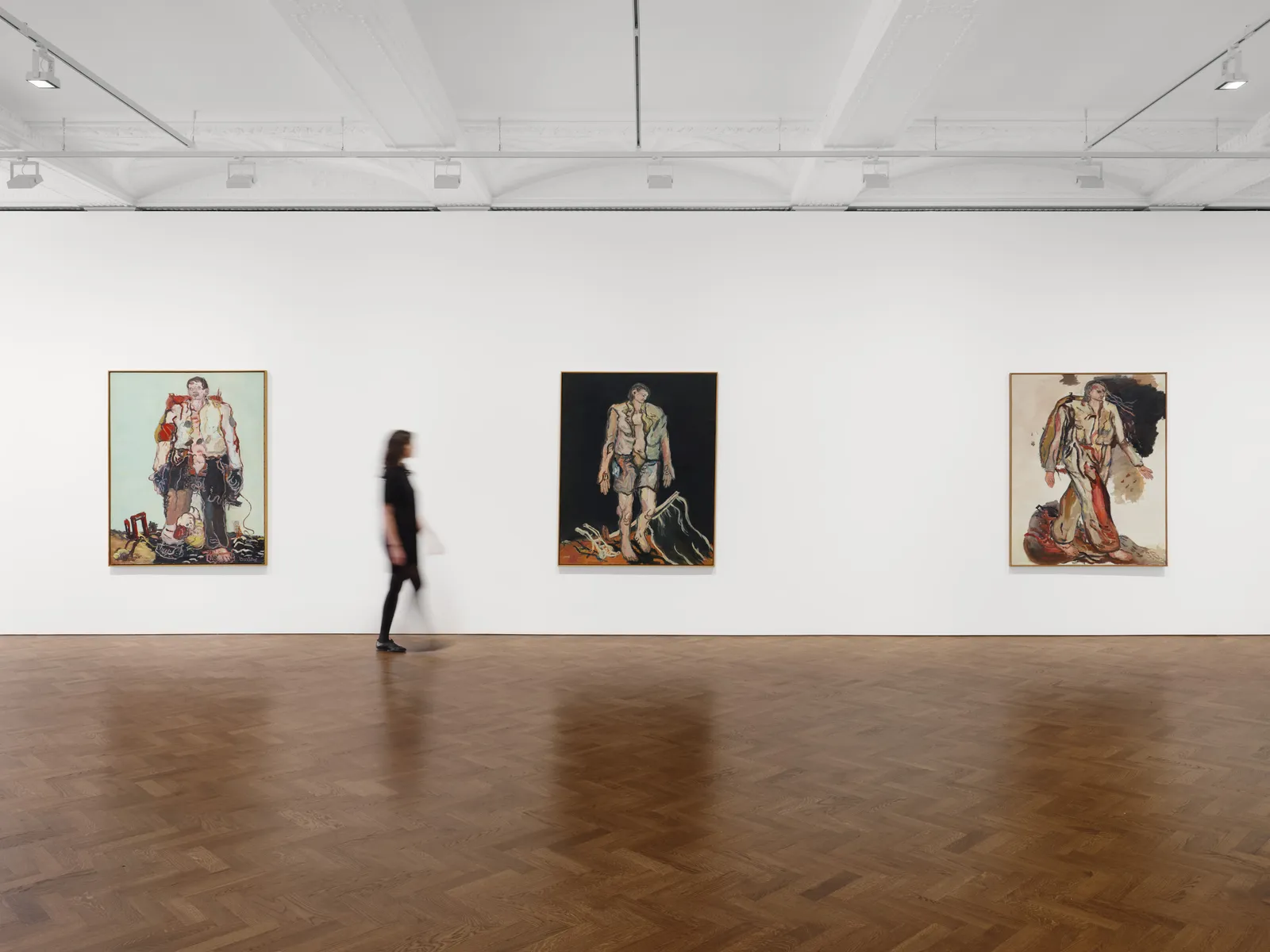
The exhibition brings together monumental post-war, battered and malformed figures from Georg Baselitz’s Heroes series, shown for the first time in the U.K. Baselitz’s mastery with this series lies in its ability to deeply reflect public attitudes during the rapid post-World War II reconstruction in Germany, where people wanted to leave the past behind, but never really fully shook it off. Abstract bodies present themselves on the large-scale canvases, hinting at Baselitz's innate focus on figuration, which is regarded by some as outmoded, reflecting his distaste toward realism. Bazelitz’s Hero paintings were first conceived in the summer of 1965, following the completion of an artist’s residency in Villa Romana in Florence. The figures hint at dark humour, almost mocking social and political realities of the time, undermining common ideas of ‘action’ paintings that were championed by artists from the abstract expressionist movement, such as Jackson Pollock and Willem de Kooning. The singular artist-heroes displayed in the series are also seen to be visually heavy, drawing parallels to the weight of history. Their Frankensteinian quality links to the German Gothic and grotesque, which, as Baselitz would have intended, is deeply rooted in the German tradition.
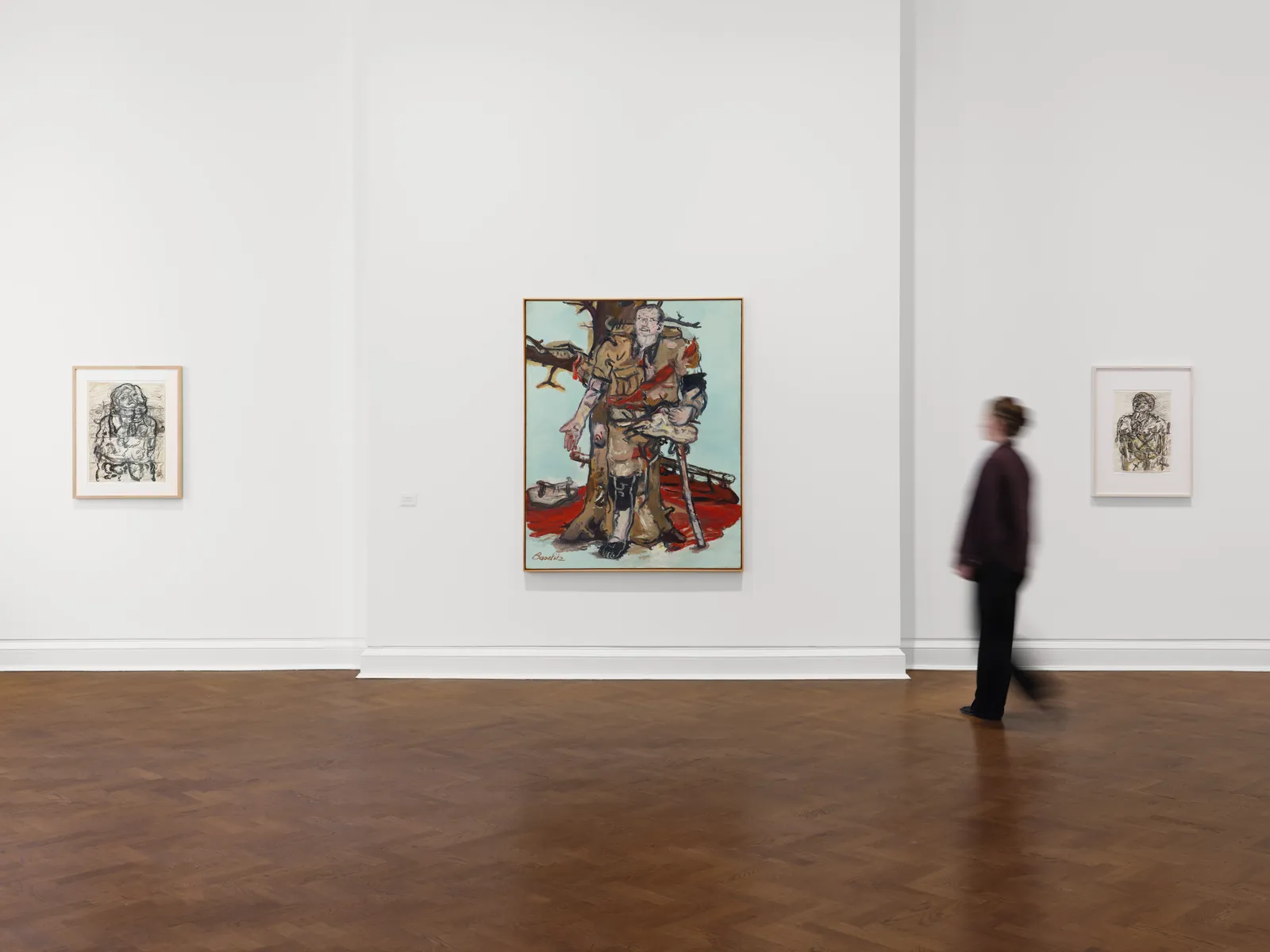
The figures’ tiny heads appear disproportionate to their bodies, made up of curving, snake-like lines which give them a standout appearance viewers can never forget. In some ways, they are both literally and figuratively larger-than-life. Their bodies also possess a deformed quality, but one that draws attention to the physically malformed and the abstracted, hinting at androgyny, having somewhat feminine qualities such as flowing hair and elongated necks. This also further pushes their ability to push ideas surrounding representation in art, making us question what really constitutes a hero. While the idea of the artistic hero is emasculated, Baselitz’s figures blur the lines. They appear war-torn, dressed in rags, and some are dripping with blood or rooted in the ground. This emphasises how they are glorified for their downfalls, ironically, in spite of being labelled as heroes. Baselitz draws on the concept of a hero: ‘When I started painting [...] I said to myself: if you paint a picture, it must not be a superfluous picture. You can’t paint a landscape, you have to paint something of global importance, something heroic…’ Socialist Realism presented figures that were too idealised, which Bazelitz was sanctioned for rejecting. This rebelliousness informs his lack of filtering or subduing any of the mark-making or non-representational techniques he utilises when producing the figures and heads.
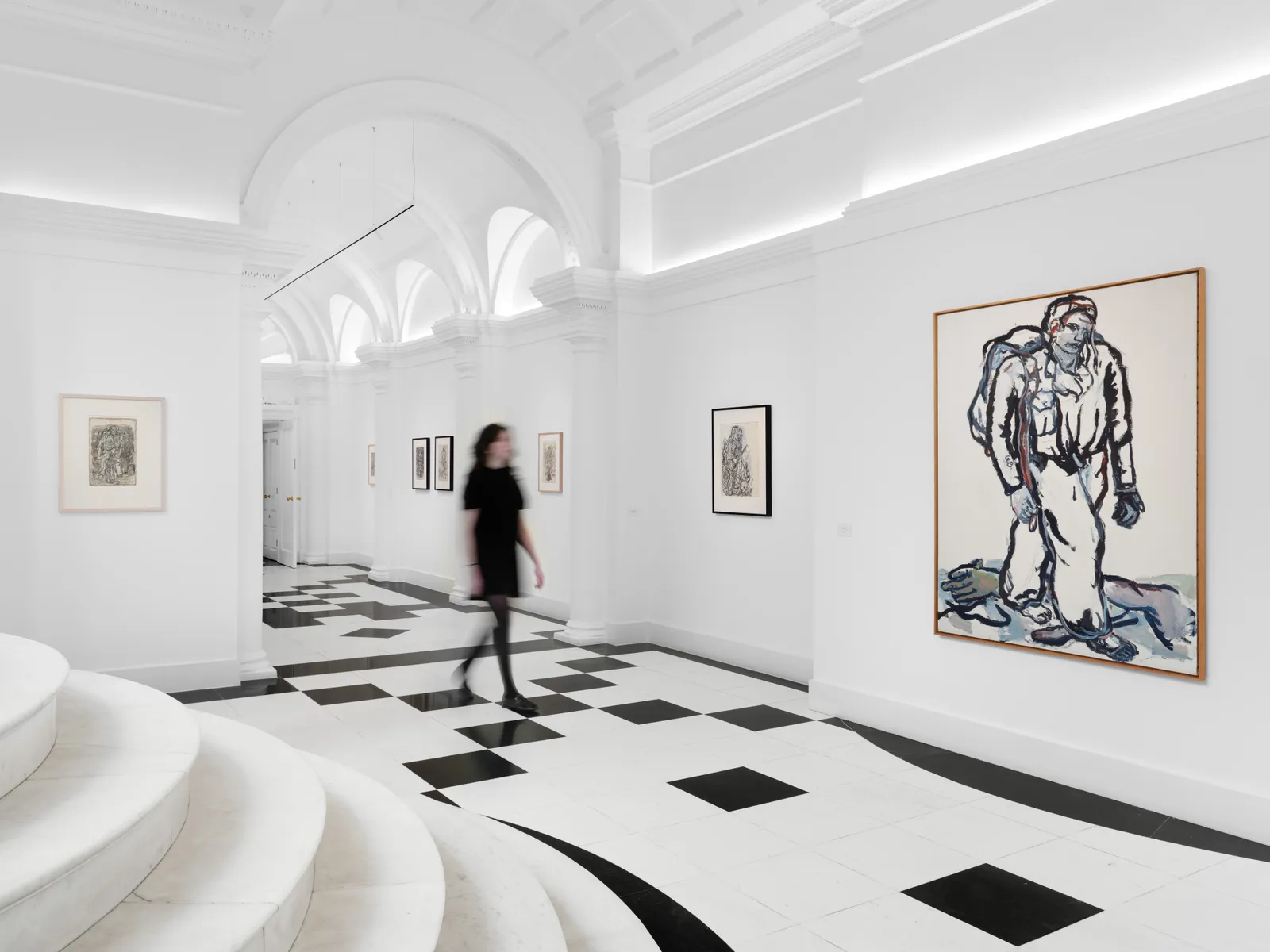
The present is viewed as highly ambiguous, which Baselitz aims to capture through these newly constructed heroes. In Spekulatius (1965), a figure wears a black costume that reveals raw, pinkish flesh, Baselitz’s initials are inscribed over the hero’s crotch, gesturing towards a now non-existent form of artistic inception. Interestingly, ‘Spekulatius’ refers to a German spiced biscuit, which appears totally unrelated to the figure’s devotional pose as he is seen lifting his arms up and tilting his head upwards. While the immediate underlying connotations in the paintings are not immediately obvious, viewers are drawn in by their peculiar compositions, which appear satirical even at an initial glance. There is a smooth contrast between 1. Kopf (1
Head) (1966) work showing a singular head, and the full-bodied heroes. 1. Kopf is loosely focused on the features that constitute a head, although still bearing visual resemblances of the voluptuous bodies. In the main gallery, we observe how the figures are against darker backgrounds, such as in Schwarzgrundig (Black Grounded), 2026, which propels them out of the canvas without limits. Each figure painted side-by-side responds directly to the other, almost competing for resemblances. A strongly archetypal work, Mit Roter Fahne (1966), displays a wrecked house in the background, while there is a stream of blood trailing from it towards the gigantic figure with its disproportionately small head. The figure holds down a scarlet flag with black markings, a stark symbol of nationhood soaked in bloodied crimson. Interestingly, the flag is held down, which collectively implies that flags observed in the series often bear down on the heroes, implying collapse as opposed to supporting them. Overall, through his series, Baselitz conveys to us that heroes remain enigmatic, existing as much in the past as they do in the present. We learn to read signifiers in the paintings as means by which we can reckon with Germany’s war-torn past while we observe what place these figures have in society today.
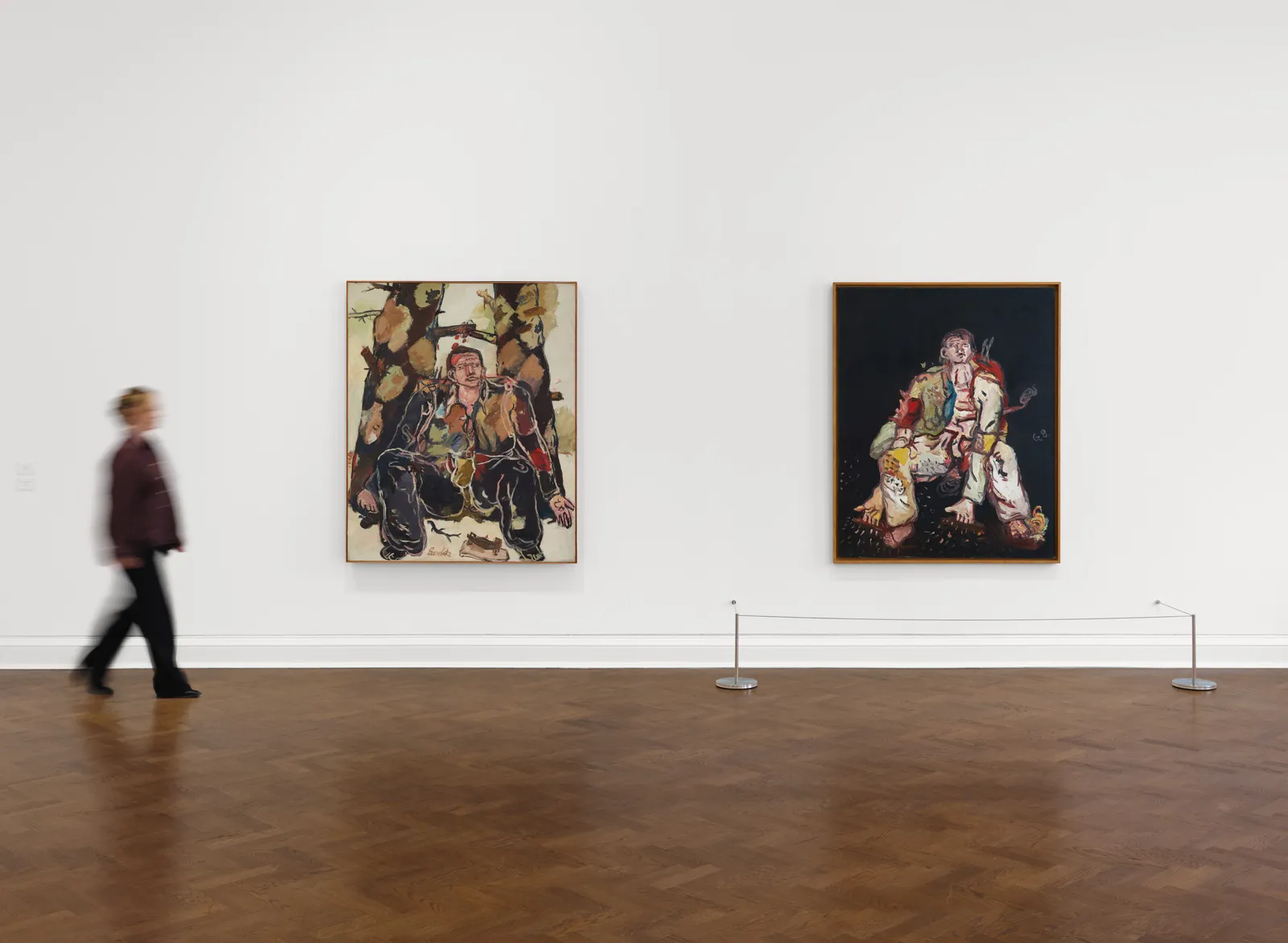
Don't forget to check in and leave your review on the gowithYamo app today!