
Minor Attractions 2026: Claw Machines and Hyperrealism
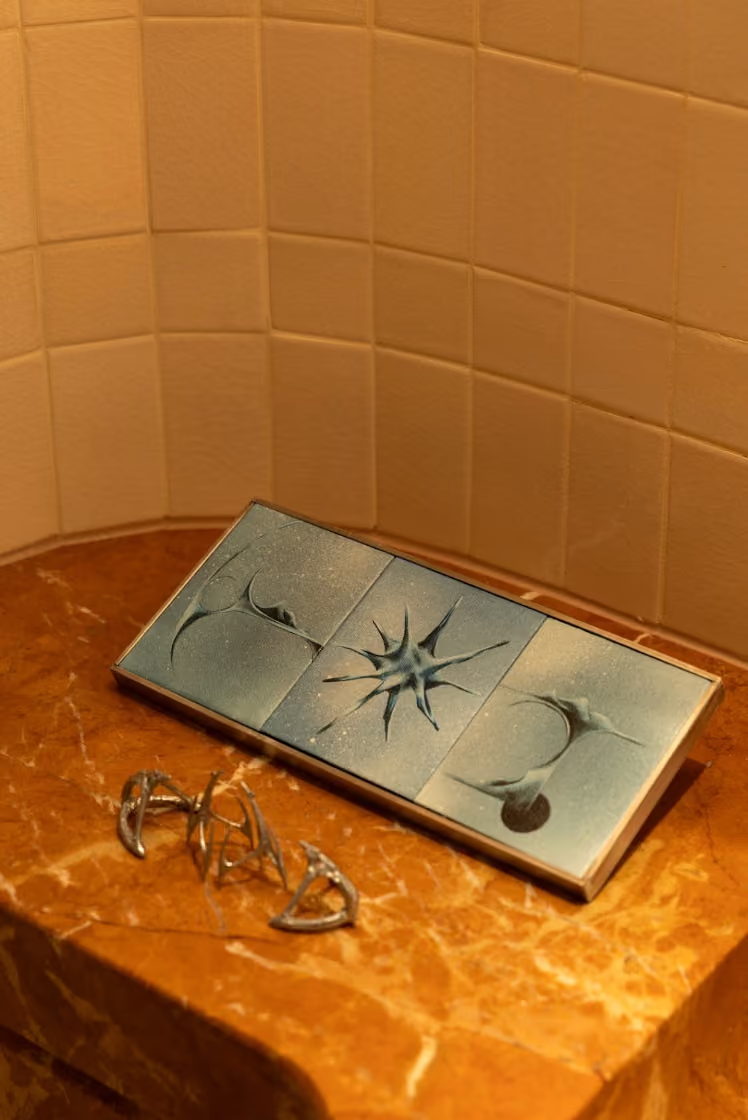
For its fourth edition, Minor Attractions is taking over the first floor of The Newman Hotel. Founded by Jonny Tanna and Jacob Barnes, the contemporary art fair is considered to be the indie darling alternative to Frieze London—a short lime bike ride away/. Minor Attractions’ 2026 programme features galleries from 15 countries, a durational performance from Amsterdam-based group Trespassing, a radio residency, a mahjong club, and an abundance of film screenings. Oh, and can’t forget an evening with Simon Amstell.

There’s a queue around the corner when I arrive for the VIP preview on Tuesday. My close friend-cum-senior editor at Elephant Magazine-cum-networking wizard Emily Burke calls in a favour, and a very well-dressed PR usher us inside, much to the disapproval of everyone left waiting. Once inside, we come face to face with the culprit of the queue: two tiny lifts.
Crowds are a given at Minor Attractions. I have war flashbacks to last year’s fair, when I watched multiple artworks get knocked off the walls of the Mandrake. The lifts feel like a strategic improvement. Compared to the steep 50 quid price tag of admission at Frieze, Minor Attractions’ free entry is one of the many reasons everyone is desperate to get inside.
Hotel suites are manipulated into gallery spaces as work is displayed on the bed, in the closet, over the sink and hanging in luxuriously large showers. Most of the 16 rooms host one to two galleries, while a few are reserved for single-work presentations. Exhibiting in a hotel suite provides a unique challenge for gallerists and artists, especially at a hotel as intentionally designed as The Newman Hotel. The sleek contemporary Swedish Grace furnishings and the artwork are in competition for attention.
Some artists lean into the aesthetic rivalry and create installations around the accommodation. Bora Akinciturk and Millie Rose Dobree team up for a duo presentation in a suite bathroom where it’s perpetually the morning after. Tie-dyed towels, Primark panties, fake nails, candy, and last night’s wrappers (Durex and McDonald’s) are littered around the bathroom sink and floor. The humorous bronze casts of BuzzBalls and resin tabs of junk reveal the scene as an art installation while simultaneously disrupting the illusion. A few rooms down the hall, Emily and I confuse someone’s leftover room service coffee and desk clutter for another Tracey Emin-esque installation.
Sydney-based Laila Gallery doesn’t have to vie with the Art Deco light fixtures; Tessa MacKay’s paintings stop you dead in your tracks anyway. MacKay sources photographs from Facebook’s private and public archives and reproduces the images as hyperrealist yet surreal paintings. Her source photographs are often accidental or unconsidered, with little compositional or aesthetic merit: the sort of pictures one would delete to make space on a digital camera’s memory card. Yet, by translating these images onto canvas, MacKay captures a bygone crudeness and carefreeness that starkly contrasts today’s social-media-induced norms of high digital literacy and curated online self-presentation.
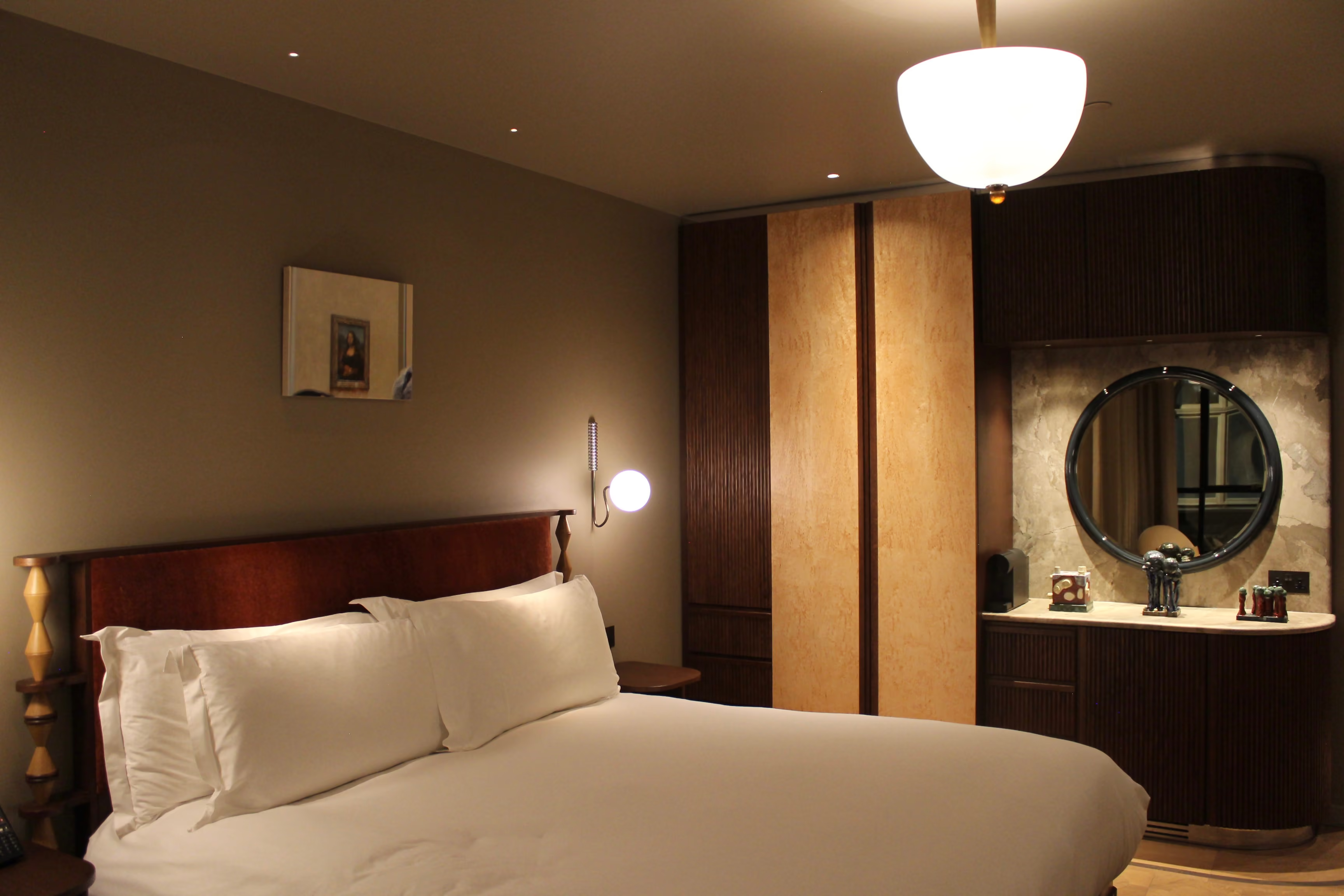
‘France_09.jpg’ (Mona Lisa) (2026) hangs over the queen-size bed. I imagine the original photographer shakily standing on tiptoes, trying to photograph the most famous portrait in the world through a sea of tourists. MacKay’s technique replicates the technological limitations of the early 2000s: malfunctions, out-of-focus subjects, red eyes and overexposure are baked into the texture of the paintings. The scenes feel uncanny, like an all-too-real memory you’re sure you once had, or a video whose origins you can no longer determine. I will be thinking about these paintings for a long time.
Emily and I, “can we just squeeze behind you, please” our way through the fair and exhale when we enter the Tala Chicago space. The lights are dimmed, and the works by Lola Ayisha Ogbara and Roland Knowlden Jr seem to negotiate with the hotel suite itself. James Baldwin’s Giovanni’s Room serving as inspiration, and the artists meditate on the space as a site of desire. Knowlden’s sculptures are presented on the bed, like two lovers. A leather mask watches from inside the closet. Not so surprisingly, the presentation won Best International Booth at Minor Attraction.
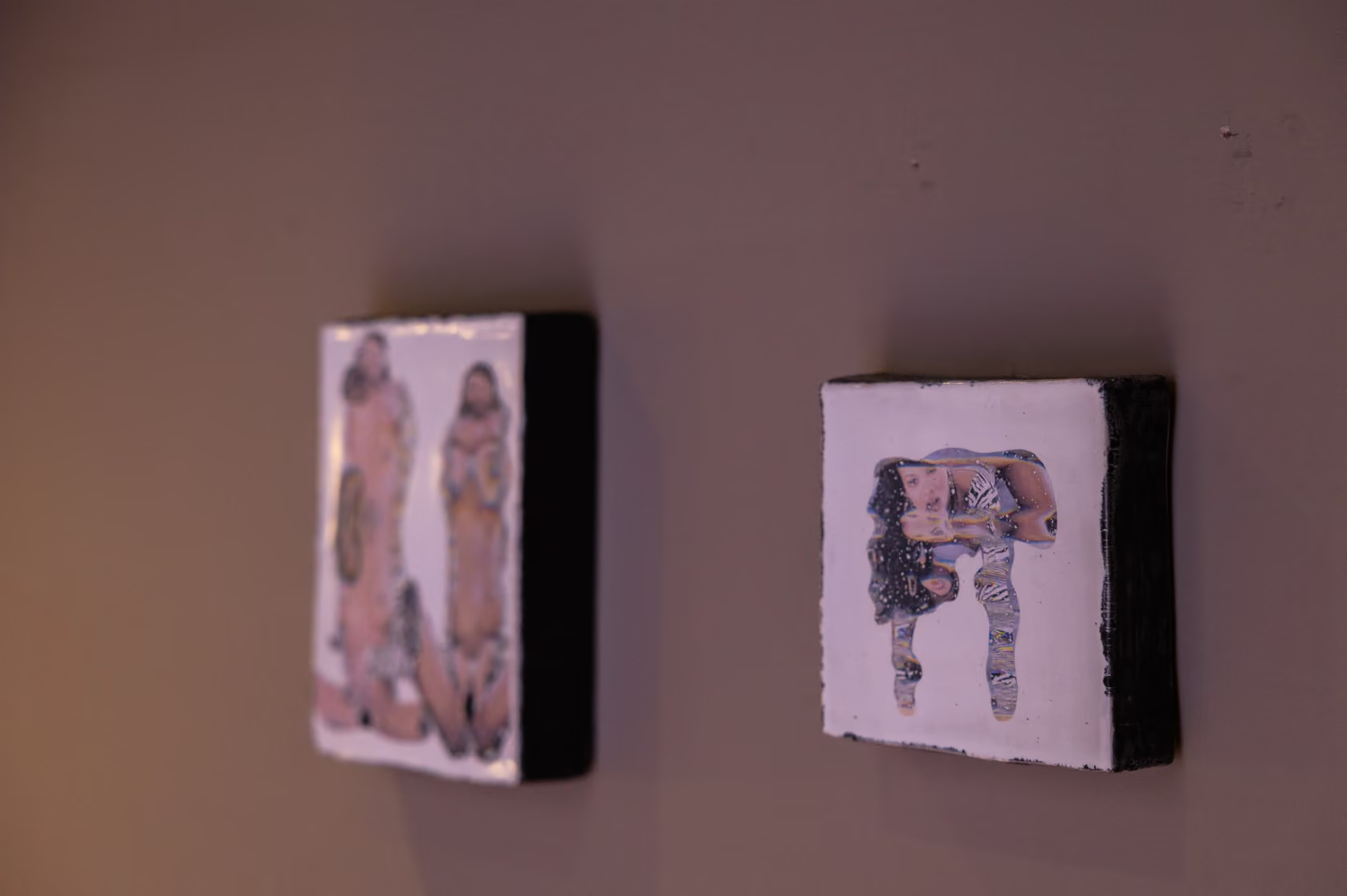
Harlesden High Street has a claw machine game filled with plastic eggs that you can pay to try to win a prize hidden in five of the eggs. Emily and I opt out and make our way back to ground level. Like any art fair, there’s an overwhelming amount of work to take in. Minor Attractions is no exception, but at least it has games.
Minor Attractions 2026 was on from October 13-18. You can see the complete program on their website.