
Visualising the Zodiac: Scorpio
In this gowithYamo series, Visualising the Zodiac, we explore ways in which art and astrology meet in an unexpected cosmic crossover. Each month, art historian and writer Melissa Baksh pairs a zodiac sign with a work of art that embodies its essence through its artistic style and tone.
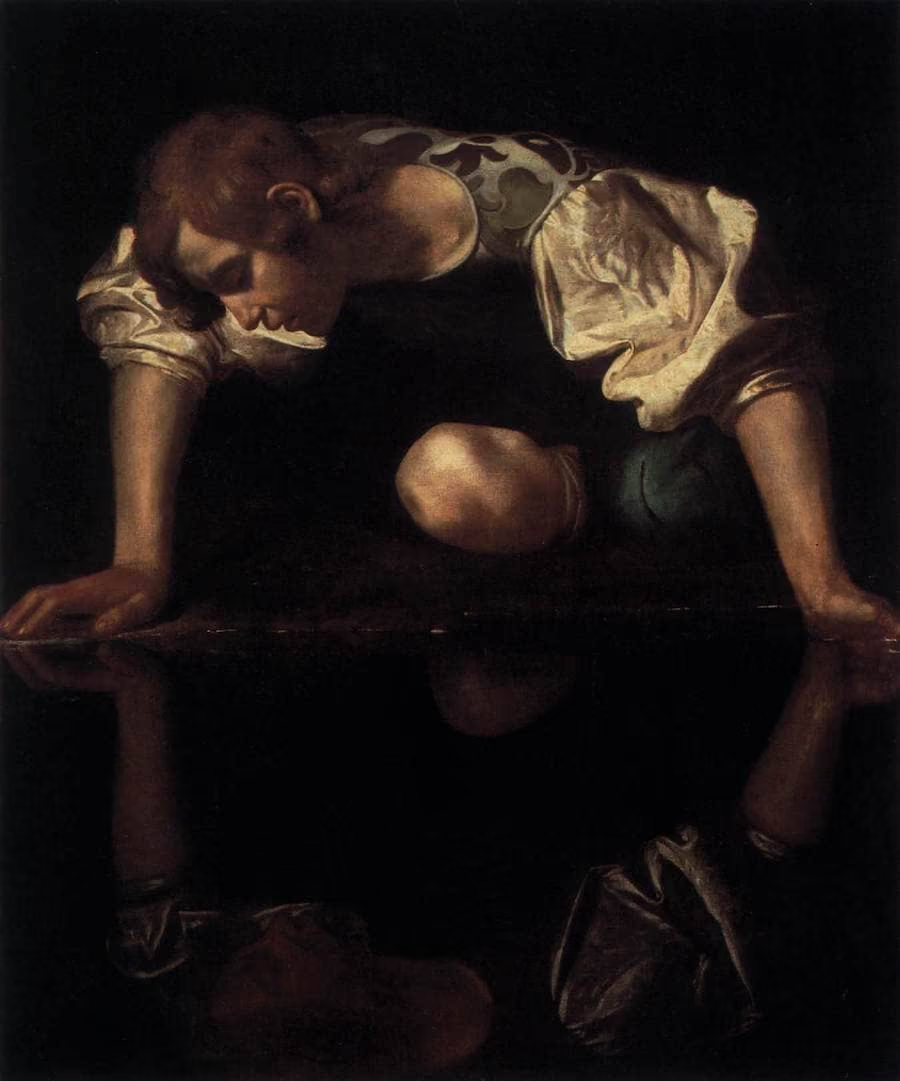
This month (23 October–21 November) belongs to Scorpio, the eighth sign of the Zodiac. Scorpio is a fixed Water sign ruled in modern astrology by Pluto, the planet of transformation and rebirth, and traditionally by Mars, the planet of action, passion and desire. Scorpios are magnetic and intensely emotional creatures, though they often conceal their innermost feelings beneath a guarded exterior. An artwork that encapsulates Scorpio’s enigmatic energy is Caravaggio’s Narcissus, c. 1597–1599, which can be found in the Galleria Nazionale d’Arte Antica in Rome.
The Baroque painting depicts the mythological youth Narcissus, who becomes captivated by his own reflection in a pool of water. At first glance, the scene appears straightforward, yet beneath its surface lies a meditation on desire, obsession and the destructive consequences of becoming consumed by oneself.
The most overtly Scorpionic quality of the work is its exploration of obsession. According to the Roman poet Ovid, Narcissus is an impossibly handsome young man who rejects the advances of numerous admirers before falling hopelessly in love with his own reflection - at which he stared until he died. After a day of hunting, he kneels down beside a pool of water to drink, only to become transfixed by the face staring back at him. Caravaggio captures the moment of his fatal fascination. Narcissus leans forward with both hands over the water, gazing intently at the reflection. Entirely withdrawn into his own world, he appears oblivious to everything beyond it. This resonates strongly with Scorpio, a sign associated with emotional fixation and the tendency to pursue desire to its furthest extreme. In Caravaggio’s painting, however, this intensity becomes destructive: Narcissus’ longing is so absolute that it leaves no room for anything else.
The unique composition is equally evocative of Scorpio’s connection with darkness, secrecy and the unconscious mind. Caravaggio eliminates almost every element of the surrounding landscape, placing Narcissus against an impenetrable black background. Unlike other depictions of the myth, there are no trees, flowers or distant horizons; instead, the youth and his reflection emerge from the darkness as though suspended in a private, timeless world. Dramatic contrasts between light and shadow - known as chiaroscuro - illuminate Narcissus’ pale skin and the folds of his clothing, while the shadows partially obscure his face. His expression remains difficult to decipher, as though something of his inner world is being deliberately withheld. Scorpio is often associated with hidden motivations and unspoken desires, and here, Caravaggio gives these unseen psychological forces a palpable, physical presence.
As a Water sign, Scorpio is associated with emotional depths, intuition and the mysteries of the inner self. Here, the pool becomes a threshold between reality and illusion; Narcissus’ reflection appears within reach, yet it remains entirely beyond his grasp. Moreover, the circular composition binds the two figures together, creating an almost hypnotic sense of entrapment. Narcissus longs to possess the image before him, but the more desperately he pursues it, the more he becomes its captive. This reflects the tension between Scorpios’ desire for control and their capacity to become overwhelmed by their powerful, all-or-nothing emotions.
Finally, the work explores a theme particularly relevant to Scorpios: transformation through destruction. In astrology, Scorpio - the sign of the deadly scorpion and serpent - is associated with the cycles of death and rebirth. Here, Narcissus’s story offers a dark interpretation of this natural process. Unable to recognise the reality of his situation, he remains imprisoned by his desire until he is ultimately consumed by it. In Ovid’s account, Narcissus’ death is followed by his transformation from self-obsessed youth into the sweet-scented, gold and white flower that bears his name. Caravaggio chooses not to depict this final metamorphosis, but instead holds us in suspense at the moment before tragedy strikes. The result is a haunting meditation on the transformative and destructive potential of unchecked desire.
In Narcissus, Caravaggio transforms this familiar myth into a compelling exploration of obsession, illusion and the dank recesses of human desire. Through the mysterious depths of the water, the impenetrable darkness and the youth’s unwavering gaze, the painting evokes Scorpio thoroughly. It also offers a distinctly Scorpionic warning: the darkest of mysteries are not always found in the world around us, but sometimes, within ourselves. And much like the scorpion itself, there is a sting in this tale.