
Visualising the Zodiac: Leo

This month is dedicated to Leo, the fifth astrological sign of the Zodiac. As a fire sign ruled by the sun, Leos are larger-than-life creatures with a naturally commanding presence. Represented by the lion, Leos are fiercely loyal, natural-born leaders. An art work that illustrates Leo’s alluring nature is Sandro Botticelli’s The Birth of Venus, c.1484, Uffizi Galleries, Florence. It was likely commissioned for Florentine statesman and patron Lorenzo de’ Medici.
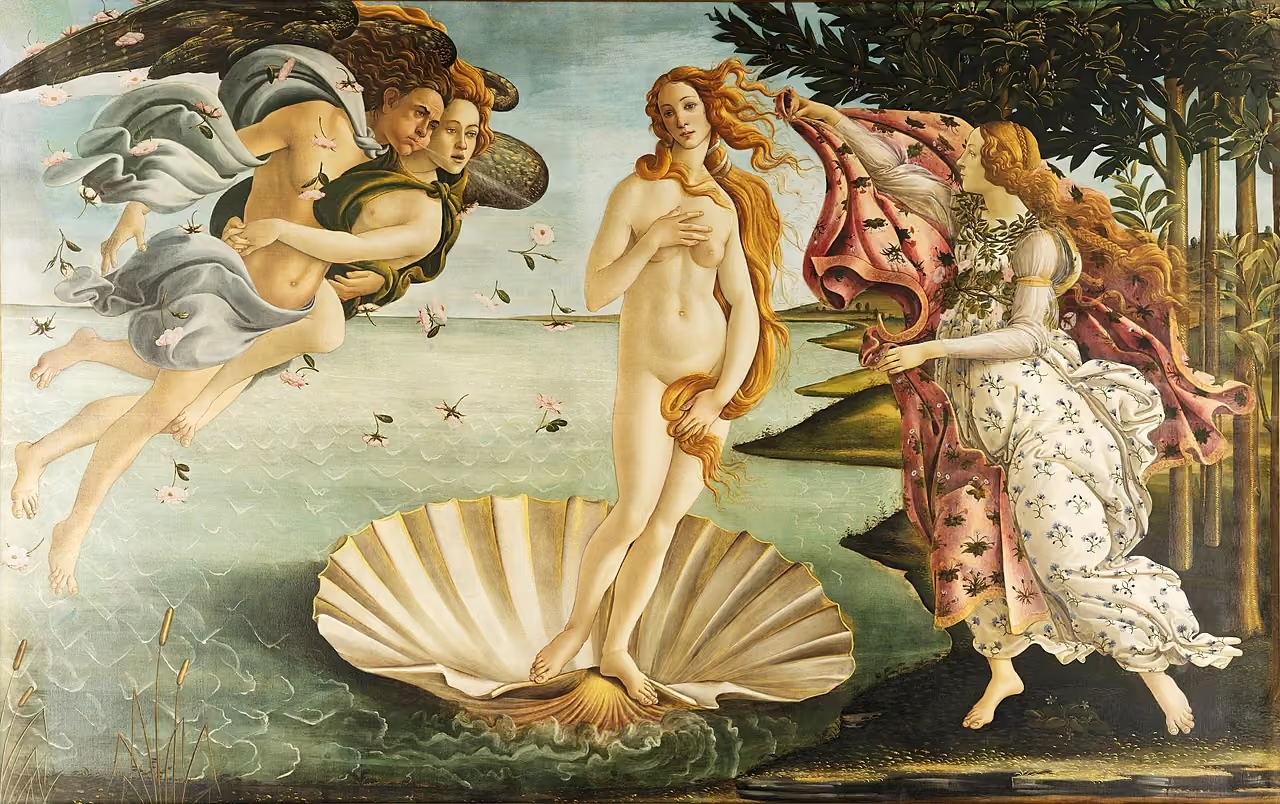
The celebrated Renaissance painting depicts Venus, goddess of love and beauty, standing on a giant scallop shell which emerges from the sea, drifting towards the Cyprus shore. To her left is the winged wind god Zephyr and his wife Aura, who shower the goddess with roses, alluding to the legend that roses first grew at Venus’ birth. On her right is Hora, goddess of Spring, who holds out a pink cloak adorned flowers, ready to clothe the goddess. Inspired by classical mythology and Humanist ideals, the painting celebrates beauty through its harmonious composition, elongated figures and flowing forms. Today, it remains one of the most iconic works of Western art and exerts enduring cultural influence.

Leos thrive in the spotlight, and here, our protagonist embraces being seen unapologetically. Venus stands at the centre of the composition, commanding the viewer's attention. Our eyes are immediately directed towards her; the wind gods on the left propel her forward, while the attendant on the right reaches to welcome her ashore. Rather than competing for attention, the surrounding figures support and enhance Venus' luminous presence. This mirrors Leos’ confidence and ability to become the focal point of any room. Here, Venus does not seek attention through dramatic movement or exaggerated gestures; she simply stands with quiet assurance, allowing her presence alone to captivate the viewer.
This painting also signals a shift in western art. Here, we have a near life-size full female nude, something that was unprecedented at the time. Whilst female nudity was largely shown as shameful in religious paintings, here, in line with Humanist ideals around free will and beauty, her nudity is celebrated. Botticelli has likely looked to a classical statue in the Medici collection for Venus’ contrapposto stance and Venus Pudica (“Modest Venus”) pose, where the right hand covers the breast and the left hand covers the pubic area. Here, Venus covers her genitalia with her long blonde hair while remaining entirely unashamed of her exposed body. Leos have a tendency to come off as arrogant or prideful, but it is thought that their confidence arises authentically. With her serene expression and regal posture, Venus embodies this innate confidence.
The goddess also brings the drama: she emerges from the sea, fully formed and upon an enormous shell. Divine winds blow as flowers scatter through the air. The composition echoes the opening scene of a grand opera, and Venus is the Prima Donna. The figures beside her float in the air; they appear weightless whilst also seeming flat, lacking depth and shadow, which adds to this sense of theatricality. The sheer splendour of Venus’ arrival echoes Leos’ dramatic flair.
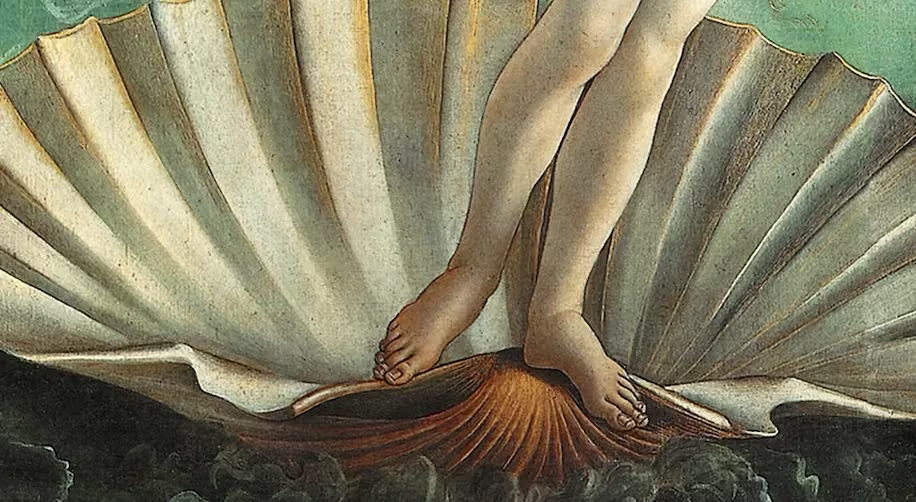
Another characteristic often associated with Leo is radiance. Leo is ruled by the Sun, which is connected with warmth, vitality, creativity, and life itself. Although Botticelli's palette is softly muted rather than intensely bright, Venus appears illuminated by an inner light that distinguishes her from her surroundings. Her idealised alabaster skin, with its marblelike quality, contrasts against the green sea and cool landscape, giving her an ethereal glow. In addition, the artist has painted a dark line around the contours of her body, making her stand out even further, suggesting that she is not of this earth, nor bound by its natural laws. Similarly, when in the company of a mesmeric Leo, you can easily forget where you are.
The Birth of Venus conveys a sense of timeless grandeur, as Botticelli transforms a mythological figure into an enduring cultural icon. The painting remains a favourite not because it demands attention but because, like Leo, it possesses an undeniable magnetism, with Venus captivating viewers with her striking presence.