
Visualising the Zodiac: Libra
Each month, art historian and writer Melissa Baksh pairs a zodiac sign with a work of art that embodies its essence through its artistic style and tone.
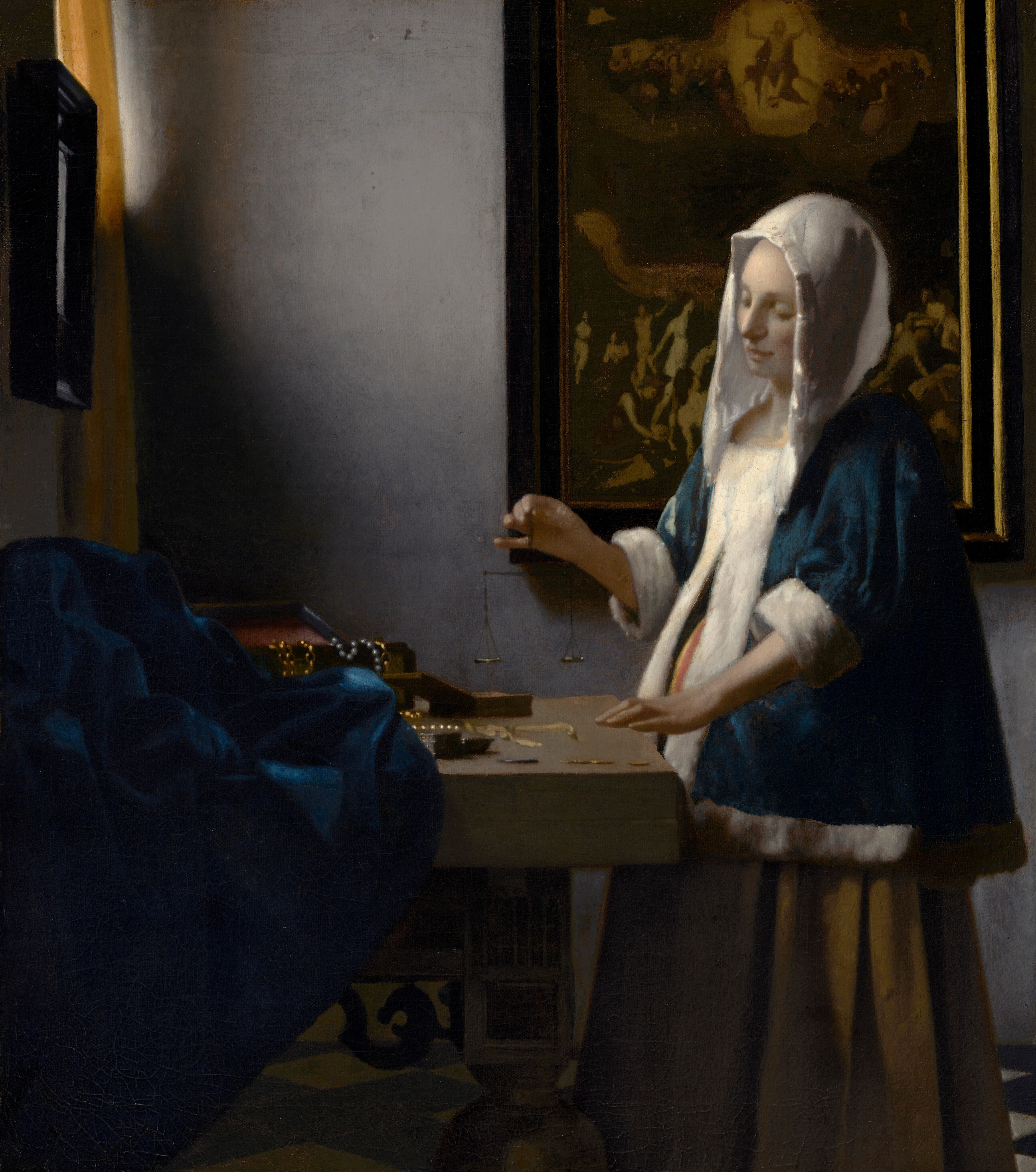
This month (23 September -22 October) is dedicated to Libra, the seventh sign of the Zodiac. Libra is an Air sign ruled by Venus, the planet associated with beauty, love and material wealth. Above all, Librans are associated with justice and fairness, making them natural diplomats and mediators. Libra is also unique among the signs in being represented by an inanimate object - the scales - rather than an animal or human figure. This is connected to the Autumn equinox, when day and night are approximately equal in length. An artwork that wholeheartedly encapsulates Libra’s harmonious energy is Johannes Vermeer’s Woman Holding a Balance, c. 1664, which can be found in the National Gallery of Art in Washington, D.C.
The painting depicts an unassuming scene from everyday life, yet, as with so many of Vermeer’s works, there is more to it than first meets the eye. The most overtly Libran quality of the work is the balance itself. A young woman dressed in fine clothing stands before a table, delicately holding a small set of weighing scales in her right hand. On the table is an open box, possibly containing weights, while from another box spills a string of pearls and pieces of gold jewellery - an indication of material wealth that places the woman within the prosperous merchant class of Vermeer’s Delft.
It was once thought that the woman was weighing some kind of precious material; however, X-ray examinations have revealed that the scales are, in fact, empty. Here, Vermeer captures the moment in which she appears to contemplate the balance itself; the painting becomes less about the physical act of weighing and more about the concept of living a balanced life. The scales appear almost perfectly level, creating an immediate sense of equilibrium. This resonates strongly with Libra and their predilection for careful deliberation; Librans are known for analysing every perspective and consequence before reaching a conclusion, and the woman’s poised and pensive gesture exemplifies this.
The picture hanging behind the woman also provides an important clue to the work’s deeper meaning. It depicts the Last Judgment, the Christian scene of the final judgment of humanity, in which Christ determines the eternal fate of souls. Christ appears at the top of the composition, enclosed within a mandorla, while the blessed and the damned occupy the space below. Significantly, the woman’s head physically divides these two groups, placing her between salvation and damnation. The pious scene introduces ideas of morality, judgment, and the consequences of human actions, creating a contrast with the display of worldly possessions on the table before her. Thus, the scales become more than an ordinary domestic object: they can be read as a symbol of judgement and of the need to negotiate between material desires and deeper spiritual concerns. This tension makes the painting particularly resonant with Libra, as the scales evoke the pursuit of equilibrium. The fact that Vermeer leaves them empty suggests it is up to the viewer to decide what hangs in the balance.
The composition itself is also remarkably balanced and refined. The woman stands slightly to the right of the centre, while the large window on the left lets a small amount of light in through the curtain. The light gently illuminates the interior, catching the woman’s face and drawing attention to her serene expression. It also creates a subtle transition between light and shadow, perhaps alluding to the passage of time, change and the possibility of coming into alignment. Here, light is fundamental to Vermeer’s sense of harmony. Rather than dramatically illuminating the room, it gradually reveals its surfaces, colours and textures. The result is an atmosphere of stillness and order - qualities strongly associated with Libra. Librans hold an appreciation for aesthetics and style, and this extends to their surroundings. Vermeer’s carefully considered interior, therefore, seems almost inherently Libran.
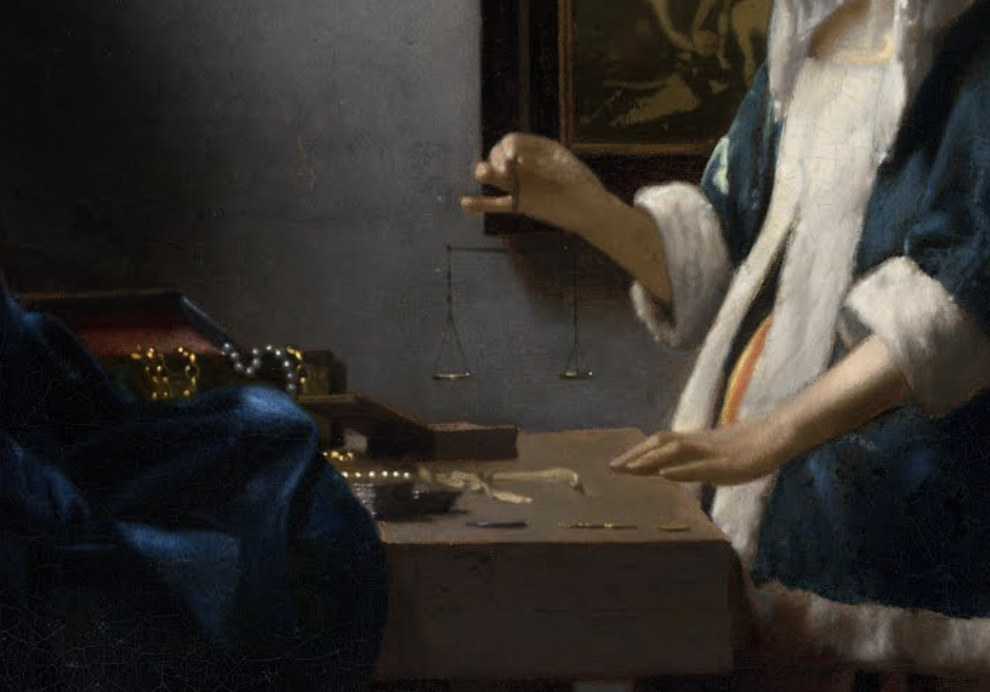
The composition goes even further in directing our attention towards the small scales in the woman’s hand. The painting’s perspective converges around her gesture, with the vanishing point located close to her extended little finger. Her arms form a frame around the device, while the small finger of her right hand extends horizontally, subtly echoing the scale’s level beam, reinforcing this sense of equilibrium. Significantly, Vermeer positions the weighing scales at the exact centre of the painting.
In Woman Holding a Balance, Vermeer transforms an ordinary domestic moment into a meditation on balance, judgment, and the relationship between material and spiritual wealth. Through the scales that take centre stage, the ominous presence of the Last Judgment and the carefully balanced composition itself, the painting evokes Libra through and through. Yet, like Libra itself, its meaning is not immediately revealed. Often inclined to avoid confrontation to keep the peace, Librans can conceal their feelings beneath a calm and harmonious exterior. Vermeer’s painting operates in a similar way: its messages require some searching out, but once uncovered, they resonate with remarkable clarity.