
Fair play to Fair Play: more art, less fees
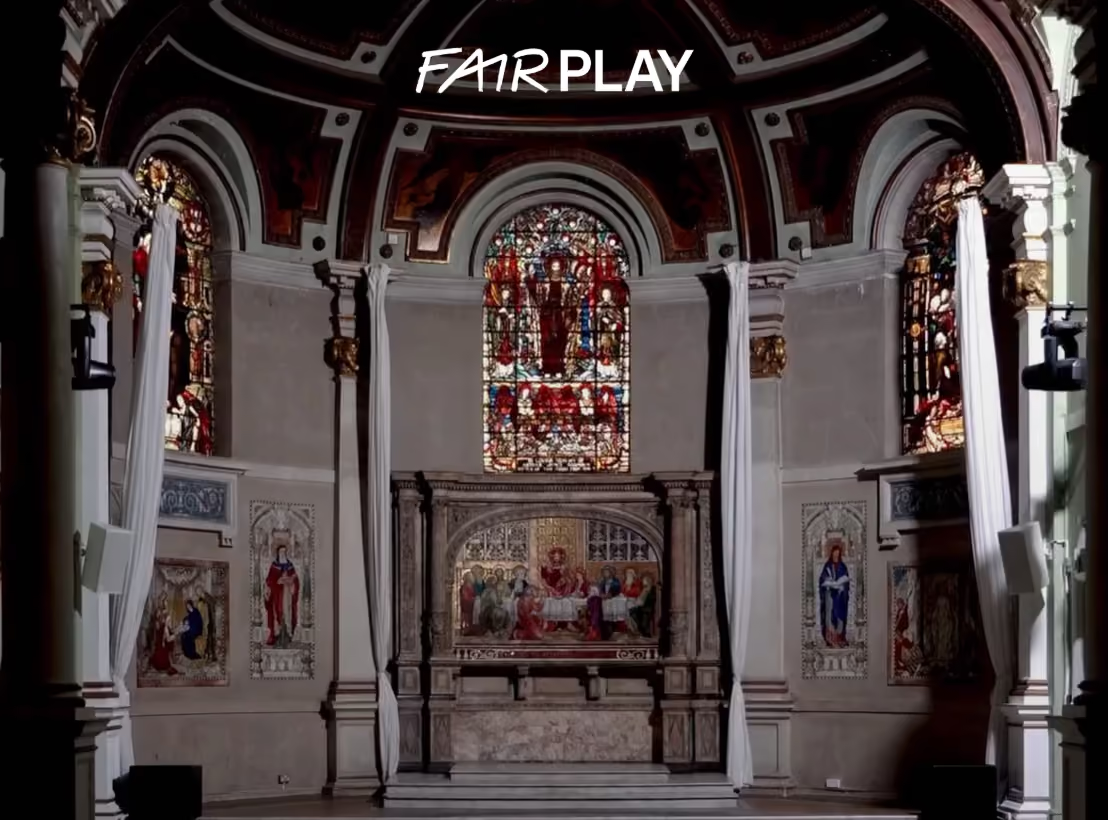
This October, Fair Play opened its inaugural fair at the beautiful One Marylebone, tucked on a little island between Regent’s Park and Great Portland Street. From the 15th to the 18th, Fair Play's Ryan Stanier, founder of The Other Art Fair, proposed an innovative, accessible take on art fairs, which are such crucial instruments of the London art scene - both sustaining and displaying it. Fair Play also leveraged an audience-at-its-heart approach, while establishing itself in a venue which shines as part of London's cultural heritage.
Fair Play did away with the usual pay-to-exhibit framework, where artists wishing to exhibit must pay a fee for their stand, thus potentially pay-walling emerging artists out of these key events.
A commission-based approach was trialed instead, potentially opening the art fair doors to a wider, alternative selection of contemporary artists.
On Saturday 17th October, we investigated this embodied promise to make the art world more accessible to artists while keeping art lovers close to contemporary art…
Arrival
Arrival is swift, with a steady queue quickly checking in and entering the beautiful One Marylebone venue. Before entering the fair, a quick tour of the gardens reveals charming fountains and lots of greenery, lit by a crisp October sunshine.
Bearings and first lap
The map of the fair lists out the 70 contemporary artists gathered under one roof and two floors, The Soane Hall and the upper Gallery. The contrast between the 19th century Grade-1 listed building and the contemporary art and people bustling inside creates a dynamic contrast, contributing to the palpable sense of excitement and expectations hanging in the air.
Across the two floors, a mixture of media confront one another – drawing, ceramics, collage, textile, sculpture – and seem to communicate in their own mixed-media language, from across the stands.
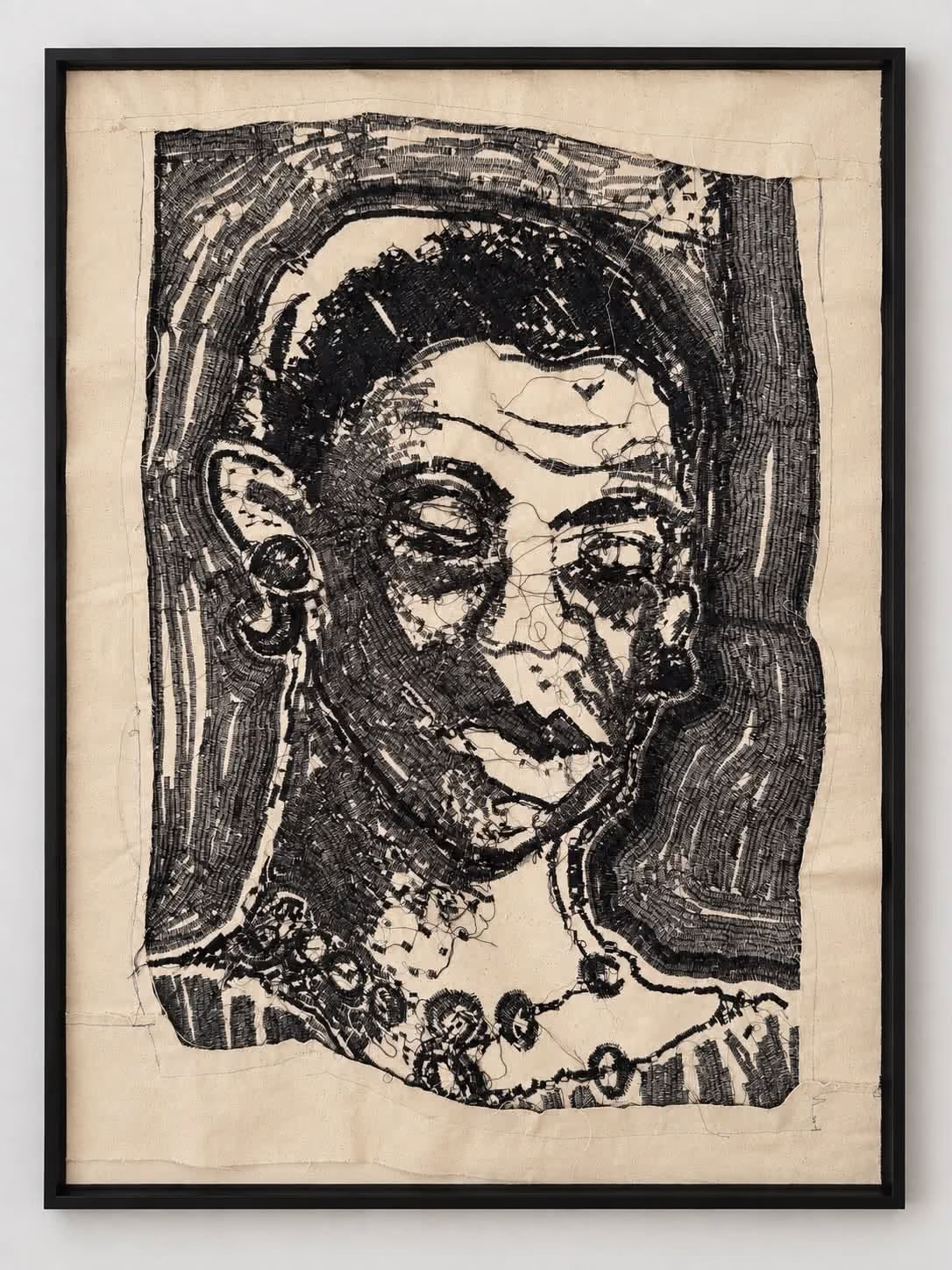
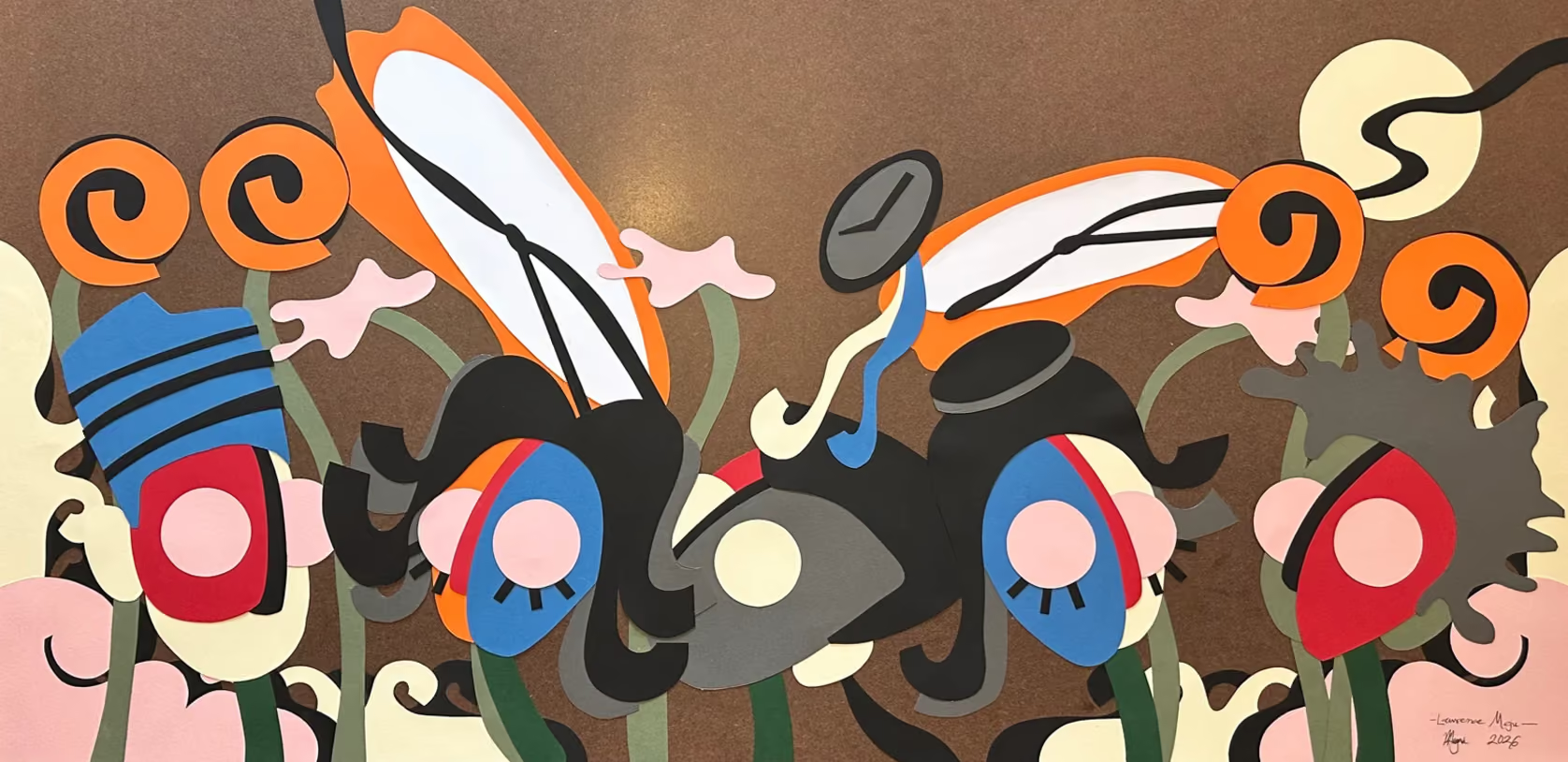
A ceiling-grazing sculpture by Tim Noble faces off to stitched marks and loose thread arrangements by Laetitzia Campbell, reminding visitors – and, presumably, exhibiting artists too – that contemporary art is at its finest when cross-pollination is encouraged. Indeed, a cleverly made 3D collage by artist Laurence Meju asks… “what happens when a collage becomes a sculpture?”
A healthy mix of original artwork and prints means price points reflect the contemporary art consumer spectrum – from first time buyers to collectors – and means a greater reach for the exhibiting artists.
The visual tide is powerful (obviously), but the auditory overlay is also interesting: a variety of accents, languages and speech patterns emerge from the crowd; might it be that the visitors gathered here today reflect London’s diverse population, showing an art world slowly and steadily lowering its brow, and opening its doors?
Coffee break
… all this thinking and walking demands a coffee break – visitors enjoyed hot drinks and cocktails while gazing up at the beautiful dome of the Soane Hall or down at its fabulous tiling.
Ryan Stanier, founder of Fair Play & the Other Art Fair, could be spotted chatting to visitors and artists; art fairs seem to humanise the art world – bringing artists, visitors and organisers close to one another.
Real faces, real humans; a warming sentiment in our tech-obsessed era.
Second lap
There is no right way to explore an art fair, and a second lap can reveal previously unseen things - starting from the end and working one's way back to the start can be a handy change of perspective as one steps from stand to stand – colours, patterns, media appearing differently when perceived following their right or left-door neighbour.
It is a small space, and the ice is easily thawed: visitors can exchange a few quick words with artists as they meander through the stands. In contrast to traditional museums and private galleries, this close contact reminds us that art is a living, breathing activity created by reals hands which one can shake.
Conversation with the artists are a good reminder that the former are also experiencing Fair Play for the first time and had to tailor a subset of work to the Fair and a new audience, like Delphine Lebourgeois who explains how she selected pieces for her stand from across her body of work, which explores the realms of human psychology, power dynamics and female identity.
Final thoughts…
Fair play to Fair Play (get it?)… who put on quite a show! The direction Fair Play took seems to accurately reflect key challenges facing the creative industry currently:
1. Addressing the inequalities in the art world by bolstering accessibility and democratisation seems to remain a top priority, rather than a passing fad or PR stunt, with new formats and solutions being proposed in highly visible contexts. Fairs doing away with paywalls may seem obvious, and yet are still not the default. Merit-, rather than fee-based, selection feels like a win for now, although transparent decision-making and a diverse, consciously chosen Selection Committee are two enabling pillars, to be reviewed and reconfirmed for each future edition of the Fair.
2. Audiences are the beating heart of the art scene and opportunities for all types of audiences to own art and actively participate in the creative industry are multiplying. By giving space to a variety of media (from painting to textile) and outputs (originals or prints), the likes of Fair Play can help open conversations around who can participate in the art world, who is priced out, and how that impacts the works created by artists.
Crucially, it allows a direct line of communication between artist and audience, without the artificial framing sometimes provided by galleries, curators or PR firms.
3. Spaces are invisible actors and can shape the outcomes of an event. Unlike permanent museums and galleries, fairs have the privilege of not being location-laden. Organisers can therefore take the art to communities and areas traditionally disconnected from the art world, or can use historical spaces like One Marylebone to enable London’s cultural heritage to uplift the artists of tomorrow in a beautiful collaboration across time and space.
(And yes - we are already looking out for next year's fair!)