
Tate Modern’s Infinities Commission 2026: nora chipaumire Gadzi
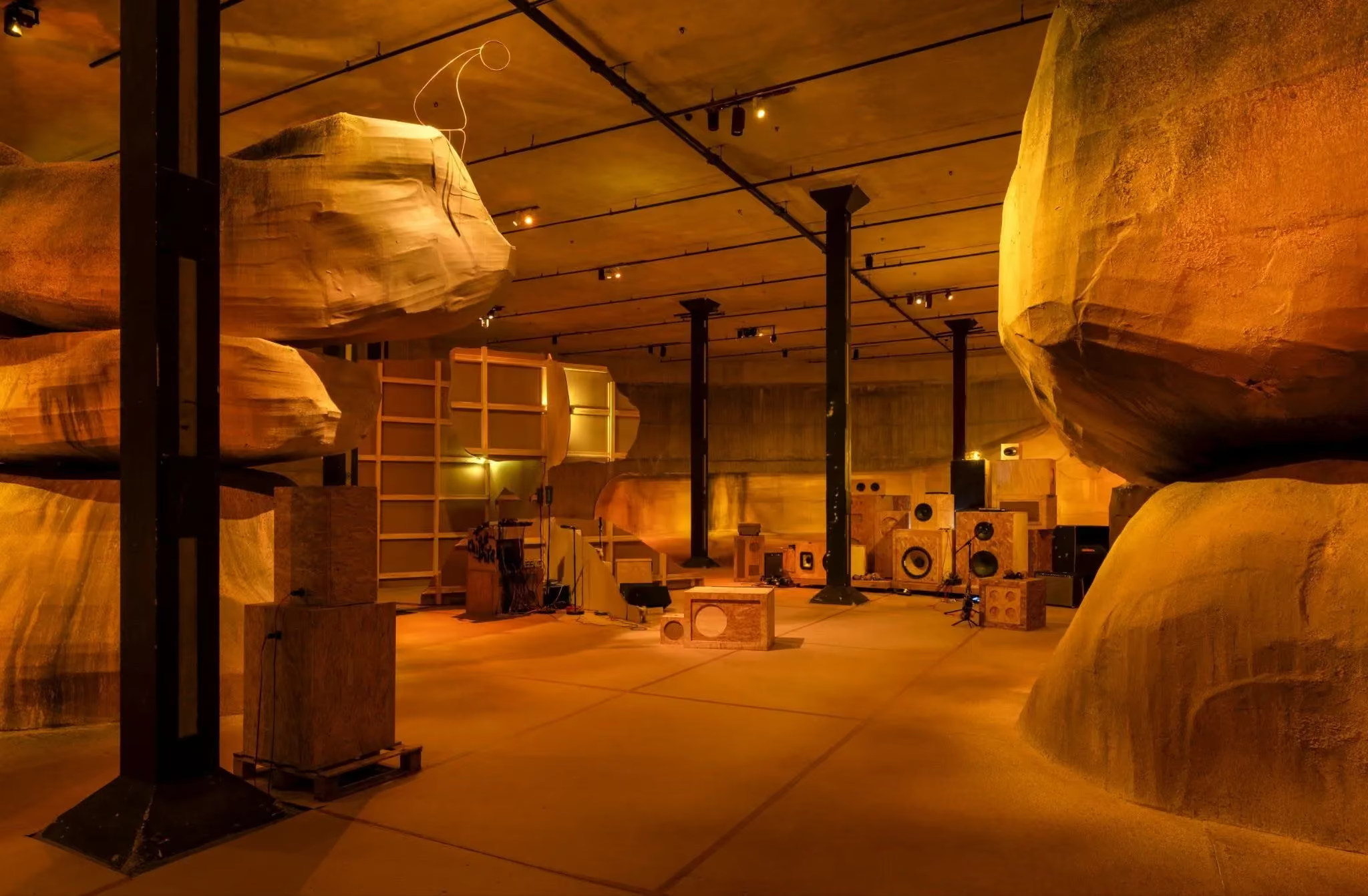
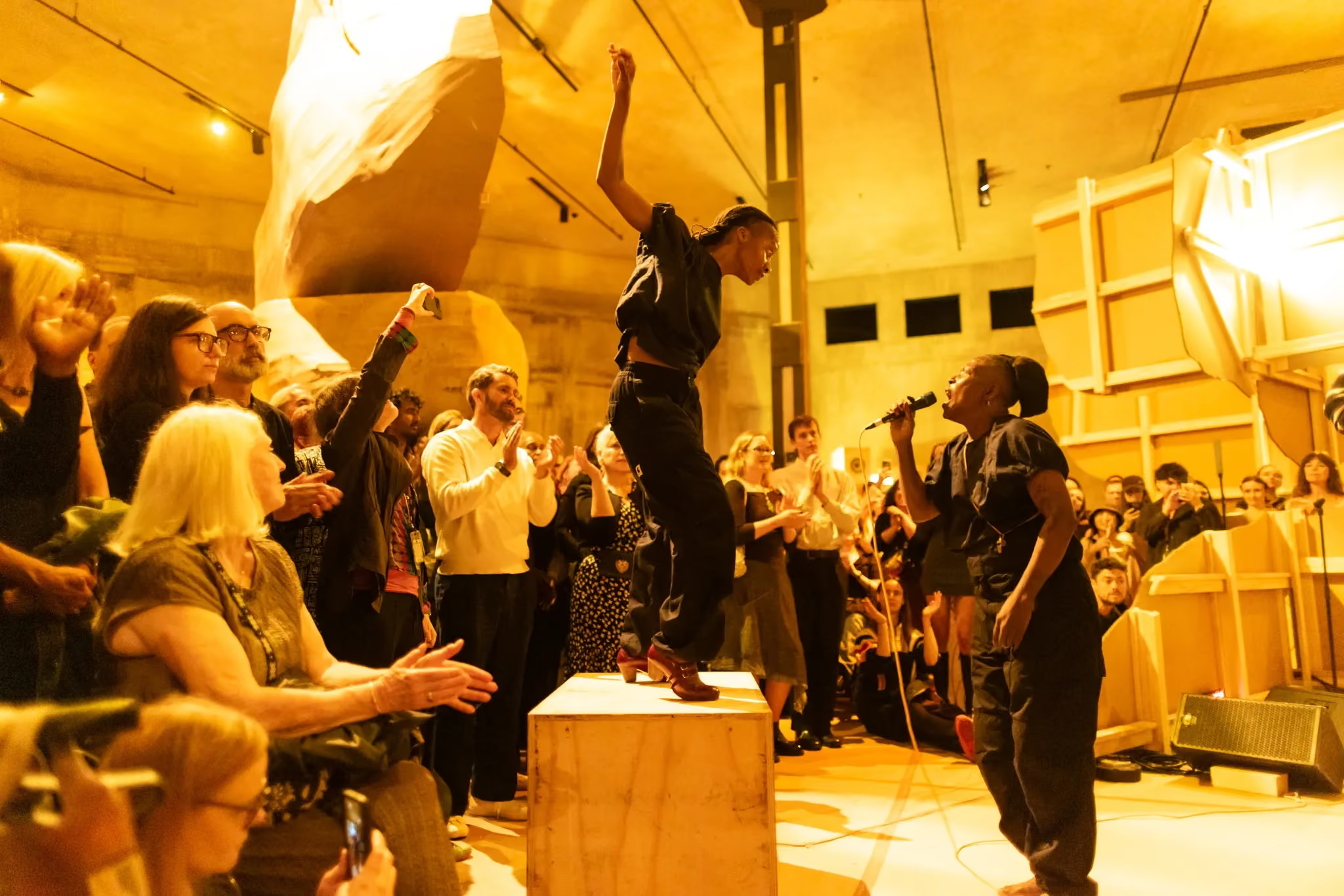
Installation view of Nora Chipaumire: Gadzi, Infinities Commission 2026, Tate Modern. Courtesy of Tate Modern.
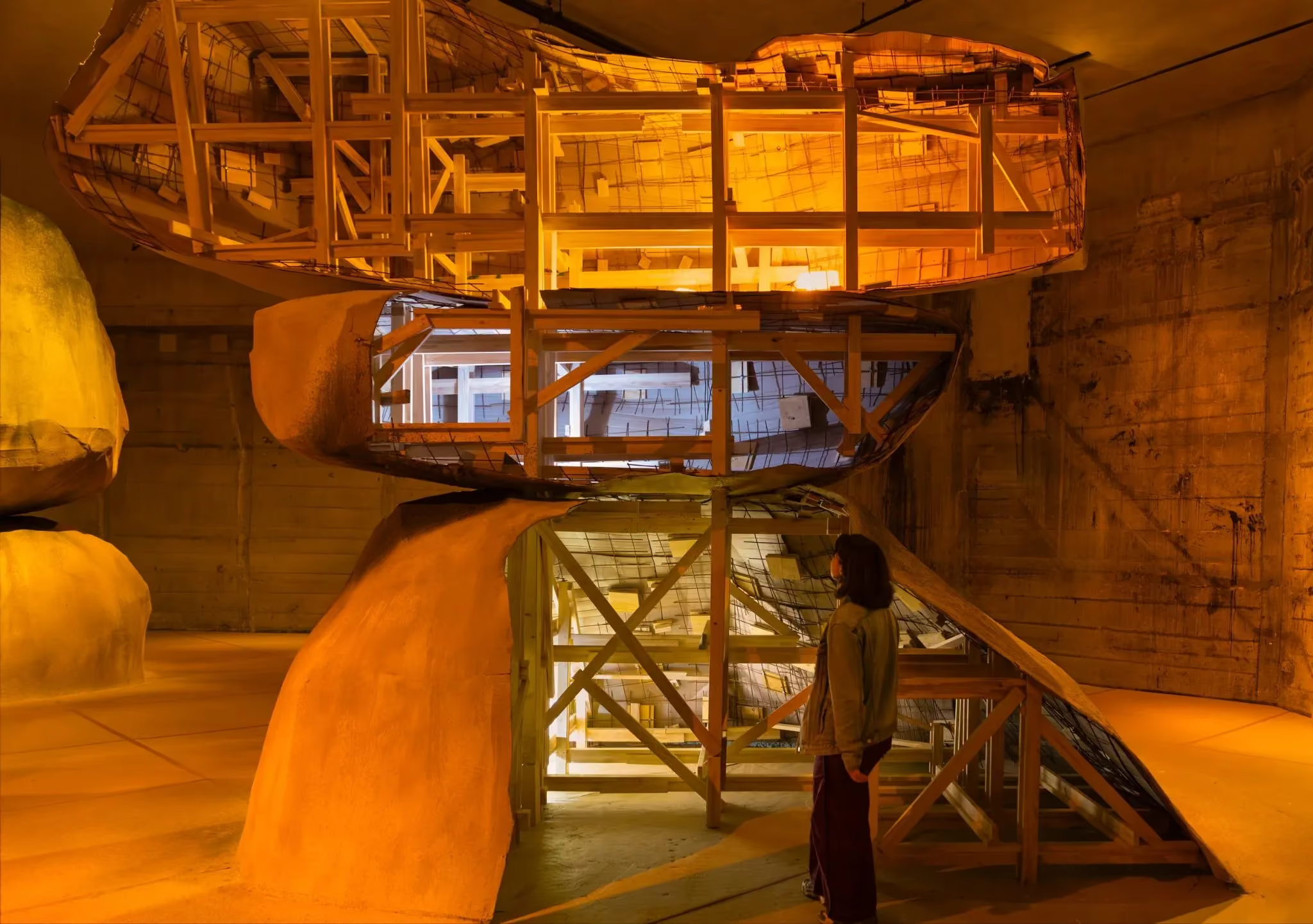
Entering nora chipaumire's installation feels like stepping into a warm sunset hug, filled with beaming vibrations. Reminiscent of a stone cave with desert-punk glimpses from Mad Max, the work features a series of sound systems and hand-built sculptural elements crafted from wood, paper, and metal.
Born in 1965 in Rhodesia, now Zimbabwe, chipaumire's work moves between multiple imaginaries — African, black, woman — across opera, dance, installation, and film, with a punk resistance running through each of them. In Tate Modern's East Tank, she creates a living sonic organism rooted in the ancient landscapes of Zimbabwe and the legends of the Shona people. The title comes from gadziguru — the oldest and most powerful female presence, a generative force tied to land, ancestry, and creation.
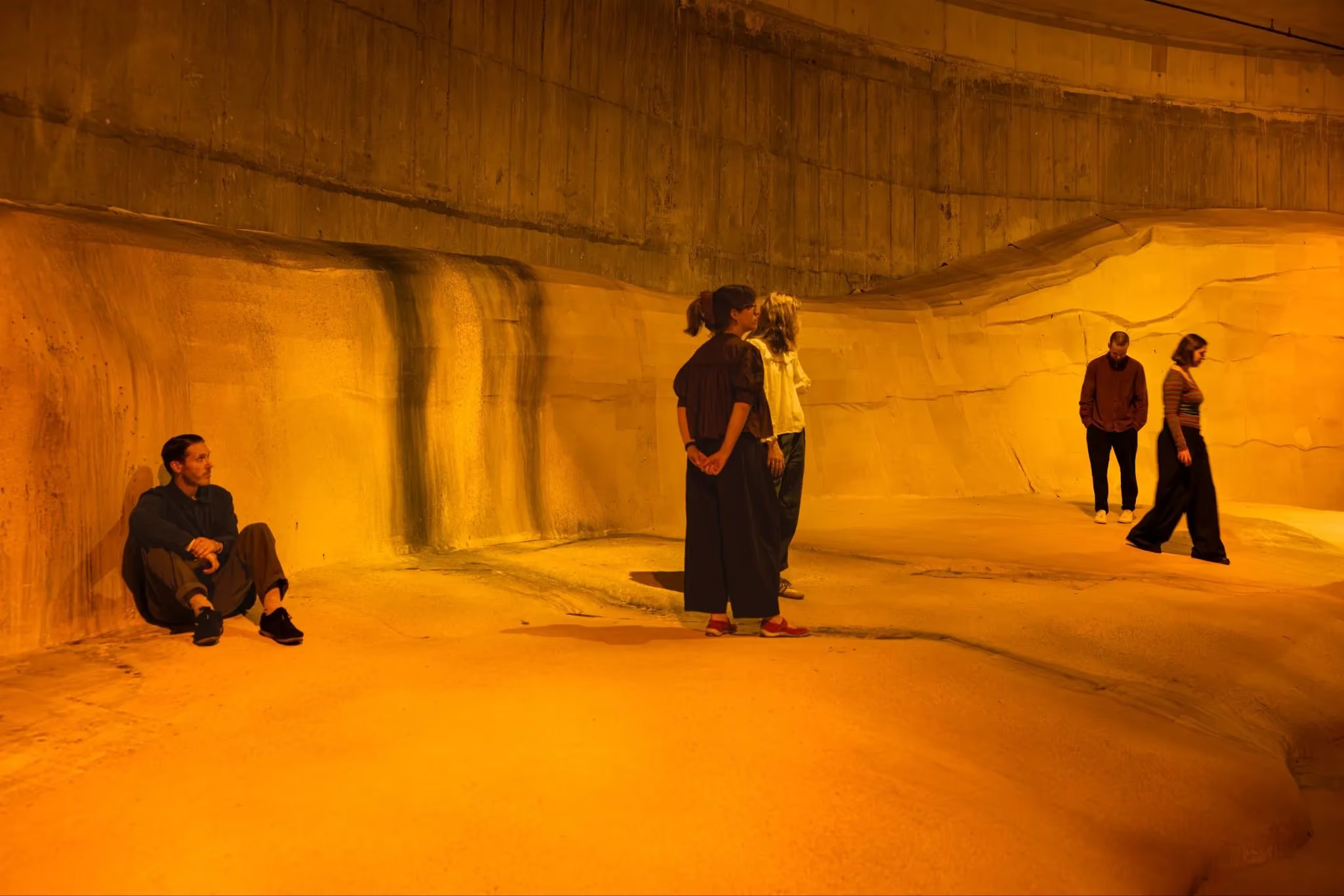
Unlike the typical museum exhibition with its barriers and roped-off zones, Gadzi offers freedom: to walk, to pause, to sit or even lie down. The work links the dub's low-frequency force, rooted in Africa, and the geological and spiritual presence of stone. Chipaumire explores how, in Zimbabwe, "God was heard through the rocks," inviting visitors to interact physically with the space — to touch it, move through it, explore it as you would in nature. Gadzi is ultimately a room where you can truly feel your body, ground yourself, and just be present.
Gadzi is part of the Infinities Commission 2026, Tate Modern's annual platform for experimental, cross-disciplinary work, curated by Valentine Umansky, Curator of International Art, and Francis Hardy, Assistant Curator of International Art.
On the opening day, gowithYamo sat down with chipaumire to find out more about the elemental force driving her work.
I noticed that you studied law before transitioning into dance. What has movement revealed about your body that you couldn't have learned in any other way?
I saw that the body doesn't lie, but the law does. The law is absolutely man-made; It can be manipulated, and is constantly being manipulated. That's its whole point, you know. Lawmakers create laws to suit situations and new scenarios. For instance, there are unhappy laws in the maritime world that were designed to protect shipowners and treat slaves as cargo, you know, insurance like this. They're completely human-made and have no humanity. They're a business mechanism.
So, I think the key difference is that the body cannot lie. How you feel is revealed every minute you move, and that sincerity is what I believe my heart and soul are dedicated to: honesty, integrity, and a realness. Also, the energy the body exudes when it is in motion and in health is life-giving, not just generative. Of course, we are productive, we have kids, but we create frequencies and energy platforms that can be healing and transformative for spaces and other life forms around us.
I think that's a greater law, that's a God-made law that is irrefutable and unchangeable. That’s really why moving into the body as a practice felt so organic to me, and why I’ve been able to stay with it, and hope to die within it.
You've described your solo work as "the most private and intimate of conversations." Now you're creating an immersive commission for a mass audience. What do you have to surrender — or protect — when the work scales up like this?
I really loved this question because it asks for a sincerity that sometimes gets lost when you’re trying to describe your practice. Solo practice is very lonely, and I would say it’s intimate — yes, a very intimate space. Once more than three people are involved, as the saying goes, and I think there are even laws in the New World that say when three Black people gather, they are plotting a revolution — there were actually laws against more than two Black people gathering.
I think, in my kind of revolutionary thrust, I would answer the expansive space in this way: we’re cooking up a revolution. The more of us there are, the more revolutionary the ideas and the frequencies become. That allows radicality to happen, rather than this exclusivity of intimacy.
You think of intimate spaces as, you know, the kitchen or the bedroom — and now we’re taking this conversation to the street. So that’s the equation I’m working with. And now we’re not in the kitchen anymore; we’re on the street, and the larger the team, the more we are in a public space, considering the implications of our bodies.
When you perform, what inner image, memory, place, or presence drives you? Is there something beneath the movement — a pulse, sensation, or force — that you return to each time?
I am very much aware of everyone in the space — the humans who occupy it with me, you know, for real. I’m in a relationship with them, so I don’t need any extracurricular thought bubble in my head, because I’m looking at everyone else on this journey with me. We have to support each other and have each other’s backs. So it’s a real-time activity.
I’m aware of these humans’ presence, and because I’m the one who has gathered us into this space and called them into it, I’m also aware of my responsibility to hold the space with them and for them, and of how they, too, are holding the space for me — for all of us.
In my body, I know I carry everyone who has come before me. For me, this is part of being African and an animist. All the people who have been before me are in me. All I have to do is be honest and make enough preparation — physical, emotional, spiritual — so that we can just go, you know, in real time. It’s time to go, to take care of the work at hand, and to do it with rigour, with joy, with love.
You described some of your dances as fados — dances filled with deep sorrow and longing — representing noble suffering. I found an interview from a few years ago in which you mentioned feeling the need to move beyond this. What do you feel has shifted in your practice over time?
I think we are capable of holding a wide range of emotions. Sadness has been very present in my life, but that's not to the exclusion of joy. I think maturity, getting older, allows me to witness and celebrate the joy. It doesn't mean the sadness has disappeared. It can cohabit with joy because we do need this reminder that life is fragile and that there are hardships, but also to remember and see the good, the light, the love, the grace.
I think it's just maturity, really, that is allowing me to see that. It's a wide range of emotions that the human organism is capable of. Some works ask for joy to be in the foreground, but there is a whole complicated ecology of emotions underneath that. Sometimes the more agent, or even anger and violence, moves into clearer focus, or dissipates into the background, you know. It's a range. It's almost like a palette, like a painter. We're working with paint on the rocks, and you have a base that lets many of the other colours come through.

Infinities Commission: nora chipaumire is on view from 3 June – 23 August 2026, Tate Modern, Bankside. Public performance times: 26 June at 7 pm, and 27 and 28 June at 3 pm. Learn more here.
Don't forget to check in and leave your review on the gowithYamo app!