Ana Mendieta's retrospective at the Tate Modern
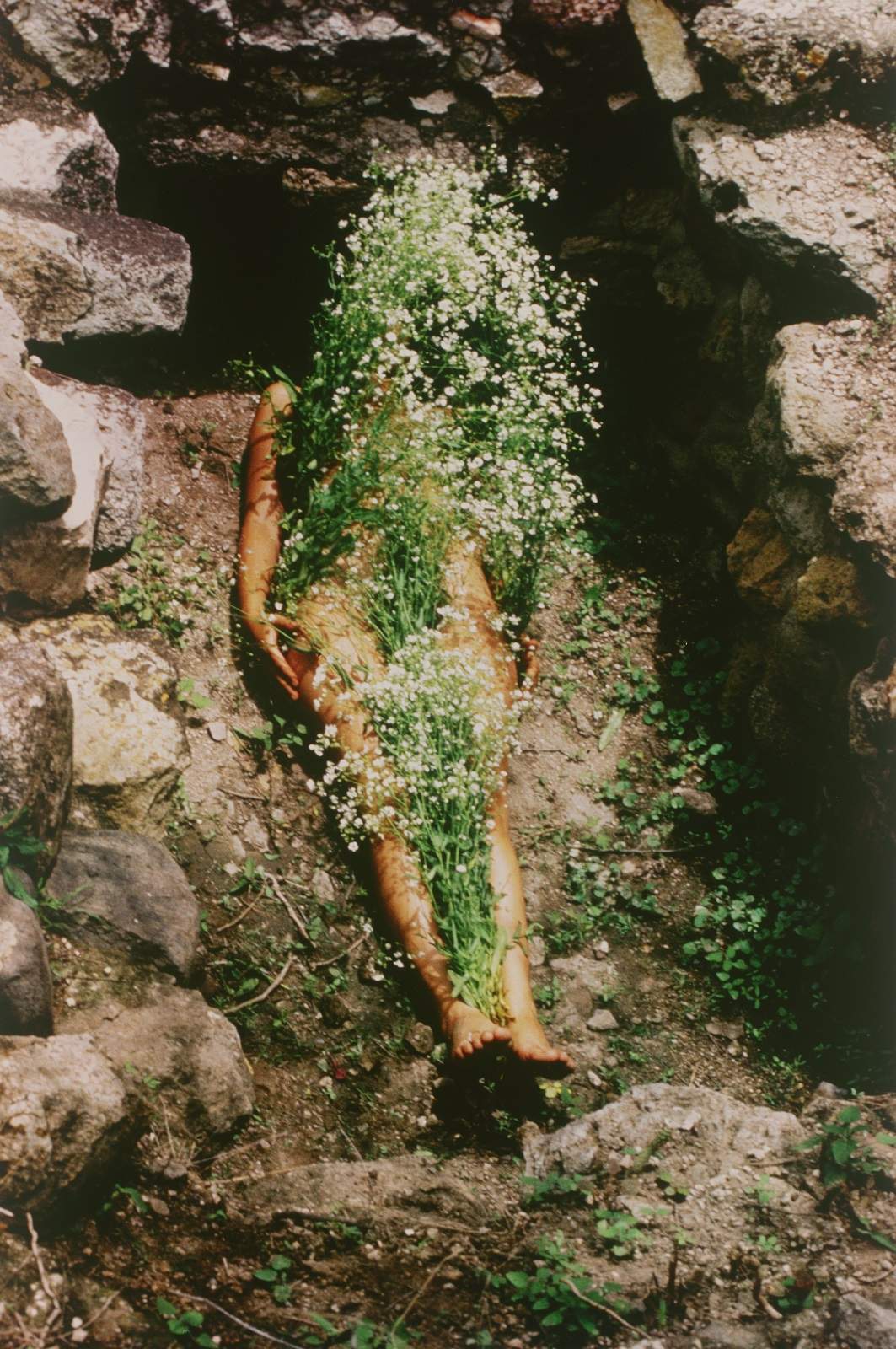
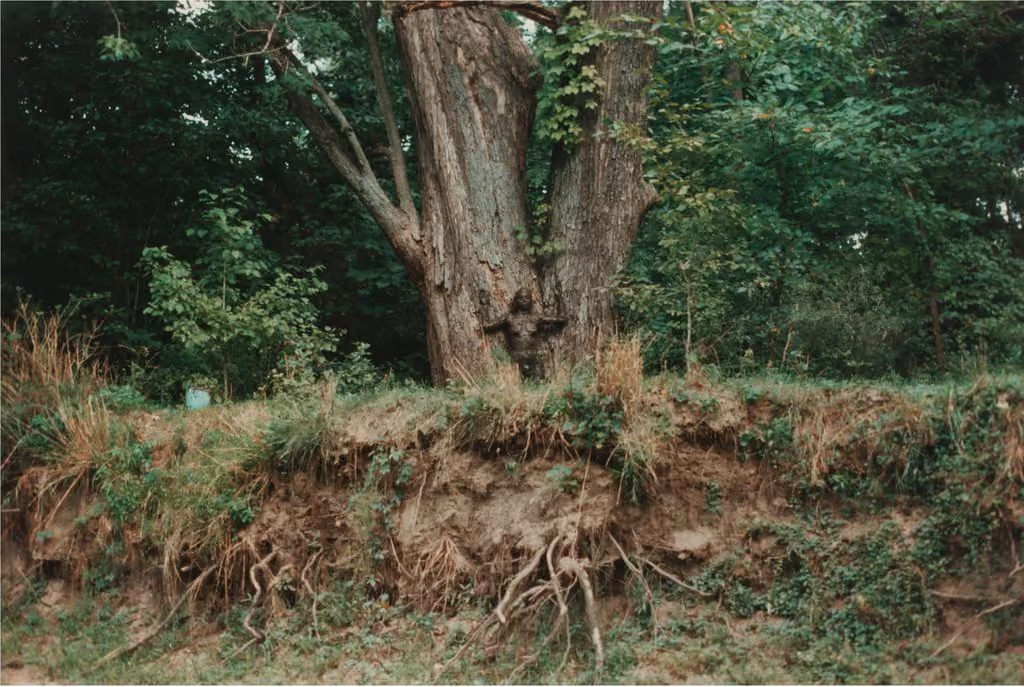
Some have placed her within Performance Art or Land Art, yet she defies categorisation. Themes of feminism and ecology run through her work, although neither encapsulates it… ultimately her work could be described as ‘soul searching’. She is best known for her Silueta Series in which she burnt, moulded or carved her silhouette into the landscape. A deep thread of belonging runs through her practice, in her almost desperate attempts to superimpose herself on her surroundings. Her works melt into their environment, being site-specific, many now survive predominantly in photographic records or film. Mendieta turned her back on the material world and retreated into the universal and unifying force that is nature, channelling its unifying energy through ritualistic ephemeral art that draws on religion. She saw herself as a Neolithic artist, and from this perspective, she can certainly be seen as one.
‘I feel suspended between sky and earth… the obsession in my work – to reaffirm myself in this world’ – Ana Mendieta
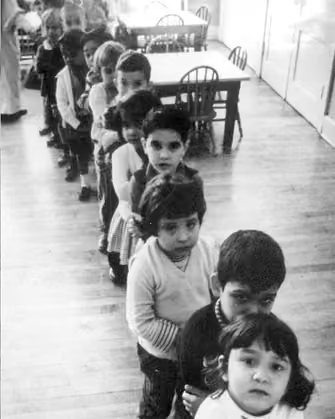
Mendieta deserves to be considered one of the greatest artists of the 20th century, and had she not died in her 30s in suspicious circumstances, her name would surely be better known. As a child, she was transported to the USA as part of Operation Peter Pan, a programme orchestrated by the Catholic Church and supported by the US government, in which children were taken from Cuba as the opposition to Castro’s regime simmered amid rising tensions between Cuba and the US. Mendieta and her sister moved between foster homes in Iowa, and at university she majored in French, Art was her minor, but she soon found it to be her passion and enrolled in an MA, joining the progressive Intermedia programme, which championed the combining of different art forms, like sculpture, performance, and video.
In this exhibition, the curators have worked closely with Mendieta’s niece Raquel Cecilia Mendieta, who is restoring Mendieta’s films and administering the artist's estate. They have been careful to only recreate installations Mendieta originally conceived for gallery spaces, including, in a UK-first, an early work which has seen the curators collect leaves, dead wood, moss and stones from around their homes to build a life-size grove in the gallery space. Recreating work which is rooted in its transience and the experience of time is a challenge in such an exhibition, however, the movement which is lost in the works presented in the gallery is captured in the restored films, which have been displayed in a long dark room, suspended in the air, hanging one after each other in a continual progression of Mendieta’s oeuvre.

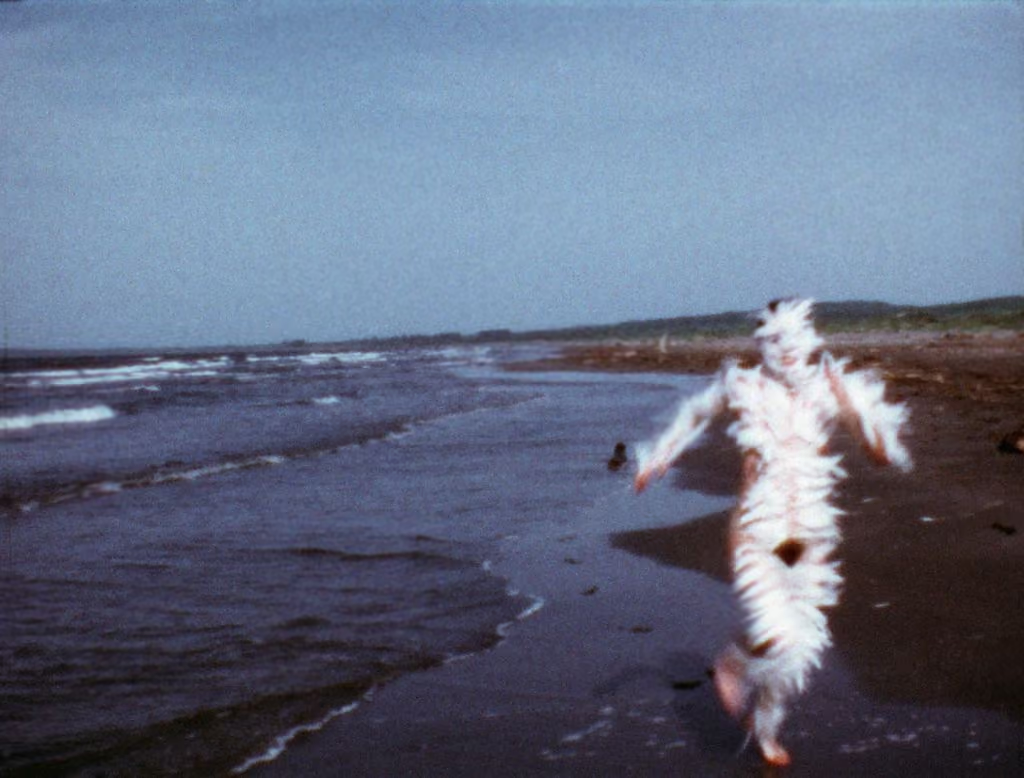
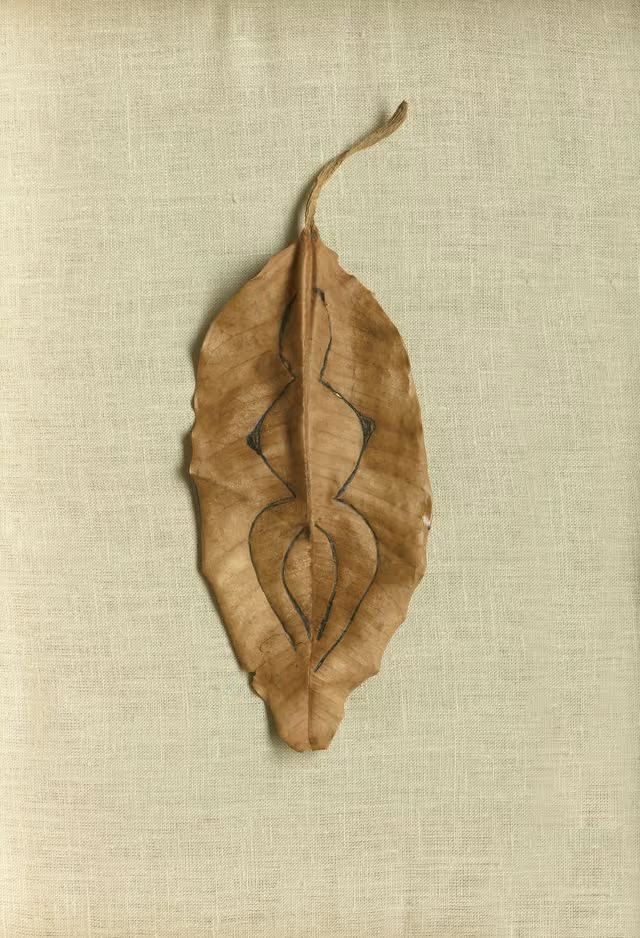
Mendieta chose the elements as her medium, working with fire, water, sand, blood and feathers. The exhibition will also feature Nanigo Burial (1976), a sileuta composed of black ritual candles which will be regularly lit during the show. Thankfully, her work has even escaped the confines of the gallery, two installations unrealised in Mendieta’s lifetime can be seen on trees outside the Blavatnik Building. Seeing children pose for photos in front of them, and two women strike up a conversation while watching, imbues Mendieta’s work with the life force that is central to it. Mendieta’s work requires the elements to be complete: the wind, the rays of the sun. She drew on leaves, made artworks using fireworks, animal organs and waves, while only visible on film, the two tree sculptures made from live plants capture Mendieta's vision of art.
‘To me, the work has existed in different levels. It’s existed in the level of being in nature.. And eventually being eroded away’ – Ana Mendieta
The exhibition organises her work not chronologically, rather it is poetically categorised around Mendieta’s core concerns. The first being the cave, a theme she returned to again and again. The second room is the grove, another sacred place, there is transcendence, fertility and spirituality in these works, which Ana Mendieta frequently made away from prying eyes, in the creeks of Iowa or the groves of Cuba. Her first studio space was in Rome, which she was awarded after winning the Prix de Rome in 1983. For the first time, she has a studio space, allowing her to create studio-based sculpture exhibited throughout the exhibition.
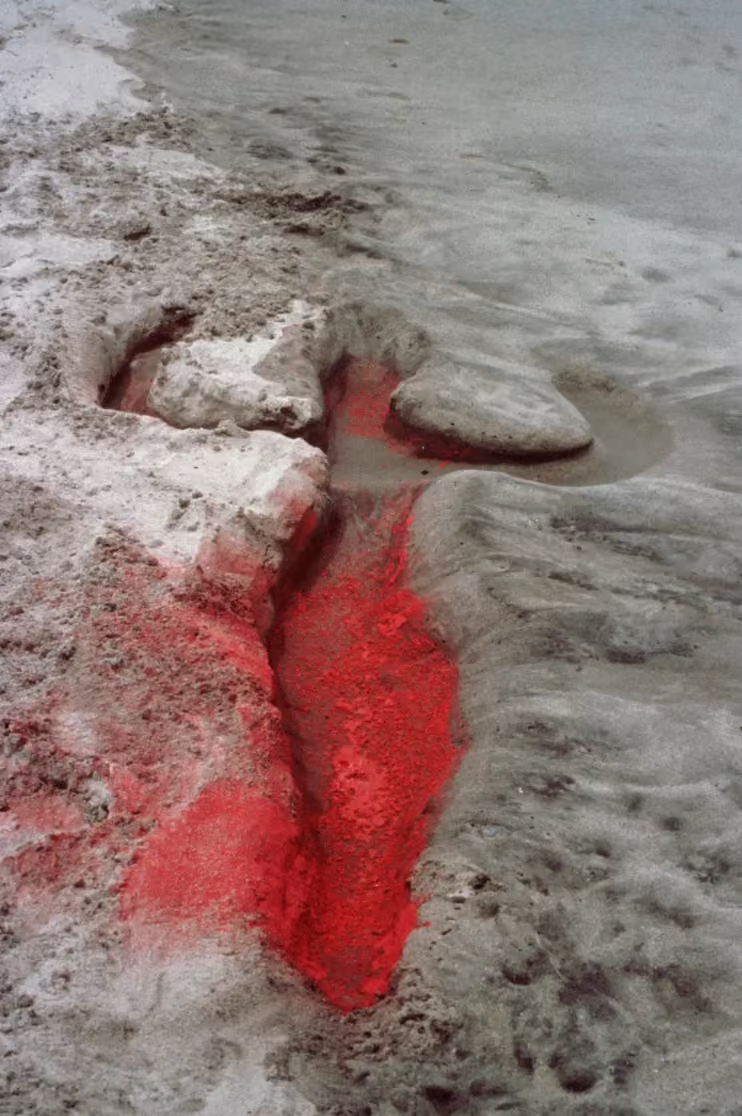
Another room is organised around School featuring work from her MFA at Iowa University. Displayed here are rarely seen early paintings which expose a completely different side to Mendieta’s work. Mendieta was at her heart an interdisciplinary artist transitioning between and merging disciplines while simultaneously transitioning between and merging concepts of time, place and identity. She was fascinated with the Afro-Cuban traditions and the sensuality of Neolithic art at sites she encountered across Europe. ‘I’m not interested in the formal qualities of my materials, but their emotional and sensual ones’, she said.
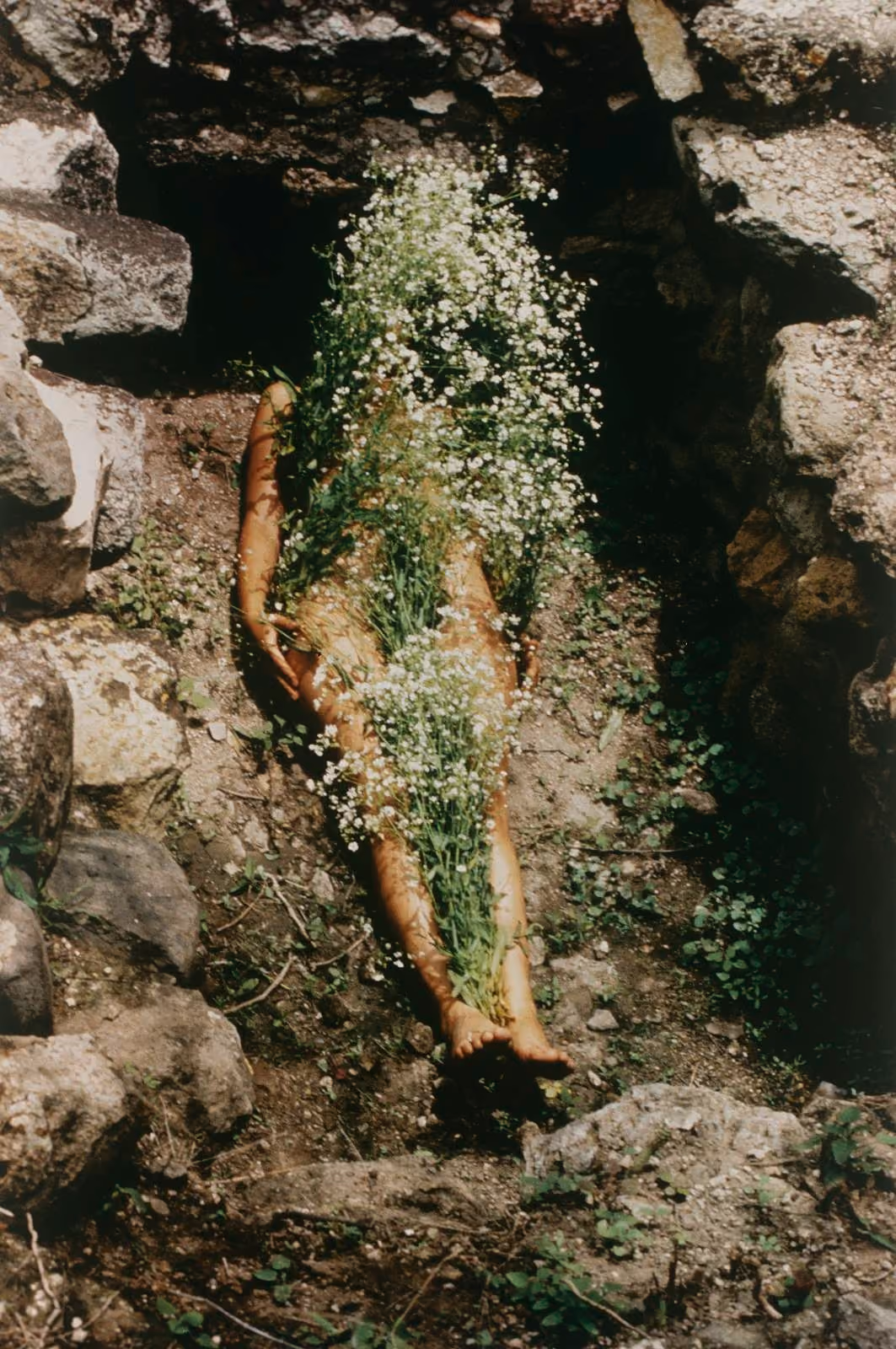
More than four decades after her death, Mendieta's work still resists easy categorisation, and the Tate's exhibition wisely avoids imposing one, instead allowing the work to speak for itself, reminding us that Mendieta’s true subject was always the bond between the body and the earth.
Ana Mendieta at Tate Modern runs from 15 July 2026 – 17 Jan 2027. Don't forget to check in and leave your review on the gowithYamo app!