
Personal Notes #1: Omar Castillo Alfaro
The personal Notes series explores how artists think, feel, and create, as they share what’s been on their minds lately...
Notes on: Communist Sailor Moon, a childhood parrot named Pedro, and feathers as carriers of migration, and ancestral techniques.
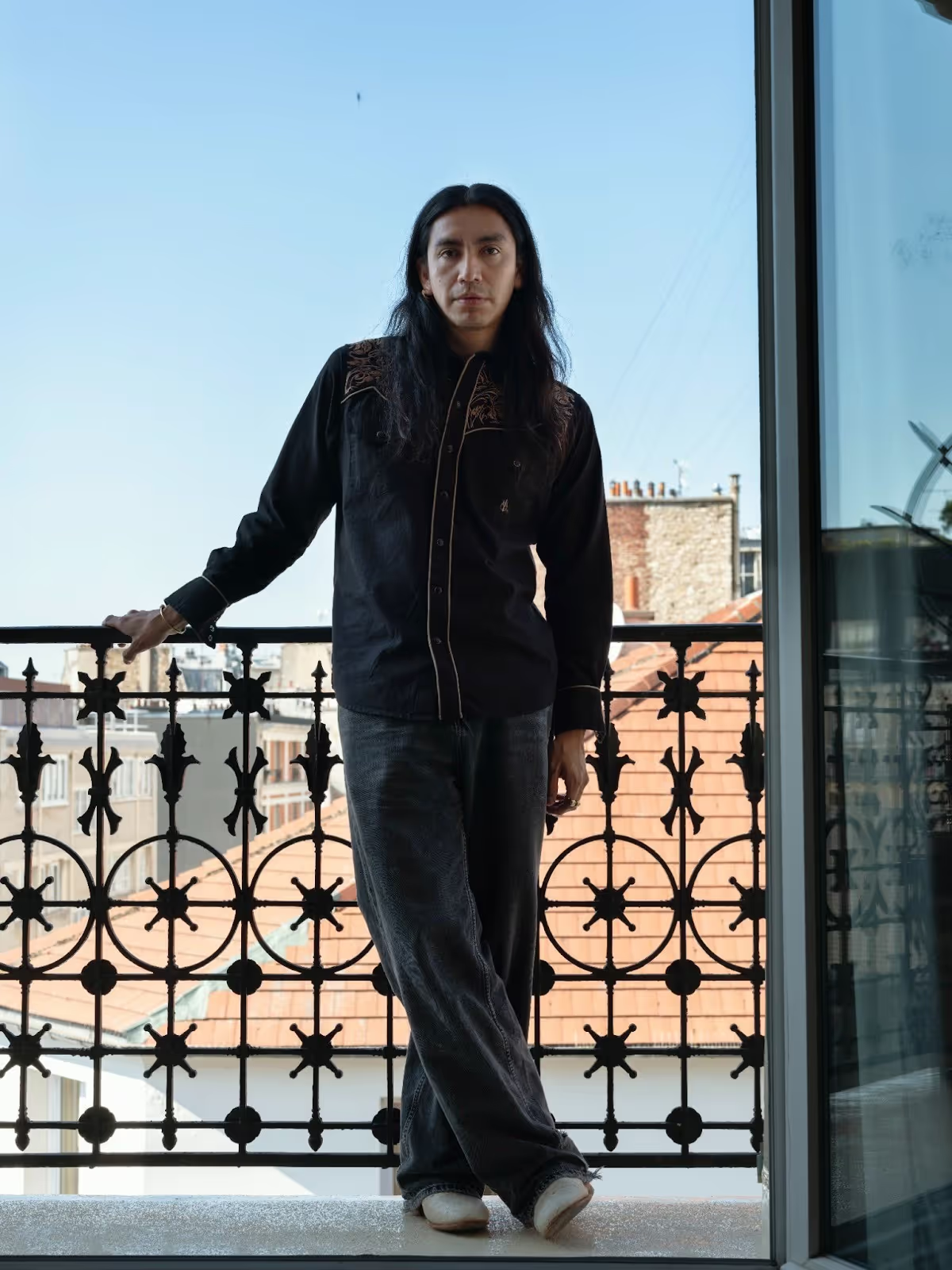
O: My name is Omar Castillo Alfaro. I come from San Lorenzo Sayula in Mexico. I am based in Paris and am a multidisciplinary artist. Welcome to my studio at Gasworks London. I’m a French artist supported by Fluxus Art Project, on a three-month residency. I continue to research this large-scale project titled Amantecas, which explores feather art stemming from pre-Columbian sculpture in Mexico.
Why did you reach a point in your practice where you felt it was necessary to explore this idea of Mesoamerican futurism?
I started thinking about Mesoamerican futurism through a text by Yásnaya Elena Aguilar Gil. She writes about creating a Mesoamerican futurist movement to dismantle narratives of oppression.
For me, this connects with using ancestral techniques to address contemporary topics in a post-colonial context. These techniques can offer different kinds of solutions or perspectives when we think about political issues.
I work with materials such as earth, clay, and feather art. These materials are often portrayed in very stereotypical ways when people talk about pre-Columbian cultures. I try to use those stereotypes and challenge them. The problem is not the materials themselves, but the way the world has imposed certain narratives of oppression onto them.
It is very important for me to work with these materials because they deserve a place in contemporary art. Often, they are seen only as decoration or craft, but for me, they are art. My family used these techniques, and the people in my community are artists as well.
You mentioned that people use certain materials in a stereotypical way. What do you mean by that?
Sometimes artists or artisans use these materials in ways that follow certain expectations because they need to sell their work and survive economically. I understand this. These practices provide income and allow people to continue their traditions, which is very important.
But institutions and residency programs can also help artists explore these techniques in other ways — with different iconographies, inspirations, and conceptual frameworks. That allows the practice to exist in another universe while still maintaining its roots.
These ancestral practices also provide me with an economy as an artist. They help people survive and continue working, and because of that, these techniques can endure over time.
These ancestral practices also provide me with an economy as an artist. They help people survive and continue working, and because of that, these techniques can endure over time.
I suppose it’s always about finding a balance that remains respectful toward those traditions.
Yes, exactly. Being respectful also means recognising the temporality of these practices, as they stem from a long history.
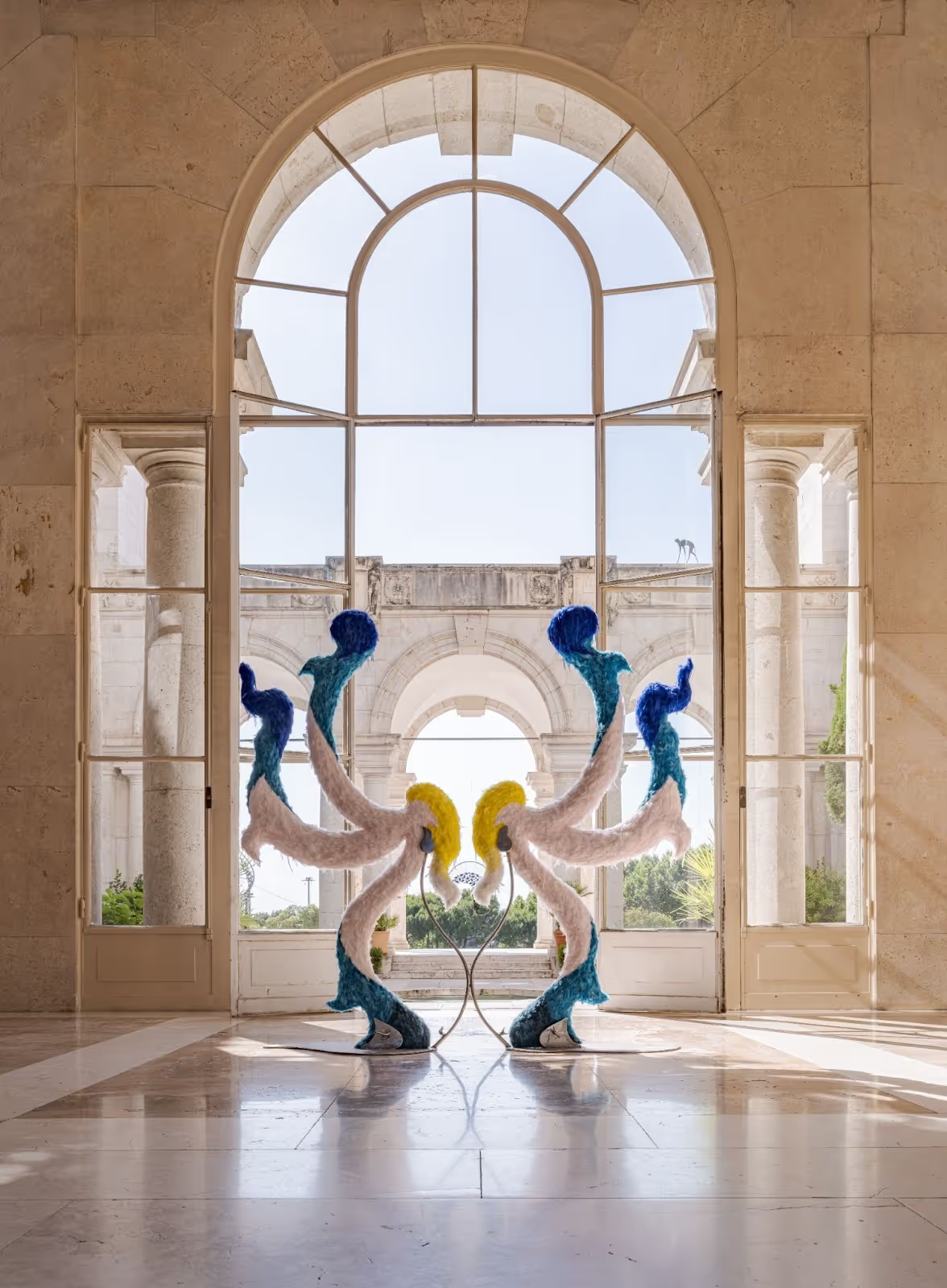
Feather art was used across many pre-Columbian cultures throughout the Americas. During the 16th to 18th centuries, in the period of colonisation and evangelisation, America was often represented as a woman wearing a crown of feathers. That imagery inspires me because it shows how materials were used to represent a continent and a community.
Time is not linear. My work tries to build bridges between the past and the present. Through fiction and artistic interpretation, we can return to history and create possibilities for languages, techniques, and cultures to continue existing — even in the future.
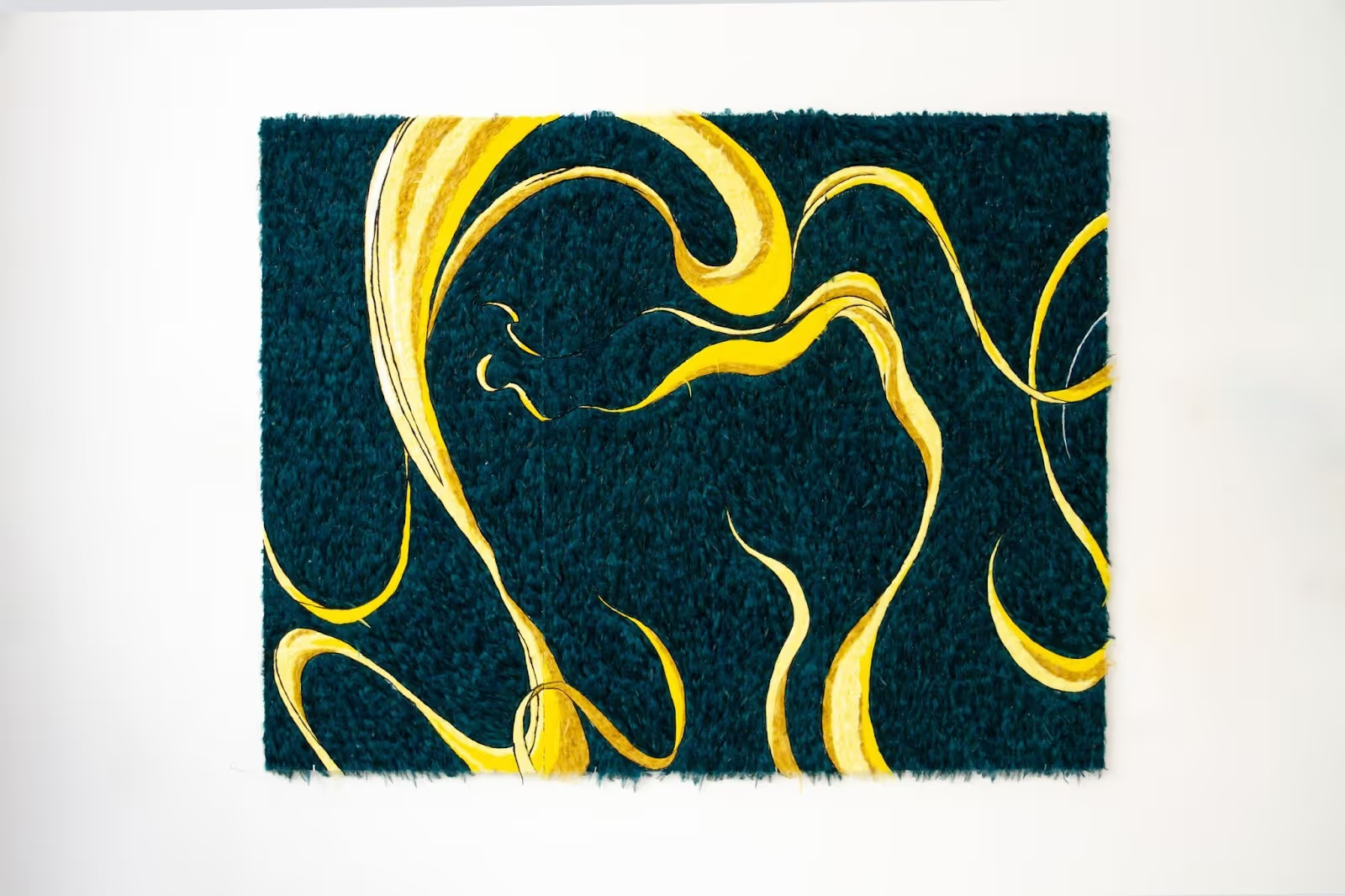
Considering that these materials embody people and their communities — somehow these “people” manifest through various materials — How do you listen to and work with them?
I choose my materials thoughtfully. For example, working with feather mosaics also involves thinking about materiality, which illustrates how America was symbolised between the 16th and 18th centuries.
The idea is to use materials that were historically employed in these artisanal techniques, such as feathers for feather mosaics. It’s important for me to continue working with these materials because, through them, these techniques persist across centuries.
When I produce or think about a piece, I avoid using stereotypical iconography to represent these cultures. Instead, I explore their visual language in a contemporary way. For me, natural and organic materials create a dialogue with time. For example, movements like Art Nouveau, which produced new forms inspired by plants, flowers, and animals, influence my approach.
During the period between the wars, styles such as Art Nouveau and Art Deco often represented “the other” as savage. My work, by contrast, uses these materials and references to focus on moments of historical representation, segregation, and discrimination, while reimagining them in a contemporary context.
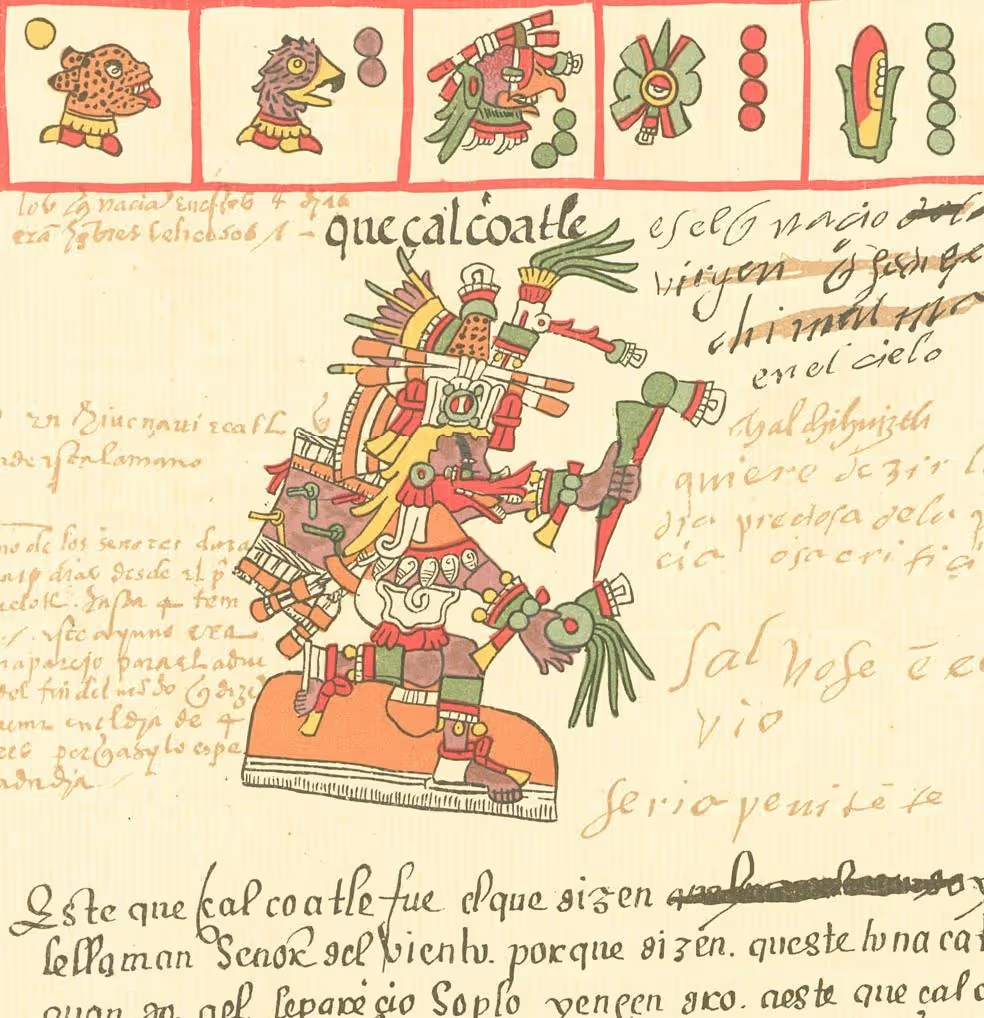
My forms become moments in which history is presented anachronistically, incorporating Mesoamerican references. Through these materials, I explore mythology — for example, Quetzalcoatl, a divinity who is both god and human. This divinity allows me to highlight feather art as one of the most significant artistic expressions in pre-Columbian sculpture.
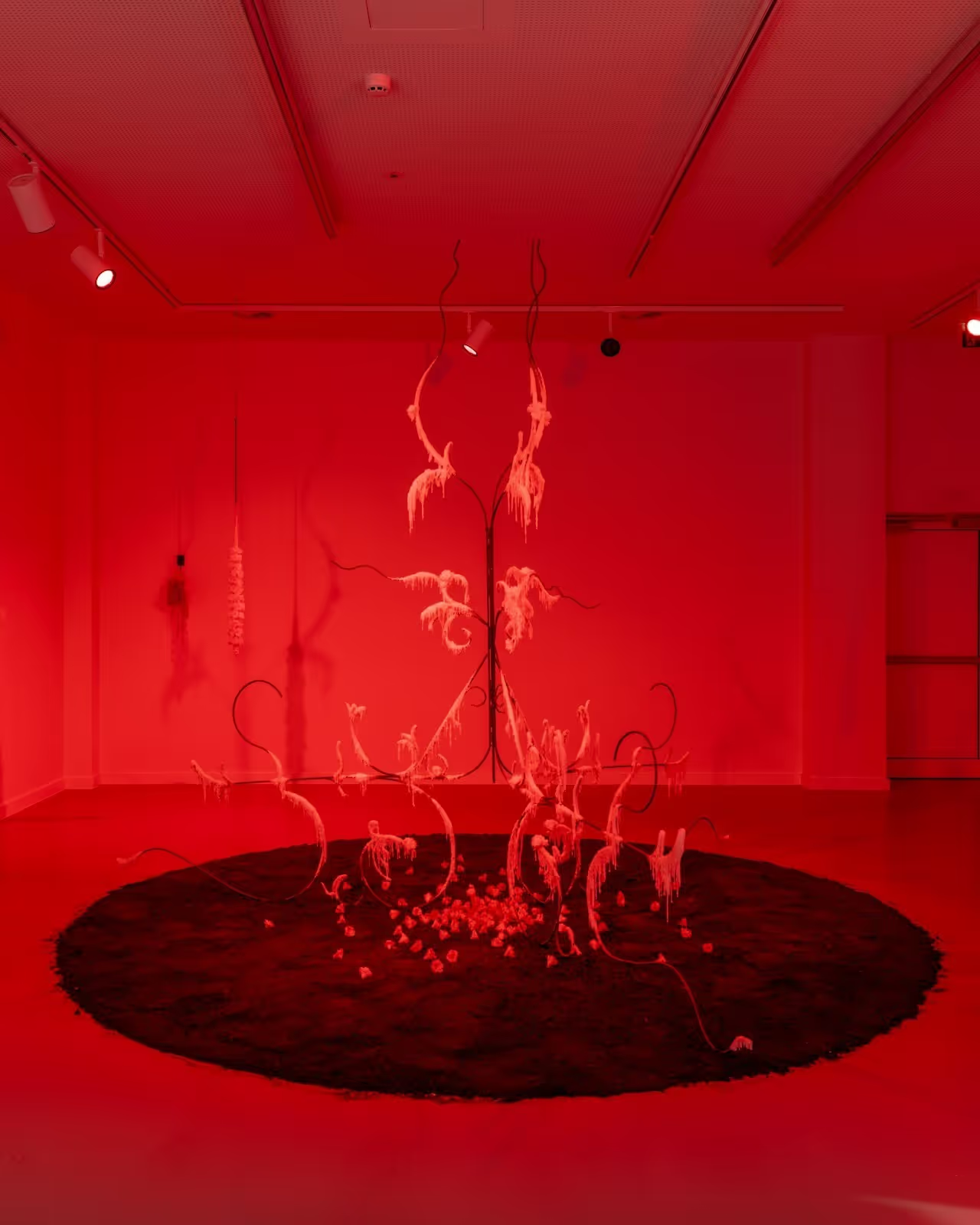
Tell me a bit about your artistic research. It can be a memory, a feeling, a book, an image, a person — something that sparks something in you.
Iconography: Yeah. I mean, when I say that I’m trying to build or produce a new vocabulary, it’s also because my research is really focused on iconography. I say that because I’m very bad at remembering names, but I’m very good with images.
For example, when I started this project, I was looking at references like the divinity Quetzalcoatl — The Feathered Serpent —. Then, I looked at feather mosaics made by Aztec hands, which represent the introduction of images in America through Western referencing. I began this research with objects I studied in France, in anthropology museums there.
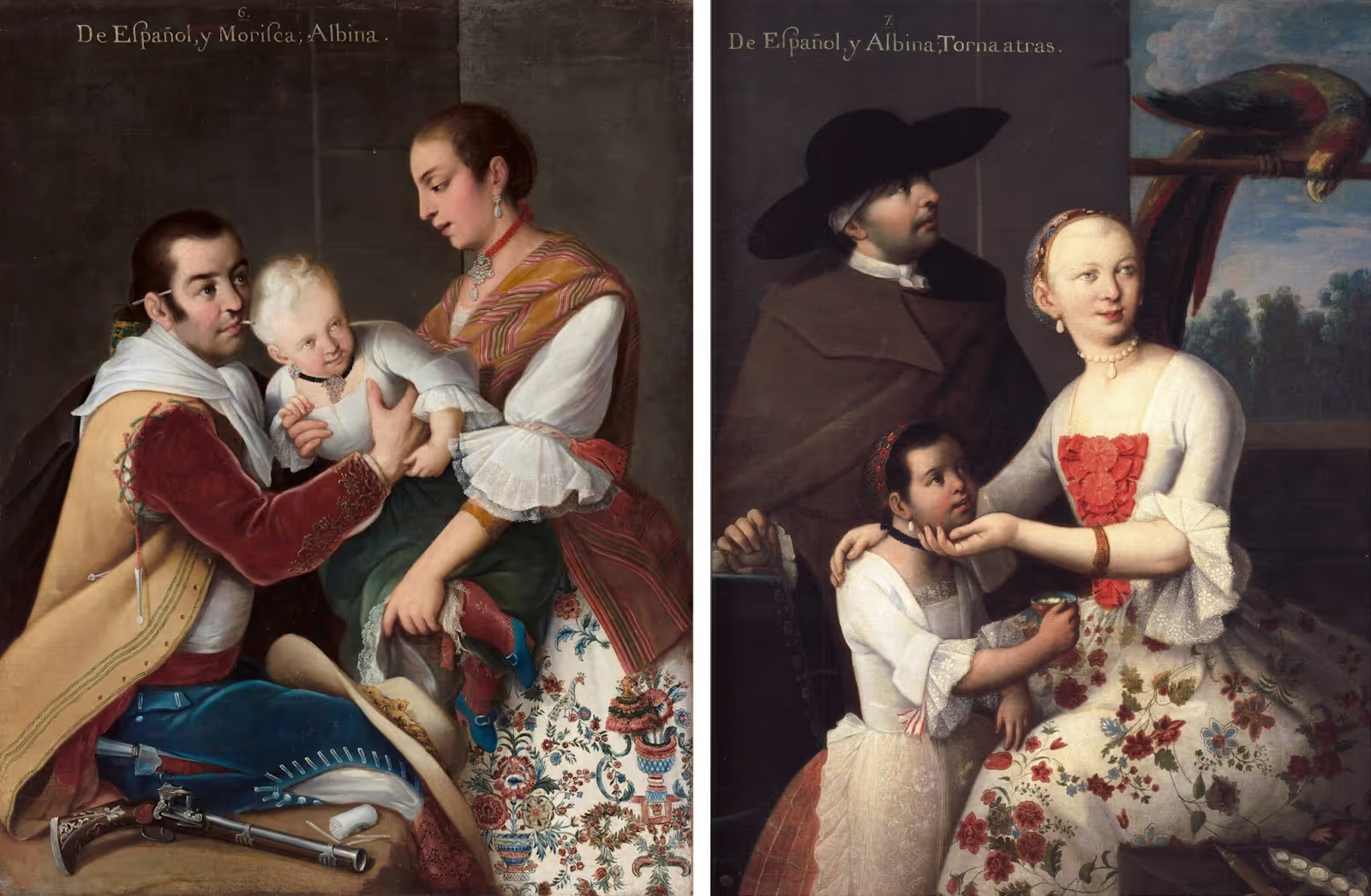
And then, obviously, this research opens up in other ways, like in painting. For example, I look at references such as the pinturas de castas, where Europe started to represent the mixing of races — for instance, when an Indigenous person and a Spaniard produce a mestizo, or when a mestizo and an albino produce a tornatrás.
More contemporary examples include Ana Mendieta's performances, such as Body Tracks in the 1970s, which engaged with Santería and the ritual use of animals.
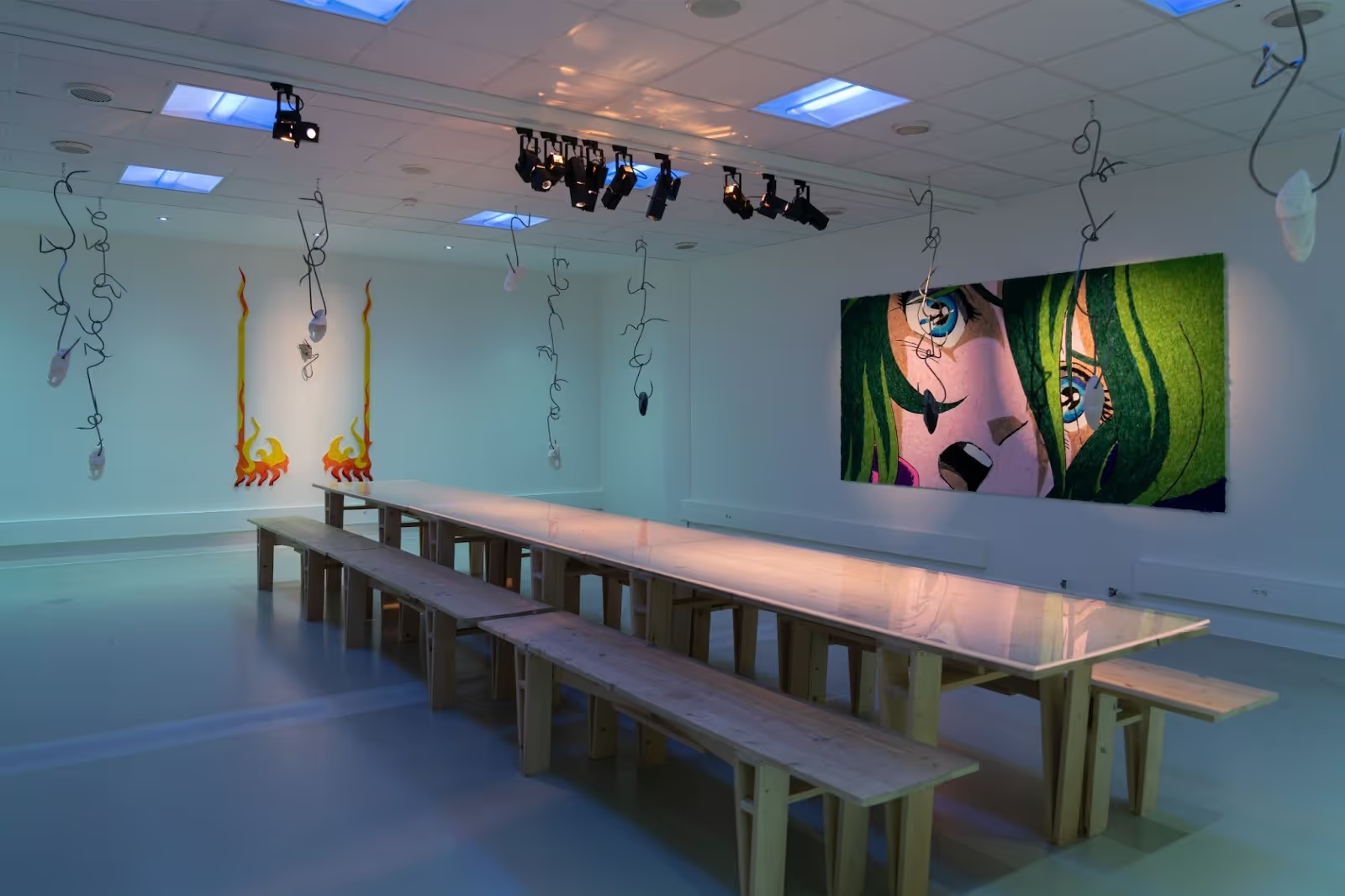
Appropriation: This research led me to focus on the problem of images, which is very common in Mexico because it borders the USA. The idea of using images and being “bombarded by images” is very important for me. Being in London allowed me to revisit American references and think about appropriation. I love this question about images. I’m not interested in producing entirely new images — I’m fascinated by the idea of appropriation.
My practice is also based on the concept of appropriation, common in the 16th to 18th centuries. During colonisation, the Spanish were appropriating not only objects but also techniques, mixing them with others from Spain, Europe, the Middle East, and Asia. They created amazing things, but it was always through appropriation. I focus on that, and it also connects to my childhood.
Parrot Pedro: I grew up with a parrot named Pedro, who is now 45. Pedro is one of my most important references in life. He reminds me of my family, my small village, and my childhood, sharing time with my mother and grandmother and watching them use these techniques.
All my references and the way I discuss them focus on my community and my family, as well as the difficulties of migration. Using feather art is a metaphor for migration — like a bird flying and moving, carrying the pain and challenges of being in a migration system or journey.
Community: When you work with ancestral, artisanal techniques entirely by hand, it’s about labour, community, and care — values shared across generations. I can relate that to my family and notions of labour and workers’ rights. I also see these ideas reflected in the Mexican muralist movement, in the architectural works of Juan O’Gorman, and in other references I incorporate into my own work.
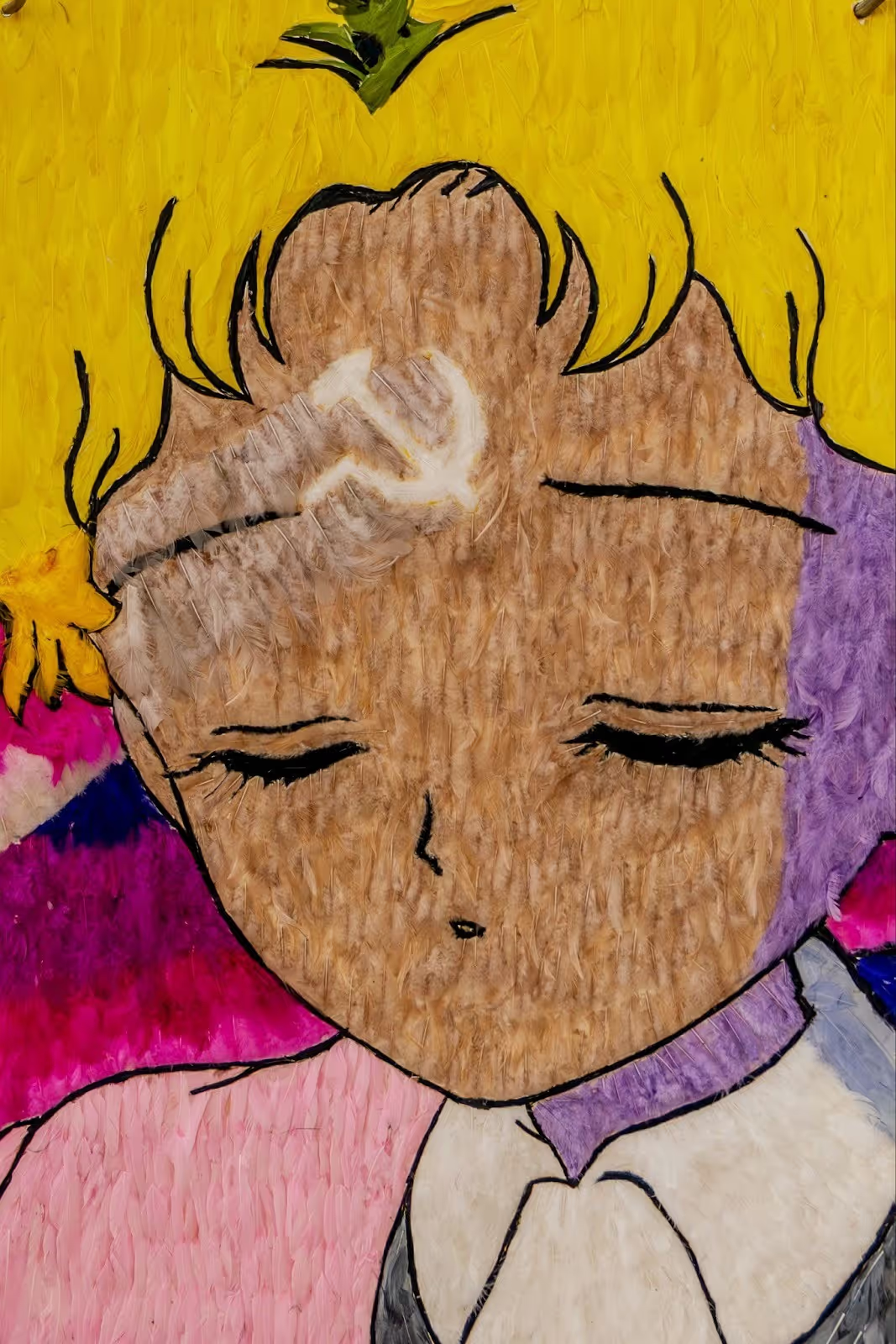
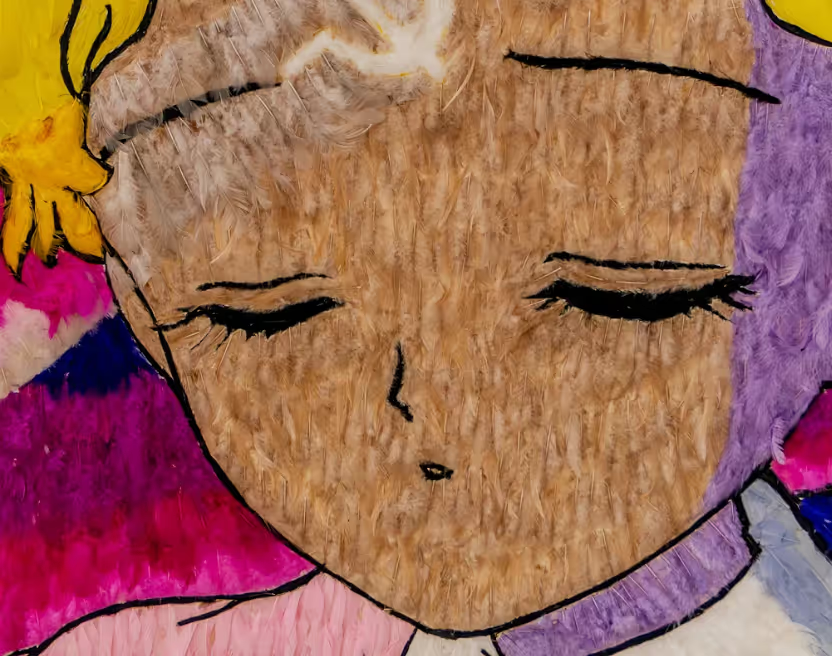
Sailor Moon: For example, I recently created a large feather mosaic called Sailor Moon Communist, which I showed in Paris. I continue to transform these practices, drawing on Art Nouveau and Art Deco references, while keeping pre-Columbian divinities in view. These works are part of my idea of an arte total, similar to what the Art Nouveau movement aimed to achieve.
What does Sailor Moon mean to you, and why did you choose to reference it in your artwork?
My practice is not about doing translations. My idea is more about how Mesoamerican futurism can help produce new narratives. That’s why I started creating works like Sailor Moon Communist — initially as a joke, a kind of meme. In Mexico, we really engage with memes, image appropriation, and manga. For me, manga isn’t just fun — it was really important in my childhood and for many people in my generation.
I grew up reading series like Sailor Moon, Caballeros del Zodiaco, and obviously Pokémon. These stories showed femininity and other possibilities of bodies, which was important because I was living in a very macho environment in a small village. Using manga as a reference, even humorously with Sailor Moon Communist, allowed me to explore connection, care, and feelings about my family and childhood. Humour is also very important in Mexican culture, something I can still see in London and across the Americas.
This manga-based reference also became a way to connect with others who, like me, experienced migration — not in exactly the same way, but through shared cultural touchpoints. Using these images creates a vector for emotions and conversations about migration, identity, and shared experiences.
Is there an artist, art space, or exhibition you recommend visiting or seeing?
We were visiting the Oxford University Museum of Natural History, and I have to say it was a very shocking experience. You can see how the museum, its collections, and galleries were organised in the past. Anthropology and archaeology objects were mixed together in the same boxes, classified by materials or motifs — it was striking.
It was amazing, obviously, but at the same time, when you are there, you see only objects. That felt very unsettling to me because it reveals the history of how people were placed into boxes and classifications.
I think it’s important that museums like this continue to exist, because they remind us of the past, of history, and of colonisation. In this post-colonial context, these memories and reflections are essential. As an artist, it also makes me think about what kind of artist I want to be. I don’t want to be “boxed” or classified based on my background or practice. I want to be an artist, not a category. Visiting these collections showed me that what I’m doing is important.