
Personal Notes #3: Linn Phyllis Seeger
The personal Notes series explores how artists think, feel, and create, as they share what’s been on their minds lately…
Notes on: The poetics of transport, disrupted futures and personal archives
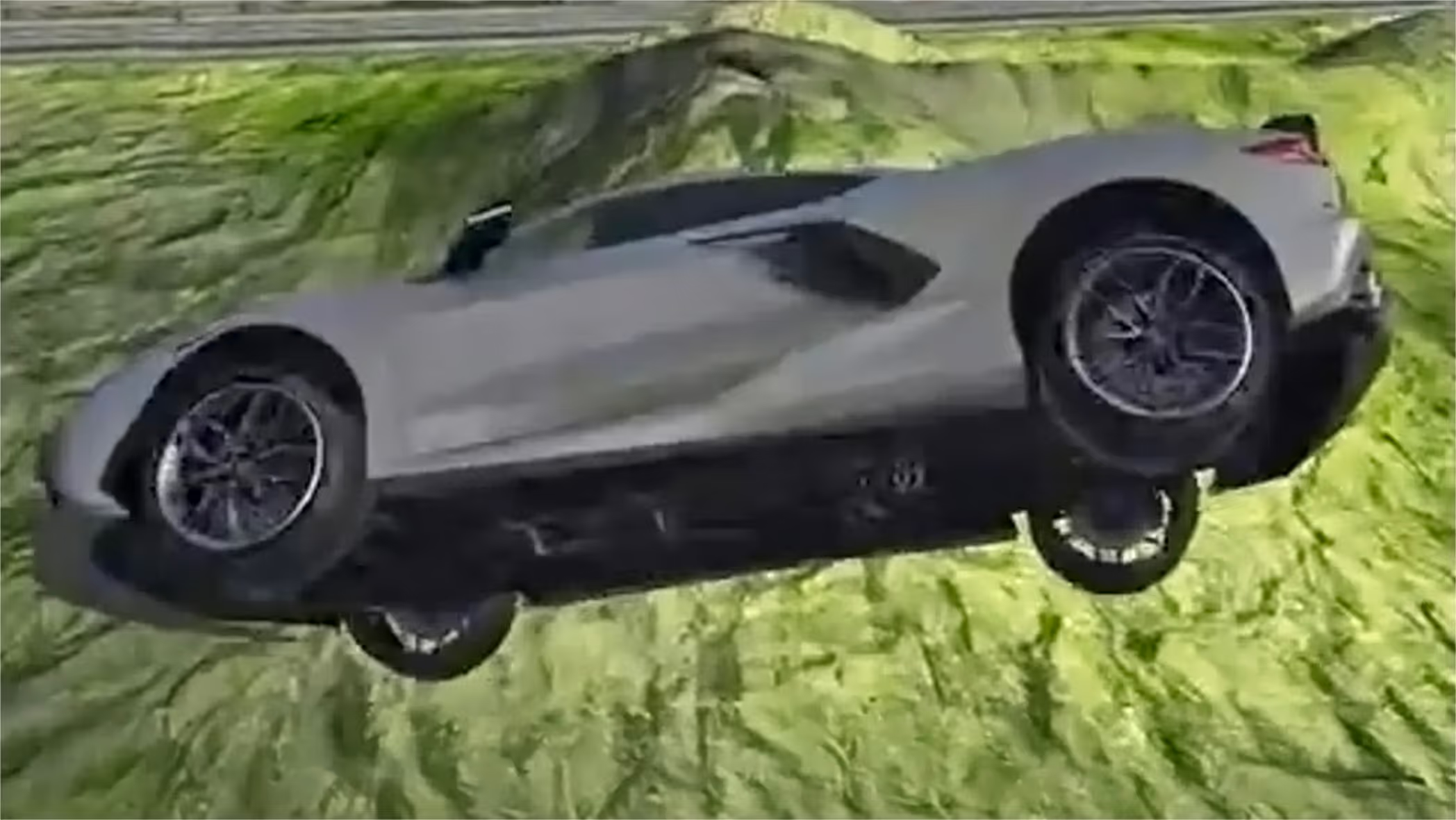
Encountering Linn’s work brought to mind films like Crash by David Cronenberg and Titane by Julia Ducournau, in which cars take on symbolic meaning rather than serving as mere means of transportation. What lies beneath a car’s surface? Here, it represents a looping existential journey that never quite reaches a destination. We invited Linn to imagine herself as a car, guiding us through the moments that have shaped her journey.
L: Hi, I’m Lynn Phyllis Seeger, and I work mainly with moving image, and I have recently started placing my moving image works within sculpture.
All my work is developed from online media, and this sort of ephemeral, immaterial space, and all my works are developed from footage I shot with my iPhone. So I’m interested in what happens when this sort of work, developed in these online spaces, is transformed into a physical work, and how it behaves when it is in relationship with physical objects.
We’re right now in my show, true idol.
I would say that about a year ago, my interest in it was that I connected it to Silicon Valley technologies, and the reason, quite explicitly, was that the internet, for instance, has, since its inception, been advertised in relation to automobility.
There’s this metaphor of the information superhighway, and early Apple ads in the 90s, for instance, were advertising personal computers as cars, with slogans like “test drive a Macintosh”. So there was an explicit relationship between automobility and the way information circulates through the internet. I found that metaphor quite interesting.
This sort of idea of progress, literally being a kind of forward movement, is what drew me to bring that in relationship to technologies of transport, and specifically in the context of the US, the personal car is like a very kind of relevant myth for the sort of understanding of America as a sort of vast land that you like can cross in, like, via individual transport.
And in the same way, the internet is kind of this idea that you, as an individual user, can go anywhere you want, wherever you want. It became my interest in this sort of analogy or juxtaposition between the two, the personal car and the personal device.
S: Imagine yourself as a car — which stops were significant to your journey and shaped your direction?
The way or the reason I got interested in these fantasies and notions of forward movement, progress, and the future, I would say, is in relation to grief, mourning, and feelings that make a future unimaginable, that kind of render it impossible to imagine that there’s any progress. There are theorists I’ve been working with, like Mark Fisher or Franco Berardi, who talk about the idea that the future is cancelled.
There’s a work that’s called Jupiter, which I did in 2023, in which I looked at, for the first time, technologies of transport, and specifically trains, in relation to the experience of losing a friend of mine to suicide.
In this sort of experience, there were technologies present, like a train, a phone call, and the consumption of Instagram stories, where you kind of notice the disappearance of someone by seeing them disappear from an online space. And this is the first time I kind of worked with that, where I developed a piece trying to talk about this experience.
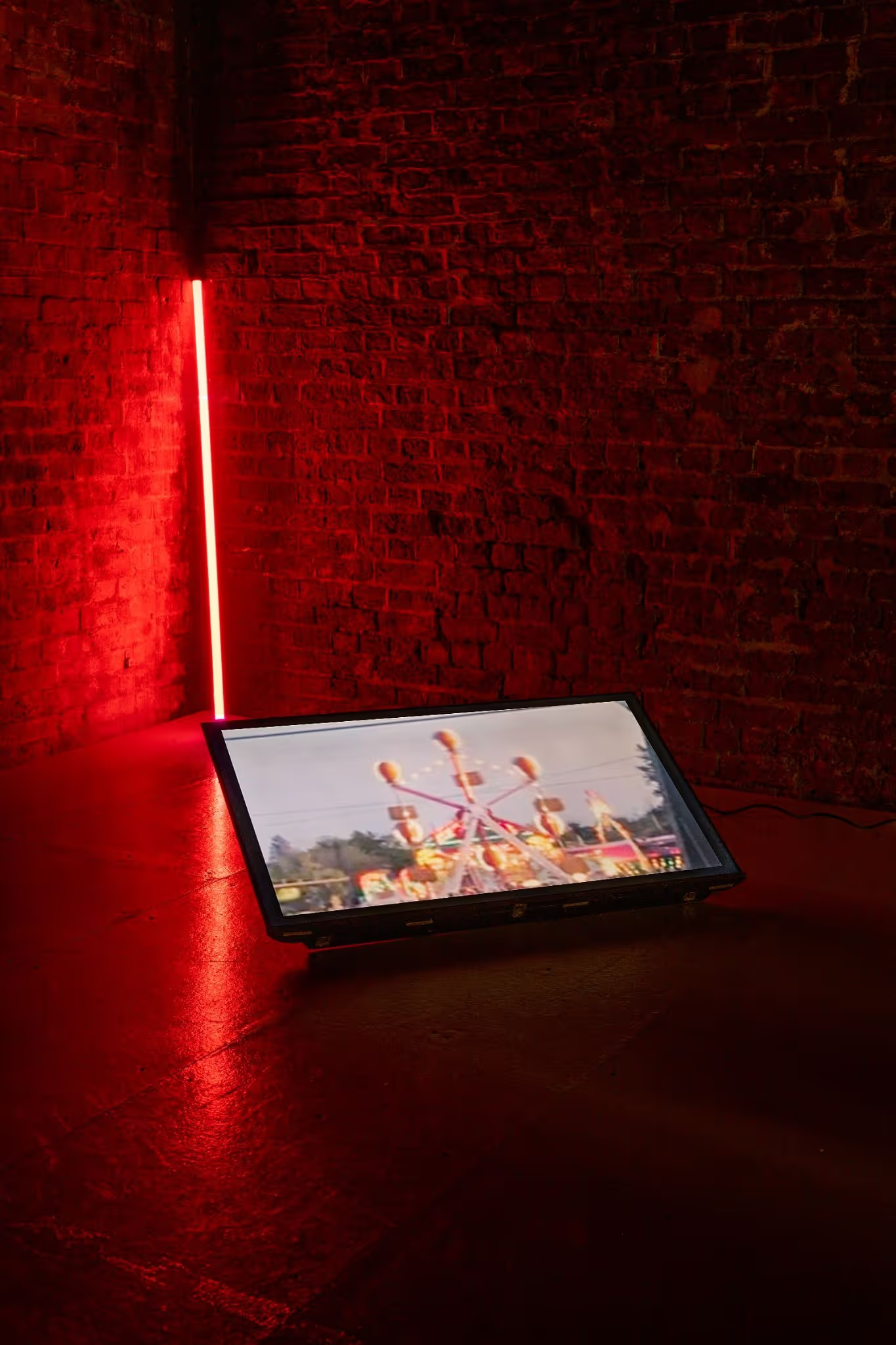
I started making a film by collecting footage from my archive of train rides — footage I took years ago when I lived in the US. I took all these videos on train rides in the American Southwest and then made this video that was kind of thinking about this experience, but through looking at how certain technologies were present in this death.
I think it initiated this sort of expansive thinking about how transport technologies and communication technologies are related, how they contribute to certain notions of futurity, how they make futures possible, how they obstruct futures, and how they perpetuate a certain kind of atmosphere of grief that makes thinking about a future impossible.
Specifically in my work, while I’m talking about these linear ideas of progress, they’re always non-linear, non-narrative, and kind of disrupted. The journeys are not about getting anywhere. I’m thinking about these loops and how everything is kind of repeated, but repeated in a way that’s always slightly different, still creating this feeling of, yeah, that your progress is obstructed.
S: What do you struggle with most when making your work?
I think, generally, what I struggle with most is working from my archives. So, when I make a film, I go back to this massive amount of footage that I’ve accumulated over the years.
I take videos with my phone all the time. I really started taking videos with the introduction of Instagram Stories. It kind of transformed my practice. I did, to the point where, like, all I wanted to do was just take videos of everything all the time and create these sort of strange sequences of stories.
It’s a very labour-intensive process, with work like selecting and editing. I try, in that process, to dissect what is personal memory and what is valuable simply because I lived it, and whether it’s material I can use to talk about something outside of myself.
S: A future stop that you know you certainly want to make?
I like this thought experiment of me being a car. I really appreciate it.
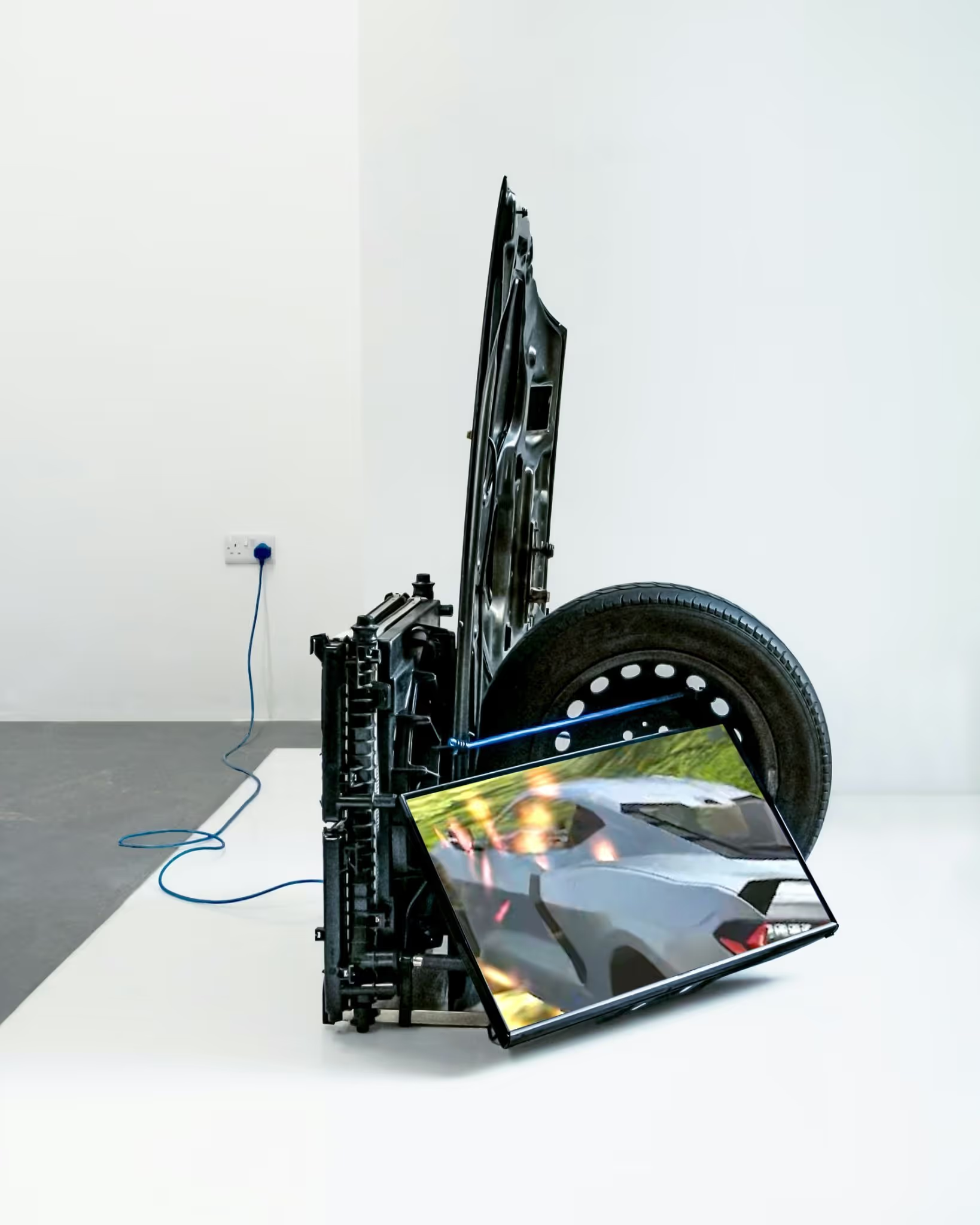
I think that the medium of video sculpture, specifically, is still very interesting to me. It’s something that I’m working through. I think this is, like, something that I would imagine and see myself doing this year. I have, like, lots more ideas that I want to explore with this, and where I’m headed after that, I don’t know.
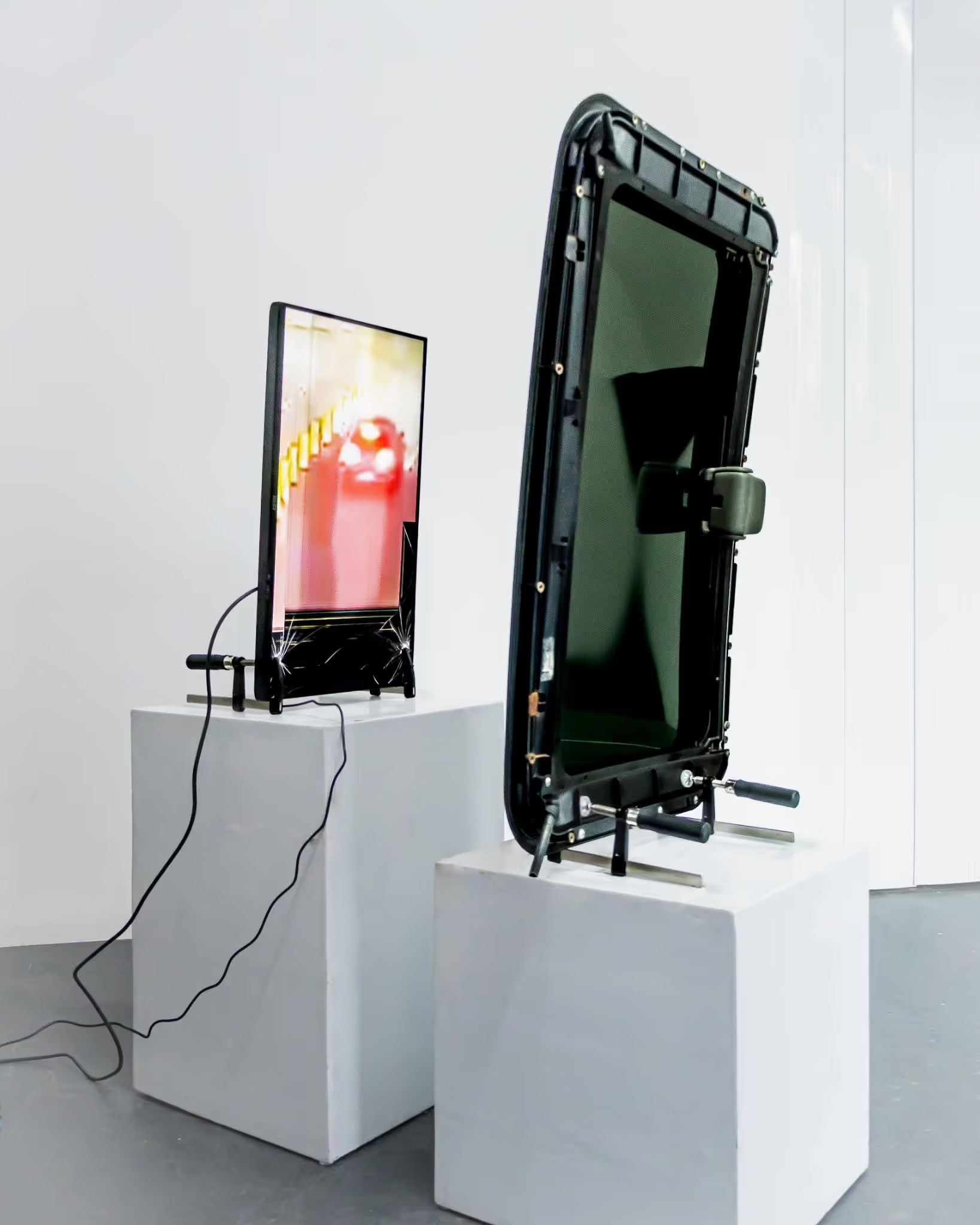
I notice that all the artworks here deliberately look as if they've been surgically dissected, each piece resembling an individual organ.
In this process, I was interested in taking these kinds of car parts, not just as a deconstructed car, but as a way of trying to decontextualise them entirely, to a point where, you know, you can obviously tell which part of the car they’re from, but also maybe not. I created these new assemblages of car parts and screens, where a car would be disassembled for repair, maintenance, and care.
There’s this environment I’m interested in, this sort of moment when the vehicle isn’t there to drive, but rather to be in a space of vulnerability. I am interested in creating a new structure that doesn’t follow this capitalist or, like, this idea of production and progress.
S: Is there a particular reason you selected these pieces? Does the window hold a special significance or deeper meaning?
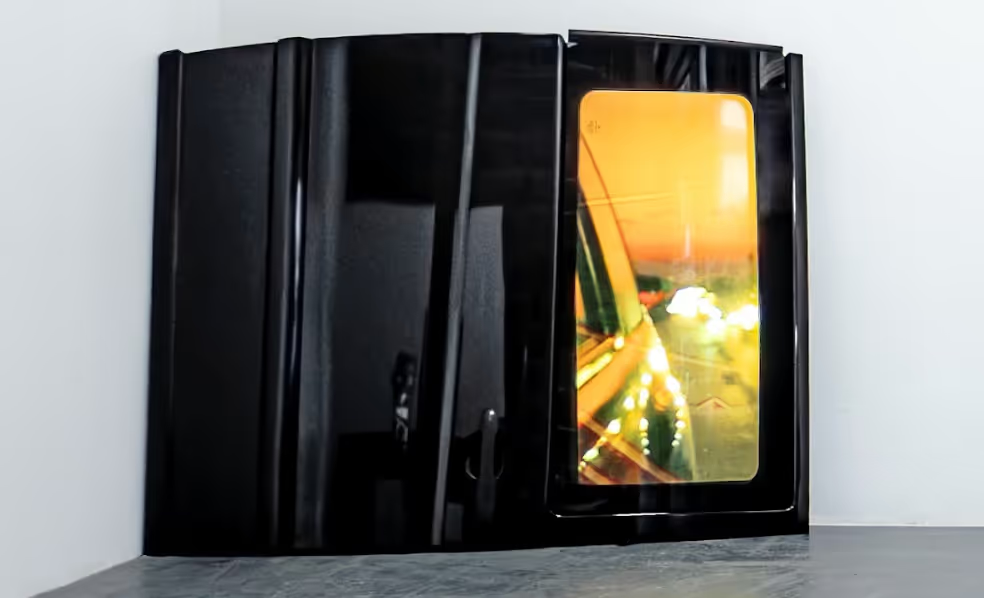
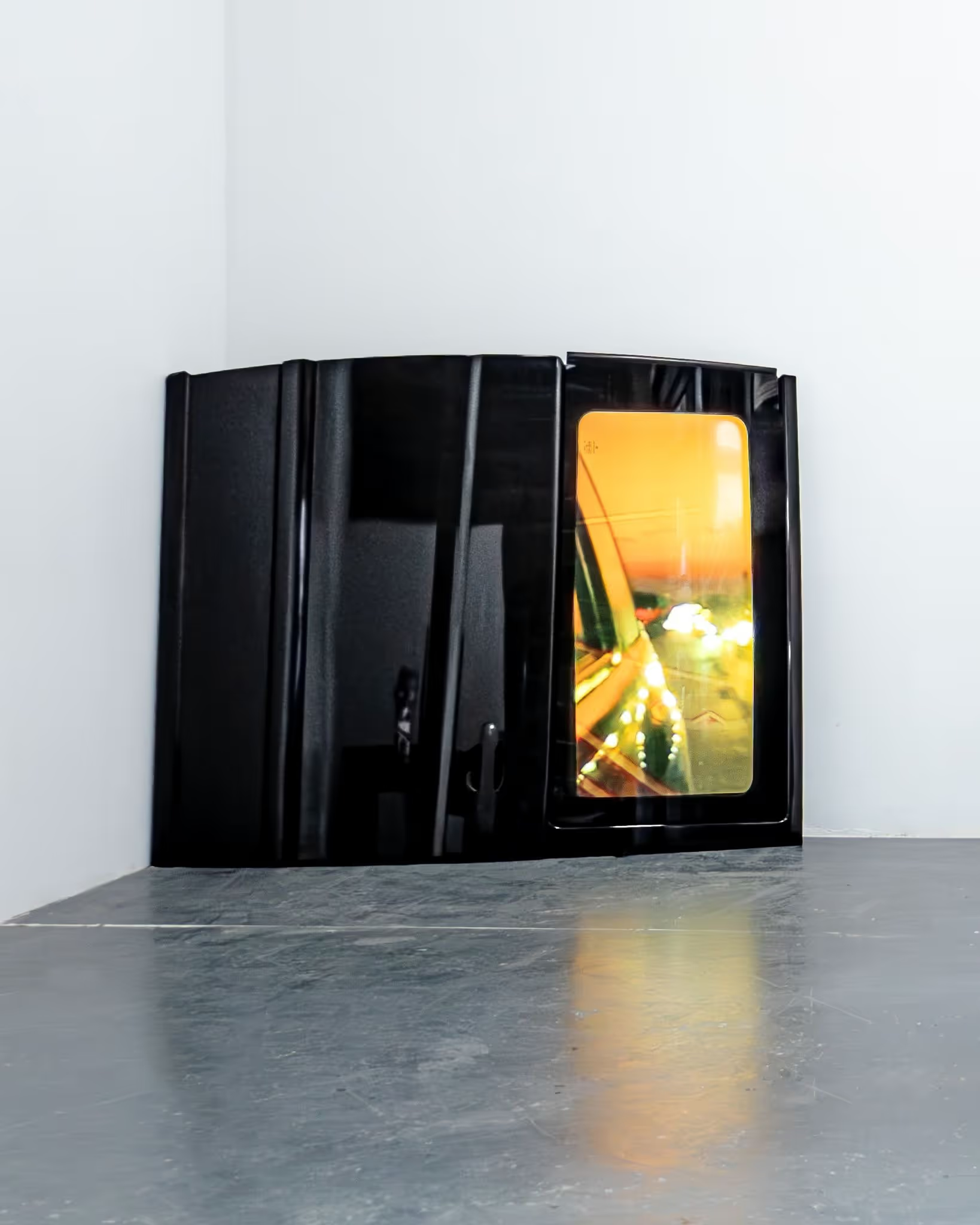
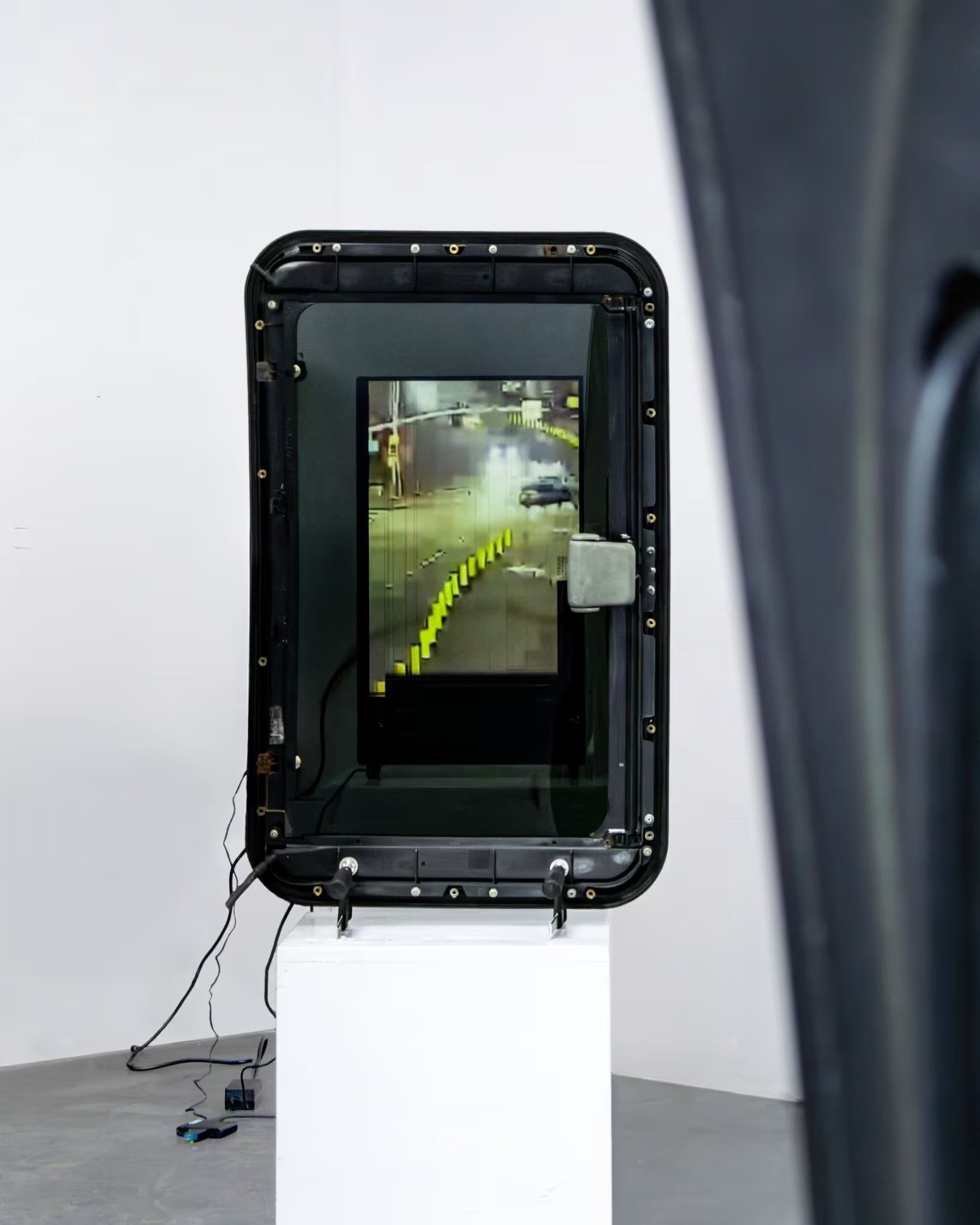
There are two pieces where I’m using windows, and I think the specific interest is in the relation to cinema and how the experience of watching a landscape pass by through a car window is very cinematic, and how historically that has also been written about.
There’s a kind of thinking around that, especially in relation to landscape, about how spectacular it is, how there’s the spectacle of viewing landscapes and urban environments passing by from within this shell of the car, through this sort of windscreen or like the side window.
They’re basically like a phone screen or a cinema screen, and the world around you kind of becomes this film, and they are experienced like a screen. So that’s, I think, the direct kind of relation that I’ve been interested in.
I feel that the work alludes to the myth of the driver, especially in Western culture and cinema. This myth has been propagated as a trope of the lone driver sitting in a car, driving off into the sunset and gazing out the window.
And it’s kind of has this like outward journey, but it’s actually like an internal sort of reflective journey, like the sort of thinking about their life or whatever.c
And that trope is like usually, that’s like a man, that’s like a male kind of trope of this sort of the lone driver. And I’ve been interested in that because I don’t drive. So, all the videos that I use in these works on automobility are taken from the passenger seat. So, that means I am never alone in the car. And I’m interested in that exact sort of disruption of the trope of the lone driver, and so on, which is also, again, a trope of loneliness.
S: It feels as if you are metaphorically dissembling yourself. You’re the mechanic of your own car.
I am metaphorically dissembling myself. Yeah, I see that. Thank you. It’s like I am the mechanic. I’m a poetic mechanic, or something like that.
To circle back to where I started, all my films come from my personal archive, but they don’t explicitly show me or my experiences. I’m using this material as a kind of fake found footage. It’s relevant to me that it always brings a personal story. It’s all kind of connected to my memories and experiences, as in, why I’m interested in it in the first place, or why I’m doing it.