
Francisco de Zurbarán at the National Gallery
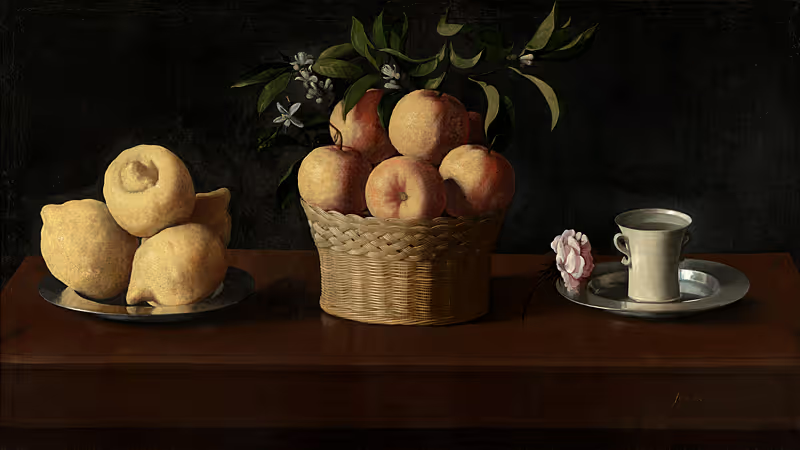
Walking into the first major monographic exhibition of the artist in Britain. You can smell the Sevillian citrus blossom, so vivid is the painting. Even the staunch atheists among us will be transported to a higher plane when confronted by these monumental canvases, which will engulf you in a state of numinousness.
Despite the National Gallery holding several of his works in its permanent collection, Zurbarán is little known in Britain. Here, he does not share the fame bestowed upon his contemporary Velázquez. The overtly Catholic and highly devotional subject matter of his work did not align with Protestant taste, so he has been rather excluded from the history of collecting in the Protestant West. In fact, his ‘Saint Francis in Meditation’ was described on its acquisition by the National Gallery, in the 1850s, as ‘small, black and repulsive’.

The austere nature of these devotional works of solemn saints muddied his image in Britain, but curators, Francesca Whitlum-Cooper and Daniel Sobrino Ralston, are putting that right by illuminating another side to him and showing his full exuberance. The best of his oeuvre is now on display in London, including major loans, over a ⅓ of which come from Spain. So illustrative of the artist is the exhibition that Gabriele Finaldi, director of the National Gallery, said: ‘If you don’t like [it], you don’t like Zurbarán’.
Born in Extremadura, Zurbarán moved to Seville at fifteen and trained in sculpture, painting and gilding. So right from the start, he is thinking in three dimensions. Making full use of the gallery’s vistas, the exhibition begins with an imposing crucifixion, his earliest signed work. His signature and date are added to a little screwed piece of paper, a trompe d'oeil barely noticeable at the bottom of the canvas: a motif for signing his work which Zurbarán returns to throughout his career. The pitch-black background pins all of our focus on Christ. Chiaroscuro creates volume; in fact, the nearly three-metre-tall painting was originally hung in a church behind a grill in a dimly lit room, leading people to assume it was a sculpture.

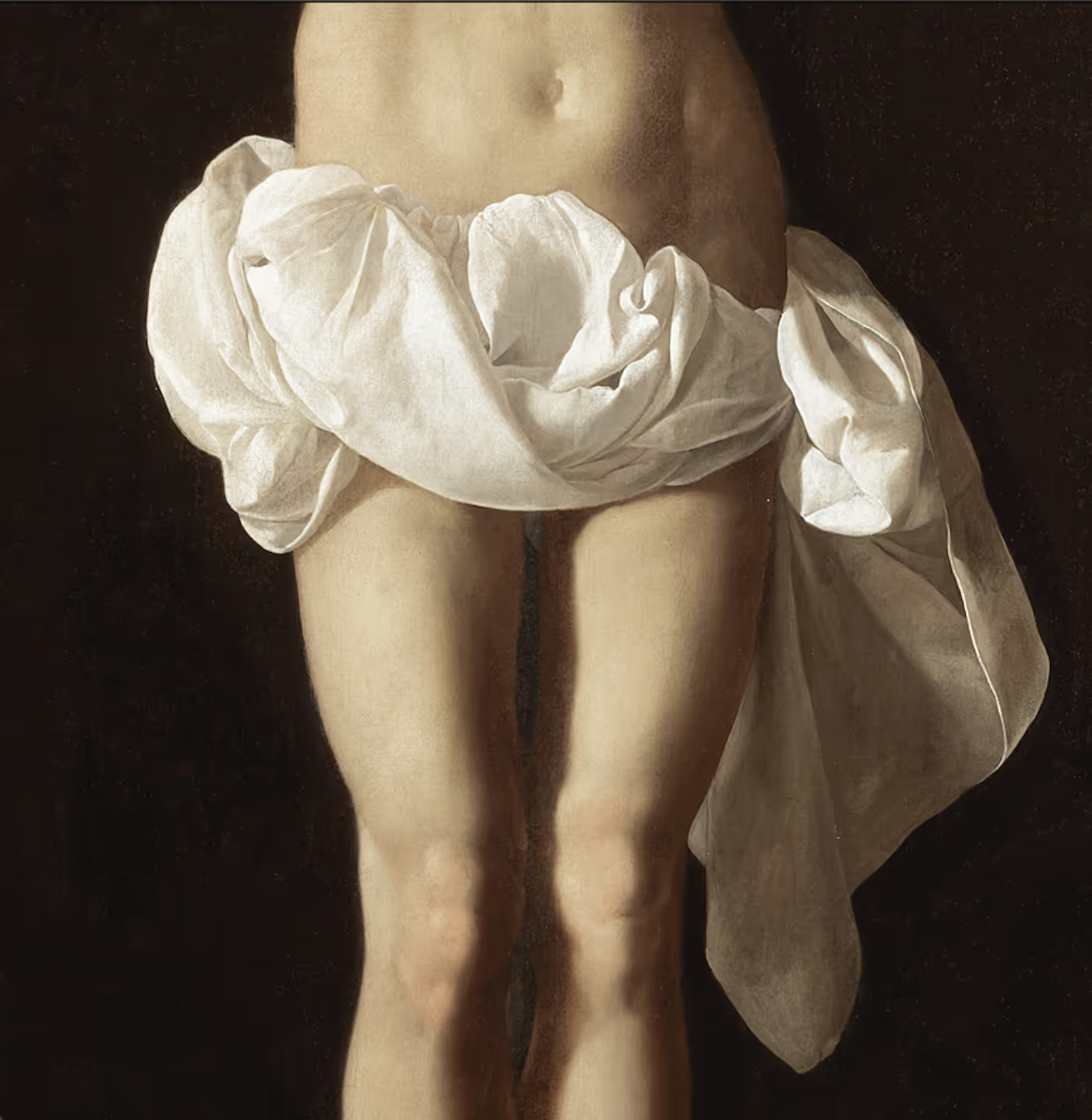
The enormity of the pictures continues in the following room, which features, seen together for the first time in a hundred and seventy-five years, a monumental triptych, the central band of a three-tiered altarpiece which was fifteen metres tall. Far from small, dark and repulsive, this triptych boasts Zurbarán’s chromatic range, in a delightful array of vivid colours, captured in that dazzling Mediterranean light. He is a sucker for details, particularly patterns and fabric. Obsessing over capturing not only colour but changes in tone amongst creases, folds, and crumpled textures. Whitlum-Cooper said of Zurbarán’s ‘The Crucified Christ (1635), ‘It is the most beautiful piece of white in the whole of art history’. She may well be right. It is as though Christ wears a fresh white rose, the folds of the loincloth crisp white petals caught in the spring sun.
In fact, his attention to voluminous fabric is said to have inspired Cristobal Balenciaga. With some going as far as to deem Zurbarán the first Spanish fashion designer, as scholars have noted, there are no records of many of the patterns and dresses he meticulously depicted on his ‘santas’ (full-length portraits of female saints), suggesting they are his own inventions. The sense of attention to detail given to the fabrics is heightened in contrast to the plain faces of the ‘santas’, who appear as mannequins. There is nothing Goya about Zurbarán’s portraits. Take Saint Casilda, the daughter of the Muslim Emir of Toledo, who, legend goes, smuggled bread in her dress to the Christian captives interned by her father. She was caught in the act by guards, but the rolls miraculously turned to roses, an event which could have been portrayed with a dash of theatrical surprise or relief on her face.

There are surprises too, for those more familiar with Zurbarán. The first has all the character the ‘Santas’ lack. A colossal menacing head, over two metres squared, frowning at the viewer. Painted for Phillip IV’s Retiro palace, it was thought to be by Vincenzo Carducci, but recent restoration work at the Prado revealed the attribution as unlikely. There are contemporary accounts of the puzzlement experienced by visitors to the palace on seeing the picture, and art historians are just as perplexed today. It is almost certain that there would have been an exacting commission for the painting, but thus far, nothing has been found. In the words of the National Gallery’s head of conservation, ‘The problem is, no one quite looks themselves when they're painting a two-metre tall face’. So the questions remain: Is it a Zurbarán? Who does it depict? Why was it commissioned for the Retiro?
There are two other recent attributions in the exhibition, two still lifes, discovered by the Louvre. Recent analysis revealed they had been in the Spanish royal collection, pointing to Zurbarán. Although still life was not a frequent subject for him, undoubtedly ‘Still Life with Lemons, Oranges and a Rose (1633)’ is one of his masterpieces, quite modern in its composition. It is contemplative, at least partly allegorical. And it is worth going to the exhibition just to see how he has painted the rind of the lemons alone.
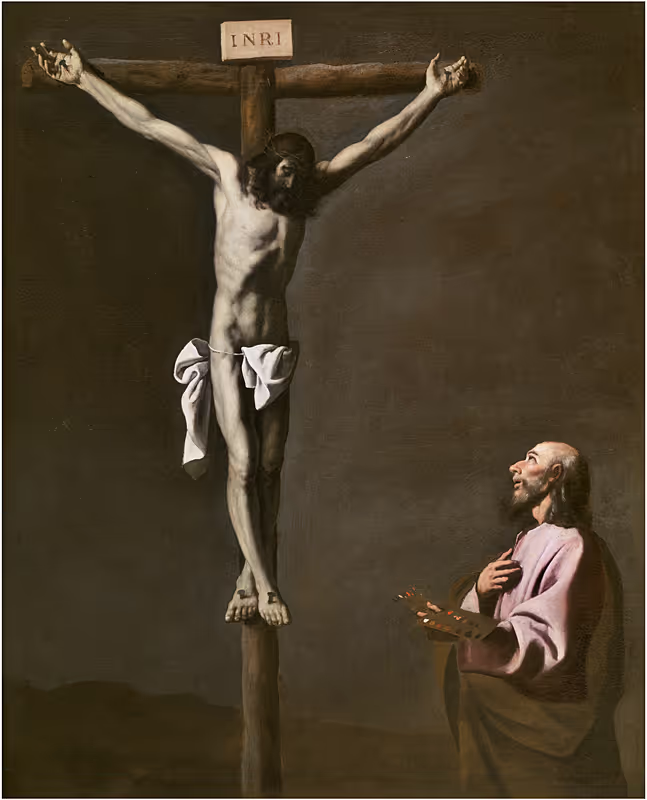
The impression the exhibition gives of Zurbarán is that of a stoic, devout Catholic. His works are fraught with pensive energy. Though interestingly, there are no records of what Zurbarán was like. He did not keep a diary, there are no known portraits, and no descriptions of his character by contemporaries. However, the final painting in the exhibition reinforces this impression of a painter devoted to his faith, in a painting which has no known precedent in the history of art. Zurbarán decided to paint a crucifixion with a painter (possibly a self-portrait) standing below, palette in hand, looking up in adoration.
Zurbarán runs at the National Gallery from 2 May to 23 August 2026. Don't forget to check-in and leave your review in the gowithYamo app!