
Abstraction meets figuration, Hurvin Anderson challenges the ‘truth’ of photography at Tate Britain
The first major survey of Hurvin Anderson’s career begins with a room entitled ARRIVAL. Anderson was born in Birmingham, the first member of his family to be born in England, after his father emigrated from Jamaica in 1961. Yet, the sense of being an outsider punctuates his oeuvre. His paintings deal with boundaries, leaving the viewer between places, whether that be the present and past, memory and photography, or scenes in which we are invited to view but not enter. We are never quite present in Anderson’s paintings, always just arriving. Things never quite being what they seem.
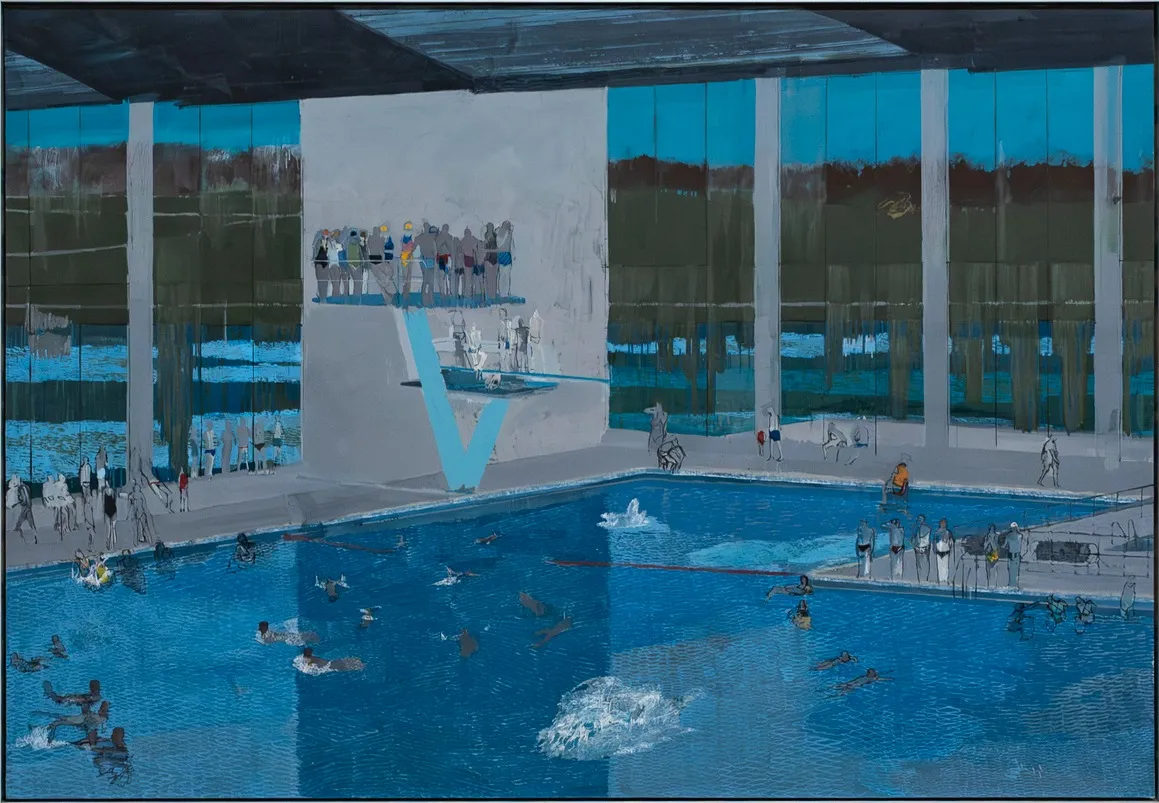
Anderson’s work questions the nature of reality, paintings show the pictorial techniques used in their construction, and the grid underdrawing used to scale the composition is often left or re-applied over the painting. In this sense, his work is far from a ‘trompe l'oeil’ (or trompe l’acrylic in the case of Anderson), it is not hyper-realism. In contrast, it is painting which questions the ‘truth’ of photography. Like water, reality is fluid and as intangible as memory. Paintings such as ‘Audition 1998’, depicting Anderson’s local municipal pool, were created using photomontage, scaled to create an accurate representation, but combined with a ghostly, painterly approach to figuration. With a muddied palette evoking faded recollection or perhaps nostalgia.
As the exhibition progresses, we see Anderson develop his practice of combining photographs and memory to construct scenes. Whether that is literally, painting the postcards and posters tacked to a barber’s mirror, or overlaying scenes as in Scrumping (2013), in which he overpaints a mango tree with a painting of an apple tree, superimposing similar childhood memories from both Jamaica and England. ‘This is the painting of memory,’ Anderson said of ‘The Banqueting Palace’ (2026), a streetscape in which he added and subtracted figures, leaving ghosts on the canvas. Traces of people are present yet exist trapped between space and time.
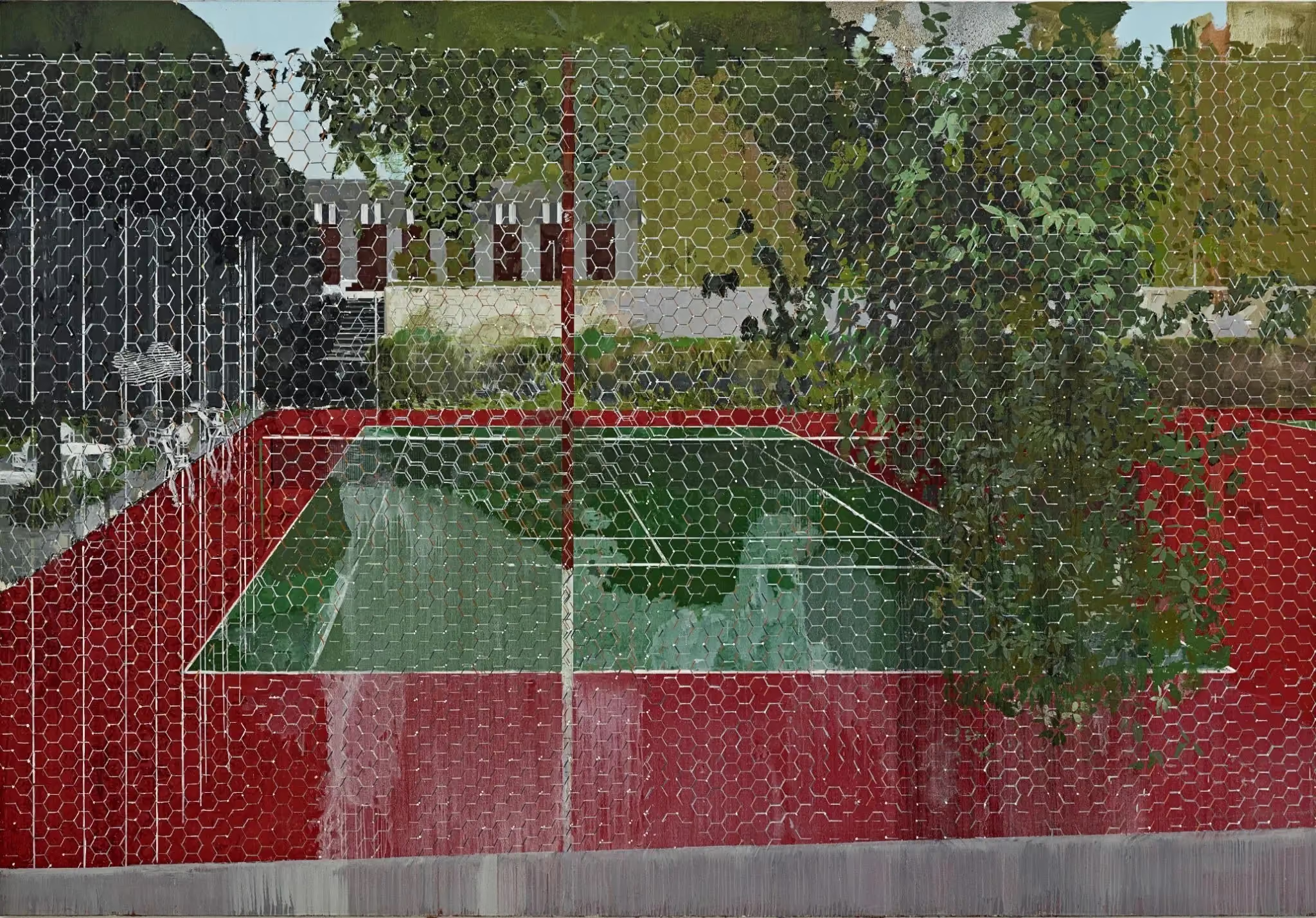
His use of a flat perspective heightens the sense that the paintings themselves are collages. He is far more interested in pattern and shape than depth. Just look at the attention and time he has spent representing the chicken wire in ‘Country Club Chicken Wire’ (2008). So cleanly is the wire portrayed, so pristine and exacting, parts of it have rusted, other parts are blackened. In the veil of the court, we see the reflection of the searing Caribbean sun. Or take ‘Wait A Moment’ (2019), Anderson has splodged out a figure under a tree on the beach, a typical Anderson figure, generic, identityless, the sea is a strip of flat blue, a striking azure horizon, breaking the pictorial plane. But where Anderson has really spent time, what he has relished in, is carefully squibbling out the shadows of the interlaced branches and foliage of the canopy, patterning the sand beneath it.
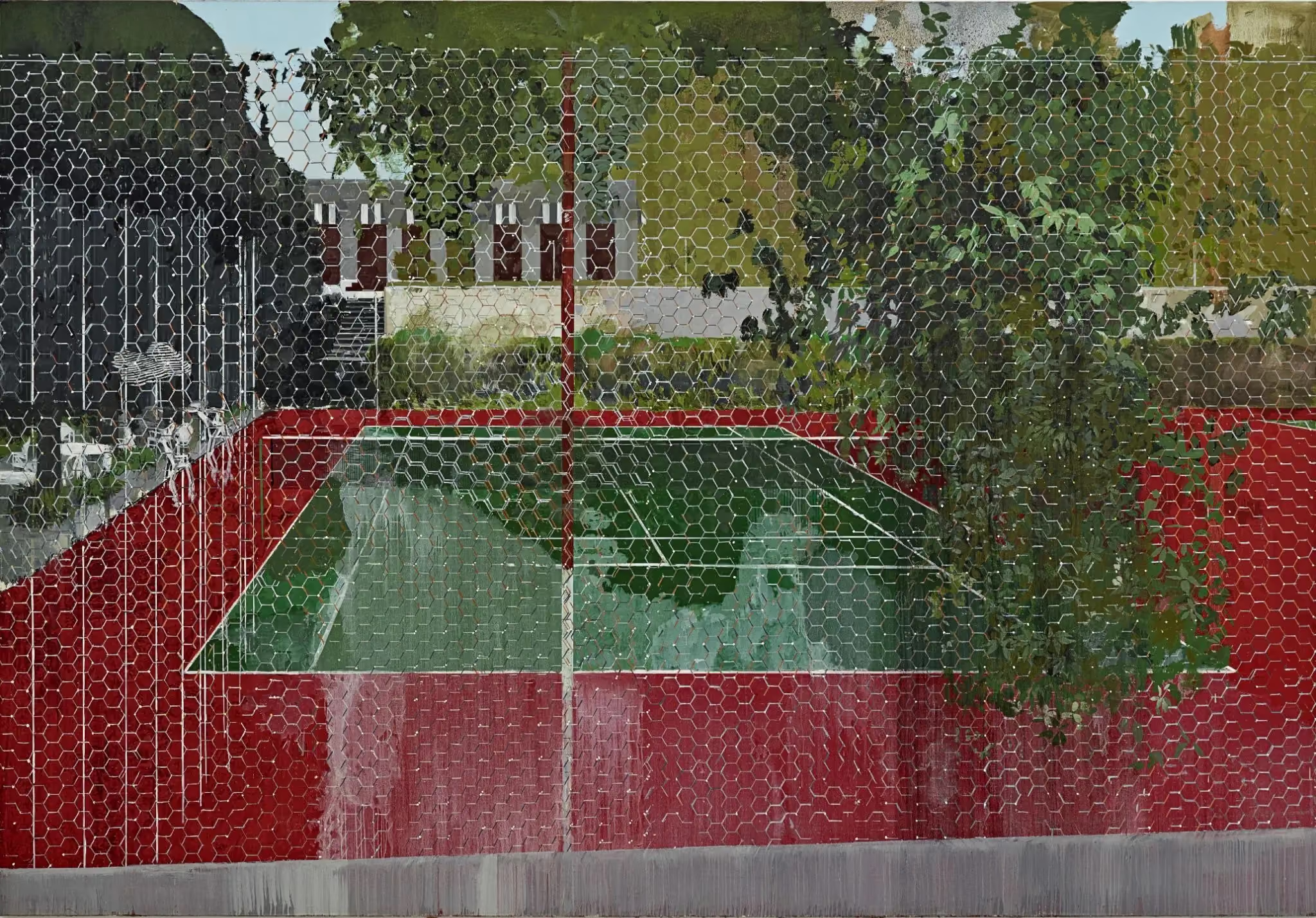
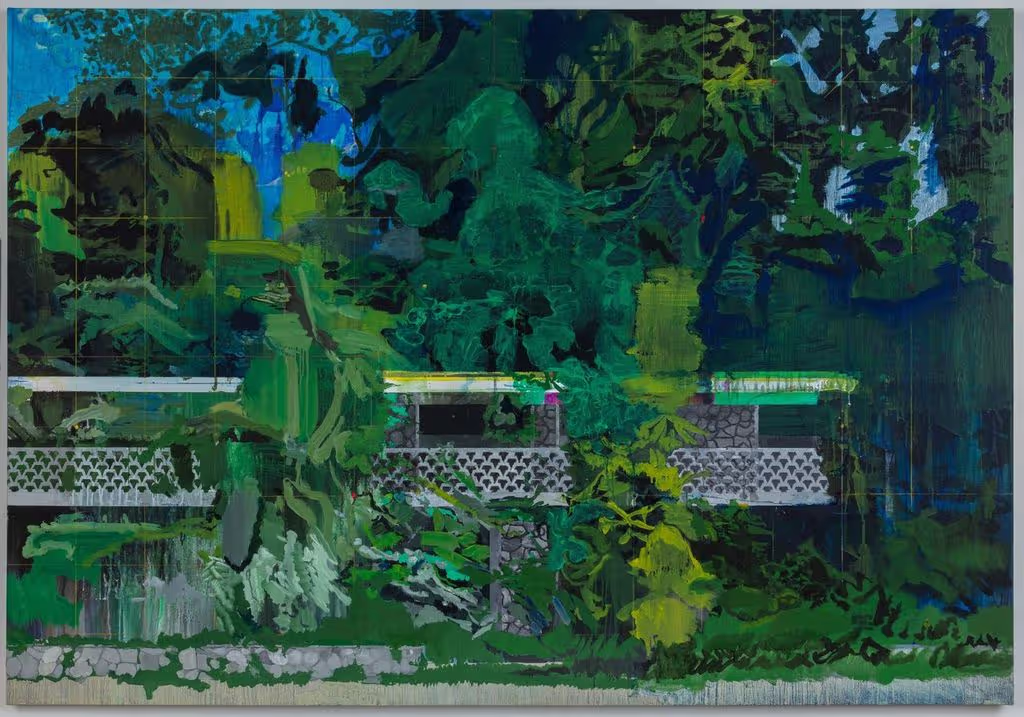
Foliage is another recurring theme, great swathes of it luxuriate across beachscapes, in picture-perfect vistas of Caribbean beaches, or engulf derelict hotels. Other paintings focus solely on vegetation; it seems that for Anderson, foliage has the uncapturable quality that he excels at capturing. Groups of figures and patterns share this characteristic with foliage, that is, they exist only as a sum of their parts; they are made up of repeating units: leaves, figures, shapes. Vegetation has a remarkable ability to slip between boundaries, for example, in the chicken wire mesh, the foliage seeps through; it is hard to tell if it is in the background, foreground, behind or in front of the fence; it’s able to permeate it – something as a viewer we cannot do. The chicken wire in the tennis court, and the grilles painted over interior scenes in his ‘Welcome’ series, assert our place as an outsider; we are invited to look but not enter. This idea of overlapping boundaries and moving across divides is prevalent in his work.
Where Anderson shines is in his large scenes. While his figures often lack identity, their faces are frequently featureless, groupings of people, he beautifully captures, in which people cease to exist alone and become a mass together. ‘Ball Watching’ (1997) offers a haunting vision; boys’ figures silhouetted against the sky are memories of playing football in Birmingham. Of course, there are exceptions, for instance ‘Grace Jones’ (2020), and in the ‘Barber Series’ in which a recurring motif is a male figure sat at the barbers, for instance in ‘Sheer Cut’ (2024) or ‘Skiffle’ (2023), whose stare meets ours directly, eyes gazing back, as if it is us looking at ourselves in the mirror.
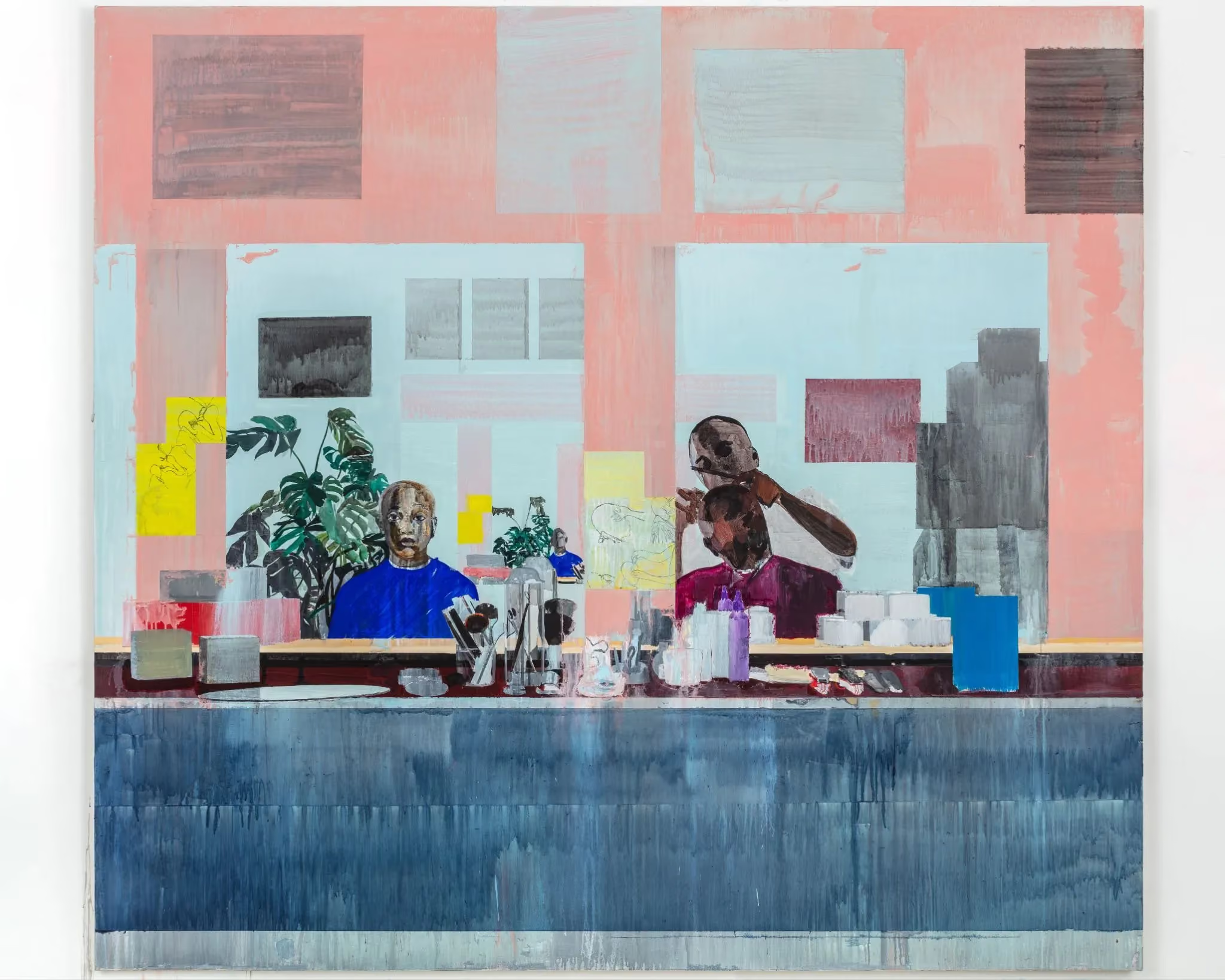
In ‘Is it OK to be Black?’ (2016), every figure is a silhouette as nondescript as the bottles lining the shelf below, except, of course, Malcolm X and Martin Luther King Jr. Sometimes the painting is more of a collage, and more about shape than anything else; he collages with paint. Shapes overlap in a way that defies perspective, for instance, a cardboard-coloured rectangle in ‘Jersey’ (2008) punctures the base of a barber’s stool. In the ‘Barber Series’, the boundary between abstraction and figuration is frequently blurred, ‘Peter's Sitters II’ (2009) is a fusion of both, a man sits in a barbers chair, head cocked down in anticipation of the scissors wearing his protective gown, but he is floating across a white plane in front of a pair of blue rectangles. Anderson has mentioned the influence of cubism on this body of work, and in some paintings like ‘Essentials’ (2014), he enters abstraction completely. Here, the rhythm of the rectangles of clippings and cut-outs is reduced fully to abstraction in a triptych that echoes the adjacent mirrors of a barbershop.
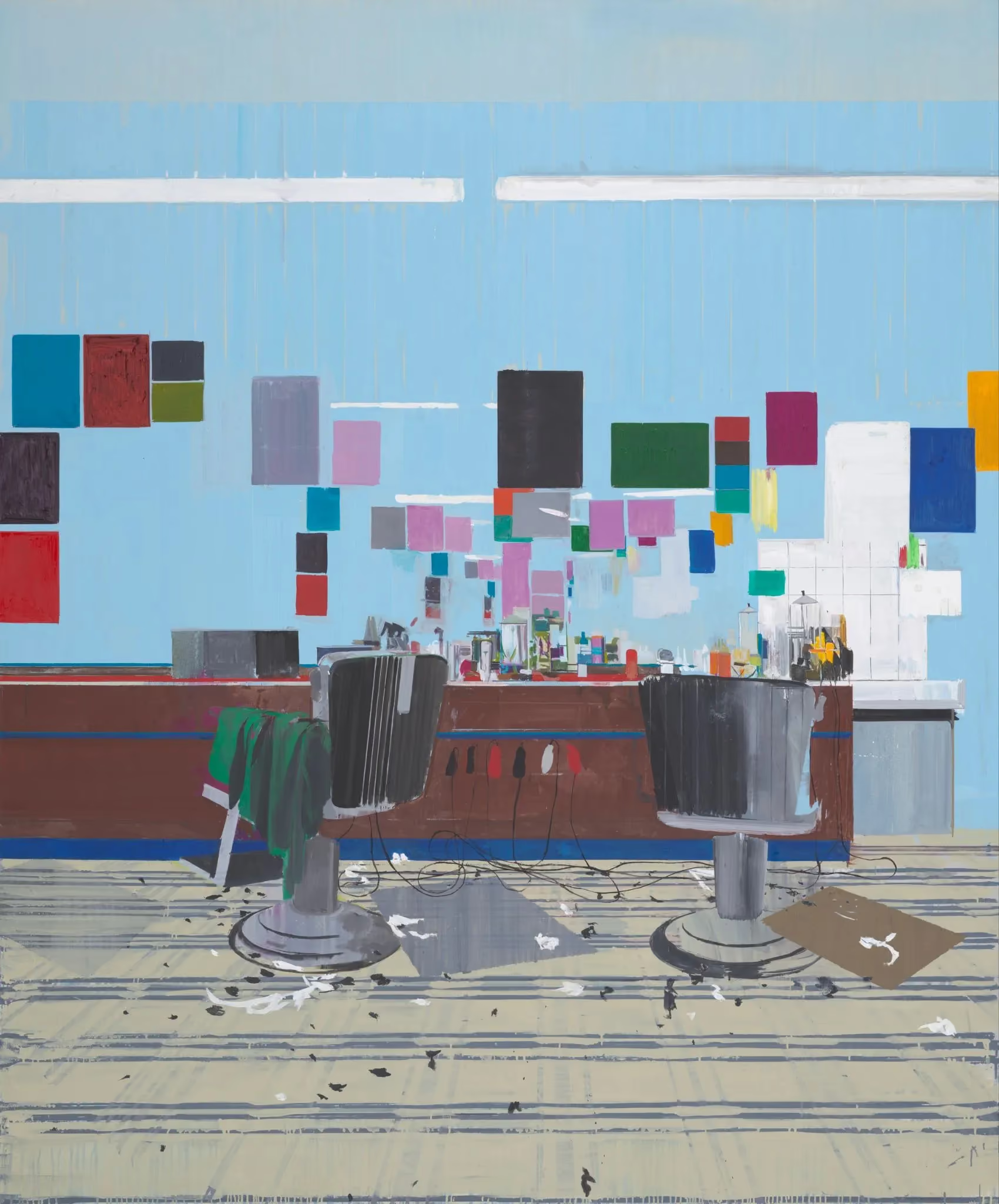
‘Dabs and dots on a wall, murals, graffiti, and messy lumps of things decorated with colour’ is how Anderson described vernacular visual culture in the Caribbean, and it’s a style he’s successfully aped throughout his work. Great splodges of vibrant colour give his work an underlying energy and passion. Existing between abstraction and figuration, his work subverts the viewer's gaze. In his own words: ‘I define these paintings as wanting to see the Black vision… …In Britain, your vision shrinks somehow. I want to broaden that out.’
Hurvin Anderson is at Tate Britain from 26 March to 23 August 2026. Don't forget to check in and leave your review in the gowithYamo app!