
Benton End: A Paradise of Pollen and Paint
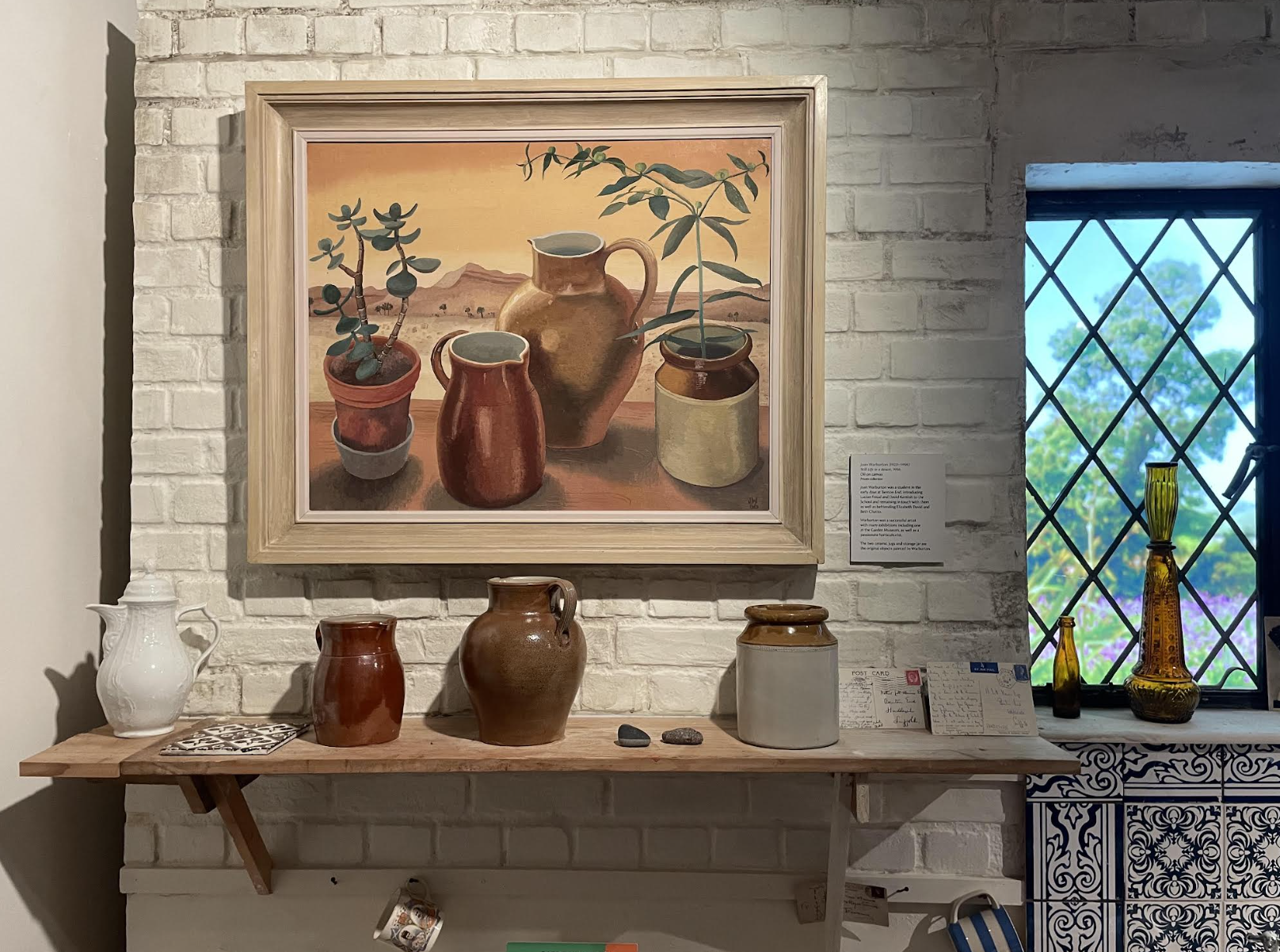
Much like its soul-sisters of Charleston and Kettle’s Yard, Benton End is a house and garden in Hadleigh, Suffolk, where art and life were deeply entwined during the 20th Century. It was the home of artists Cedric Morris (1889-1982) and Arthur Lett-Haines (1894-1978), and for half the year over many years, it was also the home of students from the East Anglian School of Painting and Drawing, which was founded in 1940. Among many others, artists Lucian Freud and Maggi Hambling walked the halls at Benton End and found their creative voice at a young age there. This summer, this extraordinary place is the subject of the Garden Museum’s exhibition ‘Benton End: A Paradise of Pollen and Paint’.
The Garden Museum is set inside a converted church on the Thames Embankment. As you enter past the sales desk and into the vast hall at the heart of the church building, you’re greeted by a rather informational space with large photos hanging from the ceiling and text panels on the walls. A list of the plants from the exhibition beds is also made available to visitors at the start of the exhibition, further enhancing the educational feeling of this space. Panels set out the premise of the exhibition, stating that it will mainly focus on the work of six key figures: Cedric Morris and Arthur Lett-Haines (who were partners in life and work), students Lucian Freud and Joan Warburton, and visitors Elizabeth David and Beth Chatto.
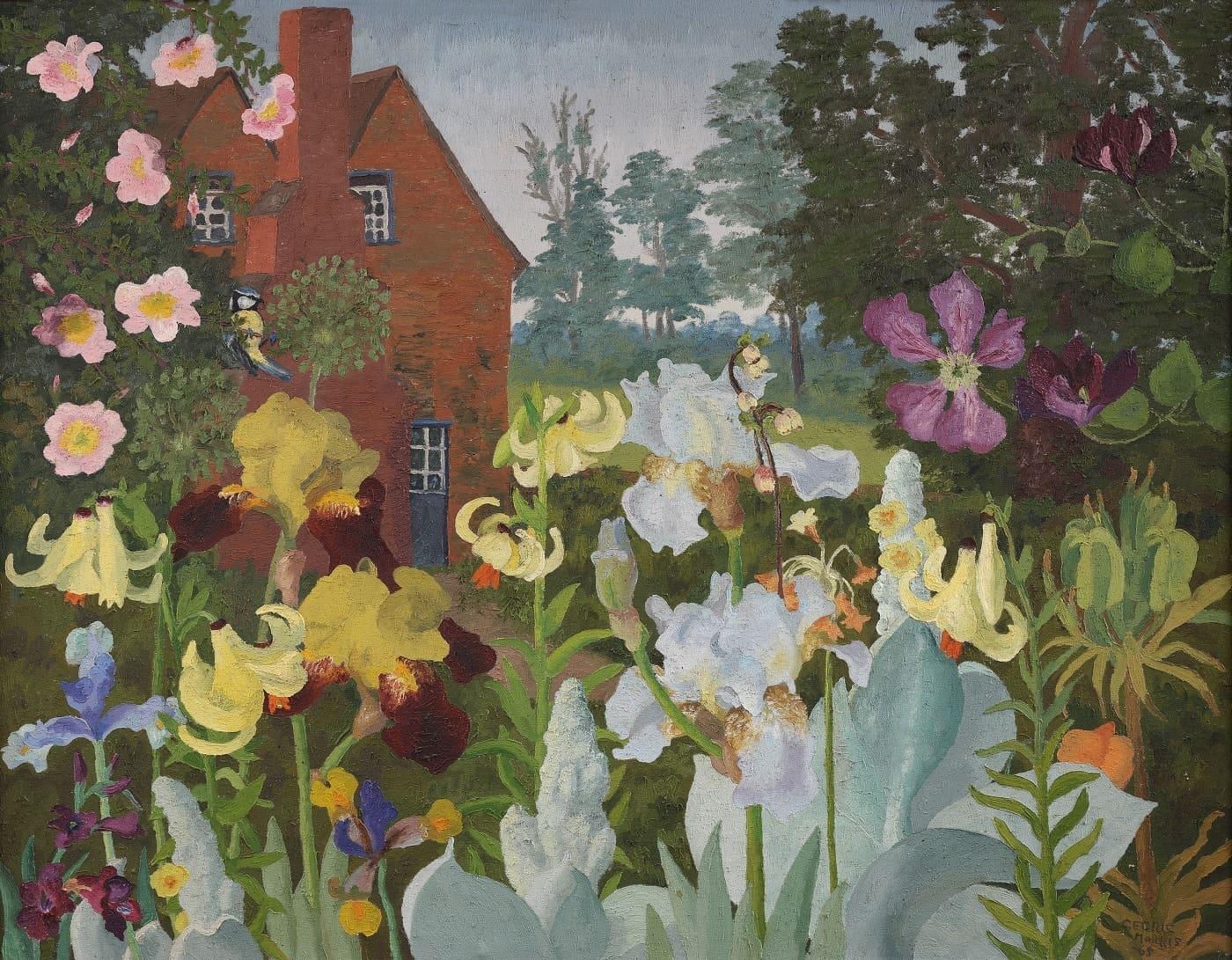
However, it’s pretty clear from the start that the star of the show is Cedric Morris. The artist Cedric Morris, who co-founded Benton End, is best known for his paintings of flowers (although he also painted portraits and landscapes). In conjunction with his painting practice, he also cultivated a profound love and understanding of plants. Amongst horticulturalists, Morris became renowned for finding and collecting rare plants and especially for breeding his own irises. As he developed an intimate knowledge of botany, he fed it back into his dense compositions of flowers, as in ‘Benton End Blue Tit’ (1965) on display at the Museum. Seeing as this exhibition is set at the Garden Museum, it’s no surprise then that one of the primary focuses of the exhibition is on Morris’ work and on the garden at Benton End in particular.
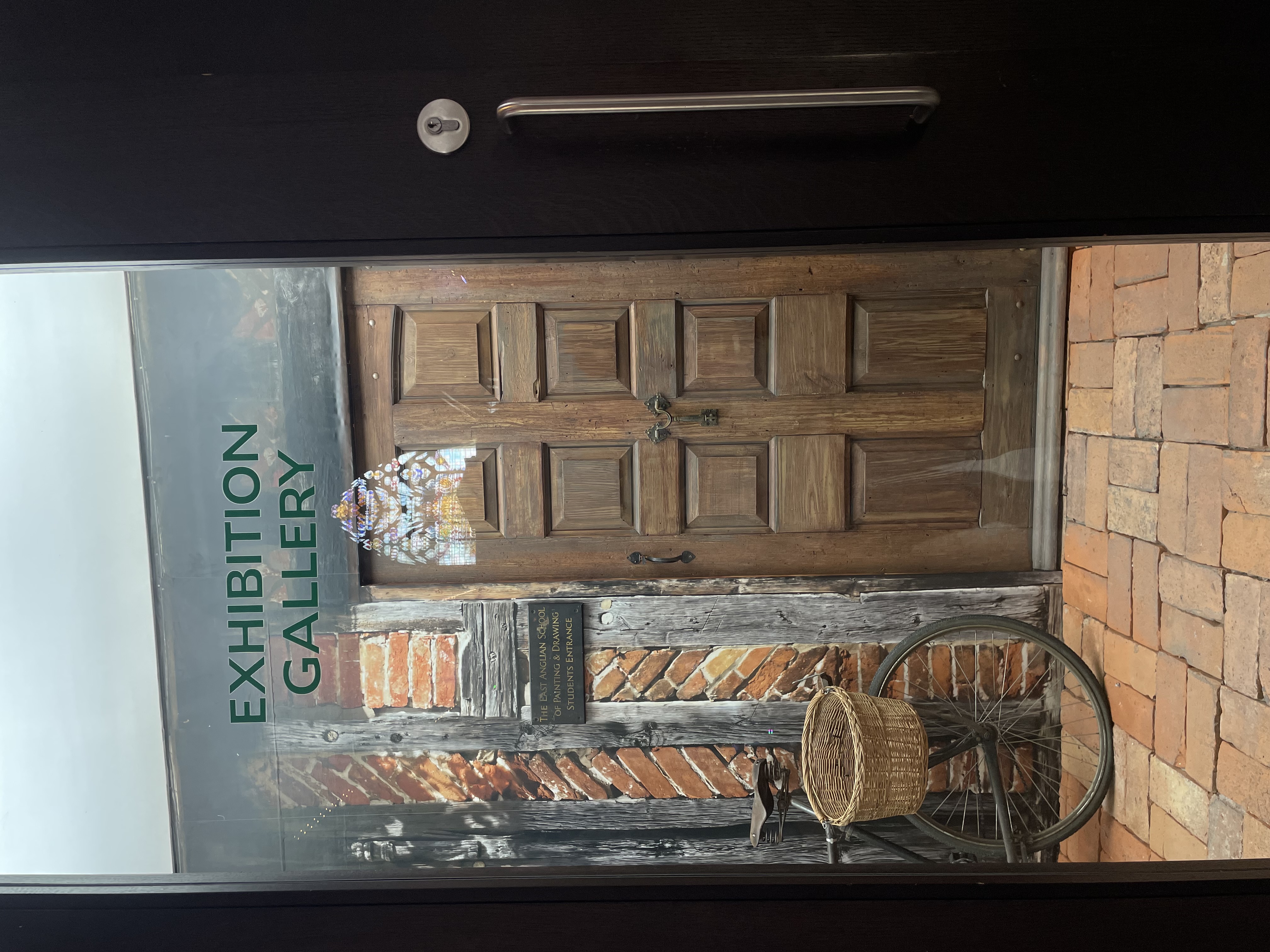
Yet this show is about so much more than gardening; it’s also about art, painting, teaching, cooking and leading an artful life in general. And the real show begins once you enter a very pleasing vestibule, which recreates the exterior of the quaint building at Benton End and its front door. Step through this door, and it’s like entering an enchanted land, within a much smaller and denser space than the church hall where the core of the exhibition is set. There’s a lot of ground to cover within this tiny space, so I imagine it was quite a challenge for the exhibition curator (Dr Patricia Hardy) and designer (Jeremy Herbert) to pack it all in, but they rose to that challenge admirably.
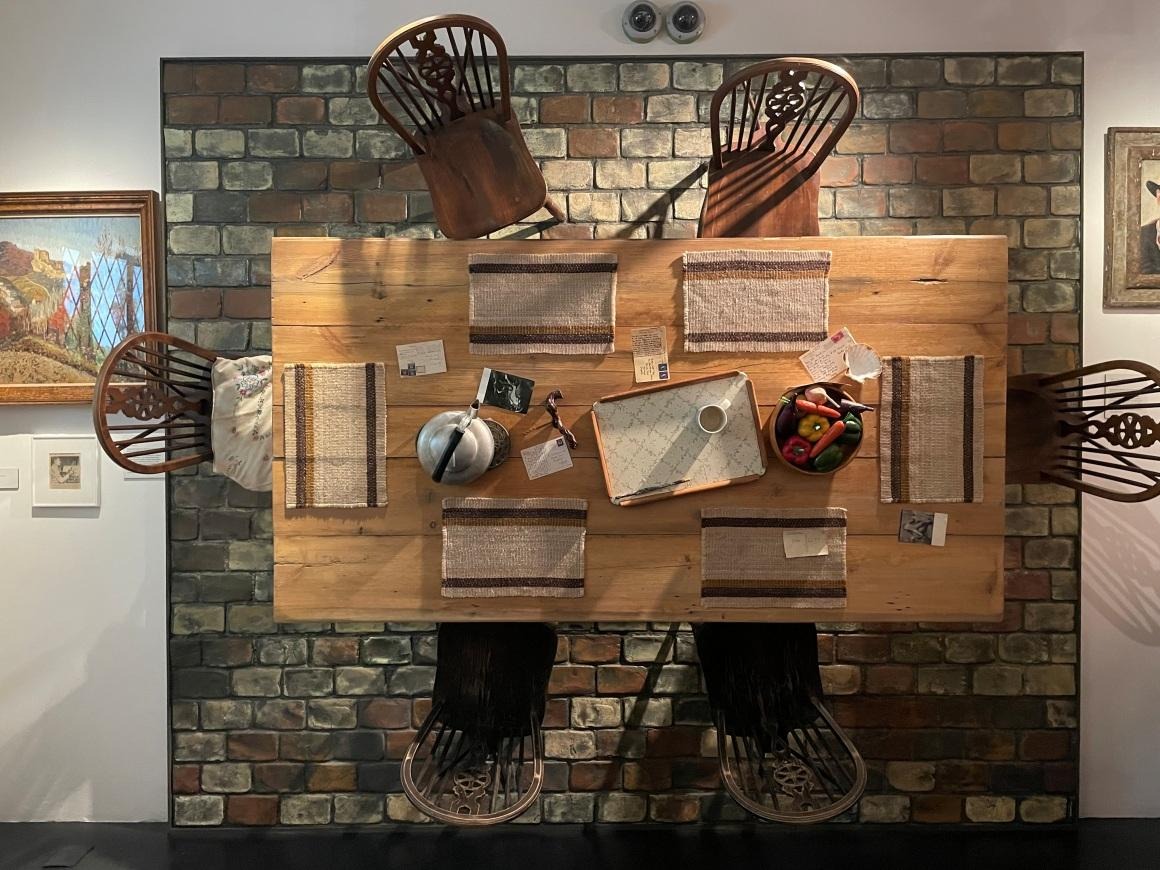
What ensues is a surprising and surreal immersive exhibition, full of playful touches: a colourful theatre set of the Benton End kitchen, a dining table hanging sideways off the wall, scented objects like colour palettes, hobs and watering cans spread out across the exhibition, and much more. These joyful immersive installations are an apt reflection of the ethos of the art school at Benton End, where a spirit of bohemian experimentation, curiosity, DIY and play reigned supreme.
It was a place of independence and unconventionality, and as the exhibition panel states, there governed ‘a refusal to accept received ideas about what painting, food, gardening or teaching should look like’. There, ‘artists […] learnt not just artistic style and composition but a way of living and sociable interaction’. Studying there was a lesson in community-living and conviviality, as each student helped with their share of the maintenance work and daily tasks at Benton End alongside their artistic training.
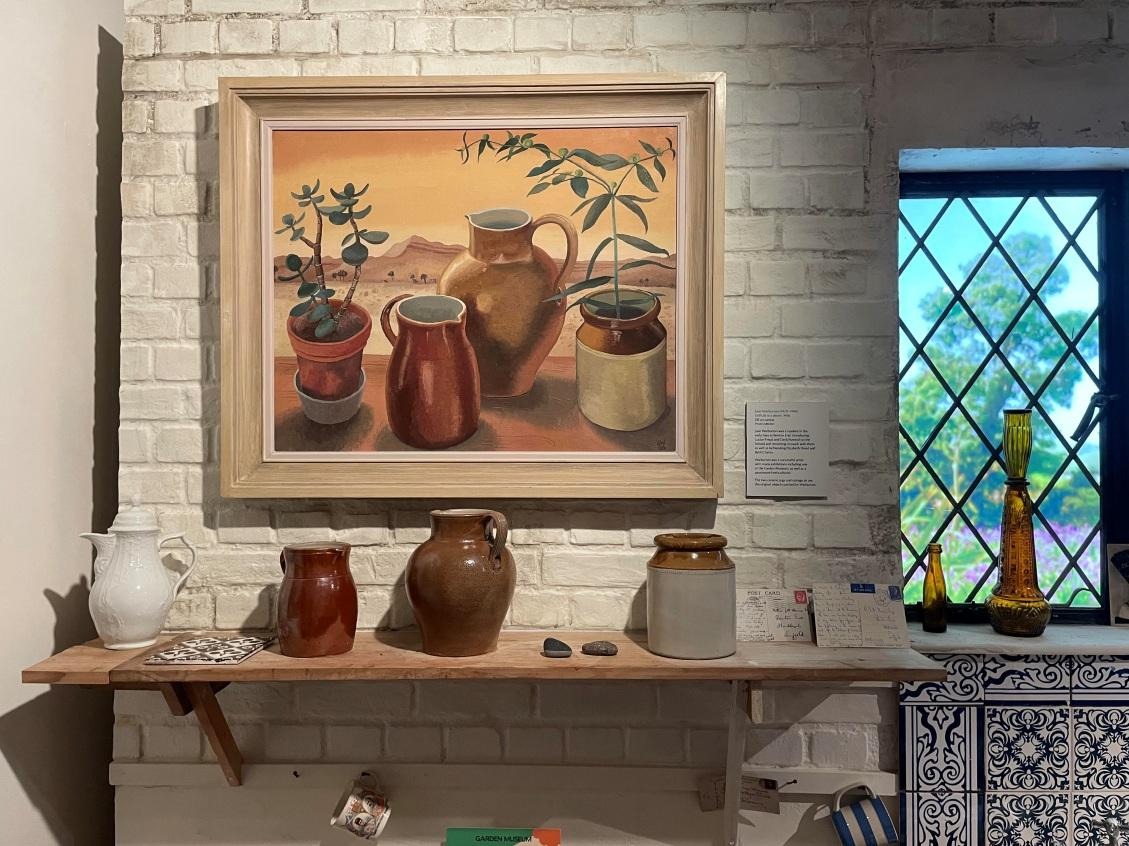
The surroundings and lifestyle at Benton End also had a profound influence on the artwork that was made there. Cedric Morris and Lett-Haines placed particular importance on spending time in the company of their subject matter, observing it closely and developing a profound knowledge of it on a daily basis. This was possible for students because they lived and worked at Benton End for multiple months per year, painting the plants, people and places around them as they immersed themselves fully in this environment.
Amongst all the playful installations, many other themes are broached within the Garden Museum exhibition. Benton End and The East Anglian School of Painting and Drawing were open for forty years, so there are plenty of stories to cover within this small exhibition space.
We get a glimpse into the wide network of influences that operated within this circle, such as the influence of travel (in Europe and further afield) on Cedric Morris and Lett Haines’s work; the influence of Benton End on the famous chef Elizabeth David and renowned gardener Beth Chatto; and the artistic influence of Cedric Morris on Lucian Freud (the similarities between the two artists’ work is most striking in their approach to portraiture, and particularly their way of representing the eyes of their sitters, as well as in their shared application of paint in thick impasto brushstrokes).
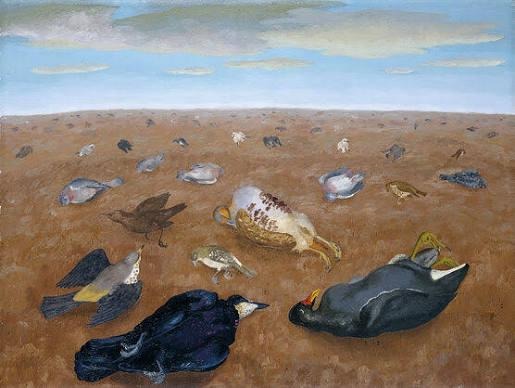
Another captivating subject that’s broached in the exhibition is Cedric Morris’s involvement with environmental subject matter. Morris was finely attuned to the wildlife around him, so when he noticed the decline of local birdlife due to game shooting and the use of chemicals in farming practices, he created a series of ‘protest paintings’ in response.
Because of its diverse approach to its subject matter, this exhibition doesn’t delve into any single topic in great depth, but instead makes an excellent starting point for further research into the stories behind Benton End and its founders, students, and visitors, no matter which angle catches your imagination the most.
And in case you were wondering, the real Benton End in Hadleigh still stands. In a campaign led by the Garden Museum, it is being renovated bit by bit. Its gardens reopened to the public for the first time this summer in 2026, but the house remains closed while it’s being renovated. In the meantime, this small but multifaceted exhibition at the Garden Museum certainly packs a punch and gives a strong taste of the ideals and the atmosphere that prevailed at Benton End.