


Jody Agus on colour, texture, and reclaiming Public Space
January 12, 2026
No items found.

Born and based in Jakarta, Jody Agus is an artist whose practice explores colour, texture, and play as tools for observing how people gather, move, and exist within public space. Working across illustration, books, and participatory formats, Agus is particularly interested in how everyday environments shape social behaviour, and how art can gently intervene when those spaces begin to disappear.

Through a balance of visual experimentation and research-driven storytelling, Agus often treats the artwork itself as a shared space: something to be entered, used, and inhabited. By translating concerns around shrinking third spaces into playful systems and characters, their work invites viewers to engage without instruction, opening up new ways of imagining connection, care, and collectivity in the contemporary city.
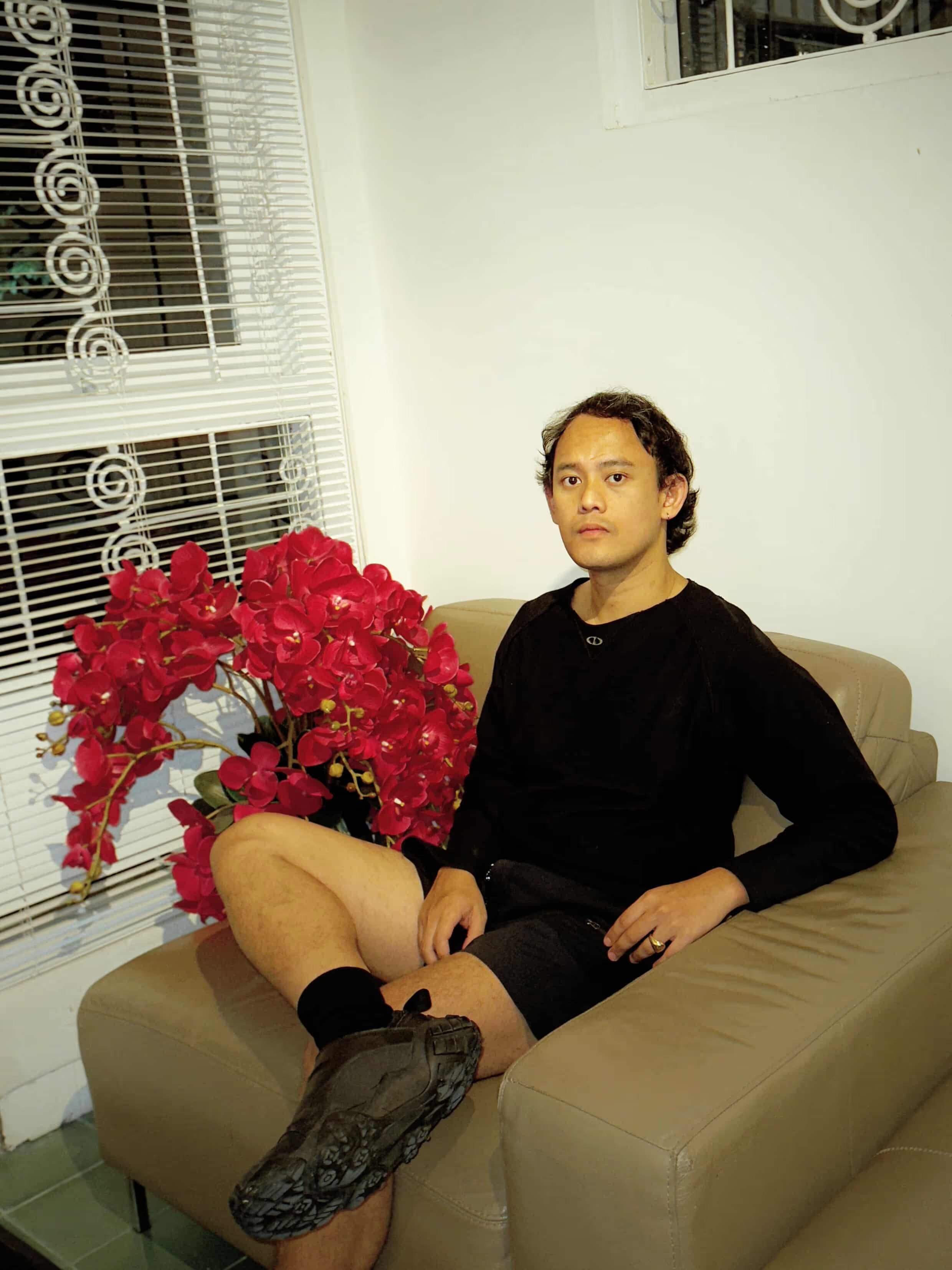
Your work often explores the interplay of colour and texture; could you walk us through how you begin a piece and what drives the initial spark?

I’ve always had a special interest in playing with colours and textures — finding balance between all the elements without making it feel too much. I usually begin a piece by aiming for something I haven’t tried before, so the process always feels like learning. I love putting on an album that takes me somewhere while I look for insights and try to answer them through my work.
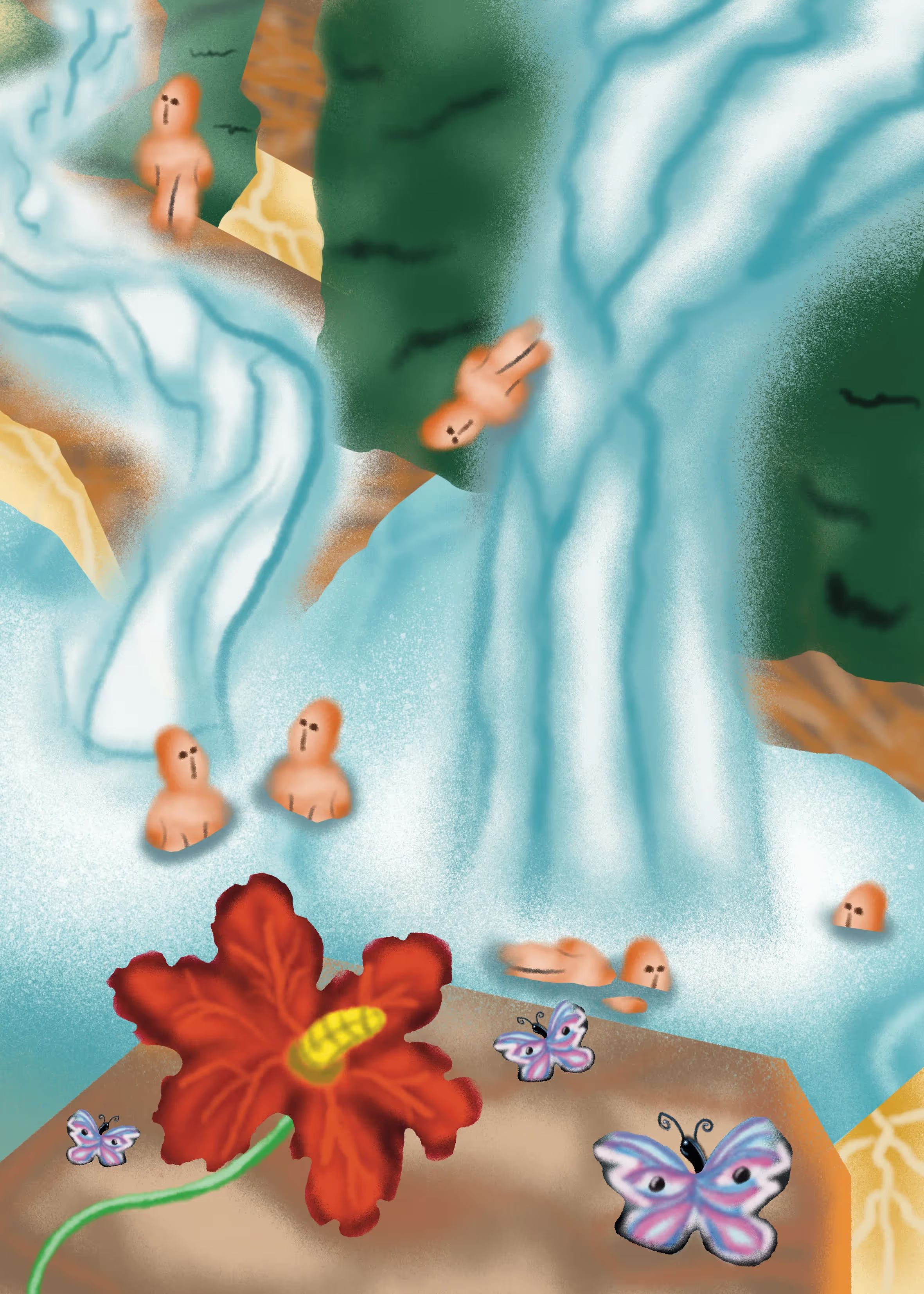
Let This Book Be Your Public Space (Copyright © Jody Agus, 2025)

In transforming frustration about shrinking third spaces into a playful toolkit, what did you learn about the potential of art to reimagine how we gather and connect?

I’ve learned that art is a very interesting medium to create interest and draw attention to an issue. Here in Jakarta, the habit of going to public spaces isn’t well developed, and not many people are aware that our public spaces are still very limited and not well-maintained. I feel art can be a fun way to build awareness around this, because people don’t like to be preached to.

The idea of a “book as a small public space” is both poetic and radical. How do you see this concept evolving? Could your next project exist as a wearable, a performance, or even a digital experience?

My ultimate goal is still to bring more attention to public space, since it remains a big issue in Jakarta. With more support in the future, I’d love to create a wearable public space — maybe by collaborating with fashion brands, haha. One of my goals is also to expand the book’s website to connect people around the world through nearby public spaces, videos, and digital experiences. I also want to create a film for public space — by listening to what the public space itself might want — and build a full archive of public spaces around the world so people can explore and care about them. Some of this is already part of the book’s website: letthisbookbeyourpublicspace.com.
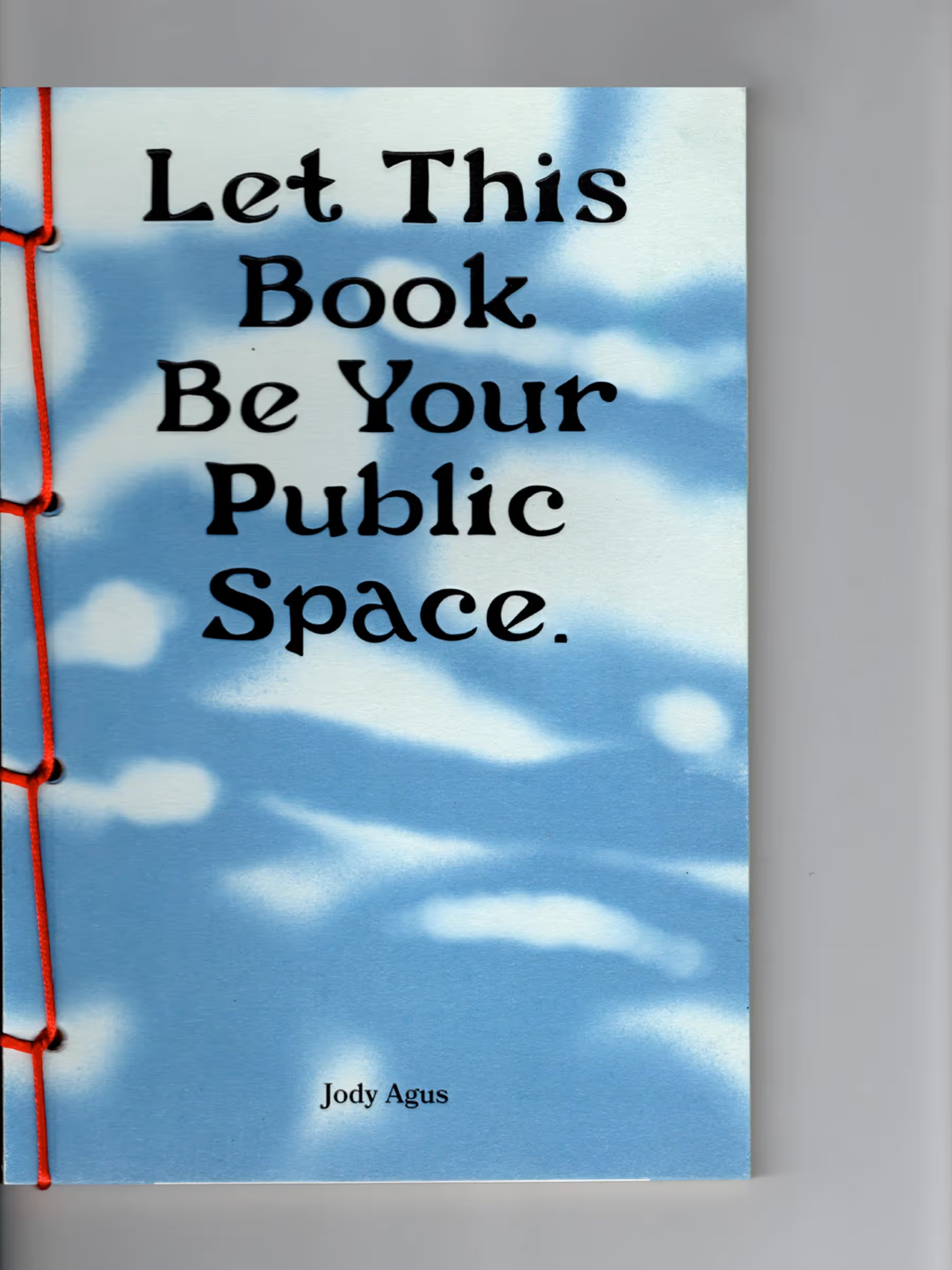
Let This Book Be Your Public Space (Copyright © Jody Agus, 2025)

The book’s design includes characters that help the viewers’ journey. How did you come about creating the characters, both in terms of their appearance and what they represent?

I tried to draw people with features that could be easily spotted in public spaces — to create that real feeling of being there, or even to let readers role-play as them while doing the book’s activities. I’ve always been interested in observing people in public spaces, wondering about their real lives, what they do for a living, and so on.
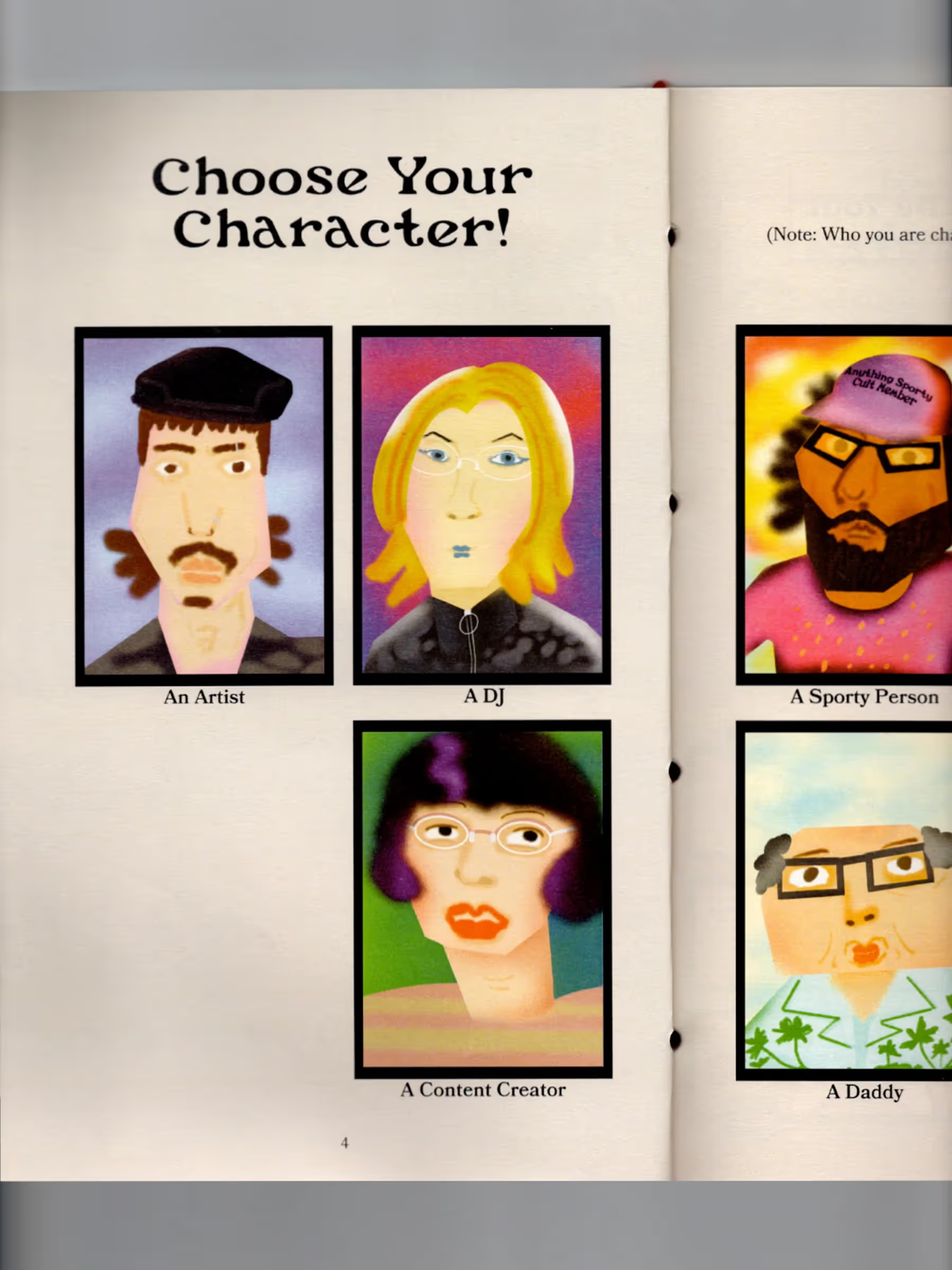
Let This Book Be Your Public Space (Copyright © Jody Agus, 2025)
A sporty person

In a fast-moving digital world, how do you feel about the role of Instagram (and other platforms) in shaping your art-world identity?

I feel that social media and art platforms are mediums that help people imagine and experience art, even if they’re not physically there. For example, I love seeing exhibitions happening somewhere else in the world — it makes me feel connected to the same atmosphere, even though I’m on the other side of it, haha.
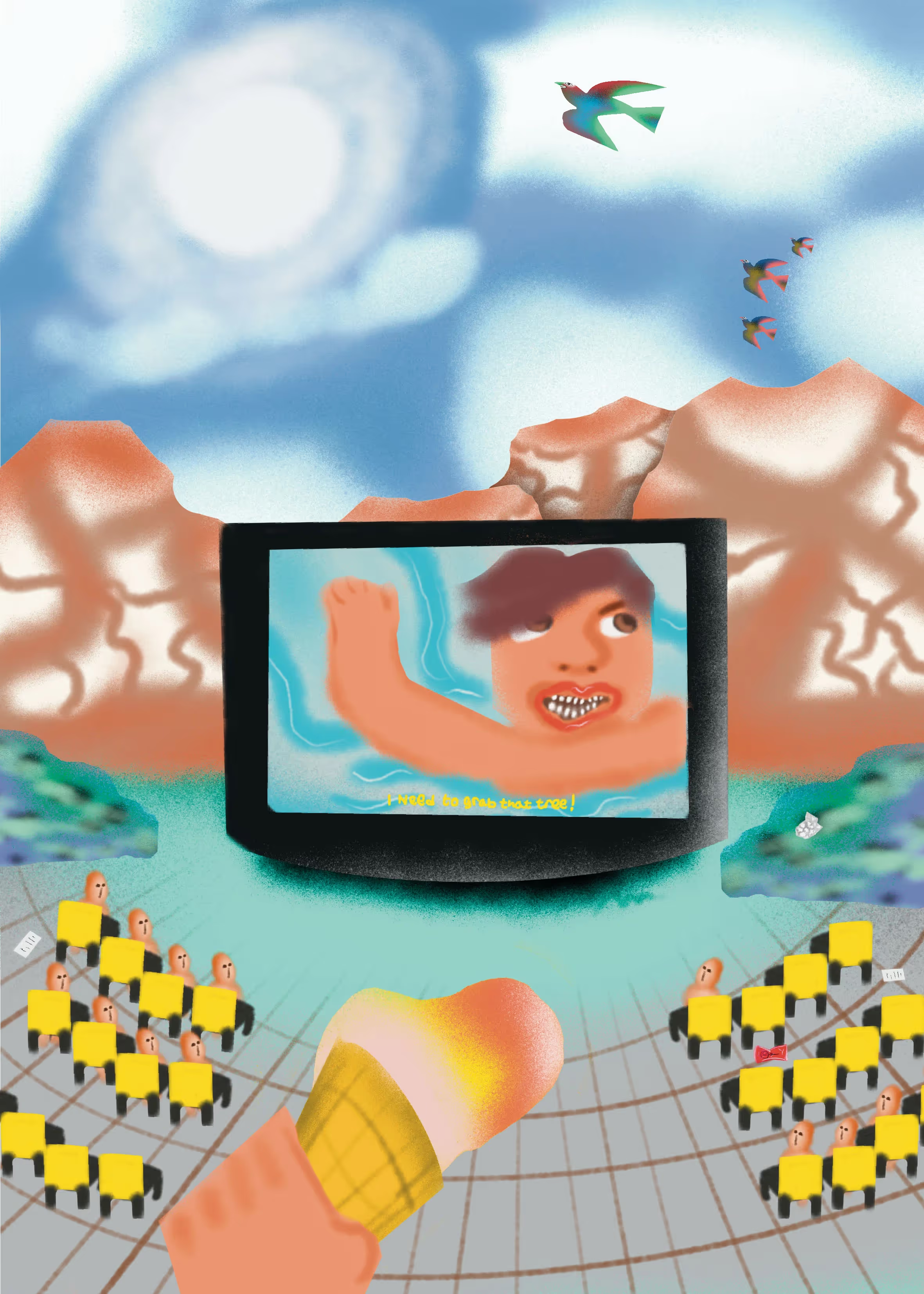
Let This Book Be Your Public Space (Copyright © Jody Agus, 2025)

For many artists, collaboration opens new doors. Have you collaborated (or would you like to) outside of the visual arts realm, and what might that look like for you?

Oh, I would love to collaborate with programmers — maybe to create an AR experience that transforms neglected public spaces through digital storytelling.

Finally, looking at the bigger picture: after making a book about reclaiming public space, what does “public space” mean to you now, and what might it look like in a city like Jakarta five or ten years from now?

For me, public space plays a huge role in the happiness of the people who live in a city. More public spaces mean more freedom for people to enjoy their lives — and it can even help us save money in this economy. More public spaces also mean people get used to going outside, walking, and taking public transport, which could help reduce traffic and create a healthier environment. Ten years from now, I hope Jakarta will be more conscious about taking care of its public spaces, and that people will walk outside more instead of staying home all the time. But there’s also another issue — Jakarta could be sinking by 2030 — so focusing on developing green spaces instead of building more buildings could help prevent that.

Tara Parmar
Read more about...
No items found.
No items found.
12/01/2026
Interview
Tara Parmar
Jody Agus on colour, texture, and reclaiming Public Space
Written by
Tara Parmar
Date Published
12/01/2026
No items found.

Born and based in Jakarta, Jody Agus is an artist whose practice explores colour, texture, and play as tools for observing how people gather, move, and exist within public space. Working across illustration, books, and participatory formats, Agus is particularly interested in how everyday environments shape social behaviour, and how art can gently intervene when those spaces begin to disappear.

Through a balance of visual experimentation and research-driven storytelling, Agus often treats the artwork itself as a shared space: something to be entered, used, and inhabited. By translating concerns around shrinking third spaces into playful systems and characters, their work invites viewers to engage without instruction, opening up new ways of imagining connection, care, and collectivity in the contemporary city.

Your work often explores the interplay of colour and texture; could you walk us through how you begin a piece and what drives the initial spark?

I’ve always had a special interest in playing with colours and textures — finding balance between all the elements without making it feel too much. I usually begin a piece by aiming for something I haven’t tried before, so the process always feels like learning. I love putting on an album that takes me somewhere while I look for insights and try to answer them through my work.

Let This Book Be Your Public Space (Copyright © Jody Agus, 2025)

In transforming frustration about shrinking third spaces into a playful toolkit, what did you learn about the potential of art to reimagine how we gather and connect?

I’ve learned that art is a very interesting medium to create interest and draw attention to an issue. Here in Jakarta, the habit of going to public spaces isn’t well developed, and not many people are aware that our public spaces are still very limited and not well-maintained. I feel art can be a fun way to build awareness around this, because people don’t like to be preached to.

The idea of a “book as a small public space” is both poetic and radical. How do you see this concept evolving? Could your next project exist as a wearable, a performance, or even a digital experience?

My ultimate goal is still to bring more attention to public space, since it remains a big issue in Jakarta. With more support in the future, I’d love to create a wearable public space — maybe by collaborating with fashion brands, haha. One of my goals is also to expand the book’s website to connect people around the world through nearby public spaces, videos, and digital experiences. I also want to create a film for public space — by listening to what the public space itself might want — and build a full archive of public spaces around the world so people can explore and care about them. Some of this is already part of the book’s website: letthisbookbeyourpublicspace.com.

Let This Book Be Your Public Space (Copyright © Jody Agus, 2025)

The book’s design includes characters that help the viewers’ journey. How did you come about creating the characters, both in terms of their appearance and what they represent?

I tried to draw people with features that could be easily spotted in public spaces — to create that real feeling of being there, or even to let readers role-play as them while doing the book’s activities. I’ve always been interested in observing people in public spaces, wondering about their real lives, what they do for a living, and so on.

Let This Book Be Your Public Space (Copyright © Jody Agus, 2025)
A sporty person

In a fast-moving digital world, how do you feel about the role of Instagram (and other platforms) in shaping your art-world identity?

I feel that social media and art platforms are mediums that help people imagine and experience art, even if they’re not physically there. For example, I love seeing exhibitions happening somewhere else in the world — it makes me feel connected to the same atmosphere, even though I’m on the other side of it, haha.

Let This Book Be Your Public Space (Copyright © Jody Agus, 2025)

For many artists, collaboration opens new doors. Have you collaborated (or would you like to) outside of the visual arts realm, and what might that look like for you?

Oh, I would love to collaborate with programmers — maybe to create an AR experience that transforms neglected public spaces through digital storytelling.

Finally, looking at the bigger picture: after making a book about reclaiming public space, what does “public space” mean to you now, and what might it look like in a city like Jakarta five or ten years from now?

For me, public space plays a huge role in the happiness of the people who live in a city. More public spaces mean more freedom for people to enjoy their lives — and it can even help us save money in this economy. More public spaces also mean people get used to going outside, walking, and taking public transport, which could help reduce traffic and create a healthier environment. Ten years from now, I hope Jakarta will be more conscious about taking care of its public spaces, and that people will walk outside more instead of staying home all the time. But there’s also another issue — Jakarta could be sinking by 2030 — so focusing on developing green spaces instead of building more buildings could help prevent that.

Thanks for reading
Collect your 5 yamos below
REDEEM YAMOS
Jody Agus on colour, texture, and reclaiming Public Space
Interview
Tara Parmar
Written by
Tara Parmar
Date Published
12/01/2026
No items found.

Born and based in Jakarta, Jody Agus is an artist whose practice explores colour, texture, and play as tools for observing how people gather, move, and exist within public space. Working across illustration, books, and participatory formats, Agus is particularly interested in how everyday environments shape social behaviour, and how art can gently intervene when those spaces begin to disappear.

Through a balance of visual experimentation and research-driven storytelling, Agus often treats the artwork itself as a shared space: something to be entered, used, and inhabited. By translating concerns around shrinking third spaces into playful systems and characters, their work invites viewers to engage without instruction, opening up new ways of imagining connection, care, and collectivity in the contemporary city.

Your work often explores the interplay of colour and texture; could you walk us through how you begin a piece and what drives the initial spark?

I’ve always had a special interest in playing with colours and textures — finding balance between all the elements without making it feel too much. I usually begin a piece by aiming for something I haven’t tried before, so the process always feels like learning. I love putting on an album that takes me somewhere while I look for insights and try to answer them through my work.

Let This Book Be Your Public Space (Copyright © Jody Agus, 2025)

In transforming frustration about shrinking third spaces into a playful toolkit, what did you learn about the potential of art to reimagine how we gather and connect?

I’ve learned that art is a very interesting medium to create interest and draw attention to an issue. Here in Jakarta, the habit of going to public spaces isn’t well developed, and not many people are aware that our public spaces are still very limited and not well-maintained. I feel art can be a fun way to build awareness around this, because people don’t like to be preached to.

The idea of a “book as a small public space” is both poetic and radical. How do you see this concept evolving? Could your next project exist as a wearable, a performance, or even a digital experience?

My ultimate goal is still to bring more attention to public space, since it remains a big issue in Jakarta. With more support in the future, I’d love to create a wearable public space — maybe by collaborating with fashion brands, haha. One of my goals is also to expand the book’s website to connect people around the world through nearby public spaces, videos, and digital experiences. I also want to create a film for public space — by listening to what the public space itself might want — and build a full archive of public spaces around the world so people can explore and care about them. Some of this is already part of the book’s website: letthisbookbeyourpublicspace.com.

Let This Book Be Your Public Space (Copyright © Jody Agus, 2025)

The book’s design includes characters that help the viewers’ journey. How did you come about creating the characters, both in terms of their appearance and what they represent?

I tried to draw people with features that could be easily spotted in public spaces — to create that real feeling of being there, or even to let readers role-play as them while doing the book’s activities. I’ve always been interested in observing people in public spaces, wondering about their real lives, what they do for a living, and so on.

Let This Book Be Your Public Space (Copyright © Jody Agus, 2025)
A sporty person

In a fast-moving digital world, how do you feel about the role of Instagram (and other platforms) in shaping your art-world identity?

I feel that social media and art platforms are mediums that help people imagine and experience art, even if they’re not physically there. For example, I love seeing exhibitions happening somewhere else in the world — it makes me feel connected to the same atmosphere, even though I’m on the other side of it, haha.

Let This Book Be Your Public Space (Copyright © Jody Agus, 2025)

For many artists, collaboration opens new doors. Have you collaborated (or would you like to) outside of the visual arts realm, and what might that look like for you?

Oh, I would love to collaborate with programmers — maybe to create an AR experience that transforms neglected public spaces through digital storytelling.

Finally, looking at the bigger picture: after making a book about reclaiming public space, what does “public space” mean to you now, and what might it look like in a city like Jakarta five or ten years from now?

For me, public space plays a huge role in the happiness of the people who live in a city. More public spaces mean more freedom for people to enjoy their lives — and it can even help us save money in this economy. More public spaces also mean people get used to going outside, walking, and taking public transport, which could help reduce traffic and create a healthier environment. Ten years from now, I hope Jakarta will be more conscious about taking care of its public spaces, and that people will walk outside more instead of staying home all the time. But there’s also another issue — Jakarta could be sinking by 2030 — so focusing on developing green spaces instead of building more buildings could help prevent that.

Thanks for reading
Collect your 5 yamos below
REDEEM YAMOS
12/01/2026
Interview
Tara Parmar
Jody Agus on colour, texture, and reclaiming Public Space
Written by
Tara Parmar
Date Published
12/01/2026
No items found.

Born and based in Jakarta, Jody Agus is an artist whose practice explores colour, texture, and play as tools for observing how people gather, move, and exist within public space. Working across illustration, books, and participatory formats, Agus is particularly interested in how everyday environments shape social behaviour, and how art can gently intervene when those spaces begin to disappear.

Through a balance of visual experimentation and research-driven storytelling, Agus often treats the artwork itself as a shared space: something to be entered, used, and inhabited. By translating concerns around shrinking third spaces into playful systems and characters, their work invites viewers to engage without instruction, opening up new ways of imagining connection, care, and collectivity in the contemporary city.

Your work often explores the interplay of colour and texture; could you walk us through how you begin a piece and what drives the initial spark?

I’ve always had a special interest in playing with colours and textures — finding balance between all the elements without making it feel too much. I usually begin a piece by aiming for something I haven’t tried before, so the process always feels like learning. I love putting on an album that takes me somewhere while I look for insights and try to answer them through my work.

Let This Book Be Your Public Space (Copyright © Jody Agus, 2025)

In transforming frustration about shrinking third spaces into a playful toolkit, what did you learn about the potential of art to reimagine how we gather and connect?

I’ve learned that art is a very interesting medium to create interest and draw attention to an issue. Here in Jakarta, the habit of going to public spaces isn’t well developed, and not many people are aware that our public spaces are still very limited and not well-maintained. I feel art can be a fun way to build awareness around this, because people don’t like to be preached to.

The idea of a “book as a small public space” is both poetic and radical. How do you see this concept evolving? Could your next project exist as a wearable, a performance, or even a digital experience?

My ultimate goal is still to bring more attention to public space, since it remains a big issue in Jakarta. With more support in the future, I’d love to create a wearable public space — maybe by collaborating with fashion brands, haha. One of my goals is also to expand the book’s website to connect people around the world through nearby public spaces, videos, and digital experiences. I also want to create a film for public space — by listening to what the public space itself might want — and build a full archive of public spaces around the world so people can explore and care about them. Some of this is already part of the book’s website: letthisbookbeyourpublicspace.com.

Let This Book Be Your Public Space (Copyright © Jody Agus, 2025)

The book’s design includes characters that help the viewers’ journey. How did you come about creating the characters, both in terms of their appearance and what they represent?

I tried to draw people with features that could be easily spotted in public spaces — to create that real feeling of being there, or even to let readers role-play as them while doing the book’s activities. I’ve always been interested in observing people in public spaces, wondering about their real lives, what they do for a living, and so on.

Let This Book Be Your Public Space (Copyright © Jody Agus, 2025)
A sporty person

In a fast-moving digital world, how do you feel about the role of Instagram (and other platforms) in shaping your art-world identity?

I feel that social media and art platforms are mediums that help people imagine and experience art, even if they’re not physically there. For example, I love seeing exhibitions happening somewhere else in the world — it makes me feel connected to the same atmosphere, even though I’m on the other side of it, haha.

Let This Book Be Your Public Space (Copyright © Jody Agus, 2025)

For many artists, collaboration opens new doors. Have you collaborated (or would you like to) outside of the visual arts realm, and what might that look like for you?

Oh, I would love to collaborate with programmers — maybe to create an AR experience that transforms neglected public spaces through digital storytelling.

Finally, looking at the bigger picture: after making a book about reclaiming public space, what does “public space” mean to you now, and what might it look like in a city like Jakarta five or ten years from now?

For me, public space plays a huge role in the happiness of the people who live in a city. More public spaces mean more freedom for people to enjoy their lives — and it can even help us save money in this economy. More public spaces also mean people get used to going outside, walking, and taking public transport, which could help reduce traffic and create a healthier environment. Ten years from now, I hope Jakarta will be more conscious about taking care of its public spaces, and that people will walk outside more instead of staying home all the time. But there’s also another issue — Jakarta could be sinking by 2030 — so focusing on developing green spaces instead of building more buildings could help prevent that.

Thanks for reading
Collect your 5 yamos below
REDEEM YAMOS
12/01/2026
Interview
Tara Parmar
Jody Agus on colour, texture, and reclaiming Public Space
Written by
Tara Parmar
Date Published
12/01/2026
No items found.

Born and based in Jakarta, Jody Agus is an artist whose practice explores colour, texture, and play as tools for observing how people gather, move, and exist within public space. Working across illustration, books, and participatory formats, Agus is particularly interested in how everyday environments shape social behaviour, and how art can gently intervene when those spaces begin to disappear.

Through a balance of visual experimentation and research-driven storytelling, Agus often treats the artwork itself as a shared space: something to be entered, used, and inhabited. By translating concerns around shrinking third spaces into playful systems and characters, their work invites viewers to engage without instruction, opening up new ways of imagining connection, care, and collectivity in the contemporary city.

Your work often explores the interplay of colour and texture; could you walk us through how you begin a piece and what drives the initial spark?

I’ve always had a special interest in playing with colours and textures — finding balance between all the elements without making it feel too much. I usually begin a piece by aiming for something I haven’t tried before, so the process always feels like learning. I love putting on an album that takes me somewhere while I look for insights and try to answer them through my work.

Let This Book Be Your Public Space (Copyright © Jody Agus, 2025)

In transforming frustration about shrinking third spaces into a playful toolkit, what did you learn about the potential of art to reimagine how we gather and connect?

I’ve learned that art is a very interesting medium to create interest and draw attention to an issue. Here in Jakarta, the habit of going to public spaces isn’t well developed, and not many people are aware that our public spaces are still very limited and not well-maintained. I feel art can be a fun way to build awareness around this, because people don’t like to be preached to.

The idea of a “book as a small public space” is both poetic and radical. How do you see this concept evolving? Could your next project exist as a wearable, a performance, or even a digital experience?

My ultimate goal is still to bring more attention to public space, since it remains a big issue in Jakarta. With more support in the future, I’d love to create a wearable public space — maybe by collaborating with fashion brands, haha. One of my goals is also to expand the book’s website to connect people around the world through nearby public spaces, videos, and digital experiences. I also want to create a film for public space — by listening to what the public space itself might want — and build a full archive of public spaces around the world so people can explore and care about them. Some of this is already part of the book’s website: letthisbookbeyourpublicspace.com.

Let This Book Be Your Public Space (Copyright © Jody Agus, 2025)

The book’s design includes characters that help the viewers’ journey. How did you come about creating the characters, both in terms of their appearance and what they represent?

I tried to draw people with features that could be easily spotted in public spaces — to create that real feeling of being there, or even to let readers role-play as them while doing the book’s activities. I’ve always been interested in observing people in public spaces, wondering about their real lives, what they do for a living, and so on.

Let This Book Be Your Public Space (Copyright © Jody Agus, 2025)
A sporty person

In a fast-moving digital world, how do you feel about the role of Instagram (and other platforms) in shaping your art-world identity?

I feel that social media and art platforms are mediums that help people imagine and experience art, even if they’re not physically there. For example, I love seeing exhibitions happening somewhere else in the world — it makes me feel connected to the same atmosphere, even though I’m on the other side of it, haha.

Let This Book Be Your Public Space (Copyright © Jody Agus, 2025)

For many artists, collaboration opens new doors. Have you collaborated (or would you like to) outside of the visual arts realm, and what might that look like for you?

Oh, I would love to collaborate with programmers — maybe to create an AR experience that transforms neglected public spaces through digital storytelling.

Finally, looking at the bigger picture: after making a book about reclaiming public space, what does “public space” mean to you now, and what might it look like in a city like Jakarta five or ten years from now?

For me, public space plays a huge role in the happiness of the people who live in a city. More public spaces mean more freedom for people to enjoy their lives — and it can even help us save money in this economy. More public spaces also mean people get used to going outside, walking, and taking public transport, which could help reduce traffic and create a healthier environment. Ten years from now, I hope Jakarta will be more conscious about taking care of its public spaces, and that people will walk outside more instead of staying home all the time. But there’s also another issue — Jakarta could be sinking by 2030 — so focusing on developing green spaces instead of building more buildings could help prevent that.

Thanks for reading
Collect your 5 yamos below
REDEEM YAMOS
12/01/2026
Interview
Tara Parmar
Jody Agus on colour, texture, and reclaiming Public Space
Written by
Tara Parmar
Date Published
12/01/2026
No items found.

Born and based in Jakarta, Jody Agus is an artist whose practice explores colour, texture, and play as tools for observing how people gather, move, and exist within public space. Working across illustration, books, and participatory formats, Agus is particularly interested in how everyday environments shape social behaviour, and how art can gently intervene when those spaces begin to disappear.

Through a balance of visual experimentation and research-driven storytelling, Agus often treats the artwork itself as a shared space: something to be entered, used, and inhabited. By translating concerns around shrinking third spaces into playful systems and characters, their work invites viewers to engage without instruction, opening up new ways of imagining connection, care, and collectivity in the contemporary city.

Your work often explores the interplay of colour and texture; could you walk us through how you begin a piece and what drives the initial spark?

I’ve always had a special interest in playing with colours and textures — finding balance between all the elements without making it feel too much. I usually begin a piece by aiming for something I haven’t tried before, so the process always feels like learning. I love putting on an album that takes me somewhere while I look for insights and try to answer them through my work.

Let This Book Be Your Public Space (Copyright © Jody Agus, 2025)

In transforming frustration about shrinking third spaces into a playful toolkit, what did you learn about the potential of art to reimagine how we gather and connect?

I’ve learned that art is a very interesting medium to create interest and draw attention to an issue. Here in Jakarta, the habit of going to public spaces isn’t well developed, and not many people are aware that our public spaces are still very limited and not well-maintained. I feel art can be a fun way to build awareness around this, because people don’t like to be preached to.

The idea of a “book as a small public space” is both poetic and radical. How do you see this concept evolving? Could your next project exist as a wearable, a performance, or even a digital experience?

My ultimate goal is still to bring more attention to public space, since it remains a big issue in Jakarta. With more support in the future, I’d love to create a wearable public space — maybe by collaborating with fashion brands, haha. One of my goals is also to expand the book’s website to connect people around the world through nearby public spaces, videos, and digital experiences. I also want to create a film for public space — by listening to what the public space itself might want — and build a full archive of public spaces around the world so people can explore and care about them. Some of this is already part of the book’s website: letthisbookbeyourpublicspace.com.

Let This Book Be Your Public Space (Copyright © Jody Agus, 2025)

The book’s design includes characters that help the viewers’ journey. How did you come about creating the characters, both in terms of their appearance and what they represent?

I tried to draw people with features that could be easily spotted in public spaces — to create that real feeling of being there, or even to let readers role-play as them while doing the book’s activities. I’ve always been interested in observing people in public spaces, wondering about their real lives, what they do for a living, and so on.

Let This Book Be Your Public Space (Copyright © Jody Agus, 2025)
A sporty person

In a fast-moving digital world, how do you feel about the role of Instagram (and other platforms) in shaping your art-world identity?

I feel that social media and art platforms are mediums that help people imagine and experience art, even if they’re not physically there. For example, I love seeing exhibitions happening somewhere else in the world — it makes me feel connected to the same atmosphere, even though I’m on the other side of it, haha.

Let This Book Be Your Public Space (Copyright © Jody Agus, 2025)

For many artists, collaboration opens new doors. Have you collaborated (or would you like to) outside of the visual arts realm, and what might that look like for you?

Oh, I would love to collaborate with programmers — maybe to create an AR experience that transforms neglected public spaces through digital storytelling.

Finally, looking at the bigger picture: after making a book about reclaiming public space, what does “public space” mean to you now, and what might it look like in a city like Jakarta five or ten years from now?

For me, public space plays a huge role in the happiness of the people who live in a city. More public spaces mean more freedom for people to enjoy their lives — and it can even help us save money in this economy. More public spaces also mean people get used to going outside, walking, and taking public transport, which could help reduce traffic and create a healthier environment. Ten years from now, I hope Jakarta will be more conscious about taking care of its public spaces, and that people will walk outside more instead of staying home all the time. But there’s also another issue — Jakarta could be sinking by 2030 — so focusing on developing green spaces instead of building more buildings could help prevent that.

Thanks for reading
Collect your 5 yamos below
REDEEM YAMOS
Written by
Tara Parmar
Date Published
12/01/2026
No items found.
12/01/2026
Interview
Tara Parmar
Jody Agus on colour, texture, and reclaiming Public Space

Born and based in Jakarta, Jody Agus is an artist whose practice explores colour, texture, and play as tools for observing how people gather, move, and exist within public space. Working across illustration, books, and participatory formats, Agus is particularly interested in how everyday environments shape social behaviour, and how art can gently intervene when those spaces begin to disappear.

Through a balance of visual experimentation and research-driven storytelling, Agus often treats the artwork itself as a shared space: something to be entered, used, and inhabited. By translating concerns around shrinking third spaces into playful systems and characters, their work invites viewers to engage without instruction, opening up new ways of imagining connection, care, and collectivity in the contemporary city.

Your work often explores the interplay of colour and texture; could you walk us through how you begin a piece and what drives the initial spark?

I’ve always had a special interest in playing with colours and textures — finding balance between all the elements without making it feel too much. I usually begin a piece by aiming for something I haven’t tried before, so the process always feels like learning. I love putting on an album that takes me somewhere while I look for insights and try to answer them through my work.

Let This Book Be Your Public Space (Copyright © Jody Agus, 2025)

In transforming frustration about shrinking third spaces into a playful toolkit, what did you learn about the potential of art to reimagine how we gather and connect?

I’ve learned that art is a very interesting medium to create interest and draw attention to an issue. Here in Jakarta, the habit of going to public spaces isn’t well developed, and not many people are aware that our public spaces are still very limited and not well-maintained. I feel art can be a fun way to build awareness around this, because people don’t like to be preached to.

The idea of a “book as a small public space” is both poetic and radical. How do you see this concept evolving? Could your next project exist as a wearable, a performance, or even a digital experience?

My ultimate goal is still to bring more attention to public space, since it remains a big issue in Jakarta. With more support in the future, I’d love to create a wearable public space — maybe by collaborating with fashion brands, haha. One of my goals is also to expand the book’s website to connect people around the world through nearby public spaces, videos, and digital experiences. I also want to create a film for public space — by listening to what the public space itself might want — and build a full archive of public spaces around the world so people can explore and care about them. Some of this is already part of the book’s website: letthisbookbeyourpublicspace.com.

Let This Book Be Your Public Space (Copyright © Jody Agus, 2025)

The book’s design includes characters that help the viewers’ journey. How did you come about creating the characters, both in terms of their appearance and what they represent?

I tried to draw people with features that could be easily spotted in public spaces — to create that real feeling of being there, or even to let readers role-play as them while doing the book’s activities. I’ve always been interested in observing people in public spaces, wondering about their real lives, what they do for a living, and so on.

Let This Book Be Your Public Space (Copyright © Jody Agus, 2025)
A sporty person

In a fast-moving digital world, how do you feel about the role of Instagram (and other platforms) in shaping your art-world identity?

I feel that social media and art platforms are mediums that help people imagine and experience art, even if they’re not physically there. For example, I love seeing exhibitions happening somewhere else in the world — it makes me feel connected to the same atmosphere, even though I’m on the other side of it, haha.

Let This Book Be Your Public Space (Copyright © Jody Agus, 2025)

For many artists, collaboration opens new doors. Have you collaborated (or would you like to) outside of the visual arts realm, and what might that look like for you?

Oh, I would love to collaborate with programmers — maybe to create an AR experience that transforms neglected public spaces through digital storytelling.

Finally, looking at the bigger picture: after making a book about reclaiming public space, what does “public space” mean to you now, and what might it look like in a city like Jakarta five or ten years from now?

For me, public space plays a huge role in the happiness of the people who live in a city. More public spaces mean more freedom for people to enjoy their lives — and it can even help us save money in this economy. More public spaces also mean people get used to going outside, walking, and taking public transport, which could help reduce traffic and create a healthier environment. Ten years from now, I hope Jakarta will be more conscious about taking care of its public spaces, and that people will walk outside more instead of staying home all the time. But there’s also another issue — Jakarta could be sinking by 2030 — so focusing on developing green spaces instead of building more buildings could help prevent that.

Thanks for reading
Collect your 5 yamos below
REDEEM YAMOS
Jody Agus on colour, texture, and reclaiming Public Space
12/01/2026
Interview
Tara Parmar
Written by
Tara Parmar
Date Published
12/01/2026
No items found.

Born and based in Jakarta, Jody Agus is an artist whose practice explores colour, texture, and play as tools for observing how people gather, move, and exist within public space. Working across illustration, books, and participatory formats, Agus is particularly interested in how everyday environments shape social behaviour, and how art can gently intervene when those spaces begin to disappear.

Through a balance of visual experimentation and research-driven storytelling, Agus often treats the artwork itself as a shared space: something to be entered, used, and inhabited. By translating concerns around shrinking third spaces into playful systems and characters, their work invites viewers to engage without instruction, opening up new ways of imagining connection, care, and collectivity in the contemporary city.

Your work often explores the interplay of colour and texture; could you walk us through how you begin a piece and what drives the initial spark?

I’ve always had a special interest in playing with colours and textures — finding balance between all the elements without making it feel too much. I usually begin a piece by aiming for something I haven’t tried before, so the process always feels like learning. I love putting on an album that takes me somewhere while I look for insights and try to answer them through my work.

Let This Book Be Your Public Space (Copyright © Jody Agus, 2025)

In transforming frustration about shrinking third spaces into a playful toolkit, what did you learn about the potential of art to reimagine how we gather and connect?

I’ve learned that art is a very interesting medium to create interest and draw attention to an issue. Here in Jakarta, the habit of going to public spaces isn’t well developed, and not many people are aware that our public spaces are still very limited and not well-maintained. I feel art can be a fun way to build awareness around this, because people don’t like to be preached to.

The idea of a “book as a small public space” is both poetic and radical. How do you see this concept evolving? Could your next project exist as a wearable, a performance, or even a digital experience?

My ultimate goal is still to bring more attention to public space, since it remains a big issue in Jakarta. With more support in the future, I’d love to create a wearable public space — maybe by collaborating with fashion brands, haha. One of my goals is also to expand the book’s website to connect people around the world through nearby public spaces, videos, and digital experiences. I also want to create a film for public space — by listening to what the public space itself might want — and build a full archive of public spaces around the world so people can explore and care about them. Some of this is already part of the book’s website: letthisbookbeyourpublicspace.com.

Let This Book Be Your Public Space (Copyright © Jody Agus, 2025)

The book’s design includes characters that help the viewers’ journey. How did you come about creating the characters, both in terms of their appearance and what they represent?

I tried to draw people with features that could be easily spotted in public spaces — to create that real feeling of being there, or even to let readers role-play as them while doing the book’s activities. I’ve always been interested in observing people in public spaces, wondering about their real lives, what they do for a living, and so on.

Let This Book Be Your Public Space (Copyright © Jody Agus, 2025)
A sporty person

In a fast-moving digital world, how do you feel about the role of Instagram (and other platforms) in shaping your art-world identity?

I feel that social media and art platforms are mediums that help people imagine and experience art, even if they’re not physically there. For example, I love seeing exhibitions happening somewhere else in the world — it makes me feel connected to the same atmosphere, even though I’m on the other side of it, haha.

Let This Book Be Your Public Space (Copyright © Jody Agus, 2025)

For many artists, collaboration opens new doors. Have you collaborated (or would you like to) outside of the visual arts realm, and what might that look like for you?

Oh, I would love to collaborate with programmers — maybe to create an AR experience that transforms neglected public spaces through digital storytelling.

Finally, looking at the bigger picture: after making a book about reclaiming public space, what does “public space” mean to you now, and what might it look like in a city like Jakarta five or ten years from now?

For me, public space plays a huge role in the happiness of the people who live in a city. More public spaces mean more freedom for people to enjoy their lives — and it can even help us save money in this economy. More public spaces also mean people get used to going outside, walking, and taking public transport, which could help reduce traffic and create a healthier environment. Ten years from now, I hope Jakarta will be more conscious about taking care of its public spaces, and that people will walk outside more instead of staying home all the time. But there’s also another issue — Jakarta could be sinking by 2030 — so focusing on developing green spaces instead of building more buildings could help prevent that.

Thanks for reading
Collect your 5 yamos below
REDEEM YAMOS
Jody Agus on colour, texture, and reclaiming Public Space
Written by
Tara Parmar
Date Published
12/01/2026
12/01/2026
Interview
Tara Parmar

Born and based in Jakarta, Jody Agus is an artist whose practice explores colour, texture, and play as tools for observing how people gather, move, and exist within public space. Working across illustration, books, and participatory formats, Agus is particularly interested in how everyday environments shape social behaviour, and how art can gently intervene when those spaces begin to disappear.

Through a balance of visual experimentation and research-driven storytelling, Agus often treats the artwork itself as a shared space: something to be entered, used, and inhabited. By translating concerns around shrinking third spaces into playful systems and characters, their work invites viewers to engage without instruction, opening up new ways of imagining connection, care, and collectivity in the contemporary city.

Your work often explores the interplay of colour and texture; could you walk us through how you begin a piece and what drives the initial spark?

I’ve always had a special interest in playing with colours and textures — finding balance between all the elements without making it feel too much. I usually begin a piece by aiming for something I haven’t tried before, so the process always feels like learning. I love putting on an album that takes me somewhere while I look for insights and try to answer them through my work.

Let This Book Be Your Public Space (Copyright © Jody Agus, 2025)

In transforming frustration about shrinking third spaces into a playful toolkit, what did you learn about the potential of art to reimagine how we gather and connect?

I’ve learned that art is a very interesting medium to create interest and draw attention to an issue. Here in Jakarta, the habit of going to public spaces isn’t well developed, and not many people are aware that our public spaces are still very limited and not well-maintained. I feel art can be a fun way to build awareness around this, because people don’t like to be preached to.

The idea of a “book as a small public space” is both poetic and radical. How do you see this concept evolving? Could your next project exist as a wearable, a performance, or even a digital experience?

My ultimate goal is still to bring more attention to public space, since it remains a big issue in Jakarta. With more support in the future, I’d love to create a wearable public space — maybe by collaborating with fashion brands, haha. One of my goals is also to expand the book’s website to connect people around the world through nearby public spaces, videos, and digital experiences. I also want to create a film for public space — by listening to what the public space itself might want — and build a full archive of public spaces around the world so people can explore and care about them. Some of this is already part of the book’s website: letthisbookbeyourpublicspace.com.

Let This Book Be Your Public Space (Copyright © Jody Agus, 2025)

The book’s design includes characters that help the viewers’ journey. How did you come about creating the characters, both in terms of their appearance and what they represent?

I tried to draw people with features that could be easily spotted in public spaces — to create that real feeling of being there, or even to let readers role-play as them while doing the book’s activities. I’ve always been interested in observing people in public spaces, wondering about their real lives, what they do for a living, and so on.

Let This Book Be Your Public Space (Copyright © Jody Agus, 2025)
A sporty person

In a fast-moving digital world, how do you feel about the role of Instagram (and other platforms) in shaping your art-world identity?

I feel that social media and art platforms are mediums that help people imagine and experience art, even if they’re not physically there. For example, I love seeing exhibitions happening somewhere else in the world — it makes me feel connected to the same atmosphere, even though I’m on the other side of it, haha.

Let This Book Be Your Public Space (Copyright © Jody Agus, 2025)

For many artists, collaboration opens new doors. Have you collaborated (or would you like to) outside of the visual arts realm, and what might that look like for you?

Oh, I would love to collaborate with programmers — maybe to create an AR experience that transforms neglected public spaces through digital storytelling.

Finally, looking at the bigger picture: after making a book about reclaiming public space, what does “public space” mean to you now, and what might it look like in a city like Jakarta five or ten years from now?

For me, public space plays a huge role in the happiness of the people who live in a city. More public spaces mean more freedom for people to enjoy their lives — and it can even help us save money in this economy. More public spaces also mean people get used to going outside, walking, and taking public transport, which could help reduce traffic and create a healthier environment. Ten years from now, I hope Jakarta will be more conscious about taking care of its public spaces, and that people will walk outside more instead of staying home all the time. But there’s also another issue — Jakarta could be sinking by 2030 — so focusing on developing green spaces instead of building more buildings could help prevent that.

Thanks for reading
Collect your 5 yamos below
REDEEM YAMOS
Jody Agus on colour, texture, and reclaiming Public Space
Written by
Tara Parmar
Date Published
12/01/2026
No items found.
12/01/2026
Interview
Tara Parmar

Born and based in Jakarta, Jody Agus is an artist whose practice explores colour, texture, and play as tools for observing how people gather, move, and exist within public space. Working across illustration, books, and participatory formats, Agus is particularly interested in how everyday environments shape social behaviour, and how art can gently intervene when those spaces begin to disappear.

Through a balance of visual experimentation and research-driven storytelling, Agus often treats the artwork itself as a shared space: something to be entered, used, and inhabited. By translating concerns around shrinking third spaces into playful systems and characters, their work invites viewers to engage without instruction, opening up new ways of imagining connection, care, and collectivity in the contemporary city.

Your work often explores the interplay of colour and texture; could you walk us through how you begin a piece and what drives the initial spark?

I’ve always had a special interest in playing with colours and textures — finding balance between all the elements without making it feel too much. I usually begin a piece by aiming for something I haven’t tried before, so the process always feels like learning. I love putting on an album that takes me somewhere while I look for insights and try to answer them through my work.

Let This Book Be Your Public Space (Copyright © Jody Agus, 2025)

In transforming frustration about shrinking third spaces into a playful toolkit, what did you learn about the potential of art to reimagine how we gather and connect?

I’ve learned that art is a very interesting medium to create interest and draw attention to an issue. Here in Jakarta, the habit of going to public spaces isn’t well developed, and not many people are aware that our public spaces are still very limited and not well-maintained. I feel art can be a fun way to build awareness around this, because people don’t like to be preached to.

The idea of a “book as a small public space” is both poetic and radical. How do you see this concept evolving? Could your next project exist as a wearable, a performance, or even a digital experience?

My ultimate goal is still to bring more attention to public space, since it remains a big issue in Jakarta. With more support in the future, I’d love to create a wearable public space — maybe by collaborating with fashion brands, haha. One of my goals is also to expand the book’s website to connect people around the world through nearby public spaces, videos, and digital experiences. I also want to create a film for public space — by listening to what the public space itself might want — and build a full archive of public spaces around the world so people can explore and care about them. Some of this is already part of the book’s website: letthisbookbeyourpublicspace.com.

Let This Book Be Your Public Space (Copyright © Jody Agus, 2025)

The book’s design includes characters that help the viewers’ journey. How did you come about creating the characters, both in terms of their appearance and what they represent?

I tried to draw people with features that could be easily spotted in public spaces — to create that real feeling of being there, or even to let readers role-play as them while doing the book’s activities. I’ve always been interested in observing people in public spaces, wondering about their real lives, what they do for a living, and so on.

Let This Book Be Your Public Space (Copyright © Jody Agus, 2025)
A sporty person

In a fast-moving digital world, how do you feel about the role of Instagram (and other platforms) in shaping your art-world identity?

I feel that social media and art platforms are mediums that help people imagine and experience art, even if they’re not physically there. For example, I love seeing exhibitions happening somewhere else in the world — it makes me feel connected to the same atmosphere, even though I’m on the other side of it, haha.

Let This Book Be Your Public Space (Copyright © Jody Agus, 2025)

For many artists, collaboration opens new doors. Have you collaborated (or would you like to) outside of the visual arts realm, and what might that look like for you?

Oh, I would love to collaborate with programmers — maybe to create an AR experience that transforms neglected public spaces through digital storytelling.

Finally, looking at the bigger picture: after making a book about reclaiming public space, what does “public space” mean to you now, and what might it look like in a city like Jakarta five or ten years from now?

For me, public space plays a huge role in the happiness of the people who live in a city. More public spaces mean more freedom for people to enjoy their lives — and it can even help us save money in this economy. More public spaces also mean people get used to going outside, walking, and taking public transport, which could help reduce traffic and create a healthier environment. Ten years from now, I hope Jakarta will be more conscious about taking care of its public spaces, and that people will walk outside more instead of staying home all the time. But there’s also another issue — Jakarta could be sinking by 2030 — so focusing on developing green spaces instead of building more buildings could help prevent that.

Thanks for reading
Collect your 5 yamos below
REDEEM YAMOS
12/01/2026
Interview
Tara Parmar
Jody Agus on colour, texture, and reclaiming Public Space

Born and based in Jakarta, Jody Agus is an artist whose practice explores colour, texture, and play as tools for observing how people gather, move, and exist within public space. Working across illustration, books, and participatory formats, Agus is particularly interested in how everyday environments shape social behaviour, and how art can gently intervene when those spaces begin to disappear.

Through a balance of visual experimentation and research-driven storytelling, Agus often treats the artwork itself as a shared space: something to be entered, used, and inhabited. By translating concerns around shrinking third spaces into playful systems and characters, their work invites viewers to engage without instruction, opening up new ways of imagining connection, care, and collectivity in the contemporary city.

Your work often explores the interplay of colour and texture; could you walk us through how you begin a piece and what drives the initial spark?

I’ve always had a special interest in playing with colours and textures — finding balance between all the elements without making it feel too much. I usually begin a piece by aiming for something I haven’t tried before, so the process always feels like learning. I love putting on an album that takes me somewhere while I look for insights and try to answer them through my work.

Let This Book Be Your Public Space (Copyright © Jody Agus, 2025)

In transforming frustration about shrinking third spaces into a playful toolkit, what did you learn about the potential of art to reimagine how we gather and connect?

I’ve learned that art is a very interesting medium to create interest and draw attention to an issue. Here in Jakarta, the habit of going to public spaces isn’t well developed, and not many people are aware that our public spaces are still very limited and not well-maintained. I feel art can be a fun way to build awareness around this, because people don’t like to be preached to.

The idea of a “book as a small public space” is both poetic and radical. How do you see this concept evolving? Could your next project exist as a wearable, a performance, or even a digital experience?

My ultimate goal is still to bring more attention to public space, since it remains a big issue in Jakarta. With more support in the future, I’d love to create a wearable public space — maybe by collaborating with fashion brands, haha. One of my goals is also to expand the book’s website to connect people around the world through nearby public spaces, videos, and digital experiences. I also want to create a film for public space — by listening to what the public space itself might want — and build a full archive of public spaces around the world so people can explore and care about them. Some of this is already part of the book’s website: letthisbookbeyourpublicspace.com.

Let This Book Be Your Public Space (Copyright © Jody Agus, 2025)

The book’s design includes characters that help the viewers’ journey. How did you come about creating the characters, both in terms of their appearance and what they represent?

I tried to draw people with features that could be easily spotted in public spaces — to create that real feeling of being there, or even to let readers role-play as them while doing the book’s activities. I’ve always been interested in observing people in public spaces, wondering about their real lives, what they do for a living, and so on.

Let This Book Be Your Public Space (Copyright © Jody Agus, 2025)
A sporty person

In a fast-moving digital world, how do you feel about the role of Instagram (and other platforms) in shaping your art-world identity?

I feel that social media and art platforms are mediums that help people imagine and experience art, even if they’re not physically there. For example, I love seeing exhibitions happening somewhere else in the world — it makes me feel connected to the same atmosphere, even though I’m on the other side of it, haha.

Let This Book Be Your Public Space (Copyright © Jody Agus, 2025)

For many artists, collaboration opens new doors. Have you collaborated (or would you like to) outside of the visual arts realm, and what might that look like for you?

Oh, I would love to collaborate with programmers — maybe to create an AR experience that transforms neglected public spaces through digital storytelling.

Finally, looking at the bigger picture: after making a book about reclaiming public space, what does “public space” mean to you now, and what might it look like in a city like Jakarta five or ten years from now?

For me, public space plays a huge role in the happiness of the people who live in a city. More public spaces mean more freedom for people to enjoy their lives — and it can even help us save money in this economy. More public spaces also mean people get used to going outside, walking, and taking public transport, which could help reduce traffic and create a healthier environment. Ten years from now, I hope Jakarta will be more conscious about taking care of its public spaces, and that people will walk outside more instead of staying home all the time. But there’s also another issue — Jakarta could be sinking by 2030 — so focusing on developing green spaces instead of building more buildings could help prevent that.

Thanks for reading
Collect your 5 yamos below
REDEEM YAMOS
*NEW* LONDON ART + CLIMATE WEEK