
Camille Provost's Excessive Refinement at Project Loop, Hoxton
On making, instinct and why "play is a serious matter, a solemn and legitimate pursuit."...
By
Lou Mensah
March 4, 2026
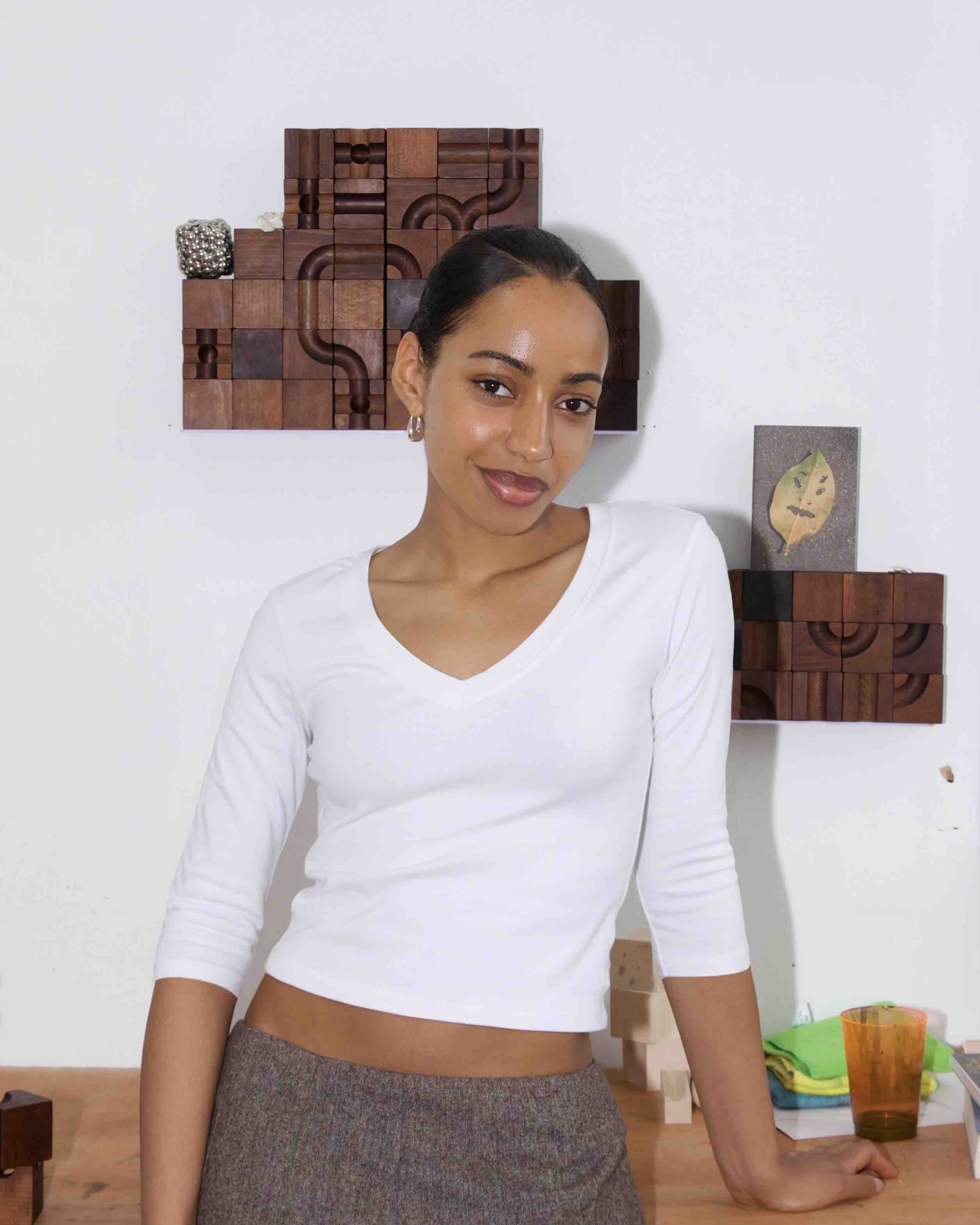
We first came across Camille Provost's work at Messums London last October in The Ground Beneath, a group show during Frieze Week. In a room of strong work she was the standout, recently out of the Royal College of Art, working across carved wood, stoneware clay and hand-woven fibre rush with a material confidence you don't often see this early. Everything she makes asks to be touched. Her first solo show, Excessive Refinement, is at Project Loop in Hoxton until 14 March. We sat down with Camille to talk about materials, instinct, and what it means to trust your own voice at the start of your career.
RCA, then your first solo show, all within two years. Amazing. How did that happen?!
Thank you! Honestly, I'm not sure... From the outside, it may seem like it happened fast, but Alïn (the founder and director of Project Loop) and I had actually been in conversation for about a year and a half before she visited my studio and offered me the show. I also entered the art world with a lot of naivety. I didn't know much about the industry or its unspoken rules, and quite frankly, that helped a lot! I was able to approach people and make moves without fear of judgment or rejection because I had no real sense of what was considered "acceptable" or not. Sometimes, not knowing the rules is exactly what allows you to move forward.
Walking through Excessive Refinement, there's a pull to touch everything: the grain of the wood, the weight of the clay. It's hard to resist! How do you feel about that response to your work?
I'm so glad you say that, that was the whole point. I can't resist it myself. I think that, in both form and substance, there is something in my work that appeals to the child in us, the part that wants to touch and feel before trying to understand what's in our hands. This first show confirmed my desire to make the work accessible and to engage with my audience in ways beyond words. I intentionally provide little written information about the work, and when I do, it often takes the form of poetry. Touch becomes almost like a musical score that the audience reads and writes as they engage with the work, revealing the purpose of the piece. In the future, I would like to make this invitation more obvious and perhaps oscillate between sculpture and installation.

In these works, you move between wood, clay, chalk, and rush fibre. At what point does the material start making decisions you didn't plan?
From the very beginning. I often work with materials I have no prior experience with (wood being the exception), so there is an immediate imbalance in the power dynamic. The material has authority over me from the start, and I try to embrace that rather than resist it. Making often feels like a dance where the material is leading, and I'm following, adjusting my pace and rhythm in response to it.

You say you're the inspiration for your own work, and that other artists rarely inform your practice. What aspects of your life feed into the work in this show?
I would say that curiosity and a constant desire to understand what home means to me in relation to France and Côte d'Ivoire is what feeds this body of work. I'm also by nature a generous person, and I'm very interested in creating bridges between places and people. I think that impulse comes through in the work by the way I give the audience agency: they're able to rearrange the pieces and create their own blueprint.
You work across Brittany and Côte d'Ivoire. How does place enter the work? Is it the materials you find there, the rhythm, or something else?
I have a selective memory, and honestly, it's frustrating most of the time. Not because it's selective, but because I don't get to choose what stays. My memories of Brittany and Côte d'Ivoire are all very fragmented, and a core aspect of my practice is trying to recover them mainly through archival research. In that process, materials become triggers. Both the far west of France and the western region of Côte d'Ivoire, where I'm from, are extremely rural. Nature and the materials of domestic life take centre stage; there aren't many buildings, cars, or modern infrastructures to disappear into. I don't really have a choice but to focus and reflect on the materiality that is present within these two places, and I love that.
I haven't seen an artist at this stage of their career produce work with your level of certainty and weight in process and form. Old soul comes to mind. Your influences aren't obvious, the work is entirely your own. How have you nurtured that singular vision?
My grandfather was a mechanic and an excellent carpenter. He had his workshop right next to the house he built, and growing up in Brittany, I spent a lot of time there as a kid, around eight or nine years old. I was with him all the time, and that's where I had my first introduction to woodworking and making in general. In a way, he was my first artistic influence. So "old soul" is really spot on.

What's alive in your practice now that wasn't there before this show?
Play! As an artist, I feel that when your work falls into the category of "Minimalism," there's a strong temptation to be extremely serious in order to justify the work. What I'm learning with this first show is to give in to play more and to recognise that both can coexist in the same space. Play is a serious matter. It's a solemn and legitimate pursuit.
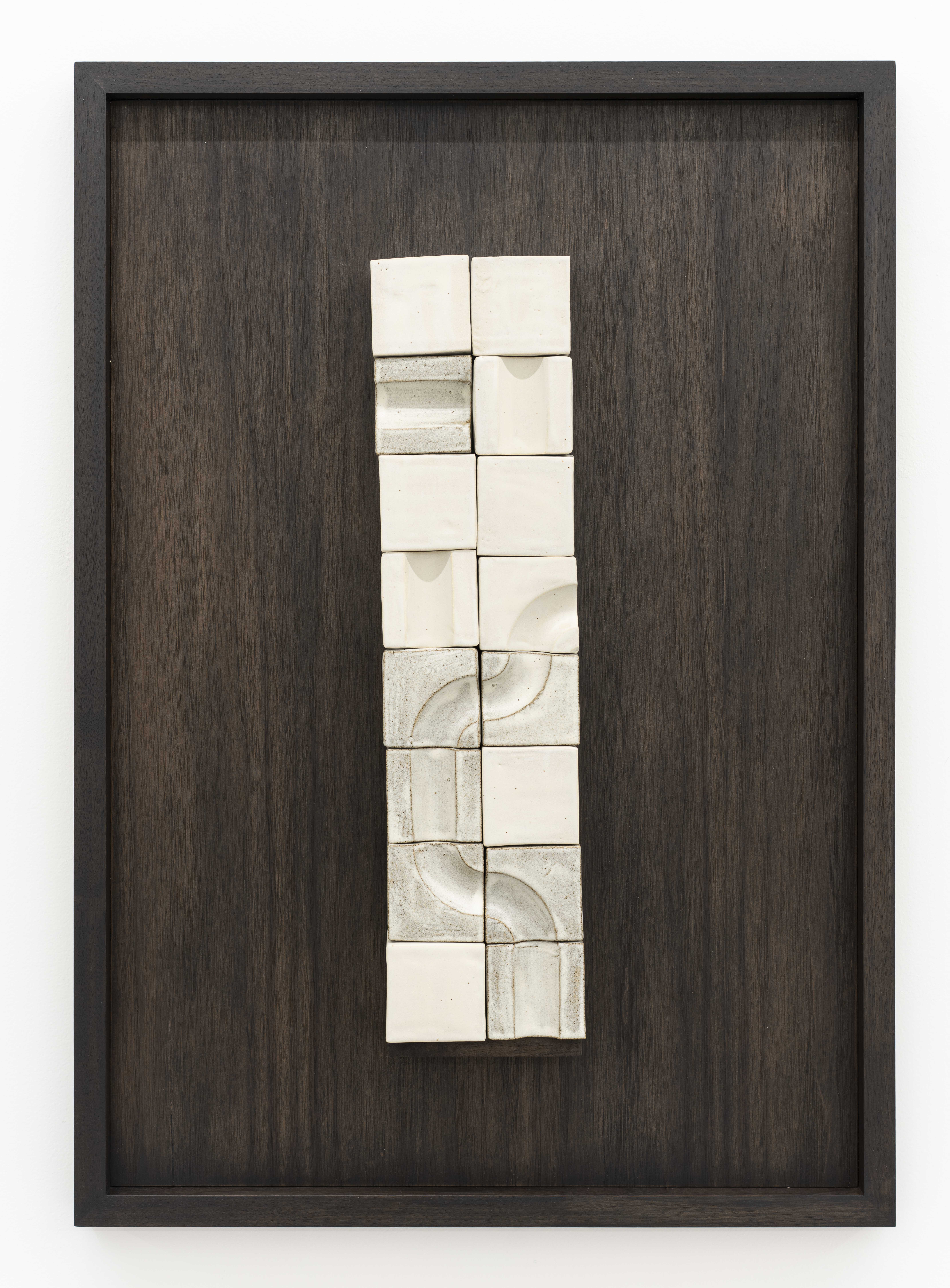
Before we go, what's one show on right now that everyone should see, and what part of your own process does it speak to?
I think everyone in London should make a point to see Olukemi Lijadu's first institutional solo show at Spike Island in Bristol. I met Kemi a couple of weeks ago when she came with a good friend of mine to see my show, and shortly after, we all headed to Bristol to see hers. I can't stress enough how remarkable it is. Kemi is an exceptional video and sound architect. Her work speaks to me particularly because of the way she uses personal archives to tell a larger story and engage her audience through sound and images.
Camille Provost: Excessive Refinement Project Loop, 16 Orsman Road, Hoxton, London N1 5QJ23 January to 14 March 2026Wednesday to Saturday, 12 to 6pm, or by appointment.Free entryprojectloop.art


We first came across Camille Provost's work at Messums London last October in The Ground Beneath, a group show during Frieze Week. In a room of strong work she was the standout, recently out of the Royal College of Art, working across carved wood, stoneware clay and hand-woven fibre rush with a material confidence you don't often see this early. Everything she makes asks to be touched. Her first solo show, Excessive Refinement, is at Project Loop in Hoxton until 14 March. We sat down with Camille to talk about materials, instinct, and what it means to trust your own voice at the start of your career.
RCA, then your first solo show, all within two years. Amazing. How did that happen?!
Thank you! Honestly, I'm not sure... From the outside, it may seem like it happened fast, but Alïn (the founder and director of Project Loop) and I had actually been in conversation for about a year and a half before she visited my studio and offered me the show. I also entered the art world with a lot of naivety. I didn't know much about the industry or its unspoken rules, and quite frankly, that helped a lot! I was able to approach people and make moves without fear of judgment or rejection because I had no real sense of what was considered "acceptable" or not. Sometimes, not knowing the rules is exactly what allows you to move forward.
Walking through Excessive Refinement, there's a pull to touch everything: the grain of the wood, the weight of the clay. It's hard to resist! How do you feel about that response to your work?
I'm so glad you say that, that was the whole point. I can't resist it myself. I think that, in both form and substance, there is something in my work that appeals to the child in us, the part that wants to touch and feel before trying to understand what's in our hands. This first show confirmed my desire to make the work accessible and to engage with my audience in ways beyond words. I intentionally provide little written information about the work, and when I do, it often takes the form of poetry. Touch becomes almost like a musical score that the audience reads and writes as they engage with the work, revealing the purpose of the piece. In the future, I would like to make this invitation more obvious and perhaps oscillate between sculpture and installation.
In these works, you move between wood, clay, chalk, and rush fibre. At what point does the material start making decisions you didn't plan?
From the very beginning. I often work with materials I have no prior experience with (wood being the exception), so there is an immediate imbalance in the power dynamic. The material has authority over me from the start, and I try to embrace that rather than resist it. Making often feels like a dance where the material is leading, and I'm following, adjusting my pace and rhythm in response to it.
You say you're the inspiration for your own work, and that other artists rarely inform your practice. What aspects of your life feed into the work in this show?
I would say that curiosity and a constant desire to understand what home means to me in relation to France and Côte d'Ivoire is what feeds this body of work. I'm also by nature a generous person, and I'm very interested in creating bridges between places and people. I think that impulse comes through in the work by the way I give the audience agency: they're able to rearrange the pieces and create their own blueprint.
You work across Brittany and Côte d'Ivoire. How does place enter the work? Is it the materials you find there, the rhythm, or something else?
I have a selective memory, and honestly, it's frustrating most of the time. Not because it's selective, but because I don't get to choose what stays. My memories of Brittany and Côte d'Ivoire are all very fragmented, and a core aspect of my practice is trying to recover them mainly through archival research. In that process, materials become triggers. Both the far west of France and the western region of Côte d'Ivoire, where I'm from, are extremely rural. Nature and the materials of domestic life take centre stage; there aren't many buildings, cars, or modern infrastructures to disappear into. I don't really have a choice but to focus and reflect on the materiality that is present within these two places, and I love that.
I haven't seen an artist at this stage of their career produce work with your level of certainty and weight in process and form. Old soul comes to mind. Your influences aren't obvious, the work is entirely your own. How have you nurtured that singular vision?
My grandfather was a mechanic and an excellent carpenter. He had his workshop right next to the house he built, and growing up in Brittany, I spent a lot of time there as a kid, around eight or nine years old. I was with him all the time, and that's where I had my first introduction to woodworking and making in general. In a way, he was my first artistic influence. So "old soul" is really spot on.
What's alive in your practice now that wasn't there before this show?
Play! As an artist, I feel that when your work falls into the category of "Minimalism," there's a strong temptation to be extremely serious in order to justify the work. What I'm learning with this first show is to give in to play more and to recognise that both can coexist in the same space. Play is a serious matter. It's a solemn and legitimate pursuit.
Before we go, what's one show on right now that everyone should see, and what part of your own process does it speak to?
I think everyone in London should make a point to see Olukemi Lijadu's first institutional solo show at Spike Island in Bristol. I met Kemi a couple of weeks ago when she came with a good friend of mine to see my show, and shortly after, we all headed to Bristol to see hers. I can't stress enough how remarkable it is. Kemi is an exceptional video and sound architect. Her work speaks to me particularly because of the way she uses personal archives to tell a larger story and engage her audience through sound and images.
Camille Provost: Excessive Refinement Project Loop, 16 Orsman Road, Hoxton, London N1 5QJ23 January to 14 March 2026Wednesday to Saturday, 12 to 6pm, or by appointment.Free entryprojectloop.art
We first came across Camille Provost's work at Messums London last October in The Ground Beneath, a group show during Frieze Week. In a room of strong work she was the standout, recently out of the Royal College of Art, working across carved wood, stoneware clay and hand-woven fibre rush with a material confidence you don't often see this early. Everything she makes asks to be touched. Her first solo show, Excessive Refinement, is at Project Loop in Hoxton until 14 March. We sat down with Camille to talk about materials, instinct, and what it means to trust your own voice at the start of your career.
RCA, then your first solo show, all within two years. Amazing. How did that happen?!
Thank you! Honestly, I'm not sure... From the outside, it may seem like it happened fast, but Alïn (the founder and director of Project Loop) and I had actually been in conversation for about a year and a half before she visited my studio and offered me the show. I also entered the art world with a lot of naivety. I didn't know much about the industry or its unspoken rules, and quite frankly, that helped a lot! I was able to approach people and make moves without fear of judgment or rejection because I had no real sense of what was considered "acceptable" or not. Sometimes, not knowing the rules is exactly what allows you to move forward.
Walking through Excessive Refinement, there's a pull to touch everything: the grain of the wood, the weight of the clay. It's hard to resist! How do you feel about that response to your work?
I'm so glad you say that, that was the whole point. I can't resist it myself. I think that, in both form and substance, there is something in my work that appeals to the child in us, the part that wants to touch and feel before trying to understand what's in our hands. This first show confirmed my desire to make the work accessible and to engage with my audience in ways beyond words. I intentionally provide little written information about the work, and when I do, it often takes the form of poetry. Touch becomes almost like a musical score that the audience reads and writes as they engage with the work, revealing the purpose of the piece. In the future, I would like to make this invitation more obvious and perhaps oscillate between sculpture and installation.
In these works, you move between wood, clay, chalk, and rush fibre. At what point does the material start making decisions you didn't plan?
From the very beginning. I often work with materials I have no prior experience with (wood being the exception), so there is an immediate imbalance in the power dynamic. The material has authority over me from the start, and I try to embrace that rather than resist it. Making often feels like a dance where the material is leading, and I'm following, adjusting my pace and rhythm in response to it.
You say you're the inspiration for your own work, and that other artists rarely inform your practice. What aspects of your life feed into the work in this show?
I would say that curiosity and a constant desire to understand what home means to me in relation to France and Côte d'Ivoire is what feeds this body of work. I'm also by nature a generous person, and I'm very interested in creating bridges between places and people. I think that impulse comes through in the work by the way I give the audience agency: they're able to rearrange the pieces and create their own blueprint.
You work across Brittany and Côte d'Ivoire. How does place enter the work? Is it the materials you find there, the rhythm, or something else?
I have a selective memory, and honestly, it's frustrating most of the time. Not because it's selective, but because I don't get to choose what stays. My memories of Brittany and Côte d'Ivoire are all very fragmented, and a core aspect of my practice is trying to recover them mainly through archival research. In that process, materials become triggers. Both the far west of France and the western region of Côte d'Ivoire, where I'm from, are extremely rural. Nature and the materials of domestic life take centre stage; there aren't many buildings, cars, or modern infrastructures to disappear into. I don't really have a choice but to focus and reflect on the materiality that is present within these two places, and I love that.
I haven't seen an artist at this stage of their career produce work with your level of certainty and weight in process and form. Old soul comes to mind. Your influences aren't obvious, the work is entirely your own. How have you nurtured that singular vision?
My grandfather was a mechanic and an excellent carpenter. He had his workshop right next to the house he built, and growing up in Brittany, I spent a lot of time there as a kid, around eight or nine years old. I was with him all the time, and that's where I had my first introduction to woodworking and making in general. In a way, he was my first artistic influence. So "old soul" is really spot on.
What's alive in your practice now that wasn't there before this show?
Play! As an artist, I feel that when your work falls into the category of "Minimalism," there's a strong temptation to be extremely serious in order to justify the work. What I'm learning with this first show is to give in to play more and to recognise that both can coexist in the same space. Play is a serious matter. It's a solemn and legitimate pursuit.
Before we go, what's one show on right now that everyone should see, and what part of your own process does it speak to?
I think everyone in London should make a point to see Olukemi Lijadu's first institutional solo show at Spike Island in Bristol. I met Kemi a couple of weeks ago when she came with a good friend of mine to see my show, and shortly after, we all headed to Bristol to see hers. I can't stress enough how remarkable it is. Kemi is an exceptional video and sound architect. Her work speaks to me particularly because of the way she uses personal archives to tell a larger story and engage her audience through sound and images.
Camille Provost: Excessive Refinement Project Loop, 16 Orsman Road, Hoxton, London N1 5QJ23 January to 14 March 2026Wednesday to Saturday, 12 to 6pm, or by appointment.Free entryprojectloop.art
We first came across Camille Provost's work at Messums London last October in The Ground Beneath, a group show during Frieze Week. In a room of strong work she was the standout, recently out of the Royal College of Art, working across carved wood, stoneware clay and hand-woven fibre rush with a material confidence you don't often see this early. Everything she makes asks to be touched. Her first solo show, Excessive Refinement, is at Project Loop in Hoxton until 14 March. We sat down with Camille to talk about materials, instinct, and what it means to trust your own voice at the start of your career.
RCA, then your first solo show, all within two years. Amazing. How did that happen?!
Thank you! Honestly, I'm not sure... From the outside, it may seem like it happened fast, but Alïn (the founder and director of Project Loop) and I had actually been in conversation for about a year and a half before she visited my studio and offered me the show. I also entered the art world with a lot of naivety. I didn't know much about the industry or its unspoken rules, and quite frankly, that helped a lot! I was able to approach people and make moves without fear of judgment or rejection because I had no real sense of what was considered "acceptable" or not. Sometimes, not knowing the rules is exactly what allows you to move forward.
Walking through Excessive Refinement, there's a pull to touch everything: the grain of the wood, the weight of the clay. It's hard to resist! How do you feel about that response to your work?
I'm so glad you say that, that was the whole point. I can't resist it myself. I think that, in both form and substance, there is something in my work that appeals to the child in us, the part that wants to touch and feel before trying to understand what's in our hands. This first show confirmed my desire to make the work accessible and to engage with my audience in ways beyond words. I intentionally provide little written information about the work, and when I do, it often takes the form of poetry. Touch becomes almost like a musical score that the audience reads and writes as they engage with the work, revealing the purpose of the piece. In the future, I would like to make this invitation more obvious and perhaps oscillate between sculpture and installation.
In these works, you move between wood, clay, chalk, and rush fibre. At what point does the material start making decisions you didn't plan?
From the very beginning. I often work with materials I have no prior experience with (wood being the exception), so there is an immediate imbalance in the power dynamic. The material has authority over me from the start, and I try to embrace that rather than resist it. Making often feels like a dance where the material is leading, and I'm following, adjusting my pace and rhythm in response to it.
You say you're the inspiration for your own work, and that other artists rarely inform your practice. What aspects of your life feed into the work in this show?
I would say that curiosity and a constant desire to understand what home means to me in relation to France and Côte d'Ivoire is what feeds this body of work. I'm also by nature a generous person, and I'm very interested in creating bridges between places and people. I think that impulse comes through in the work by the way I give the audience agency: they're able to rearrange the pieces and create their own blueprint.
You work across Brittany and Côte d'Ivoire. How does place enter the work? Is it the materials you find there, the rhythm, or something else?
I have a selective memory, and honestly, it's frustrating most of the time. Not because it's selective, but because I don't get to choose what stays. My memories of Brittany and Côte d'Ivoire are all very fragmented, and a core aspect of my practice is trying to recover them mainly through archival research. In that process, materials become triggers. Both the far west of France and the western region of Côte d'Ivoire, where I'm from, are extremely rural. Nature and the materials of domestic life take centre stage; there aren't many buildings, cars, or modern infrastructures to disappear into. I don't really have a choice but to focus and reflect on the materiality that is present within these two places, and I love that.
I haven't seen an artist at this stage of their career produce work with your level of certainty and weight in process and form. Old soul comes to mind. Your influences aren't obvious, the work is entirely your own. How have you nurtured that singular vision?
My grandfather was a mechanic and an excellent carpenter. He had his workshop right next to the house he built, and growing up in Brittany, I spent a lot of time there as a kid, around eight or nine years old. I was with him all the time, and that's where I had my first introduction to woodworking and making in general. In a way, he was my first artistic influence. So "old soul" is really spot on.
What's alive in your practice now that wasn't there before this show?
Play! As an artist, I feel that when your work falls into the category of "Minimalism," there's a strong temptation to be extremely serious in order to justify the work. What I'm learning with this first show is to give in to play more and to recognise that both can coexist in the same space. Play is a serious matter. It's a solemn and legitimate pursuit.
Before we go, what's one show on right now that everyone should see, and what part of your own process does it speak to?
I think everyone in London should make a point to see Olukemi Lijadu's first institutional solo show at Spike Island in Bristol. I met Kemi a couple of weeks ago when she came with a good friend of mine to see my show, and shortly after, we all headed to Bristol to see hers. I can't stress enough how remarkable it is. Kemi is an exceptional video and sound architect. Her work speaks to me particularly because of the way she uses personal archives to tell a larger story and engage her audience through sound and images.
Camille Provost: Excessive Refinement Project Loop, 16 Orsman Road, Hoxton, London N1 5QJ23 January to 14 March 2026Wednesday to Saturday, 12 to 6pm, or by appointment.Free entryprojectloop.art
We first came across Camille Provost's work at Messums London last October in The Ground Beneath, a group show during Frieze Week. In a room of strong work she was the standout, recently out of the Royal College of Art, working across carved wood, stoneware clay and hand-woven fibre rush with a material confidence you don't often see this early. Everything she makes asks to be touched. Her first solo show, Excessive Refinement, is at Project Loop in Hoxton until 14 March. We sat down with Camille to talk about materials, instinct, and what it means to trust your own voice at the start of your career.
RCA, then your first solo show, all within two years. Amazing. How did that happen?!
Thank you! Honestly, I'm not sure... From the outside, it may seem like it happened fast, but Alïn (the founder and director of Project Loop) and I had actually been in conversation for about a year and a half before she visited my studio and offered me the show. I also entered the art world with a lot of naivety. I didn't know much about the industry or its unspoken rules, and quite frankly, that helped a lot! I was able to approach people and make moves without fear of judgment or rejection because I had no real sense of what was considered "acceptable" or not. Sometimes, not knowing the rules is exactly what allows you to move forward.
Walking through Excessive Refinement, there's a pull to touch everything: the grain of the wood, the weight of the clay. It's hard to resist! How do you feel about that response to your work?
I'm so glad you say that, that was the whole point. I can't resist it myself. I think that, in both form and substance, there is something in my work that appeals to the child in us, the part that wants to touch and feel before trying to understand what's in our hands. This first show confirmed my desire to make the work accessible and to engage with my audience in ways beyond words. I intentionally provide little written information about the work, and when I do, it often takes the form of poetry. Touch becomes almost like a musical score that the audience reads and writes as they engage with the work, revealing the purpose of the piece. In the future, I would like to make this invitation more obvious and perhaps oscillate between sculpture and installation.
In these works, you move between wood, clay, chalk, and rush fibre. At what point does the material start making decisions you didn't plan?
From the very beginning. I often work with materials I have no prior experience with (wood being the exception), so there is an immediate imbalance in the power dynamic. The material has authority over me from the start, and I try to embrace that rather than resist it. Making often feels like a dance where the material is leading, and I'm following, adjusting my pace and rhythm in response to it.
You say you're the inspiration for your own work, and that other artists rarely inform your practice. What aspects of your life feed into the work in this show?
I would say that curiosity and a constant desire to understand what home means to me in relation to France and Côte d'Ivoire is what feeds this body of work. I'm also by nature a generous person, and I'm very interested in creating bridges between places and people. I think that impulse comes through in the work by the way I give the audience agency: they're able to rearrange the pieces and create their own blueprint.
You work across Brittany and Côte d'Ivoire. How does place enter the work? Is it the materials you find there, the rhythm, or something else?
I have a selective memory, and honestly, it's frustrating most of the time. Not because it's selective, but because I don't get to choose what stays. My memories of Brittany and Côte d'Ivoire are all very fragmented, and a core aspect of my practice is trying to recover them mainly through archival research. In that process, materials become triggers. Both the far west of France and the western region of Côte d'Ivoire, where I'm from, are extremely rural. Nature and the materials of domestic life take centre stage; there aren't many buildings, cars, or modern infrastructures to disappear into. I don't really have a choice but to focus and reflect on the materiality that is present within these two places, and I love that.
I haven't seen an artist at this stage of their career produce work with your level of certainty and weight in process and form. Old soul comes to mind. Your influences aren't obvious, the work is entirely your own. How have you nurtured that singular vision?
My grandfather was a mechanic and an excellent carpenter. He had his workshop right next to the house he built, and growing up in Brittany, I spent a lot of time there as a kid, around eight or nine years old. I was with him all the time, and that's where I had my first introduction to woodworking and making in general. In a way, he was my first artistic influence. So "old soul" is really spot on.
What's alive in your practice now that wasn't there before this show?
Play! As an artist, I feel that when your work falls into the category of "Minimalism," there's a strong temptation to be extremely serious in order to justify the work. What I'm learning with this first show is to give in to play more and to recognise that both can coexist in the same space. Play is a serious matter. It's a solemn and legitimate pursuit.
Before we go, what's one show on right now that everyone should see, and what part of your own process does it speak to?
I think everyone in London should make a point to see Olukemi Lijadu's first institutional solo show at Spike Island in Bristol. I met Kemi a couple of weeks ago when she came with a good friend of mine to see my show, and shortly after, we all headed to Bristol to see hers. I can't stress enough how remarkable it is. Kemi is an exceptional video and sound architect. Her work speaks to me particularly because of the way she uses personal archives to tell a larger story and engage her audience through sound and images.
Camille Provost: Excessive Refinement Project Loop, 16 Orsman Road, Hoxton, London N1 5QJ23 January to 14 March 2026Wednesday to Saturday, 12 to 6pm, or by appointment.Free entryprojectloop.art
We first came across Camille Provost's work at Messums London last October in The Ground Beneath, a group show during Frieze Week. In a room of strong work she was the standout, recently out of the Royal College of Art, working across carved wood, stoneware clay and hand-woven fibre rush with a material confidence you don't often see this early. Everything she makes asks to be touched. Her first solo show, Excessive Refinement, is at Project Loop in Hoxton until 14 March. We sat down with Camille to talk about materials, instinct, and what it means to trust your own voice at the start of your career.
RCA, then your first solo show, all within two years. Amazing. How did that happen?!
Thank you! Honestly, I'm not sure... From the outside, it may seem like it happened fast, but Alïn (the founder and director of Project Loop) and I had actually been in conversation for about a year and a half before she visited my studio and offered me the show. I also entered the art world with a lot of naivety. I didn't know much about the industry or its unspoken rules, and quite frankly, that helped a lot! I was able to approach people and make moves without fear of judgment or rejection because I had no real sense of what was considered "acceptable" or not. Sometimes, not knowing the rules is exactly what allows you to move forward.
Walking through Excessive Refinement, there's a pull to touch everything: the grain of the wood, the weight of the clay. It's hard to resist! How do you feel about that response to your work?
I'm so glad you say that, that was the whole point. I can't resist it myself. I think that, in both form and substance, there is something in my work that appeals to the child in us, the part that wants to touch and feel before trying to understand what's in our hands. This first show confirmed my desire to make the work accessible and to engage with my audience in ways beyond words. I intentionally provide little written information about the work, and when I do, it often takes the form of poetry. Touch becomes almost like a musical score that the audience reads and writes as they engage with the work, revealing the purpose of the piece. In the future, I would like to make this invitation more obvious and perhaps oscillate between sculpture and installation.
In these works, you move between wood, clay, chalk, and rush fibre. At what point does the material start making decisions you didn't plan?
From the very beginning. I often work with materials I have no prior experience with (wood being the exception), so there is an immediate imbalance in the power dynamic. The material has authority over me from the start, and I try to embrace that rather than resist it. Making often feels like a dance where the material is leading, and I'm following, adjusting my pace and rhythm in response to it.
You say you're the inspiration for your own work, and that other artists rarely inform your practice. What aspects of your life feed into the work in this show?
I would say that curiosity and a constant desire to understand what home means to me in relation to France and Côte d'Ivoire is what feeds this body of work. I'm also by nature a generous person, and I'm very interested in creating bridges between places and people. I think that impulse comes through in the work by the way I give the audience agency: they're able to rearrange the pieces and create their own blueprint.
You work across Brittany and Côte d'Ivoire. How does place enter the work? Is it the materials you find there, the rhythm, or something else?
I have a selective memory, and honestly, it's frustrating most of the time. Not because it's selective, but because I don't get to choose what stays. My memories of Brittany and Côte d'Ivoire are all very fragmented, and a core aspect of my practice is trying to recover them mainly through archival research. In that process, materials become triggers. Both the far west of France and the western region of Côte d'Ivoire, where I'm from, are extremely rural. Nature and the materials of domestic life take centre stage; there aren't many buildings, cars, or modern infrastructures to disappear into. I don't really have a choice but to focus and reflect on the materiality that is present within these two places, and I love that.
I haven't seen an artist at this stage of their career produce work with your level of certainty and weight in process and form. Old soul comes to mind. Your influences aren't obvious, the work is entirely your own. How have you nurtured that singular vision?
My grandfather was a mechanic and an excellent carpenter. He had his workshop right next to the house he built, and growing up in Brittany, I spent a lot of time there as a kid, around eight or nine years old. I was with him all the time, and that's where I had my first introduction to woodworking and making in general. In a way, he was my first artistic influence. So "old soul" is really spot on.
What's alive in your practice now that wasn't there before this show?
Play! As an artist, I feel that when your work falls into the category of "Minimalism," there's a strong temptation to be extremely serious in order to justify the work. What I'm learning with this first show is to give in to play more and to recognise that both can coexist in the same space. Play is a serious matter. It's a solemn and legitimate pursuit.
Before we go, what's one show on right now that everyone should see, and what part of your own process does it speak to?
I think everyone in London should make a point to see Olukemi Lijadu's first institutional solo show at Spike Island in Bristol. I met Kemi a couple of weeks ago when she came with a good friend of mine to see my show, and shortly after, we all headed to Bristol to see hers. I can't stress enough how remarkable it is. Kemi is an exceptional video and sound architect. Her work speaks to me particularly because of the way she uses personal archives to tell a larger story and engage her audience through sound and images.
Camille Provost: Excessive Refinement Project Loop, 16 Orsman Road, Hoxton, London N1 5QJ23 January to 14 March 2026Wednesday to Saturday, 12 to 6pm, or by appointment.Free entryprojectloop.art
We first came across Camille Provost's work at Messums London last October in The Ground Beneath, a group show during Frieze Week. In a room of strong work she was the standout, recently out of the Royal College of Art, working across carved wood, stoneware clay and hand-woven fibre rush with a material confidence you don't often see this early. Everything she makes asks to be touched. Her first solo show, Excessive Refinement, is at Project Loop in Hoxton until 14 March. We sat down with Camille to talk about materials, instinct, and what it means to trust your own voice at the start of your career.
RCA, then your first solo show, all within two years. Amazing. How did that happen?!
Thank you! Honestly, I'm not sure... From the outside, it may seem like it happened fast, but Alïn (the founder and director of Project Loop) and I had actually been in conversation for about a year and a half before she visited my studio and offered me the show. I also entered the art world with a lot of naivety. I didn't know much about the industry or its unspoken rules, and quite frankly, that helped a lot! I was able to approach people and make moves without fear of judgment or rejection because I had no real sense of what was considered "acceptable" or not. Sometimes, not knowing the rules is exactly what allows you to move forward.
Walking through Excessive Refinement, there's a pull to touch everything: the grain of the wood, the weight of the clay. It's hard to resist! How do you feel about that response to your work?
I'm so glad you say that, that was the whole point. I can't resist it myself. I think that, in both form and substance, there is something in my work that appeals to the child in us, the part that wants to touch and feel before trying to understand what's in our hands. This first show confirmed my desire to make the work accessible and to engage with my audience in ways beyond words. I intentionally provide little written information about the work, and when I do, it often takes the form of poetry. Touch becomes almost like a musical score that the audience reads and writes as they engage with the work, revealing the purpose of the piece. In the future, I would like to make this invitation more obvious and perhaps oscillate between sculpture and installation.
In these works, you move between wood, clay, chalk, and rush fibre. At what point does the material start making decisions you didn't plan?
From the very beginning. I often work with materials I have no prior experience with (wood being the exception), so there is an immediate imbalance in the power dynamic. The material has authority over me from the start, and I try to embrace that rather than resist it. Making often feels like a dance where the material is leading, and I'm following, adjusting my pace and rhythm in response to it.
You say you're the inspiration for your own work, and that other artists rarely inform your practice. What aspects of your life feed into the work in this show?
I would say that curiosity and a constant desire to understand what home means to me in relation to France and Côte d'Ivoire is what feeds this body of work. I'm also by nature a generous person, and I'm very interested in creating bridges between places and people. I think that impulse comes through in the work by the way I give the audience agency: they're able to rearrange the pieces and create their own blueprint.
You work across Brittany and Côte d'Ivoire. How does place enter the work? Is it the materials you find there, the rhythm, or something else?
I have a selective memory, and honestly, it's frustrating most of the time. Not because it's selective, but because I don't get to choose what stays. My memories of Brittany and Côte d'Ivoire are all very fragmented, and a core aspect of my practice is trying to recover them mainly through archival research. In that process, materials become triggers. Both the far west of France and the western region of Côte d'Ivoire, where I'm from, are extremely rural. Nature and the materials of domestic life take centre stage; there aren't many buildings, cars, or modern infrastructures to disappear into. I don't really have a choice but to focus and reflect on the materiality that is present within these two places, and I love that.
I haven't seen an artist at this stage of their career produce work with your level of certainty and weight in process and form. Old soul comes to mind. Your influences aren't obvious, the work is entirely your own. How have you nurtured that singular vision?
My grandfather was a mechanic and an excellent carpenter. He had his workshop right next to the house he built, and growing up in Brittany, I spent a lot of time there as a kid, around eight or nine years old. I was with him all the time, and that's where I had my first introduction to woodworking and making in general. In a way, he was my first artistic influence. So "old soul" is really spot on.
What's alive in your practice now that wasn't there before this show?
Play! As an artist, I feel that when your work falls into the category of "Minimalism," there's a strong temptation to be extremely serious in order to justify the work. What I'm learning with this first show is to give in to play more and to recognise that both can coexist in the same space. Play is a serious matter. It's a solemn and legitimate pursuit.
Before we go, what's one show on right now that everyone should see, and what part of your own process does it speak to?
I think everyone in London should make a point to see Olukemi Lijadu's first institutional solo show at Spike Island in Bristol. I met Kemi a couple of weeks ago when she came with a good friend of mine to see my show, and shortly after, we all headed to Bristol to see hers. I can't stress enough how remarkable it is. Kemi is an exceptional video and sound architect. Her work speaks to me particularly because of the way she uses personal archives to tell a larger story and engage her audience through sound and images.
Camille Provost: Excessive Refinement Project Loop, 16 Orsman Road, Hoxton, London N1 5QJ23 January to 14 March 2026Wednesday to Saturday, 12 to 6pm, or by appointment.Free entryprojectloop.art
We first came across Camille Provost's work at Messums London last October in The Ground Beneath, a group show during Frieze Week. In a room of strong work she was the standout, recently out of the Royal College of Art, working across carved wood, stoneware clay and hand-woven fibre rush with a material confidence you don't often see this early. Everything she makes asks to be touched. Her first solo show, Excessive Refinement, is at Project Loop in Hoxton until 14 March. We sat down with Camille to talk about materials, instinct, and what it means to trust your own voice at the start of your career.
RCA, then your first solo show, all within two years. Amazing. How did that happen?!
Thank you! Honestly, I'm not sure... From the outside, it may seem like it happened fast, but Alïn (the founder and director of Project Loop) and I had actually been in conversation for about a year and a half before she visited my studio and offered me the show. I also entered the art world with a lot of naivety. I didn't know much about the industry or its unspoken rules, and quite frankly, that helped a lot! I was able to approach people and make moves without fear of judgment or rejection because I had no real sense of what was considered "acceptable" or not. Sometimes, not knowing the rules is exactly what allows you to move forward.
Walking through Excessive Refinement, there's a pull to touch everything: the grain of the wood, the weight of the clay. It's hard to resist! How do you feel about that response to your work?
I'm so glad you say that, that was the whole point. I can't resist it myself. I think that, in both form and substance, there is something in my work that appeals to the child in us, the part that wants to touch and feel before trying to understand what's in our hands. This first show confirmed my desire to make the work accessible and to engage with my audience in ways beyond words. I intentionally provide little written information about the work, and when I do, it often takes the form of poetry. Touch becomes almost like a musical score that the audience reads and writes as they engage with the work, revealing the purpose of the piece. In the future, I would like to make this invitation more obvious and perhaps oscillate between sculpture and installation.
In these works, you move between wood, clay, chalk, and rush fibre. At what point does the material start making decisions you didn't plan?
From the very beginning. I often work with materials I have no prior experience with (wood being the exception), so there is an immediate imbalance in the power dynamic. The material has authority over me from the start, and I try to embrace that rather than resist it. Making often feels like a dance where the material is leading, and I'm following, adjusting my pace and rhythm in response to it.
You say you're the inspiration for your own work, and that other artists rarely inform your practice. What aspects of your life feed into the work in this show?
I would say that curiosity and a constant desire to understand what home means to me in relation to France and Côte d'Ivoire is what feeds this body of work. I'm also by nature a generous person, and I'm very interested in creating bridges between places and people. I think that impulse comes through in the work by the way I give the audience agency: they're able to rearrange the pieces and create their own blueprint.
You work across Brittany and Côte d'Ivoire. How does place enter the work? Is it the materials you find there, the rhythm, or something else?
I have a selective memory, and honestly, it's frustrating most of the time. Not because it's selective, but because I don't get to choose what stays. My memories of Brittany and Côte d'Ivoire are all very fragmented, and a core aspect of my practice is trying to recover them mainly through archival research. In that process, materials become triggers. Both the far west of France and the western region of Côte d'Ivoire, where I'm from, are extremely rural. Nature and the materials of domestic life take centre stage; there aren't many buildings, cars, or modern infrastructures to disappear into. I don't really have a choice but to focus and reflect on the materiality that is present within these two places, and I love that.
I haven't seen an artist at this stage of their career produce work with your level of certainty and weight in process and form. Old soul comes to mind. Your influences aren't obvious, the work is entirely your own. How have you nurtured that singular vision?
My grandfather was a mechanic and an excellent carpenter. He had his workshop right next to the house he built, and growing up in Brittany, I spent a lot of time there as a kid, around eight or nine years old. I was with him all the time, and that's where I had my first introduction to woodworking and making in general. In a way, he was my first artistic influence. So "old soul" is really spot on.
What's alive in your practice now that wasn't there before this show?
Play! As an artist, I feel that when your work falls into the category of "Minimalism," there's a strong temptation to be extremely serious in order to justify the work. What I'm learning with this first show is to give in to play more and to recognise that both can coexist in the same space. Play is a serious matter. It's a solemn and legitimate pursuit.
Before we go, what's one show on right now that everyone should see, and what part of your own process does it speak to?
I think everyone in London should make a point to see Olukemi Lijadu's first institutional solo show at Spike Island in Bristol. I met Kemi a couple of weeks ago when she came with a good friend of mine to see my show, and shortly after, we all headed to Bristol to see hers. I can't stress enough how remarkable it is. Kemi is an exceptional video and sound architect. Her work speaks to me particularly because of the way she uses personal archives to tell a larger story and engage her audience through sound and images.
Camille Provost: Excessive Refinement Project Loop, 16 Orsman Road, Hoxton, London N1 5QJ23 January to 14 March 2026Wednesday to Saturday, 12 to 6pm, or by appointment.Free entryprojectloop.art
We first came across Camille Provost's work at Messums London last October in The Ground Beneath, a group show during Frieze Week. In a room of strong work she was the standout, recently out of the Royal College of Art, working across carved wood, stoneware clay and hand-woven fibre rush with a material confidence you don't often see this early. Everything she makes asks to be touched. Her first solo show, Excessive Refinement, is at Project Loop in Hoxton until 14 March. We sat down with Camille to talk about materials, instinct, and what it means to trust your own voice at the start of your career.
RCA, then your first solo show, all within two years. Amazing. How did that happen?!
Thank you! Honestly, I'm not sure... From the outside, it may seem like it happened fast, but Alïn (the founder and director of Project Loop) and I had actually been in conversation for about a year and a half before she visited my studio and offered me the show. I also entered the art world with a lot of naivety. I didn't know much about the industry or its unspoken rules, and quite frankly, that helped a lot! I was able to approach people and make moves without fear of judgment or rejection because I had no real sense of what was considered "acceptable" or not. Sometimes, not knowing the rules is exactly what allows you to move forward.
Walking through Excessive Refinement, there's a pull to touch everything: the grain of the wood, the weight of the clay. It's hard to resist! How do you feel about that response to your work?
I'm so glad you say that, that was the whole point. I can't resist it myself. I think that, in both form and substance, there is something in my work that appeals to the child in us, the part that wants to touch and feel before trying to understand what's in our hands. This first show confirmed my desire to make the work accessible and to engage with my audience in ways beyond words. I intentionally provide little written information about the work, and when I do, it often takes the form of poetry. Touch becomes almost like a musical score that the audience reads and writes as they engage with the work, revealing the purpose of the piece. In the future, I would like to make this invitation more obvious and perhaps oscillate between sculpture and installation.
In these works, you move between wood, clay, chalk, and rush fibre. At what point does the material start making decisions you didn't plan?
From the very beginning. I often work with materials I have no prior experience with (wood being the exception), so there is an immediate imbalance in the power dynamic. The material has authority over me from the start, and I try to embrace that rather than resist it. Making often feels like a dance where the material is leading, and I'm following, adjusting my pace and rhythm in response to it.
You say you're the inspiration for your own work, and that other artists rarely inform your practice. What aspects of your life feed into the work in this show?
I would say that curiosity and a constant desire to understand what home means to me in relation to France and Côte d'Ivoire is what feeds this body of work. I'm also by nature a generous person, and I'm very interested in creating bridges between places and people. I think that impulse comes through in the work by the way I give the audience agency: they're able to rearrange the pieces and create their own blueprint.
You work across Brittany and Côte d'Ivoire. How does place enter the work? Is it the materials you find there, the rhythm, or something else?
I have a selective memory, and honestly, it's frustrating most of the time. Not because it's selective, but because I don't get to choose what stays. My memories of Brittany and Côte d'Ivoire are all very fragmented, and a core aspect of my practice is trying to recover them mainly through archival research. In that process, materials become triggers. Both the far west of France and the western region of Côte d'Ivoire, where I'm from, are extremely rural. Nature and the materials of domestic life take centre stage; there aren't many buildings, cars, or modern infrastructures to disappear into. I don't really have a choice but to focus and reflect on the materiality that is present within these two places, and I love that.
I haven't seen an artist at this stage of their career produce work with your level of certainty and weight in process and form. Old soul comes to mind. Your influences aren't obvious, the work is entirely your own. How have you nurtured that singular vision?
My grandfather was a mechanic and an excellent carpenter. He had his workshop right next to the house he built, and growing up in Brittany, I spent a lot of time there as a kid, around eight or nine years old. I was with him all the time, and that's where I had my first introduction to woodworking and making in general. In a way, he was my first artistic influence. So "old soul" is really spot on.
What's alive in your practice now that wasn't there before this show?
Play! As an artist, I feel that when your work falls into the category of "Minimalism," there's a strong temptation to be extremely serious in order to justify the work. What I'm learning with this first show is to give in to play more and to recognise that both can coexist in the same space. Play is a serious matter. It's a solemn and legitimate pursuit.
Before we go, what's one show on right now that everyone should see, and what part of your own process does it speak to?
I think everyone in London should make a point to see Olukemi Lijadu's first institutional solo show at Spike Island in Bristol. I met Kemi a couple of weeks ago when she came with a good friend of mine to see my show, and shortly after, we all headed to Bristol to see hers. I can't stress enough how remarkable it is. Kemi is an exceptional video and sound architect. Her work speaks to me particularly because of the way she uses personal archives to tell a larger story and engage her audience through sound and images.
Camille Provost: Excessive Refinement Project Loop, 16 Orsman Road, Hoxton, London N1 5QJ23 January to 14 March 2026Wednesday to Saturday, 12 to 6pm, or by appointment.Free entryprojectloop.art
We first came across Camille Provost's work at Messums London last October in The Ground Beneath, a group show during Frieze Week. In a room of strong work she was the standout, recently out of the Royal College of Art, working across carved wood, stoneware clay and hand-woven fibre rush with a material confidence you don't often see this early. Everything she makes asks to be touched. Her first solo show, Excessive Refinement, is at Project Loop in Hoxton until 14 March. We sat down with Camille to talk about materials, instinct, and what it means to trust your own voice at the start of your career.
RCA, then your first solo show, all within two years. Amazing. How did that happen?!
Thank you! Honestly, I'm not sure... From the outside, it may seem like it happened fast, but Alïn (the founder and director of Project Loop) and I had actually been in conversation for about a year and a half before she visited my studio and offered me the show. I also entered the art world with a lot of naivety. I didn't know much about the industry or its unspoken rules, and quite frankly, that helped a lot! I was able to approach people and make moves without fear of judgment or rejection because I had no real sense of what was considered "acceptable" or not. Sometimes, not knowing the rules is exactly what allows you to move forward.
Walking through Excessive Refinement, there's a pull to touch everything: the grain of the wood, the weight of the clay. It's hard to resist! How do you feel about that response to your work?
I'm so glad you say that, that was the whole point. I can't resist it myself. I think that, in both form and substance, there is something in my work that appeals to the child in us, the part that wants to touch and feel before trying to understand what's in our hands. This first show confirmed my desire to make the work accessible and to engage with my audience in ways beyond words. I intentionally provide little written information about the work, and when I do, it often takes the form of poetry. Touch becomes almost like a musical score that the audience reads and writes as they engage with the work, revealing the purpose of the piece. In the future, I would like to make this invitation more obvious and perhaps oscillate between sculpture and installation.
In these works, you move between wood, clay, chalk, and rush fibre. At what point does the material start making decisions you didn't plan?
From the very beginning. I often work with materials I have no prior experience with (wood being the exception), so there is an immediate imbalance in the power dynamic. The material has authority over me from the start, and I try to embrace that rather than resist it. Making often feels like a dance where the material is leading, and I'm following, adjusting my pace and rhythm in response to it.
You say you're the inspiration for your own work, and that other artists rarely inform your practice. What aspects of your life feed into the work in this show?
I would say that curiosity and a constant desire to understand what home means to me in relation to France and Côte d'Ivoire is what feeds this body of work. I'm also by nature a generous person, and I'm very interested in creating bridges between places and people. I think that impulse comes through in the work by the way I give the audience agency: they're able to rearrange the pieces and create their own blueprint.
You work across Brittany and Côte d'Ivoire. How does place enter the work? Is it the materials you find there, the rhythm, or something else?
I have a selective memory, and honestly, it's frustrating most of the time. Not because it's selective, but because I don't get to choose what stays. My memories of Brittany and Côte d'Ivoire are all very fragmented, and a core aspect of my practice is trying to recover them mainly through archival research. In that process, materials become triggers. Both the far west of France and the western region of Côte d'Ivoire, where I'm from, are extremely rural. Nature and the materials of domestic life take centre stage; there aren't many buildings, cars, or modern infrastructures to disappear into. I don't really have a choice but to focus and reflect on the materiality that is present within these two places, and I love that.
I haven't seen an artist at this stage of their career produce work with your level of certainty and weight in process and form. Old soul comes to mind. Your influences aren't obvious, the work is entirely your own. How have you nurtured that singular vision?
My grandfather was a mechanic and an excellent carpenter. He had his workshop right next to the house he built, and growing up in Brittany, I spent a lot of time there as a kid, around eight or nine years old. I was with him all the time, and that's where I had my first introduction to woodworking and making in general. In a way, he was my first artistic influence. So "old soul" is really spot on.
What's alive in your practice now that wasn't there before this show?
Play! As an artist, I feel that when your work falls into the category of "Minimalism," there's a strong temptation to be extremely serious in order to justify the work. What I'm learning with this first show is to give in to play more and to recognise that both can coexist in the same space. Play is a serious matter. It's a solemn and legitimate pursuit.
Before we go, what's one show on right now that everyone should see, and what part of your own process does it speak to?
I think everyone in London should make a point to see Olukemi Lijadu's first institutional solo show at Spike Island in Bristol. I met Kemi a couple of weeks ago when she came with a good friend of mine to see my show, and shortly after, we all headed to Bristol to see hers. I can't stress enough how remarkable it is. Kemi is an exceptional video and sound architect. Her work speaks to me particularly because of the way she uses personal archives to tell a larger story and engage her audience through sound and images.
Camille Provost: Excessive Refinement Project Loop, 16 Orsman Road, Hoxton, London N1 5QJ23 January to 14 March 2026Wednesday to Saturday, 12 to 6pm, or by appointment.Free entryprojectloop.art
We first came across Camille Provost's work at Messums London last October in The Ground Beneath, a group show during Frieze Week. In a room of strong work she was the standout, recently out of the Royal College of Art, working across carved wood, stoneware clay and hand-woven fibre rush with a material confidence you don't often see this early. Everything she makes asks to be touched. Her first solo show, Excessive Refinement, is at Project Loop in Hoxton until 14 March. We sat down with Camille to talk about materials, instinct, and what it means to trust your own voice at the start of your career.
RCA, then your first solo show, all within two years. Amazing. How did that happen?!
Thank you! Honestly, I'm not sure... From the outside, it may seem like it happened fast, but Alïn (the founder and director of Project Loop) and I had actually been in conversation for about a year and a half before she visited my studio and offered me the show. I also entered the art world with a lot of naivety. I didn't know much about the industry or its unspoken rules, and quite frankly, that helped a lot! I was able to approach people and make moves without fear of judgment or rejection because I had no real sense of what was considered "acceptable" or not. Sometimes, not knowing the rules is exactly what allows you to move forward.
Walking through Excessive Refinement, there's a pull to touch everything: the grain of the wood, the weight of the clay. It's hard to resist! How do you feel about that response to your work?
I'm so glad you say that, that was the whole point. I can't resist it myself. I think that, in both form and substance, there is something in my work that appeals to the child in us, the part that wants to touch and feel before trying to understand what's in our hands. This first show confirmed my desire to make the work accessible and to engage with my audience in ways beyond words. I intentionally provide little written information about the work, and when I do, it often takes the form of poetry. Touch becomes almost like a musical score that the audience reads and writes as they engage with the work, revealing the purpose of the piece. In the future, I would like to make this invitation more obvious and perhaps oscillate between sculpture and installation.
In these works, you move between wood, clay, chalk, and rush fibre. At what point does the material start making decisions you didn't plan?
From the very beginning. I often work with materials I have no prior experience with (wood being the exception), so there is an immediate imbalance in the power dynamic. The material has authority over me from the start, and I try to embrace that rather than resist it. Making often feels like a dance where the material is leading, and I'm following, adjusting my pace and rhythm in response to it.
You say you're the inspiration for your own work, and that other artists rarely inform your practice. What aspects of your life feed into the work in this show?
I would say that curiosity and a constant desire to understand what home means to me in relation to France and Côte d'Ivoire is what feeds this body of work. I'm also by nature a generous person, and I'm very interested in creating bridges between places and people. I think that impulse comes through in the work by the way I give the audience agency: they're able to rearrange the pieces and create their own blueprint.
You work across Brittany and Côte d'Ivoire. How does place enter the work? Is it the materials you find there, the rhythm, or something else?
I have a selective memory, and honestly, it's frustrating most of the time. Not because it's selective, but because I don't get to choose what stays. My memories of Brittany and Côte d'Ivoire are all very fragmented, and a core aspect of my practice is trying to recover them mainly through archival research. In that process, materials become triggers. Both the far west of France and the western region of Côte d'Ivoire, where I'm from, are extremely rural. Nature and the materials of domestic life take centre stage; there aren't many buildings, cars, or modern infrastructures to disappear into. I don't really have a choice but to focus and reflect on the materiality that is present within these two places, and I love that.
I haven't seen an artist at this stage of their career produce work with your level of certainty and weight in process and form. Old soul comes to mind. Your influences aren't obvious, the work is entirely your own. How have you nurtured that singular vision?
My grandfather was a mechanic and an excellent carpenter. He had his workshop right next to the house he built, and growing up in Brittany, I spent a lot of time there as a kid, around eight or nine years old. I was with him all the time, and that's where I had my first introduction to woodworking and making in general. In a way, he was my first artistic influence. So "old soul" is really spot on.
What's alive in your practice now that wasn't there before this show?
Play! As an artist, I feel that when your work falls into the category of "Minimalism," there's a strong temptation to be extremely serious in order to justify the work. What I'm learning with this first show is to give in to play more and to recognise that both can coexist in the same space. Play is a serious matter. It's a solemn and legitimate pursuit.
Before we go, what's one show on right now that everyone should see, and what part of your own process does it speak to?
I think everyone in London should make a point to see Olukemi Lijadu's first institutional solo show at Spike Island in Bristol. I met Kemi a couple of weeks ago when she came with a good friend of mine to see my show, and shortly after, we all headed to Bristol to see hers. I can't stress enough how remarkable it is. Kemi is an exceptional video and sound architect. Her work speaks to me particularly because of the way she uses personal archives to tell a larger story and engage her audience through sound and images.
Camille Provost: Excessive Refinement Project Loop, 16 Orsman Road, Hoxton, London N1 5QJ23 January to 14 March 2026Wednesday to Saturday, 12 to 6pm, or by appointment.Free entryprojectloop.art


.png)


.svg)


