
Vanessa Bell & Duncan Grant Inside Bloomsbury at Tate Britain
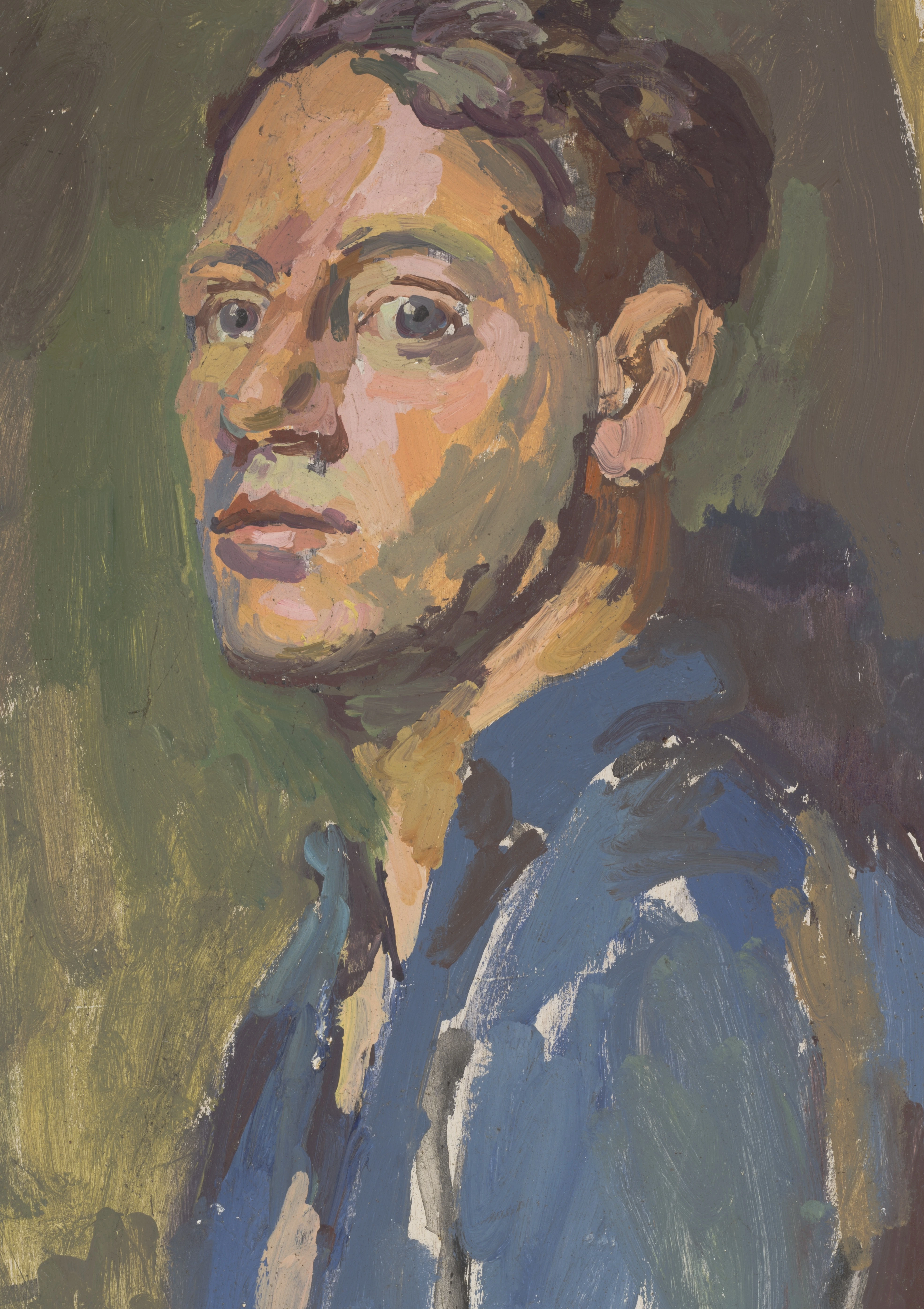
The exhibition is vast with over five hundred objects and paintings on display from Charleston – the epicentre of the Bloomsbury Group – alone. The curators have secured loans offering an extensive survey of both artists’ careers. Both dedicated their lives to painting and in many ways each other. The exhibition opens with a quote from Bell writing to Grant, ‘Dear Duncan, if I may call you that’, already flouting strict Edwardian convention addressing him by his first name, a pattern that would draw the two artists together in their pursuit of the avant-garde and bind them in a romantic and professional partnership.
The exhibition begins with the two artists' formal training, while Grant studied at the Westminster School of Art, for Bell as a woman it was harder to receive formal instruction. She took private lessons and in 1901 enrolled at the Royal Academy. Inspired by the café culture of Paris, she formed the Friday Club, where artists could meet, exhibit their work and discuss art, in a way creating her own school. Grant was encouraged to pursue painting by his aunt and his cousin’s husband, the French artist Simon Bussy, and on the latter’s recommendation moved to Paris for a year to study at the Académie de la Palette. His transcriptions of paintings from the Louvre such as ‘After Chardin’ (c.1906) are astounding for their mastery of light and tone, as are the early paintings of Bell, of which ‘Iceland Poppies’ (c.1908-9) is on display, though unfortunately most of her early work was lost to aerial bombing during the blitz. These early paintings are a far cry from their later works, heavily influenced by the post-impressionists and mingling with modernist circles both artists moved toward abstraction. The curators illustrate this transition in side by side hangings of paintings, for instance on display are two paintings by Bell of Stundland Beach (1911 and 1912) a year apart in the contrasting styles showing her evolution into modernism.

Despite the exhibition being about both artists who had a fifty year friendship, it never truly delves into the nitty gritty of Duncan and Vanessa’s relationship, it is more a recurring side note. Portraits line the walls introducing us to Duncan’s many male lovers, including Bell's own brother Adrian Stephen, the economist John Maynard Keynes, James Strachey (his portrait amusingly centres on his legs), and of course David “Bunny” Garnet. One of the great joys of the exhibition is to compare the styles of Grant and Bell as they often worked on the same subject (during the same sitting) and their different interpretations are displayed side by side. The curator Thomas Kennedy remarked that in the case of one still life in which Bell veered heavily toward abstraction, Grant’s painting was useful to decode the individual elements.
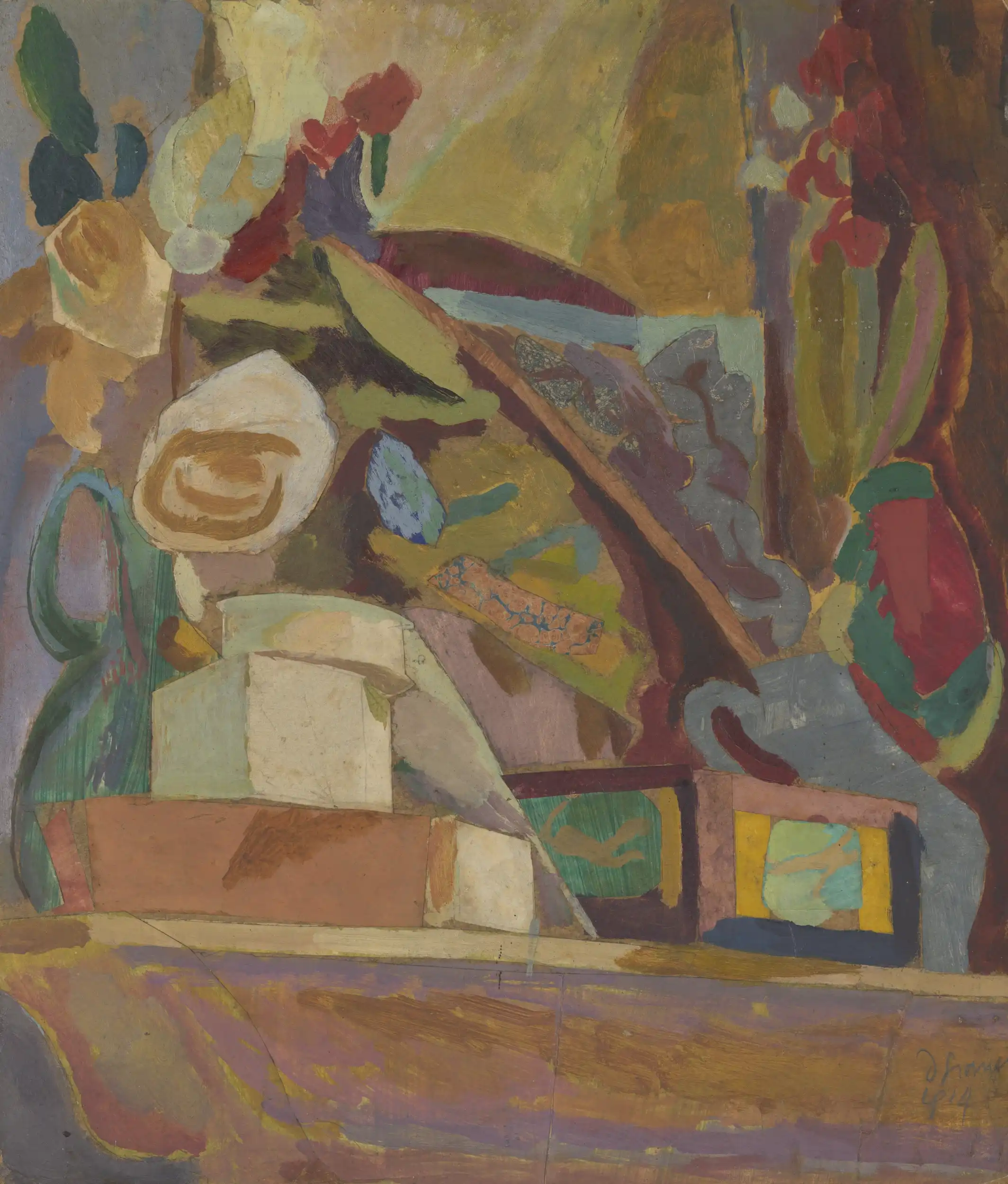
Even more fun to see however, are portraits of the same person interpreted differently by the two artists, such as Dr Marie Moralt or the Bohemian actress Iris Tree. Regrettably, while Grant’s portrait of Garnett is on display, Bell’s remains at the National Portrait Gallery. This is one of the most striking differences in perception, in Grant’s portrait “Bunny” appears muscular and virile, with dark hair and strong features, while in Bell’s he appears adolescent, limp and blonde. This could speak to a tension in their relationship which may suggest a jealousy Bell harboured toward Grant’s love interests. Bell was known to voice vexation at Grant’s lovers but paradoxically the reason Grant felt so close to Bell was he felt, in a society where homosexuality was still a crime, she allowed him to be fully himself: a liberty he despaired at being denied by contemporary British society. ‘You cannot imagine how much I want to scream sometimes… …one has to hide one’s whole philosophy of life’, he wrote.
It is easy to forget that although Grant and Bell were from highly privileged backgrounds, which allowed them to experience the interwar years painting, discussing art and taking lovers in the relative safety of the Sussex downs, they were also highly unconventional. A contemporary newspaper article exhibited in the exhibition reads ‘A Post Impressionist Flat: What Would The Landlord Think?’ with photographs of the Omega Workshop for which Bell and Grant designed textiles, ceramics, furniture and other home furnishings. Today, the Omega style championed by the Bloomsbury Group is almost kitsch, with their patterns strewn over mass produced lampshades and tea towels across the country and enthusiastically lapped up by the general public. But the original designs were radical. Roger Fry who ran the Omega Workshop, before Nina Hammett took over during the war, was the first to exhibit Post-Impressionist Art from the continent in London; the public were both amused and horrified. People actually attended the exhibition to laugh at the paintings of Manet, van Gogh, Matisse, Cezanne and Gauguin. So while potentially passé now, as Charleston is hashed and rehashed time and again in every interiors magazine, they were at the time visionary and totally avant garde. By the 30s Bell and Grant were trend setters and ‘everybody wanted their paintings’.

It is quite incredible to see so much of both artists' work in one place, offering an exciting opportunity to not only study the dialogue between their practices, but what's more, the exhibition is even a rare opportunity to see much of each artist’s work side by side. Two large scale works by Duncan Grant commissioned by Roger Fry have been exhibited side by side for the first time in decades. And several projects are on display in which both artists worked together and the exact authorship of who did what is unclear, these include the feminist dinner service featuring prominent women through history and a series of murals for the Cambridge dorm of John Maynard Keynes'.

The exhibition ends with an installation of the artist’s shared studio in Charleston. A unique chance to see Charleston in London, the Tate has literally brought Charleston to Pimlico, as the house undergoes extensive conservation work and has been cleared. The exhibition is a truly extensive and rare opportunity to see such a vast array of letters, objects, furniture, paintings and the personal effects of both artists from across their life in one place.
