The Mnemosyne: inside Jamie Fitzpatrick's curated moodboard
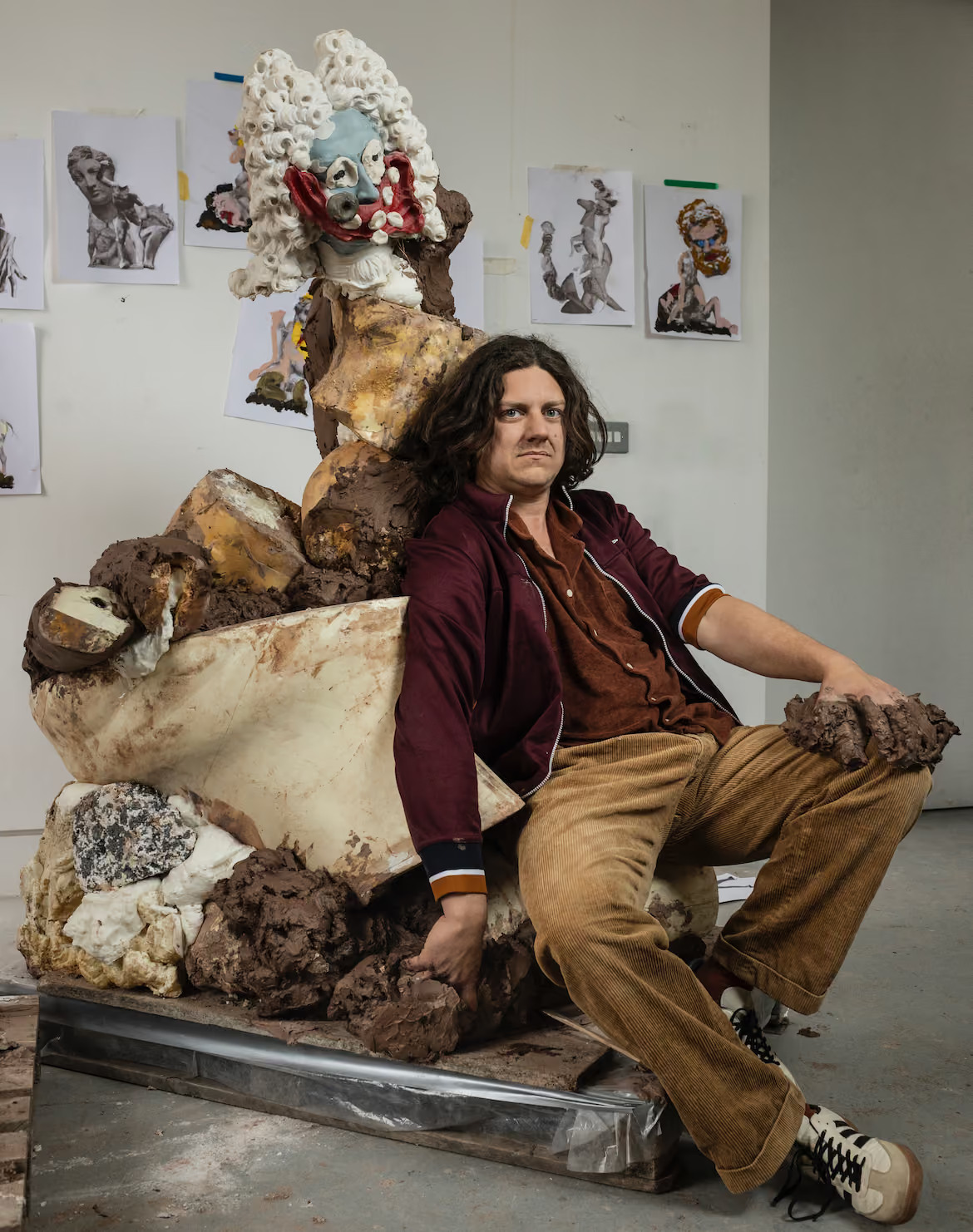
In this chapter, we present Jamie Fitzpatrick, an Edinburgh-based artist whose clay sculptures investigate the power of political icons to find out how they morph the landscape we inhabit. In this six-party walkthrough image story, he talks about folk British music, theatre, childhood recklessness and bucolic romantic landscapes in the age of AI.
Flyfloor
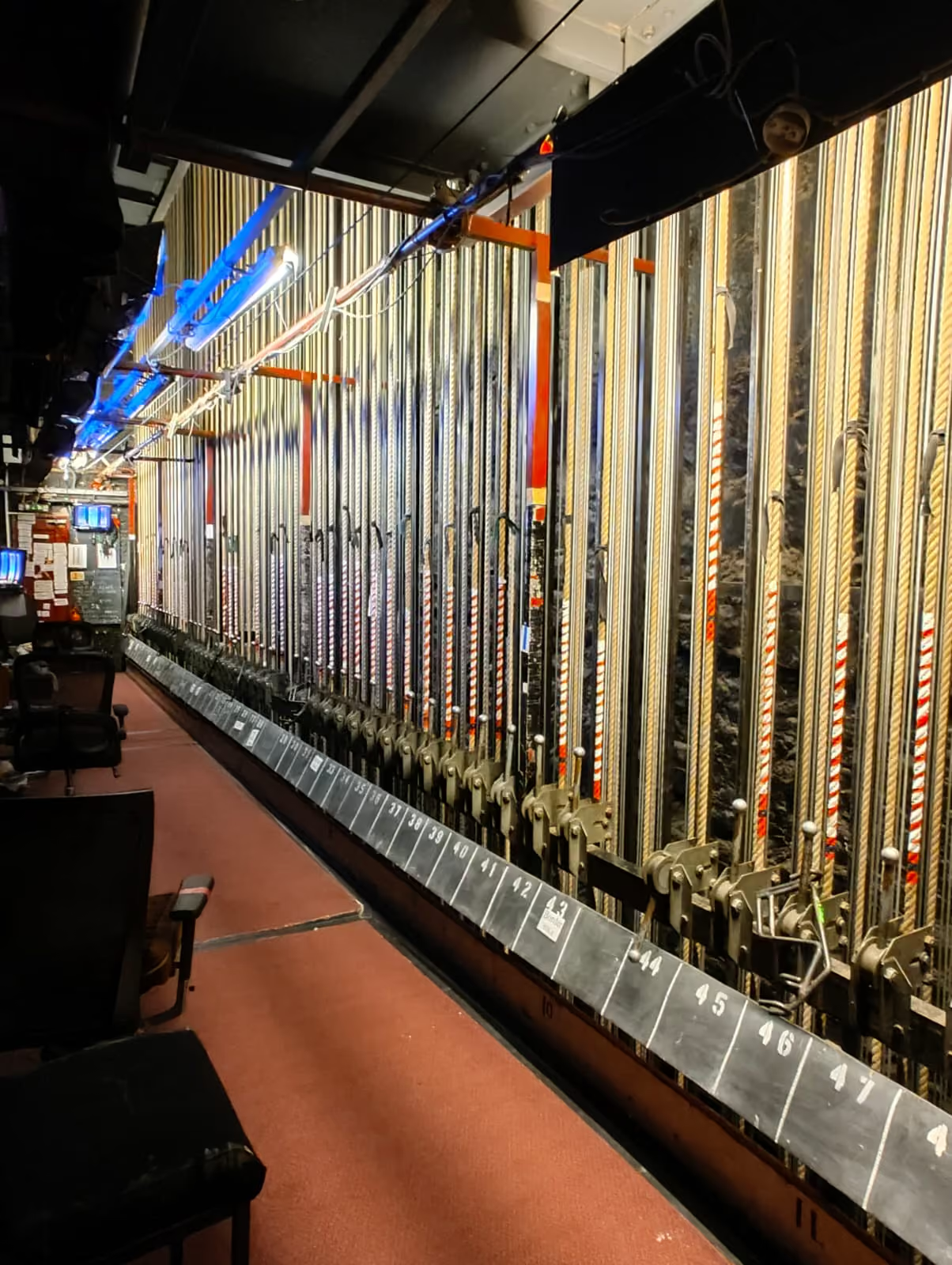
As soon as we found out Kat (my wife) was pregnant, we moved out of London and back to Scotland. I had no work and, having previously kept myself afloat by working for galleries to install exhibitions or in other artists' studios, was needing to find some employment fast. It was at the time that the theatres were opening up again for the first time after COVID, and Les Mis was rolling back into town after having been mothballed. From a place of desperation on both sides, I found myself on stage as part of the technical crew, and within a couple of days of having stepped on a stage for the first time, I was in front of a full house with a full cue sheet. What was meant to be a quick gig to tide me over whilst we had a newborn and a cash flow problem has turned into a side career that I’ve been at ever since.
Initially, I enjoyed the fact that this new line of work was completely separate from my own artistic work in a way that was totally new to me compared to past employment. At first, I really tried to keep these two worlds apart. Predictably, however, I totally failed at this.
I’ve little interest in the large-scale commercial productions I tend to work on, but I am in love with the mechanics of how theatre is able to completely alter space with such efficiency. More recently, I have been finding myself working on the fly floor, a platform roughly 10 metres above the stage from which the flymen pull the ropes that bring the set pieces in and out of view. The recent show ‘National Theatre’ at Kunsthall Trondheim, with its backdrops, obstructive sculptures and bastardised soundtrack, is perhaps the one where I have taken my work home with me more. and inviting my experiences in the theatre to influence my work in the studio.
WIP
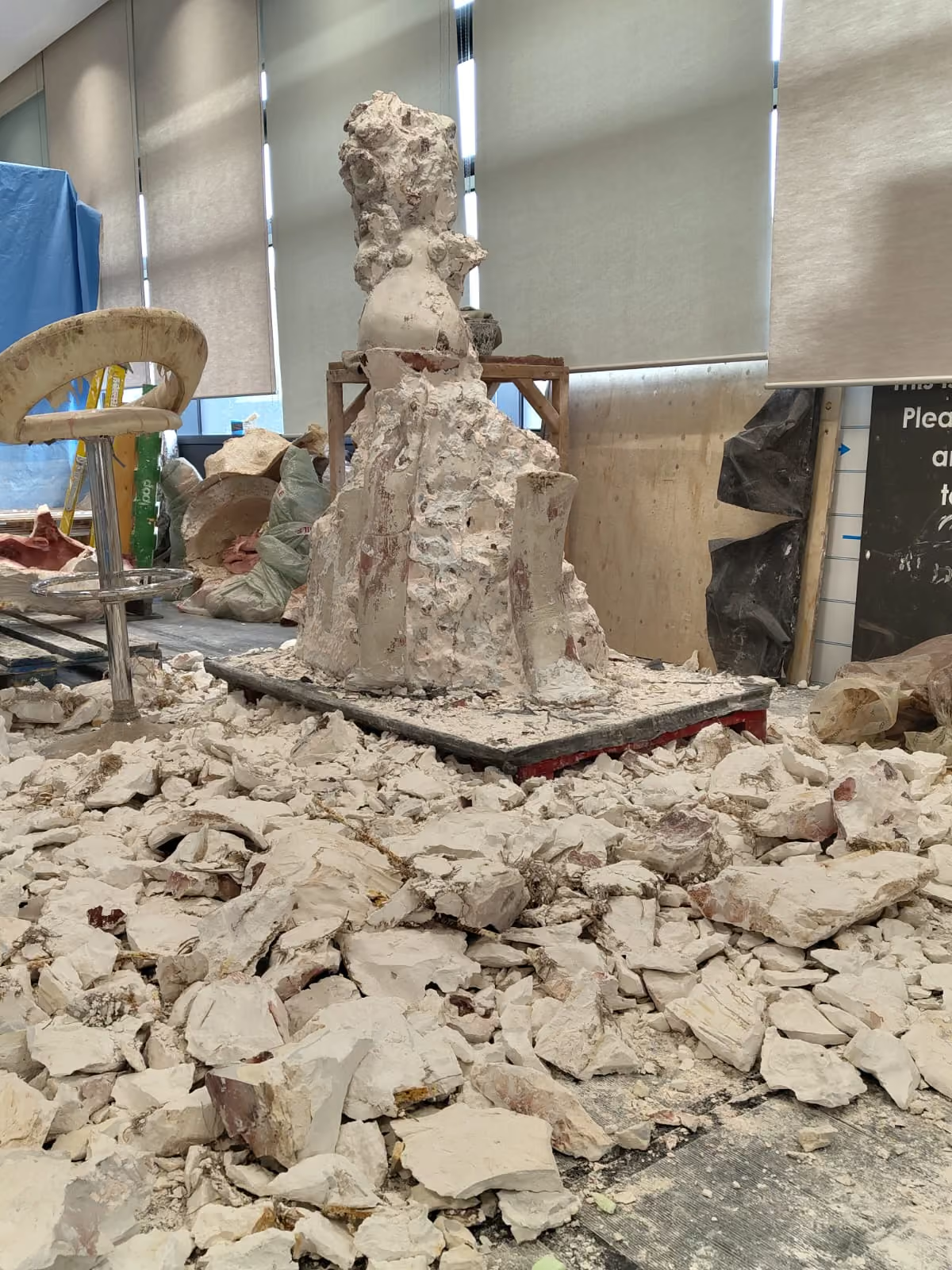
The first time I was placed into remedial art was during my early secondary education. In an attempt by the school to calm me down when I tried to derail lessons, I was sat at a table with several blocks of modelling wax on it and invited to make things with them. The point, I guess, was to instil in me a self-directed method of haptic processing, to focus my overactive energy into creative outlets rather than disruptive behaviour. In all honesty, I don’t remember much about those fairly inconsequential educational interventions, apart from the fact that I really, REALLY remember the wax.
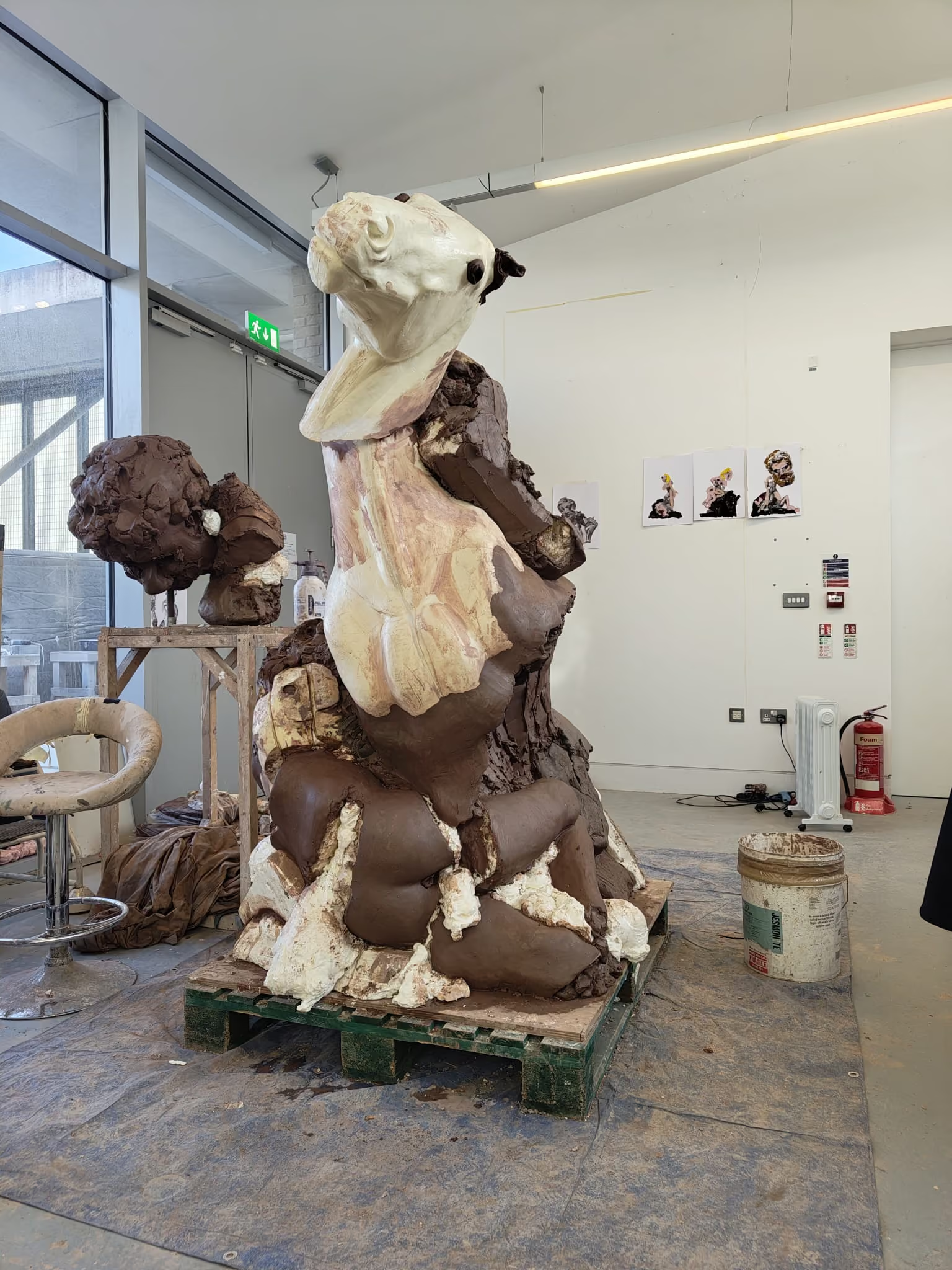
What started from about that same time was the start of my intense and passionate obsession with sculpture. It has become the way that I engage with the world, to think in form, surface and movement. Fifteen years later, I was acting up at the Royal College of Art during my MA, this time old enough to know and be behaving better. The head of the foundry at the college had had enough and dragged me out of my studio to sit me down in front of a pot of wax. She said I clearly needed to work with something that could be worked quickly and discarded just as fast. I’m not sure the Wax Method is some canon technique in support teaching, but once again, I found myself being made to decompress with a big lump of modelling wax.
LANDSCAPE
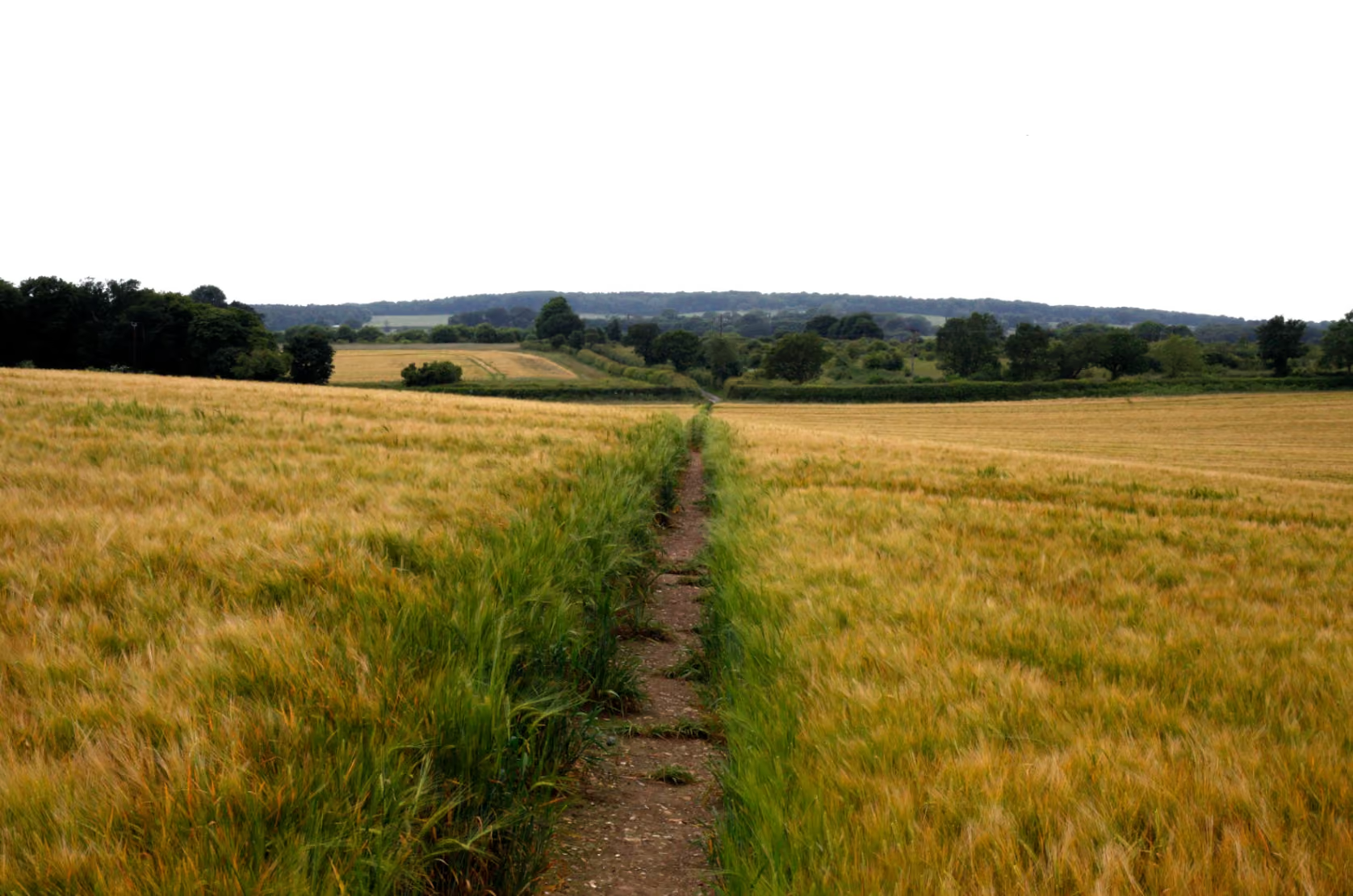
When he was small enough to go on my back, I used to go out walking with my son across the fields a lot. Around the same time, I was reading Nick Hayes's The Book of Trespass, which traces the history of the British landscape from the Enclosures onwards, arguing that the privatisation of land profoundly shaped Britain's social structures, national identity, and the ways people understand both the landscape and those who live within and beyond the island.
There was this moment when I was walking through a crop field that had a right-of-way running through the middle of it. Suddenly, this thin and overgrown path felt like the most meagre of concessions, and I felt a wave of bucolic romanticism come at me. It was a powerful moment of being both completely in love with something and utterly hating it all in the same moment. I think, to some degree, all the works that were made for the shows I’ve been working on this year have something to do with this one moment.
BACKDROPS
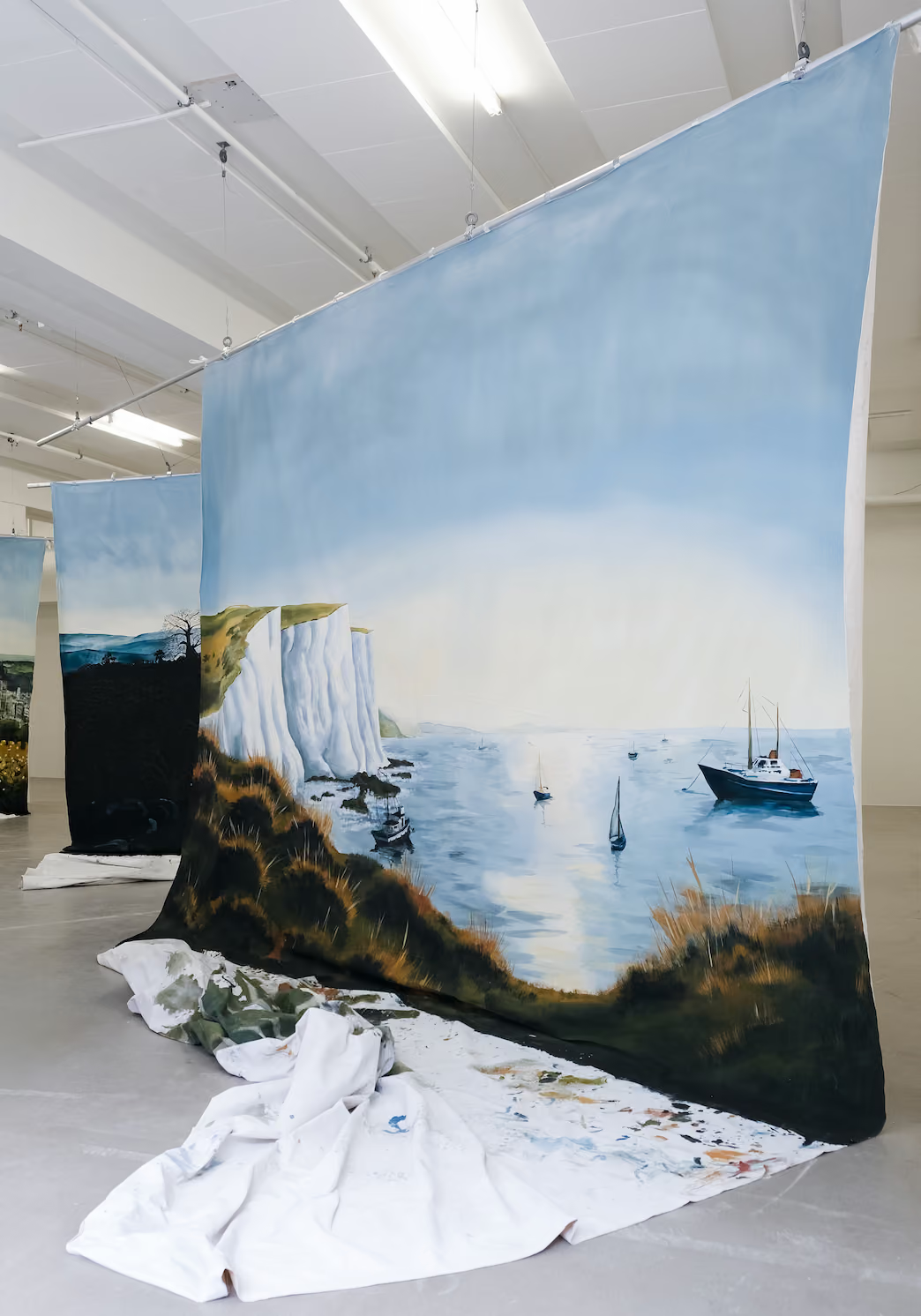
In the early stages of developing the work National Theatre, I spent a great deal of time reading the websites and policy documents of populist and far-right political parties, trying to understand, in their own words, the nostalgic ethnonationalism underpinning contemporary political discourse. I became increasingly aware that the Romantic landscapes used throughout these websites and PDFs often relied on AI-generated or heavily enhanced imagery. Implicit was the belief that these fabricated visions of nationhood could evoke a more emotionally convincing Britain than lived experience ever could. I became fascinated by the idea of an imagined nation superseding the reality of community and landscape, and began asking: what does this country actually look like, the one these parties have appointed themselves to defend?
As populist political movements increasingly use generative AI to produce and amplify political propaganda, I chose to employ the same technologies as a means of interrogating these constructed visions of nationhood. Using environmental and cultural policies from British nationalist parties that have helped shape contemporary ethnonationalist rhetoric, I transformed passages from these documents into AI image prompts, asking what kind of landscape these texts were imagining.
What interests me most about the resulting images is their profound lack of imagination. They gravitate towards conventional ideals of beauty, order and harmony, relying on crude symbolism and sanitised visual rhetoric. Everything is explicit, leaving little room for ambiguity or interpretation. Conceptually and compositionally, they echo the aesthetics of European state-sponsored art produced under twentieth-century totalitarian regimes, where idealised landscapes became vehicles for ideology rather than observation.
These generated images were then painted onto theatrical backdrops, a reference to my practice outside the gallery. Suspended throughout the exhibition, they allow the imagined landscape to physically inhabit the space. On the reverse of each canvas, the original AI prompt is written out in full, offering a literal glimpse behind the curtain and revealing the mechanism through which these manufactured visions came into being.
LARK ASCENDING
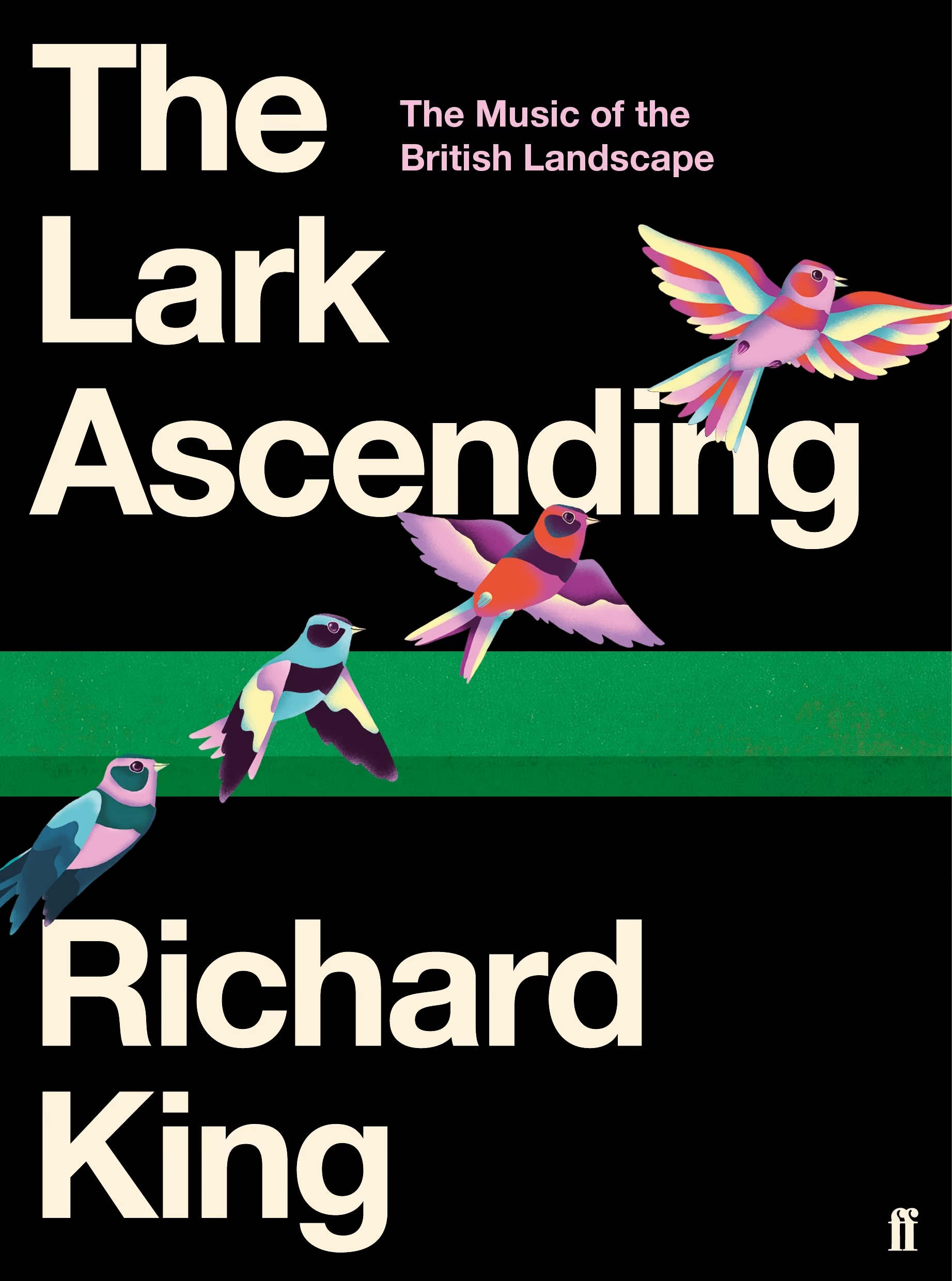
This is the most recent book that I’ve finished: it has this tramping pace as it walks through the history of land protest, rural counter culture and land occupation as social resistance, how this has been expressed through music in the 20th century.
I was particularly interested in the history of the Interwar period and the history of Rolf Gardiner, a folk and dance revivalist, pioneering farmer and nazi sympathiser. I was curious about how all the seemingly benign formative movements towards organic agriculture and eco-concerns about intensive industrial farming were closely linked to racially motivated concepts of Blood and Soil.
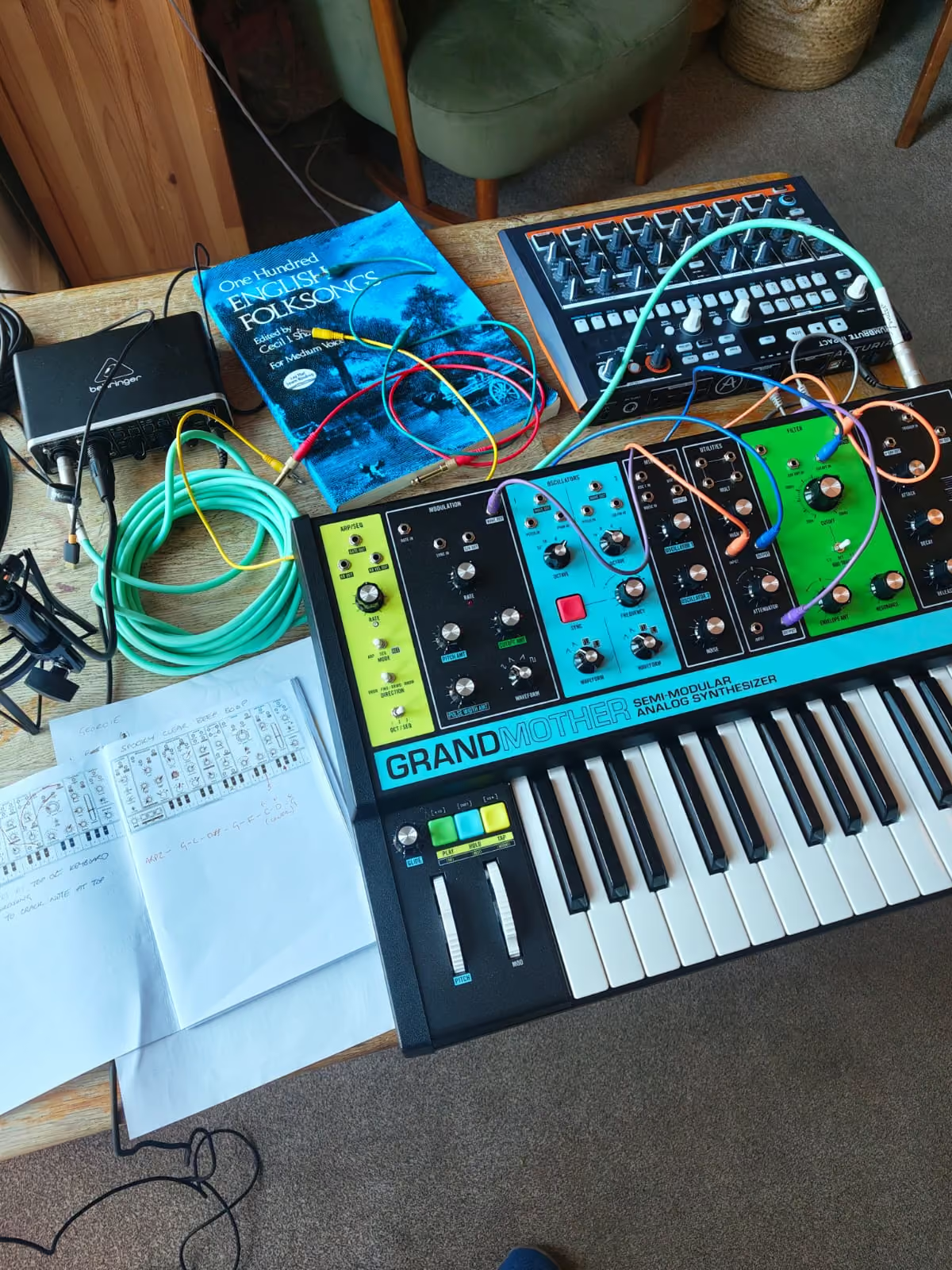
At the time, I was working on the soundtrack piece 100 English Folk Songs, a reinterpretation of Cecil Sharp's schoolbook anthology. Sharp believed that preserving and teaching these songs was essential to safeguarding English values through the education system. The soundtrack for the exhibition treats these songs in much the same way that the sculptures manipulate their materials. The familiar order, beauty and romanticism of the originals are stretched, fragmented and distorted until they are only fleetingly recognisable. In doing so, the work transforms nostalgia into something oppressive and uncanny.
Nationalism becomes monstrous, overwhelming and all-consuming, filling the gallery with an unsettling soundscape where the idyllic fantasy of England is rendered loud, hostile and deeply uncomfortable.
PICTURE OF A HOLE
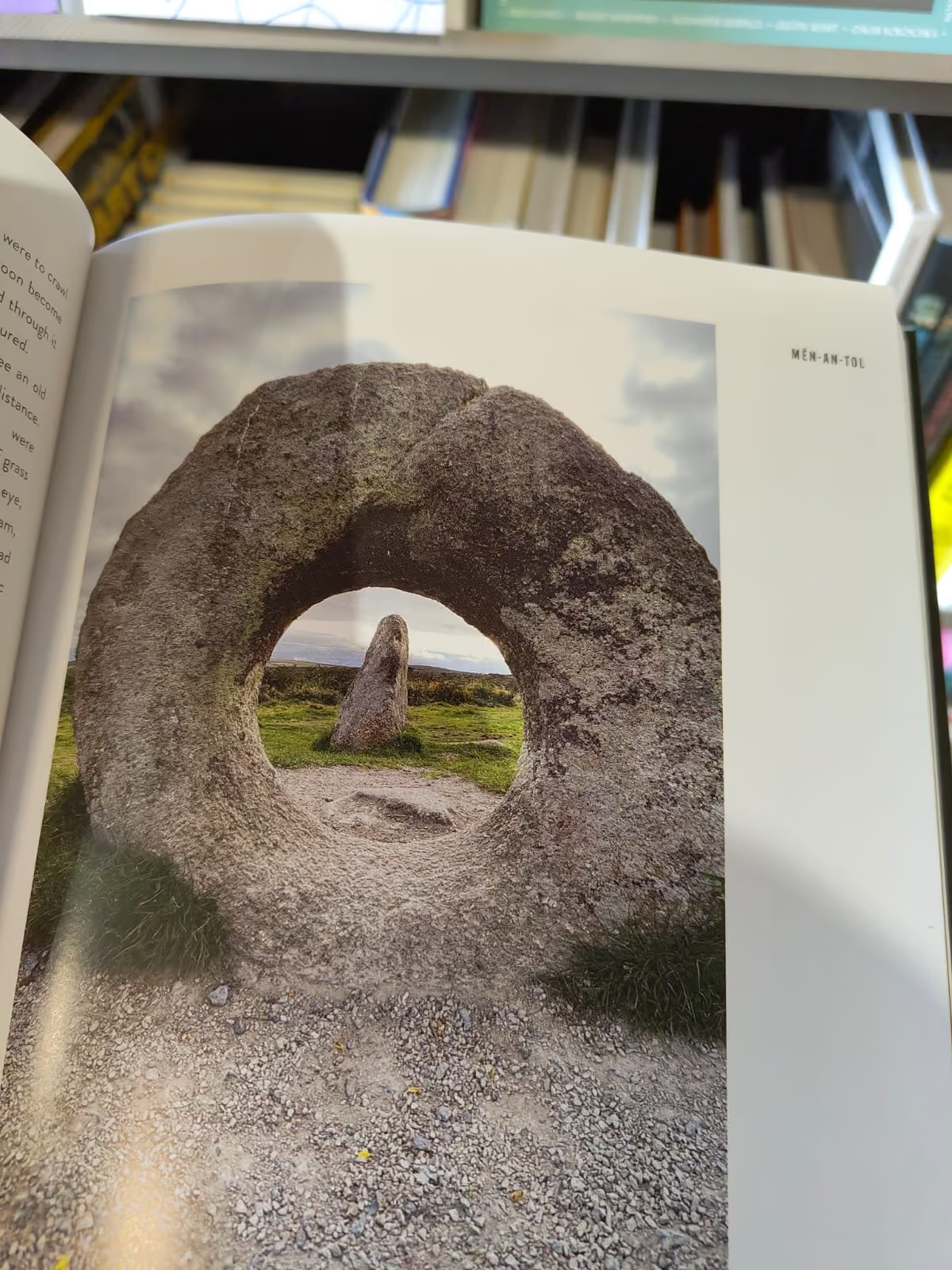
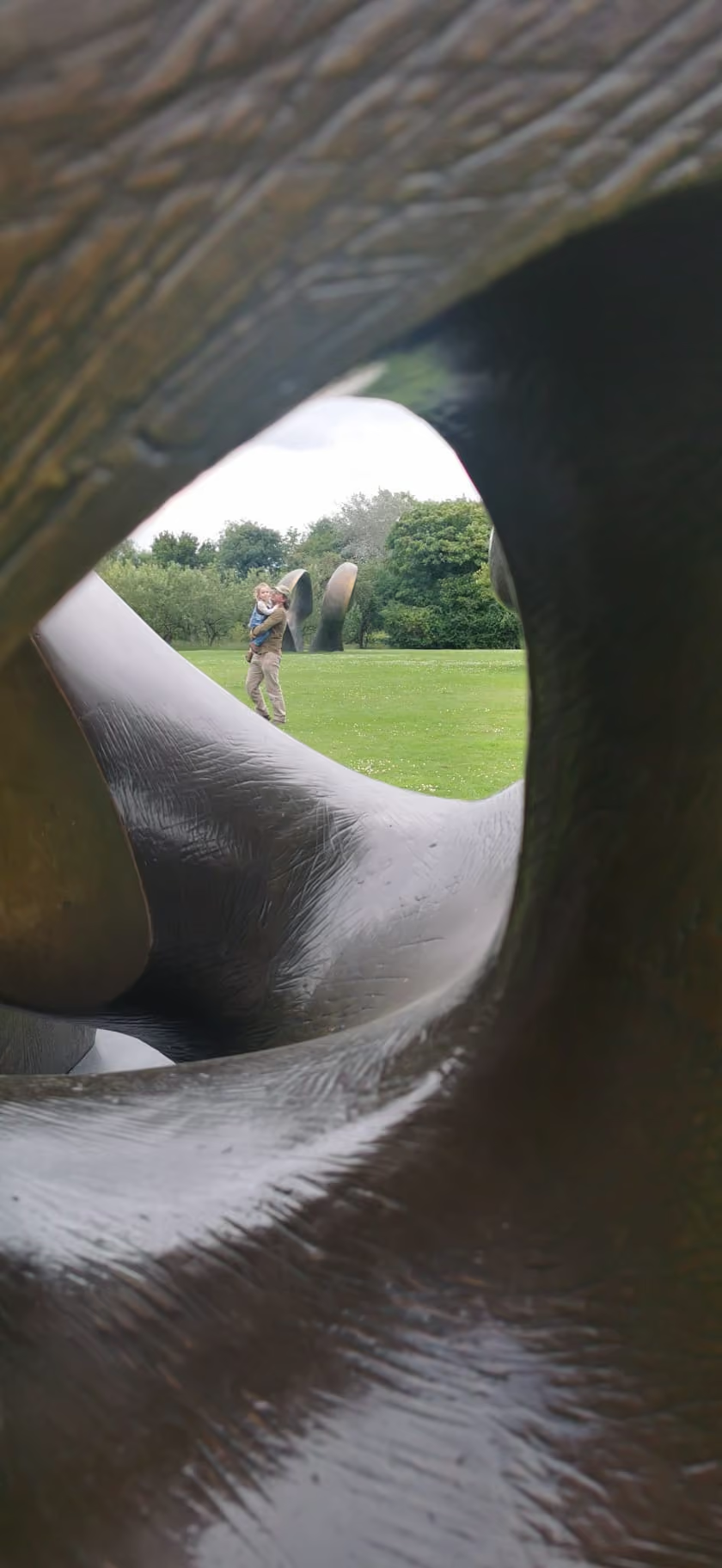
I am becoming increasingly interested in holes in sculpture: those absences in sculptural form that transform an object from a passive body into a dynamic one. Empty spaces that activate an object that can be walked under, poked with fingers or explored with tongues and noses.
It’s that tight, empty void that runs through us all, from mouth through to arsehole. We, too, are creatures wrapped around our own essential nothingness. I’ve been leaving holes and spaces within the recent sculptures, trying to be more aware of how to open new sight lines for whoever is watching the work. It’s not always been successful, but when it has, I feel like the sculptures are able to translate the world into something that holds its own mythic or magical power.