
The Mnemosyne: inside Del LaGrace Volcano's curated moodboard
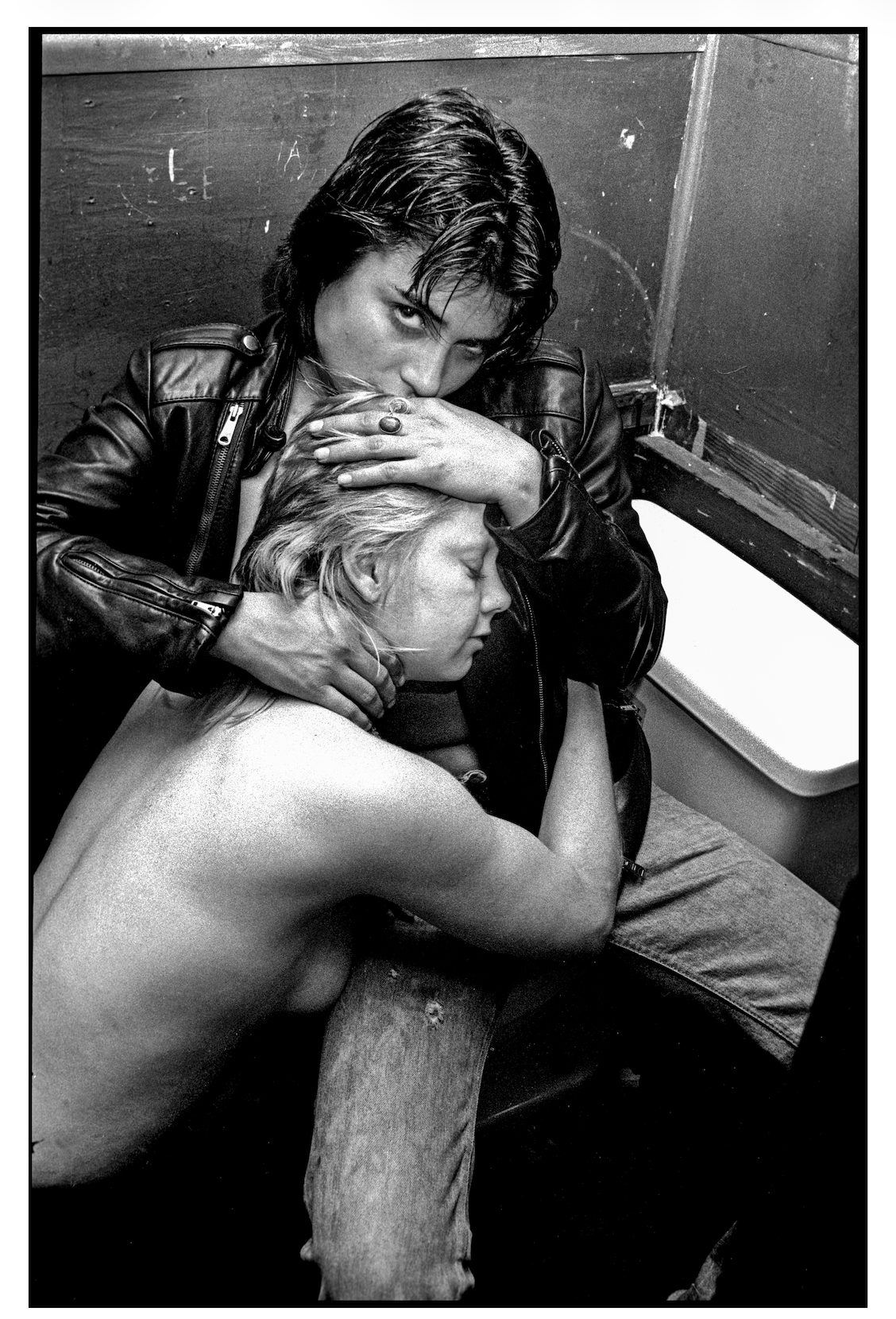
In this chapter, photographer Del LaGrace Volcano guides us through a visual and written board: a diary dedicated to queer erotic photography, family, and encounters. In August 2026, Del LaGrace Volcano opened the exhibition Love Bites Back at the Edinburgh Art Festival, presenting a photographic archive spanning the years 1982 to 1995.
SELF PORTRAITURE
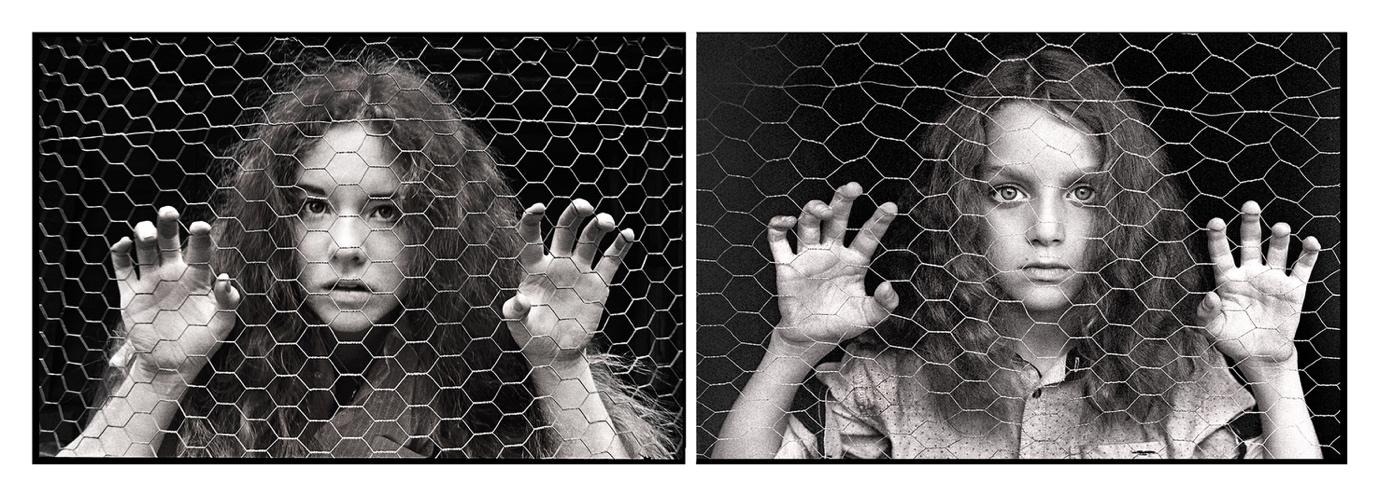
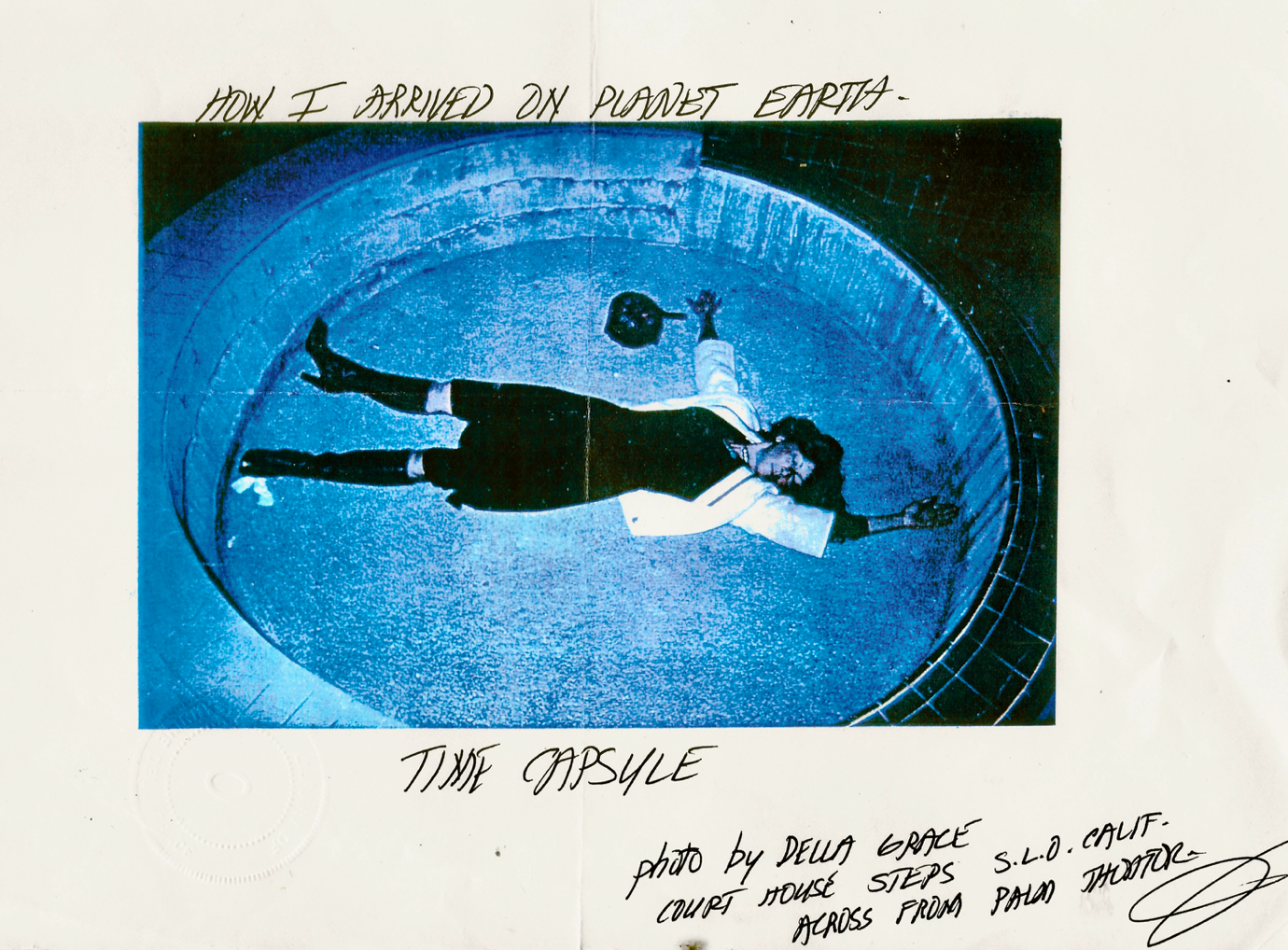
Time, for me, has always felt a bit twisted. I can feel out of time, out of place and at the same time feel that I am in exactly the right place. This re-construction makes a bridge spanning forty-five years. A self portrait of Della, who I was then, at twenty-two, wondering who I was and who I would become. Then we have Nico, my youngest child at eleven, mirroring a me he will never know. The sixty-nine-year-olds I am today, from Del the Dude, to the improbably named Del LaGrace Volcano, happily co-exists with all the other names, bodies and personas I have inhabited in this one human life.
My work grows in much the same way: rhizomically - sideways, backwards, through the sub-altern underground, sparking synapses as one life touches another. Its multiplicities and contradictions resist a single origin, a single hierarchy, a single way of being read. Photographs allow time to fold and unfold before our very eyes. The person I was can look back at the person I am; a child can resemble an ancestor they never knew; an old image can become newly alive because the present has changed the way I see it. Self-portraiture, in this sense, is not simply a picture I make of myself. It is a way of living inside time.
REFLECTIONS and PONDERINGS
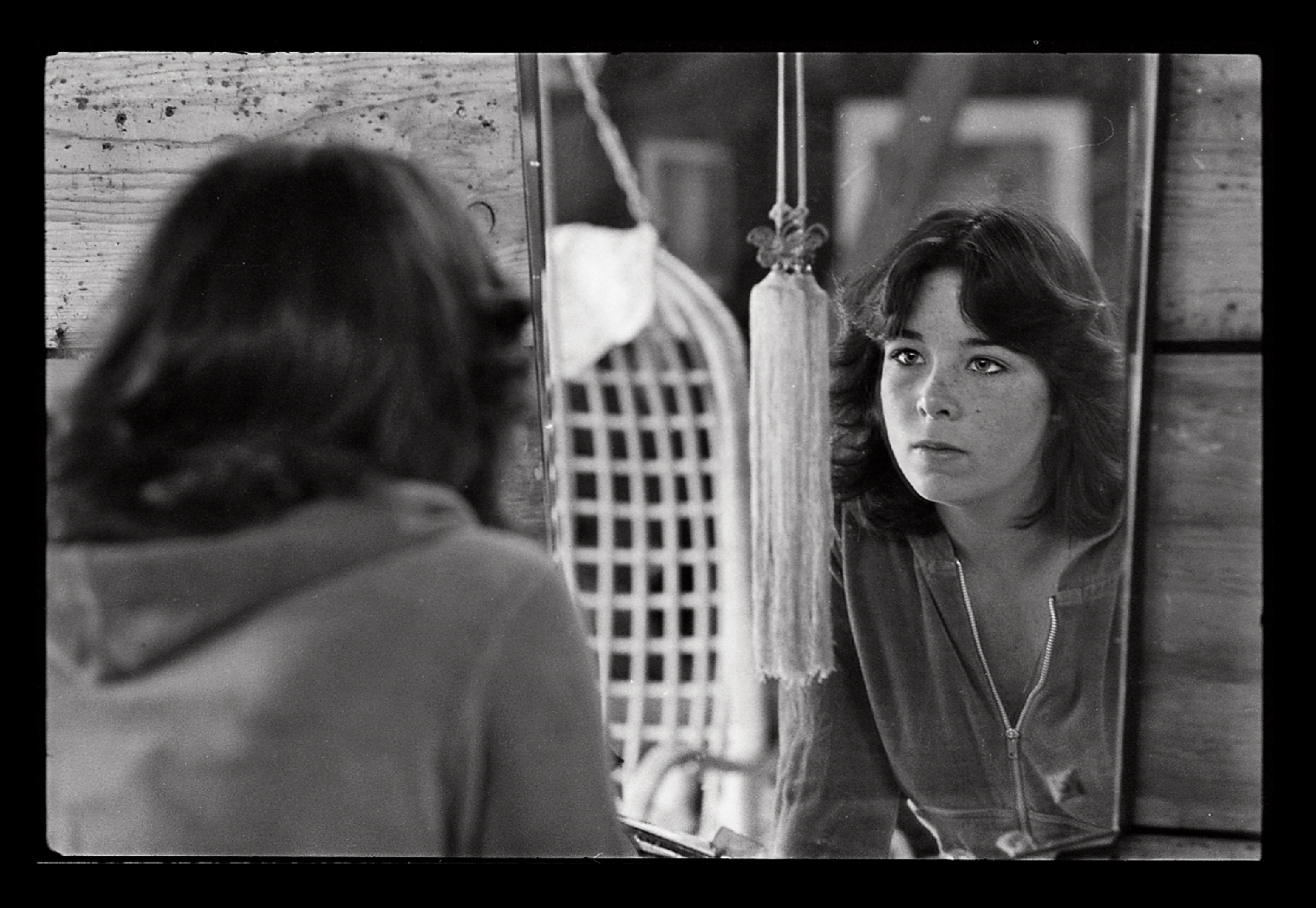
I’ve always been someone who looks. Yes, at myself but less often than you might think.
I have an insatiable hunger for faces and the stories they have to tell. Bodies are interesting, as well as the gestures we make with them. The eyes are what I go for first and when a gaze meets my own I do not look away. Depending on who is looking back I may smile or I may not. How we look and how we are looked at is something one could say is a special interest of mine. The first photographs I developed a relationship with were the old photographs of my two distinct biological families. There were many and someone on both the patriarchal and matriarchal sides of my family loved photographs. In the ones my mother (?) took of me I can see a through line to today in terms of my attitude and fondness for ruffled shirts. In the first black and white photographs I made of my biologicals in the early 1970s I can see similar themes emerging, the grids, the reflections and the strong steady gaze that doesn’t back down, offering an invitation rather than a threat.
INHERITANCE
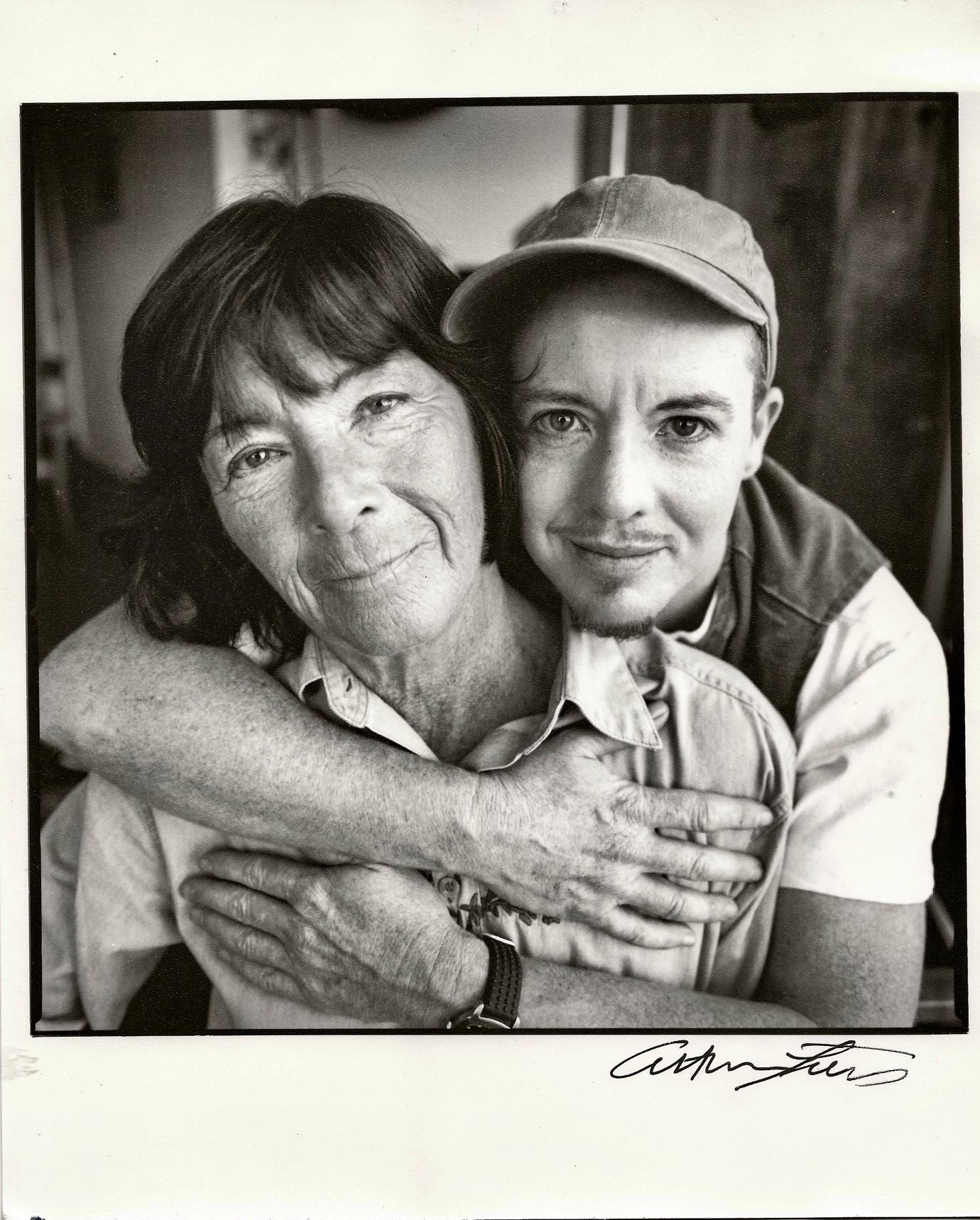
This is my favourite image of my dearly, queerly departed mother, Jeannine Della-Grace, made by Arthur Tress, a gay photographer I learned about as a student. Decades later he came to a talk I was giving at Phoenix Books, in San Luis Obispo, California. The next year when I was visiting he took this photograph of my mother and me at The House of Desire*, a house built by my step-father, Walter J. Torrence, originally for Donovan Marley, director of PCPA, the Pacific Conservatory of the Performing Arts.
*The House of Desire was based on a set Walt made for PCPA’s production of Eugene O’Neil’s play, “Desire Under the Elms”.
My mother and my two younger sisters were all stunningly gorgeous and were what you could call my first ‘subjects’. Looking back, it has become obvious how much of my first-born Leo mother's personality - her theatricality, quirks, charisma and appetite for reinvention - lives on in me, her Super Leo first-born child.
My mother never went to church until the end of her life. But she was a WICCAN and a follower of Z Budapest, a famous Californian Wiccan at the time. The excitement of humans landing on the moon in the 60s combined with and my mother’s distinctly witchy side, is one way to explain why from the age of five I sincerely I had been accidentally (on purpose?) left behind by my fellow space cadets, marooned on planet Earth in order to collect data about the experience of being human. I may be close to fulfilling my mission. And truth be told, there is still a part of me that really hopes there is some entity, alien space ship or not that might still land. My time capsule is waiting.
BORN MAKING TROUBLE
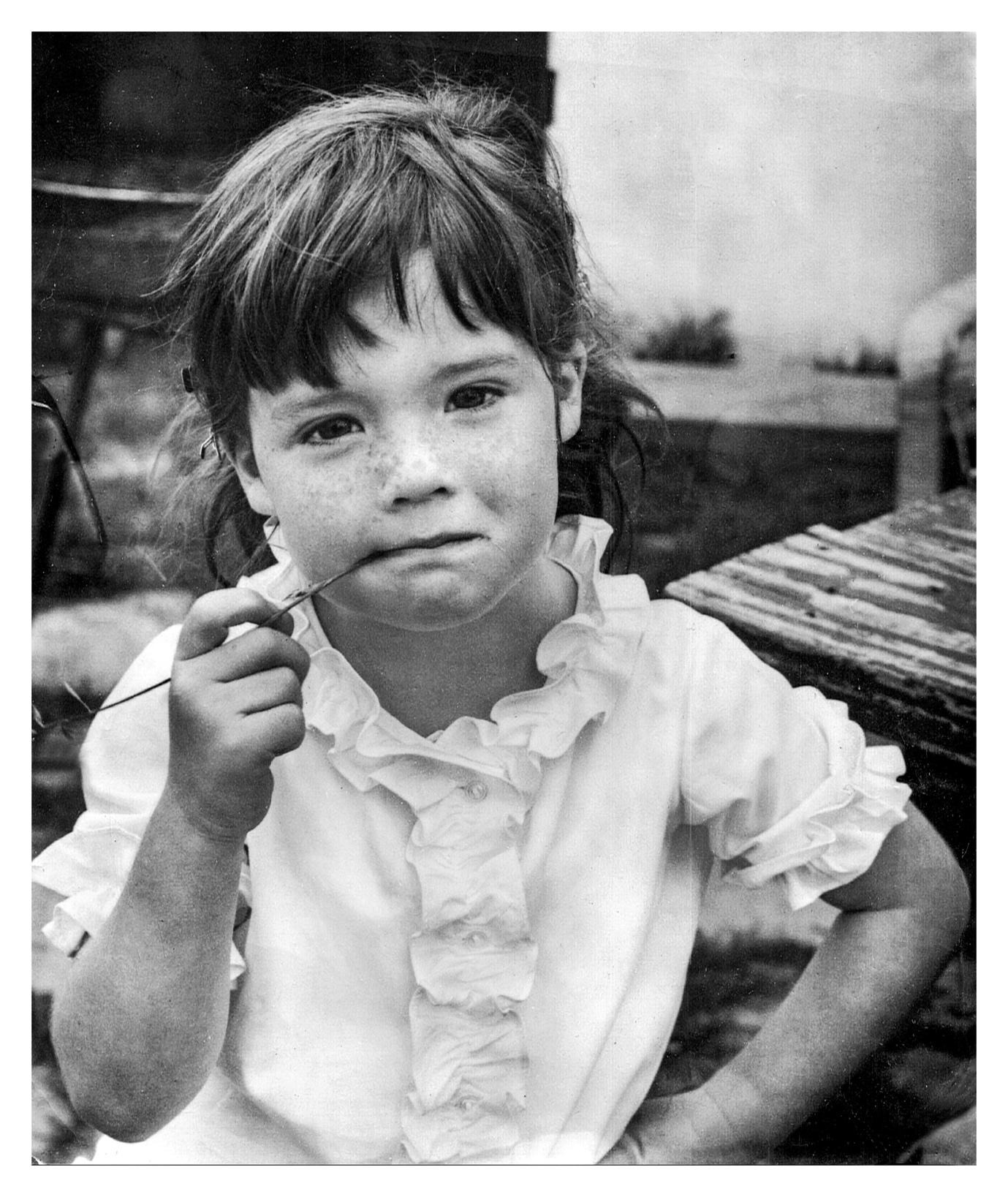
I was always a 'spunky' girl. Born making trouble. Not just gender trouble but ALL kinds of trouble - 'good trouble, necessary trouble', as the late great Civil Rights leader John Lewis encouraged us to make.
The first time the cops brought me home I was five years old, picked up for selling red rocks from Mars to the unsuspecting human population without a licence. I persuaded them to let us keep the money.
WE ARE EACH OTHER
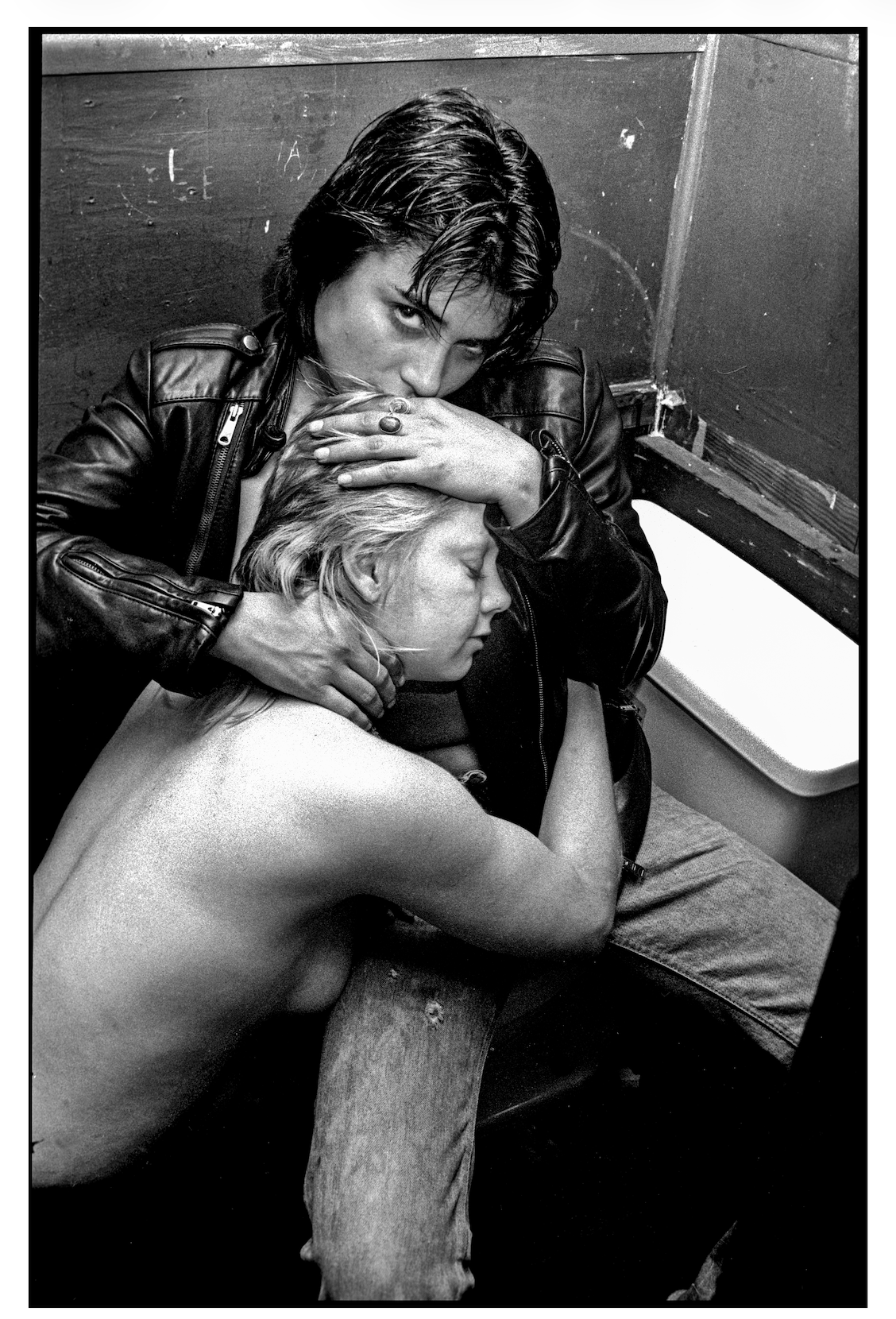
The first time I knowingly made a queer erotic photograph was Scott's Bar, Charmaine and Velinda, San Francisco, 1980. It was also the first time I put someone into my leather jacket. I didn't know then that this small gesture would keep returning across decades of work.
QUEER TECHNOLOGIES OF CONNECTIONS
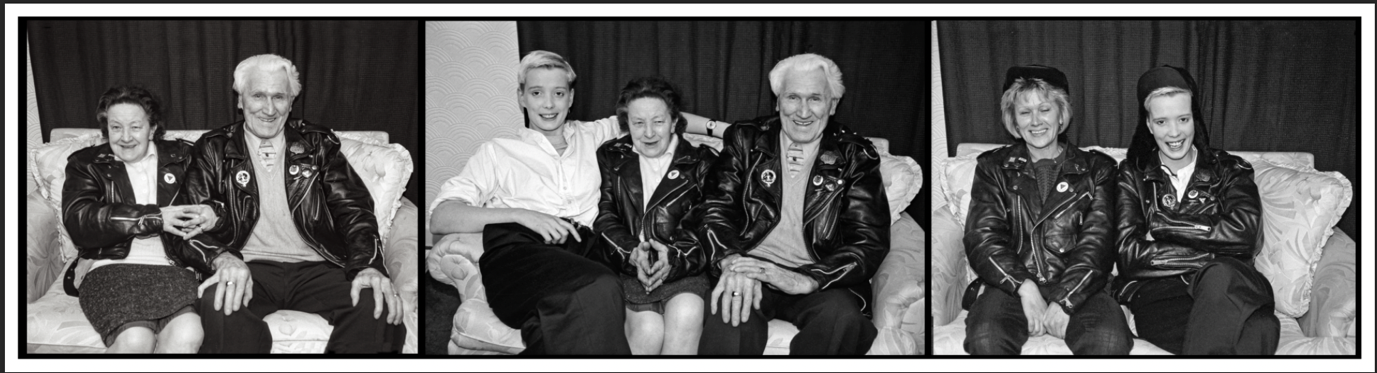
By 1989, visiting my Scottish lover's grandparents in Edinburgh, I photographed them - and Sylvia's auntie Joan - on the sofa in our leather jackets.
Dressing people in my clothes has become a small queer technology of welcome. It can signal complete acceptance, but it also reveals the sheer pleasure ostensibly straight people often take in being invited, however briefly, into our queer world. I have watched this happen again and again over half a century of making images.
It also made me notice an absence in my own work. I had consciously neglected a large part of the human experience: people who identify, or are identified, as 'normal heterosexuals' - a demographic that, let's face it, has rarely lacked representation. One of my current projects, QUEERLY HETEROSEXUAL, turns the lens toward normative identity itself: not to centre it yet again, but to make its power visible, peculiar and available for examination.
THE ROAD IS NEVER STRAIGHT
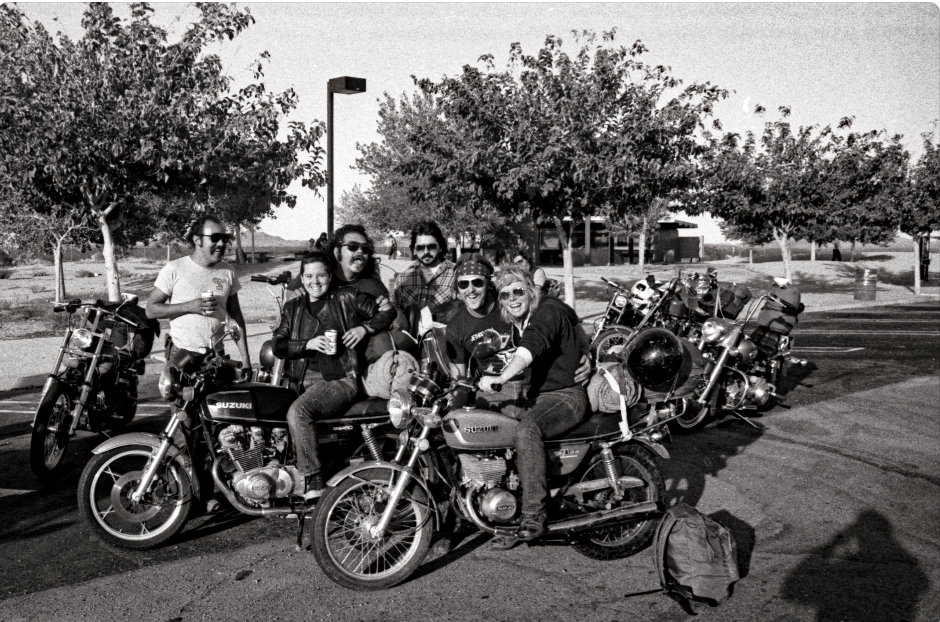
In October 1981 I was riding back across the country from NYC to San Francisco on my Suzuki GS450, with a dyke I had picked up in New Mexico, when a group of Hell's Angels roared past us as we crossed back into California. We tried to lose them, but as you can see, they managed to find us. Fortunately they were impressed that two 'girls' could manage it and were very friendly.
This, too, is how memory works for me: not as a neat itinerary but as a network of encounters, risks, jokes, lovers, strangers, chosen kin and photographic proof. One image sends a root toward another. One decade touches the next. The archive does not sit behind me. I’m making it and it is making me back.
“Vision is not only a passive, feminine receptacle where the ‘real’ gets photographed, it is also a phalloid organ, able to unfold and erect itself out of its cavity and point towards the visible. The gaze is the erection of the eye.” Jean Clair, Paris 1983