
Personal Notes #2: Lily Bunney

The personal Notes series explores how artists think, feel, and create, as they share what’s been on their minds lately…
Notes on: Pixel-by-pixel meditation, JennyCam and the tension between branding and vulnerability.
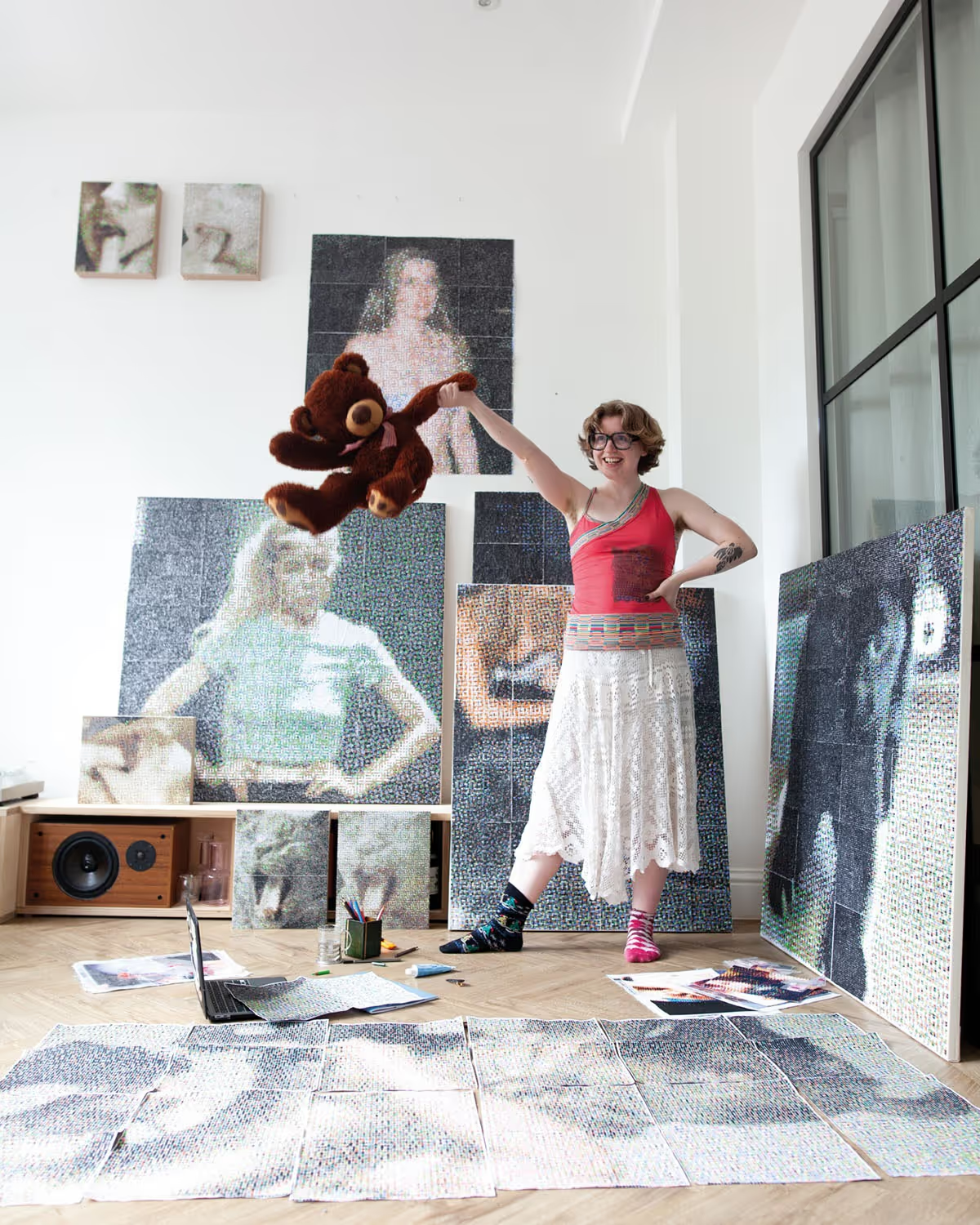
L: Hi, my name is Lily Bunney. This is Twilight Contemporary, presenting my trio show, How to Guarantee a Miracle, featuring Harry Hugo Little and Mattia Guarnera.
S: Why are you interested in dots, holes, and pixels?
So I used to be really into crocheting, because I was depressed, and so it was a very good, cathartic thing. And then I kind of stopped doing it because I didn't really like how it looked aesthetically. But I read this book called Zeros + Ones by Sadie Plant, which was talking about the history of the computer and the overlapping history between the computer and the Jacquard loom. The Jacquard loom was programmed with punch cards, which inspired the original computer programming hardware. So these are kind of variations on knitted patterns.
The process for making the painting plan comes from an old website. It was like someone's niche site about turning your family photo into a knit pattern. Anyway, I was also working as a maths teacher when I was reading this book, and having a really hard time. I was a teacher at this alternative provision school. And I was also living really far out of London, and I was never really seeing anyone. I just wanted an art practice that I could do to relax or when I was feeling quite low and didn’t really have the energy.
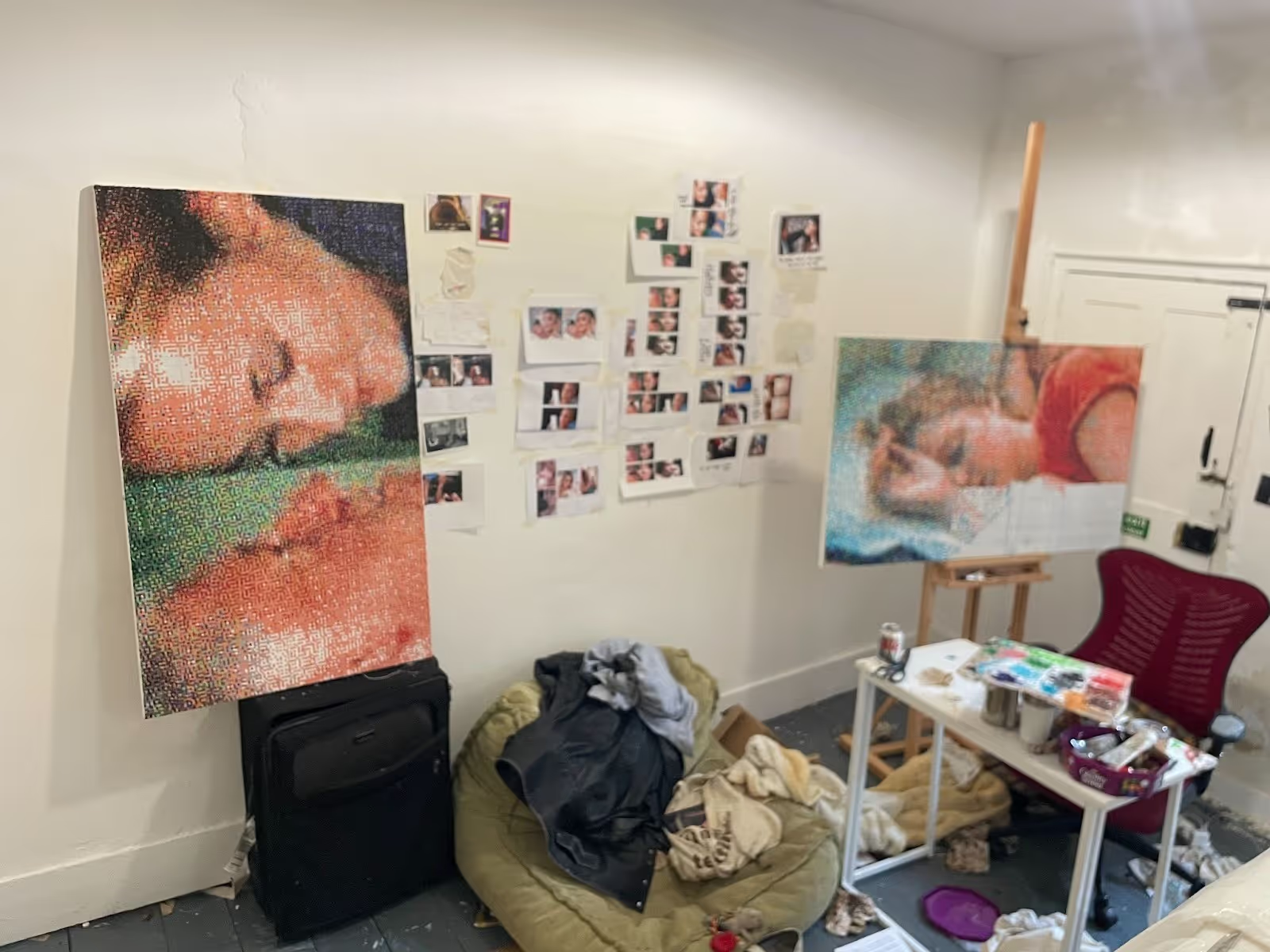
It is quite ritualistic, isn't it?
Yeah, it's a very ritualistic practice. It's very meditative. I recently did a workshop as part of a commission I'm working on, and I worked with some primary school kids. And it was so funny, because a lot of the kids were like, I don't want to do this. This is so boring. And then there were a couple of kids who were like, “This is so nice. I'm really enjoying a mindless task with a clear endpoint where I can sit in silence and thread beads”.
And I think that's very me. I really enjoy going to the studio from like 8 am till 8 pm, and colouring in cells like that is really calming for me. So I think, like, an emotional experience kind of led me to really stick with this as an art medium.
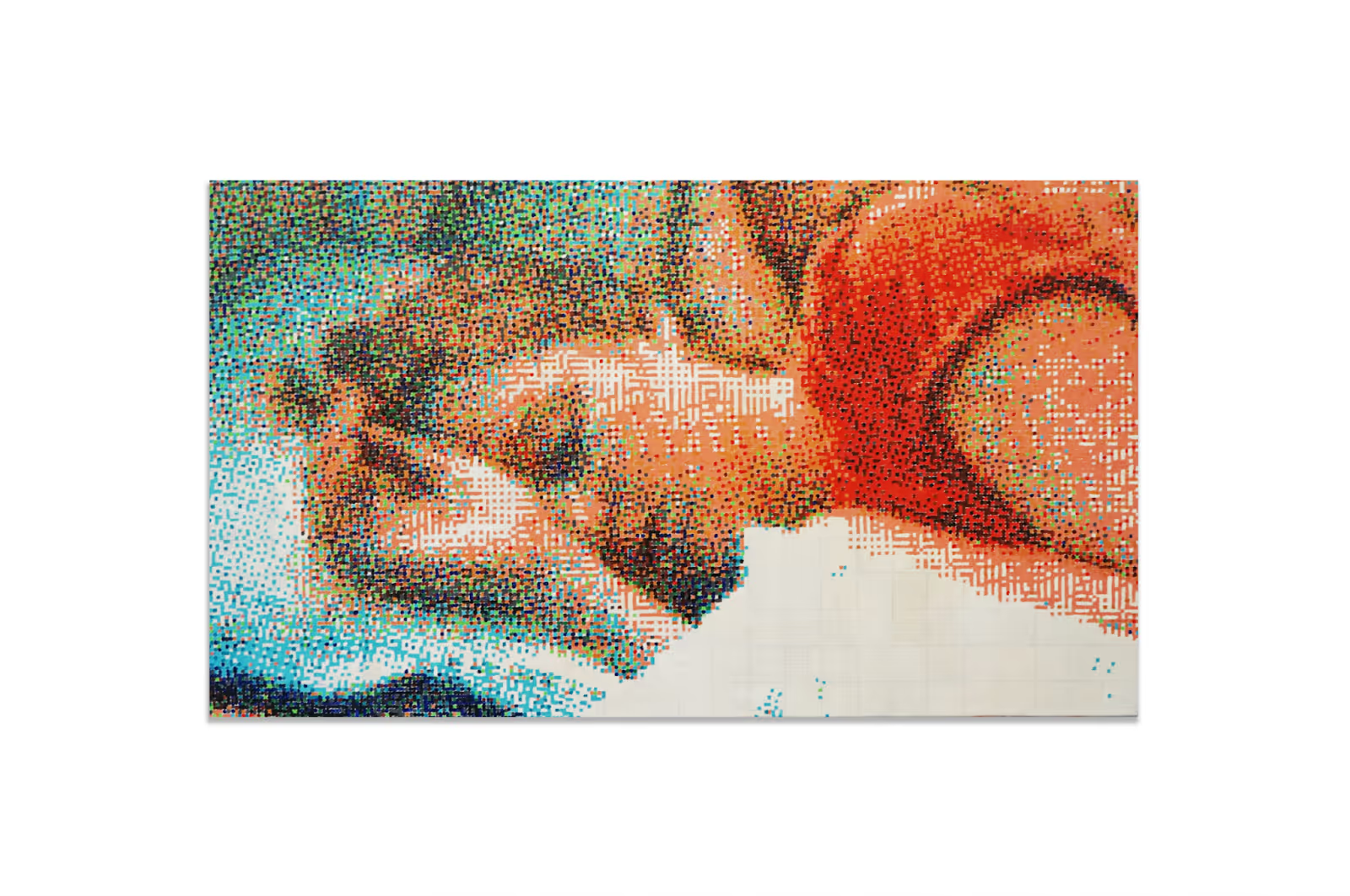
Tell more about this girl lying down or sleeping? Who is she?
She's called Jenny Cam. There’s a podcast I really enjoy, and I've been quite into it over the past year, called Panic World. Their whole focus is on how the Internet has shaped modern politics and culture. They did a whole episode about Jenny Cam. She was an American woman who, in the late 90s, set up a webcam in her university dorm room that took a photo of her or the room every 10 minutes and posted it online. She then gained a fan base, mainly men, who would check for updates on, like, what Jenny Cam was doing in her bedroom today. There was obviously a sexual dimension to it. Still, it also serves as an interesting example of how people experimented with the internet as a way of breaking down some kind of boundary between private and public, and maybe why we do that.
But what is quite interesting about looking at her figure is the photographs that have been archived and preserved from that experiment she did, like the ones that are usually quite sexual or quite violent, like images of her in bed with men or looking very upset. These images are not necessarily strange, but there is something quite charged about them that the people who consumed her content at the time wanted to retain.
This is one of the images of her in bed with a guy, captured by this webcam in the late 1990s, which I've cropped and redone. I was kind of creating these paintings almost to try and figure out my own interests within that period of history. I also really enjoy learning about how the Internet has shaped.

Which images interest you when making work?
I quite enjoy using the internet and images to try to find a sort of universal vocabulary. Something I’ve always struggled with as a young person was feeling that no one would understand me. You know, I believe everyone goes through a phase when they think their experiences are so unique that their feelings can never be understood by others. I worked with many teenagers in my early 20s, and you could see that kind of experience reflected in them — like teenagers who say, "You just don't understand what's happening to me." It's like, well, maybe I don't understand. But I think there is, like, a broader shared collection of feelings.
I think the internet is quite an interesting way of trying to capture those, or to be like, if I present this image to you, will you, Will, recognise it and like it? How do they recognise it? I think, in a very broad sense, that's something I'm quite interested in. And then I tend to filter through it to find more specific themes. I'm also really interested in celebrities, voyeurism, friendship, and emotional resonance.
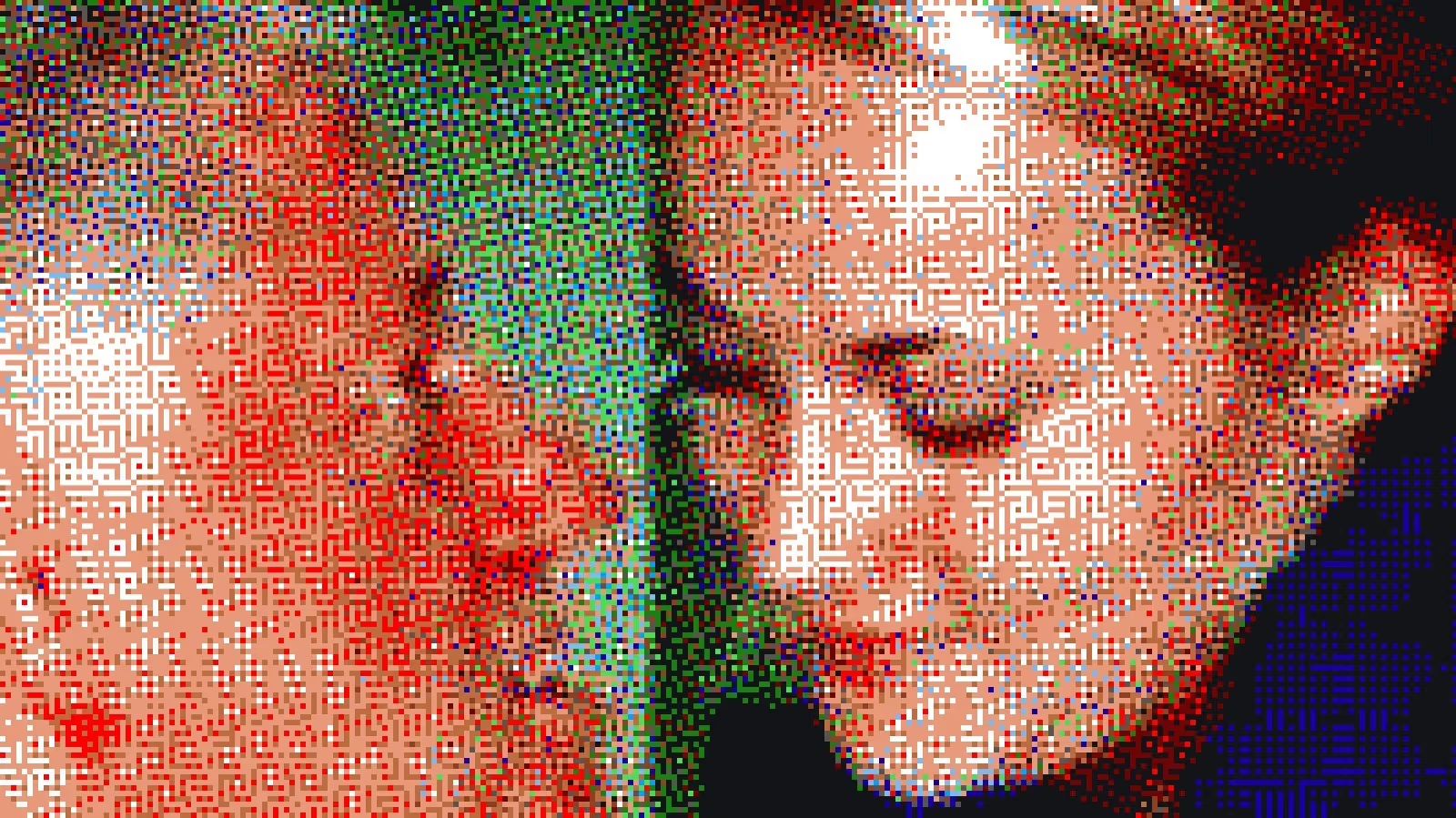
Is this Bill Clinton?
It's Bill Clinton with one of the women from the Epstein files. I saw it on Reddit. Originally, it's Bill Clinton getting a massage, but it's a different composition. I've heavily edited the image to put their faces next to each other. I tried to condense the image or its feeling into something I could fit on the canvas. I did this in September, and I’ve been listening to many podcasts about the internet and politics, so I started thinking about the way people talk about the period of neoliberalism in the early 2000s, when everyone felt very optimistic about the world.
What do you feel is your biggest struggle when creating your work? What's your inner fight?
I am someone very interested in many things in general. Before I was painting like this, I would completely change my medium every one to two years. I think it’s because I have ADHD. I would be a performance artist, then a writer, then do sculpture. I basically forced myself to pick a style and stick with it. When I found a style that I thought was interesting enough or could hold my attention, I would focus on that, which I am very glad I did. Still, I feel the need to move on from things too quickly. I'm not good at sitting with something; I tend to percolate into it. So, I try to revisit ideas – like, I made that show two years ago, but I can go back to it as if it’s fine.
I'm kind of torn between loving the idea of making work that quickly becomes outdated, almost before you've even finished it, because you're trying to tap into a trend cycle. But at the same time, I don't want to be constantly shifting. So, it's quite a contradiction. Still, there's something quite true about that contradiction. I believe we are, almost subconsciously, encouraged to see ourselves as a brand most of the time. I think there’s a flattening that occurs, where I am both attracted to it because I find the idea interesting and because I think it will make me more successful. At the same time, I feel the need to resist it. Within that, you get this interesting cycle: I need to do something entirely different. Maybe I need to burn all my paintings and become a fiction writer.
I think art is far more interesting if you're trying to be fully seen as a person. I know I said earlier in the interview that I don't want people to know me. I think there’s a real tension there — I'm not quite sure if I want my art to be about me or not, because I suppose that’s still, perhaps, an inner debate.
I want to focus on myself and try to be honest and tap into something genuine and vulnerable within me, which allows me to create work that perhaps resonates with others. But I also don't want to have to think about myself all the time. I think many people probably feel the same. They want to make something truly meaningful that connects with others, but they don't want to be constantly preoccupied with themselves.

Could you say a bit more about the painting portraying Lady Diana?
I was reading a book about modernist portraits; the phrase was something like “the tyranny of the image.” I was preparing for this show, and I thought that “the tyranny of the image” was quite a good reference point, a phrase to consider. I believe someone like Princess Diana, who would still be walking through the streets, was really living a life where, like, the image is a tyrant.
There’s something about that tension between, like, the audience and the power. I was talking to a friend about this because we both work with celebrities. She’s working on a piece about Britney Spears. I said, I think Britney Spears is interesting because you’ve got Britney, the fans, and then her dad and the conservatorship, and, like, the abuse of power. In a traditional celebrity scenario, you always see it as, like, the celebrity and the fans, where the fans give power to the celebrity, and then the celebrity wields that power. And then, yeah, I think exactly — with Britney, you can see that, actually, there are often more people involved in that dynamic than just that.

What’s been on your mind lately? Is there something that you discovered about yourself while making this work?
To be honest, I feel like, although I really enjoy the series and this work, I feel like there's a lack of vulnerability in them, and maybe I want to return to a sense of vulnerability. I think that's something I sometimes default to. I believe it's more interesting to make your art feel really vulnerable, but sometimes it’s really tiring, and it can feel like it's not the full truth. It's really difficult to find that balance. I don't really want people to understand me. I don't think that's really what I need. I think I'm much more interested in, like, how other people feel about things, or if I make this work, how is someone is going to feel looking at that work?
On a very personal note, I find vulnerability quite difficult, even in romantic relationships. I tend to be quite closed off because I am very emotional. I really enjoy the process of creating these works because I get to spend extended periods of time alone. I think that if you're a very emotional person, being alone can be helpful, or at least I enjoy it because I can experience my own inner world without anyone interrupting or presenting a counter-narrative.
That's why I think it's beneficial to indulge in your own feelings. The process of making the works allows me to do that, but I don't necessarily want the works’ subjects to reflect that, as I believe it's also important to look outward.
How can I be really hyper-specific, maybe so other people can relate to me, and be really honest about my own interests, even when I'm not entirely sure about them? Maybe there's something there that others can grab onto. I’m always trying to focus on what I genuinely find interesting, even if I think no one else will care. And then, in the process, I’ll often test that. For example, I’ll make a plan for a painting, and I send it to a friend with no context, just asking, “What does this image look like to you?” For this one, they said “creepy old man,” and I was like, yeah, perfect — that’s exactly it. And sometimes people have a completely different reaction, or they just don’t care. And that’s kind of fine.