
Peggy Guggenheim in London: The Making of a Collector at the Royal Academy of Arts
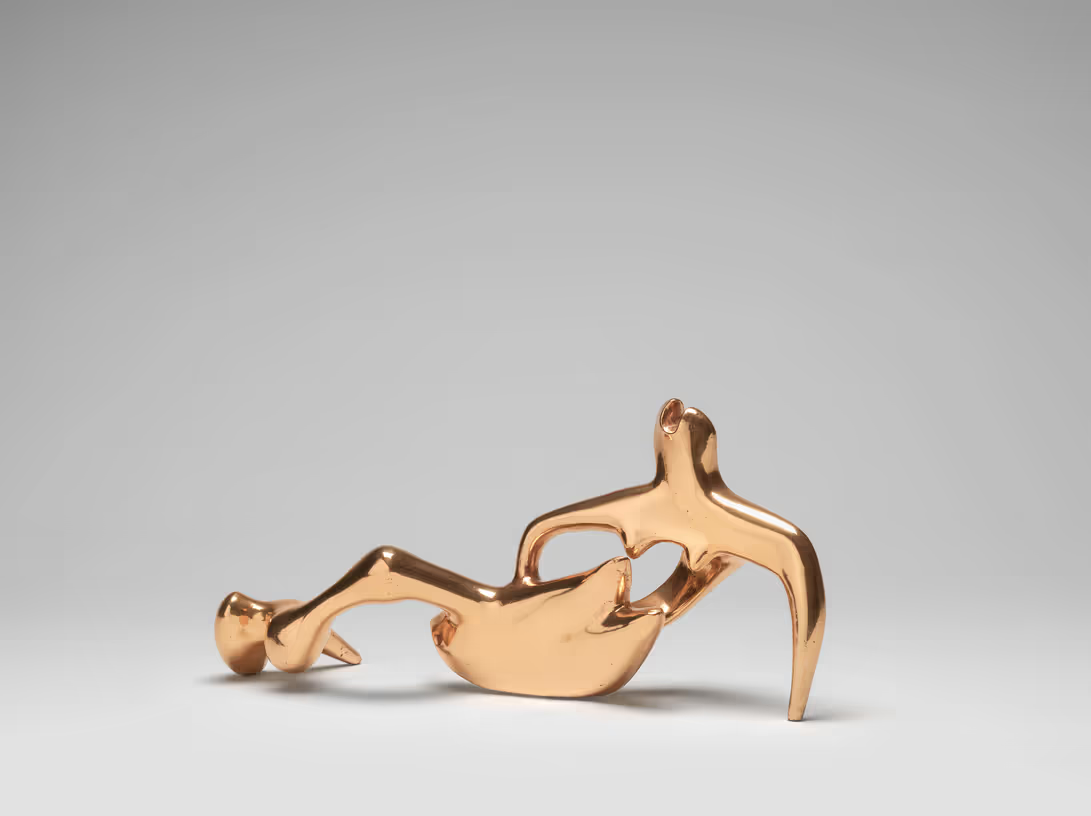
The captivating and electric exhibition Peggy Guggenheim in London: The Making of a Collector at the Royal Academy of Arts steps outside the Venice palazzo and into the inner world of a profound collector and patron, Peggy Guggenheim. The works on display reflect her varied tastes, not always informed by mainstream tastes but instead a selection of works that caught her attention visually and materially. Some of the standout artists included in the exhibition are Salvador Dalí, Barbara Hepworth, Rita Kernan-Larsen, Henry Moore, Wassily Kandinsky, Piet Mondrian and Cedric Morris. Rather than working in isolation, these artists cultivated close connections which helped with crafting a narrative that was well suited to Peggy’s evolving tastes. Stemming from her opening of a gallery in Cork Street in the late 1930s, the exhibition revisits this gallery as a starting point for her collecting journey, which arguably drastically shifted the British art scene. The extent to which Peggy redefined modern art becomes a vibrant topic that shifts with the various works on display in the exhibition. Peggy’s Cork Street gallery was fuelled by avant-gardism, providing a driving force in the contemporary post-war art scene. Through these revolutionary forms of artistic presentation, Peggy showcased the numerous possibilities of what contemporary art could be, and how it materialised throughout the ages. Arguably part of a dominant commercial circuit, her ever-expanding art collection operated on a basis of artists shining light on other artists. Through this, she established an in-crowd that gradually expanded through her personal goals such as buying a painting a day, which was a famous notion that became a backdrop to her collection.
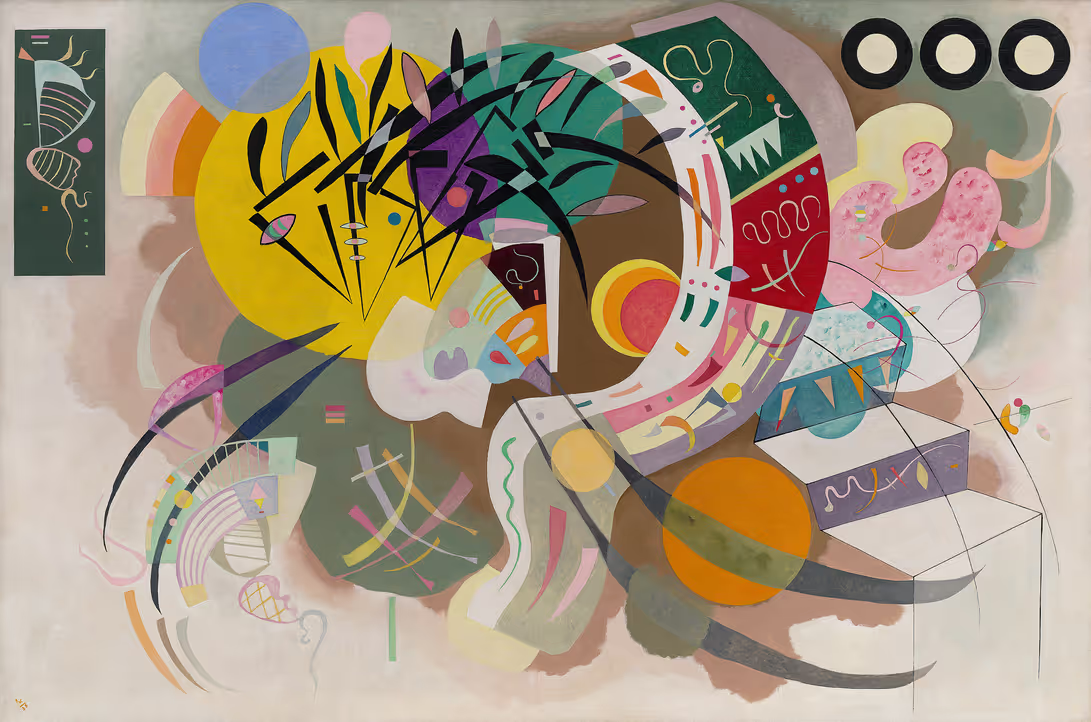
Standout works in the art-historical canon, such as Wassily Kandinsky's Dominant Curve, 1936, acquired directly from the Guggenheim Museum’s collection, are vibrant and charged with symbolism through shape and block colours which were characteristic of the artist. This work, amongst others, challenged the boundary between abstraction and surrealism. Other works displayed in the exhibition, such as Lucien Freud’s Old Man Running, 1937–38, one of the first paintings that Freud ever publicly exhibited, were among the three paintings submitted by his mother to an exhibition of children’s art at Peggy’s Cork Street Gallery. This work in particular reflects her commitment to emerging talent amidst the mainstream, popularised artists at the time, such as Kandinsky. It appears dull in its earthy palette, yet the simplified image of a bearded old man, a figure often compared to Sigmund Freud, running over depicted green curves or ‘hills’ is striking, moving with the fluidity of the paint. The man’s pace is unknown, but the way he propels himself forward with one leg snaking far beyond the other implies a certain speed. This well-crafted selection of emerging works is seen to hold greater significance, perhaps than the more established works, which, as a result, shone light on Peggy’s personal philosophy as a collector.
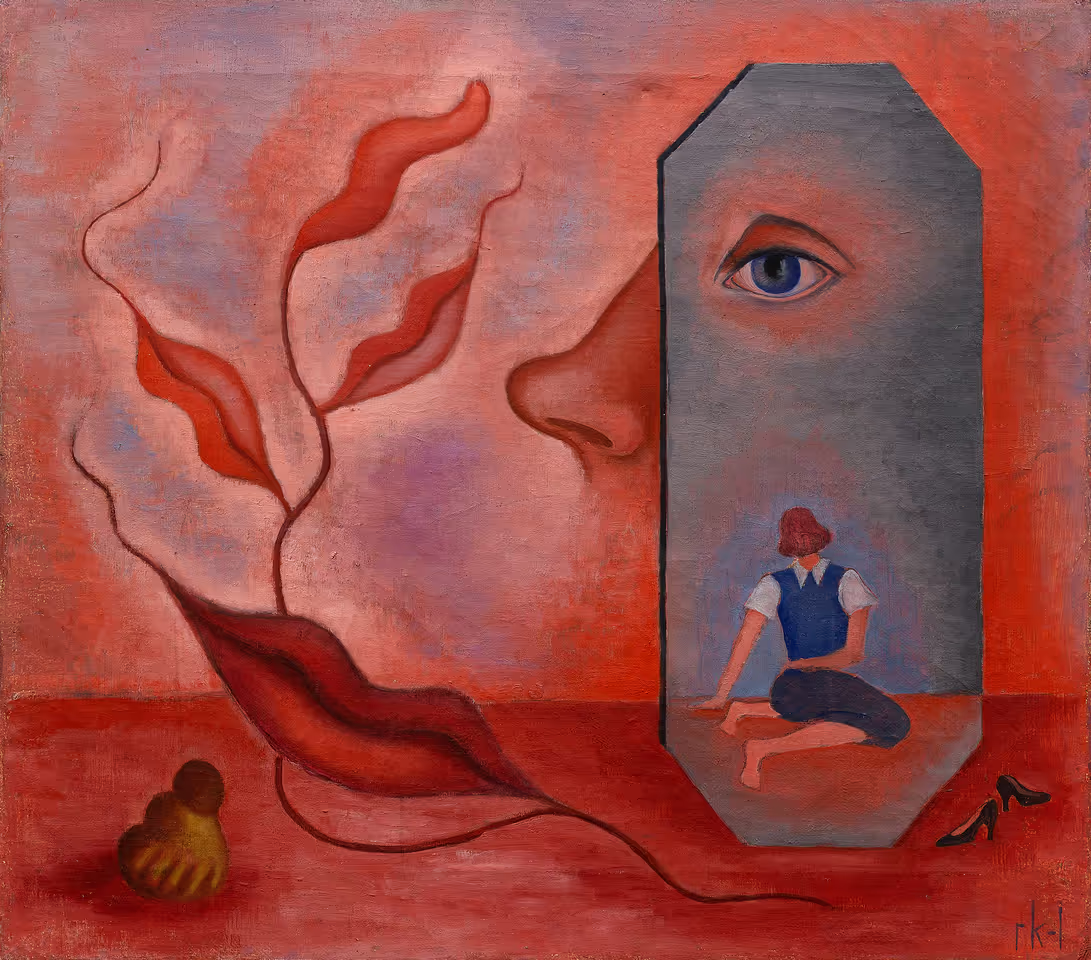
Rita Kernan-Larsen's Self-portrait (Know Thyself), 1937, is striking in all its redness, reflecting the surrealist, dream-like state evoked by numerous works in her collection. It allows us to peer into a window of a world that exists within and beyond a surrealist dreamscape. Salvador Dalí, Untitled, 1931, draws us towards an isolated woman lying down, with soft shading defining her physicality, and rocks and seashells growing from openings in her body while one of her wrists is bound by a chain hanging from a skeletal tree branch protruding from one side of the canvas. This work in particular highlights Peggy’s commitment to biomorphic forms. Wolfgang Paalen’s Articulated Cloud (Nuage articulé) is a suspended assemblage consisting of an umbrella and natural sponges, which adds a playful take to some of the surrealist themes running throughout the exhibition. This work emphasises the scattered nature of the works on display, as it exists through symbolism in its own right, heightened by its materiality and strange quality. It remains one of the selected works that makes us question if the object is even art at all. Yves Tanguy’s Earrings for Peggy Guggenheim, c. 1938, bears this similar quality of being non-art, whilst simultaneously becoming novelty objects that capture her unique and evolving identity. Overall, the exhibition captures the collection that was not only defined in terms of strict styles or themes, but also by personal tastes and real-world connections, reflecting how Peggy’s life intersected with some of the greatest artists of her time.