
In conversation with curator Francis Hardy at the Tate Modern

So who was Julio Le Parc?
He was an Argentinian artist born in 1928. He moved to Paris in 1958 and spent most of his career working in France. His work explores light and movement, and the effect that it has on the viewer. And that's really the focus of everything that he's done over his career, from his early experiments as a student in Buenos Aires, through to his time in Paris, working with the Groupe de Recherche d'Art Visuel (GRAV).
Was that the group that he founded?
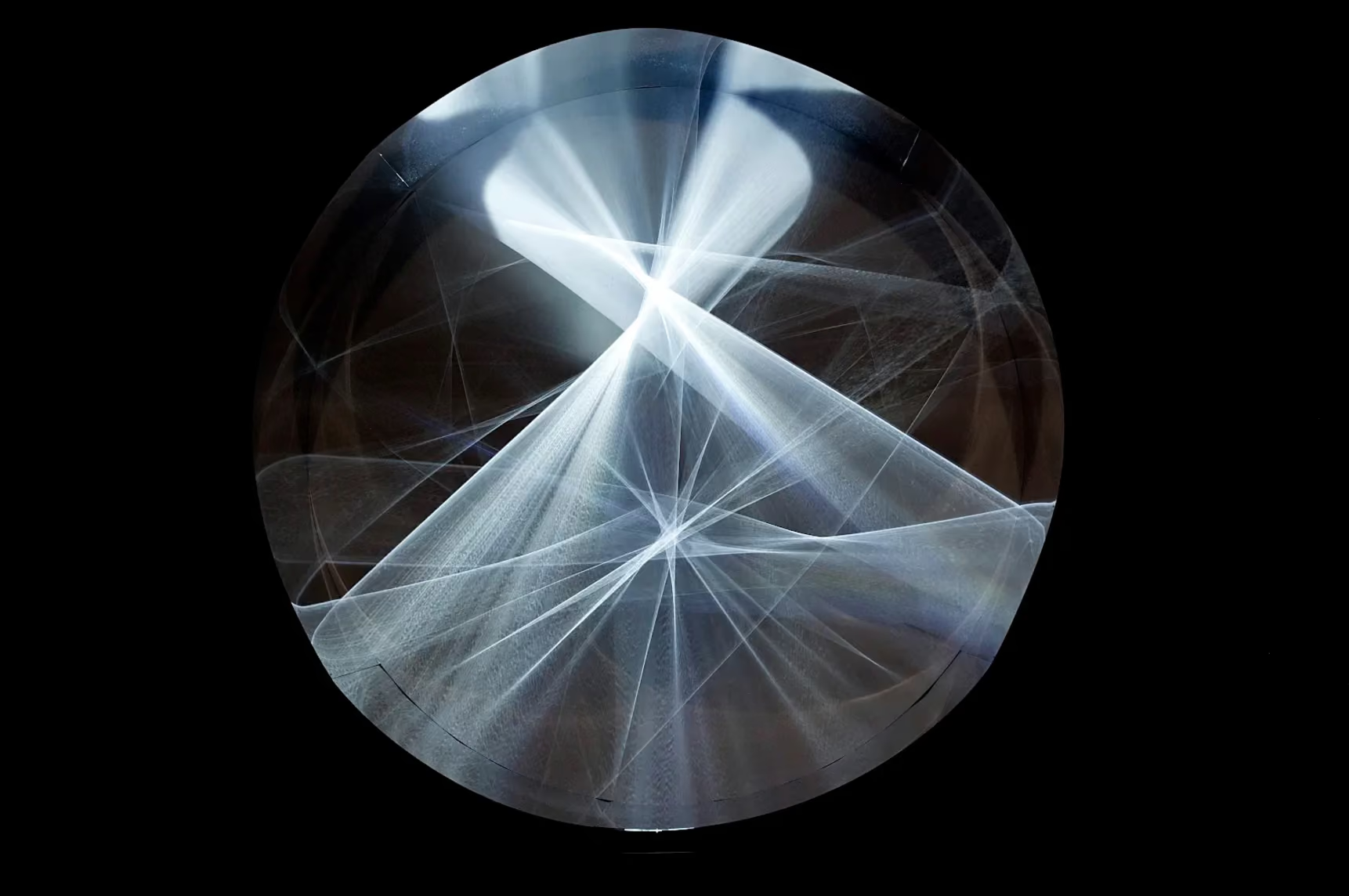
He co-founded it with a number of other artists. They were influenced by Victor Vasarely, who was a French-Hungarian artist, working in Paris at the time. When they came to Paris in the 1960s as young people, there was an idea that art should be approached as a form of visual research, in a kind of scientific manner. In rejection of the idea of the artist genius that was so central to Abstract Expressionism and the American art of the time, think Rothko, Jackson Pollock, this idea that somehow, in the expressive brush strokes, you get to view the expressive genius of the sole artist and these radical young artists felt that that was very hierarchical, very exclusionary. They wanted to create accessible art that, in fact, hid the artist’s hand and removed that kind of arbitrariness of expressionism, and instead focused on the relationship between the work and the viewer. Essentially, trying to make the most effective art possible. And they did that through forming a group of researchers (GRAV). There were different ideas about whether it should be a public display, or just a research practice until they'd got to the point where they felt it was ready, there were lots of competing ideas, but it was very much this atmosphere of excitement, about the future, and what was to come, and how art could learn from the sciences, and renegotiate its relationship with the viewer through this kind of group research practice.
Was that an established scene he entered, or was he very much part of founding it?
I’d say… he was very instrumental in developing it. He was already in the Concrete Art Movement and the Madí movement in Argentina. The concrete art movement also found expression in Brazil and across Latin America, as well as Europe. There was already this idea of wanting to change the relationship between material and the experience of art on the viewer, and the experience of moving away from paint, moving towards using found materials. These ideas are very much in the air. They're also building on De Stijl movement and Mondrian, that sort of earlier expression of abstraction and very formulaic, regimented form of expression, trying to get to the purest relationships between colour and line and form on the page. So these ideas already exist, and then Le Parc is really radical in making that step from exploring these ideas through the page to creating installations that directly interact with the viewer and immerse the viewer, in which the viewer is forced to confront their relationship with the art.
On that subject of immersion and interaction with the viewer, in his early works, exhibited in the first room, he obviously uses optical illusion, and I think the exhibition describes the viewer as ‘completing the artwork with their eye movements’. Can you explain a bit more about what that means?
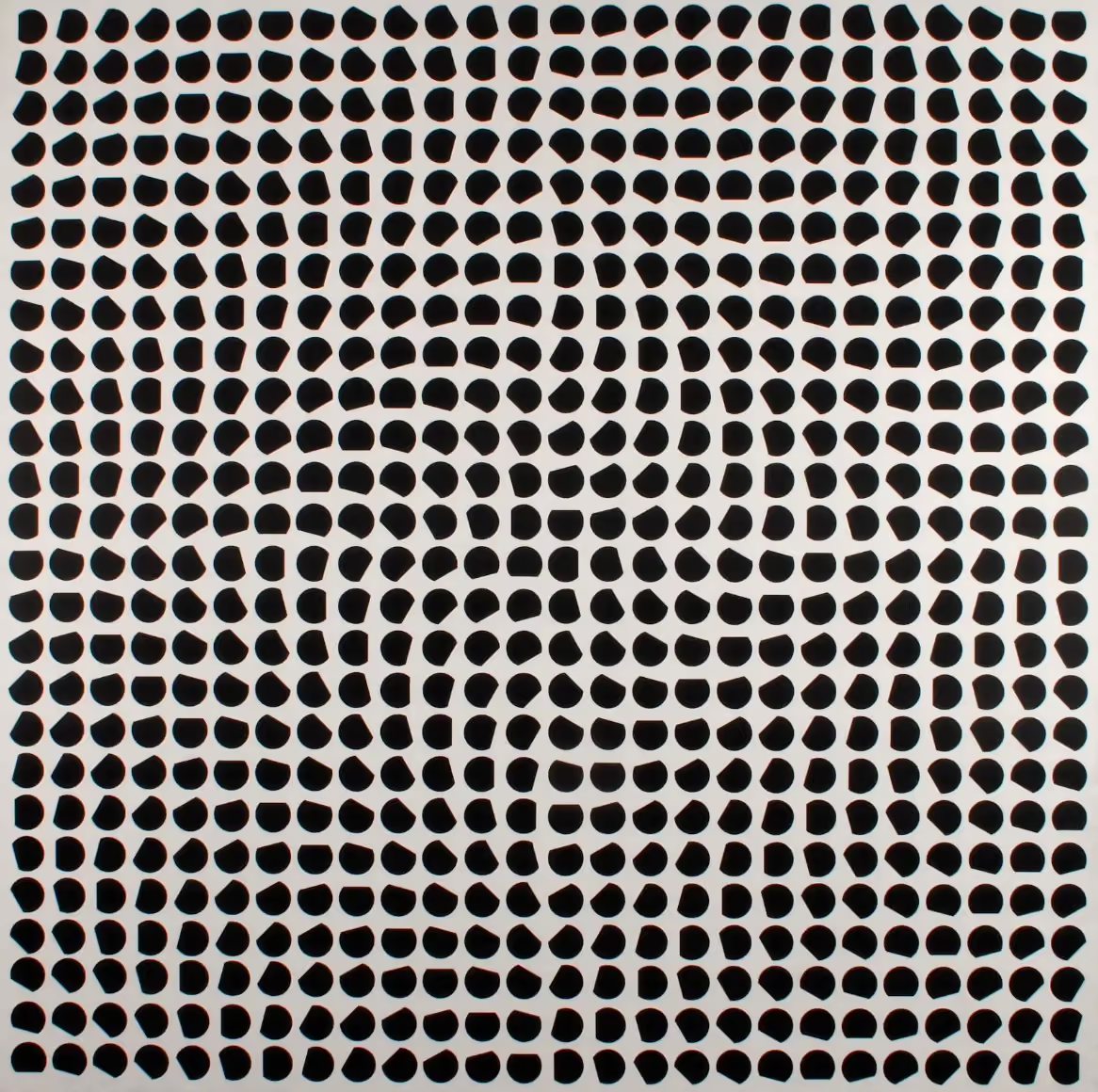
Yeah, so Le Parc initially became very interested in the kind of strain of removing identifiable, expressive, artistic style. He became very interested in exploring the way of making art through repetitive patterns. And in doing that, you noticed that they were having these optical effects, that in these patterns, the eye would be forced to move across the page, or that you would, in focusing on the centre of the work, become aware of visual effects in the periphery of your vision. He became very interested in the way that you'd look at the centre, and you'd see a distortion around the periphery, and your eye would move there. So that activation of the viewer, through this kind of visual instability, he came back to again and again – the importance of destabilising vision. Creates this sense of movement, and that leads on from surfaces to the sequences where he arranges them in space. So, not only the viewer’s eye, but also their bodies, are compelled to follow the sequence.
Would it be right to say that he pioneered lumino kinetic art? And what actually is lumino kinetic art?
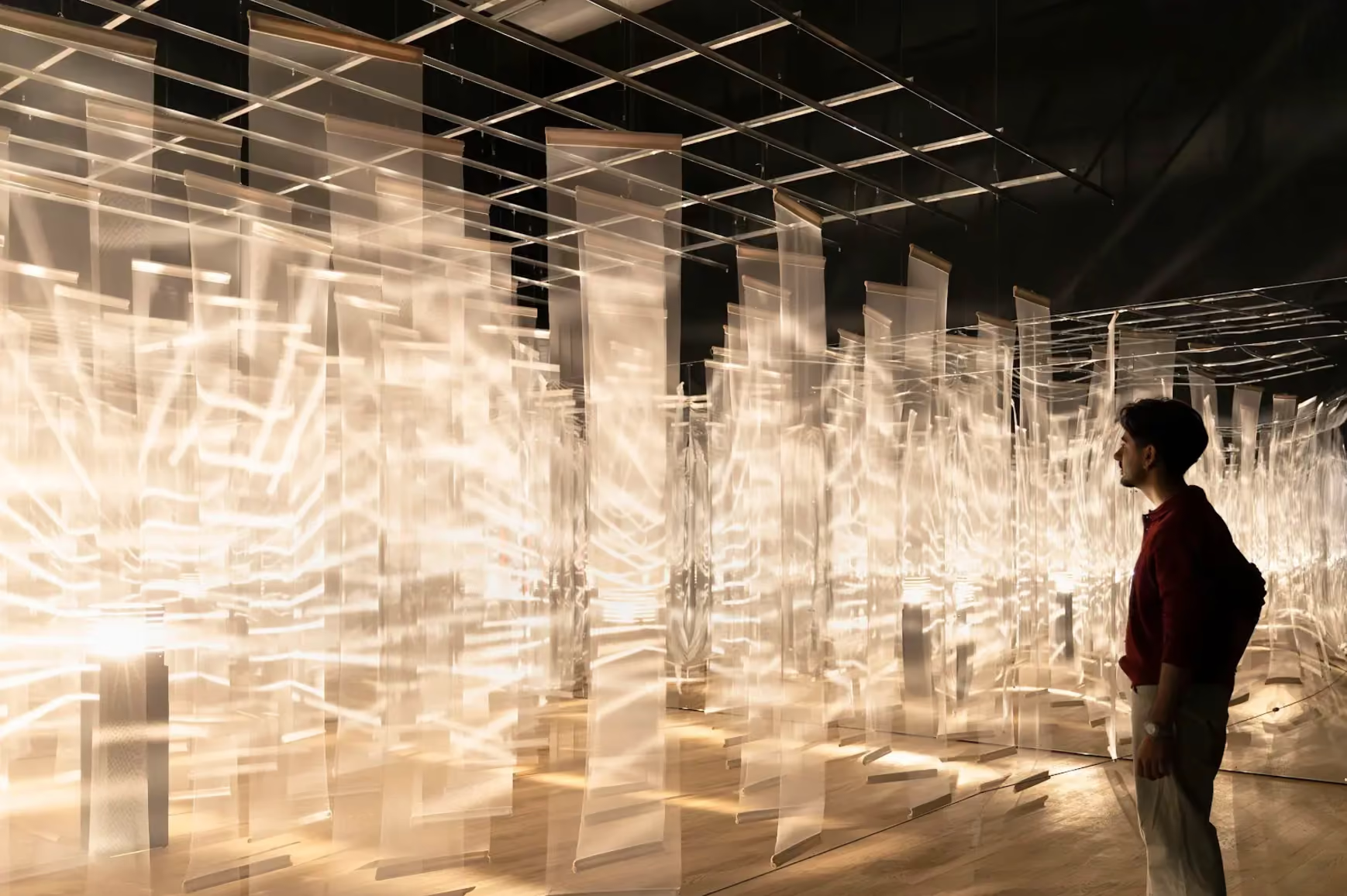
Well, Le Parc always rejected being put into boxes. Lots of people have, especially the 2D works you've mentioned; they've drawn similarities with Bridget Riley and many of the Op Art artists. Le Parc would have rejected this pigeonholing because he always felt that there was so much more to the work. So, you wouldn't want to say Le Parc is a lumino-kinetic artist. But at the same time, this exploration of light and movement is very central to his work, and he was very radical, and at the forefront, along with his GRAV collaborators, in developing this form of artistic experience, it's really looking at using light as a material in the same way an artist would use paint. And creating the experience for the viewer through how the light moves around the room. So the key works for this are the Continuel Mobile, which we have one in the exhibition, and we have also installed a new one on the ground floor of this building – the Grand Mobile. These are reflective sheets that are suspended and lit by directional light sources, and they project light around the room. One of the things that Le Parc was particularly interested in when he put these works in gallery spaces was the way that, as viewers walk past them, the air currents in the room activate. So it's almost like the viewer is activating the work through their movement, which is then causing the reflections to move around the room, which in turn causes the viewers to turn their heads. That feedback loop is important to these early works. Then Le Parc starts to introduce motors, and so you get works with a very simple motorised mechanism, often a light bulb with just a simple box with certain slits in it that is rotating, this projects light onto a background and creates these constantly moving patterns which are really unexpected. Something I find so delightful in Le Parc’s work is the way that the actual mechanism is so simple. The sequence that he creates for the 2D works, the mechanism in these mobiles, they are not complicated. But the visual effect has almost infinite depth and complexity of movement.
In his early career, I suspect that his work was viewed as quite radical by the public. But how has the public reception of his work changed over time?
I think it's been hugely positive. In the 1960s, it was very radical. GRAV, to an extent, fed off that radicalism. They viewed themselves as very radical, both in art and in politics. They wanted to reject the world of conventional art galleries. Le Parc was very resistant to the foundation of the Pompidou Centre, the fact that it was named after Pompidou, the President of France, and that the state was co-opting art in that way. So they were very radical, but... Because the work offers so much, it is really delightful as you go through it, and constantly surprising. It's very accessible and engaging, which is one of the things that makes it wonderful. And it has created a huge following, certainly in Argentina. Where Le Parc has become an icon: he created light installations for the central plaza in Buenos Aires. In Paris as well, his work has become very well known. Even in the 1960s, he took part in the Atelier Populaire, which was an occupation of the art school in Paris during the May 1968 student and workers' uprisings. He made posters in support of the demonstrations as part of this atelier, and he was arrested, and expelled from Paris, and then his fellow artists and Parisians demanded to bring him back, and so it was, even in the early 1970s, they had made enough of an effect that their art was viewed as important enough, and they had generated enough popular support that the government was compelled to allow them to return.
So he's always been a rebel and political. How then do you keep his rebel streak while exhibiting him in such a big institution of the art establishment, like the Tate Modern?
To me, central to that is the accessibility of the work. Le Parc’s work doesn't need acres of interpretation text; it doesn't need people to tell the viewer all about it. It doesn't need you to have studied art history to get something from it. Anyone who comes into this exhibition and this gallery will be able to connect with it, experience the delight and the surprise, and feel the kind of instability. A lot of Le Parc’s work is aimed at working on not quite the subliminal, but the kind of background. You immerse yourself in the light installations, or you play with the games, and you feel that kind of childish delight in not knowing what they're gonna do when you press a button. You reconnect with a side of you that feels like you are an active part of the art. And for me, in an institution like this, to host an exhibition, it really puts the viewer at the centre, I hope, does some justice there.
With the game-based works? Would you place that within the movement of gamification?
I don't think so, I mean, for one thing, it predates the idea of gamification. I think it's almost trying to be the opposite. When we think of gamification, it's actually a way of, even if it's used for a positive outcome, it's extracting data, it's when people want to gather something that would maybe be quite boring. They add an element of a game. The game is a mechanism for drawing out something from the viewer or the game participant. Whereas I think with Le Parc, it's the opposite. It's about the person playing the game and what they get from the game rather than what the ‘gamifier’ gets from them. So I think it predates it. Maybe gamification approximates and draws on this kind of thing, but I think that's very much not what Le Parc would have had in mind.
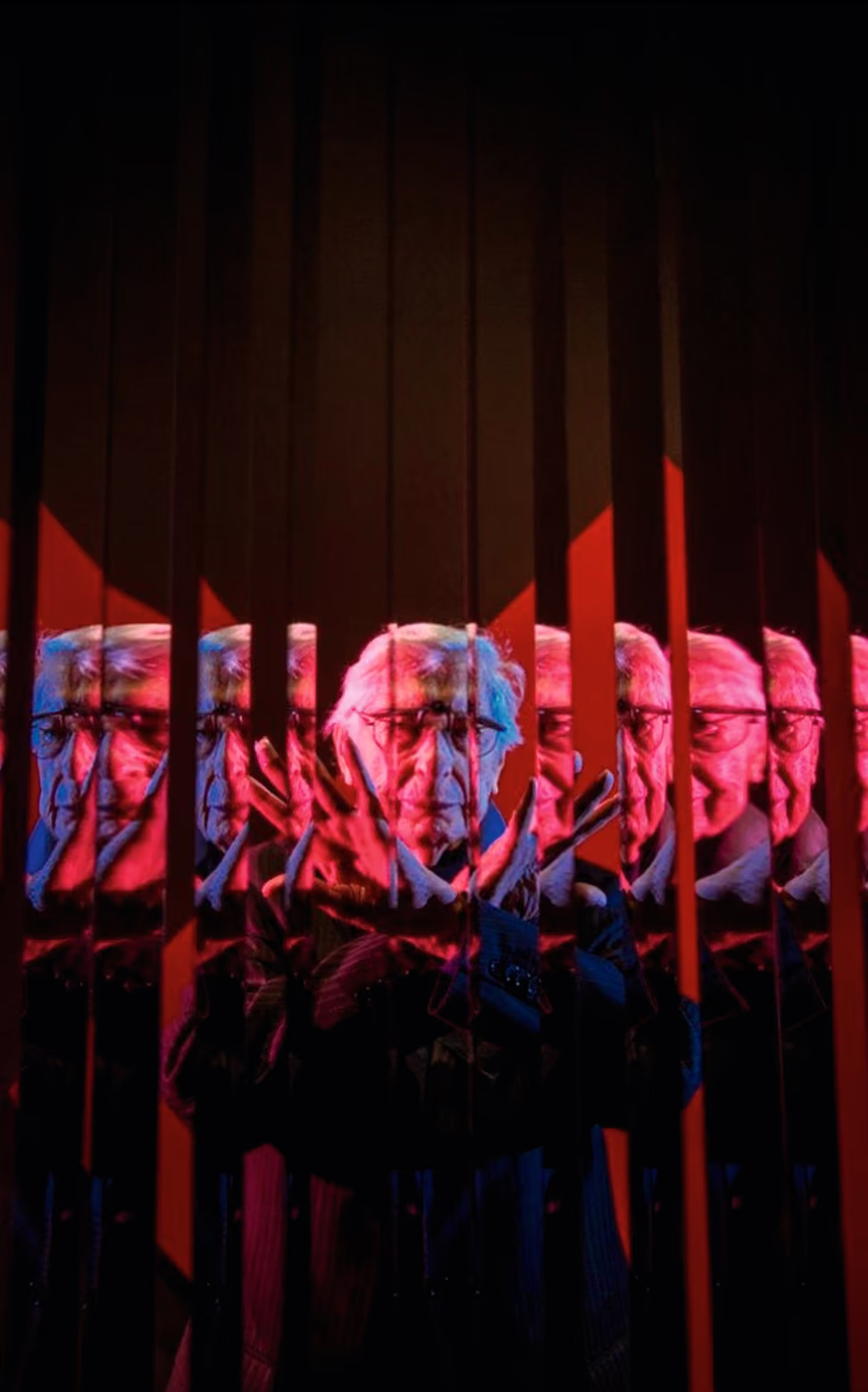
Le Parc was working way before the smartphone, do you think there's a risk that the smartphone can come between the viewer and the work since his work is based so much on interaction?
I think there is a risk. I mean, if you only view these works through your phone, you will lose out. These works are visually incredibly exciting and stimulating. I would encourage viewers to take pictures and videos. But I hope they also find time to put the phone down and just let themselves experience it without that conduit. They are the sound, the movement, it's something that feels... You can't capture it; it's all surrounding you. So I really hope the viewers do both explore the work through capturing images, which, of course, can be very rewarding and enjoyable in itself, but also allow themselves the time. Julio Le Parc also tried to constantly experiment with technology, so with his son, he's created digital versions of his artworks that are to be experienced through virtual reality or through the phone. So he's not against the idea that the phone or technology provides another avenue for activation and immersion. I think what is really important in his work is the thinking about what it is that you are doing when you are engaging with it. What is that engagement and that activation making you think about your relationship to the art? If you're still thinking about that through engaging with it with the phone, then it's still being successful.
For this exhibition, you worked closely with Le Parc and his atelier. Did that change the way you see his work or practice at all?
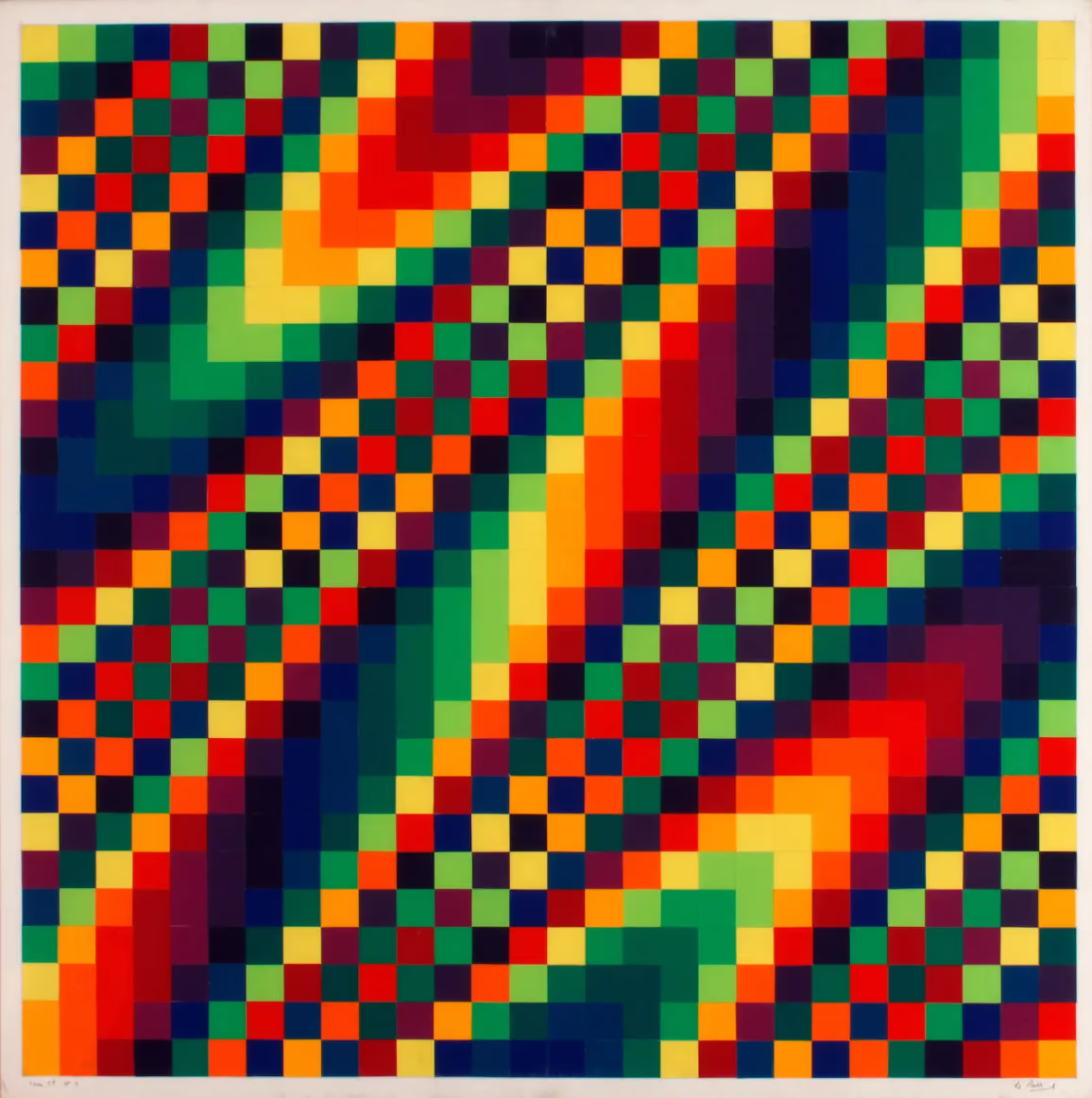
Hugely. It was really amazing to work with him and his sons. I was incredibly fortunate to visit his atelier in Cachan, which is a suburb south of Paris. And it's amazing that his studio and his sons work amongst his artworks. They're all over the place. They have a room in the basement for all the light works, where you can go in and turn them on and see how they were. But even in the office, there are his mobiles hanging over you. You're totally immersed in this explosion of colour and movement. So that experience really helped us understand how we wanted to curate the show. But also working with Julio himself on the floor plan, he wanted to see every iteration, he would take every floor plan we gave him, he would change it, he would be there with his scale ruler and his pen, replanning where the works were, and the insight and understanding he has of light and movement, and how the works interact with each other is really essential for how we arranged the show. We did have a narrative: we had a way we wanted to introduce the audience to his work, to take them from the two-dimensional, through the light works, the games, and then into the explosion of colour at the end. As curators, storytelling is what we try and do best. But for Julio to then show how he wanted the works to interact, and his understanding of, for example, the corners that you should turn to be suddenly surprised by a new work, that you don't want to get too much of the classic gallery curation, I mean to have a painting at the end of a long corridor, for Julio, I think that takes away some of the surprise. So for him, it was much more about surprise, where you turn a corner, and suddenly there's a light box or a new artwork. Working with him was really, really instructive, getting to work with him like that.
What's the work in that exhibition that you think surprises people the most?
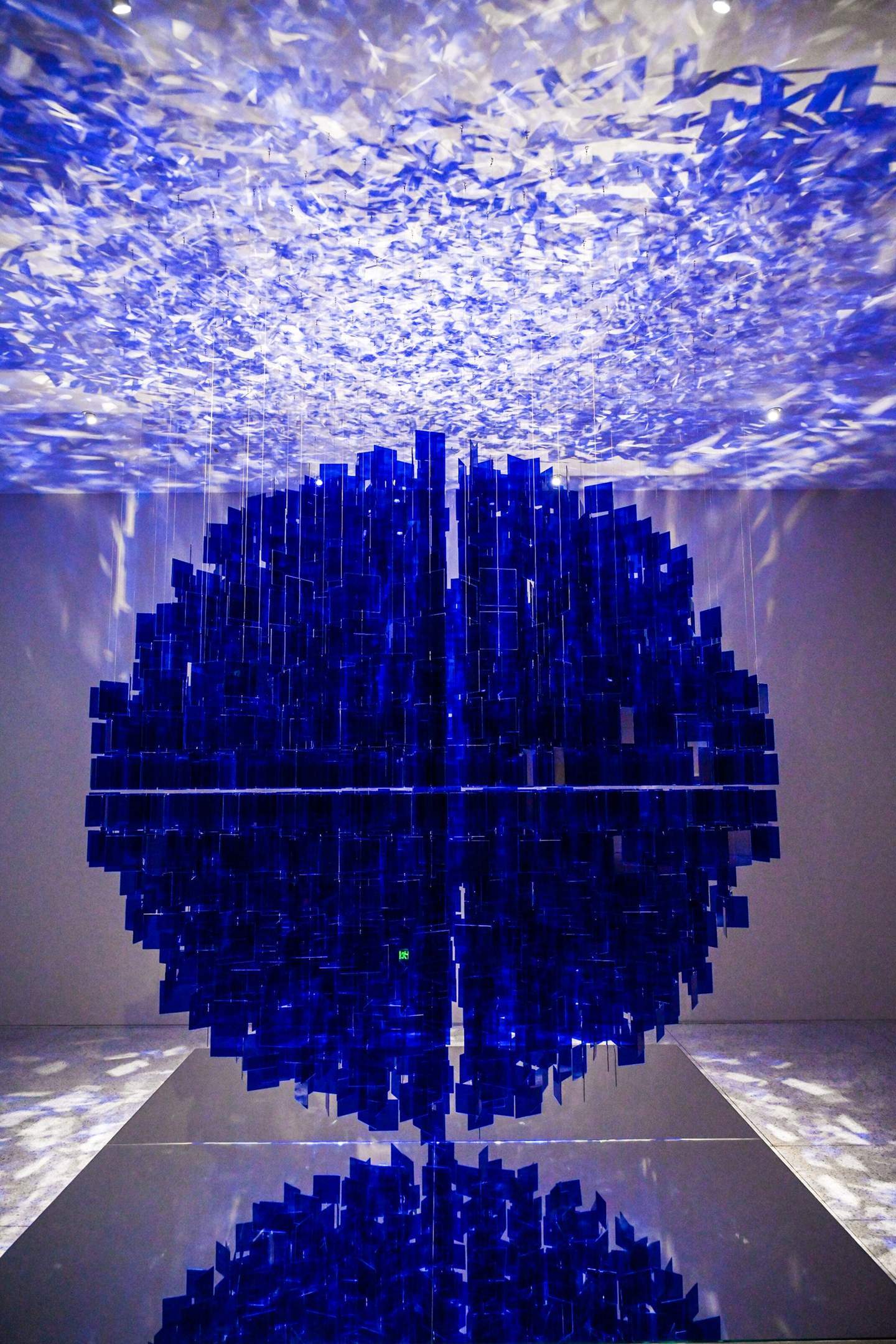
I think the blue sphere really surprised me, and I think it surprises people because it is just sheets of blue perspex. But the way that Julio wanted it to be lit, the inclusion of the mirror underneath it, the projection that it places on the wall is so infinitely deep, and yet compact. It's certainly one that surprised me, having seen it unlit when you were installing, and then suddenly... seeing it in action: it's a whole new experience.
Julio Le Parc: Light. Colour. Action.
11 June 2026 – 3 May 2027, Tate Modern, Bankside, SW1P 4RG
Don't forget to check in and leave your review on the gowithYamo app!