

Visualising the Zodiac: Pisces
February 19, 2026
No items found.

In this brand-new gowithYamo series, Visualising the Zodiac, we explore ways in which art and astrology meet in an unexpected cosmic crossover. Each month, art historian and writer Melissa Baksh pairs a zodiac sign with a work of art that embodies its essence through its artistic style and tone.
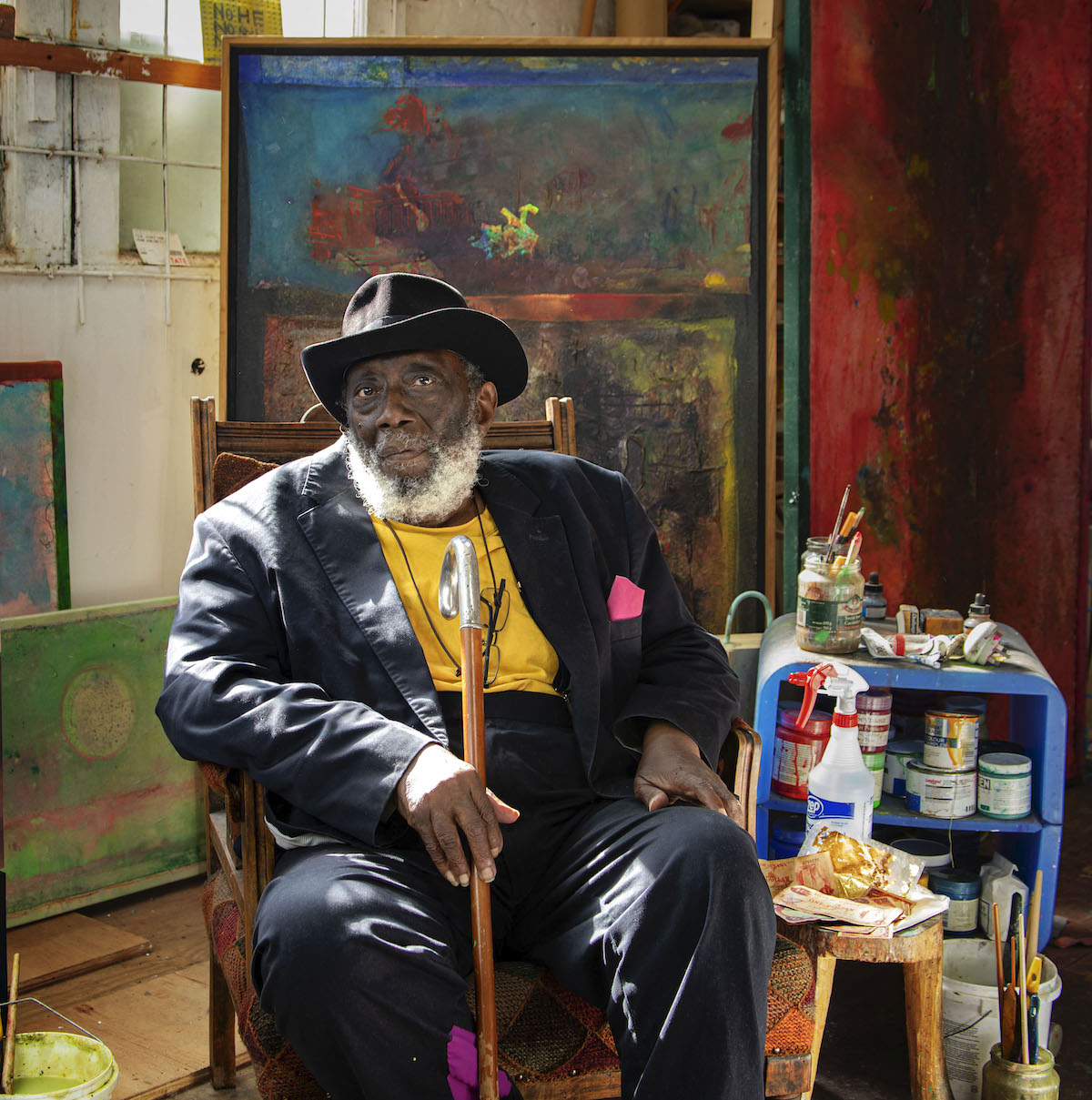
This month belongs to dreamy Pisces, the twelfth and final sign of the Zodiac. Symbolised by two fish swimming in opposite directions, Pisces oscillates between real and imagined worlds. Essentially, this means: do not ask them to come to a decision on where to go for dinner, as they are likely too busy getting lost in a daydream. Known for their creativity and artistic flair, Pisces are the most sensitive and intuitive of the signs. A work that best embodies Pisces’ watery nature is Frank Bowling’s Barticaborn I, created in 1967. This month’s pairing also presents a double-whammy of alignment, as Bowling is a proud February Pisces.
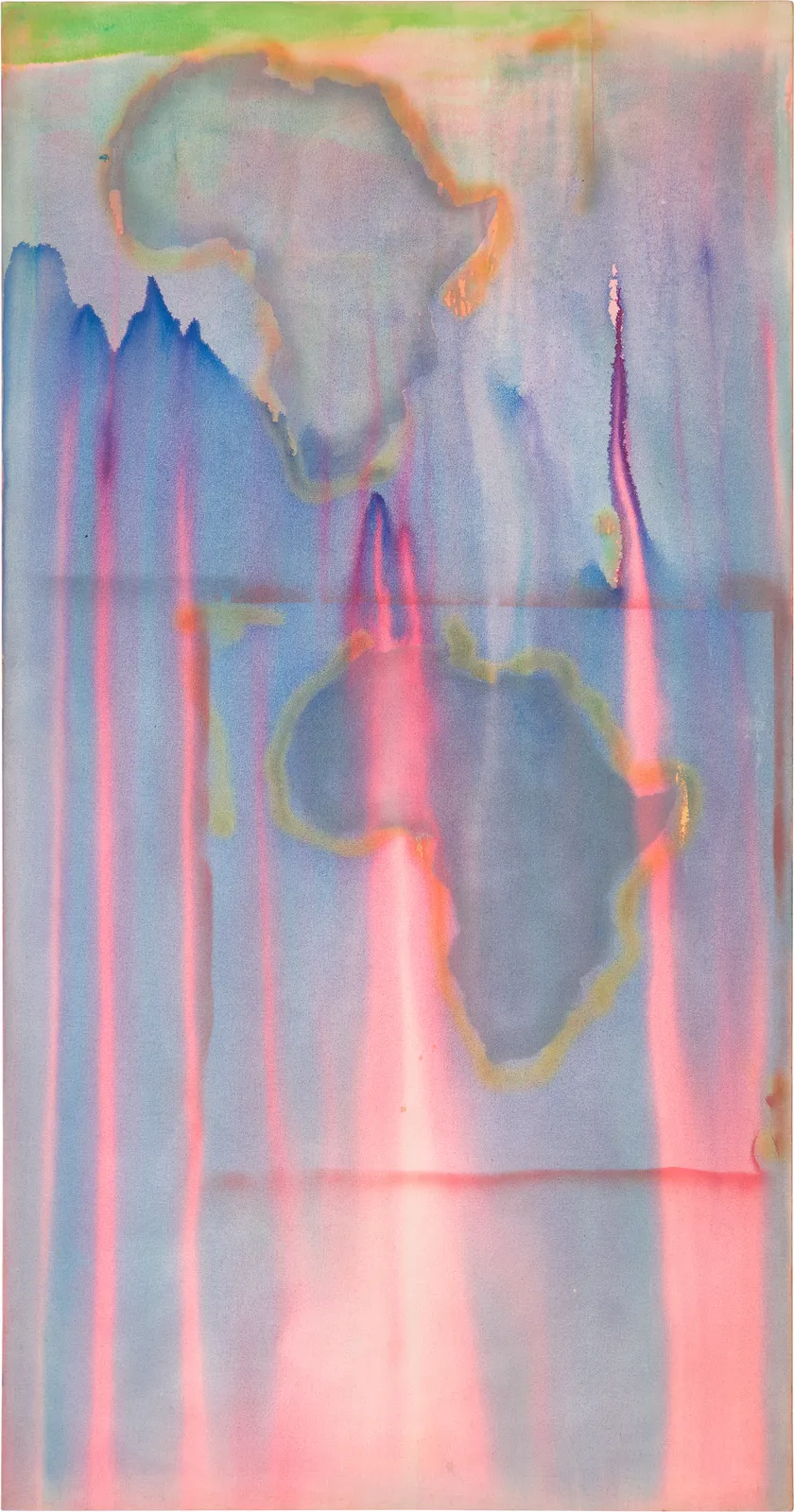
Barticaborn I, Frank Bowling, 1967

At over 2 metres high, this large-scale abstract work is one you can effortlessly lose yourself in, Pisces or otherwise. Renowned as an artist who “pushes the possibilities of paint”, Bowling’s practice feels almost alchemic. Here, the work’s broad, expansive washes of colour - achieved through fluid application of acrylic paint - is paired with looser drips, washes and stains; characteristic of Bowling’s unique and experimental style. The muted, cool purple tones, married with luminous bleeds of electric pink that ignite through the canvas, take you on a journey of both rest and play. Moreover, the way the pink has been poured, meandering in an upwards motion, seems counterintuitive and speaks to Pisces’ escapist, idealist nature. 

The work – alongside much of Bowling’s oeuvre – wholeheartedly encapsulates Pisces’ watery element. Over the course of six decades, Bowling has developed his inimitable practice with techniques including soaking his canvases in water and pouring water across them, firstly working on the floor and then the wall. He also applies paint in highly inventive ways, such as staining, spraying and pouring; namely in his ‘Pour paintings’, for which he built a tilting platform, enabling him to pour from heights of up to six feet. Aquatic to their core, Bowling’s Studio Assistant and close friend Spencer Richards once said: “There’s so much water in his work, I’m surprised the paintings don’t drown.”
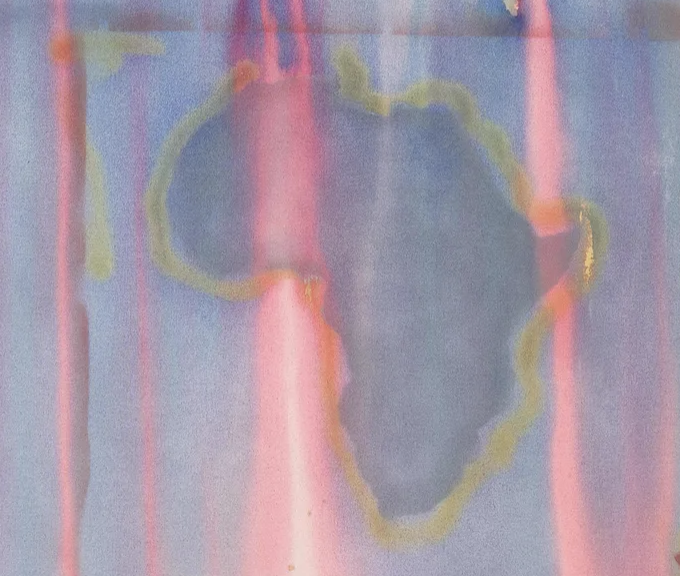
Close-up of Barticaborn I, 1967

Bowling’s predilection for water is perhaps unsurprising given his early life. The title of the work references the town of Bartica in Guyana, the place of Bowling’s birth. Located at the edge of the Amazon rainforest, Bartica sits on the west bank of the Essequibo River, where the Cuyuni and Mazaruni Rivers meet. Guyana also means ‘Land of Many Waters’ in Amerindian, due to its plentiful rivers, waterfalls and unspoilt natural beauty. Bowling left Guyana at the age of 19, but the country and its landscape has remained an integral part of his practice to this day.

Bowling is said to have a distinctly ‘Transatlantic practice’, with him describing having one foot in London and the other in America. Born in Guyana in 1934, he moved to London in 1953; his Map Paintings were conceived during his time in New York (1966 – 1975). This notion of being pulled in multiple directions speaks to the duality of Pisces’ nature; in constant negotiation between the material world and dream-like introspection.  

This work is one of Bowling’s iconic Map Paintings series, completed between 1967-71, and was exhibited in his acclaimed retrospective at Tate Modern in 2019. The Map Paintings feature stencilled maps of Guyana, South America, Africa and Australia, which emerge subtly within abstract fields of colour; their layering explores the complexities of migration, diaspora and the Transatlantic experience. Here, a map of Africa, with its softly diffused outlines, appears just-visible, like a distant memory resurfacing or the remnants of a mottled dream. They exist neither here nor there, but in a liminal space. This nod to a subconscious, inner world beyond earthly perception feels markedly Piscean.

As the human sponges of the zodiac, super-sensitive Pisces absorb it all - energies and emotions alike. Similarly porous, soaked and saturated in the best possible way, Bowling’s works are innately Piscean – both guided by water and made up of it.

Melissa Baksh
Read more about...
No items found.
No items found.
19/02/2026
Discussion
Melissa Baksh
Visualising the Zodiac: Pisces
Written by
Melissa Baksh
Date Published
19/02/2026
No items found.

In this brand-new gowithYamo series, Visualising the Zodiac, we explore ways in which art and astrology meet in an unexpected cosmic crossover. Each month, art historian and writer Melissa Baksh pairs a zodiac sign with a work of art that embodies its essence through its artistic style and tone.

This month belongs to dreamy Pisces, the twelfth and final sign of the Zodiac. Symbolised by two fish swimming in opposite directions, Pisces oscillates between real and imagined worlds. Essentially, this means: do not ask them to come to a decision on where to go for dinner, as they are likely too busy getting lost in a daydream. Known for their creativity and artistic flair, Pisces are the most sensitive and intuitive of the signs. A work that best embodies Pisces’ watery nature is Frank Bowling’s Barticaborn I, created in 1967. This month’s pairing also presents a double-whammy of alignment, as Bowling is a proud February Pisces.

Barticaborn I, Frank Bowling, 1967

At over 2 metres high, this large-scale abstract work is one you can effortlessly lose yourself in, Pisces or otherwise. Renowned as an artist who “pushes the possibilities of paint”, Bowling’s practice feels almost alchemic. Here, the work’s broad, expansive washes of colour - achieved through fluid application of acrylic paint - is paired with looser drips, washes and stains; characteristic of Bowling’s unique and experimental style. The muted, cool purple tones, married with luminous bleeds of electric pink that ignite through the canvas, take you on a journey of both rest and play. Moreover, the way the pink has been poured, meandering in an upwards motion, seems counterintuitive and speaks to Pisces’ escapist, idealist nature. 

The work – alongside much of Bowling’s oeuvre – wholeheartedly encapsulates Pisces’ watery element. Over the course of six decades, Bowling has developed his inimitable practice with techniques including soaking his canvases in water and pouring water across them, firstly working on the floor and then the wall. He also applies paint in highly inventive ways, such as staining, spraying and pouring; namely in his ‘Pour paintings’, for which he built a tilting platform, enabling him to pour from heights of up to six feet. Aquatic to their core, Bowling’s Studio Assistant and close friend Spencer Richards once said: “There’s so much water in his work, I’m surprised the paintings don’t drown.”

Close-up of Barticaborn I, 1967

Bowling’s predilection for water is perhaps unsurprising given his early life. The title of the work references the town of Bartica in Guyana, the place of Bowling’s birth. Located at the edge of the Amazon rainforest, Bartica sits on the west bank of the Essequibo River, where the Cuyuni and Mazaruni Rivers meet. Guyana also means ‘Land of Many Waters’ in Amerindian, due to its plentiful rivers, waterfalls and unspoilt natural beauty. Bowling left Guyana at the age of 19, but the country and its landscape has remained an integral part of his practice to this day.

Bowling is said to have a distinctly ‘Transatlantic practice’, with him describing having one foot in London and the other in America. Born in Guyana in 1934, he moved to London in 1953; his Map Paintings were conceived during his time in New York (1966 – 1975). This notion of being pulled in multiple directions speaks to the duality of Pisces’ nature; in constant negotiation between the material world and dream-like introspection.  

This work is one of Bowling’s iconic Map Paintings series, completed between 1967-71, and was exhibited in his acclaimed retrospective at Tate Modern in 2019. The Map Paintings feature stencilled maps of Guyana, South America, Africa and Australia, which emerge subtly within abstract fields of colour; their layering explores the complexities of migration, diaspora and the Transatlantic experience. Here, a map of Africa, with its softly diffused outlines, appears just-visible, like a distant memory resurfacing or the remnants of a mottled dream. They exist neither here nor there, but in a liminal space. This nod to a subconscious, inner world beyond earthly perception feels markedly Piscean.

As the human sponges of the zodiac, super-sensitive Pisces absorb it all - energies and emotions alike. Similarly porous, soaked and saturated in the best possible way, Bowling’s works are innately Piscean – both guided by water and made up of it.

Thanks for reading
Collect your 5 yamos below
REDEEM YAMOS
Visualising the Zodiac: Pisces
Discussion
Melissa Baksh
Written by
Melissa Baksh
Date Published
19/02/2026
No items found.

In this brand-new gowithYamo series, Visualising the Zodiac, we explore ways in which art and astrology meet in an unexpected cosmic crossover. Each month, art historian and writer Melissa Baksh pairs a zodiac sign with a work of art that embodies its essence through its artistic style and tone.

This month belongs to dreamy Pisces, the twelfth and final sign of the Zodiac. Symbolised by two fish swimming in opposite directions, Pisces oscillates between real and imagined worlds. Essentially, this means: do not ask them to come to a decision on where to go for dinner, as they are likely too busy getting lost in a daydream. Known for their creativity and artistic flair, Pisces are the most sensitive and intuitive of the signs. A work that best embodies Pisces’ watery nature is Frank Bowling’s Barticaborn I, created in 1967. This month’s pairing also presents a double-whammy of alignment, as Bowling is a proud February Pisces.

Barticaborn I, Frank Bowling, 1967

At over 2 metres high, this large-scale abstract work is one you can effortlessly lose yourself in, Pisces or otherwise. Renowned as an artist who “pushes the possibilities of paint”, Bowling’s practice feels almost alchemic. Here, the work’s broad, expansive washes of colour - achieved through fluid application of acrylic paint - is paired with looser drips, washes and stains; characteristic of Bowling’s unique and experimental style. The muted, cool purple tones, married with luminous bleeds of electric pink that ignite through the canvas, take you on a journey of both rest and play. Moreover, the way the pink has been poured, meandering in an upwards motion, seems counterintuitive and speaks to Pisces’ escapist, idealist nature. 

The work – alongside much of Bowling’s oeuvre – wholeheartedly encapsulates Pisces’ watery element. Over the course of six decades, Bowling has developed his inimitable practice with techniques including soaking his canvases in water and pouring water across them, firstly working on the floor and then the wall. He also applies paint in highly inventive ways, such as staining, spraying and pouring; namely in his ‘Pour paintings’, for which he built a tilting platform, enabling him to pour from heights of up to six feet. Aquatic to their core, Bowling’s Studio Assistant and close friend Spencer Richards once said: “There’s so much water in his work, I’m surprised the paintings don’t drown.”

Close-up of Barticaborn I, 1967

Bowling’s predilection for water is perhaps unsurprising given his early life. The title of the work references the town of Bartica in Guyana, the place of Bowling’s birth. Located at the edge of the Amazon rainforest, Bartica sits on the west bank of the Essequibo River, where the Cuyuni and Mazaruni Rivers meet. Guyana also means ‘Land of Many Waters’ in Amerindian, due to its plentiful rivers, waterfalls and unspoilt natural beauty. Bowling left Guyana at the age of 19, but the country and its landscape has remained an integral part of his practice to this day.

Bowling is said to have a distinctly ‘Transatlantic practice’, with him describing having one foot in London and the other in America. Born in Guyana in 1934, he moved to London in 1953; his Map Paintings were conceived during his time in New York (1966 – 1975). This notion of being pulled in multiple directions speaks to the duality of Pisces’ nature; in constant negotiation between the material world and dream-like introspection.  

This work is one of Bowling’s iconic Map Paintings series, completed between 1967-71, and was exhibited in his acclaimed retrospective at Tate Modern in 2019. The Map Paintings feature stencilled maps of Guyana, South America, Africa and Australia, which emerge subtly within abstract fields of colour; their layering explores the complexities of migration, diaspora and the Transatlantic experience. Here, a map of Africa, with its softly diffused outlines, appears just-visible, like a distant memory resurfacing or the remnants of a mottled dream. They exist neither here nor there, but in a liminal space. This nod to a subconscious, inner world beyond earthly perception feels markedly Piscean.

As the human sponges of the zodiac, super-sensitive Pisces absorb it all - energies and emotions alike. Similarly porous, soaked and saturated in the best possible way, Bowling’s works are innately Piscean – both guided by water and made up of it.

Thanks for reading
Collect your 5 yamos below
REDEEM YAMOS
19/02/2026
Discussion
Melissa Baksh
Visualising the Zodiac: Pisces
Written by
Melissa Baksh
Date Published
19/02/2026
No items found.

In this brand-new gowithYamo series, Visualising the Zodiac, we explore ways in which art and astrology meet in an unexpected cosmic crossover. Each month, art historian and writer Melissa Baksh pairs a zodiac sign with a work of art that embodies its essence through its artistic style and tone.

This month belongs to dreamy Pisces, the twelfth and final sign of the Zodiac. Symbolised by two fish swimming in opposite directions, Pisces oscillates between real and imagined worlds. Essentially, this means: do not ask them to come to a decision on where to go for dinner, as they are likely too busy getting lost in a daydream. Known for their creativity and artistic flair, Pisces are the most sensitive and intuitive of the signs. A work that best embodies Pisces’ watery nature is Frank Bowling’s Barticaborn I, created in 1967. This month’s pairing also presents a double-whammy of alignment, as Bowling is a proud February Pisces.

Barticaborn I, Frank Bowling, 1967

At over 2 metres high, this large-scale abstract work is one you can effortlessly lose yourself in, Pisces or otherwise. Renowned as an artist who “pushes the possibilities of paint”, Bowling’s practice feels almost alchemic. Here, the work’s broad, expansive washes of colour - achieved through fluid application of acrylic paint - is paired with looser drips, washes and stains; characteristic of Bowling’s unique and experimental style. The muted, cool purple tones, married with luminous bleeds of electric pink that ignite through the canvas, take you on a journey of both rest and play. Moreover, the way the pink has been poured, meandering in an upwards motion, seems counterintuitive and speaks to Pisces’ escapist, idealist nature. 

The work – alongside much of Bowling’s oeuvre – wholeheartedly encapsulates Pisces’ watery element. Over the course of six decades, Bowling has developed his inimitable practice with techniques including soaking his canvases in water and pouring water across them, firstly working on the floor and then the wall. He also applies paint in highly inventive ways, such as staining, spraying and pouring; namely in his ‘Pour paintings’, for which he built a tilting platform, enabling him to pour from heights of up to six feet. Aquatic to their core, Bowling’s Studio Assistant and close friend Spencer Richards once said: “There’s so much water in his work, I’m surprised the paintings don’t drown.”

Close-up of Barticaborn I, 1967

Bowling’s predilection for water is perhaps unsurprising given his early life. The title of the work references the town of Bartica in Guyana, the place of Bowling’s birth. Located at the edge of the Amazon rainforest, Bartica sits on the west bank of the Essequibo River, where the Cuyuni and Mazaruni Rivers meet. Guyana also means ‘Land of Many Waters’ in Amerindian, due to its plentiful rivers, waterfalls and unspoilt natural beauty. Bowling left Guyana at the age of 19, but the country and its landscape has remained an integral part of his practice to this day.

Bowling is said to have a distinctly ‘Transatlantic practice’, with him describing having one foot in London and the other in America. Born in Guyana in 1934, he moved to London in 1953; his Map Paintings were conceived during his time in New York (1966 – 1975). This notion of being pulled in multiple directions speaks to the duality of Pisces’ nature; in constant negotiation between the material world and dream-like introspection.  

This work is one of Bowling’s iconic Map Paintings series, completed between 1967-71, and was exhibited in his acclaimed retrospective at Tate Modern in 2019. The Map Paintings feature stencilled maps of Guyana, South America, Africa and Australia, which emerge subtly within abstract fields of colour; their layering explores the complexities of migration, diaspora and the Transatlantic experience. Here, a map of Africa, with its softly diffused outlines, appears just-visible, like a distant memory resurfacing or the remnants of a mottled dream. They exist neither here nor there, but in a liminal space. This nod to a subconscious, inner world beyond earthly perception feels markedly Piscean.

As the human sponges of the zodiac, super-sensitive Pisces absorb it all - energies and emotions alike. Similarly porous, soaked and saturated in the best possible way, Bowling’s works are innately Piscean – both guided by water and made up of it.

Thanks for reading
Collect your 5 yamos below
REDEEM YAMOS
19/02/2026
Discussion
Melissa Baksh
Visualising the Zodiac: Pisces
Written by
Melissa Baksh
Date Published
19/02/2026
No items found.

In this brand-new gowithYamo series, Visualising the Zodiac, we explore ways in which art and astrology meet in an unexpected cosmic crossover. Each month, art historian and writer Melissa Baksh pairs a zodiac sign with a work of art that embodies its essence through its artistic style and tone.

This month belongs to dreamy Pisces, the twelfth and final sign of the Zodiac. Symbolised by two fish swimming in opposite directions, Pisces oscillates between real and imagined worlds. Essentially, this means: do not ask them to come to a decision on where to go for dinner, as they are likely too busy getting lost in a daydream. Known for their creativity and artistic flair, Pisces are the most sensitive and intuitive of the signs. A work that best embodies Pisces’ watery nature is Frank Bowling’s Barticaborn I, created in 1967. This month’s pairing also presents a double-whammy of alignment, as Bowling is a proud February Pisces.

Barticaborn I, Frank Bowling, 1967

At over 2 metres high, this large-scale abstract work is one you can effortlessly lose yourself in, Pisces or otherwise. Renowned as an artist who “pushes the possibilities of paint”, Bowling’s practice feels almost alchemic. Here, the work’s broad, expansive washes of colour - achieved through fluid application of acrylic paint - is paired with looser drips, washes and stains; characteristic of Bowling’s unique and experimental style. The muted, cool purple tones, married with luminous bleeds of electric pink that ignite through the canvas, take you on a journey of both rest and play. Moreover, the way the pink has been poured, meandering in an upwards motion, seems counterintuitive and speaks to Pisces’ escapist, idealist nature. 

The work – alongside much of Bowling’s oeuvre – wholeheartedly encapsulates Pisces’ watery element. Over the course of six decades, Bowling has developed his inimitable practice with techniques including soaking his canvases in water and pouring water across them, firstly working on the floor and then the wall. He also applies paint in highly inventive ways, such as staining, spraying and pouring; namely in his ‘Pour paintings’, for which he built a tilting platform, enabling him to pour from heights of up to six feet. Aquatic to their core, Bowling’s Studio Assistant and close friend Spencer Richards once said: “There’s so much water in his work, I’m surprised the paintings don’t drown.”

Close-up of Barticaborn I, 1967

Bowling’s predilection for water is perhaps unsurprising given his early life. The title of the work references the town of Bartica in Guyana, the place of Bowling’s birth. Located at the edge of the Amazon rainforest, Bartica sits on the west bank of the Essequibo River, where the Cuyuni and Mazaruni Rivers meet. Guyana also means ‘Land of Many Waters’ in Amerindian, due to its plentiful rivers, waterfalls and unspoilt natural beauty. Bowling left Guyana at the age of 19, but the country and its landscape has remained an integral part of his practice to this day.

Bowling is said to have a distinctly ‘Transatlantic practice’, with him describing having one foot in London and the other in America. Born in Guyana in 1934, he moved to London in 1953; his Map Paintings were conceived during his time in New York (1966 – 1975). This notion of being pulled in multiple directions speaks to the duality of Pisces’ nature; in constant negotiation between the material world and dream-like introspection.  

This work is one of Bowling’s iconic Map Paintings series, completed between 1967-71, and was exhibited in his acclaimed retrospective at Tate Modern in 2019. The Map Paintings feature stencilled maps of Guyana, South America, Africa and Australia, which emerge subtly within abstract fields of colour; their layering explores the complexities of migration, diaspora and the Transatlantic experience. Here, a map of Africa, with its softly diffused outlines, appears just-visible, like a distant memory resurfacing or the remnants of a mottled dream. They exist neither here nor there, but in a liminal space. This nod to a subconscious, inner world beyond earthly perception feels markedly Piscean.

As the human sponges of the zodiac, super-sensitive Pisces absorb it all - energies and emotions alike. Similarly porous, soaked and saturated in the best possible way, Bowling’s works are innately Piscean – both guided by water and made up of it.

Thanks for reading
Collect your 5 yamos below
REDEEM YAMOS
19/02/2026
Discussion
Melissa Baksh
Visualising the Zodiac: Pisces
Written by
Melissa Baksh
Date Published
19/02/2026
No items found.

In this brand-new gowithYamo series, Visualising the Zodiac, we explore ways in which art and astrology meet in an unexpected cosmic crossover. Each month, art historian and writer Melissa Baksh pairs a zodiac sign with a work of art that embodies its essence through its artistic style and tone.

This month belongs to dreamy Pisces, the twelfth and final sign of the Zodiac. Symbolised by two fish swimming in opposite directions, Pisces oscillates between real and imagined worlds. Essentially, this means: do not ask them to come to a decision on where to go for dinner, as they are likely too busy getting lost in a daydream. Known for their creativity and artistic flair, Pisces are the most sensitive and intuitive of the signs. A work that best embodies Pisces’ watery nature is Frank Bowling’s Barticaborn I, created in 1967. This month’s pairing also presents a double-whammy of alignment, as Bowling is a proud February Pisces.

Barticaborn I, Frank Bowling, 1967

At over 2 metres high, this large-scale abstract work is one you can effortlessly lose yourself in, Pisces or otherwise. Renowned as an artist who “pushes the possibilities of paint”, Bowling’s practice feels almost alchemic. Here, the work’s broad, expansive washes of colour - achieved through fluid application of acrylic paint - is paired with looser drips, washes and stains; characteristic of Bowling’s unique and experimental style. The muted, cool purple tones, married with luminous bleeds of electric pink that ignite through the canvas, take you on a journey of both rest and play. Moreover, the way the pink has been poured, meandering in an upwards motion, seems counterintuitive and speaks to Pisces’ escapist, idealist nature. 

The work – alongside much of Bowling’s oeuvre – wholeheartedly encapsulates Pisces’ watery element. Over the course of six decades, Bowling has developed his inimitable practice with techniques including soaking his canvases in water and pouring water across them, firstly working on the floor and then the wall. He also applies paint in highly inventive ways, such as staining, spraying and pouring; namely in his ‘Pour paintings’, for which he built a tilting platform, enabling him to pour from heights of up to six feet. Aquatic to their core, Bowling’s Studio Assistant and close friend Spencer Richards once said: “There’s so much water in his work, I’m surprised the paintings don’t drown.”

Close-up of Barticaborn I, 1967

Bowling’s predilection for water is perhaps unsurprising given his early life. The title of the work references the town of Bartica in Guyana, the place of Bowling’s birth. Located at the edge of the Amazon rainforest, Bartica sits on the west bank of the Essequibo River, where the Cuyuni and Mazaruni Rivers meet. Guyana also means ‘Land of Many Waters’ in Amerindian, due to its plentiful rivers, waterfalls and unspoilt natural beauty. Bowling left Guyana at the age of 19, but the country and its landscape has remained an integral part of his practice to this day.

Bowling is said to have a distinctly ‘Transatlantic practice’, with him describing having one foot in London and the other in America. Born in Guyana in 1934, he moved to London in 1953; his Map Paintings were conceived during his time in New York (1966 – 1975). This notion of being pulled in multiple directions speaks to the duality of Pisces’ nature; in constant negotiation between the material world and dream-like introspection.  

This work is one of Bowling’s iconic Map Paintings series, completed between 1967-71, and was exhibited in his acclaimed retrospective at Tate Modern in 2019. The Map Paintings feature stencilled maps of Guyana, South America, Africa and Australia, which emerge subtly within abstract fields of colour; their layering explores the complexities of migration, diaspora and the Transatlantic experience. Here, a map of Africa, with its softly diffused outlines, appears just-visible, like a distant memory resurfacing or the remnants of a mottled dream. They exist neither here nor there, but in a liminal space. This nod to a subconscious, inner world beyond earthly perception feels markedly Piscean.

As the human sponges of the zodiac, super-sensitive Pisces absorb it all - energies and emotions alike. Similarly porous, soaked and saturated in the best possible way, Bowling’s works are innately Piscean – both guided by water and made up of it.

Thanks for reading
Collect your 5 yamos below
REDEEM YAMOS
Written by
Melissa Baksh
Date Published
19/02/2026
No items found.
19/02/2026
Discussion
Melissa Baksh
Visualising the Zodiac: Pisces

In this brand-new gowithYamo series, Visualising the Zodiac, we explore ways in which art and astrology meet in an unexpected cosmic crossover. Each month, art historian and writer Melissa Baksh pairs a zodiac sign with a work of art that embodies its essence through its artistic style and tone.

This month belongs to dreamy Pisces, the twelfth and final sign of the Zodiac. Symbolised by two fish swimming in opposite directions, Pisces oscillates between real and imagined worlds. Essentially, this means: do not ask them to come to a decision on where to go for dinner, as they are likely too busy getting lost in a daydream. Known for their creativity and artistic flair, Pisces are the most sensitive and intuitive of the signs. A work that best embodies Pisces’ watery nature is Frank Bowling’s Barticaborn I, created in 1967. This month’s pairing also presents a double-whammy of alignment, as Bowling is a proud February Pisces.

Barticaborn I, Frank Bowling, 1967

At over 2 metres high, this large-scale abstract work is one you can effortlessly lose yourself in, Pisces or otherwise. Renowned as an artist who “pushes the possibilities of paint”, Bowling’s practice feels almost alchemic. Here, the work’s broad, expansive washes of colour - achieved through fluid application of acrylic paint - is paired with looser drips, washes and stains; characteristic of Bowling’s unique and experimental style. The muted, cool purple tones, married with luminous bleeds of electric pink that ignite through the canvas, take you on a journey of both rest and play. Moreover, the way the pink has been poured, meandering in an upwards motion, seems counterintuitive and speaks to Pisces’ escapist, idealist nature. 

The work – alongside much of Bowling’s oeuvre – wholeheartedly encapsulates Pisces’ watery element. Over the course of six decades, Bowling has developed his inimitable practice with techniques including soaking his canvases in water and pouring water across them, firstly working on the floor and then the wall. He also applies paint in highly inventive ways, such as staining, spraying and pouring; namely in his ‘Pour paintings’, for which he built a tilting platform, enabling him to pour from heights of up to six feet. Aquatic to their core, Bowling’s Studio Assistant and close friend Spencer Richards once said: “There’s so much water in his work, I’m surprised the paintings don’t drown.”

Close-up of Barticaborn I, 1967

Bowling’s predilection for water is perhaps unsurprising given his early life. The title of the work references the town of Bartica in Guyana, the place of Bowling’s birth. Located at the edge of the Amazon rainforest, Bartica sits on the west bank of the Essequibo River, where the Cuyuni and Mazaruni Rivers meet. Guyana also means ‘Land of Many Waters’ in Amerindian, due to its plentiful rivers, waterfalls and unspoilt natural beauty. Bowling left Guyana at the age of 19, but the country and its landscape has remained an integral part of his practice to this day.

Bowling is said to have a distinctly ‘Transatlantic practice’, with him describing having one foot in London and the other in America. Born in Guyana in 1934, he moved to London in 1953; his Map Paintings were conceived during his time in New York (1966 – 1975). This notion of being pulled in multiple directions speaks to the duality of Pisces’ nature; in constant negotiation between the material world and dream-like introspection.  

This work is one of Bowling’s iconic Map Paintings series, completed between 1967-71, and was exhibited in his acclaimed retrospective at Tate Modern in 2019. The Map Paintings feature stencilled maps of Guyana, South America, Africa and Australia, which emerge subtly within abstract fields of colour; their layering explores the complexities of migration, diaspora and the Transatlantic experience. Here, a map of Africa, with its softly diffused outlines, appears just-visible, like a distant memory resurfacing or the remnants of a mottled dream. They exist neither here nor there, but in a liminal space. This nod to a subconscious, inner world beyond earthly perception feels markedly Piscean.

As the human sponges of the zodiac, super-sensitive Pisces absorb it all - energies and emotions alike. Similarly porous, soaked and saturated in the best possible way, Bowling’s works are innately Piscean – both guided by water and made up of it.

Thanks for reading
Collect your 5 yamos below
REDEEM YAMOS
Visualising the Zodiac: Pisces
19/02/2026
Discussion
Melissa Baksh
Written by
Melissa Baksh
Date Published
19/02/2026
No items found.

In this brand-new gowithYamo series, Visualising the Zodiac, we explore ways in which art and astrology meet in an unexpected cosmic crossover. Each month, art historian and writer Melissa Baksh pairs a zodiac sign with a work of art that embodies its essence through its artistic style and tone.

This month belongs to dreamy Pisces, the twelfth and final sign of the Zodiac. Symbolised by two fish swimming in opposite directions, Pisces oscillates between real and imagined worlds. Essentially, this means: do not ask them to come to a decision on where to go for dinner, as they are likely too busy getting lost in a daydream. Known for their creativity and artistic flair, Pisces are the most sensitive and intuitive of the signs. A work that best embodies Pisces’ watery nature is Frank Bowling’s Barticaborn I, created in 1967. This month’s pairing also presents a double-whammy of alignment, as Bowling is a proud February Pisces.

Barticaborn I, Frank Bowling, 1967

At over 2 metres high, this large-scale abstract work is one you can effortlessly lose yourself in, Pisces or otherwise. Renowned as an artist who “pushes the possibilities of paint”, Bowling’s practice feels almost alchemic. Here, the work’s broad, expansive washes of colour - achieved through fluid application of acrylic paint - is paired with looser drips, washes and stains; characteristic of Bowling’s unique and experimental style. The muted, cool purple tones, married with luminous bleeds of electric pink that ignite through the canvas, take you on a journey of both rest and play. Moreover, the way the pink has been poured, meandering in an upwards motion, seems counterintuitive and speaks to Pisces’ escapist, idealist nature. 

The work – alongside much of Bowling’s oeuvre – wholeheartedly encapsulates Pisces’ watery element. Over the course of six decades, Bowling has developed his inimitable practice with techniques including soaking his canvases in water and pouring water across them, firstly working on the floor and then the wall. He also applies paint in highly inventive ways, such as staining, spraying and pouring; namely in his ‘Pour paintings’, for which he built a tilting platform, enabling him to pour from heights of up to six feet. Aquatic to their core, Bowling’s Studio Assistant and close friend Spencer Richards once said: “There’s so much water in his work, I’m surprised the paintings don’t drown.”

Close-up of Barticaborn I, 1967

Bowling’s predilection for water is perhaps unsurprising given his early life. The title of the work references the town of Bartica in Guyana, the place of Bowling’s birth. Located at the edge of the Amazon rainforest, Bartica sits on the west bank of the Essequibo River, where the Cuyuni and Mazaruni Rivers meet. Guyana also means ‘Land of Many Waters’ in Amerindian, due to its plentiful rivers, waterfalls and unspoilt natural beauty. Bowling left Guyana at the age of 19, but the country and its landscape has remained an integral part of his practice to this day.

Bowling is said to have a distinctly ‘Transatlantic practice’, with him describing having one foot in London and the other in America. Born in Guyana in 1934, he moved to London in 1953; his Map Paintings were conceived during his time in New York (1966 – 1975). This notion of being pulled in multiple directions speaks to the duality of Pisces’ nature; in constant negotiation between the material world and dream-like introspection.  

This work is one of Bowling’s iconic Map Paintings series, completed between 1967-71, and was exhibited in his acclaimed retrospective at Tate Modern in 2019. The Map Paintings feature stencilled maps of Guyana, South America, Africa and Australia, which emerge subtly within abstract fields of colour; their layering explores the complexities of migration, diaspora and the Transatlantic experience. Here, a map of Africa, with its softly diffused outlines, appears just-visible, like a distant memory resurfacing or the remnants of a mottled dream. They exist neither here nor there, but in a liminal space. This nod to a subconscious, inner world beyond earthly perception feels markedly Piscean.

As the human sponges of the zodiac, super-sensitive Pisces absorb it all - energies and emotions alike. Similarly porous, soaked and saturated in the best possible way, Bowling’s works are innately Piscean – both guided by water and made up of it.

Thanks for reading
Collect your 5 yamos below
REDEEM YAMOS
Visualising the Zodiac: Pisces
Written by
Melissa Baksh
Date Published
19/02/2026
19/02/2026
Discussion
Melissa Baksh

In this brand-new gowithYamo series, Visualising the Zodiac, we explore ways in which art and astrology meet in an unexpected cosmic crossover. Each month, art historian and writer Melissa Baksh pairs a zodiac sign with a work of art that embodies its essence through its artistic style and tone.

This month belongs to dreamy Pisces, the twelfth and final sign of the Zodiac. Symbolised by two fish swimming in opposite directions, Pisces oscillates between real and imagined worlds. Essentially, this means: do not ask them to come to a decision on where to go for dinner, as they are likely too busy getting lost in a daydream. Known for their creativity and artistic flair, Pisces are the most sensitive and intuitive of the signs. A work that best embodies Pisces’ watery nature is Frank Bowling’s Barticaborn I, created in 1967. This month’s pairing also presents a double-whammy of alignment, as Bowling is a proud February Pisces.

Barticaborn I, Frank Bowling, 1967

At over 2 metres high, this large-scale abstract work is one you can effortlessly lose yourself in, Pisces or otherwise. Renowned as an artist who “pushes the possibilities of paint”, Bowling’s practice feels almost alchemic. Here, the work’s broad, expansive washes of colour - achieved through fluid application of acrylic paint - is paired with looser drips, washes and stains; characteristic of Bowling’s unique and experimental style. The muted, cool purple tones, married with luminous bleeds of electric pink that ignite through the canvas, take you on a journey of both rest and play. Moreover, the way the pink has been poured, meandering in an upwards motion, seems counterintuitive and speaks to Pisces’ escapist, idealist nature. 

The work – alongside much of Bowling’s oeuvre – wholeheartedly encapsulates Pisces’ watery element. Over the course of six decades, Bowling has developed his inimitable practice with techniques including soaking his canvases in water and pouring water across them, firstly working on the floor and then the wall. He also applies paint in highly inventive ways, such as staining, spraying and pouring; namely in his ‘Pour paintings’, for which he built a tilting platform, enabling him to pour from heights of up to six feet. Aquatic to their core, Bowling’s Studio Assistant and close friend Spencer Richards once said: “There’s so much water in his work, I’m surprised the paintings don’t drown.”

Close-up of Barticaborn I, 1967

Bowling’s predilection for water is perhaps unsurprising given his early life. The title of the work references the town of Bartica in Guyana, the place of Bowling’s birth. Located at the edge of the Amazon rainforest, Bartica sits on the west bank of the Essequibo River, where the Cuyuni and Mazaruni Rivers meet. Guyana also means ‘Land of Many Waters’ in Amerindian, due to its plentiful rivers, waterfalls and unspoilt natural beauty. Bowling left Guyana at the age of 19, but the country and its landscape has remained an integral part of his practice to this day.

Bowling is said to have a distinctly ‘Transatlantic practice’, with him describing having one foot in London and the other in America. Born in Guyana in 1934, he moved to London in 1953; his Map Paintings were conceived during his time in New York (1966 – 1975). This notion of being pulled in multiple directions speaks to the duality of Pisces’ nature; in constant negotiation between the material world and dream-like introspection.  

This work is one of Bowling’s iconic Map Paintings series, completed between 1967-71, and was exhibited in his acclaimed retrospective at Tate Modern in 2019. The Map Paintings feature stencilled maps of Guyana, South America, Africa and Australia, which emerge subtly within abstract fields of colour; their layering explores the complexities of migration, diaspora and the Transatlantic experience. Here, a map of Africa, with its softly diffused outlines, appears just-visible, like a distant memory resurfacing or the remnants of a mottled dream. They exist neither here nor there, but in a liminal space. This nod to a subconscious, inner world beyond earthly perception feels markedly Piscean.

As the human sponges of the zodiac, super-sensitive Pisces absorb it all - energies and emotions alike. Similarly porous, soaked and saturated in the best possible way, Bowling’s works are innately Piscean – both guided by water and made up of it.

Thanks for reading
Collect your 5 yamos below
REDEEM YAMOS
Visualising the Zodiac: Pisces
Written by
Melissa Baksh
Date Published
19/02/2026
No items found.
19/02/2026
Discussion
Melissa Baksh

In this brand-new gowithYamo series, Visualising the Zodiac, we explore ways in which art and astrology meet in an unexpected cosmic crossover. Each month, art historian and writer Melissa Baksh pairs a zodiac sign with a work of art that embodies its essence through its artistic style and tone.

This month belongs to dreamy Pisces, the twelfth and final sign of the Zodiac. Symbolised by two fish swimming in opposite directions, Pisces oscillates between real and imagined worlds. Essentially, this means: do not ask them to come to a decision on where to go for dinner, as they are likely too busy getting lost in a daydream. Known for their creativity and artistic flair, Pisces are the most sensitive and intuitive of the signs. A work that best embodies Pisces’ watery nature is Frank Bowling’s Barticaborn I, created in 1967. This month’s pairing also presents a double-whammy of alignment, as Bowling is a proud February Pisces.

Barticaborn I, Frank Bowling, 1967

At over 2 metres high, this large-scale abstract work is one you can effortlessly lose yourself in, Pisces or otherwise. Renowned as an artist who “pushes the possibilities of paint”, Bowling’s practice feels almost alchemic. Here, the work’s broad, expansive washes of colour - achieved through fluid application of acrylic paint - is paired with looser drips, washes and stains; characteristic of Bowling’s unique and experimental style. The muted, cool purple tones, married with luminous bleeds of electric pink that ignite through the canvas, take you on a journey of both rest and play. Moreover, the way the pink has been poured, meandering in an upwards motion, seems counterintuitive and speaks to Pisces’ escapist, idealist nature. 

The work – alongside much of Bowling’s oeuvre – wholeheartedly encapsulates Pisces’ watery element. Over the course of six decades, Bowling has developed his inimitable practice with techniques including soaking his canvases in water and pouring water across them, firstly working on the floor and then the wall. He also applies paint in highly inventive ways, such as staining, spraying and pouring; namely in his ‘Pour paintings’, for which he built a tilting platform, enabling him to pour from heights of up to six feet. Aquatic to their core, Bowling’s Studio Assistant and close friend Spencer Richards once said: “There’s so much water in his work, I’m surprised the paintings don’t drown.”

Close-up of Barticaborn I, 1967

Bowling’s predilection for water is perhaps unsurprising given his early life. The title of the work references the town of Bartica in Guyana, the place of Bowling’s birth. Located at the edge of the Amazon rainforest, Bartica sits on the west bank of the Essequibo River, where the Cuyuni and Mazaruni Rivers meet. Guyana also means ‘Land of Many Waters’ in Amerindian, due to its plentiful rivers, waterfalls and unspoilt natural beauty. Bowling left Guyana at the age of 19, but the country and its landscape has remained an integral part of his practice to this day.

Bowling is said to have a distinctly ‘Transatlantic practice’, with him describing having one foot in London and the other in America. Born in Guyana in 1934, he moved to London in 1953; his Map Paintings were conceived during his time in New York (1966 – 1975). This notion of being pulled in multiple directions speaks to the duality of Pisces’ nature; in constant negotiation between the material world and dream-like introspection.  

This work is one of Bowling’s iconic Map Paintings series, completed between 1967-71, and was exhibited in his acclaimed retrospective at Tate Modern in 2019. The Map Paintings feature stencilled maps of Guyana, South America, Africa and Australia, which emerge subtly within abstract fields of colour; their layering explores the complexities of migration, diaspora and the Transatlantic experience. Here, a map of Africa, with its softly diffused outlines, appears just-visible, like a distant memory resurfacing or the remnants of a mottled dream. They exist neither here nor there, but in a liminal space. This nod to a subconscious, inner world beyond earthly perception feels markedly Piscean.

As the human sponges of the zodiac, super-sensitive Pisces absorb it all - energies and emotions alike. Similarly porous, soaked and saturated in the best possible way, Bowling’s works are innately Piscean – both guided by water and made up of it.

Thanks for reading
Collect your 5 yamos below
REDEEM YAMOS
19/02/2026
Discussion
Melissa Baksh
Visualising the Zodiac: Pisces

In this brand-new gowithYamo series, Visualising the Zodiac, we explore ways in which art and astrology meet in an unexpected cosmic crossover. Each month, art historian and writer Melissa Baksh pairs a zodiac sign with a work of art that embodies its essence through its artistic style and tone.

This month belongs to dreamy Pisces, the twelfth and final sign of the Zodiac. Symbolised by two fish swimming in opposite directions, Pisces oscillates between real and imagined worlds. Essentially, this means: do not ask them to come to a decision on where to go for dinner, as they are likely too busy getting lost in a daydream. Known for their creativity and artistic flair, Pisces are the most sensitive and intuitive of the signs. A work that best embodies Pisces’ watery nature is Frank Bowling’s Barticaborn I, created in 1967. This month’s pairing also presents a double-whammy of alignment, as Bowling is a proud February Pisces.

Barticaborn I, Frank Bowling, 1967

At over 2 metres high, this large-scale abstract work is one you can effortlessly lose yourself in, Pisces or otherwise. Renowned as an artist who “pushes the possibilities of paint”, Bowling’s practice feels almost alchemic. Here, the work’s broad, expansive washes of colour - achieved through fluid application of acrylic paint - is paired with looser drips, washes and stains; characteristic of Bowling’s unique and experimental style. The muted, cool purple tones, married with luminous bleeds of electric pink that ignite through the canvas, take you on a journey of both rest and play. Moreover, the way the pink has been poured, meandering in an upwards motion, seems counterintuitive and speaks to Pisces’ escapist, idealist nature. 

The work – alongside much of Bowling’s oeuvre – wholeheartedly encapsulates Pisces’ watery element. Over the course of six decades, Bowling has developed his inimitable practice with techniques including soaking his canvases in water and pouring water across them, firstly working on the floor and then the wall. He also applies paint in highly inventive ways, such as staining, spraying and pouring; namely in his ‘Pour paintings’, for which he built a tilting platform, enabling him to pour from heights of up to six feet. Aquatic to their core, Bowling’s Studio Assistant and close friend Spencer Richards once said: “There’s so much water in his work, I’m surprised the paintings don’t drown.”

Close-up of Barticaborn I, 1967

Bowling’s predilection for water is perhaps unsurprising given his early life. The title of the work references the town of Bartica in Guyana, the place of Bowling’s birth. Located at the edge of the Amazon rainforest, Bartica sits on the west bank of the Essequibo River, where the Cuyuni and Mazaruni Rivers meet. Guyana also means ‘Land of Many Waters’ in Amerindian, due to its plentiful rivers, waterfalls and unspoilt natural beauty. Bowling left Guyana at the age of 19, but the country and its landscape has remained an integral part of his practice to this day.

Bowling is said to have a distinctly ‘Transatlantic practice’, with him describing having one foot in London and the other in America. Born in Guyana in 1934, he moved to London in 1953; his Map Paintings were conceived during his time in New York (1966 – 1975). This notion of being pulled in multiple directions speaks to the duality of Pisces’ nature; in constant negotiation between the material world and dream-like introspection.  

This work is one of Bowling’s iconic Map Paintings series, completed between 1967-71, and was exhibited in his acclaimed retrospective at Tate Modern in 2019. The Map Paintings feature stencilled maps of Guyana, South America, Africa and Australia, which emerge subtly within abstract fields of colour; their layering explores the complexities of migration, diaspora and the Transatlantic experience. Here, a map of Africa, with its softly diffused outlines, appears just-visible, like a distant memory resurfacing or the remnants of a mottled dream. They exist neither here nor there, but in a liminal space. This nod to a subconscious, inner world beyond earthly perception feels markedly Piscean.

As the human sponges of the zodiac, super-sensitive Pisces absorb it all - energies and emotions alike. Similarly porous, soaked and saturated in the best possible way, Bowling’s works are innately Piscean – both guided by water and made up of it.

Thanks for reading
Collect your 5 yamos below
REDEEM YAMOS
*NEW* LONDON ART + CLIMATE WEEK